
Get up to €50 off your staySubscribe and get up to €50 off your next stay
Browse and explore the best travel guides in Quebec City.
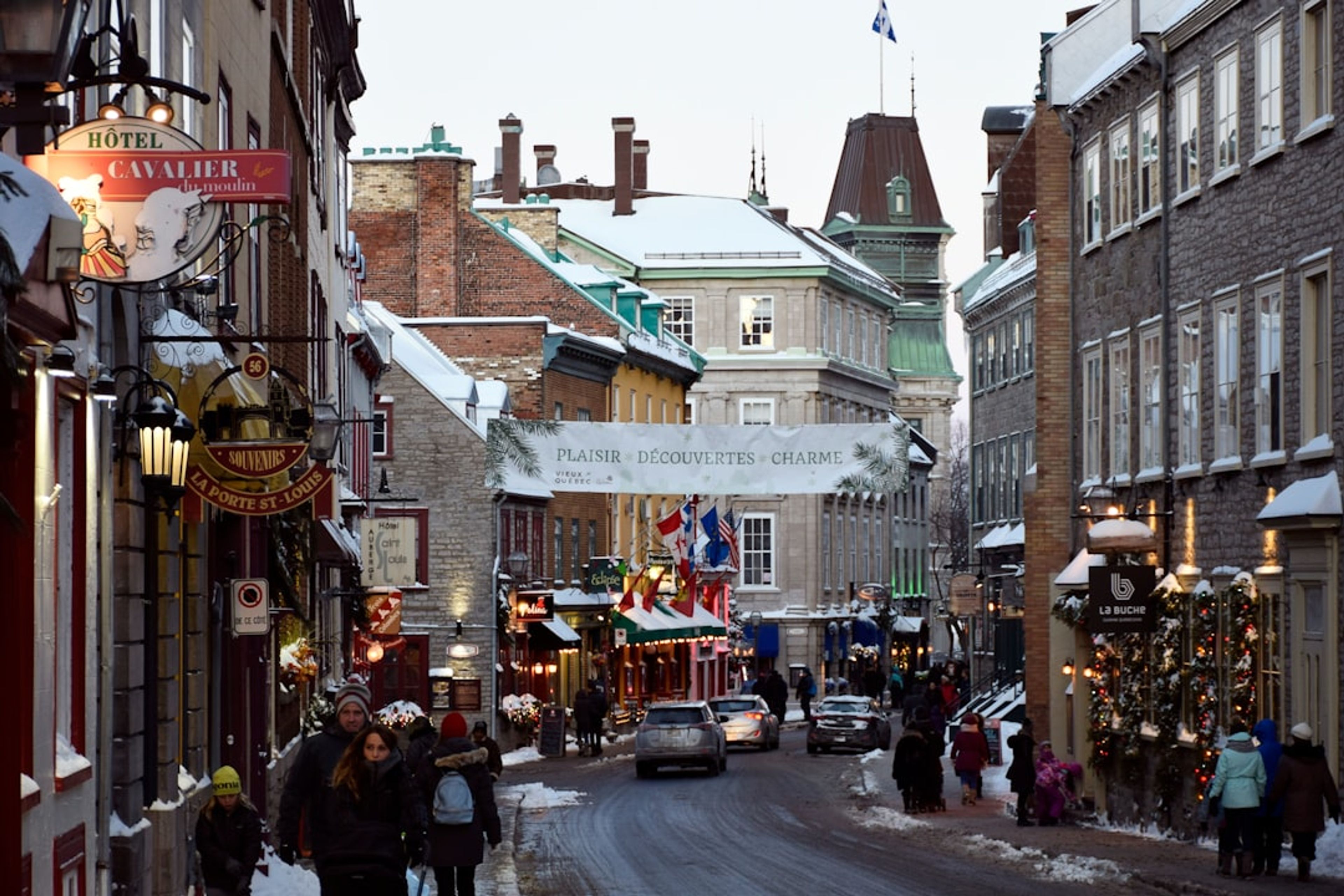
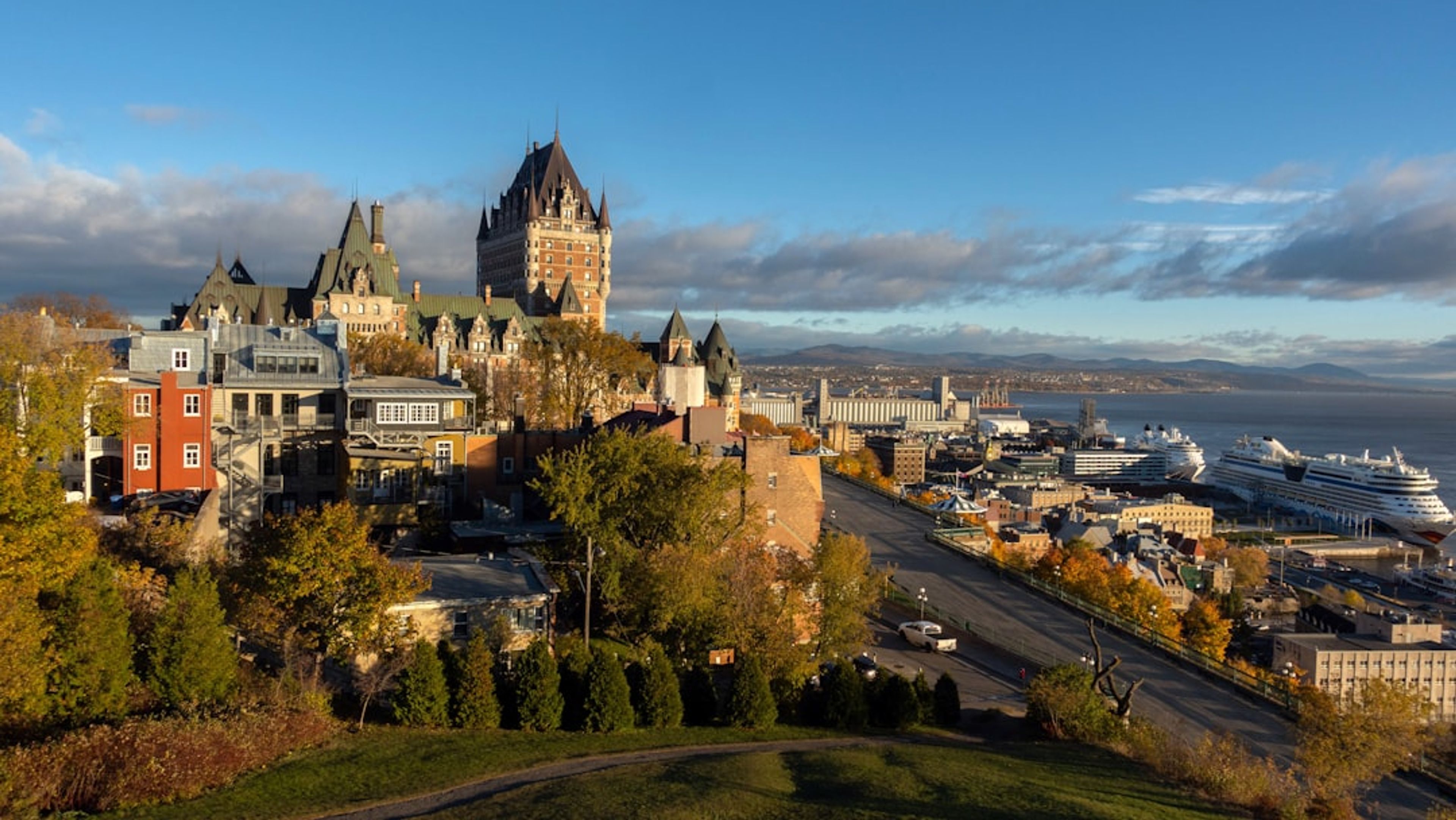
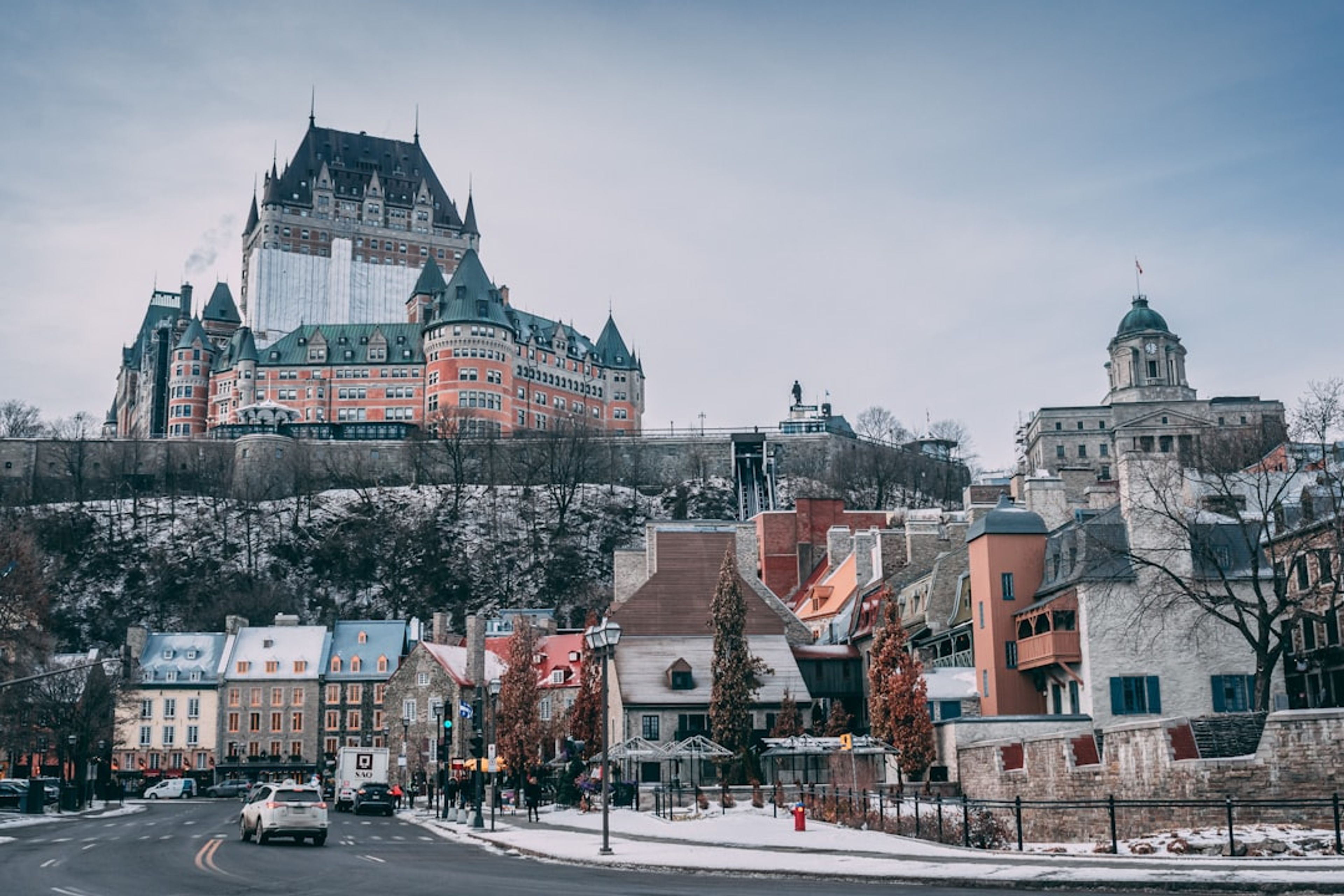
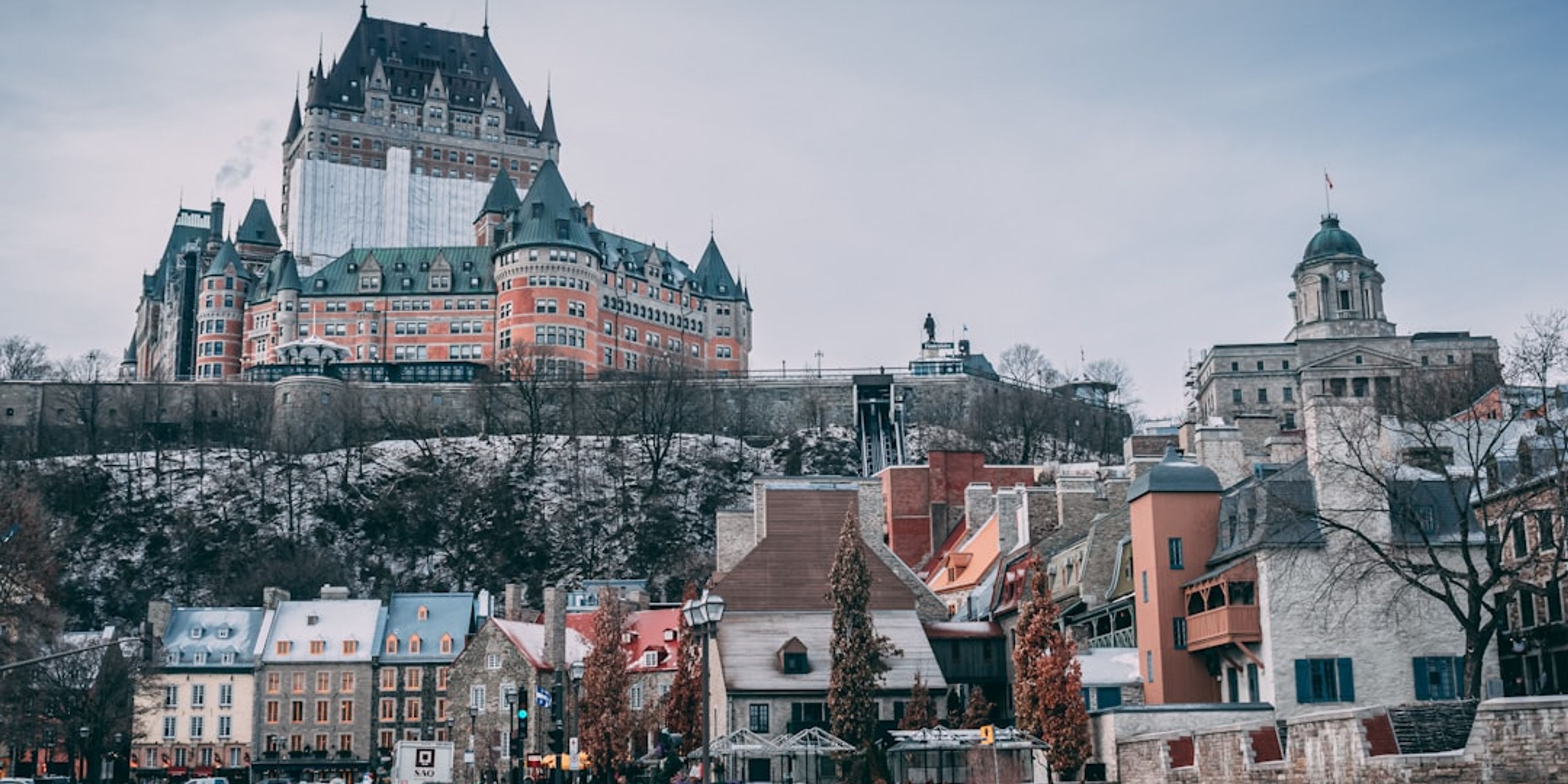
Quebec City is the only walled city north of Mexico, and the fortifications are the least of it. Founded in 1608, Vieux-Québec is a UNESCO World Heritage site of narrow stone streets, steep staircases and the copper-turreted Château Frontenac looming over the Saint Lawrence River - a setting that feels closer to Normandy than to North America.
French is the working language here far more than in Montreal, and the food follows: sugar shacks, tourtière, poutine done properly, and a growing bistro scene in the Saint-Roch district below the cliff. The city is compact enough to cross on foot, though the Lower Town and Upper Town are separated by a serious gradient and a funicular.
Winter is a genuine season rather than an obstacle. The Carnaval de Québec in February is the largest winter carnival in the world, the Hôtel de Glace is rebuilt from scratch each year, and Montmorency Falls freezes into a climbable ice wall just fifteen minutes from downtown.
Country
Canada
Region
Québec province, Saint Lawrence River
Population
~550,000 (city), ~840,000 metro
Elevation
~98 m, with a sharp cliff between Upper and Lower Town
Time Zone
Eastern Time (UTC-5, UTC-4 in summer)
Currency
Canadian Dollar (CAD)
Language
French (official); English understood in tourist areas
Nearest Airport
YQB (Québec City Jean Lesage International, 16 km)
Airport to City Centre
~20-25 min by taxi or rideshare; RTC bus 76 then 800 takes ~50 min
Typical Cost Level
Mid-range
Transport Pass
RTC day pass or OPUS card for city buses; the old town is best walked
Spring (Mar-May)
0-18°C, late thaw and sugar shack season
Summer (Jun-Aug)
13-25°C, peak festival season
Autumn (Sep-Nov)
1-16°C, strong autumn colour in October
Winter (Dec-Feb)
-18 to -6°C, heavy snow and Carnaval in February
Get the latest deals, new destinations, and travel tips delivered straight to your inbox.
No spam, unsubscribe anytime.
Entry rules, stay length and passport validity by nationality.
Quebec City has two strong seasons rather than one. June to September brings warm weather, terrace dining and the Festival d'été, and is the easiest time to visit. February is the other peak, built around the Carnaval de Québec and the ice hotel, with deep snow that suits the walled old town perfectly if you are dressed for -20°C. September and October deliver autumn colour along the Saint Lawrence with far fewer visitors. April and November are the two months to avoid, being grey, wet and between seasons.
A taxi or rideshare from Québec City Jean Lesage International (YQB) takes about 20 to 25 minutes to the old town, covering the 16 km for a flat-rate fare. Public transport is possible but slow, requiring RTC bus 76 then a transfer to the 800, taking around 50 minutes in total. There is no train or metro link. Many old town hotels are inside pedestrianised or narrow streets, so confirm the drop-off point with your driver rather than assuming door-to-door access.
No, but a few words go a long way. Quebec City is far more French-speaking than Montreal, with around 95 percent of residents using French as their first language, and signage is French-only by law. Staff in hotels, restaurants and attractions across the old town speak English comfortably. Outside the tourist core, in Saint-Roch or Limoilou, English is less certain. Opening with bonjour before switching to English is the local convention and is genuinely appreciated.
Two to three days is right for most visitors. One day covers Vieux-Québec on foot, including the Château Frontenac, Place Royale, Petit-Champlain and the Plains of Abraham. A second day adds the Musée de la Civilisation, the ramparts walk and the Saint-Roch food scene below the cliff. A third opens up Montmorency Falls, Île d'Orléans or Sainte-Anne-de-Beaupré. The historic core is genuinely small, so you will not need longer unless you are here for a festival.
Quebec City is one of the safest cities in North America, with very low violent crime and a walkable centre that stays comfortable after dark. Petty theft is rare even in the busiest tourist areas. The realistic hazards are seasonal rather than criminal: icy staircases and steep cobbled hills between Upper and Lower Town in winter, and genuine cold that can reach -30°C with wind chill. Proper footwear with grip matters more here than anti-theft precautions.
Montmorency Falls is the easiest, just 15 minutes away and a full 30 metres taller than Niagara, with a suspension bridge and cable car. Île d'Orléans is a rural island loop of farms, cider houses and strawberry stands about 20 minutes from the centre. The Basilica of Sainte-Anne-de-Beaupré and the Canyon Sainte-Anne sit slightly further along the same road. In winter, Mont-Sainte-Anne and Le Massif offer skiing within an hour, and whale watching at Tadoussac is a longer but rewarding summer excursion.
On trip1, you can book hotels across Quebec City and pay with over 120 cryptocurrencies including Bitcoin, Ethereum, and USDC. trip1 covers 3 million+ hotels in 190+ countries, making it easy to find and book accommodation with crypto.