Get up to €50 off your staySubscribe and get up to €50 off your next stay
Browse and explore the best travel guides in Banff.
Banff is a small town of around 8,300 people sitting entirely inside Canada's oldest national park, which is why it has never sprawled: residency is restricted by law and the buildings stop where the mountains begin. Rundle, Cascade and Sulphur Mountain rise directly above the main street.
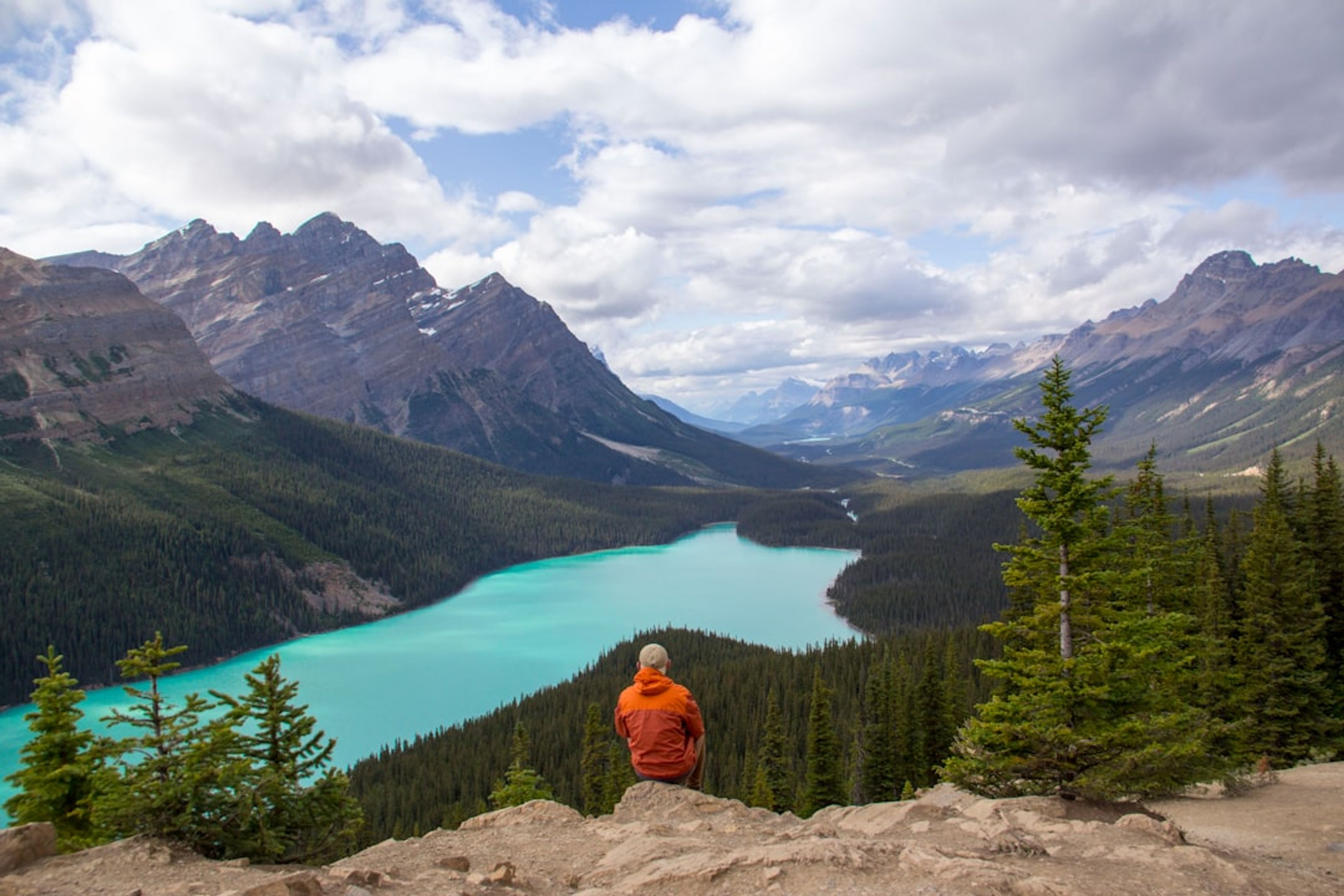
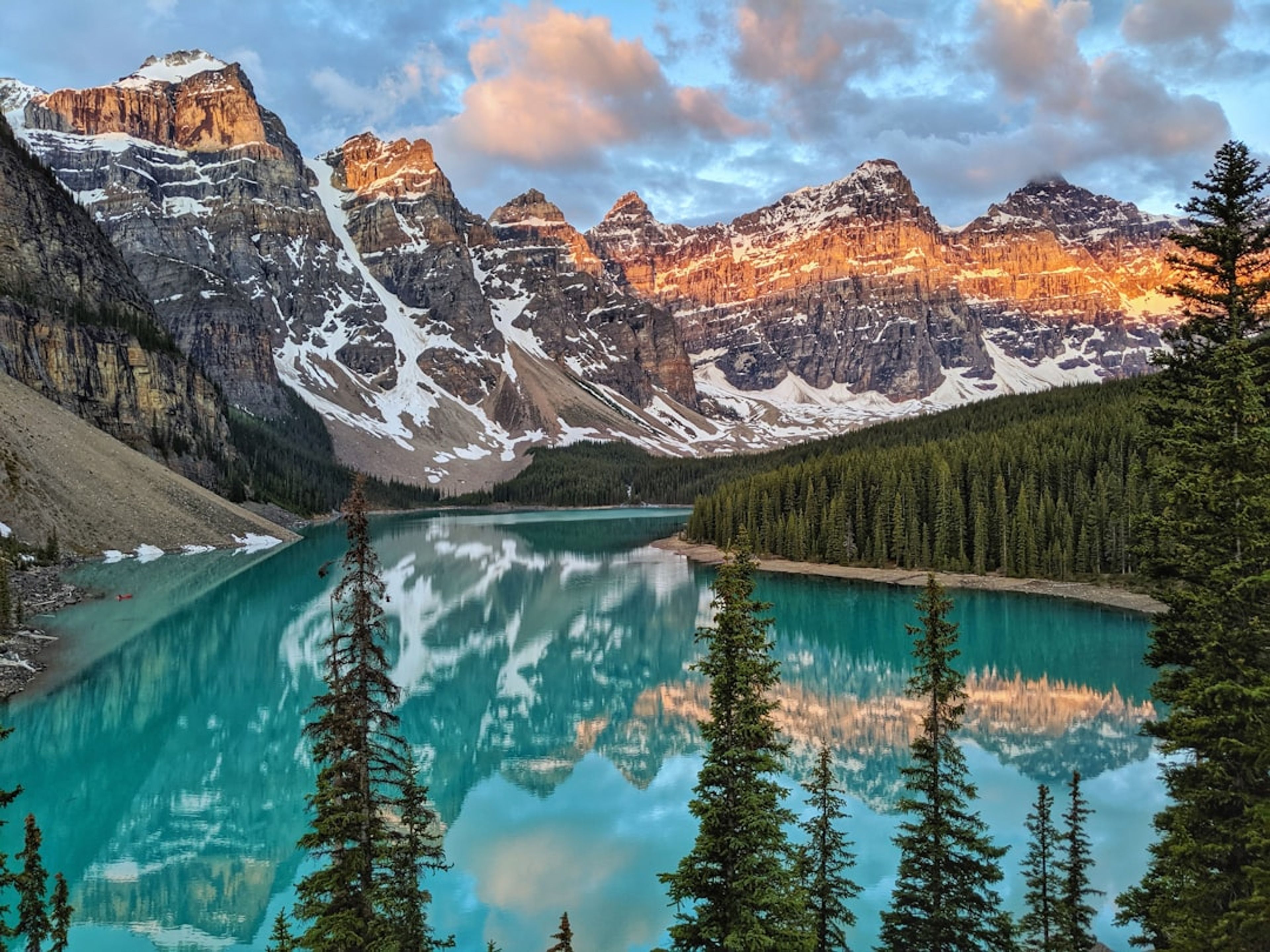
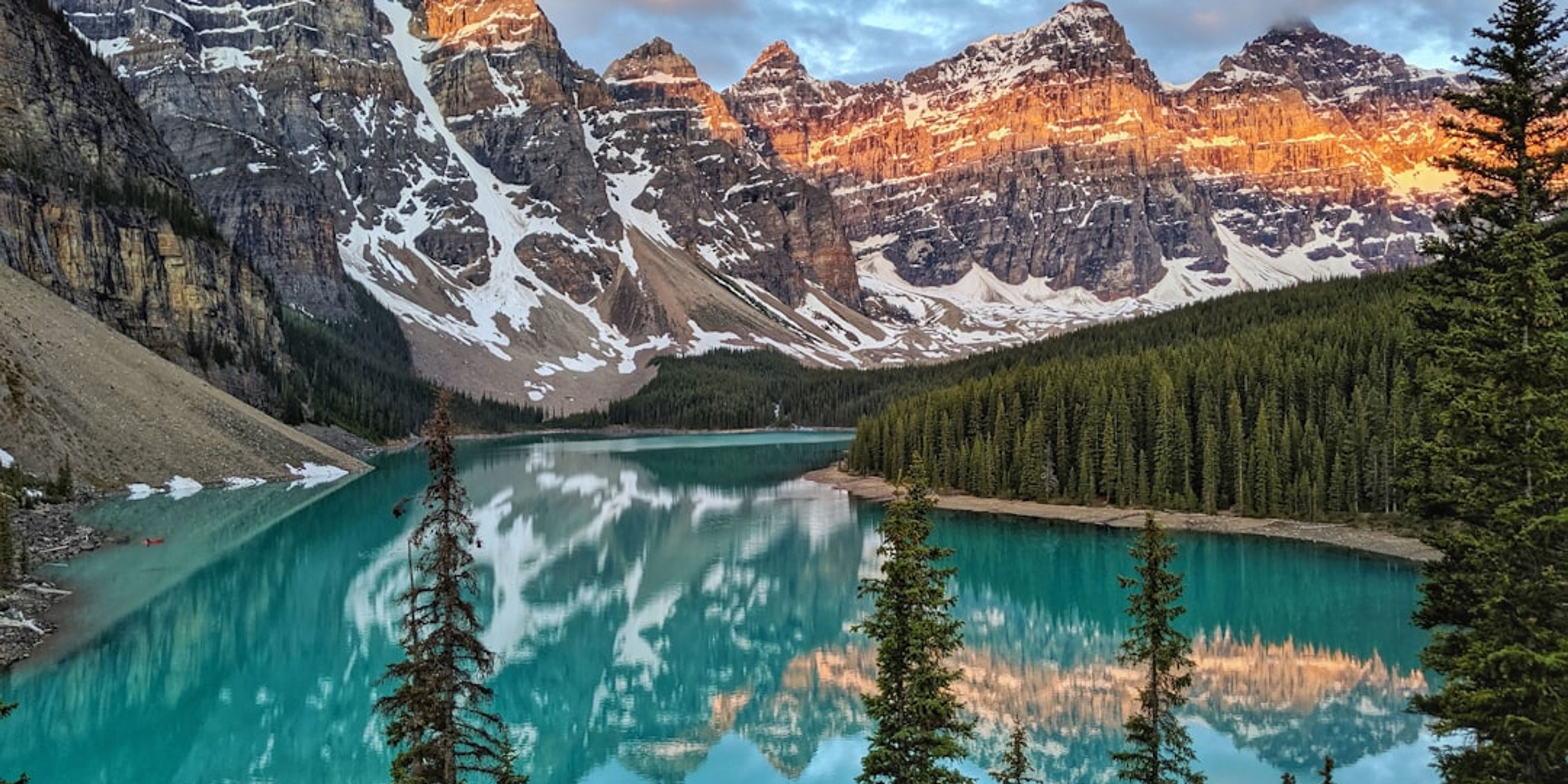
The glacial lakes are what most people come for. Lake Louise, 40 minutes northwest, sits beneath Victoria Glacier, and Moraine Lake in the Valley of the Ten Peaks is arguably more spectacular still. Note that Moraine Lake road is now closed to private vehicles year-round, so access is by Parks Canada shuttle, commercial bus, bike or guided tour only, booked ahead.
In winter the three ski areas of Sunshine Village, Lake Louise and Mount Norquay share a single lift pass, and the Banff Upper Hot Springs are open year-round. The Icefields Parkway north to Jasper is one of the great mountain drives anywhere, and a Parks Canada pass is required for everyone entering the park.
Country
Canada
Region
Alberta, Banff National Park in the Canadian Rockies
Population
~8,300, capped by national park residency rules
Elevation
1,383 m, one of the highest towns in Canada
Time Zone
Mountain Time (UTC-7, UTC-6 in summer)
Currency
Canadian Dollar (CAD)
Language
English; French is co-official nationally
Nearest Airport
YYC (Calgary International, 140 km east)
Airport to City Centre
~1h45 by scheduled airport shuttle or car along the Trans-Canada Highway
Typical Cost Level
Expensive
Transport Pass
Roam Transit day pass; a Parks Canada park pass is separately required
Spring (Mar-May)
-5 to 12°C, snow lingers at altitude; quiet shoulder season
Summer (Jun-Aug)
7-22°C, peak season with all trails and lakes accessible
Autumn (Sep-Nov)
-1 to 14°C, golden larches in late September and the elk rut
Winter (Dec-Feb)
-14 to -3°C, ski season across three resorts on one pass
Get the latest deals, new destinations, and travel tips delivered straight to your inbox.
No spam, unsubscribe anytime.
Entry rules, stay length and passport validity by nationality.
June to September is peak season, when all the trails, lakes and the Icefields Parkway are open and the glacial water is at its most vivid turquoise, roughly late June onwards once the ice melts. Late September brings golden larches and the elk rut with far fewer people. December to March is ski season across three resorts. May and October are the cheapest but many higher trails and some services are closed.
Banff has no airport, so everyone comes through Calgary International, 140 km east. Scheduled shuttle buses such as the Banff Airporter and Brewster Express run several times daily and take about 1 hour 45 minutes door to door. Renting a car gives more freedom for the Icefields Parkway and trailheads, but note that parking in Banff and at Lake Louise fills very early in summer.
You cannot drive there. Parks Canada closed Moraine Lake Road to personal vehicles because demand vastly exceeded the car park, so access is now by Parks Canada shuttle from the Lake Louise Park and Ride, a commercial bus or guided tour, by bicycle, or on foot. Shuttle reservations open in advance and sell out quickly for sunrise slots, so book as early as you can. The road is closed entirely in winter.
Yes, everyone entering Banff National Park needs a Parks Canada pass, including people just passing through on the Trans-Canada Highway or staying in Banff town. Buy a daily pass or, if you are staying a week or more or visiting several parks, the annual Discovery Pass usually works out cheaper. Display it on your windscreen. Passes are sold at park gates, online and at visitor centres.
Four to five days is a good target. One day for Banff town, the gondola up Sulphur Mountain and the hot springs, one for Lake Louise and Moraine Lake, one for Johnston Canyon and the Bow Valley Parkway, and one for a longer hike or the drive up the Icefields Parkway to the Columbia Icefield. A week lets you add Yoho and Kootenay national parks just across the BC border.
Both black and grizzly bears live in the park and encounters do happen, but attacks are rare when people follow the rules. Carry bear spray, know how to use it and keep it accessible rather than in your pack. Make noise while hiking, especially near streams and berry patches, and travel in groups of four or more, which some trails legally require during seasonal restrictions. Never leave food unattended and check trail closures at the visitor centre before setting out.
On trip1, you can book hotels across Banff and pay with over 120 cryptocurrencies including Bitcoin, Ethereum, and USDC. trip1 covers 3 million+ hotels in 190+ countries, making it easy to find and book accommodation with crypto.