

Guides · Tallinn
10 Top Places to Visit in Tallinn

CEO and co-founder
This guide ranks the 10 top places to visit in Tallinn, Estonia - the sights that genuinely earn a spot on your itinerary whether you have a long weekend or a full week. Each entry lists the exact street address with postal code, the nearest tram or bus stop with walking time, and a Pro Tip based on when queues thin and light is best. Tallinn packs an unusual amount into a small footprint: a UNESCO medieval Old Town, a Baroque palace on parkland, one of Northern Europe's leading art museums, and a working port with a submarine you can walk through.
The list is ordered for efficient sightseeing. Attractions 1 through 5 sit inside Vanalinn (Old Town) and Toompea Hill and can be walked in a single long day. Attractions 6 through 8 cluster in Kadriorg and Kalamaja - the two most interesting neighbourhoods beyond the medieval core - and pair well on Day 2. The final two entries push out to city viewpoints and the Lahemaa National Park day trip. Every attraction is reachable on foot, by tram, or by bus with the exception of Lahemaa, which is easier with a rental car or organised guide.
Prices, opening times, and transit info reflect the 2026 season. If you plan to visit three or more paid museums the Tallinn Card pays for itself. Cash is rarely needed - Estonia is close to fully cashless.
1Tallinn Old Town (Vanalinn) and Town Hall Square - The Best-Preserved Medieval Core in Northern Europe
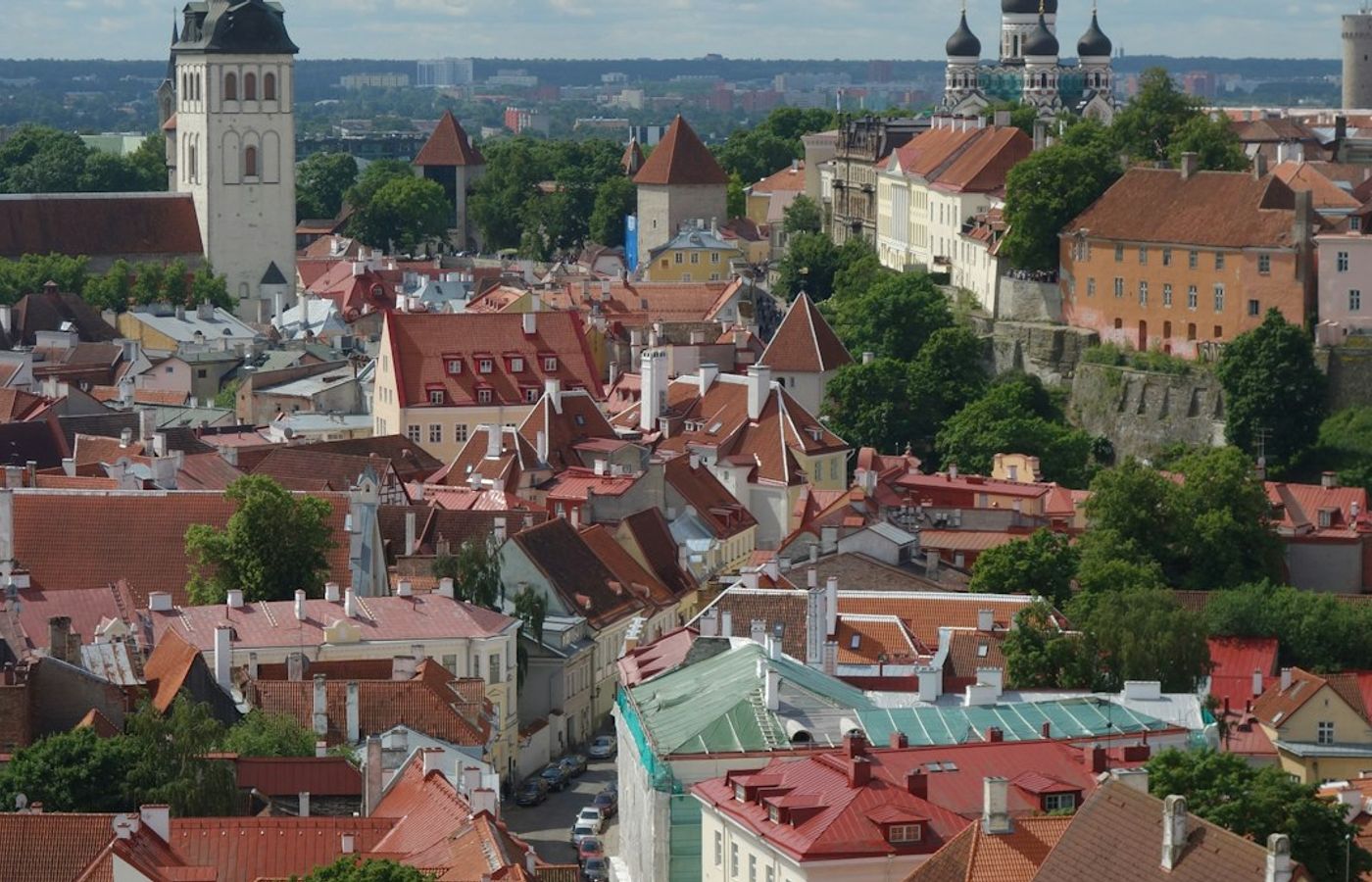

Topping every list of places to visit in Tallinn, Tallinn's Old Town (Vanalinn) is a UNESCO World Heritage Site and one of the best-preserved medieval city centres in Northern Europe. The lower town sits inside 1.9 km of surviving stone walls with 20 towers still standing, most built between the 13th and 16th centuries when Tallinn was a wealthy Hanseatic League trading port. Cobbled lanes like Pikk, Viru and Katariina kaik lead through merchant houses, guild halls and Gothic churches with barely a modern intrusion.
Anchor your visit at Town Hall Square (Raekoja plats), the medieval public heart of the city. The Gothic Town Hall (Raekoda) built between 1402 and 1404 is the only intact Gothic town hall in Northern Europe and its cellar has been continuously trading since 1422. In summer, the square fills with cafe terraces; in December the Tallinn Christmas Market centres on it with a spruce tree tradition dating to 1441. Walk five minutes in any direction and you will hit St Catherine's Passage, the Great Guild Hall, or the 15th-century Three Sisters merchant houses on Pikk Street.
Pro Tip: Enter Vanalinn through the Viru Gate around 08:00 before the cruise ship groups arrive at 10:00. Coffee at Cafe Maiasmokk on Pikk 16, open since 1864, gives you a working local start.
2Toompea Castle - Estonia's Seat of Government on the Upper Hill
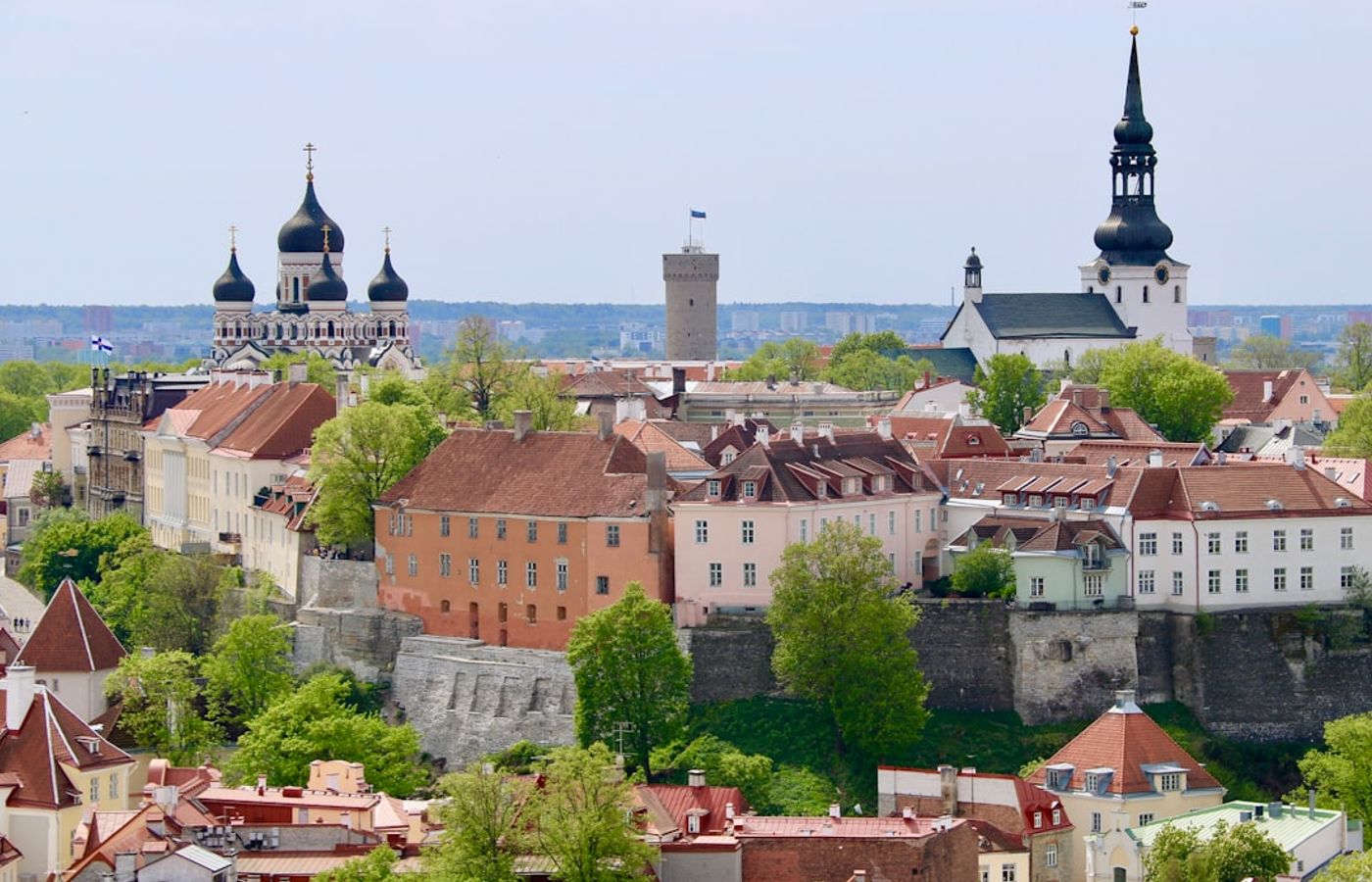

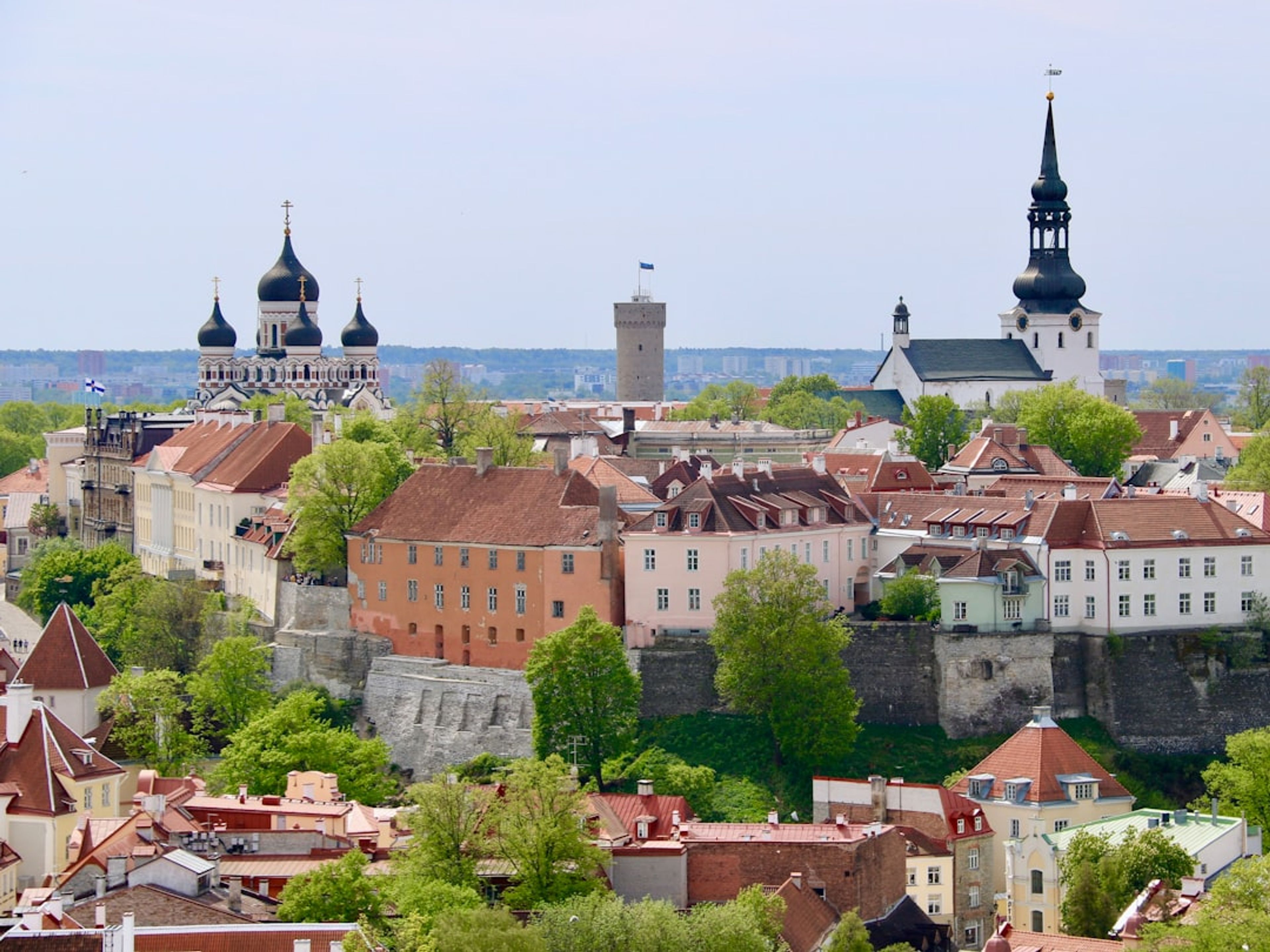
Toompea Castle crowns the limestone escarpment 30 metres above the lower Old Town and has held Estonia's seat of power for eight centuries. The Danes built the first stone fortress here in 1219, the Livonian Order rebuilt it in the 14th century, and the Russian Empress Catherine the Great added the pink Baroque parliament wing in the 1770s. Today the Riigikogu (Estonian Parliament) sits inside that pink block, while the medieval Tall Hermann tower (Pikk Hermann) at the south corner flies the Estonian flag every morning at sunrise to the national anthem.
The castle courtyard, walls and Tall Hermann tower base are freely accessible during daylight. Parliament interior tours run on weekdays and must be booked at least two working days in advance through the Riigikogu website - they are free but limited. From the west wall of the courtyard you get an unusual westerly view over Toompark and the Baltic. The area around Lossi plats also holds Alexander Nevsky Cathedral and the entrance to the Patkuli viewing platform, so plan Toompea as a linked cluster.
Pro Tip: Approach Toompea via Pikk jalg (Long Leg) and descend later via Luhike jalg (Short Leg) - the two medieval streets connect Vanalinn to Toompea and each is worth a slow walk. Sunrise flag-raising at 07:33 in summer is a quiet local moment.

3Alexander Nevsky Cathedral - The Onion-Domed Russian Orthodox Landmark
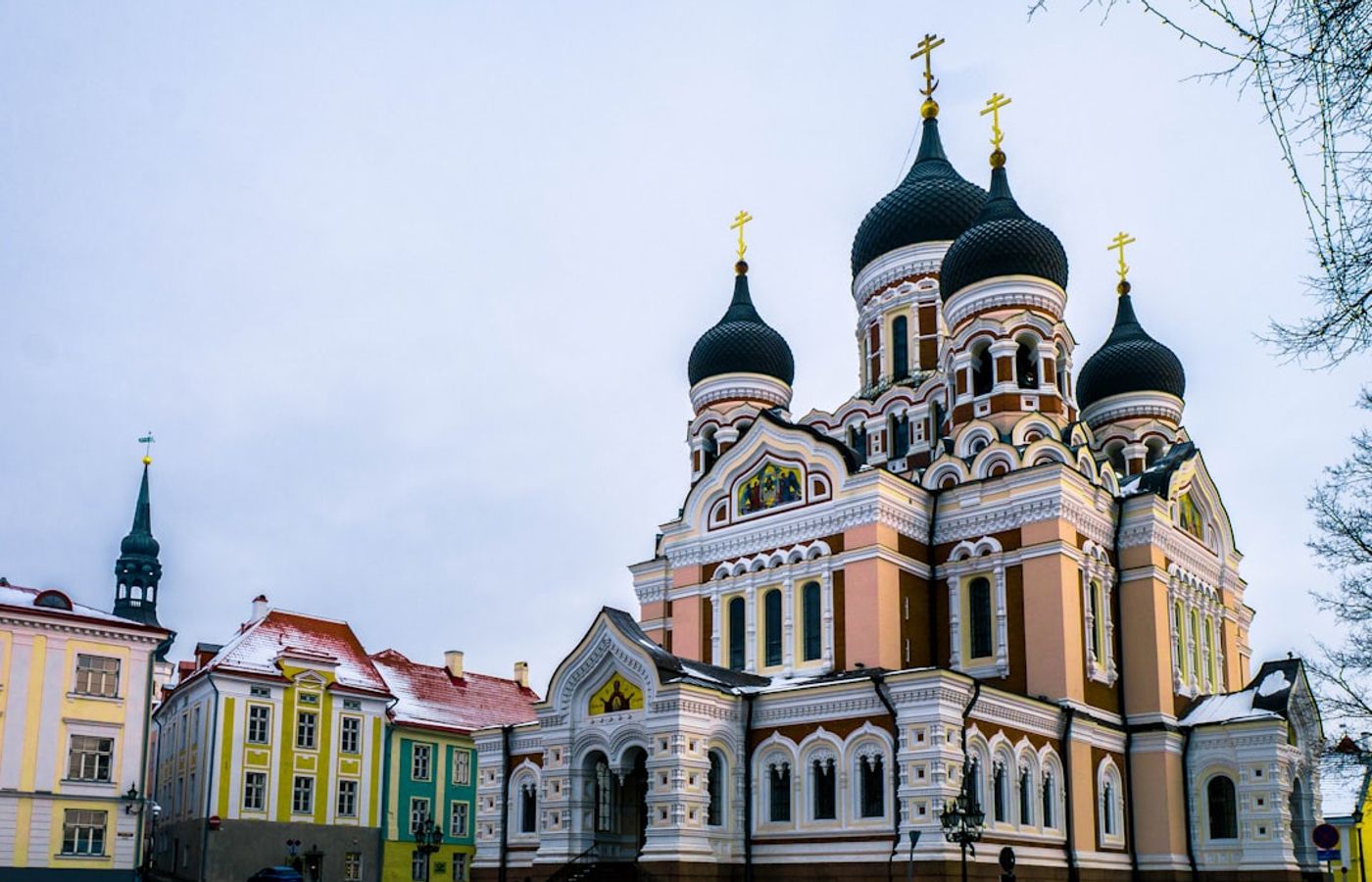

Directly across Lossi plats from Toompea Castle stands Alexander Nevsky Cathedral, the largest and grandest Russian Orthodox church in Tallinn. Built between 1894 and 1900 by architect Mikhail Preobrazhensky, it was commissioned by the Russian Empire during a period of active Russification. Five black onion domes rise above a pink granite and grey limestone facade, and the interior holds three altars and a set of 11 bells cast in Saint Petersburg - the largest weighs 15 tonnes and can be heard across the whole Old Town when it rings.
Entry to the cathedral interior is free. There is a strict silent-observation policy during services (typically 08:00 and 18:00 daily) and a request to cover shoulders and knees. The interior mosaics were completed by artists from the Frolov workshop and the icon screen (iconostasis) is unusually deep at three tiers. Photography is not permitted inside. The cathedral remains an active parish and is home to the Estonian Orthodox Church of Moscow Patriarchate.
Pro Tip: Visit between services (roughly 10:00 to 17:00) so you can walk the nave without disturbing worship. Combine with Toompea Castle across the square in one 45-minute stop.
4St Olaf's Church (Oleviste kirik) - The Old Town Viewing Tower
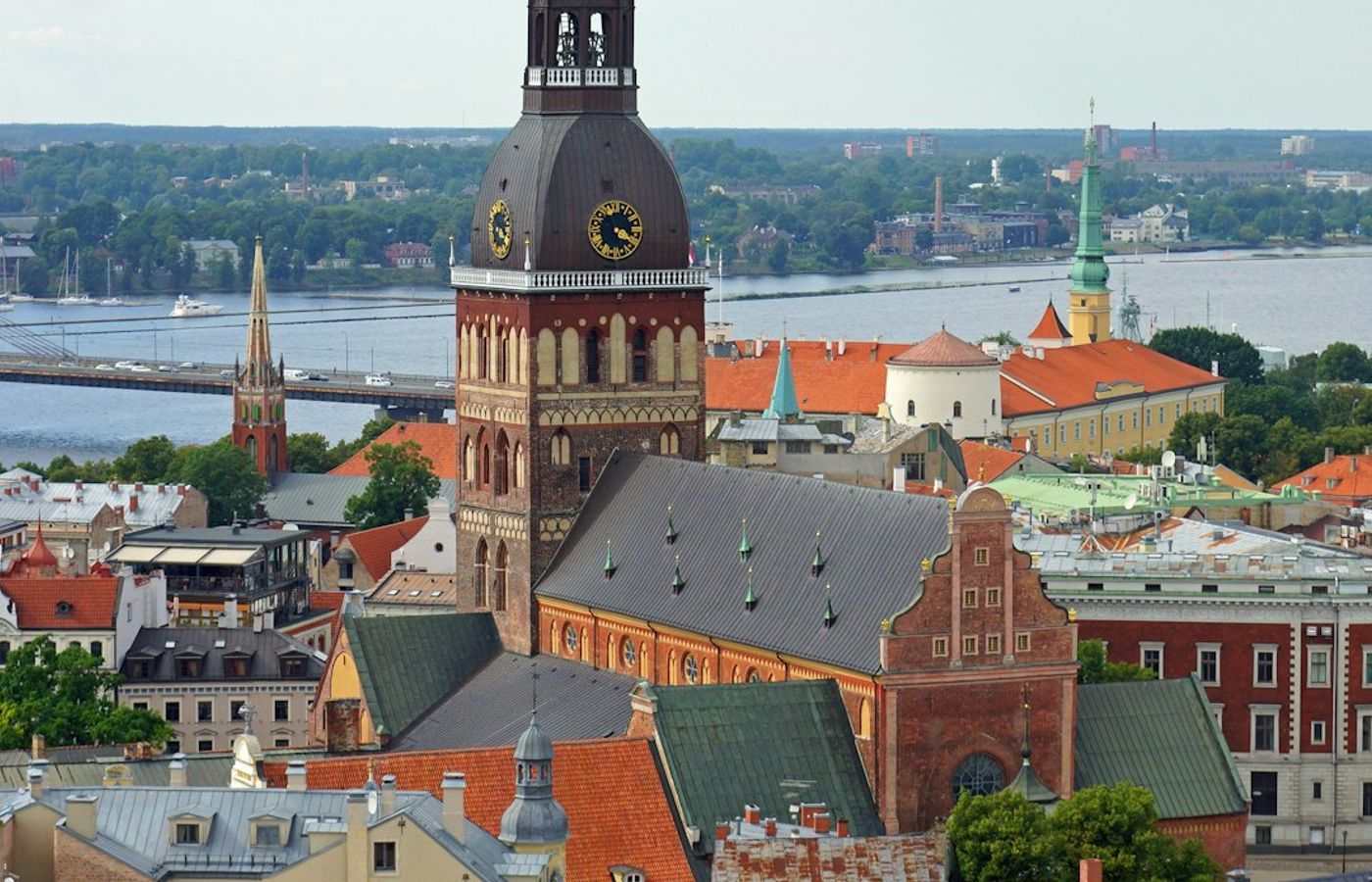
St Olaf's Church (Oleviste kirik) is the most visible landmark on Tallinn's skyline, its Gothic spire piercing 123.7 metres above the lower Old Town. Between 1549 and 1625 an earlier 159-metre spire briefly made this the tallest building in the world; three lightning strikes and fires later, the current spire dates from a 19th-century rebuild. The church itself is first mentioned in 1267 and served Tallinn's Scandinavian merchant community, dedicated to the 11th-century Norwegian king Olaf II.
The core visitor draw is the tower climb - 232 narrow spiral steps take you to an observation platform at 60 metres. From up top the entire Old Town, the Baltic, the port ferries to Helsinki and the modern skyline north of Toompea all unfold in one 360-degree view. The tower is open from April to October only. Entry costs about 5 EUR in 2026. The church interior below is free and holds a memorial chapel to victims of Soviet-era deportations.
Pro Tip: Climb St Olaf's tower at 10:00 opening in June or July - the light hits Alexander Nevsky's onion domes best in morning and the queue is shortest before 11:00. Bring water; the stairs are steep and unventilated.
5Kadriorg Palace and Kadriorg Park - Peter the Great's Baroque Retreat
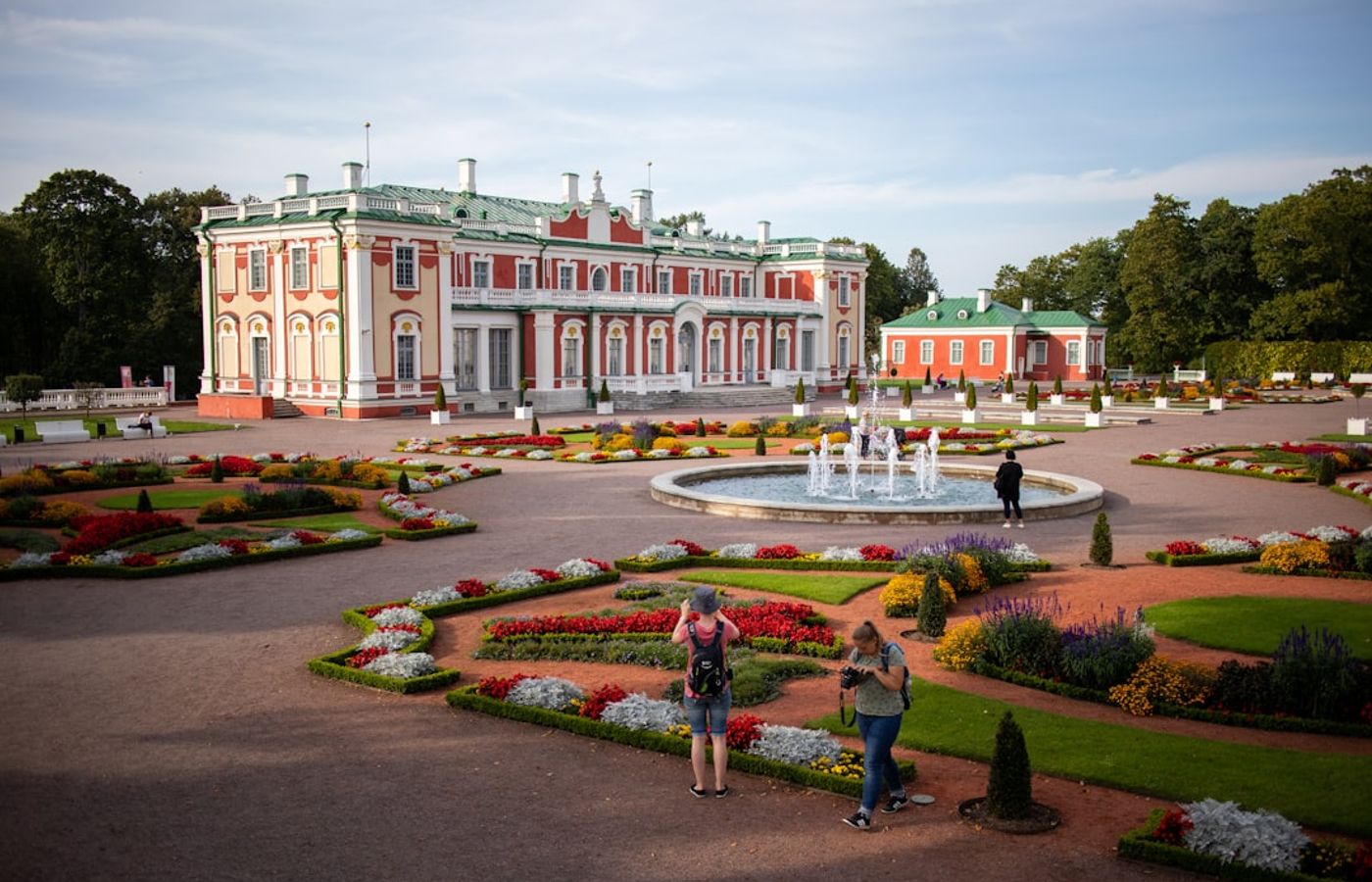
Kadriorg Palace is Tallinn's finest Baroque building - a pink and white summer residence commissioned by Russian Tsar Peter the Great in 1718 and named for his wife Catherine (Kadriorg means Catherine's Valley in Estonian). Italian architect Nicola Michetti designed the palace and the surrounding formal gardens. Today it houses the Kadriorg Art Museum, the foreign-art branch of the Art Museum of Estonia, with a strong 16th-to-20th-century collection covering Dutch, German, Italian and Russian works.
Admission is around 8 EUR in 2026 and includes the palace state rooms. The upper floor Great Hall with its stucco ceiling is the visual highlight. Outside, Kadriorg Park spreads across 70 hectares of formal gardens, ponds and shaded avenues. Within the park you will also find the Mikkel Museum (private collection), KUMU (the modern art museum, listed separately below), the Presidential Palace, and the small wooden Peter's House where Peter the Great actually stayed during his visits. The park is free and open 24 hours.
Pro Tip: Tram 1 or 3 delivers you to the Kadriorg terminus in 15 minutes from the Old Town. Buy a combined ticket for Kadriorg Palace and KUMU on entry and save 3 EUR versus separate admissions.
6KUMU Art Museum - The Largest Art Museum in the Baltics
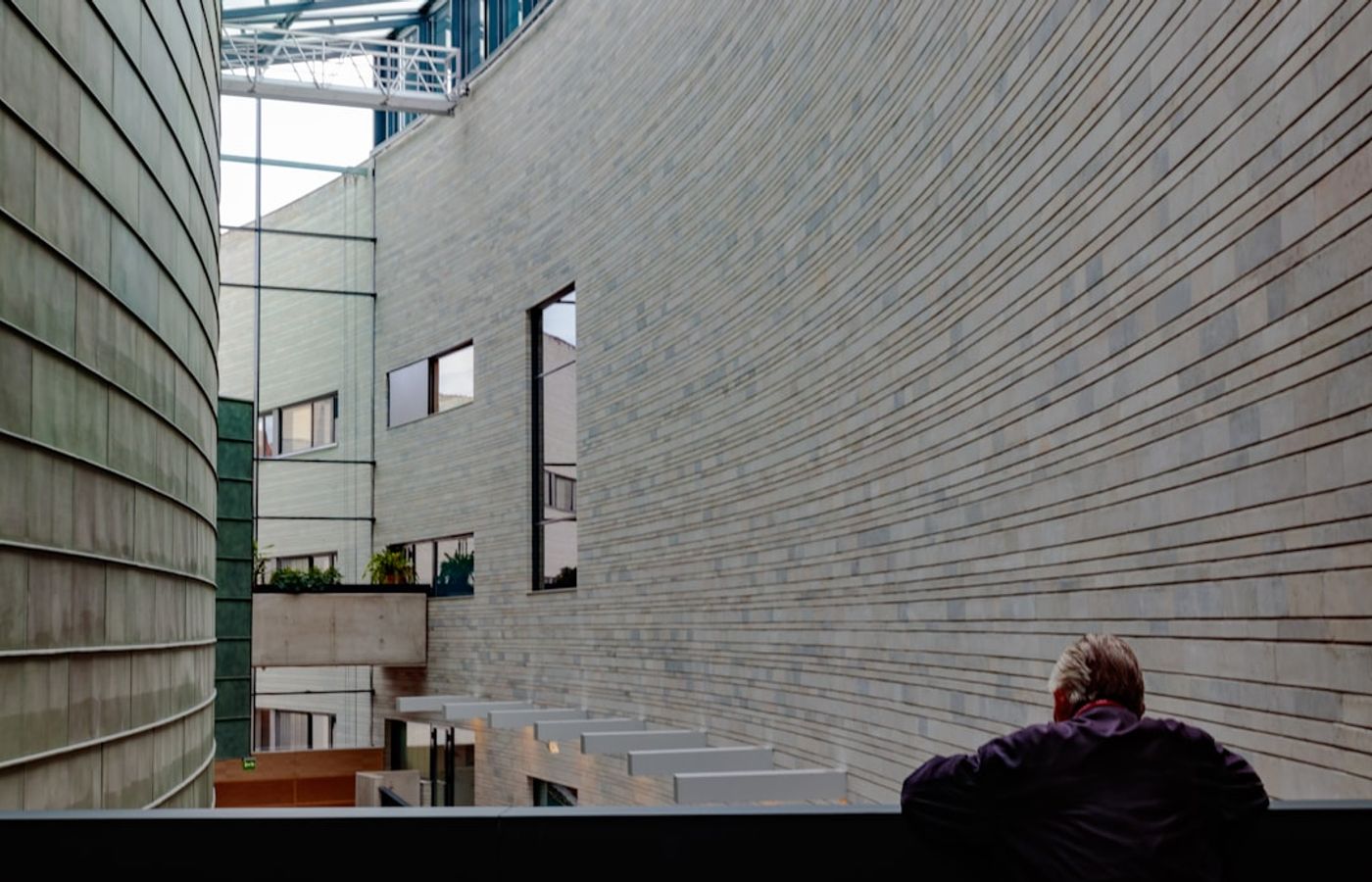
KUMU (Kunstimuuseum) is the flagship of the Art Museum of Estonia and the largest art museum in the Baltics, opened in 2006 in a striking copper-clad building by Finnish architect Pekka Vapaavuori. The permanent collection covers Estonian art from the early 18th century to today, arranged across four floors - classical portraits and landscape on the lower floors, Soviet-era socialist realism and non-conformist art on the third, and rotating contemporary exhibitions on the top floor. It won the European Museum of the Year award in 2008.
Standard admission is about 12 EUR in 2026 and includes both the permanent and temporary exhibitions. The building itself is worth an unhurried walk - the atrium sits four floors deep with natural light from a slanted roof, and the top floor exhibition hall opens onto a terrace with views over Kadriorg Park. Allow at least two hours; three if temporary shows interest you. Free lockers and a good cafe on the ground floor.
Pro Tip: Start on the 3rd floor Soviet-era gallery for the most surprising material and work down. Thursday evenings until 20:00 have a discounted 8 EUR after-6pm ticket.
7Telliskivi Creative City - The Old Industrial Quarter Turned Culture Hub
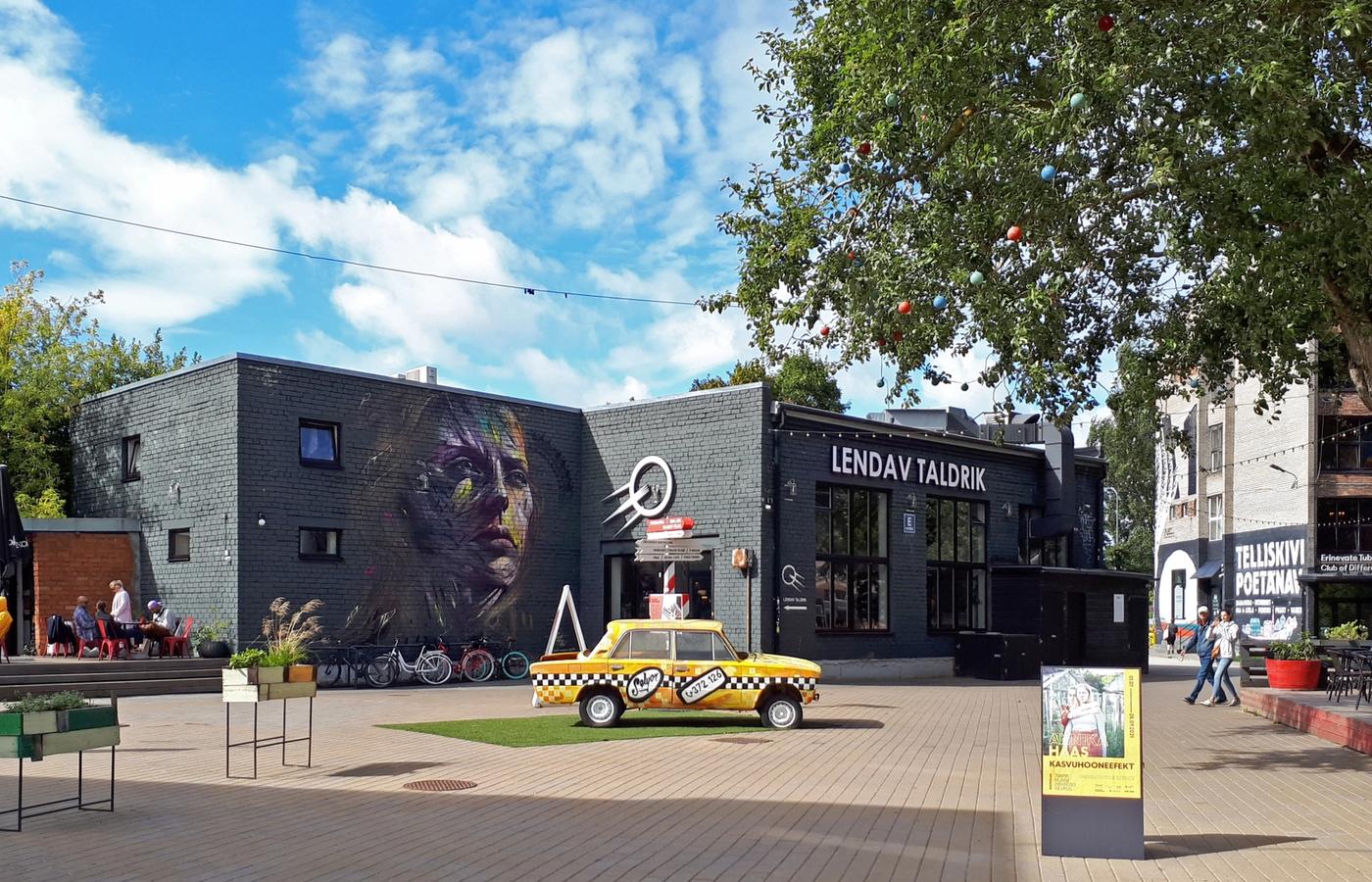
Telliskivi Creative City (Telliskivi Loomelinnak) is a former Soviet-era electric railway repair workshop turned into Tallinn's largest creative complex. Redeveloped from 2007 onward, the 10-building compound now holds around 250 tenants - design studios, tech startups, restaurants, independent shops, theatres and Fotografiska Tallinn (the Tallinn branch of Stockholm's contemporary photography museum). The industrial architecture has been left visibly raw: brick walls, exposed pipework, and the original railway sidings running through the site.
Access to the complex and the outdoor street-art alleys is always free. Fotografiska ticket entry costs 15 EUR and rotates four to six shows per year with a strong contemporary lineup. Restaurants are one of the strongest draws: F-Hoone in the old cotton warehouse, Peatus made from two old Soviet tram carriages, and Sfaar as a modern Estonian option. A Saturday flea market runs 10:00 to 16:00 in the courtyard from May to October.
Pro Tip: Enter Telliskivi from the north side and walk south to end at Balti Jaam Market - the two form a natural loop with the best independent food and vintage clothing shopping in Tallinn.
8Kalamaja Wooden Houses and Seaplane Harbour (Lennusadam) - The Coastal District
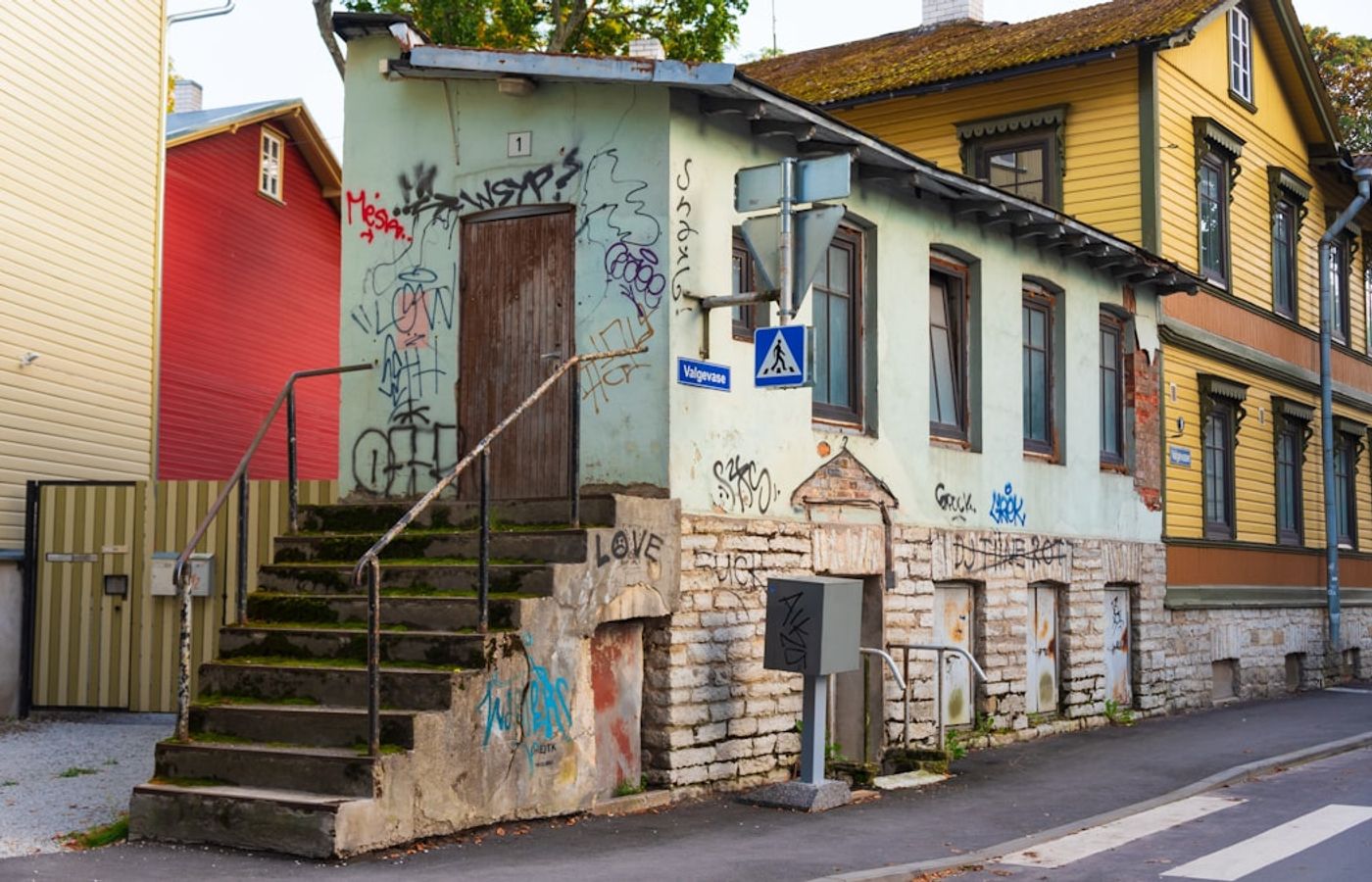
Kalamaja is Tallinn's oldest suburb and its most photogenic residential neighbourhood - a grid of colourfully painted 19th- and early 20th-century wooden houses on quiet cobbled streets. The neighbourhood grew as a fishing village (kalamaja literally means fish house) and was transformed into worker housing when the railway arrived in 1870. Walk any of the streets between Kotzebue, Vabriku, Salme and Soo and you will see the classic three-storey wooden facades - many now home to designers, cafes and independent bakeries.
At the northern edge on the water sits the Seaplane Harbour (Lennusadam), a branch of the Estonian Maritime Museum housed inside three vast concrete seaplane hangars completed in 1917. The 8,000-square-metre hall is home to the interwar Estonian submarine Lembit (walk-through), a full-size replica of the 1936 seaplane Short Type 184, torpedoes, mines and interactive naval exhibits. Outside, moored icebreakers and steamships add another hour of exploring. Adult entry is 20 EUR in 2026; combined with Fat Margaret Maritime Museum in Vanalinn saves 5 EUR.
Pro Tip: Walk to Lennusadam through Kalamaja rather than by bus - the 25-minute stroll along Volta, Kalju and Vesilennuki streets is the point of Kalamaja. Late afternoon light hits the wooden facades best.
9Patkuli and Kohtuotsa Viewing Platforms - The Two Iconic Tallinn Panoramas
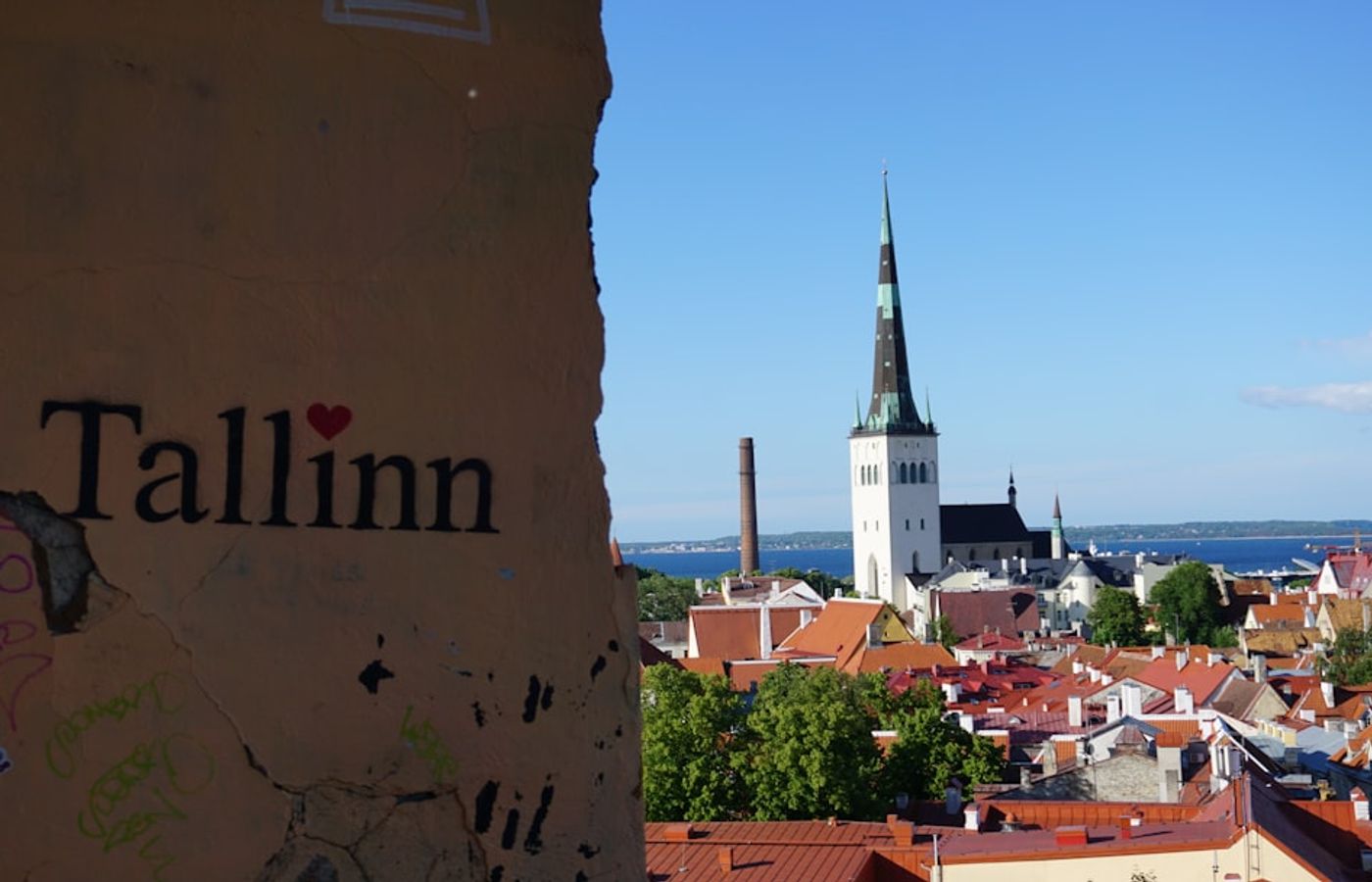
The two free viewing platforms on Toompea Hill deliver the postcard Tallinn shots you have seen in every guidebook, and both deserve a stop. Kohtuotsa platform at Rahvakohtu 3 faces east over the red-tiled roofs of the lower Old Town, with St Olaf's spire and the Baltic behind - this is the shot with the graffiti-covered wall that says The Times We Had. Patkuli platform at the end of Rahukohtu street faces north over the medieval wall towers of Nunna, Sauna and Kuldjala, with Kalamaja and the port beyond.
Both platforms are open 24 hours and free. Patkuli requires a short descent down 157 stairs from the platform if you want to reach the modern city below - a useful shortcut back to Balti Jaam or Telliskivi. Kohtuotsa is on the walking loop between Alexander Nevsky Cathedral and the north side of Toompea. On summer weekends both fill quickly with tour groups between 11:00 and 15:00, so early morning or after 18:00 gives you room to shoot.
Pro Tip: Golden hour is 30 minutes before sunset for Kohtuotsa (east-facing, so best in morning too) and just after sunrise for Patkuli. In winter both platforms freeze fast - grip helps.
10Lahemaa National Park - The Coastal Day Trip East of Tallinn
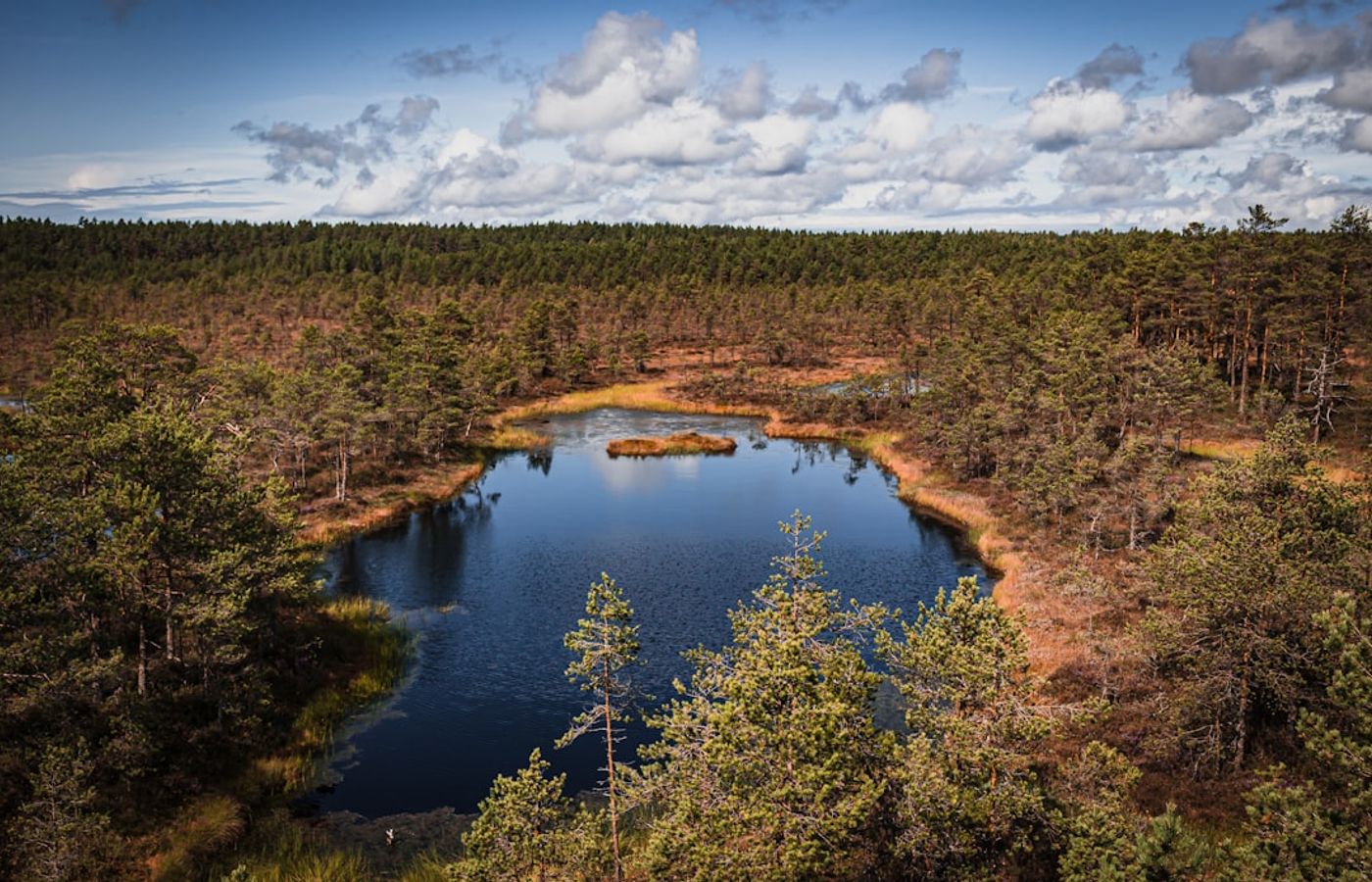
Lahemaa National Park protects 725 square kilometres of coastal Estonia and is the country's oldest and largest national park, founded in 1971 - the first national park in the former Soviet Union. Lahemaa means Land of Bays, and the coast folds into four large peninsulas separated by shallow bays lined with reed beds. Inland, boardwalks cross the Viru bog, the most accessible of Estonia's peat bogs, on a 3.5 km loop from the visitor point. Wildlife includes elk, lynx and around 260 bird species.
The park is best organised around three or four stops: Palmse Manor (18th-century baronial estate, entry 12 EUR), Kasmu Captain's Village on the sea, Viru Raba boardwalk hike (free, allow 2 hours), and Jagala Waterfall (Estonia's widest natural falls). Day tours from Tallinn run 45-70 EUR per person and pack the essential circuit into 8-9 hours. Renting a car for the day gives you more freedom - the E20 highway east from Tallinn is fast.
Pro Tip: Book a small-group tour (max 8 people) rather than a coach tour - the manor grounds and Viru bog boardwalk feel entirely different without a 40-person group ahead of you. September brings mushroom season and cranberry bogs.
Get hotel deals for Tallinn
Price drops, new stays and local tips for Tallinn, straight to your inbox.
No spam, unsubscribe anytime.

CEO and co-founder
Tomas is the co-founder and director of trip1, an European company specializing in reservation services. He launched the company in 2025 with a focus on building scalable, efficient operations.
10 Top Places to Visit in Tallinn, Estonia - FAQ
Two days for the city, three with a day trip. The Old Town and Toompea Hill fill one long day on foot. Kadriorg Palace, the KUMU art museum, the Kalamaja wooden houses and the Seaplane Harbour fill a second, linked by tram. Lahemaa National Park needs a full third day, by rental car or small-group tour, since public buses there are limited.
Yes. Its Old Town is a UNESCO World Heritage Site, with 1.9 km of medieval walls, 20 towers still standing and a Gothic Town Hall built between 1402 and 1404. Beyond it you get Peter the Great's Baroque palace at Kadriorg, the largest art museum in the Baltics, a submarine to walk through at the Seaplane Harbour, and Lahemaa's bogs and coast as a day trip.
Town Hall Square and the Old Town lanes, Toompea Hill with Alexander Nevsky Cathedral and the free Kohtuotsa and Patkuli viewing platforms, and the 232-step climb up St Olaf's tower, open from April to October. Outside the walls, see Kadriorg Palace, KUMU, the wooden houses of Kalamaja and the Seaplane Harbour, then eat at Telliskivi Creative City.
June to August, for long days, cafe terraces on Town Hall Square and the St Olaf's tower climb, which is open only from April to October. September is quieter and brings mushroom and cranberry season in Lahemaa. December is the pick for the Christmas Market on Town Hall Square, but the viewing platforms freeze fast, so wear shoes with grip.
It depends on what you do, but much of the best is free. The Old Town streets, Kadriorg Park, Alexander Nevsky Cathedral and both Toompea viewing platforms cost nothing. Paid sights run from about 5 euros for St Olaf's tower to 12 euros for KUMU and 20 euros for the Seaplane Harbour. The Tallinn Card pays for itself if you visit three or more paid museums.