Guides · Kaunas
Top Things to Do in Kaunas, Lithuania
By Tomas Achmedovas · CEO and co-founder

CEO and co-founder
Kaunas: Lithuania's Underrated Second City
Kaunas rarely tops the list when travellers think about the Baltics, and that is exactly what makes it worth your time. Lithuania's second city sits at the meeting point of two rivers, packs a medieval Old Town, over 6,000 interwar modernist buildings, and some of the most thought-provoking museums in Eastern Europe into a walkable footprint. Whether you have one day as a side trip from Vilnius or a full long weekend, the things to do in Kaunas are concentrated enough to make planning straightforward and spread out enough to keep each day interesting.
This guide covers 11 attractions and experiences that represent the best of Kaunas - from the 14th-century castle ruins to the sobering Ninth Fort, from the world's only Devil's Museum to panoramic views atop Christ's Resurrection Church. Each entry includes exact addresses, transport directions, expected costs, and a specific tip to help you get more from your visit. The attractions are ordered geographically to make it easy to build a logical walking route across the city.
Kaunas earned the European Capital of Culture title in 2022, which left the city with upgraded cultural infrastructure, new street art, and a confidence that shows in its growing restaurant and cafe scene. Prices remain well below Western European averages, English is widely spoken in tourist-facing venues, and the compact layout means you will rarely need anything beyond your own feet to get between sights. Here is where to start.
Check dates for Kaunas
See what is available on your dates.
1Kaunas Old Town - Medieval Heart of Lithuania's Second City


Kaunas Old Town occupies a compact triangle between the Nemunas and Neris rivers, anchored by Town Hall Square (Rotuses aikste) and its distinctive white Town Hall building, nicknamed the White Swan for its slender tower. The cobblestone streets here date to the 15th century, and the architecture is a mix of Gothic, Renaissance, and Baroque that reflects the city's shifting fortunes over 700 years. Vilniaus gatve, the main pedestrian artery, is lined with cafes, small galleries, and restored merchant houses.
Town Hall Square itself serves as the social centre of old Kaunas. On weekends, a small market sometimes sets up along the edges, and in summer the outdoor terraces fill with locals drinking coffee and Lithuanian craft beer. The square is flanked by the Kaunas Cathedral Basilica of St. Peter and St. Paul, one of the largest Gothic churches in Lithuania, and the Jesuits' Church of St. Francis Xavier with its ornate Baroque interior. Take time to wander the side streets off Vilniaus gatve - small courtyards and crumbling brick facades reveal layers of history that the main drag only hints at.
2Kaunas Castle - The Oldest Stone Fortress in Lithuania


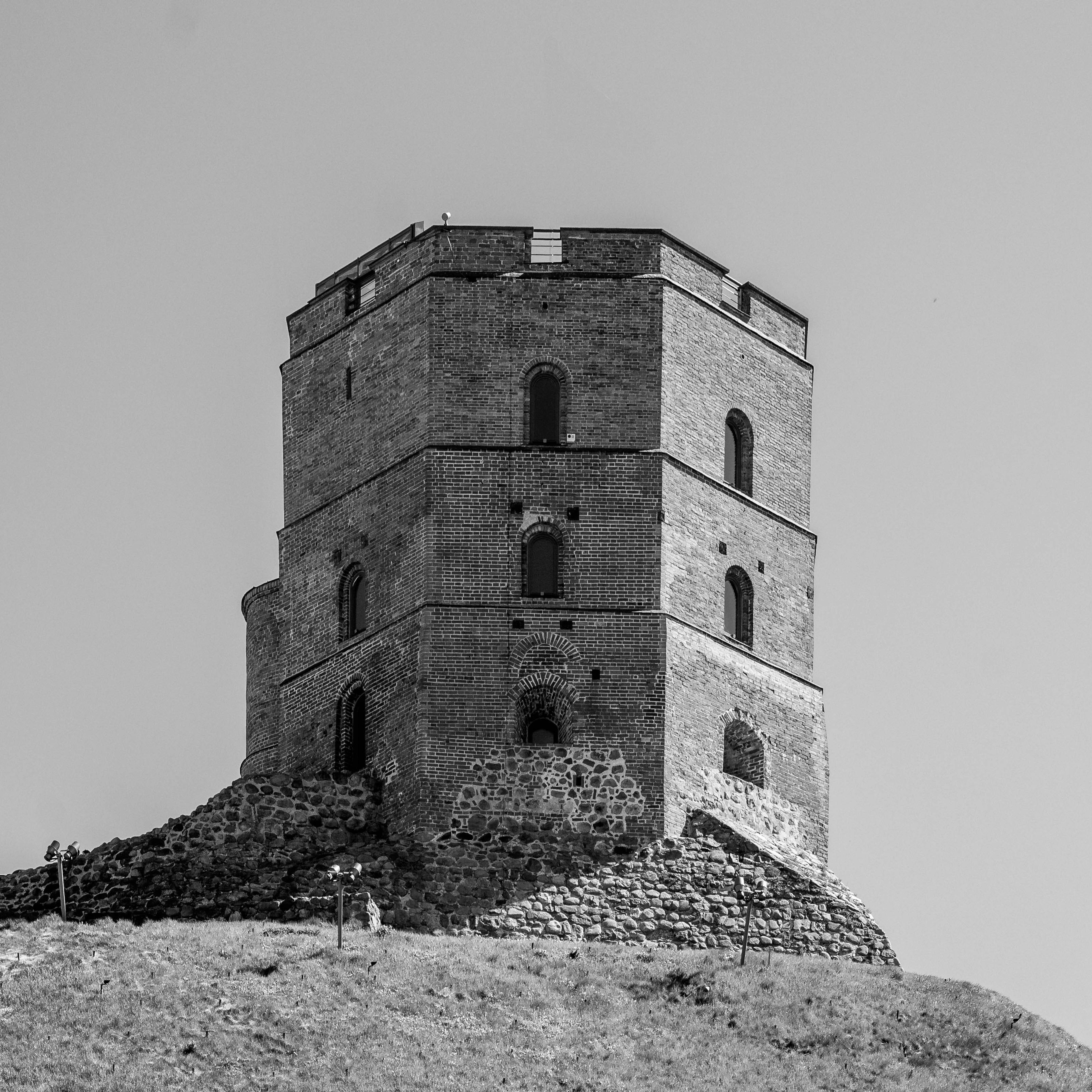
Built in the mid-14th century to defend against Teutonic Order raids, Kaunas Castle is the oldest stone fortification in Lithuania. What remains today is roughly a third of the original structure - one round tower, a section of wall, and a restored main building that now houses a small museum on the castle's history and medieval life in the region. The castle sits on a grassy mound at the very point where the Neris flows into the Nemunas, a strategic location that made it a constant target during the Northern Crusades.
The museum inside is modest but well-presented, with archaeological finds from the site and scale models showing the castle at its full extent. Admission costs around 3 euros. The real draw, however, is the setting. The surrounding park area offers views across both rivers and toward the Old Town, and in summer the castle grounds host open-air concerts and cultural events. The nearby Santakos Park, at the actual river confluence, is a five-minute walk and provides one of the best photo opportunities in Kaunas.
3Ninth Fort - A Sobering Memorial to Lithuania's Darkest Chapter


The Ninth Fort is one of the most important Holocaust memorial sites in the Baltics. Originally built as part of the Kaunas Fortress defensive ring in the early 20th century, the fort was used during World War II as a transit and execution site where over 50,000 people were murdered, the majority of them Jewish. The museum and memorial complex documents this history with unflinching clarity through original documents, photographs, personal belongings, and testimony from survivors.
The exhibition is split between the museum building, which covers the broader history of the Kaunas Fortress and the Holocaust in Lithuania, and the fort itself, where you walk through the actual cells, corridors, and execution grounds. A massive 32-metre concrete memorial sculpture by Alfonsas Ambraziunas stands on the hillside above the fort. Plan at least two to three hours for a thorough visit. Admission is approximately 5 euros. The experience is emotionally demanding but essential for understanding this part of European history.
Check dates for Kaunas
See what is available on your dates.
4Laisves aleja - Europe's Longest Pedestrian Boulevard

Laisves aleja (Liberty Avenue) stretches 1.6 kilometres through the heart of Kaunas's New Town, making it one of the longest pedestrian streets in Europe. Lined with linden trees, it serves as the city's main promenade - a place where university students, families, and elderly couples stroll at all hours, stopping at cafes, bookshops, and ice cream stands along the way. The boulevard was laid out in the 19th century and became the social spine of the city during the interwar period when Kaunas was Lithuania's capital.
Several of Kaunas's most notable institutions line the avenue or sit just off it: the Vytautas the Great War Museum, the M.K. Ciurlionis National Museum of Art, a musical fountain that performs in summer evenings, and dozens of interwar-era buildings that give the street its distinctive architectural character. The western end connects to Vilniaus gatve and the Old Town, while the eastern end meets the Soboras (St. Michael the Archangel Church), a striking Neo-Byzantine structure originally built for the Russian Orthodox garrison.
5Devil's Museum - The World's Only Collection of Demonic Art

The Devil's Museum (Velnio muziejus) is exactly what it sounds like: a museum dedicated entirely to depictions of the devil, demons, and related mythological figures from around the world. Founded in 1966 from the private collection of Lithuanian artist Antanas Zmuidzinavicius, the museum now holds over 3,000 pieces across three floors - carved wooden devils from Lithuanian folklore, satirical political caricatures, devil masks from Africa and Asia, and plenty of pieces that blur the line between sinister and absurd. One notable exhibit shows Hitler and Stalin dancing together over a map of Lithuania.
The collection grows regularly, as visitors from around the world donate devil-themed items. The museum occupies a handsome early 20th-century building and takes about an hour to walk through. Admission is around 4 euros. Despite the dark subject matter, the tone is more playful than menacing - this is folk art and cultural anthropology, not a horror show. Children over about eight tend to enjoy the more cartoonish pieces, and the museum shop sells some excellent devil-themed souvenirs.
6M.K. Ciurlionis National Museum of Art - Lithuania's Greatest Painter and Composer

Mikalojus Konstantinas Ciurlionis (1875-1911) was a singular figure in European art - both a serious composer and a painter whose work anticipated abstract art by several years. This museum, the largest art museum in Lithuania, holds the world's most comprehensive collection of his paintings, including the haunting "Creation of the World" cycle and the dreamlike "Zodiac" series. His canvases combine musical structure with visual art in ways that feel remarkably modern for their time.
Beyond the Ciurlionis galleries, the museum holds a broad collection of Lithuanian art from the 16th century to the present, including folk art, textiles, and a strong section on interwar graphic design. A separate wing covers numismatics and applied art. Admission is approximately 5 euros, and a combined ticket with the Devil's Museum (which sits on the same street) offers a small discount. Allow one to two hours depending on your interest level, longer if the temporary exhibition grabs you.
7Christ's Resurrection Church - Panoramic Views from a Soviet-Era Survivor

This white modernist church on Zaliakalnis hill has one of the most turbulent construction stories in Europe. Begun in 1934 during Lithuania's independence, it was left unfinished when the Soviets occupied the country in 1940. The occupiers converted the shell into a radio factory, and the building served that purpose for decades. After Lithuanian independence was restored in 1990, the factory was removed and the church finally completed and consecrated in 2004 - seventy years after construction started.
The terrace on the church roof is the main attraction for non-worshippers. Reached by elevator (small fee of about 2 euros), it offers a sweeping 360-degree panorama across the entire city, both rivers, and the flat Lithuanian countryside beyond. On clear days you can see for dozens of kilometres. The church interior, while architecturally interesting in its clean modernist lines, is deliberately austere. The building is a powerful symbol of Lithuanian resilience and the long road to independence.
8Kaunas Modernist Architecture - An Open-Air Museum of Interwar Design

When Kaunas served as Lithuania's temporary capital from 1920 to 1940, the city underwent a building boom that produced over 6,000 structures in the modernist, Art Deco, and functionalist styles that were fashionable across Europe at the time. What makes Kaunas exceptional is the concentration and survival rate - entire streets in the New Town district remain largely intact. The Central Post Office on Laisves aleja, the Pienocentras dairy headquarters, the Officers' Club, and dozens of residential buildings showcase clean geometric lines, rounded balconies, and decorative concrete details that collectively represent one of Europe's best-preserved interwar architectural ensembles.
This legacy was recognised in 2023 when UNESCO inscribed Kaunas Modernist Architecture on the World Heritage List, making it the newest cultural heritage site in the Baltics. Self-guided walking routes are available from the tourist information centre on Laisves aleja, and the recently opened Modernism for the Future Centre (Moderno centras) at V. Putvinskio g. 56 provides context on the architects, their influences, and the political circumstances that shaped the building campaign. The centre charges about 4 euros for entry.
9Zaliakalnis and Aleksotas Funiculars - Twin Hillside Railways from the 1930s

Kaunas has two funicular railways, both dating from the 1930s, and both still in daily operation. The Zaliakalnis funicular (built 1931) climbs Zaliakalnis hill from the New Town to the Christ's Resurrection Church neighbourhood. The Aleksotas funicular (built 1935) crosses the river on the south bank, ascending Aleksotas hill to a viewpoint terrace that looks directly across at the Old Town and cathedral. Each ride lasts about two minutes and costs roughly one euro.
The Aleksotas viewpoint at the top is arguably the best vantage point in Kaunas. From the terrace you can see the full sweep of the Old Town, Town Hall Square, Kaunas Castle, the confluence of the two rivers, and the New Town rising behind. The funiculars themselves are charming period pieces - small wooden carriages on a steep track, with the mechanical infrastructure still visible. Both are among the oldest continuously operating funiculars in Europe and are protected as cultural heritage objects.
10Pazaislis Monastery - Baroque Masterpiece on the Kaunas Reservoir

Pazaislis Monastery is widely considered the finest example of Italian Baroque architecture outside Italy. Built between 1667 and 1712 by Italian architects Giovanni Battista Frediani and Pietro Putini for the Camaldolese order, the monastery features a hexagonal church with original frescoes by Michelangelo Palloni covering the dome and walls. The proportions, craftsmanship, and state of preservation are extraordinary - this is a building that would draw serious crowds if it were in Tuscany rather than on the outskirts of a Lithuanian city.
The monastery grounds overlook the Kaunas Reservoir (Kauno marios), a large artificial lake popular for swimming and sailing in summer. The annual Pazaislis Music Festival, held from June through August, stages classical concerts in the church and courtyard, drawing performers from across Europe. Outside the festival, visiting the church interior and grounds is free or costs a nominal donation. The surrounding forest trails along the reservoir shore are excellent for a quiet walk after exploring the monastery.
11Confluence of the Nemunas and Neris Rivers - Where Two Waterways Shape a City

The point where the Neris river empties into the Nemunas is the geographic and historical reason Kaunas exists. Santakos Park occupies this wedge of land between the two rivers, offering a green, open space that feels surprisingly wild for its central location. The name Santaka means "confluence" in Lithuanian, and the spot has been a gathering place since long before the castle was built nearby. Today you can stand at the very tip of the peninsula and watch the two distinct currents merge - the Neris arriving from the east and the Nemunas curving from the south.
The park is free, open around the clock, and particularly atmospheric at dusk when the light softens over the water. A walking path loops through the park and connects to the Old Town on one side and the embankment on the other. In summer, locals come here to sit on the grass, watch the river traffic, and enjoy the breezes that come off the water. The confluence viewpoint provides an excellent perspective on Kaunas Castle and the Old Town skyline rising behind it. Combined with a visit to the castle, this makes a natural pair to start or finish your exploration of the old quarter.
Take this guide with you
Get every place in this guide, with addresses and map links, in your inbox — easy to open on your phone during the trip.
One email to the address on your account. No newsletter.

CEO and co-founder
Tomas is the co-founder and director of trip1, an European company specializing in reservation services. He launched the company in 2025 with a focus on building scalable, efficient operations.
Top Things to Do in Kaunas, Lithuania - FAQ
Yes. Lithuania's second city has a medieval Old Town between the Nemunas and Neris rivers, over 6,000 interwar modernist buildings recognised by UNESCO in 2023, the Ninth Fort memorial and two 1930s funiculars, all in a walkable centre. It works as a day trip from Vilnius, about an hour away by LTG Link train, but a long weekend leaves time for Pazaislis Monastery and the museums.
Yes, by Western European standards. Many sights are free: the Old Town, Laisves aleja, Santakos Park at the river confluence and the modernist streets. Paid sights are modest in 2026: the Ninth Fort and the Devil's Museum are 8 euros each, the main M.K. Ciurlionis museum is 10 euros, and the Aleksotas funicular costs 1.50 euros one way.
Start at the Devil's Museum, over 3,000 devils from Lithuanian folklore and around the world, including Hitler and Stalin dancing over a map of Lithuania. Ride a 1930s funicular up Zaliakalnis or Aleksotas hill, then take the lift to the roof terrace of Christ's Resurrection Church, which the Soviets turned into a radio factory. The terrace costs a few euros and gives a 360-degree view.
Yes, though it is emotionally demanding. Built as part of the Kaunas Fortress ring, it became a site where over 50,000 people, most of them Jewish, were murdered during World War II. You walk the original cells and corridors, below a 32-metre memorial. Allow two to three hours and take the audio guide. Tickets are 8 euros, and the museum is closed on Mondays.
Start at Town Hall Square and its white Town Hall, nicknamed the White Swan for its slender tower. Nearby stand the Cathedral Basilica of St Peter and St Paul, one of the largest Gothic churches in Lithuania, and the Baroque Church of St Francis Xavier. Walk Vilniaus gatve, then finish at Kaunas Castle and Santakos Park, where the Neris flows into the Nemunas.
Yes, in most places visitors go. English is widely spoken in hotels, museums, cafes and other tourist-facing venues, and the Ninth Fort offers an audio guide at the ticket desk. A few Lithuanian words are appreciated: labas means hello and aciu means thank you. Away from the centre, such as at Pazaislis Monastery or on local buses, a translation app can help.