

Guides · Rotterdam
10 Top Places to Visit in Rotterdam

CEO and co-founder
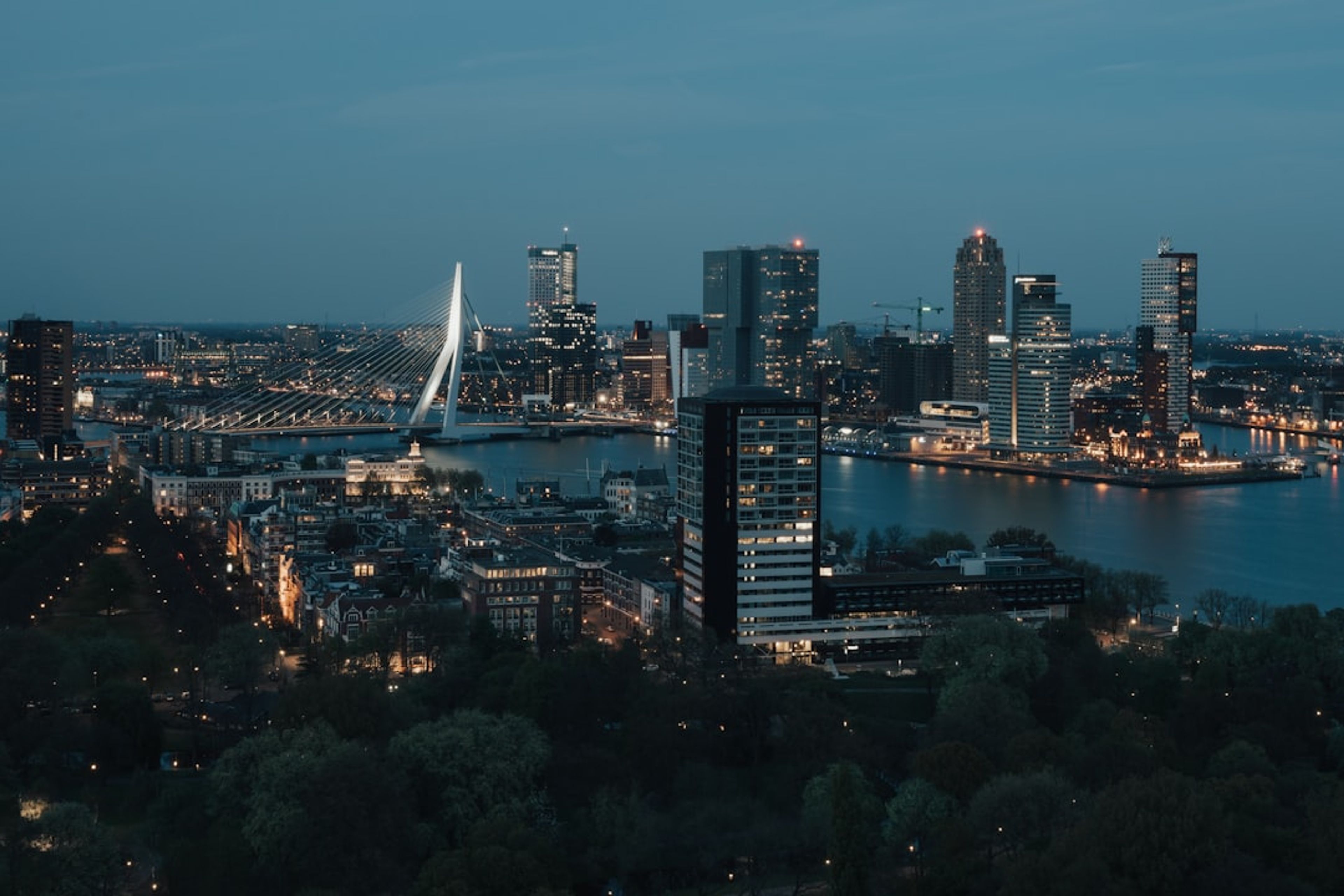
This guide ranks the 10 top places to visit in Rotterdam, the sights that genuinely earn their spot on the itinerary of a city too often overlooked in favour of Amsterdam. Almost completely rebuilt after the German bombing of May 14, 1940 flattened the medieval centre, Rotterdam today is Europe's largest port and a full-scale outdoor exhibit of modern architecture. Each entry gives you the exact address with Dutch postal code, the nearest metro or tram stop with a walking time, and a practical Pro Tip. We have grouped the list so the north-bank sights (Markthal, Cube Houses, Museumpark, Delfshaven) form natural day-one clusters, and the south-bank icons (Erasmus Bridge, Kop van Zuid, Euromast, SS Rotterdam) cluster together for day two.
Rotterdam splits sharply across the wide Nieuwe Maas river, and moving between banks is half the fun. RET metro, tram, bus and the Waterbus ferry all run on the same OV-chipkaart, and the 802-metre Erasmus Bridge (Erasmusbrug) is walkable in 15 minutes if you want the postcard view. A Rotterdam Welcome Card for 2026 covers 24, 48 or 72 hours of unlimited RET transport plus 25 percent discounts across most attractions on this list, and it usually pays for itself within a day.
1Markthal - The Horseshoe Food Market With Europe's Largest Artwork
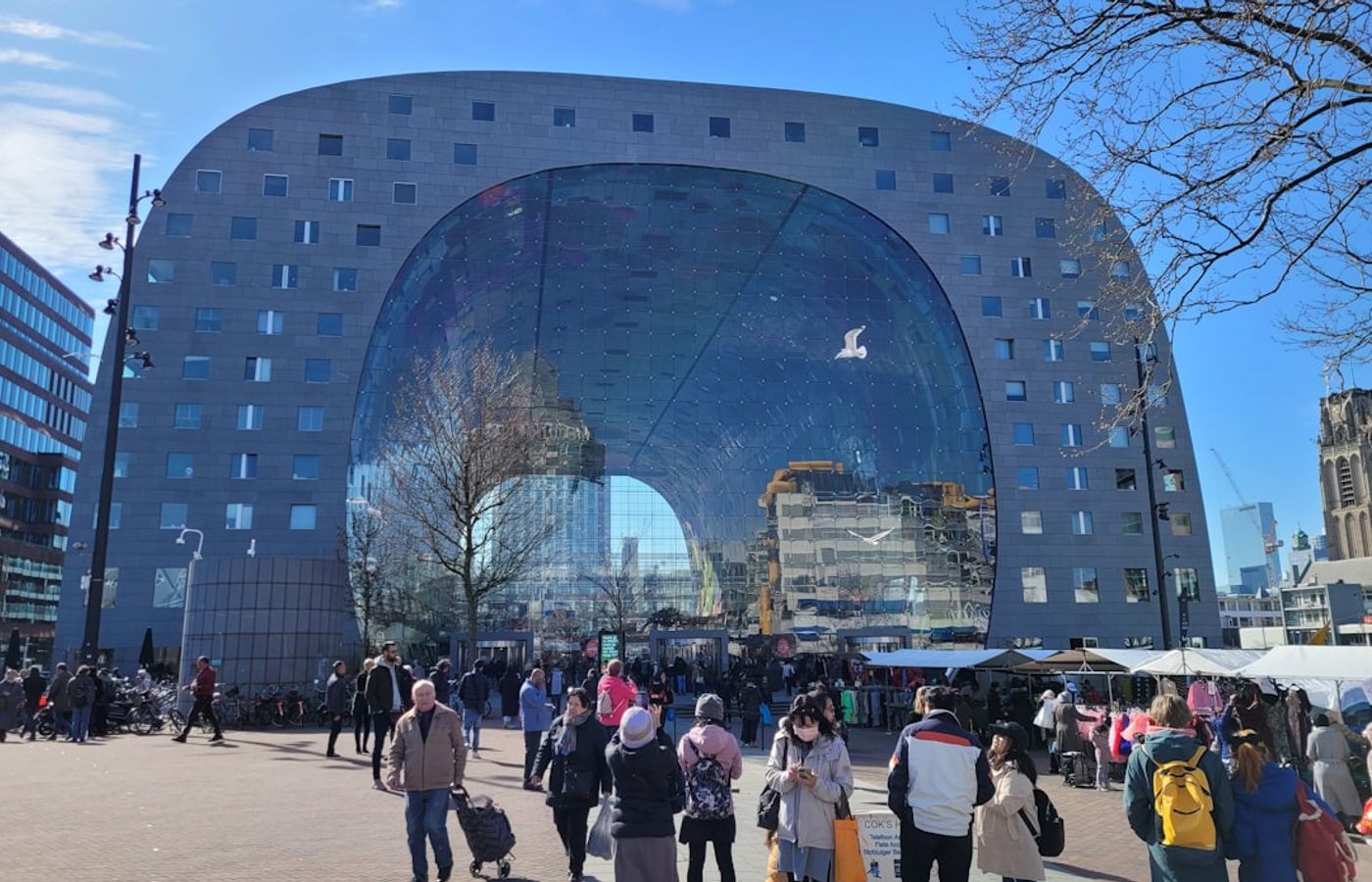

Markthal is Rotterdam's calling card - a 40-metre-high horseshoe arch of apartments wrapped around a covered food market floor. Designed by MVRDV and opened in October 2014, the building holds 228 residential apartments in the curve above, 96 market stalls at ground level, and, unfortunately for the residents, no soundproofing complaints anyone will publicly discuss. The 11,000-square-metre interior mural by Arno Coenen and Iris Roskam, titled Horn of Plenty, is the largest artwork in the Netherlands and was rendered on 4,000 aluminium panels using Pixar-grade CGI software.
The stalls run the full range from Dutch cheese, herring and stroopwafels to Turkish, Surinamese, Indonesian and Vietnamese food. Prices are fair for a tourist landmark - a proper haring sandwich is around EUR 4, and a hot stroopwafel from Original Stroopwafels is EUR 2.50. The two upper floors are apartments and off-limits, but a hidden viewing platform on the second-floor mezzanine gives an under-the-arch look at the mural. Open 10:00 to 20:00 daily (Sundays from 12:00).
Pro Tip: Come Tuesdays and Saturdays when the Binnenrotte open-air street market runs right outside - it more than doubles the food and produce on offer and locals outnumber tourists. The Jumbo supermarket in the basement is cheaper for take-away picnic snacks than the ground-floor stalls.
2Cube Houses (Kubuswoningen) - Piet Blom's Tilted Yellow Homes
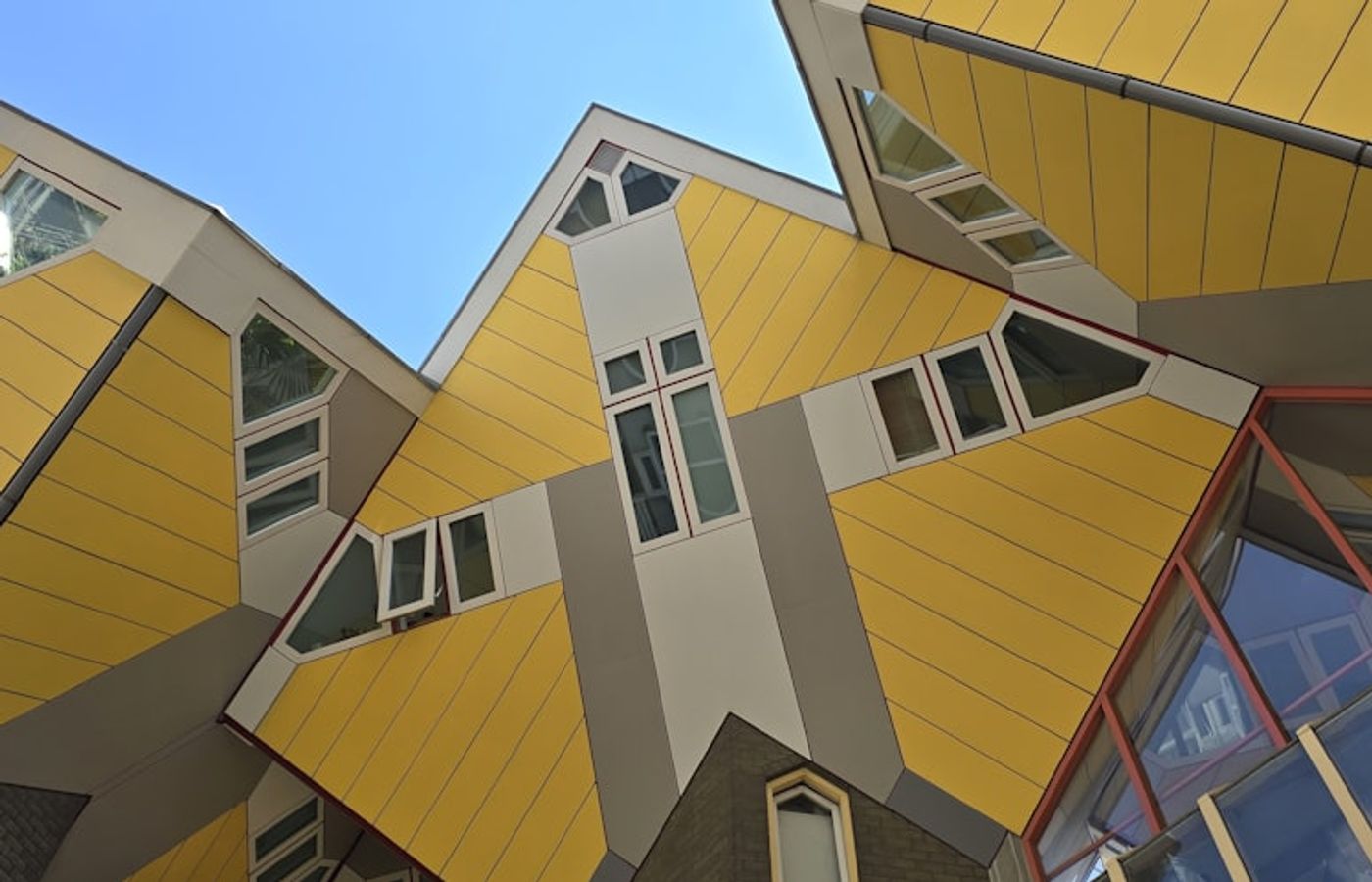

Piet Blom's Cube Houses are Rotterdam's most photographed post-war buildings - a cluster of 38 yellow cubes tilted at 45 degrees on hexagonal pylons, completed in 1984. Blom intended them as an abstracted forest, with each cube a tree and the whole ensemble a village. The residents call them Blaakse Bos (the Blaak Forest). The blocks straddle a pedestrian bridge over Blaak, turning the busy road below into part of a covered public route.
Most cubes are private homes, but the Kijk-Kubus show cube at Overblaak 70 is open to visitors for EUR 3, giving you a fully furnished look at the interior - the walls tilt away from you at 55 degrees, which is disorientating and surprisingly livable. There is also a hostel (Stayokay Rotterdam) inside several cubes if you want to actually sleep in one. Combined with the neighbouring Pencil Tower (also Blom) and Markthal, this corner is the densest concentration of Rotterdam icons in one photo.
Pro Tip: The best exterior photo angle is from the pedestrian bridge at Overblaak level, not from Blaak street below. Come at blue hour (30 minutes after sunset) when the interior lights turn the yellow cubes into lanterns against a deep blue sky.

3Erasmus Bridge (Erasmusbrug) - The Swan of Rotterdam
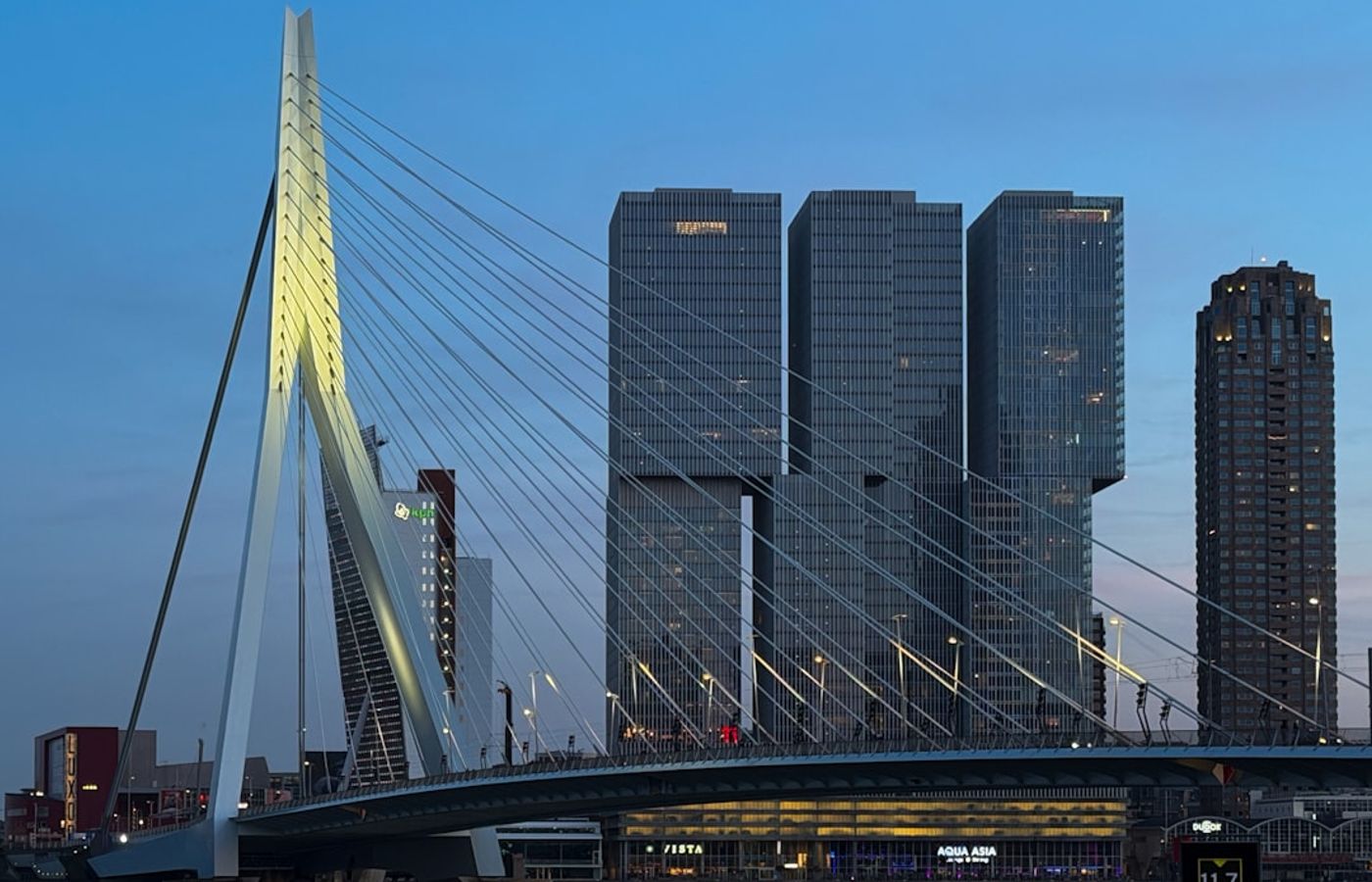

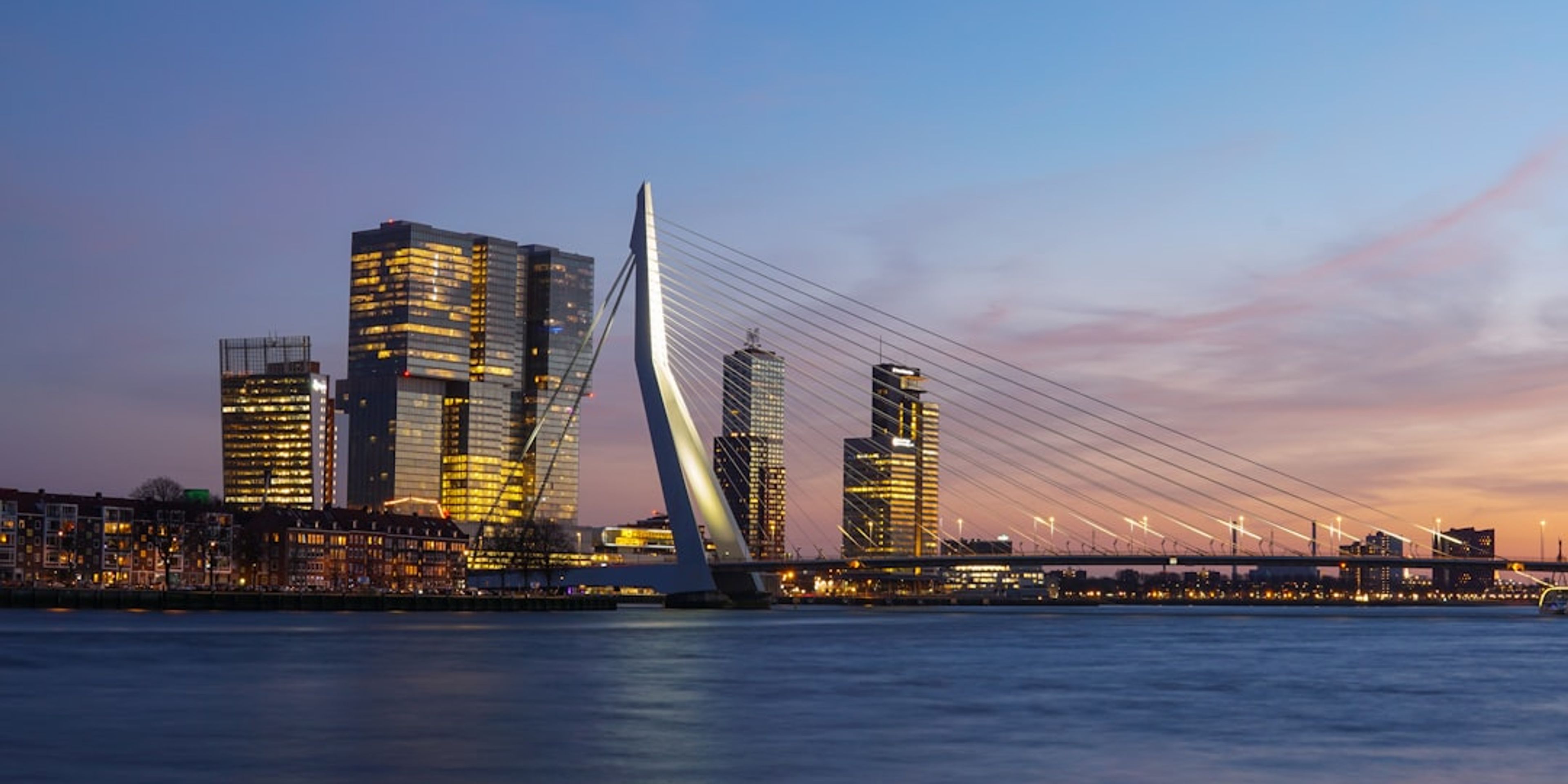
The 802-metre Erasmus Bridge is the sculptural spine of modern Rotterdam - a cable-stayed span designed by Ben van Berkel of UNStudio and opened in 1996 by Queen Beatrix. The 139-metre asymmetric white pylon leans at an angle that earned the bridge its universal nickname De Zwaan (the Swan). The southern third is a separate bascule lifting section - the largest and heaviest in Western Europe - which opens for tall ships several times per week. The whole bridge carries road traffic, trams, cyclists, and pedestrian walkways on both sides.
Crossing on foot takes 15 minutes and connects central Rotterdam to Kop van Zuid, the redeveloped former shipyards on the south bank. The northern approach passes the Boompjes waterfront and the Willemsplein plaza; the southern end lands at Wilhelminaplein next to the SS Rotterdam pier and the modern towers of the New York Hotel district. During the annual Rotterdam Marathon and Wings for Life run in June, the entire bridge closes to traffic and fills with runners.
Pro Tip: For the classic swan-profile photo, walk 200 metres east along the Boompjes to Nieuwe Leuvebrug pier - it gives you the full pylon lean in silhouette. The night lighting comes on at civil dusk and the LED colour cycles for major events.
4Euromast - Rotterdam's 185-Metre Observation Tower
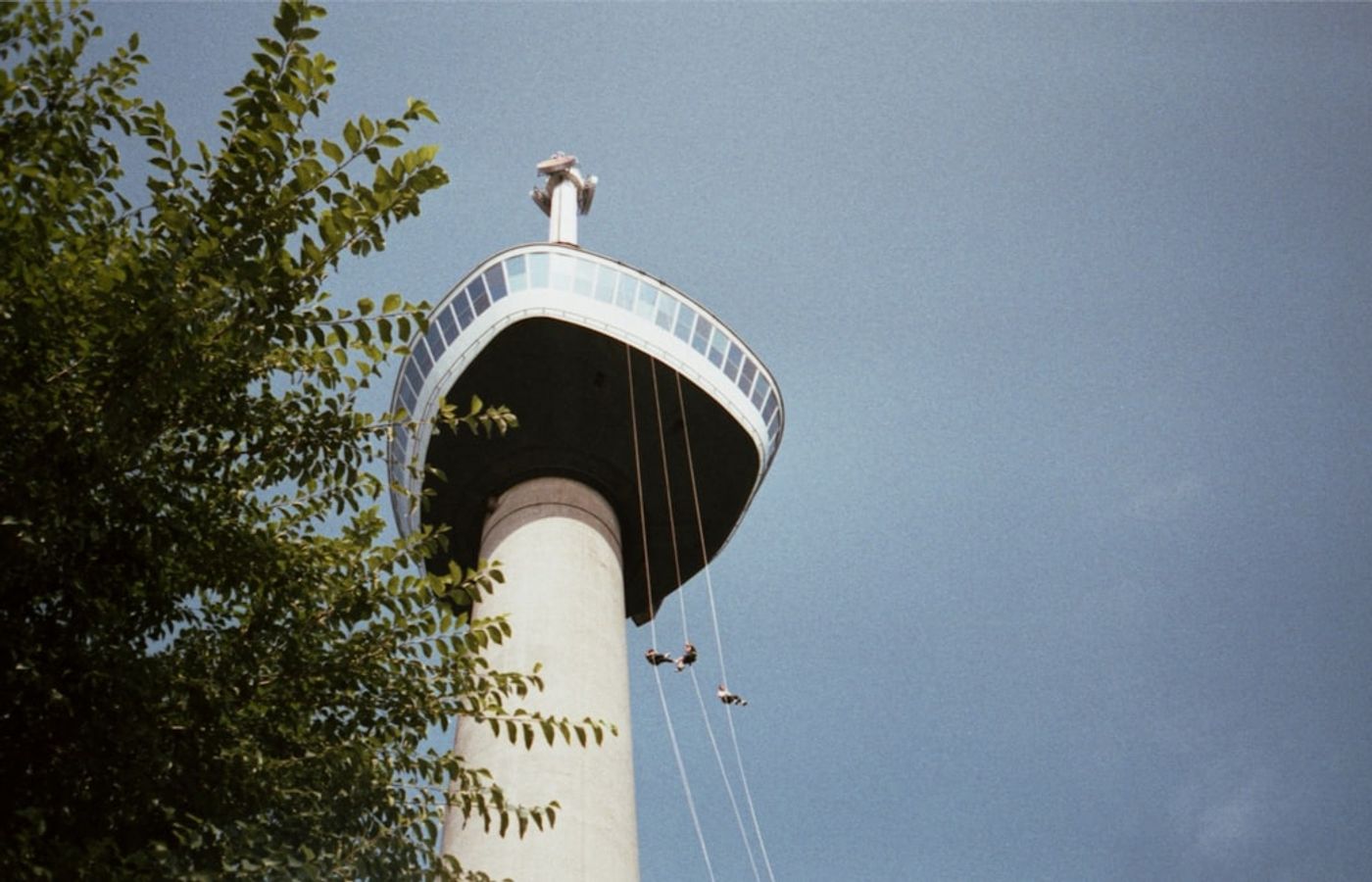
The Euromast opened in 1960 for the Floriade horticultural expo and was originally 101 metres tall. In 1970 it was extended with a rotating Space Tower, adding another 85 metres and reaching its current 185 metres, making it the tallest building in Rotterdam for decades. The main observation floor at 100 metres is reached by a straight lift; the rotating Space Cabin above it circles the mast on a slow spiral, giving a full 360-degree view of the port, the city, and on clear days the North Sea coast at Hoek van Holland.
Entry is EUR 18.50 in 2026, or EUR 25 combined with the Space Cabin, which is worth the upgrade for the slow rotation. The lower deck holds a well-regarded brasserie (Euromast Restaurant) with a fixed-price lunch menu around EUR 32. Two suites near the top are converted into hotel rooms if you want to sleep at 100 metres. For adventurers, a 100-metre abseil down the tower is offered on weekends from April to October for EUR 55.
Pro Tip: Book the last slot before sunset online. You get both the daytime port view and the city lights coming on. On clear evenings the queue at the ticket window can hit 45 minutes; the online-only pre-booked entry lane skips it.
5SS Rotterdam - The Grande Dame of Dutch Ocean Liners
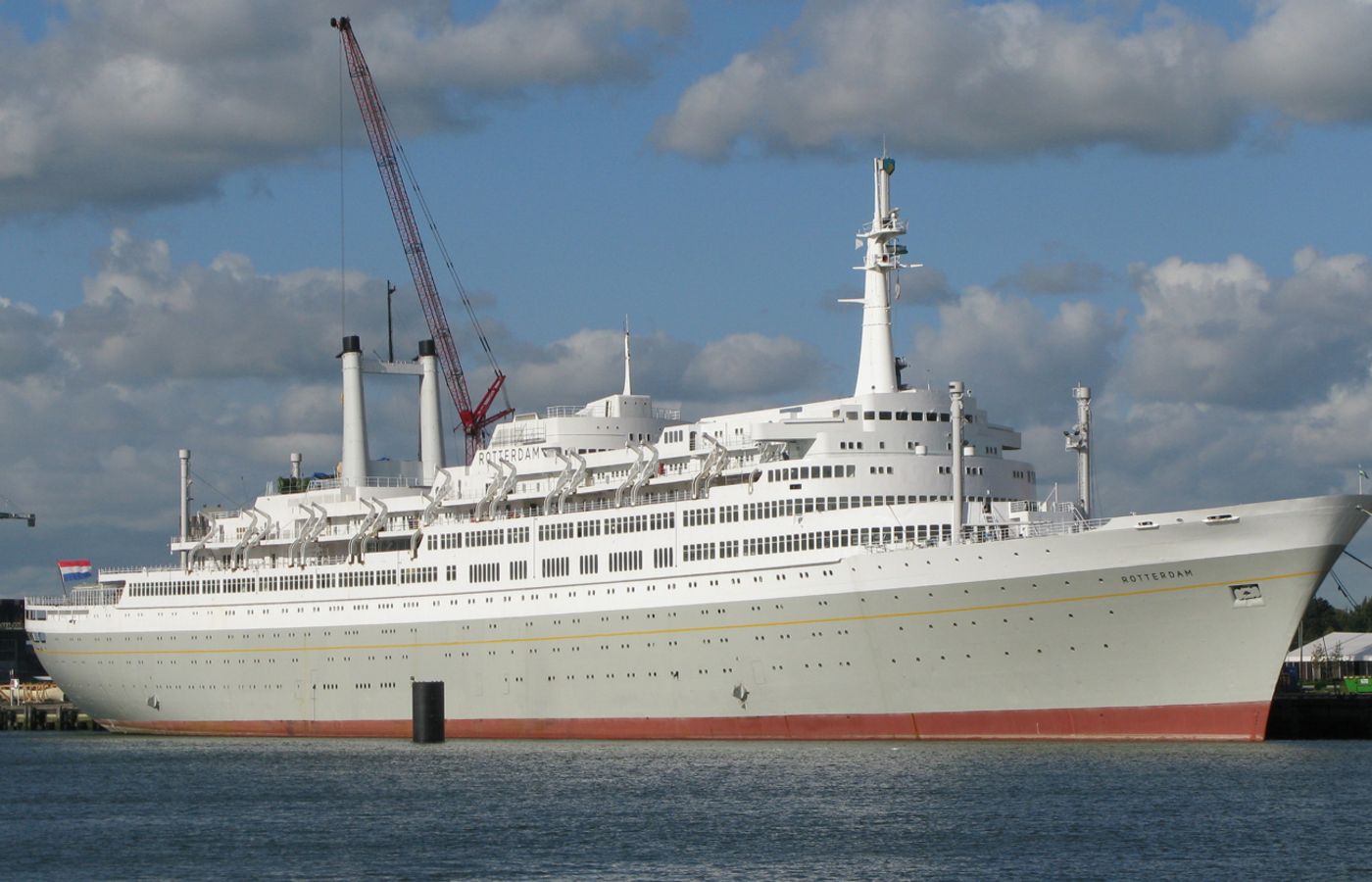
The SS Rotterdam is the largest passenger ship ever built in the Netherlands - a 228-metre transatlantic liner launched in 1958 and the flagship of the Holland America Line for two decades. Retired from cruising in 2000, she was towed home in 2008 and permanently moored at Katendrecht as a floating hotel, restaurant and museum. The interiors are extraordinarily well-preserved - mid-century Dutch modernist murals, teak decks, twin-stage theatre, brass fittings, and an art deco captain's bridge you can stand on.
Self-guided audio tours cost EUR 18.50 and cover 8 decks, a slice of the engine room, and the first-class ballroom. Guided technical tours (EUR 27, book ahead) go deeper into the propulsion turbines. The onboard Lido restaurant serves a solid daily lunch, and the Sky Bar on Deck 12 is one of Rotterdam's most atmospheric drinking spots at sunset. Getting there via the Waterbus from Erasmusbrug pier is half the fun - a 6-minute trip across the river for EUR 4.20 on your OV-chipkaart.
Pro Tip: Combine the tour with a walk around Katendrecht, once Rotterdam's Chinatown and red-light district and now a food-lover's neighbourhood. Fenix Food Factory on Veerlaan is a five-minute walk and does the best natural wine and small plates in the city.
6Depot Boijmans Van Beuningen - The World's First Public Art Depot
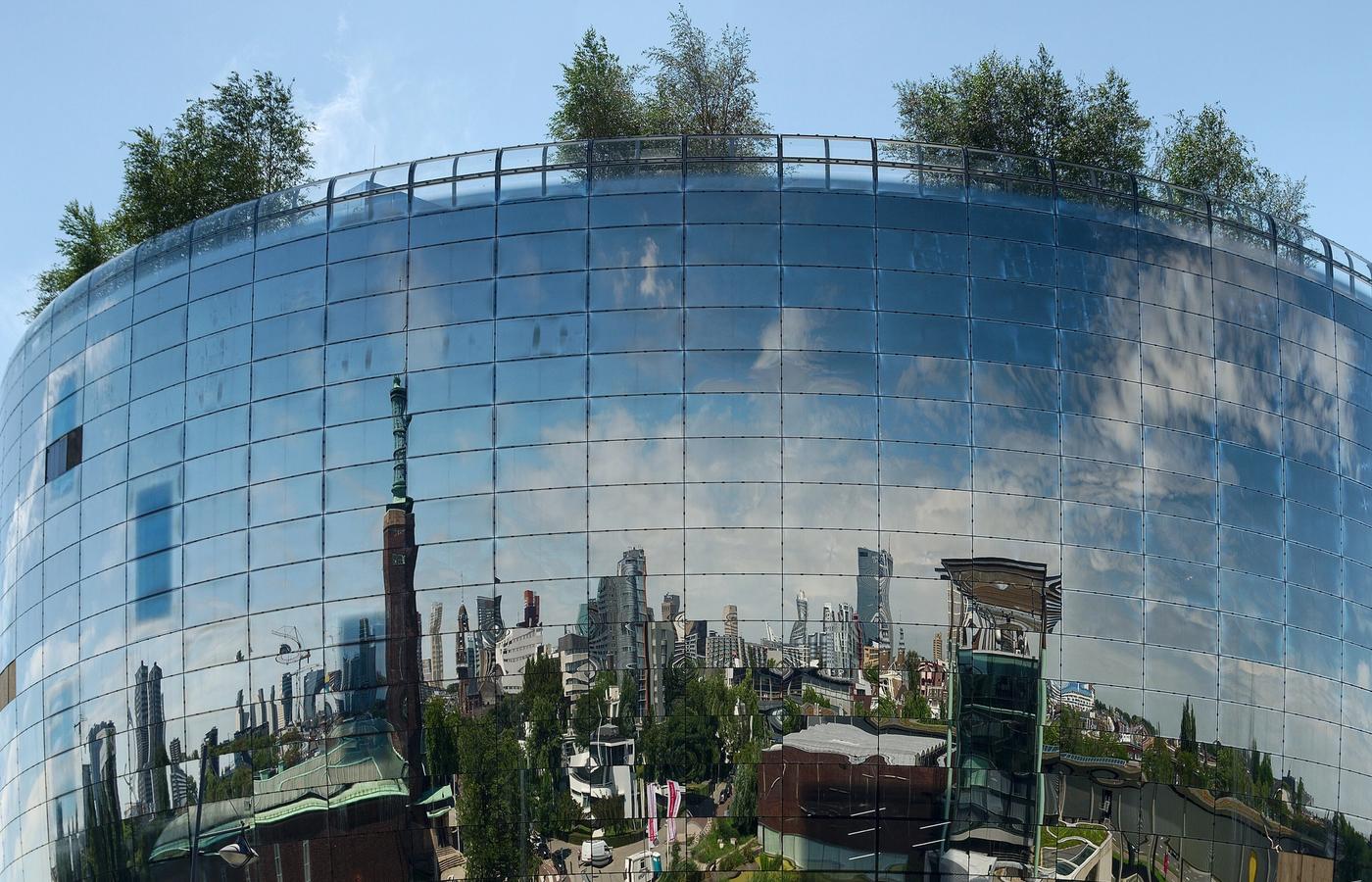
The mirrored 39.5-metre bowl of the Depot Boijmans Van Beuningen is one of the boldest museum buildings in Europe. Designed by MVRDV and opened in November 2021, it is the first publicly accessible art storage facility on the planet - 151,000 works from the Boijmans collection displayed in five climate-controlled zones you actually walk through rather than curated galleries. The exterior mirror facade (1,664 curved panels) reflects the surrounding Museumpark, and the rooftop birch forest and public restaurant are free to visit without a museum ticket.
The main Boijmans museum building next door is closed for renovation through 2028, so the Depot is currently the only way to see the collection - which includes works by Bosch, Bruegel, Rembrandt, Van Gogh, Dali and Rothko. Entry is EUR 22 for adults; a rooftop-only ticket is EUR 8.50 and gives you the birch forest and the panoramic terrace with a view over Rotterdam. Timed slots are booked online, essential on weekends. Allow 2 to 3 hours for a proper visit.
Pro Tip: The last-hour ticket (EUR 15) sold on the day gets you full access for the final 60 minutes before closing and cuts the crowd in the popular top-level restoration studios. The rooftop restaurant serves the best coffee-and-cake stop in the museum district.
7Maritime Museum - Ships, Cranes and 300 Years of Port History
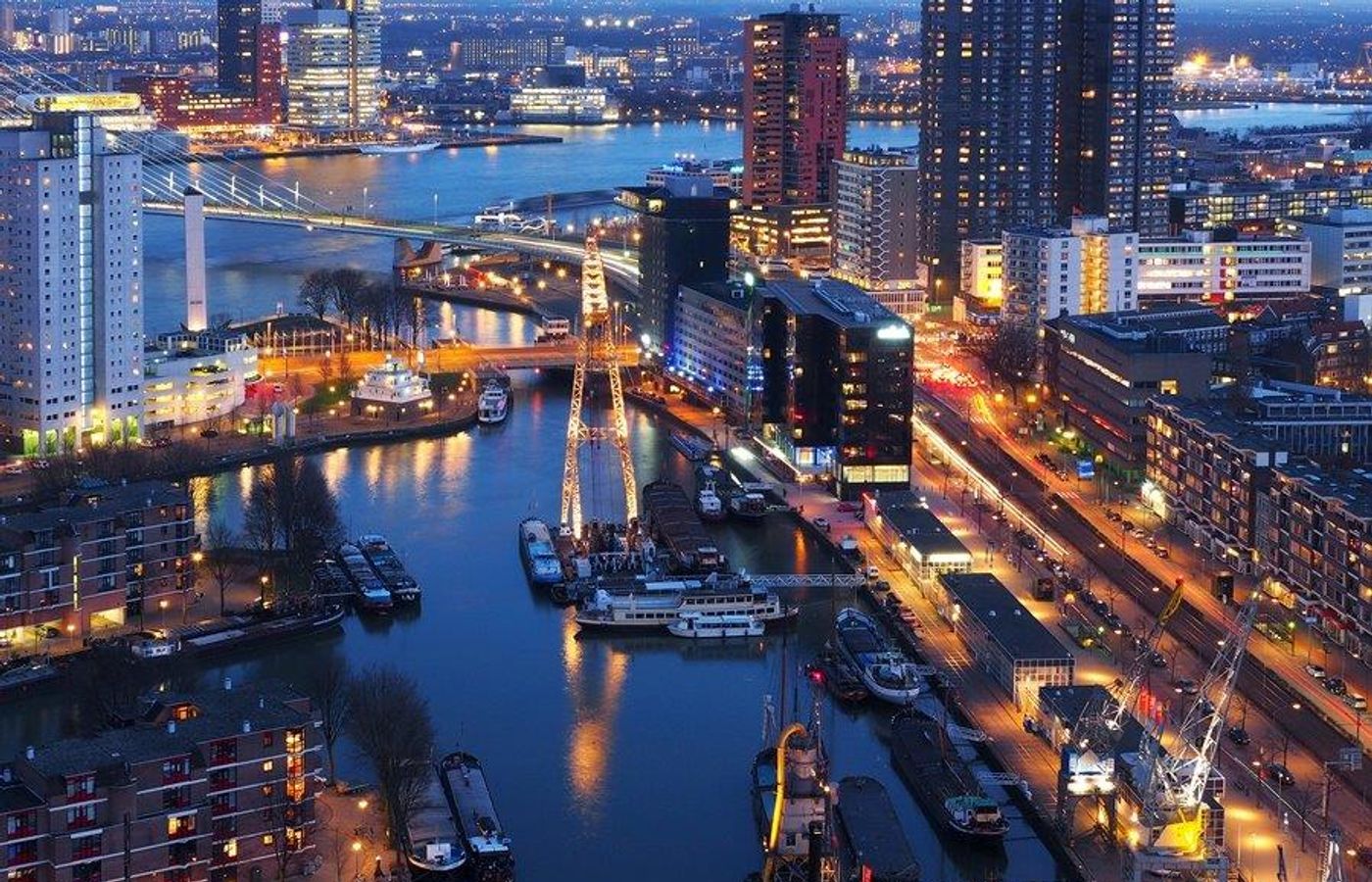
The Maritime Museum is more than an indoor gallery - it wraps around the Leuvehaven, the oldest surviving harbour basin in Rotterdam (dug in 1598), which itself functions as a floating open-air museum full of historic tugboats, dredgers, floating cranes and pilot boats you can board. Inside the modernist Wim Quist building, the main exhibitions cover the story of the Dutch East India Company (VOC), the rise of the container port, and the science of harbour engineering. The award-winning Offshore Experience simulator lets kids and adults captain a virtual drilling platform.
Entry is EUR 19 (under-4s free). The permanent exhibits are well done, but the outdoor harbour is the real draw - free to wander even without a ticket. Look for the SS Buffel, a fully restored 1868 ironclad ram gunship, and the 150-year-old floating crane De Landbouwer. The rooftop terrace of the museum cafe overlooks the whole basin. Combined with a walk along the neighbouring Wijnhaven and Oude Haven, this is where you get a feel for the pre-war port city.
Pro Tip: Skip the indoor exhibits if you're short on time and just walk the outdoor Historic Port basin - it's free and full of restored vessels with clear English information panels. Best light for photography is late afternoon when the sun hits the yellow tugboats from the west.
8Kunsthal Rotterdam - Rem Koolhaas's Cultural Provocateur
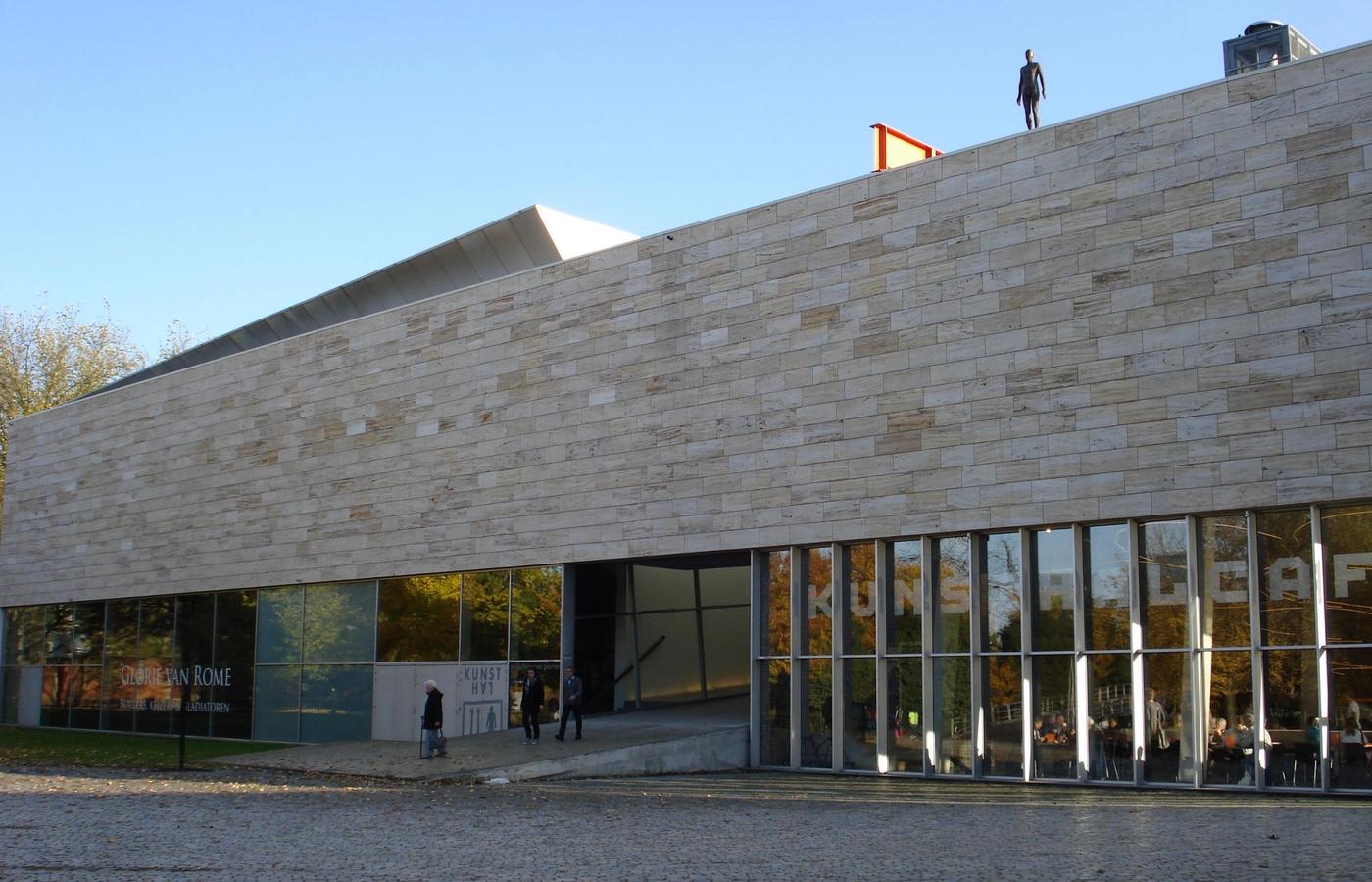
The Kunsthal is Rem Koolhaas and OMA's 1992 built manifesto - a low, cross-shaped building of raw concrete, corrugated plastic and steel that sits on a slope in the Museumpark. It has no permanent collection; instead it runs 25 to 30 shifting exhibitions per year across four halls, ranging from Old Masters and Fabergé eggs to contemporary fashion, street art and design. The 2012 heist that saw seven paintings by Picasso, Monet, Gauguin and Matisse stolen in under 3 minutes remains one of the great art crimes of the 21st century - the paintings are still missing, likely destroyed.
Entry is EUR 17.50, or free with a Rotterdam Welcome Card. The building itself is worth the visit even between exhibitions: Koolhaas mixed a car ramp with an auditorium, a colonnade with an open-air terrace, and used the sloping site to create diagonal sightlines through the halls. The Kunsthal Cafe on the lower level does an under-EUR-15 lunch. Allow around 90 minutes.
Pro Tip: Check the exhibition calendar before you go. Kunsthal is exhibition-only, so a slow week between shows can leave you with just two of the four halls open. Combine with the Depot Boijmans and the Chabot Museum in Museumpark for a full afternoon.
9Delfshaven - Rotterdam's Only Surviving Historic District
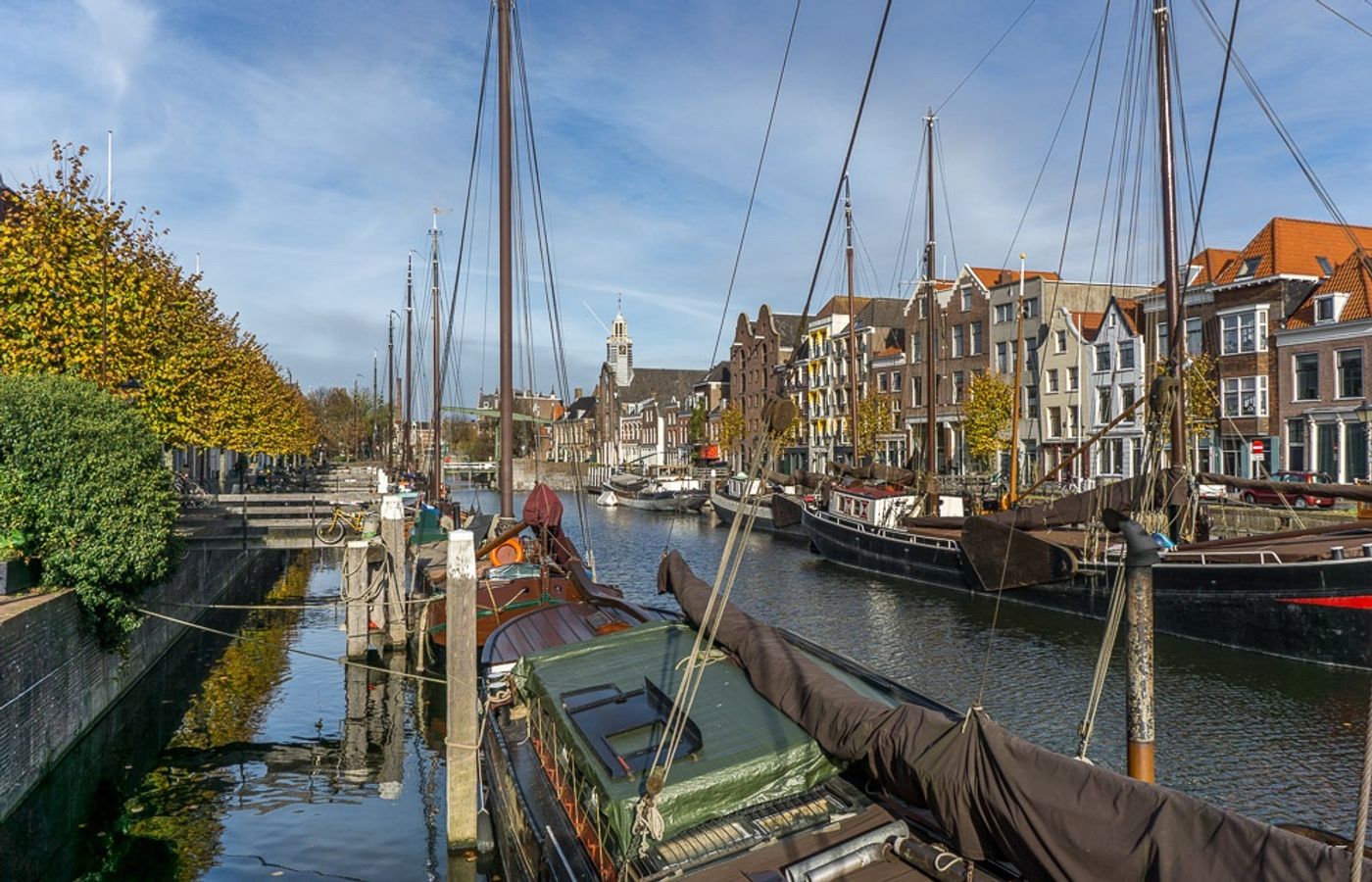
Delfshaven is the one district that survived the 1940 bombing largely intact - a small pocket of 17th-century canal houses, brick warehouses and a working windmill that shows what pre-war Rotterdam looked like. Built as the harbour of Delft in 1389 and independent of Rotterdam until 1886, its picture-postcard triple harbour (Voorhaven, Achterhaven and Aelbrechtskolk) is lined with restored merchant houses and small workshops. The De Distilleerketel windmill from 1727, still working, grinds grain for the local craft distillery.
The Pilgrimvaderskerk (Pilgrim Fathers Church) on Voorhaven 12 is where the Mayflower Pilgrims held their last European service on July 22, 1620 before sailing for America. The interior is still used for services and open to visitors on Wednesday afternoons for free. The area's small bars and jenever proefokalen (tasting rooms) make it Rotterdam's best evening walk, and it's blessedly free of the modern-architecture tour groups. Reach it in 10 minutes by metro or 25 minutes by scenic tram 8 from the centre.
Pro Tip: Stop at Stokerij De Tweekoppige Phoenix on Aelbrechtskolk 12, a 1904 jenever distillery that still makes gin and jenever on-site, with tastings from EUR 8. The Delfshaven canal walk is at its best on Sunday morning when the district is at its quietest.
10Witte de Withstraat - Rotterdam's Best Eating and Drinking Street
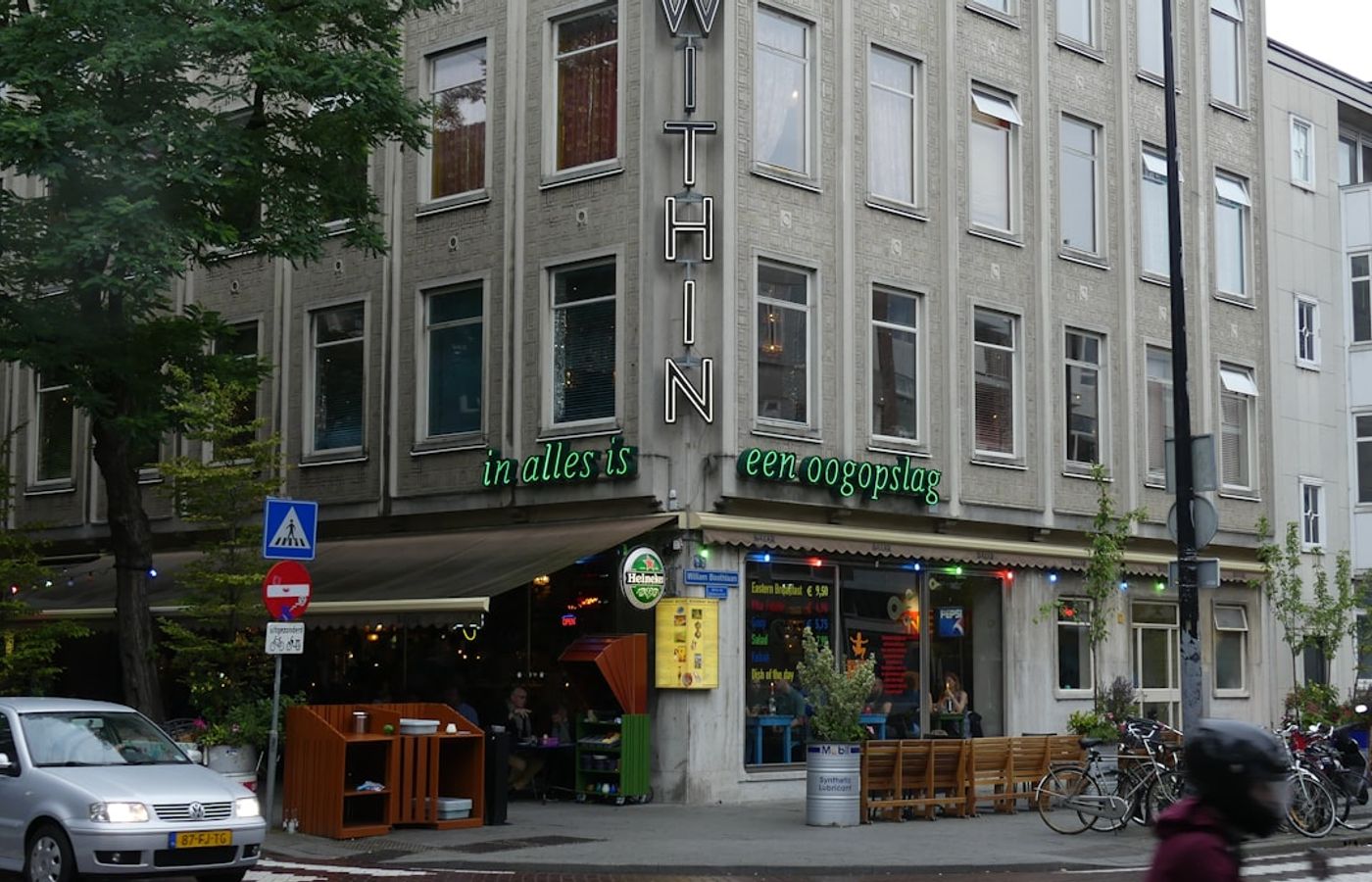
Witte de Withstraat is a 400-metre street between the Museumpark and the harbourfront that concentrates more good bars, cafes and restaurants per square metre than anywhere else in Rotterdam. It runs east-west between the Witte de With centre for contemporary art (recently renamed Kunstinstituut Melly) and the Schouwburgplein plaza. On summer weekends the whole street closes to cars and turns into an outdoor cafe row - locals treat it as their default evening venue.
Key stops: Bazar (Witte de Withstraat 16) does excellent Middle Eastern brunch in a Moroccan-tiled dining room; De Consul serves Dutch craft beer and simple bar food; Ayla is the best modern Middle-Eastern dinner in the city. For coffee, De Machinist and Man Met Bril are both worth the queue. The street has been a bohemian quarter since the 1980s, and the mix of Turkish, Dutch, Cape Verdean and Surinamese ownership gives it a texture central Amsterdam has long since priced out.
Pro Tip: Wednesday to Sunday from 17:00 onwards is when the street peaks. Book Bazar or Ayla at least 3 days ahead in summer. The side alleys off Witte de Withstraat (Schilderstraat, Nieuwe Binnenweg) hide smaller, cheaper spots that locals prefer once they've done the main strip.

CEO and co-founder
Tomas is the co-founder and director of trip1, an European company specializing in reservation services. He launched the company in 2025 with a focus on building scalable, efficient operations.
Climate averages · 1991–2020
When is the best time to visit Rotterdam?
Monthly temperatures, rainfall and sunshine — not a live forecast.
See Rotterdam weatherMore of Netherlands
10 Top Places to Visit in Rotterdam, Netherlands - FAQ
No. Rotterdam is spread across two banks of the Nieuwe Maas river, and the museums alone need half a day each. Plan for two days to cover the list at a normal pace, or three days if you want time inside the Boijmans Depot and a proper wander through Delfshaven and Witte de Withstraat.
Day one, stay on the north bank: Markthal for breakfast, Cube Houses next door, then walk to the Maritime Museum and Museumpark for the Boijmans Depot and Kunsthal. Finish at Witte de Withstraat for dinner. Day two, cross the Erasmus Bridge on foot to Kop van Zuid, tour the SS Rotterdam, and end at the Euromast at sunset. Delfshaven is a relaxing morning add-on by tram 8.
Book the Depot Boijmans Van Beuningen and the Euromast online, especially the Euromast on summer weekends when queues stretch past an hour. SS Rotterdam ship tours also benefit from an advance slot. Markthal, Cube Houses exteriors, Erasmus Bridge, Delfshaven, Witte de Withstraat and Museumpark are walk-up. The Kijk-Kubus show cube charges EUR 3 at the door with no reservations.
Roughly EUR 75 to 90 per adult in 2026 for the paid entries: Depot Boijmans (EUR 22), Euromast (EUR 18.50), Maritime Museum (EUR 19), Kunsthal (EUR 17.50), SS Rotterdam tour (EUR 18.50), and the Kijk-Kubus show cube (EUR 3). A Rotterdam Welcome Card at EUR 15 for one day adds 25 percent discounts across most attractions and free RET transit, and it pays back after the second museum.
Yes. RET runs an efficient network of metro, tram, bus and Waterbus. Metro line D serves Beurs (Markthal, Cube Houses) and Wilhelminaplein (Kop van Zuid). Tram 8 links Central Station with Delfshaven. The Waterbus from Erasmusbrug pier crosses to Katendrecht for the SS Rotterdam in six minutes. A single OV-chipkaart trip is around EUR 4.20 and works across every mode.
Yes, easily. Opened in November 2021, the mirrored bowl designed by MVRDV is the first publicly accessible art storage facility in the world, showing all 151,000 objects from the Boijmans collection. The main museum building is still closed for renovation through 2028, so the Depot is the only way to see the collection. The rooftop restaurant offers one of the best free skyline panoramas in Rotterdam.
A few sights did not make the top 10. Kinderdijk with its 19 UNESCO-listed windmills is a stunning half-day trip 20 km southeast by Waterbus. The Rotterdam Zoo (Diergaarde Blijdorp) is one of the oldest in the Netherlands and excellent for families. Fenix Migration Museum in Katendrecht opened in 2025 and offers a moving take on the port's migrant history.

Related travel guides
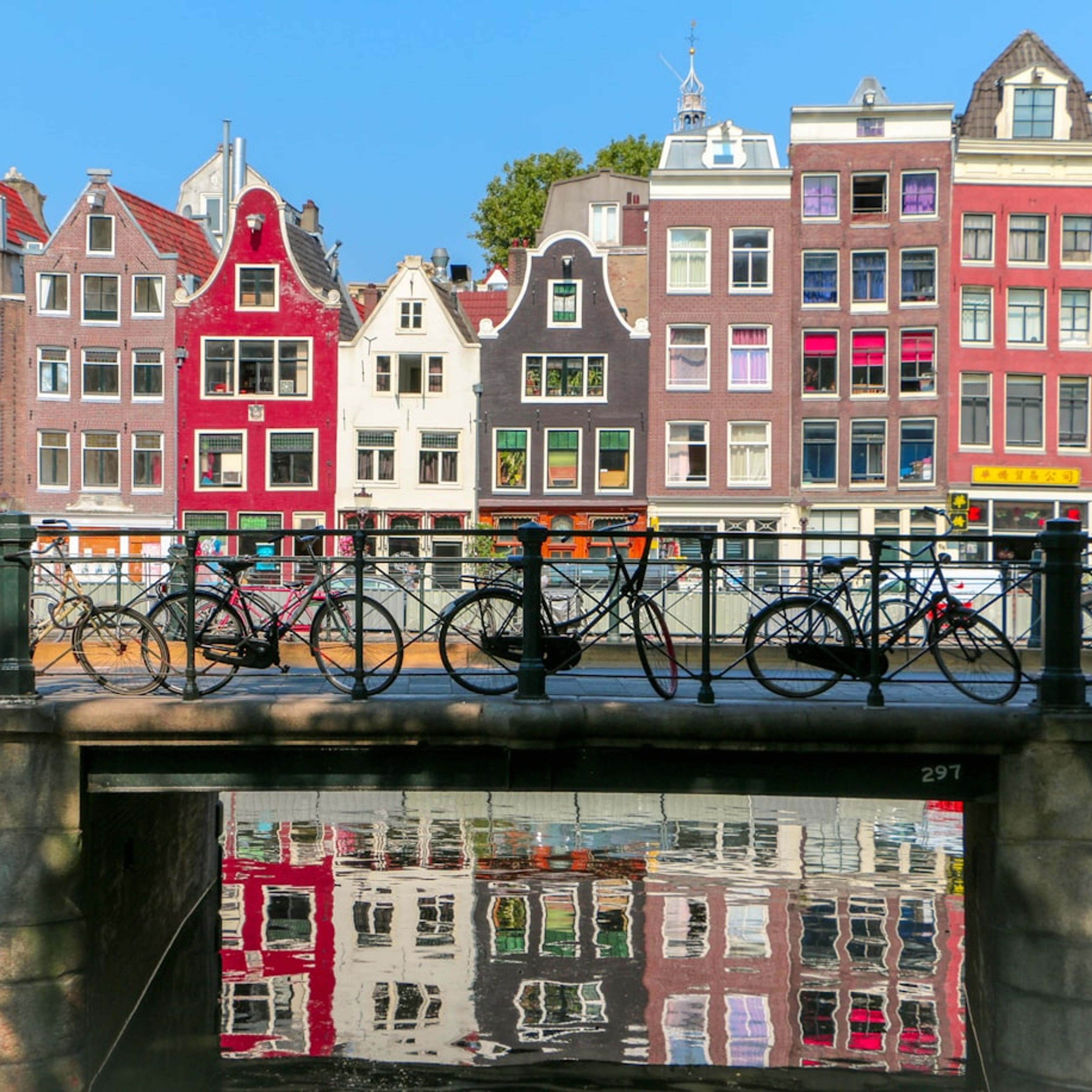
5 Best Things to Do in Amsterdam During Amsterdam Dance Event
Five things to do in Amsterdam during Amsterdam Dance Event 2026: the forest, Westergas, Felix Meritis, Muziekgebouw and Paradiso, with times and prices.
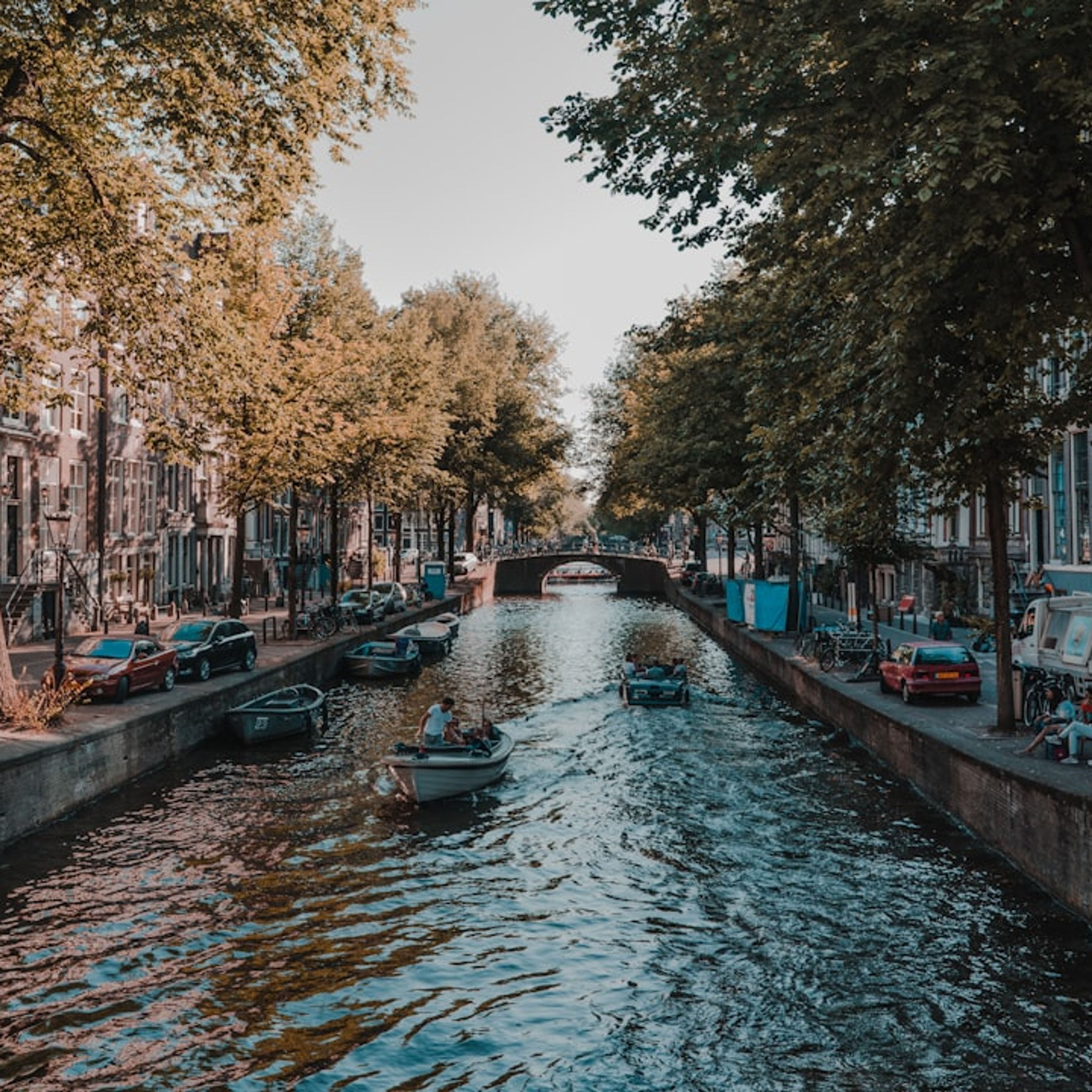
12 Top Things to Do in Amsterdam
Discover the best things to do in Amsterdam in 2026. Rijksmuseum, Van Gogh Museum, Anne Frank House, canal cruises, and 9 more with practical tips.