
Get up to €50 off your staySubscribe and get up to €50 off your next stay
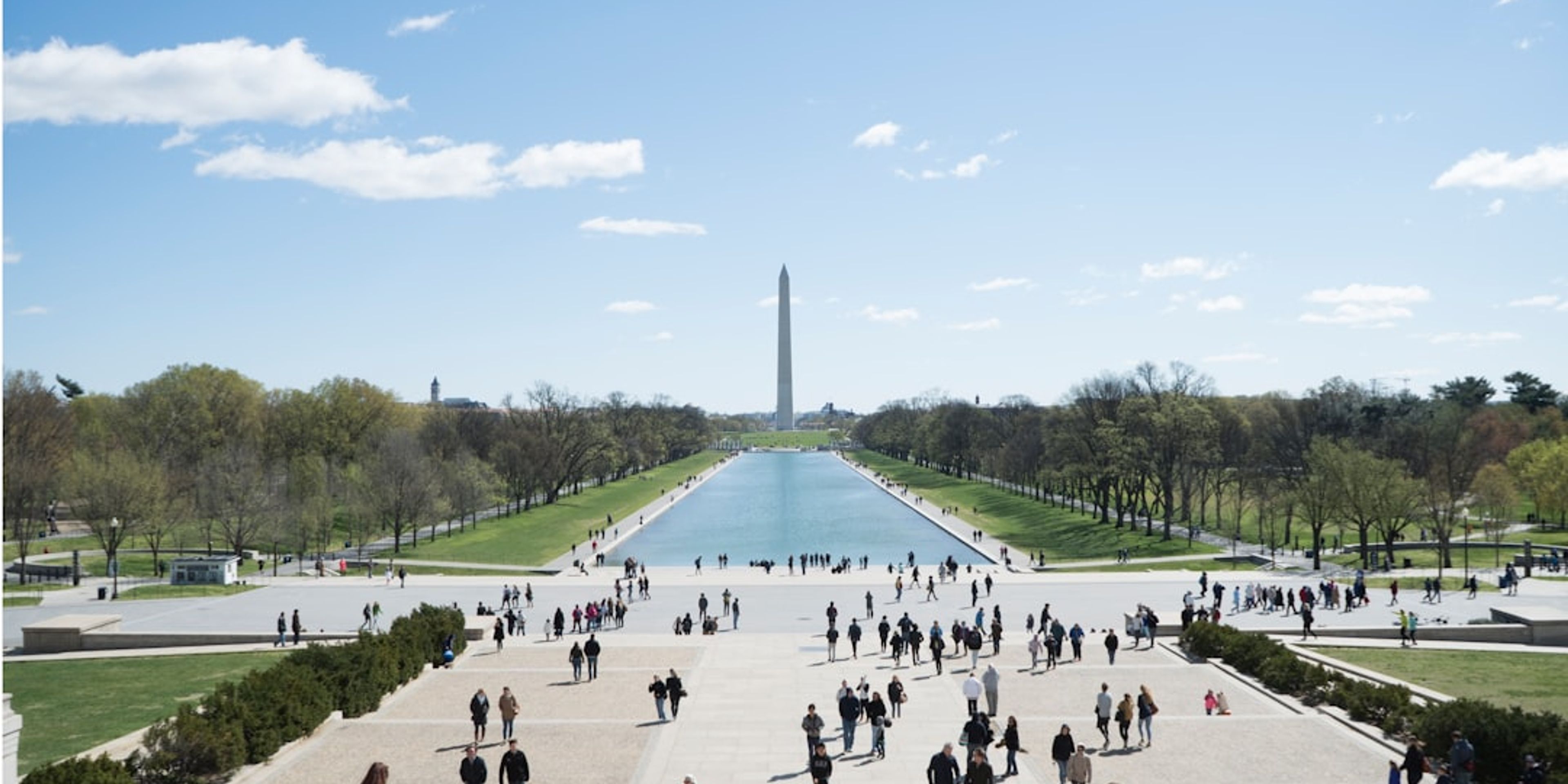
Browse and explore the best travel guides in Washington, DC.
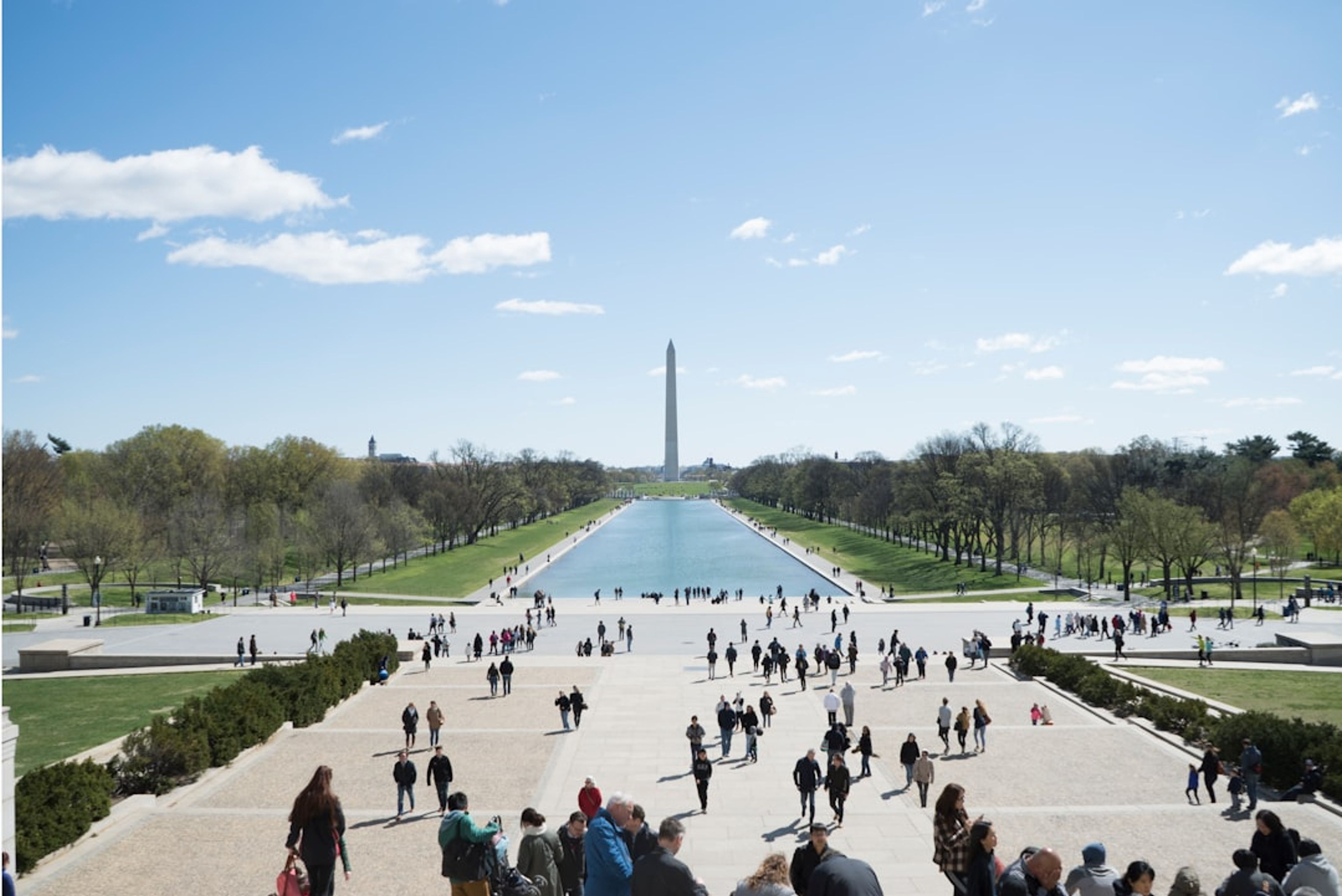
Washington, DC is the rare capital city where the headline attractions are free. The Smithsonian's museums along the National Mall, the National Gallery of Art, the monuments and memorials, and the public galleries of the Capitol all cost nothing to enter, which makes DC one of the better-value major American cities despite its reputation.
Beyond the federal core, the city is a collection of distinct and walkable neighbourhoods: the row houses and bookshops of Capitol Hill, the nightlife along the 14th Street corridor, the Ethiopian restaurants of Shaw, the cobbled hills of Georgetown, and the murals and taquerias of Adams Morgan and Columbia Heights. A height limit on buildings keeps the skyline low and the sightlines long.
Spring cherry blossom season around the Tidal Basin is the single busiest and most beautiful moment in the DC calendar, drawing well over a million visitors across a bloom window that usually lasts under two weeks.
Country
United States
Region
District of Columbia, Mid-Atlantic
Population
~680,000 (city), ~6.3 million metro
Elevation
0-125 m
Time Zone
Eastern Time (UTC-5, UTC-4 in summer)
Currency
US Dollar (USD)
Language
English
Nearest Airport
DCA (Reagan National, 8 km); IAD (Dulles, 42 km); BWI (Baltimore, 51 km)
Airport to City Centre
DCA: ~15 min on Metro Blue/Yellow Line; IAD: ~50 min on Silver Line; BWI: ~40 min by MARC or Amtrak train
Typical Cost Level
Mid-range to Expensive
Transport Pass
SmarTrip card or mobile SmarTrip, valid on Metrorail and Metrobus
Spring (Mar-May)
8-24°C, cherry blossom late March to early April
Summer (Jun-Aug)
20-32°C, humid with afternoon thunderstorms
Autumn (Sep-Nov)
8-27°C, the most reliable weather of the year
Winter (Dec-Feb)
-2 to 8°C, occasional snow
Get the latest deals, new destinations, and travel tips delivered straight to your inbox.
No spam, unsubscribe anytime.
Entry rules, stay length and passport validity by nationality.
September to November is the best all-round window, with warm days, low humidity and the year's most settled weather. Late March to early April brings the cherry blossoms around the Tidal Basin, which is spectacular but the busiest and priciest fortnight of the year, and the peak bloom date shifts annually. Summer is hot, humid and crowded with school groups. Winter is quiet and cheap, and the museums are all indoors anyway.
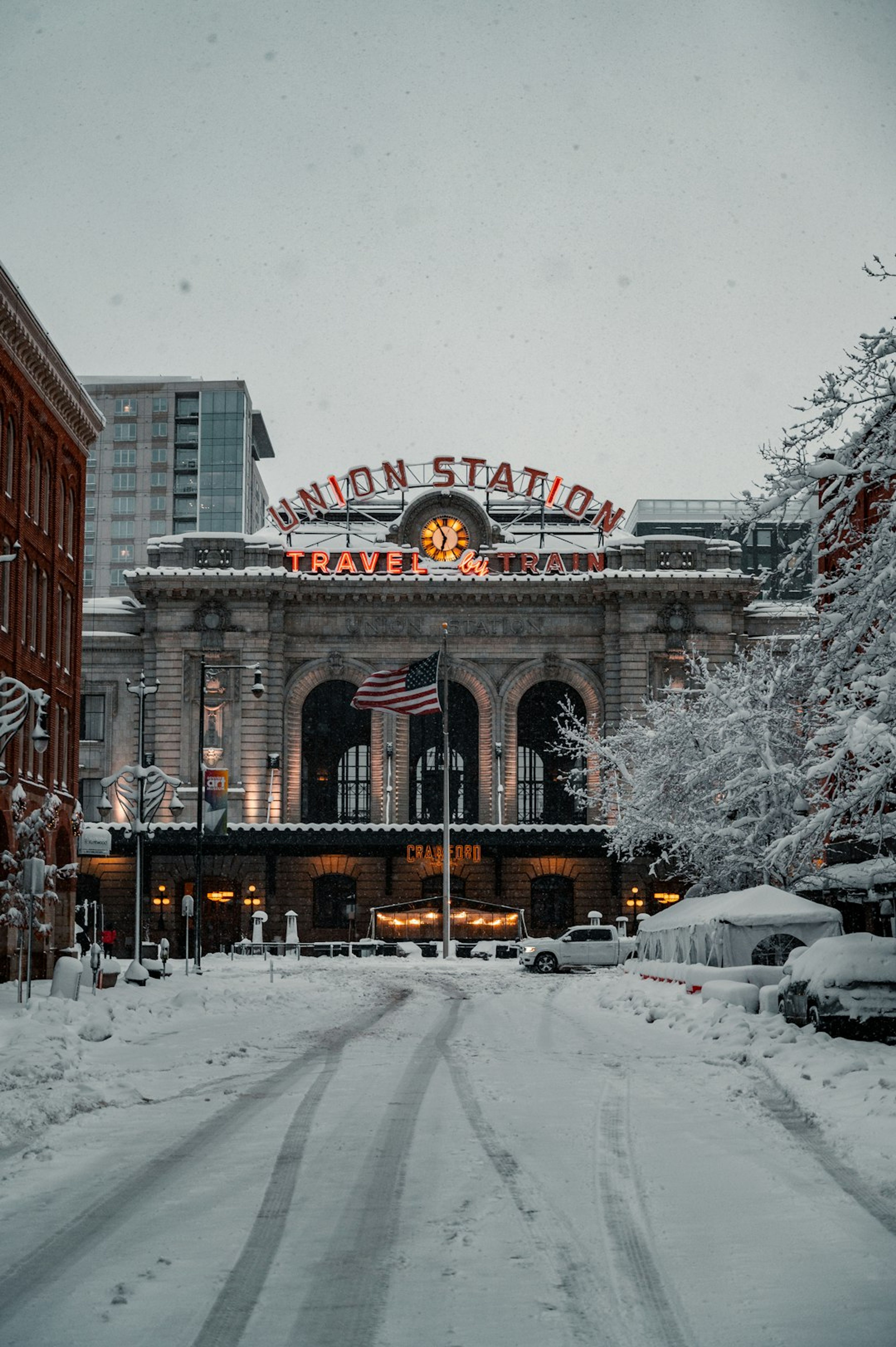
Reagan National (DCA) is the easiest, with its own Metro station on the Blue and Yellow lines putting you downtown in about 15 minutes. Dulles (IAD) is connected by the Metro Silver Line, taking roughly 50 minutes to the centre, or 45 minutes by taxi outside rush hour. Baltimore/Washington (BWI) is furthest out, best reached by MARC or Amtrak train to Union Station in about 40 minutes. If you have the choice when booking flights, DCA is worth paying a little more for.
Walking plus the Metro covers almost everything, and you do not need a car. Buy a SmarTrip card or add one to your phone, and use it on both Metrorail and Metrobus. The National Mall is deceptively large at roughly 3 km end to end, so plan Metro hops between the Capitol, the Smithsonian cluster and the Lincoln Memorial rather than walking it all. Capital Bikeshare is good for the flatter riverside stretches. Driving is actively unhelpful here: parking is scarce and expensive, and the traffic circles are notorious.
Three days is the practical minimum and four to five is better. One day covers the Mall monuments and one or two Smithsonian museums, a second handles the Capitol, Library of Congress and Supreme Court, and a third leaves room for the National Museum of African American History and Culture, which needs several hours on its own. Add a fourth day for Georgetown, Arlington National Cemetery or a trip out to Mount Vernon. Because entry is free, there is no pressure to cram museums into a single day.
The main tourist areas are generally safe and heavily policed. The National Mall, Capitol Hill, Georgetown, Penn Quarter, Dupont Circle and the museum districts see a constant security presence from Park Police, Capitol Police and Secret Service. Standard city precautions apply: keep valuables out of sight, be alert on the Metro late at night, and use rideshare rather than walking long distances after dark in unfamiliar neighbourhoods. The Mall itself is poorly lit and empty after the monuments close, so take transport back rather than crossing it on foot at night.
Yes, all Smithsonian museums are free to enter with no ticket charge, as are the National Gallery of Art and the National Zoo. A few of the most popular sites use free timed-entry passes released online in advance to manage crowds, most notably the National Museum of African American History and Culture, and these can go quickly in peak season. Special exhibitions, IMAX screenings and the separately run International Spy Museum and Newseum-style attractions do charge. Booking free passes a few weeks ahead is worth the small effort.
Penn Quarter and Downtown are the most convenient bases, within walking distance of the Mall and well served by Metro. Capitol Hill offers row-house charm and Eastern Market. Georgetown has the cobbled streets, waterfront and shopping but no Metro station of its own. Dupont Circle and Logan Circle are the centre of the restaurant and bar scene, with the 14th Street corridor running between them. Shaw and U Street bring live music and DC's celebrated Ethiopian restaurants, while Adams Morgan and Columbia Heights are livelier and better value.
On trip1, you can book hotels across Washington, DC and pay with over 120 cryptocurrencies including Bitcoin, Ethereum, and USDC. trip1 covers 3 million+ hotels in 190+ countries, making it easy to find and book accommodation with crypto.