Guides · Ghent
10 Best Things to Do in Ghent

CEO and co-founder
This guide ranks the 10 best things to do in Ghent, the Flemish city that in the Middle Ages was one of the largest in Europe (bigger than Paris in 1400) and today keeps its entire medieval spine intact along three converging rivers. Ghent gives you Bruges-level canals and gables without Bruges-level crowds, and unlike its more famous neighbour, it functions as a real university city with 60,000 students underneath the belfries. Each entry gives you the exact address with Belgian postal code, the nearest De Lijn tram or bus stop with a walking time, and a practical Pro Tip you would only get from someone who has already made the wrong turn.
The historic centre of Ghent is a compact car-free triangle bounded by the Leie and Scheldt rivers, walkable end to end in 15 minutes. We have ordered this list so the three-tower loop (St Bavo's Cathedral, Belfry, St Michael's Bridge) forms a natural morning walk, Gravensteen Castle and Patershol slot into the afternoon, and the STAM and MSK museums cluster together for a second day. A 48-hour CityCard Gent at EUR 38 in 2026 covers every paid entry on this list plus all De Lijn trams and one canal boat trip, and it more than pays for itself before lunch on day one.
1St Bavo's Cathedral and the Ghent Altarpiece - Van Eyck's Masterpiece


The main reason to travel to Ghent is inside St Bavo's Cathedral: The Adoration of the Mystic Lamb, painted by the brothers Hubert and Jan van Eyck and completed in 1432. Widely considered the most influential painting in Western art history and the first major oil painting, the 12-panel polyptych was the target of 13 crimes over 6 centuries - stolen by Napoleon, split up by Prussians, hidden from the Nazis by Ghent citizens in a mine in Austria, and had one panel stolen in 1934 that has never been found. The 25-year restoration finished in 2024 revealed the painted figures' original faces after 500 years of overpainting.
The Altarpiece has been housed since 2020 in a purpose-built climate-controlled visitor centre inside the cathedral's Sacrament chapel. Entry now uses a timed AR-guided experience (EUR 16 including headset), launched in 2025, that puts you inside the missing lower-left panel via augmented reality. Book online 3 to 5 days ahead in peak summer. The cathedral itself, a 14th to 16th-century Gothic pile with a Romanesque crypt, is free to enter. Rubens's Conversion of St Bavo (1624) hangs in the north chapel.
Pro Tip: Book the first 09:30 AR slot on a weekday. The visitor centre holds only 8 people at a time and by 11:00 the noise from later groups outside starts to leak in. Photography without flash is now allowed in the Altarpiece chapel, but the AR experience is why you came.
2Gravensteen - The 12th-Century Castle in the Middle of the City
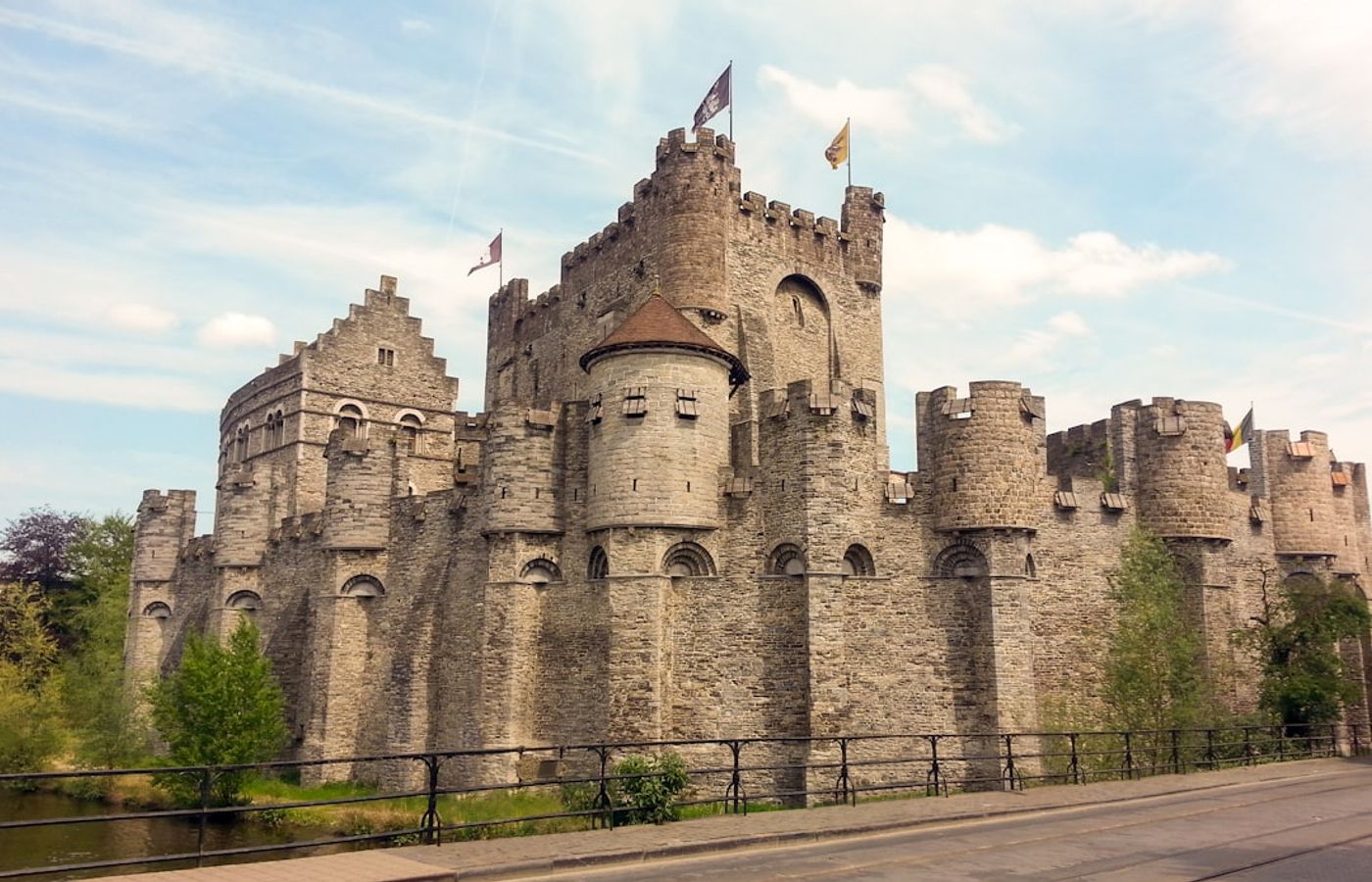

The Gravensteen (Castle of the Counts) is the only surviving medieval fortress in Flanders that still sits in the middle of a working city rather than out in the countryside. Built by Count Philip of Alsace in 1180 on the model of Crusader castles he had seen in the Levant, it has been used as a court, prison, weapons factory and cotton mill over 800 years, and was rescued from demolition in 1885 by a committee of Ghent citizens who saw the value of keeping a moated donjon in the middle of town.
Entry is EUR 13 and includes an audio guide voiced by the Belgian comedian Wouter Deprez that has become internet-famous - part serious history, part deliberately deadpan tour, and worth the ticket for the audio alone. The route takes you through the great hall, the count's private chapel, the medieval torture museum in the gatehouse (a working guillotine among the exhibits), and finally onto the crenellated roof for a full 360-degree view of Ghent's three medieval towers. Allow 90 minutes to 2 hours.
Pro Tip: Go weekday mornings before 11:00. On weekend afternoons the roof terrace becomes standing-room-only for the view. The narrow spiral stone staircase to the roof has no elevator and is unforgiving on knees; sensible shoes essential.

3Belfry of Ghent - The Middle of the Three Medieval Towers
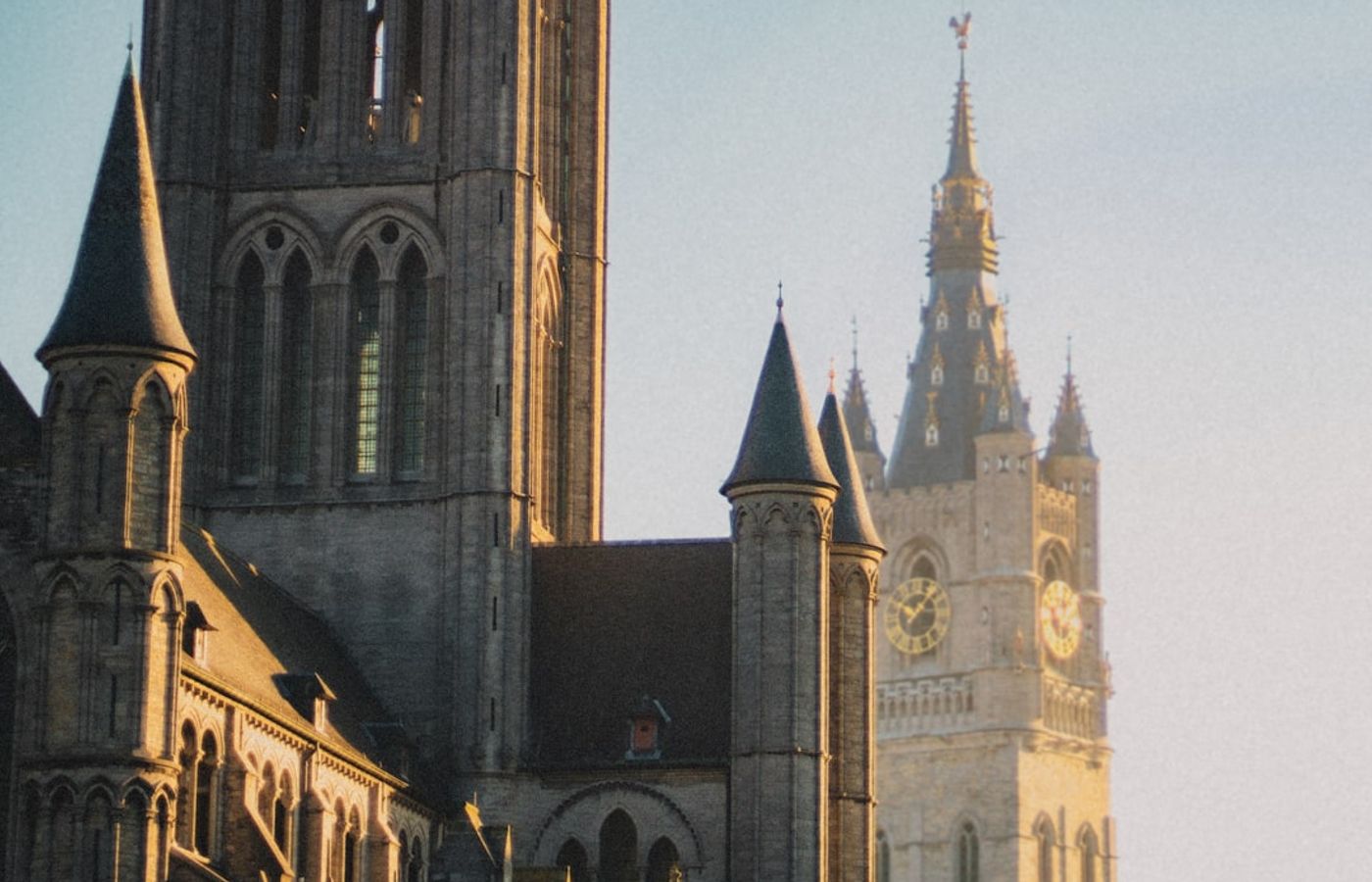

The 91-metre Belfry of Ghent, built between 1313 and 1380, is the tallest of the city's three medieval towers and a UNESCO World Heritage Site as part of the Belfries of Belgium and France listing. Originally a symbol of civic power (as opposed to the church's Cathedral or the count's castle), the belfry housed the city bells and the town charters in an iron chest called the Secret. The gilded copper dragon that has crowned the spire since 1377 was blown down four times in five centuries, and the current one dates from a full restoration completed in 1985.
Entry is EUR 11 and includes a lift most of the way up followed by two short flights of stairs to reach the viewing platform at 66 metres. From the top the three-tower alignment - St Nicholas's, the Belfry, St Bavo's - is visible right below you, and on clear days you can see the Ghent University Book Tower designed by Henry van de Velde. The 54-bell carillon still plays every 15 minutes; if you time your visit for the Sunday noon carillon concert (April to September) you can watch the beiaardier at work.
Pro Tip: Go 30 minutes before sunset in summer - the light turns the sandstone facades of Graslei orange and you get the classic three-tower silhouette to the west. Cover your ears when the quarter-hour chimes ring - inside the tower they are physically painful at close range.
4Graslei and Korenlei - The Twin Medieval Quays

Graslei (Grass Quay) and Korenlei (Corn Quay) are the two medieval quays that face each other across a short bend of the Leie river, and together they form the most-photographed 200 metres in Belgium. Ghent grew rich from grain trade in the 11th and 12th centuries and used these two banks as its main port. The result is a solid wall of guildhouses on the Graslei side - the Free Boatmen's House (1531), the Grain Weighers' House (1698), the Coopers' Guild (1531), the Corn Measurers (1698) - and slightly humbler brick warehouses across on Korenlei.
Both quays are pedestrianised. Locals treat the stone steps of Graslei as the city's outdoor living room in summer - bring a takeaway from Julie's House on Kraanlei or a beer from the Waterhuis aan de Bierkant and sit for an hour watching canal boats slide underneath St Michael's Bridge. The 40-minute canal boat tours depart from the Graslei jetty every 20 minutes in season (EUR 10) and give the best water-level view of the guildhouses.
Pro Tip: Cross to the Korenlei side for the classic postcard photo of Graslei's guildhouses - the angle is only right from the opposite bank. Cafe De Foyer at Sint-Baafsplein has a rooftop terrace overlooking both quays that most visitors never find.
5St Michael's Bridge (Sint-Michielsbrug) - The Best View in Ghent

St Michael's Bridge is the single best free viewpoint in the historic city. Standing at the highest point of the arched sandstone bridge (built 1905-1909, replacing an earlier drawbridge), you get a rare open sightline to all three medieval towers - St Nicholas's Church to the east, the Belfry behind it, and St Bavo's Cathedral in the far distance - lined up like beads on a string. Ghent city planners in the 19th century deliberately widened the surrounding streets to preserve this view, one of the earliest documented cases of view protection in Europe.
Look downriver (north) from the bridge for the Graslei guildhouses on the right bank and the neo-Gothic pinnacles of the former post office (now a shopping arcade, 1910) to the left. The bronze statue of St Michael the archangel on the bridge itself dates from 1912 and was recast in 2001 after the original wore through. Free at all hours, but late afternoon light in autumn is when photographers set up shop. Come after dark when the towers and guildhouses are illuminated in warm yellow.
Pro Tip: The absolute best photo spot is not the middle of the bridge but the corner where the bridge meets Sint-Michielshelling on the west bank. Come 15 minutes after sunset (blue hour) in autumn or winter for the strongest tower silhouettes.
6Patershol - The Medieval Warren With the Best Restaurants
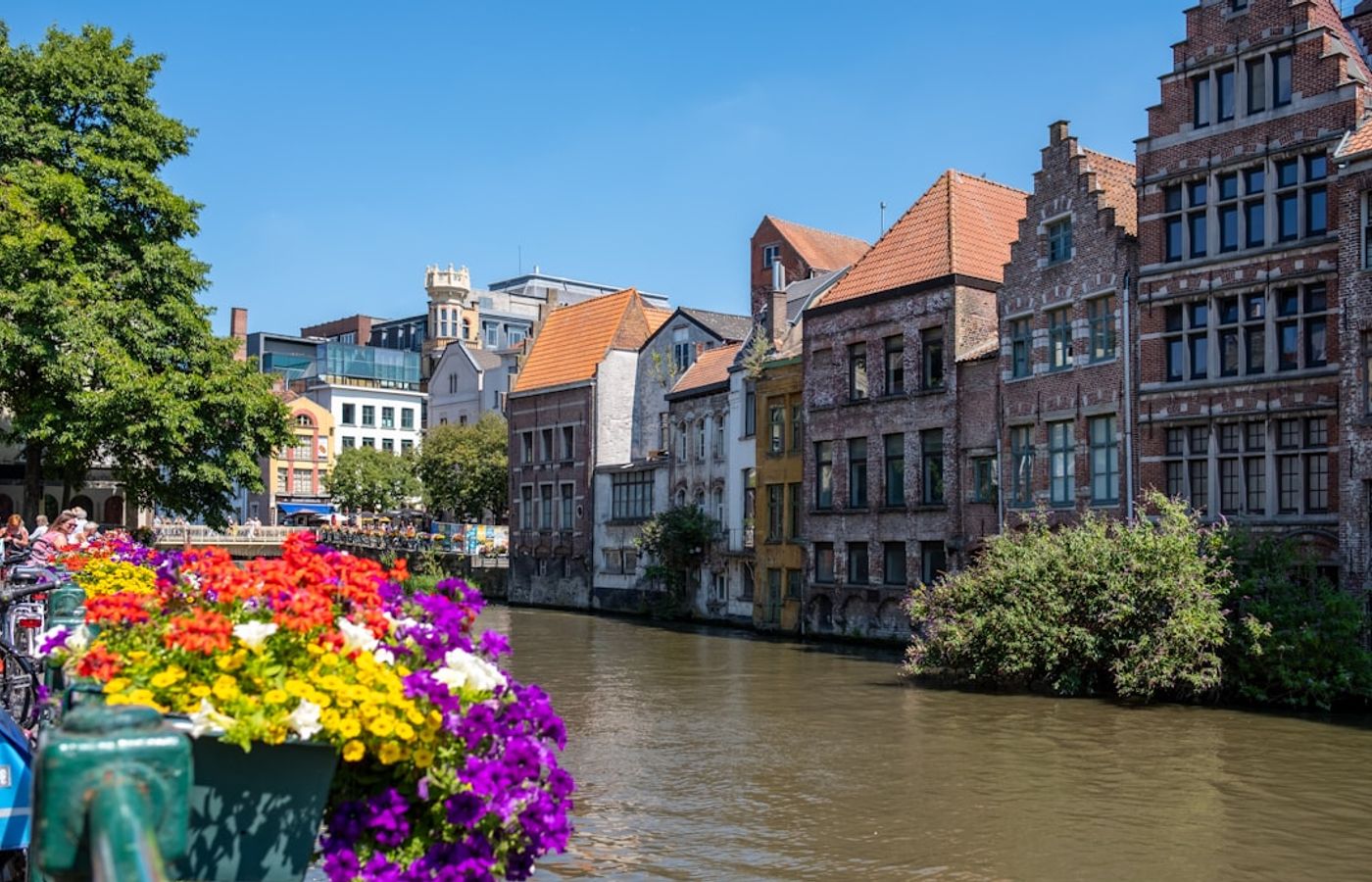
Patershol is the tight labyrinth of 16th- and 17th-century houses immediately north of Gravensteen Castle - eight narrow cobbled streets, three named after the Carmelite friars who lived here (the paters, hence Patershol, the fathers' hole), a small central square, and about 40 restaurants packed into a district you can walk across in 4 minutes. Once a working-class slum on the edge of demolition in the 1970s, it was saved by a resident-led restoration and now holds most of Ghent's Michelin-recommended kitchens without ever feeling touristy.
Highlights: Publiek (Sint-Widostraat 1), a modern Belgian tasting menu that regularly holds a Bib Gourmand; De Vitrine (Brabantdam 134), butcher's-shop-plus-restaurant; and 't Klaverblad (Corduwaniersstraat 61), the best-value classic Flemish stew and vol-au-vent in the city. The Huis van Alijn folklore museum on Kraanlei 65 (EUR 8) shows domestic Flemish life across three centuries in a set of restored almshouses and is quietly one of the best small museums in Belgium.
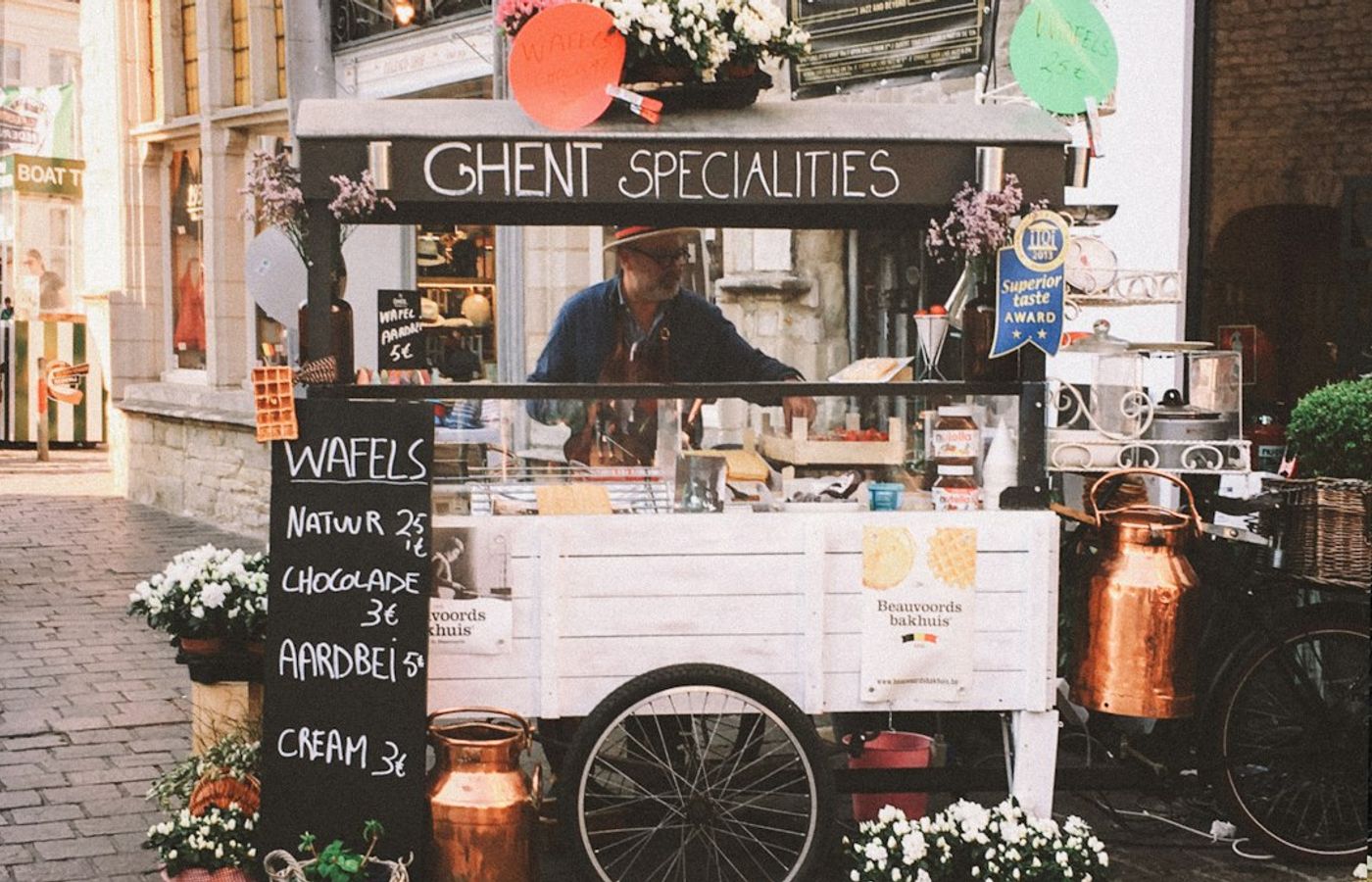
Pro Tip: Book Patershol dinner at least a week ahead in summer or on any Friday and Saturday; kitchens are small and locals have the good tables. Julie's House on Kraanlei 13 does the best breakfast waffles in the district for EUR 6, no booking needed.
7Werregarenstraat - The Street Art Alley of Ghent

Werregarenstraat (also known as Graffitistraatje) is a legal graffiti alley 130 metres long, wedged between Onderstraat and Hoogpoort in the middle of the historic centre. In 1995 the city struck an unusual deal with local street artists: anyone can paint over anything else at any time, no permits, no consequences. The result is a wall that changes completely every few weeks. Ghent's home-grown street artist ROA (whose massive black-and-white animal murals are on walls from New York to Buenos Aires) still occasionally leaves work here.
The alley is technically part of the city street network so it's open 24 hours and free. Bring your own spray can and you're welcome to add your mark - most weekend afternoons in summer there is at least one artist working, and they're happy to explain what they're doing. The far end opens onto Hoogpoort, where the Gerard the Devil Castle (Geeraard de Duivelsteen), a rare surviving 13th-century town house, sits opposite. Combined with Patershol, this is the arty half of Ghent.
Pro Tip: Come between 15:00 and 17:00 on a Saturday if you want to see artists working - that's the busiest painting window. The alley is narrow so wide-angle photos work better than trying to fit whole murals in one frame.
8STAM Ghent City Museum - 1,000 Years of Ghent in a Medieval Abbey
STAM is the city history museum of Ghent, housed in the extraordinary Bijloke abbey complex - a former Cistercian nunnery founded in 1233 whose 14th-century oak-beamed refectory has one of the great medieval interiors in Belgium. The permanent exhibition takes you chronologically from the Roman settlement of Ganda through Ghent's medieval golden age (when it was the second-largest city north of the Alps after Paris), the textile boom, the collapse under the Habsburgs, and up to the present-day university city.
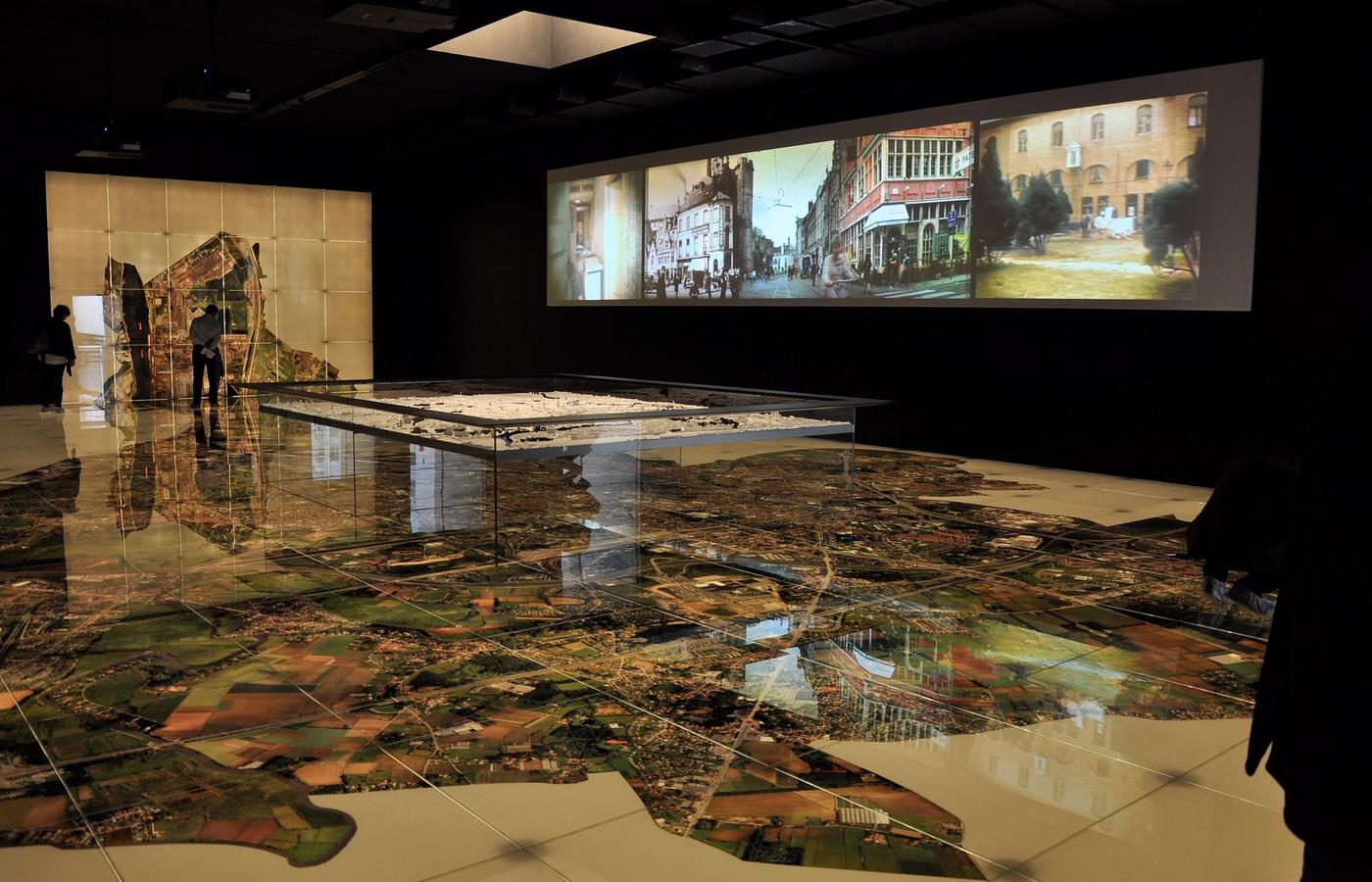
The single most impressive object is not a painting but a 40-square-metre aerial photograph of Ghent laid on the floor of the abbey's dormitory, showing every street and building overlaid with historical maps you can walk on. Entry is EUR 11 and the museum is included in the CityCard Gent. Allow 90 minutes to 2 hours; the Bijloke Nursing Hall (used for concerts) and the medieval herb garden in the cloister are worth the visit alone. Free English audio guide via QR code.
Pro Tip: Combine STAM with a walk through the Citadelpark 200 metres east, which also holds MSK and the SMAK contemporary art museum. Bijloke Nursing Hall next door often has free daytime rehearsals of the resident concert series - stick your head in.
9MSK - Ghent's Museum of Fine Arts

The MSK (Museum voor Schone Kunsten) is one of the oldest museums in Belgium, founded in 1798 and housed since 1904 in a neo-classical building in the Citadelpark. The collection covers Flemish and Belgian painting from the 15th to the 20th century and is exceptionally strong on the Symbolists and early modernists - James Ensor's The Skate (1892) and Skeletons Warming Themselves (1889) are the two most-viewed paintings, and the museum holds one of the largest Ensor collections in the world alongside excellent Rene Magritte, Constant Permeke and Leon Spilliaert rooms.
Older highlights include Hieronymus Bosch's The Bearing of the Cross (a masterpiece of grotesque faces, painted around 1510-1516), Rogier van der Weyden's Madonna with Carnation, and works by Frans Hals, Jacob Jordaens and Peter Paul Rubens. Entry is EUR 12 (free for under-19s), or included in the CityCard Gent. The museum sits directly across the Citadelpark from SMAK (contemporary art) - a combined ticket at EUR 20 covers both and is a full day's art if that appeals.
Pro Tip: Head straight to Room 12 (Ensor room) first before the tour groups arrive at 11:00. The museum cafe overlooks the Citadelpark rose garden and does an excellent EUR 15 lunch. Every first Sunday of the month is free entry - avoid it unless you enjoy queuing.
10Vrijdagmarkt and Ghent's Beer Culture - The Belgian Bar Circuit
Vrijdagmarkt (Friday Market) has been Ghent's main civic square for 800 years - the place where guilds held meetings, where every count of Flanders swore his oath to the citizens, and where public executions once took place under the plane trees. The bronze statue of Jacob van Artevelde (1863), the medieval brewer-turned-mayor who allied Ghent with England during the Hundred Years War, dominates the centre. The Friday market for which the square is named still runs every Friday morning from 07:30 to 13:00 with 100-plus stalls of Flemish produce and antiques.
Around the square is Ghent's best beer circuit. Dulle Griet on Vrijdagmarkt 50 famously requires you to leave a shoe as deposit for the giant 1.2-litre Kwak glass. 't Galgenhuisje just off the square is the smallest pub in Ghent (12 seats). The Trappistenhuis on Brabantdam 164 stocks all 12 authorised Trappist beers on tap, a rarity even in Belgium. For a proper geuze or kriek, walk five minutes to Waterhuis aan de Bierkant on Groentenmarkt with its 150-plus Belgian beer menu.
Pro Tip: Friday morning is the only time to catch the actual weekly market that gives the square its name. Order a proper Flemish lambic or geuze rather than a standard blonde - it's the local sour beer style you cannot get outside Belgium at anywhere near this quality.

CEO and co-founder
Tomas is the co-founder and director of trip1, an European company specializing in reservation services. He launched the company in 2025 with a focus on building scalable, efficient operations.
Climate averages · 1991–2020
When is the best time to visit Ghent?
Monthly temperatures, rainfall and sunshine — not a live forecast.
See Ghent weatherMore of Belgium
10 Best Things to Do in Ghent, Belgium - FAQ
Just about, if you skip the museum interiors. Ghent's historic centre is compact and walkable within 15 minutes end to end, so seeing Gravensteen, the Belfry, Graslei, St Bavo's and Werregarenstraat in one long day is realistic. To do the Ghent Altarpiece, STAM and MSK properly, allow two full days.
Start early at St Bavo's Cathedral for the Ghent Altarpiece before tour groups arrive. Walk to the Belfry, then Graslei and Korenlei quays for photos from St Michael's Bridge. Cross to Gravensteen Castle before lunch, then explore Patershol and Vrijdagmarkt in the afternoon. Finish with the Werregarenstraat street art alley. Day two, take tram 1 south for STAM and MSK, and end with a canal boat tour.
The Ghent Altarpiece visit at St Bavo's Cathedral now uses timed AR-guided entry and slots often sell out 3 to 5 days ahead in summer. Book that online. Gravensteen Castle and the Belfry accept walk-ups but expect a 20-minute queue at Gravensteen on weekend afternoons. STAM, MSK, canal boats, Graslei, St Michael's Bridge, Patershol, Vrijdagmarkt and Werregarenstraat are free to visit or walk-up only.
Budget around EUR 55 to 70 per adult in 2026 for the paid entries: Ghent Altarpiece with AR guide (EUR 16), Gravensteen Castle (EUR 13), Belfry (EUR 11), STAM (EUR 11), MSK (EUR 12), and a 40-minute canal boat tour (EUR 10). The CityCard Gent at EUR 38 for 48 hours covers all these plus De Lijn trams and canal boats, so it usually pays for itself before lunch on day one.
Yes. Ghent's historic centre is a car-free zone with excellent De Lijn tram coverage. Tram 1 links Gent-Sint-Pieters station with Korenmarkt in the centre in 10 minutes and continues south to STAM and MSK. Everything except MSK and STAM is within a 10-minute walk of Korenmarkt, and the whole tram network runs on a single EUR 2.50 ticket bought via the De Lijn app.
Yes. Jan and Hubert van Eyck's Adoration of the Mystic Lamb, completed in 1432, is widely considered the most influential painting in Western art history and the first major oil painting. The 25-year restoration completed in 2024 revealed the original faces, and the new immersive AR tour launched in 2025 puts you inside the missing lower-left panel that was stolen in 1934. Even for non-art enthusiasts, it is a genuinely moving hour.
A few worthy extras. The Design Museum Gent reopened after major expansion in 2024 and is a strong pick for design fans. St Nicholas' Church anchors the trio of medieval towers alongside the Belfry and St Bavo's. Ghent is also famously vegetarian-friendly, so booking a table at somewhere like Le Botaniste is worthwhile. For a day trip, Bruges is 25 minutes by direct train.

Related travel guides
Top 10 Places to Visit in Bruges, Belgium
Discover the top 10 places to visit in Bruges in 2026 - the Belfry, canal cruises, Markt Square, Beguinage, chocolate and Belgian beer.
12 Top Places to Visit in Brussels, Belgium - 2026 Guide
Discover the 12 top places to visit in Brussels in 2026 - from the Grand Place to the Atomium, Belgian chocolate, and Art Nouveau gems.