

Guides · Banff
Banff, Canada in October: Weather, Larches & Hikes

CEO and co-founder
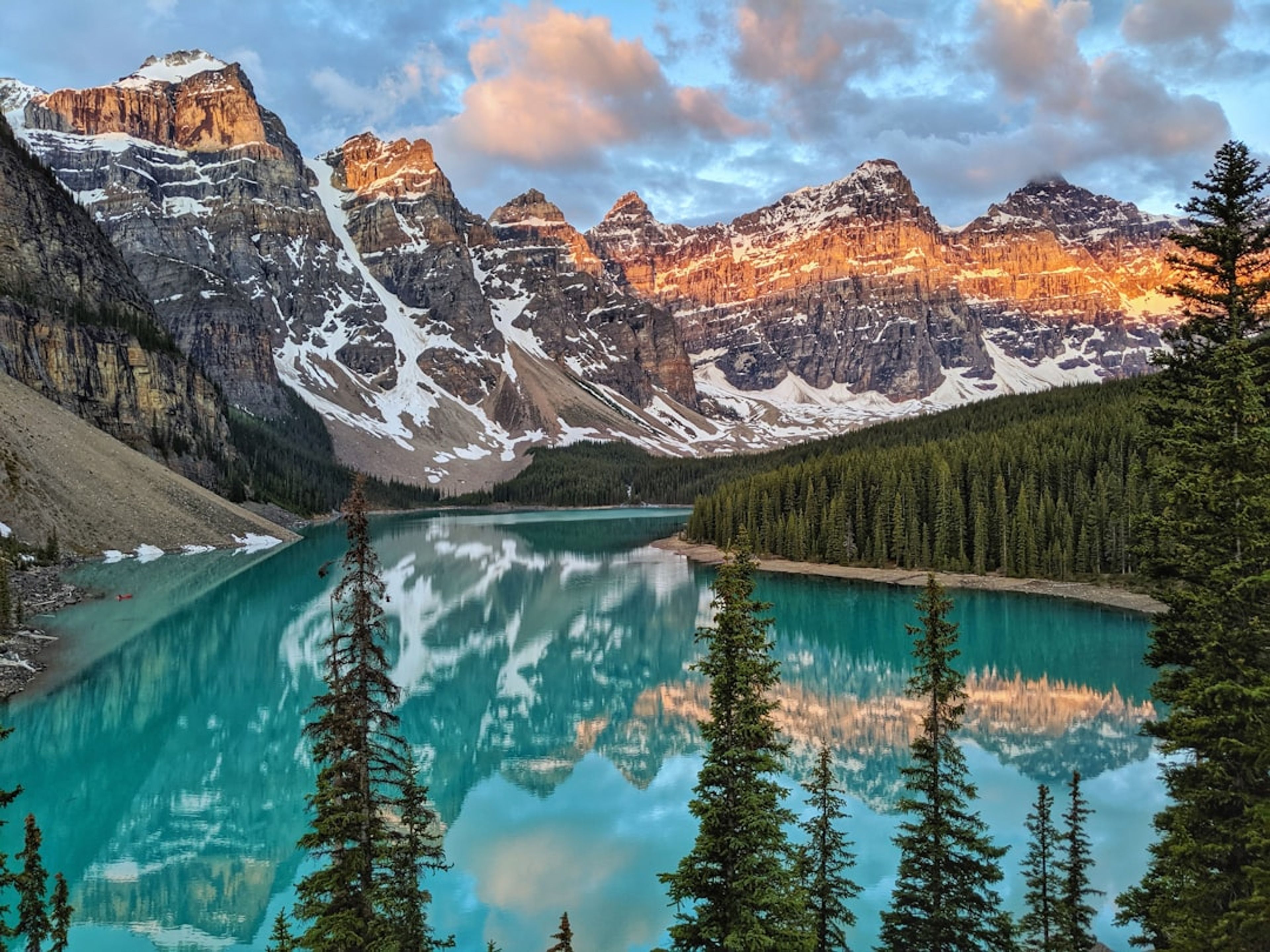
Banff in October is a month of two halves. The first week still has golden larches high in the alpine, elk bugling in the Bow Valley and the Parks Canada shuttle running to Moraine Lake. By the second half, the larch needles have dropped, Moraine Lake Road has closed for the season on 13 October 2026, and the first snow is settling on the peaks around Banff town. Daytime highs average around 10C (50F), nights fall below freezing, and by mid-October the sun sets around 6:45pm.
This guide covers 5 things to do in Banff in October, ordered by how time-sensitive they are. The first two are high-country hikes: Taylor Lake for the last golden larches, and Castle Lookout, which stays dry into late October. The rest - the elk rut at Vermilion Lakes, the Banff Upper Hot Springs and Lake Minnewanka - work right through to the end of the month. Every entry includes the exact address or trailhead, transit or driving notes, and a Pro Tip.
Plan by area: Taylor Lake and Castle Lookout sit close together off the Trans-Canada Highway and the Bow Valley Parkway, while everything else is within 15 minutes of Banff Avenue. Larch Valley and the Lake Louise teahouse trails are also at their best early in the month, but the Moraine Lake shuttle ends on 12 October. Check trail conditions every morning, because a single October storm can close the high routes.
1Taylor Lake - Golden Larches Without the Moraine Lake Crowds
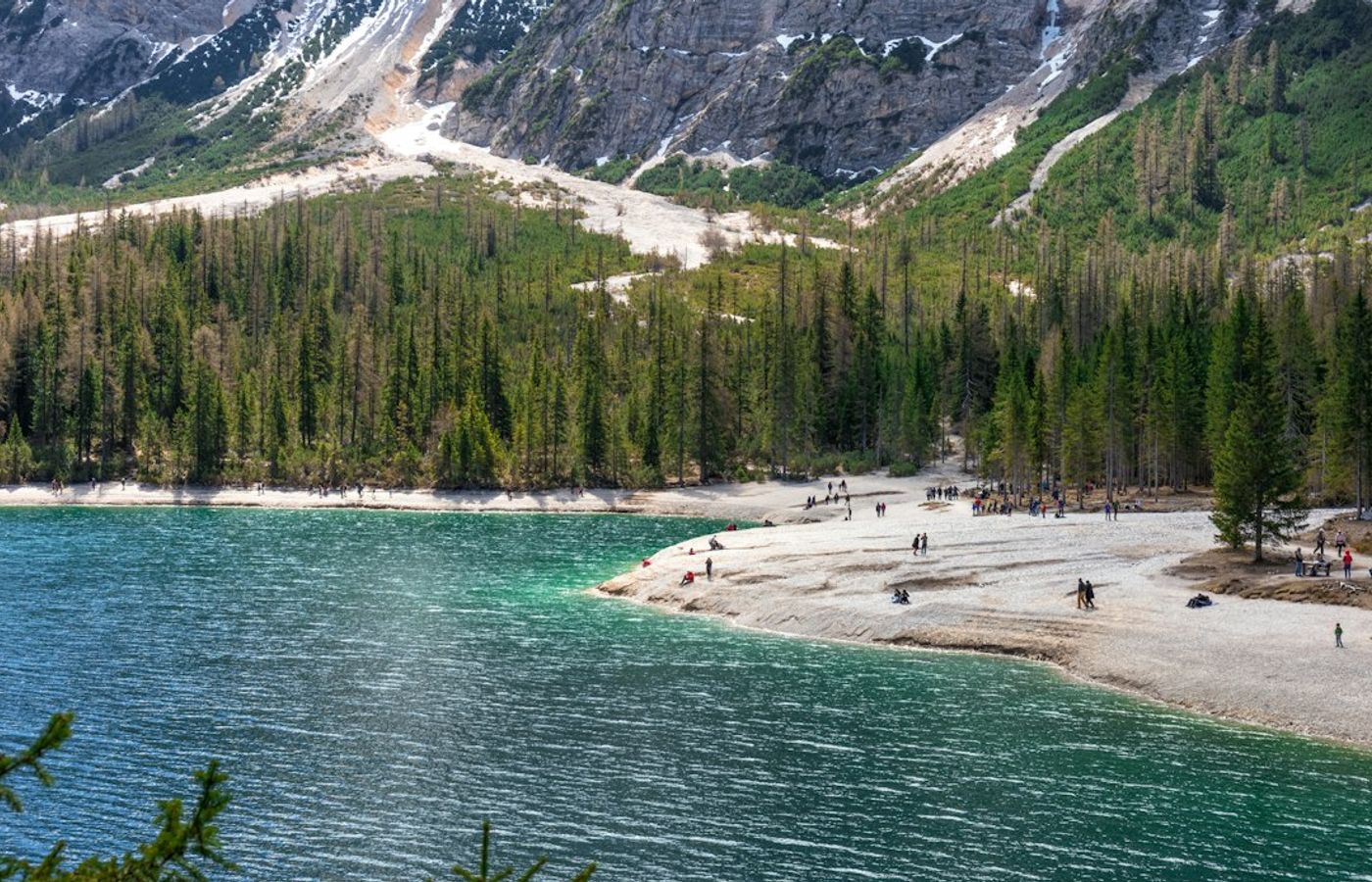

Taylor Lake is the best larch hike in Banff in early October for anyone who wants to skip the Moraine Lake shuttle and the Larch Valley crowds. The trail climbs steadily through forest from a small day-use area on the Trans-Canada Highway, about 6.3 km one way with roughly 585 m of elevation gain, before opening onto a turquoise lake beneath the cliffs of Mount Bell. Alpine larches ring the shoreline and the meadows above it.
Banff larch season peaks in late September, and most needles have dropped by around 10 October, so treat the first week of the month as the window. The forest section is long and viewless, and the lake basin holds snow early, so after the first storm of the season the trail is better left until next year. There is no transit to the trailhead.
Pro Tip: The trailhead is only reachable from the westbound lanes of the Trans-Canada Highway. Coming from Banff, it is on your right about 8 km past the Castle Junction exit - slow down early, because the turn-off is easy to miss.
2Castle Lookout - A Late-Season Hike That Stays Dry
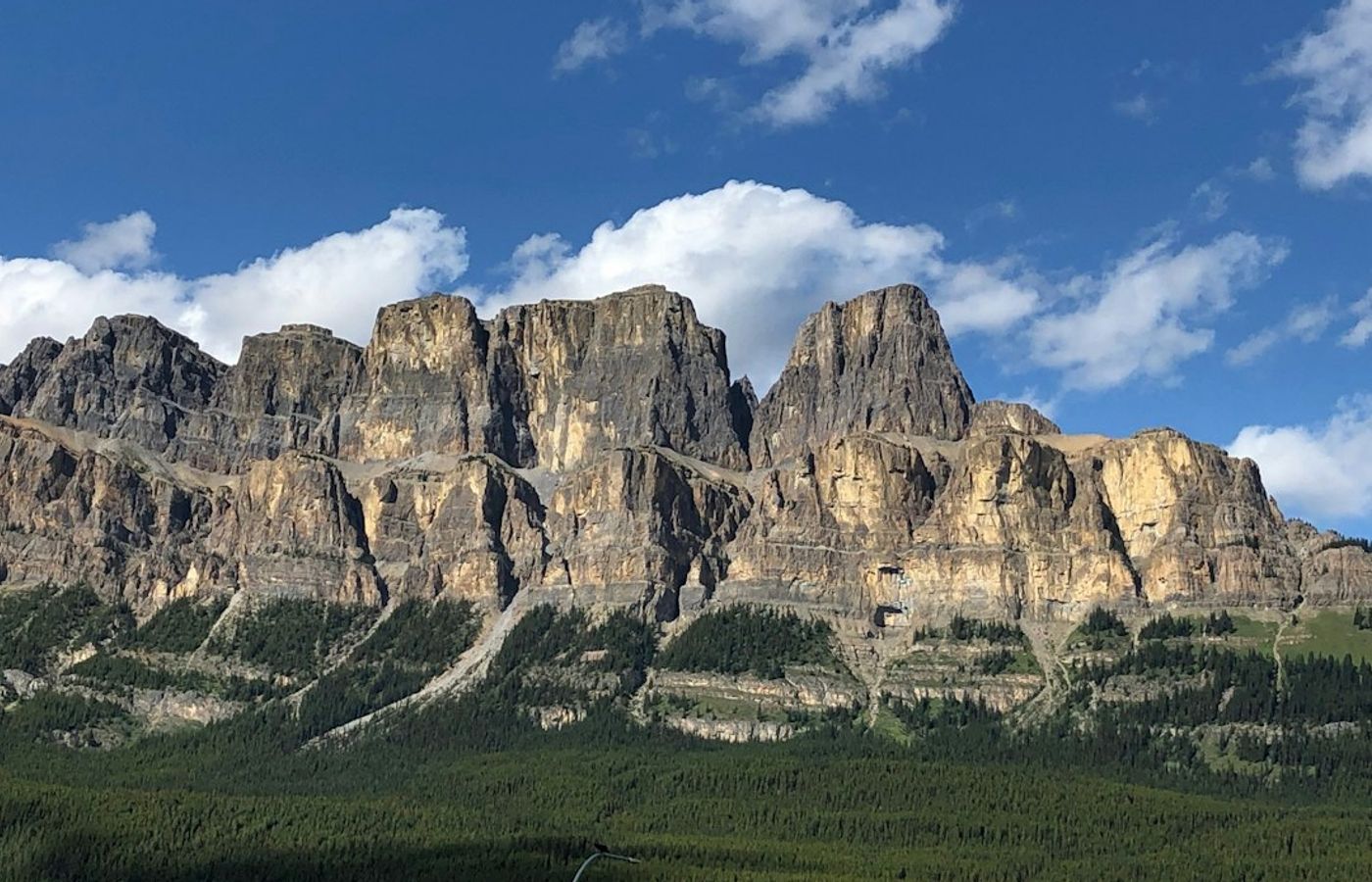

Castle Lookout is one of the best Banff fall hikes for the second half of October, because its south-facing slope dries out early in spring and stays snow-free late into autumn. The trail climbs about 3.7 km with roughly 520 m of gain to the site of an old fire lookout beneath the cliffs of Castle Mountain, with a sweeping view along the Bow Valley.
The Canadian Rockies Trail Guide, the long-standing local hiking reference, names Castle Lookout and nearby Rockbound Lake among its regular October hikes, with faded larches still adding colour into mid-October. The only real caveat is ice: after a cold night, the upper switchbacks can be slick.
Pro Tip: Carry light traction spikes from October onwards. They weigh almost nothing and turn an icy descent from nervous to straightforward.

3Elk Rut at Vermilion Lakes - Bugling Bulls on the Edge of Town
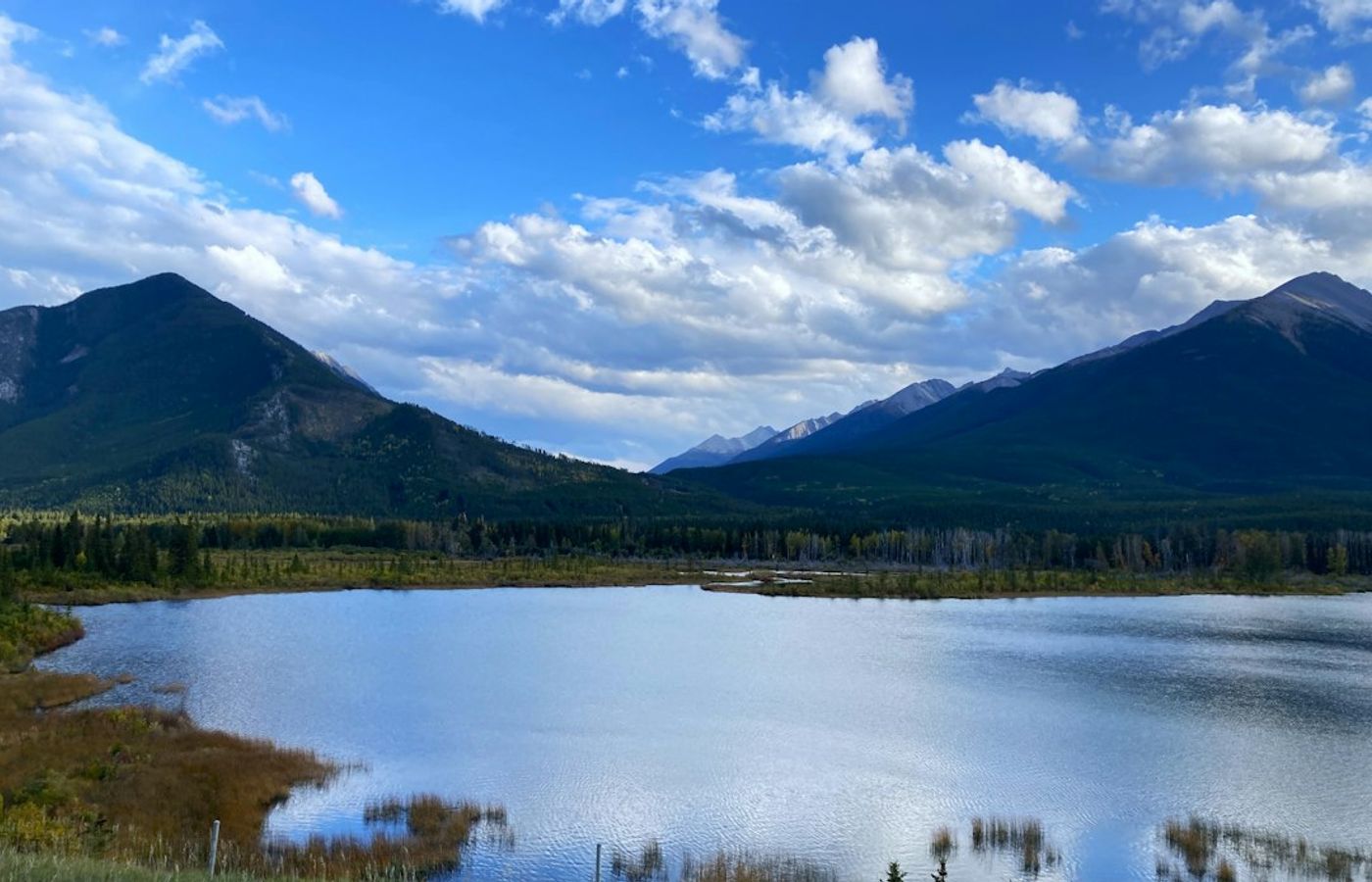

October is peak elk rut in Banff, and you do not need to hike anywhere to see it. Bull elk round up harems of cows on open ground around Banff town, on the golf course, along Vermilion Lakes Drive and even on lawns beside Banff Avenue, and their high-pitched bugling echoes across the valley at dawn and dusk. The three Vermilion Lakes, a 5-minute drive west of town, add a classic reflection of Mount Rundle.
Rutting bulls are unpredictable and genuinely dangerous. Parks Canada asks visitors to stay at least 30 m from elk - more during the rut - and never to come between a bull and his cows. Use a car as a shield if one approaches.
Pro Tip: Drive Vermilion Lakes Drive slowly around sunrise with the windows down. You will often hear the bugling before you see the elk, and the lakes are usually still enough for mirror reflections.
4Banff Upper Hot Springs - The Highest Hot Springs in Canada
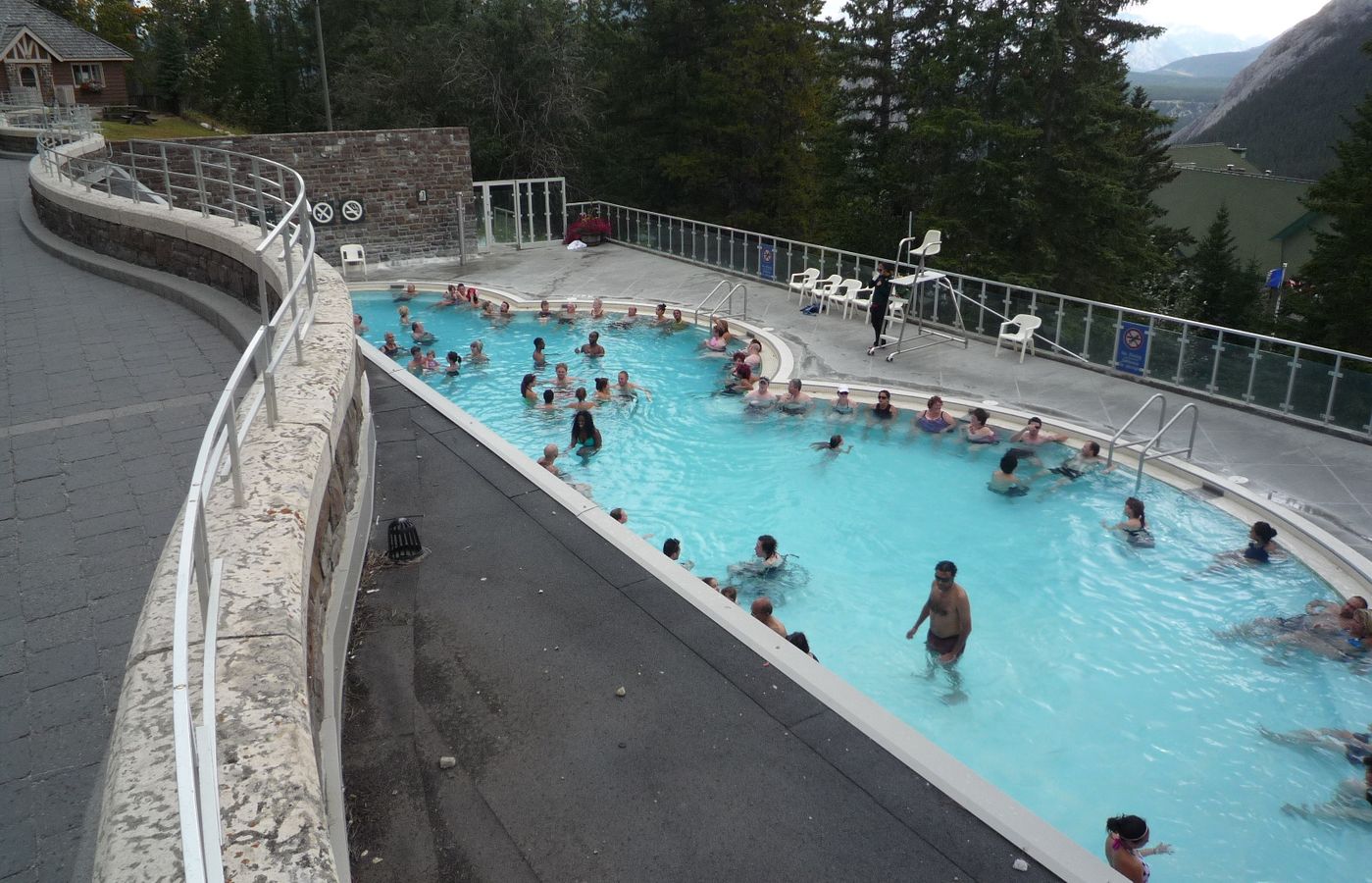
Banff Upper Hot Springs is the right end to a cold October day in the park. Run by Parks Canada, the outdoor pool sits at 1,585 m on the slopes of Sulphur Mountain, making it the highest hot springs in Canada, and the mineral water is kept at around 37C to 40C. The view from the pool looks straight across the valley to Mount Rundle.
The hot springs are the reason Banff exists: railway workers found them in 1883, and the dispute over who owned them led to the creation of Canada's first national park in 1885. Swimsuits and towels can be rented on site, and sessions are not time-limited.
Pro Tip: Go after dark on a weeknight. The pool is quieter, and if snow is falling, sitting in steaming water under it is one of the best experiences Banff offers in October.
5Lake Minnewanka and Two Jack Lake - Aspens and Bighorn Sheep
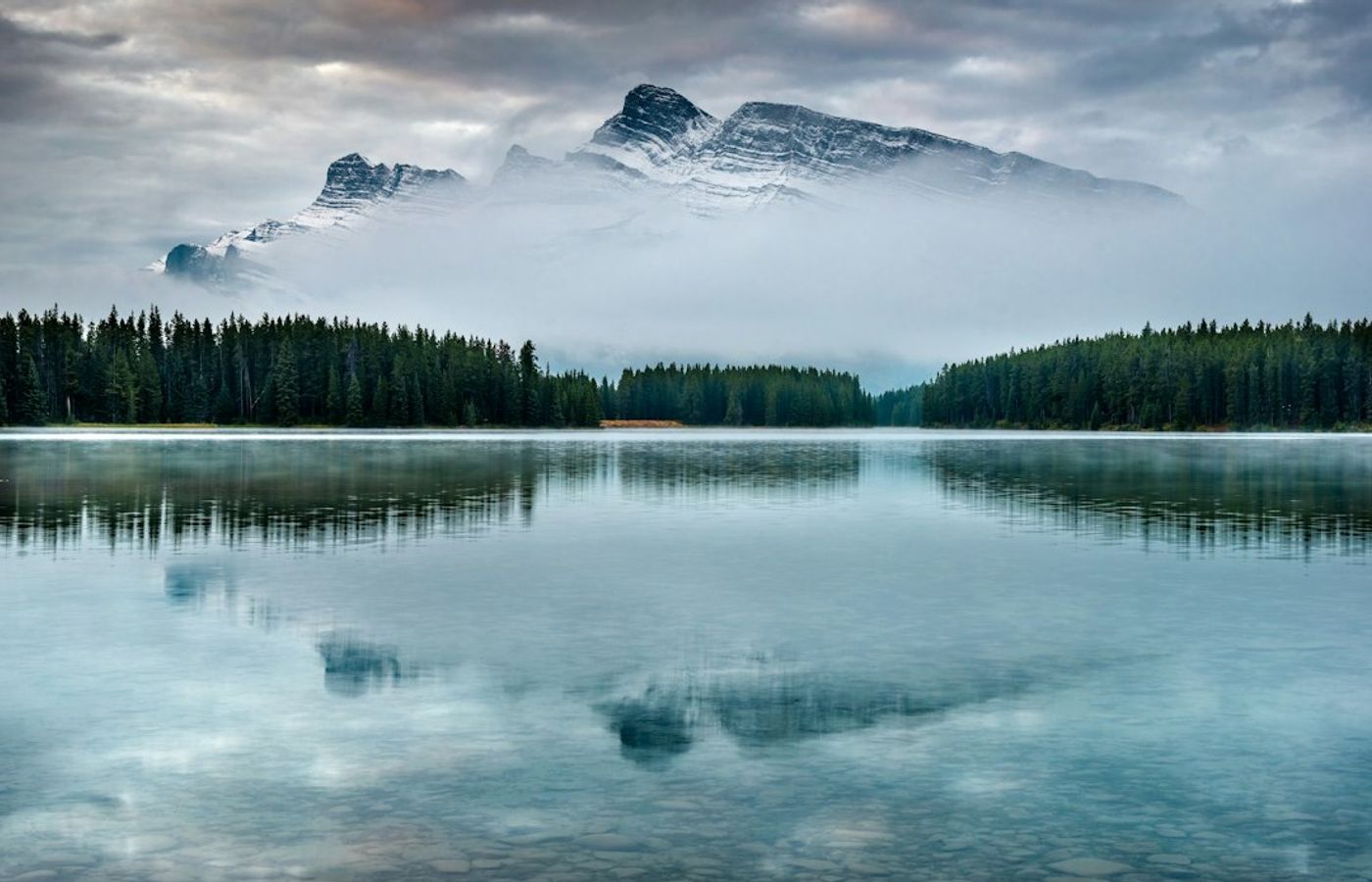
Lake Minnewanka is the largest lake in Banff National Park, stretching about 21 km into the Front Ranges, and the scenic loop that reaches it is at its best when the aspens turn gold. The 24-km Lake Minnewanka Scenic Drive also passes Two Jack Lake, where the reflection of Mount Rundle is one of the most photographed views near town, and bighorn sheep regularly graze along the road.
At the lake, the easy Stewart Canyon trail follows the shore for 1.5 km to a footbridge over a narrow gorge. Boat cruises on the lake wind down in early October, but the shoreline walks and picnic areas stay open through the month, with far fewer visitors than in summer.
Pro Tip: Drive the loop clockwise in the early morning and stop at Two Jack Lake first, before the wind picks up. Do not feed or approach the bighorn sheep on the road - Parks Canada fines for it.
Get hotel deals for Banff
Price drops, new stays and local tips for Banff, straight to your inbox.
No spam, unsubscribe anytime.

CEO and co-founder
Tomas is the co-founder and director of trip1, an European company specializing in reservation services. He launched the company in 2025 with a focus on building scalable, efficient operations.
Banff, Canada in October: Weather, Larches & Hikes - FAQ
Yes, especially the first half. Early October brings the last golden larches, active elk rut and thinner crowds than summer. The trade-off is unpredictable weather, shorter days and seasonal closures, including Moraine Lake Road, which shuts on 13 October 2026.
Cool and changeable. Daytime highs in Banff average around 10C (50F), nights regularly drop below freezing, and the first snow usually reaches the valley by mid-October. Sunny afternoons can still touch the high teens, so pack layers, a warm hat and waterproofs.
Banff larch season runs from mid-September into early October, peaking in the last two weeks of September. By around 10 October most needles have fallen, so the first week of October is the last realistic window for golden larches in 2026.
Only until 12 October 2026. Moraine Lake Road is closed to private vehicles, and the Parks Canada shuttle from the Lake Louise Park and Ride makes its last trips on 12 October. The road closes for the season on 13 October, after which the lake is off-limits until June.
Yes, in three days. Taylor Lake and Castle Lookout each take most of a day, though they share the same corner of the park. The elk rut at Vermilion Lakes, the Upper Hot Springs and Lake Minnewanka fit easily into one relaxed day around Banff town.
Kananaskis Country, an hour south-east of Banff, has excellent larch hikes such as Chester Lake and often quieter trails. Yoho National Park is 30 minutes west of Lake Louise, and Canmore makes a cheaper base for an October trip into the park.