Guides · Doha
10 Best Things to Do in Doha

CEO and co-founder
This guide covers the 10 best things to do in Doha, Qatar, ranked so you can build a route rather than a wish list. Each entry gives you the exact street address, the nearest Doha Metro station or a realistic taxi time, how far the place sits from the city centre, and one Pro Tip drawn from the way the city actually works. Prices appear in Qatari riyal with a rough euro equivalent, because almost nothing here is priced the way you would expect.
The order is geographic as much as it is a ranking. The first seven entries cluster along or just behind the Doha Corniche, the 7 km waterfront promenade that curves from the Museum of Islamic Art north to the Sheraton roundabout. Souq Waqif, both national museums, Msheireb, Katara Cultural Village and The Pearl-Qatar all sit within a short walk of a Doha Metro station, and the free Metrolink feeder buses close the last kilometre for nothing. The final three break the pattern and need a vehicle: a desert run south to Khor Al Adaid, a campus visit west in Education City, and a two-hour drive north to Al Zubarah Fort.
Timing matters more here than in most capitals. November to March is the only genuinely comfortable season, with daytime highs around 22 to 28C and evenings cool enough to walk the Corniche end to end; from May to September the temperature regularly passes 45C and sightseeing becomes a short dash between air-conditioned buildings. Qatar is a conservative country, so covered shoulders and knees are the expected standard at museums, the souq and religious sites - light long sleeves also keep the sun off.
1Souq Waqif - Doha's Restored Market and Evening Hub
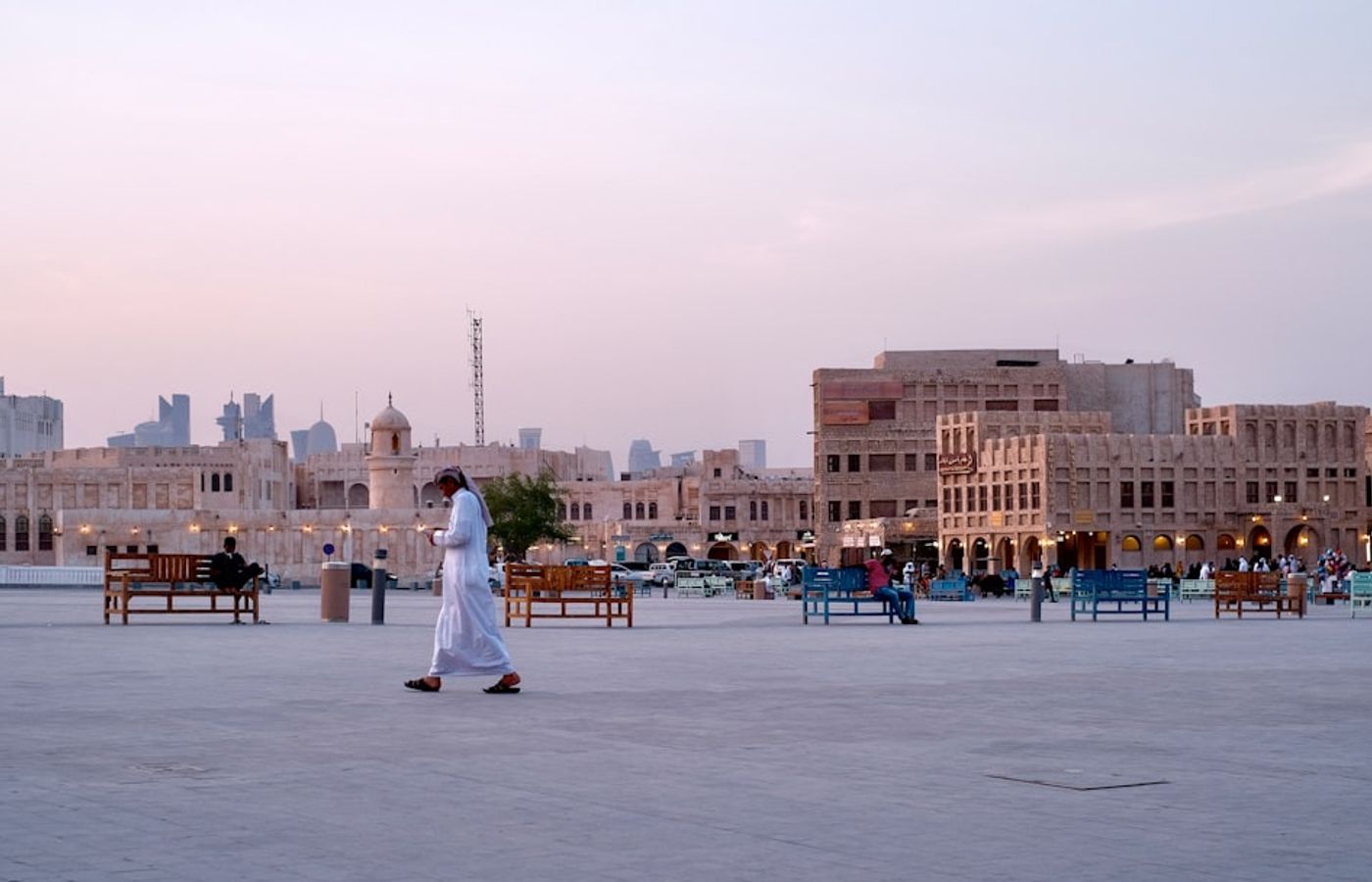

Souq Waqif is the oldest trading ground in Doha and the easiest place to start. Merchants have bartered on this patch of land beside Wadi Musheireb for well over a century, though the mud-rendered walls and exposed danchal timber beams you see now come from a 2006 restoration that rebuilt the market in its 19th-century form after a fire. Inside the lanes there are spice stalls, Iranian textile shops, oud perfumers, a falcon souq with its own falcon hospital, and stables for the Amiri Guard horses.
Go in the evening. The market barely stirs before 16:00, then fills until midnight with families, shisha smokers and musicians. Food runs from 10 QAR (about 3 EUR) for karak tea and a plate of dates to 120 QAR (roughly 30 EUR) for a full Qatari or Levantine dinner on Al Rayyan Street. Bargaining is normal in the textile and souvenir lanes and pointless in the restaurants. Dress here is relaxed but not beachwear - shoulders and knees covered will keep you comfortable among local families.
Pro Tip: Skip the main entrance on Al Souq Street and go in from the falcon souq side. You reach the working end of the market first, and the courtyard cafes there charge roughly a third less than the terraces facing the Corniche.
2Museum of Islamic Art - I. M. Pei's Island Landmark
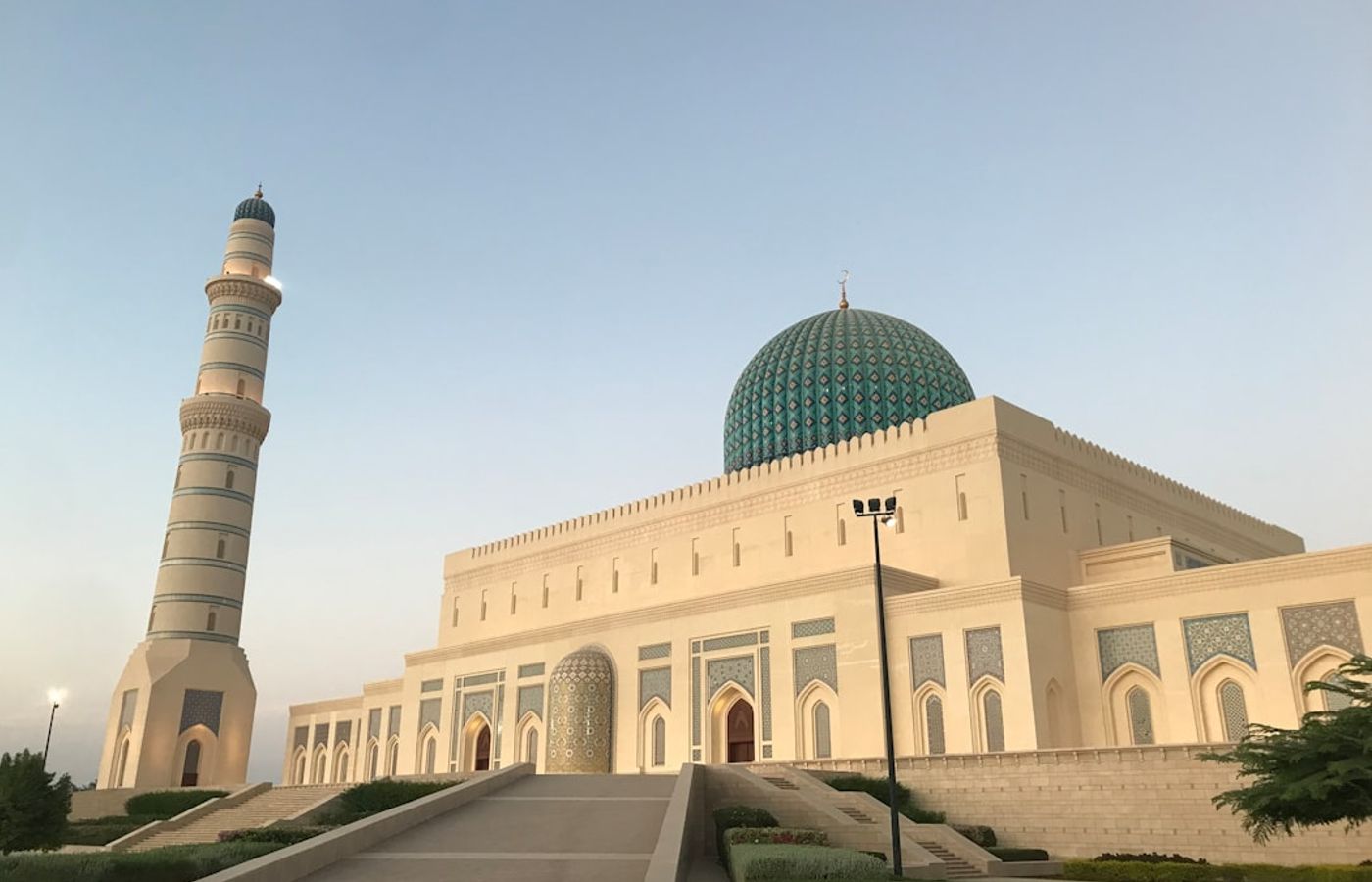

The Museum of Islamic Art sits on its own island 60 metres off the Doha Corniche, and the building is half the reason to go. I. M. Pei came out of retirement in his nineties to design it, travelling the Muslim world for months before settling on the ablution fountain of the Ibn Tulun Mosque in Cairo as his model. What he produced is a stack of cream limestone cubes that changes shape as you walk around it, wrapped around a five-storey atrium and a north window that frames the West Bay skyline.
Reopened in 2022 after an 18-month redisplay, the collection spans 1,400 years and three continents: Mamluk enamelled glass, Iranian lustreware, Mughal jades, an Ottoman helmet inlaid with silver, and a page of the 9th-century Blue Quran written in gold on indigo parchment. Adult entry is 50 QAR (about 13 EUR), under-16s go free, and the museum closes on Tuesdays. Two hours covers the permanent galleries. MIA Park outside runs south along the water past a dhow harbour to Richard Serra's steel sculpture at the tip.
Pro Tip: Take the lift straight to the top floor and work downwards. The window over West Bay is the best photograph in the building and it stays empty for roughly the first 30 minutes after the 09:00 opening.

3National Museum of Qatar - The Desert Rose Building
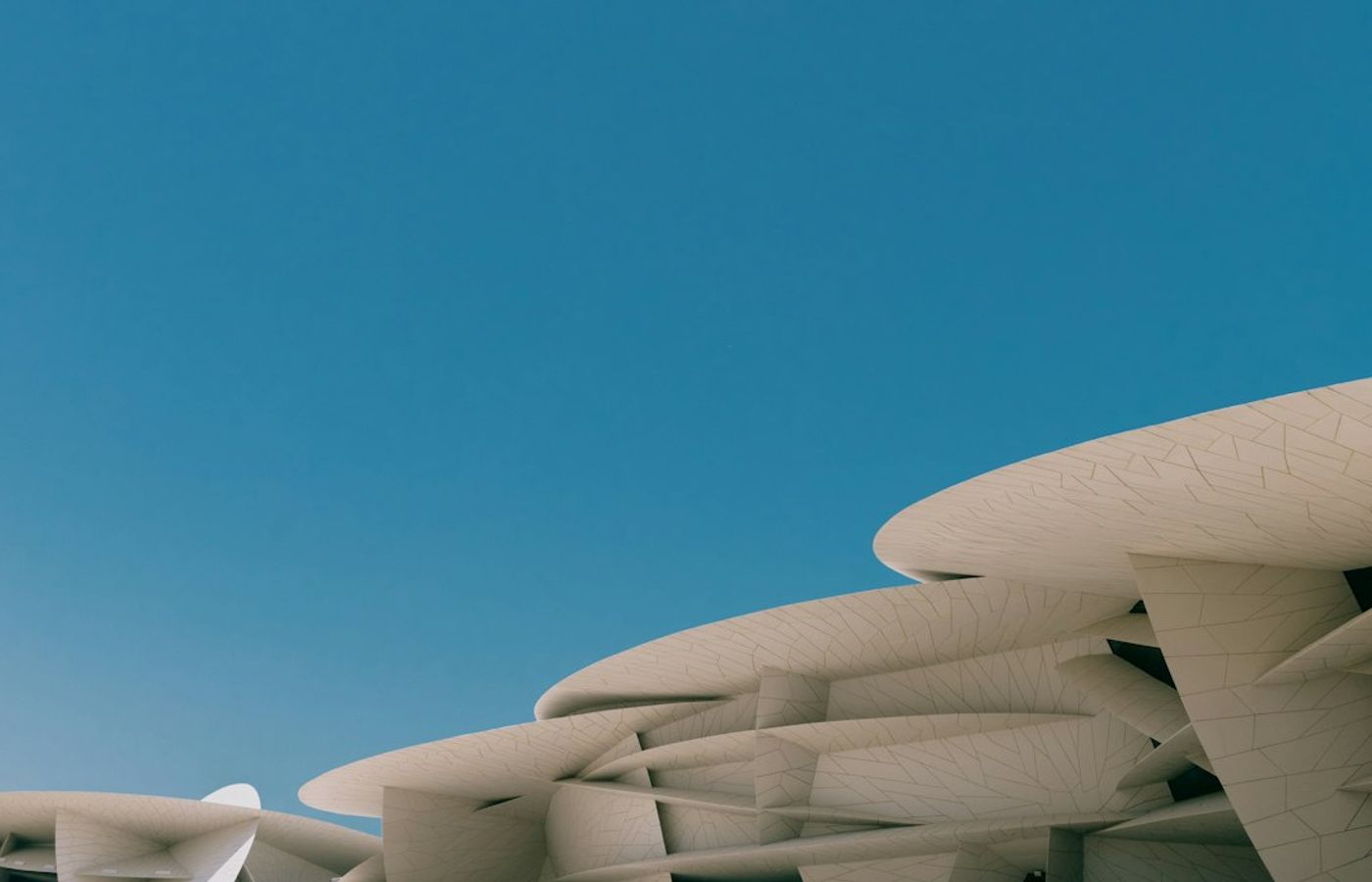
Jean Nouvel's National Museum of Qatar opened in 2019 and looks like 316 interlocking discs dropped into the sand. The reference is the desert rose, the gypsum crystal that forms in Qatar's coastal sabkha flats, and the consequence is that there is barely a straight wall in the building. The route inside is one continuous 1.5 km loop through 11 galleries, moving from the geology of the peninsula through pearling and Bedouin life to the oil discovery of 1939 and the modern state.
The storytelling leans hard on film, with floor-to-ceiling projections and recorded testimony from former pearl divers. The single most striking object is the Pearl Carpet of Baroda, an 1865 textile set with around 1.5 million Gulf pearls. Restored at the centre of the site is the early 20th-century palace of Sheikh Abdullah bin Jassim Al Thani, the reason the museum stands on this spot at all. Tickets cost 50 QAR (roughly 13 EUR), under-16s free, closed Tuesdays. Allow two and a half hours - the loop is longer than it looks and there is no shortcut across.
Pro Tip: Start after 15:00 and wear shoes you can walk a long way in. The white concrete throws heat back at you in the forecourt, and the final galleries plus the lagoon terrace look far better once the sun drops.
4The Doha Corniche - The Seven-Kilometre Waterfront Walk
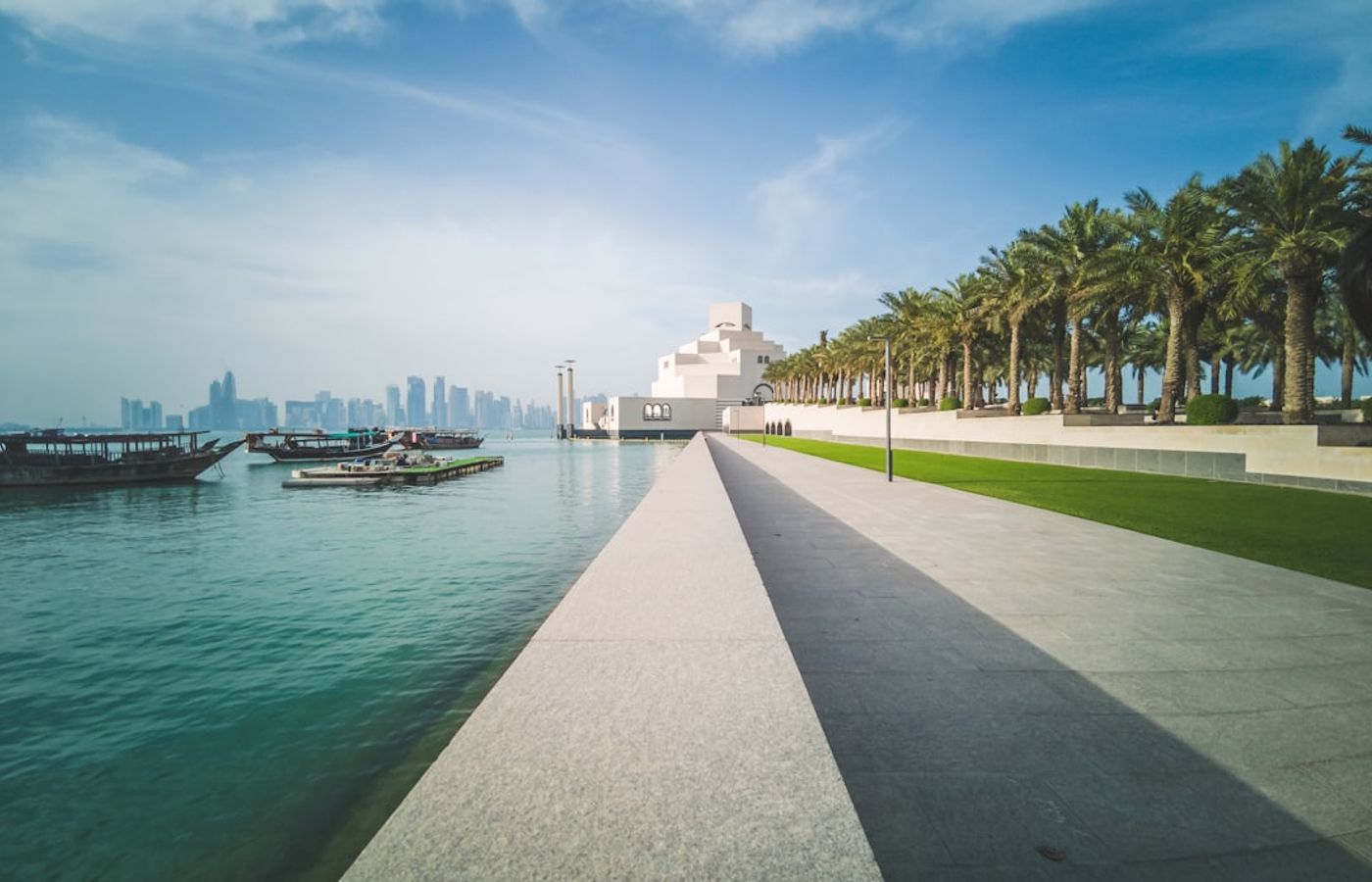
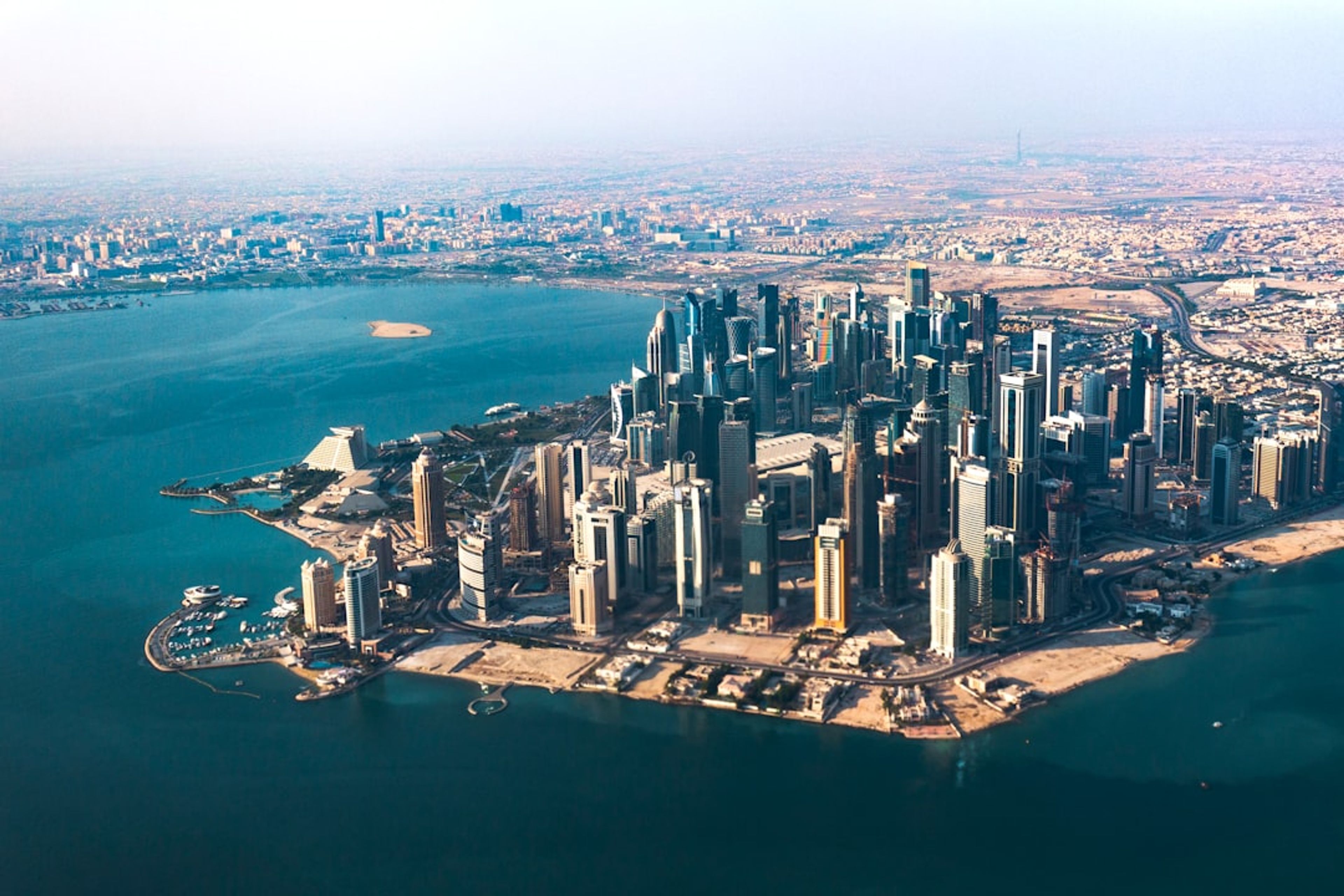
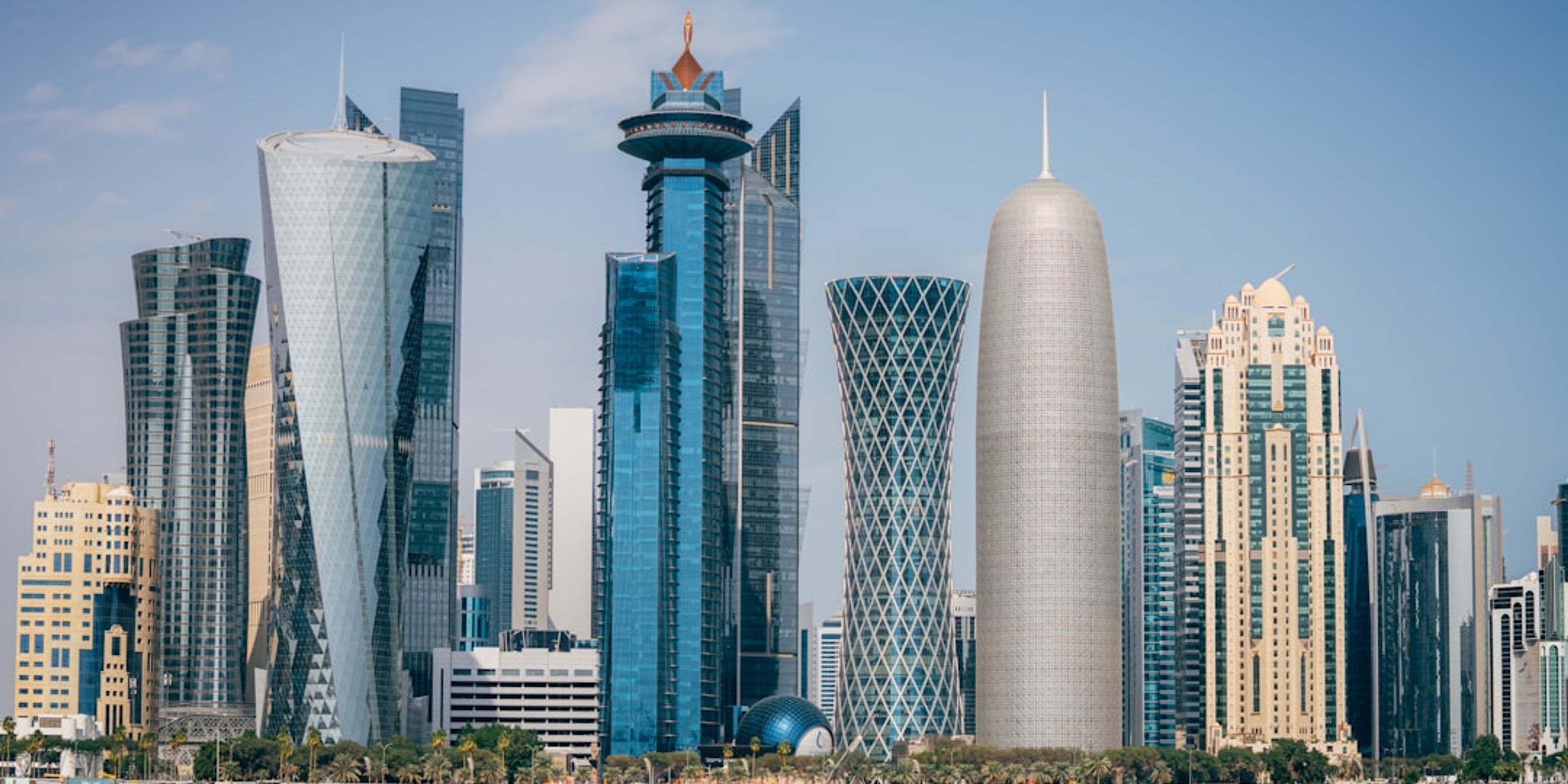
The Doha Corniche is the 7 km crescent of promenade that ties the whole city together, curving from the Museum of Islamic Art in the south to the Sheraton roundabout at the northern tip of West Bay. Walk it and you get the full skyline: the twisted Tornado Tower, the aluminium lattice of the Doha Tower, and dozens of wooden dhows moored along the seawall with their lights strung up after dark. The paved path is continuous, lit at night, and lined with shaded benches.
Covering the whole stretch takes about 90 minutes at a steady pace. Most people do the southern half instead, from MIA Park up to Al Bidda Park, then turn back. A traditional dhow cruise from the moorings on Al Corniche Street costs 50 to 100 QAR (13 to 25 EUR) for an hour and is the standard way to photograph West Bay from the water. Between November and March the sea breeze makes early evening the best window; in high summer the promenade is effectively unusable before 21:00.
Pro Tip: On Friday mornings a section of the northern Corniche between Al Bidda Park and the Sheraton roundabout closes to traffic. It is the one reliable window to run or cycle the seaward lane without dodging cars.
5Katara Cultural Village - Amphitheatre, Galleries and Beach
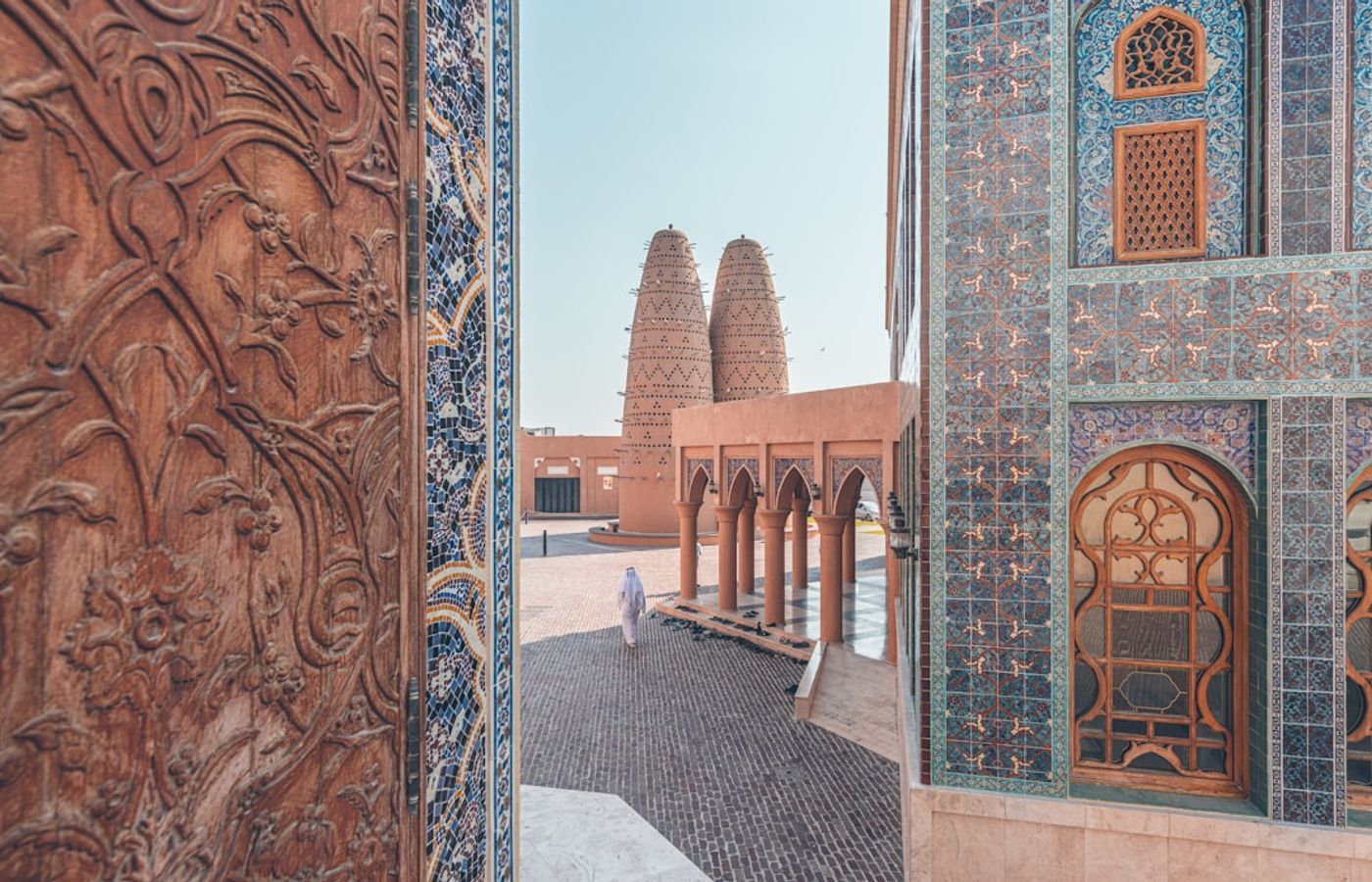
Katara Cultural Village is a purpose-built arts district on the coast north of West Bay, laid out to resemble an old Gulf town with sand-coloured alleys, wind towers and two pigeon towers that genuinely house birds. The centrepiece is a 5,000-seat open-air amphitheatre built to Greco-Roman proportions and used for concerts from October onwards. Around it sit the Katara Mosque with its Persian-tiled dome, a smaller gold-tiled mosque designed by Turkish architect Zeynep Fadillioglu, an opera house, a planetarium and around a dozen galleries.
Entry to the grounds is free and most exhibitions cost nothing. Katara Beach charges roughly 50 QAR (about 13 EUR) for a day pass with a lounger. This is a cultural and family site rather than a resort strip, so swimwear stays on the sand and covered shoulders and knees are the norm everywhere else, particularly near the two mosques. Restaurants along the main spine run 80 to 200 QAR (20 to 50 EUR) a head. Evenings are busiest, and the film and food festivals in winter fill the amphitheatre steps.
Pro Tip: The public rooftop terrace above Building 22 lines up the amphitheatre, the tiled dome and the West Bay towers in one frame. It is not signposted - take the outdoor stairs on the north side of the building.
6The Pearl-Qatar - Marinas and Promenades on Reclaimed Land
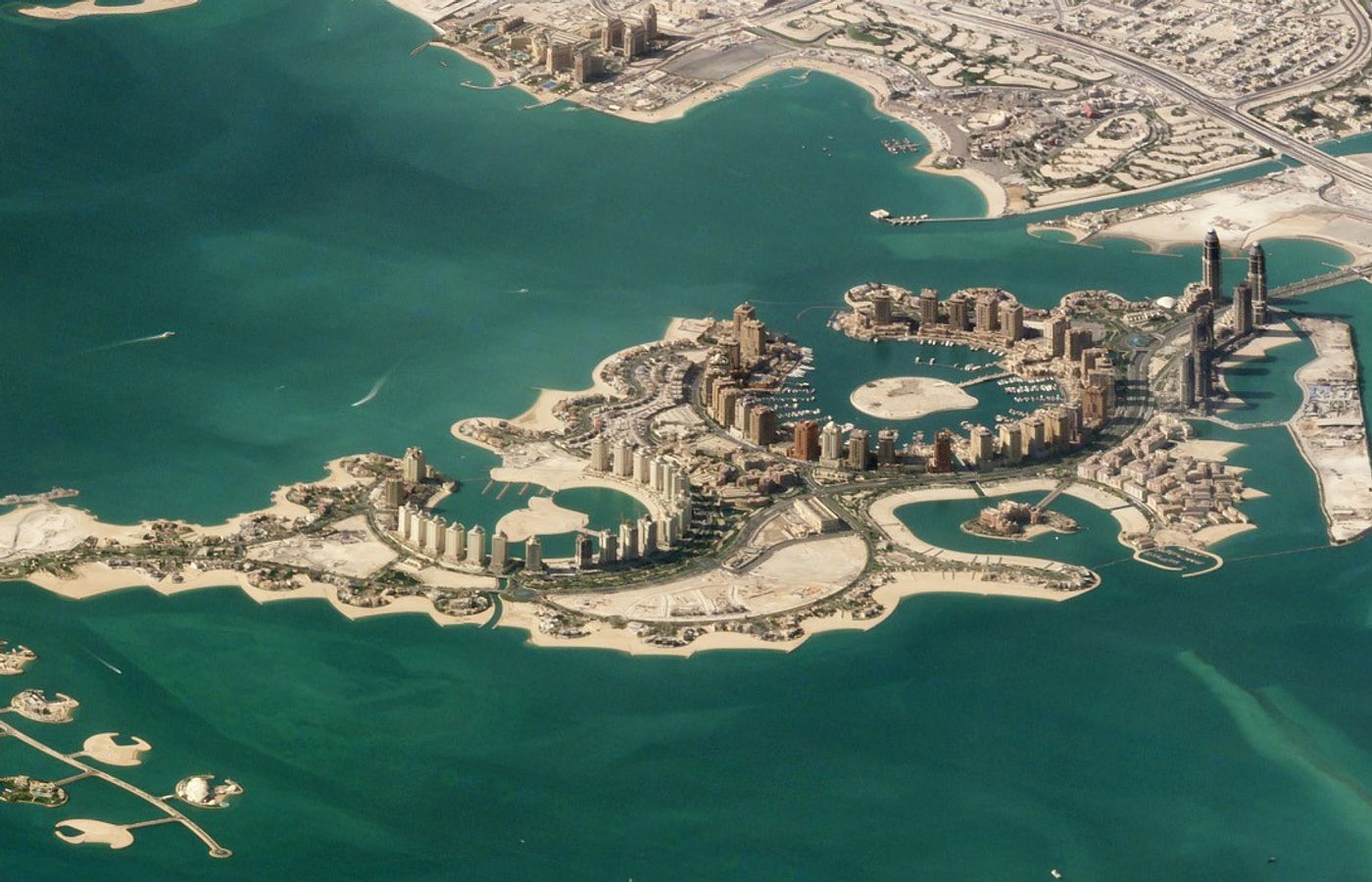
The Pearl-Qatar is four square kilometres of reclaimed land built over a former pearl-diving bed, and it was the first place in the country where foreign nationals could buy freehold property. Porto Arabia is the district worth your time: a horseshoe marina ringed by a wide pedestrian promenade, superyachts on one side and arcaded ground-floor cafes on the other. Qanat Quartier next door is the Venice pastiche, with candy-coloured townhouses, footbridges and a narrow canal you can cross by water taxi.
There is no museum here and no historic core. The appeal is a two-hour traffic-free walk with water on both sides, which after a day of galleries is exactly the point. Parking in the tower basements is free. Coffee costs 25 to 35 QAR (6 to 9 EUR) and a sit-down meal starts around 150 QAR (about 38 EUR), so this is not the cheap end of Doha. Arrive after 17:00, when the marina lights come on and local families are doing the same loop.
Pro Tip: Walk Porto Arabia anticlockwise from Tower 1 and finish at the Qanat Quartier bridge for sunset. The water taxi between the two districts is about 20 QAR (5 EUR) and saves a 25-minute detour on foot.
7Msheireb Museums - Four Restored Houses in the Old City
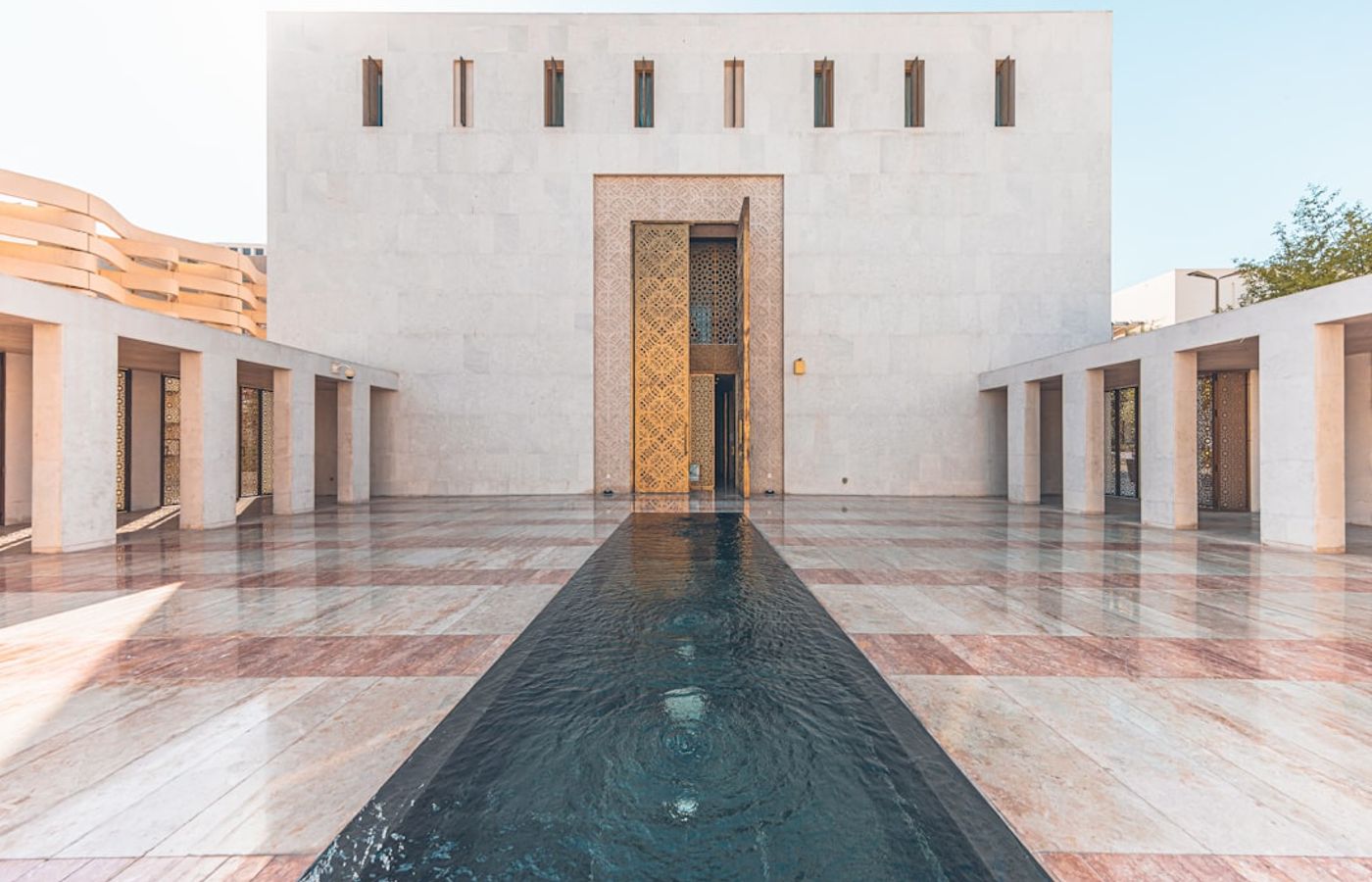
Msheireb Museums are four of the oldest surviving houses in Doha, restored inside the Msheireb Downtown regeneration district and run as free museums. Bin Jelmood House is the one people remember. It deals directly with the Indian Ocean slave trade and Qatar's own part in it, then closes with a section on contemporary forced labour that pulls no punches. Company House tells the story of the first Qatari oil workers through recorded interviews with the men themselves and with their widows and children.
Mohammed Bin Jassim House covers the demolition and rebuilding of the district itself, and Radwani House shows domestic life across three generations, from a courtyard well to the arrival of mains electricity. All four are free, air-conditioned and compact enough that the full circuit takes about 90 minutes. They close on Mondays. This is the most candid history on offer anywhere in the city, and it draws a fraction of the crowds the waterfront museums pull.
Pro Tip: Do Bin Jelmood House first and give it a full 40 minutes. The audio testimonies in the final rooms are the point of the whole complex, and most visitors reach them too late in the loop to sit down and listen.
8Khor Al Adaid Desert Safari - The Inland Sea on the Saudi Border
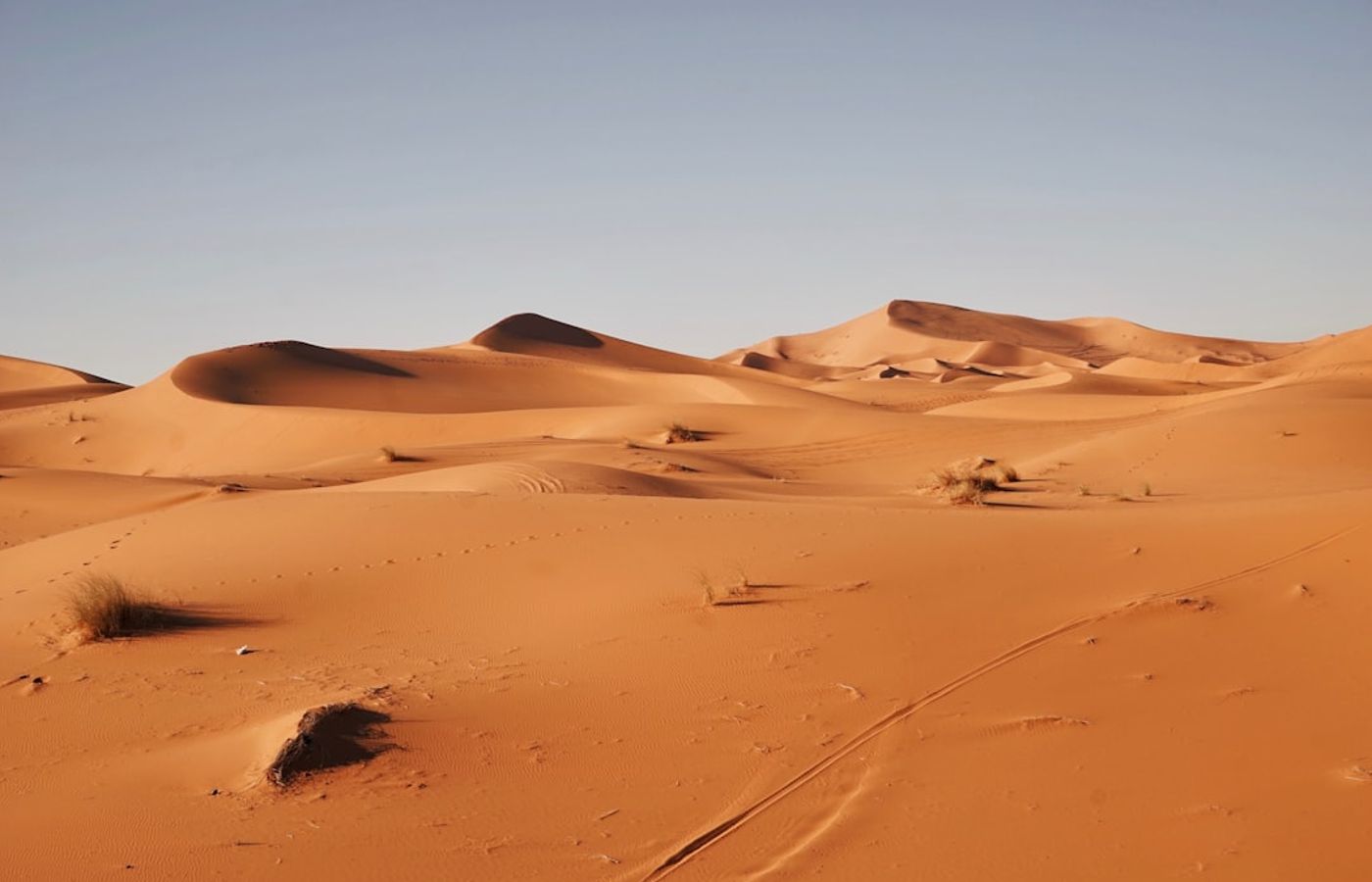
Khor Al Adaid is the inland sea, a tidal inlet where the Gulf pushes several kilometres into the desert and runs straight up against the dunes. It is a UNESCO-recognised nature reserve, reachable only by 4x4, and the one landscape in Qatar that does not feel engineered. Getting there means crossing the Sealine dunes with the tyres deflated for dune bashing, a genuinely rough 20 minutes that some passengers love and some regret within the first minute.
A half-day trip runs 250 to 350 QAR (roughly 63 to 88 EUR); a full day with lunch and an overnight camp option climbs to around 600 QAR (150 EUR). Most departures leave central Doha near 15:00 to catch the low light on the water, returning by 21:00. Flamingos and Arabian oryx show up in winter. Operators sell the trip year-round, but the heat at the dune camp between May and September is punishing, which is one more reason to come between November and March.
Pro Tip: Ask whether your operator descends to the water's edge or only stops on the ridge above it - cheaper tours routinely skip the descent. Bring closed shoes, because the sand up on the ridge is fine enough to fill a sandal in about a minute.
9Education City and the Qatar National Library - Campus Architecture and an Open Collection
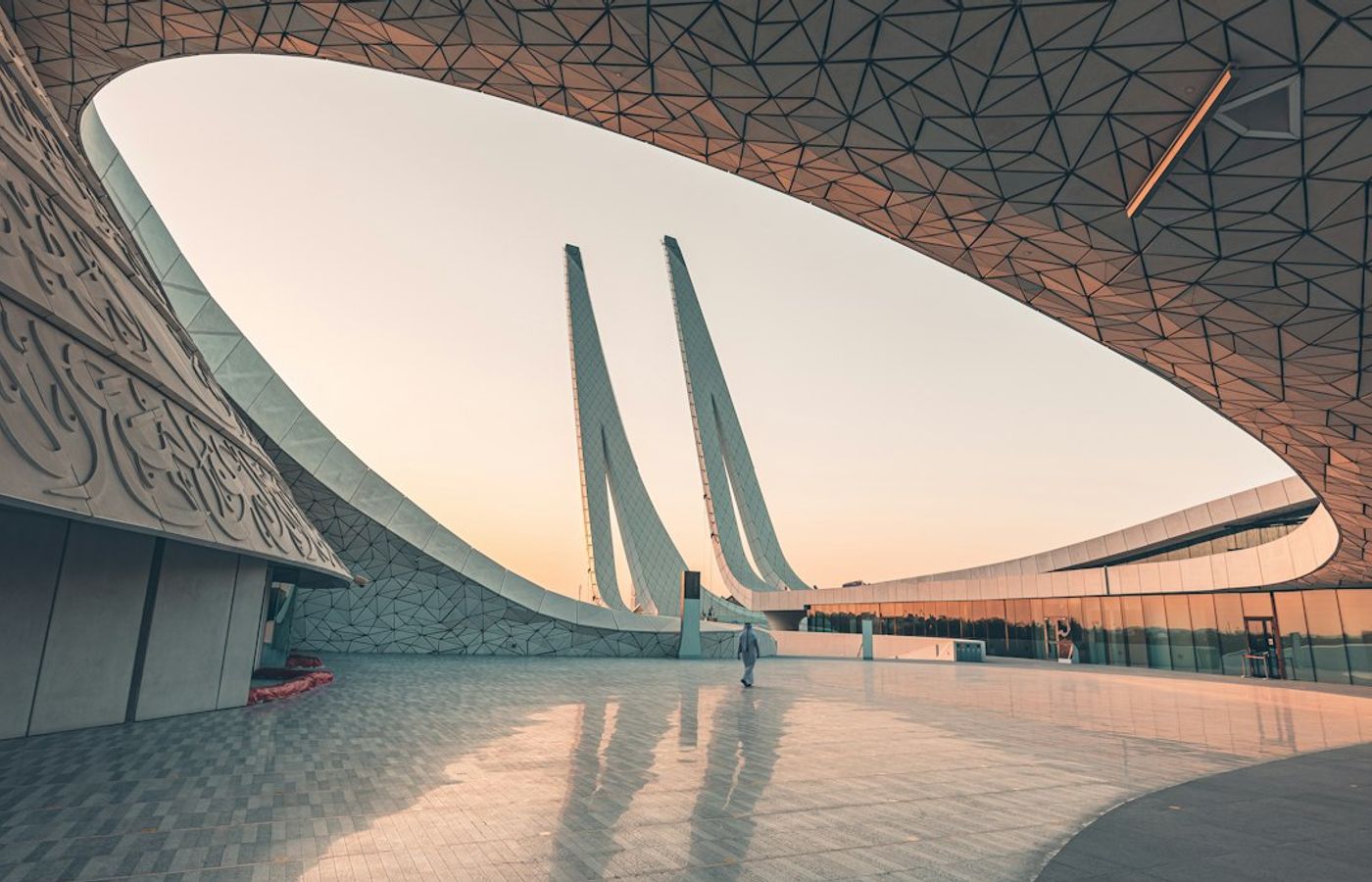
Education City is a 12 square kilometre campus west of central Doha where eight international universities keep branch schools, and for a visitor it works as an open-air architecture park. Rem Koolhaas designed the Qatar National Library as a single folded plane, with around a million volumes stacked on white marble terraces visible from anywhere in the room and no walls dividing the sections. Sunk into the middle of the floor is the Heritage Library, a marble pit holding manuscripts, maps, globes and early Arabic printing from the 15th century onwards.
Entry is free and open to non-residents, and you can sit and work there all day. Elsewhere on campus, Arata Isozaki's Qatar Faculty of Islamic Studies, the Ceremonial Court and Oxygen Park are all walkable from the tram. The Education City Mosque welcomes non-Muslim visitors outside prayer times, with modest dress expected and headscarves available at the door. The 3-2-1 Qatar Olympic and Sports Museum sits a short ride away at Khalifa International Stadium if you want to make a half-day of it.
Pro Tip: The main library stays open until 20:00 on most days, but the Heritage Library pit shuts at 17:00 and is roped off afterwards. Go down the central stairs the moment you arrive, then browse the terraces at your own pace.
10Al Zubarah Fort - The UNESCO Pearling Town in the North
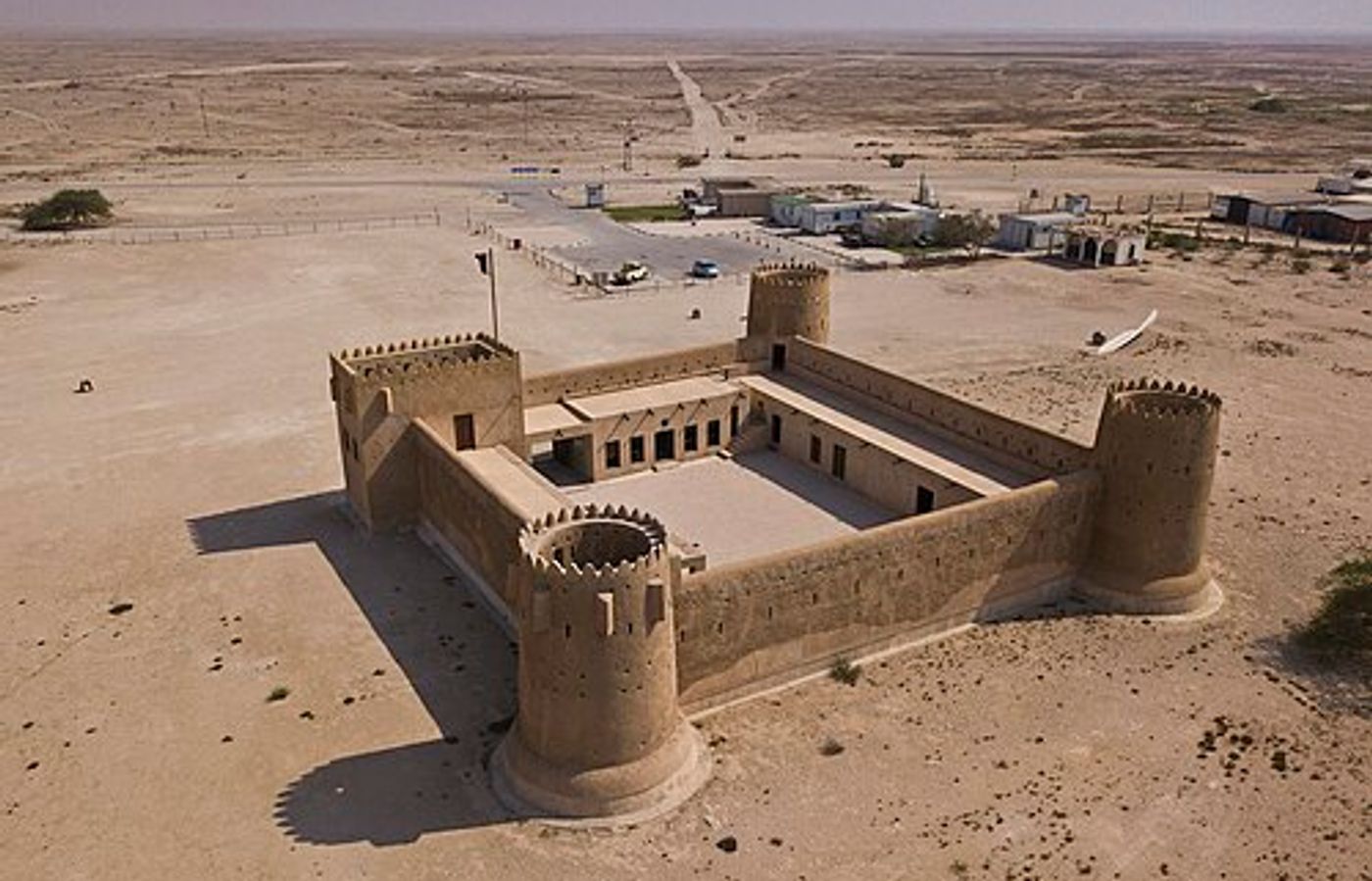
Al Zubarah is Qatar's only UNESCO World Heritage Site and the best-preserved example of an 18th-century Gulf pearling town anywhere in the region. The walled settlement covered around 60 hectares at its peak, traded pearls as far as India, and was abandoned by the early 20th century. That abandonment is precisely why the street plan, courtyard houses, harbour and defensive wall survived under the sand instead of being built over.
What you actually walk through today is the 1938 fort, a square building with three round towers and one rectangular one, restored and holding a small exhibition on the excavations. The archaeological site proper is mostly outlines and knee-high walls, so read the fort displays before heading out onto it. Entry is free. There is no cafe and no shade beyond the fort walls, so carry water. The drive up the Al Shamal Road takes around 105 minutes and pairs well with the Purple Island mangroves on the way back.
Pro Tip: Leave Doha by 07:30 even in winter. The excavation site has no shade at all, and by 11:00 the glare off the sand flattens the low wall outlines to the point where they are hard to read and harder to photograph.

CEO and co-founder
Tomas is the co-founder and director of trip1, an European company specializing in reservation services. He launched the company in 2025 with a focus on building scalable, efficient operations.
10 Best Things to Do in Doha, Qatar - FAQ
No, ten sites in one day is not realistic in Doha. Four or five central attractions fit comfortably into a single day. Khor Al Adaid takes six to seven hours on its own, and Al Zubarah Fort sits 105 km north of the city. Plan three days minimum for the full list, four if you want unhurried museum time.
Work along the Doha Corniche first, then move outward. Day one covers Souq Waqif, Msheireb Museums and the Museum of Islamic Art, all within a short walk or one Doha Metro stop of each other. Day two takes the National Museum of Qatar, Katara Cultural Village and The Pearl-Qatar heading north. Save the desert safari and Al Zubarah Fort for separate full days, and slot Education City in whenever a museum day runs short.
Only the desert safari to Khor Al Adaid genuinely needs booking ahead, ideally two or three days out in winter when operators fill up. The Museum of Islamic Art and the National Museum of Qatar sell timed entry online, which saves queueing on Friday and Saturday but is not mandatory. Souq Waqif, the Corniche, Katara, The Pearl-Qatar and Education City are all free to enter with no ticket at all.
Budget roughly 600 to 750 QAR (about 150 to 185 EUR) per person for admissions and transport. Museum entry runs 50 QAR (13 EUR) each at the Museum of Islamic Art and the National Museum of Qatar. The desert safari is the single biggest line item at 250 to 400 QAR (62 to 100 EUR). A three-day Doha Metro pass costs 20 QAR (5 EUR), and the Al Zubarah round trip by taxi adds around 300 QAR (75 EUR).
Seven of the ten are reachable on the Doha Metro. Souq Waqif, Msheireb Museums, the Museum of Islamic Art, the Doha Corniche, the National Museum of Qatar, The Pearl-Qatar and Education City all sit near a station, and free Metrolink feeder buses cover the last stretch where the walk is long. Katara Cultural Village needs a short feeder bus or taxi from Legtaifiya. Khor Al Adaid and Al Zubarah Fort have no rail link at all.
Several worthwhile places did not make the top ten. Banana Island and Al Safliya Island suit a beach day by ferry from the Corniche. The Aspire Park and Torch tower area rewards an hour at sunset. Falcon Souq, tucked behind Souq Waqif, is free and genuinely odd in the best way. Sheikh Faisal Bin Qassim Al Thani Museum out at Al Samriya holds a sprawling private collection, and Al Wakrah Souq gives you a quieter version of Souq Waqif twenty minutes south.