Guides · Belgrade
10 Best Things to Do in Belgrade

CEO and co-founder
This guide ranks the 10 best things to do in Belgrade in 2026, the sights that genuinely earn their place whether you have a long weekend or a full week in the Serbian capital. Each entry lists the exact street address, nearest bus, tram or trolleybus stop, distance from Republic Square, and a practical Pro Tip you can act on when you arrive.
We have ordered the list to help you plan efficient routes across the city. Belgrade Fortress, Knez Mihailova pedestrian street, Republic Square and Skadarlija sit within a compact 20-minute walk in Stari Grad and can be strung together in a single afternoon. The Temple of Saint Sava and the Nikola Tesla Museum share the Vracar district. Ada Ciganlija belongs on a summer half-day, Zemun and Gardos Tower earn a sunset visit, and the Splavovi floating clubs run through the night on the Sava and Danube. Novi Sad and Petrovaradin Fortress are about 35 minutes away by high-speed train and make a rewarding third-day trip.
Belgrade is one of Europe's most affordable capitals. Most sights on this list are free or cost less than 5 EUR, and city buses, trams and trolleybuses have been free for everyone since January 2025. The city sits at the confluence of the Sava and Danube rivers, has been destroyed and rebuilt more than 40 times over 2,300 years, and today runs on a Bohemian energy that stays awake until dawn.
1Belgrade Fortress and Kalemegdan Park - The Historic Heart of the City
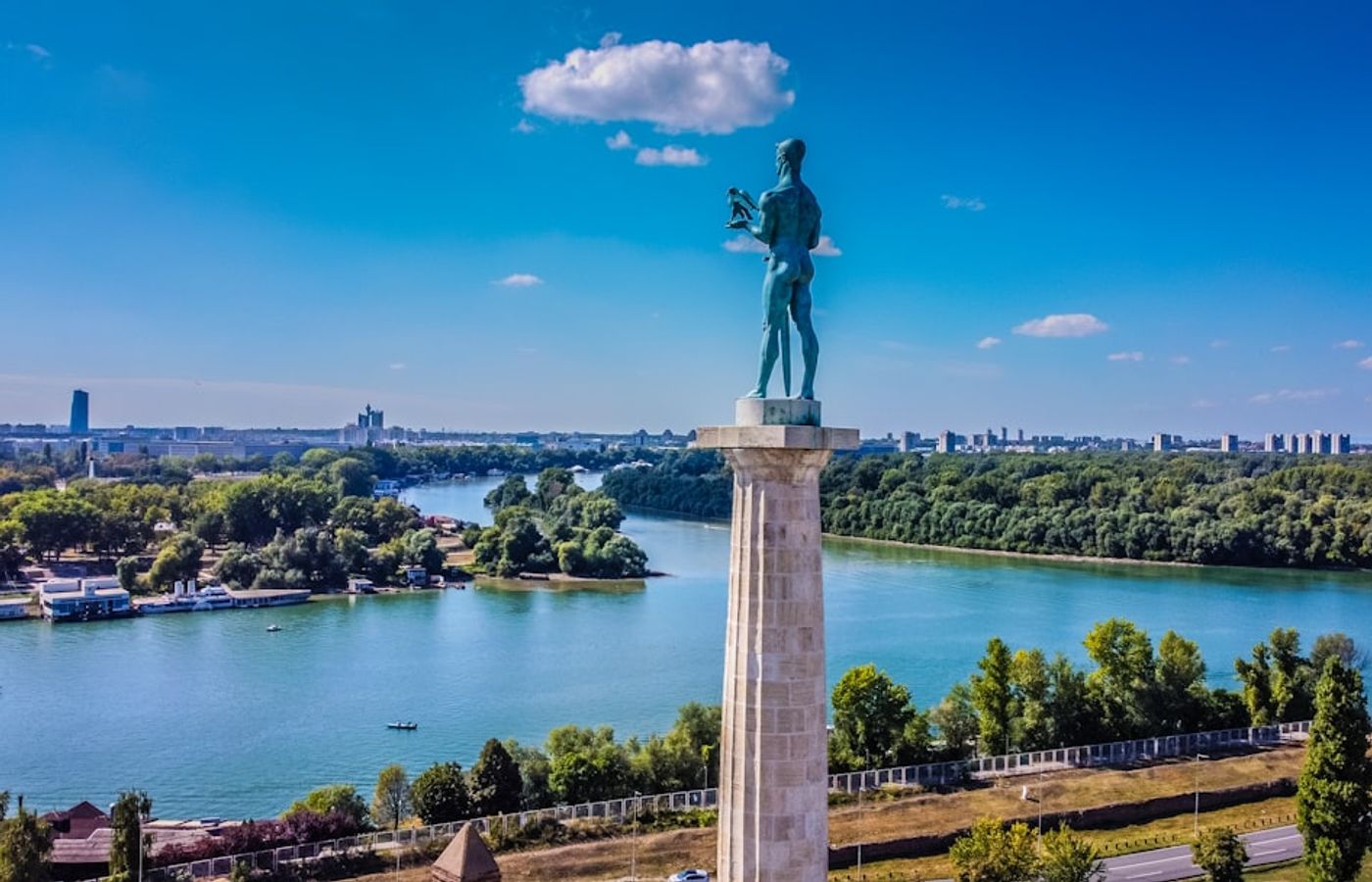

Topping every list of things to do in Belgrade, Belgrade Fortress (Beogradska tvrdjava) rises on the ridge where the Sava meets the Danube. The site has been continuously occupied since the 3rd century BC, when the Celtic Scordisci built the first stronghold called Singidunum. Roman, Byzantine, Ottoman and Habsburg walls all layer on top of each other across 55 hectares of ramparts, gates and terraces.
The Upper Town holds the Pobednik (Victor) statue, a 14-metre bronze monument to the 1918 Balkan campaigns, and the terrace beside it delivers the best free view in the city. Inside the walls you can walk through the Military Museum (Tuesday-Sunday 10:00-17:00, 200 RSD), the Ruzica Church with chandeliers built from bullet shells and bayonets, the small public observatory with four panoramic telescopes, and the Belgrade Zoo at Mali Kalemegdan 8. Kalemegdan Park spreads across the rest of the plateau, laced with plane trees, playgrounds, a Roman well and the Cvijeta Zuzoric Art Pavilion.
Pro Tip: Arrive by 06:30 on a summer morning for sunrise over the confluence, then loop through the empty Upper Town before the tour buses reach the main gate at 09:00. In winter, come at 15:30 for golden hour and stay for the streetlights along Knez Mihailova as you walk back.
2Skadarlija - The Bohemian Quarter with Live Serbian Music
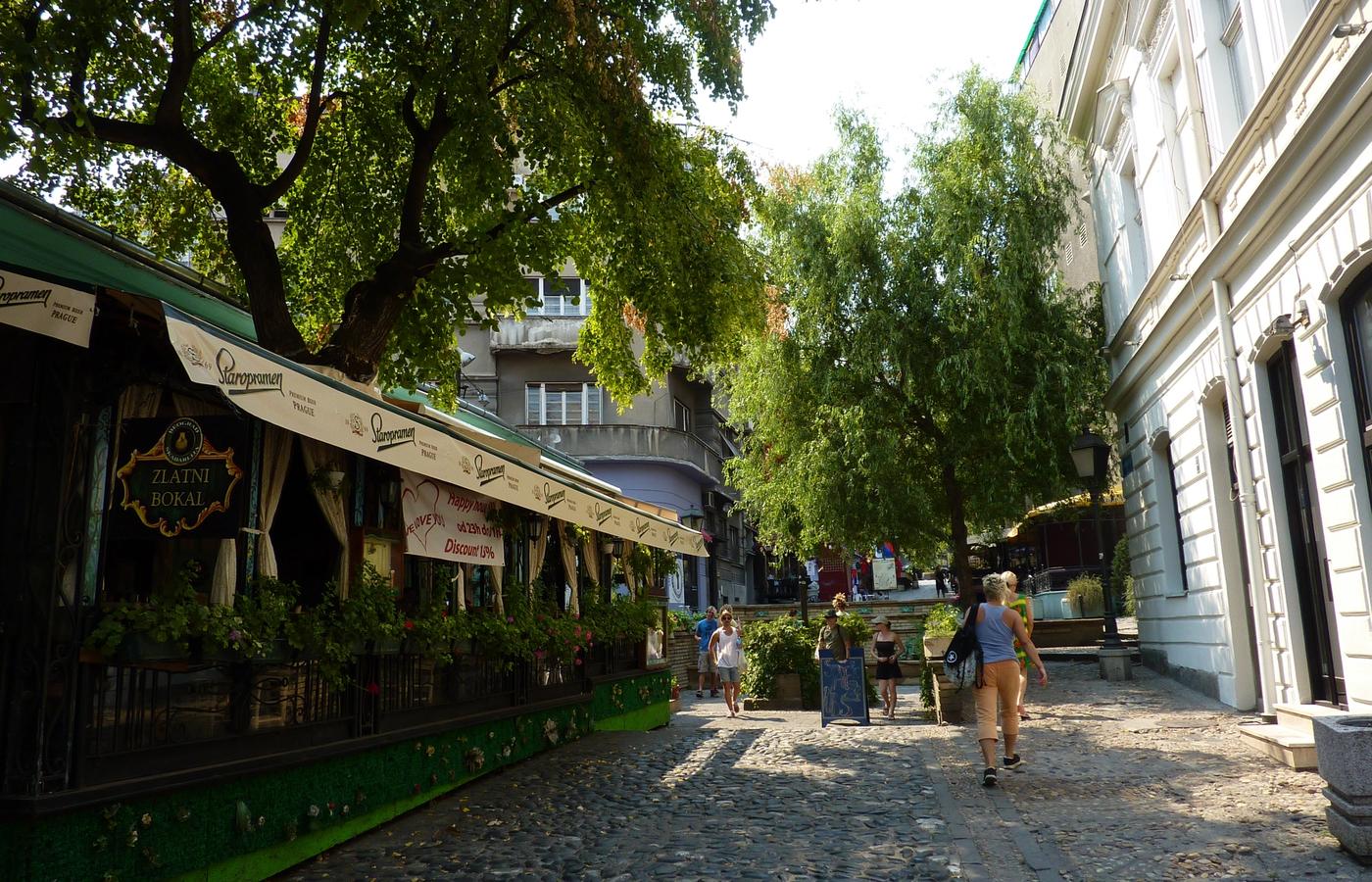
Skadarlija is Belgrade's cobblestone bohemian quarter, a single sloping street lined with 19th century kafanas, wall murals and outdoor tables. The neighbourhood earned its reputation in the 1880s when Serbian poets, actors and painters colonised the Dva Jelena tavern (Skadarska 32, founded 1832) and the Tri Sesira restaurant. Traditional tamburitza and violin bands still work the terraces most evenings, playing sevdah and starogradska ballads to diners eating Karadjordjeva schnitzel and cevapi.
The 400-metre street runs from Cetinjska (home of the KC Grad cultural centre and Drugstore club) down to Bajlonijeva pijaca farmers' market. Sesir Moj at Skadarska 21 stays open daily 09:00-01:00 and serves the classic Balkan mixed grill. The trompe-l'oeil frescoes on the south walls appeared in the 1970s as part of a heritage restoration. Just north of the street you enter Strahinjica Bana, the strip locals nickname Silicon Valley for its glossy cocktail bars.
Pro Tip: Skip lunch here (mediocre and overpriced) and arrive at 20:30 for dinner when the tamburitza players start their circuit. Ask for a table at Sesir Moj on the terrace side, not indoors, and order the Karadjordjeva schnitzel with a shot of Sljivovica plum brandy from Fruska Gora.

3Knez Mihailova Street - Belgrade's Main Pedestrian Artery

Knez Mihailova (Prince Michael Street) is the city's main pedestrian axis, linking Republic Square with the entrance to Belgrade Fortress. The 800-metre run is protected under Serbia's cultural heritage law - almost every building along it dates from between 1870 and 1930, in a mix of academic historicism, Art Nouveau and early modernism. Highlights include the Serbian Academy of Sciences at number 35, the neo-Renaissance Hotel Balkan facade and the House of Nikola Spasic at number 33.
The street is at its best in early evening when the korzo (pre-dinner promenade) fills the pavement with families, students and buskers. Bookstores Vulkan (at the Republic Square end) and Plato (at the Kalemegdan end) both keep late hours. Side-streets Cika Ljubina and Vase Carapica hide independent cafes, ice cream stands and the Zepter Museum at number 42. Free wifi covers the entire street through the city's BG-Free hotspot.
Pro Tip: Walk Knez Mihailova between 18:00 and 20:00 for the korzo, then duck one street east to Obilicev Venac for coffee at Kafeterija - the terrace overlooks the neoclassical Ministry of Foreign Affairs and stays sunny into the evening.
4Temple of Saint Sava - One of the Largest Orthodox Churches in the World
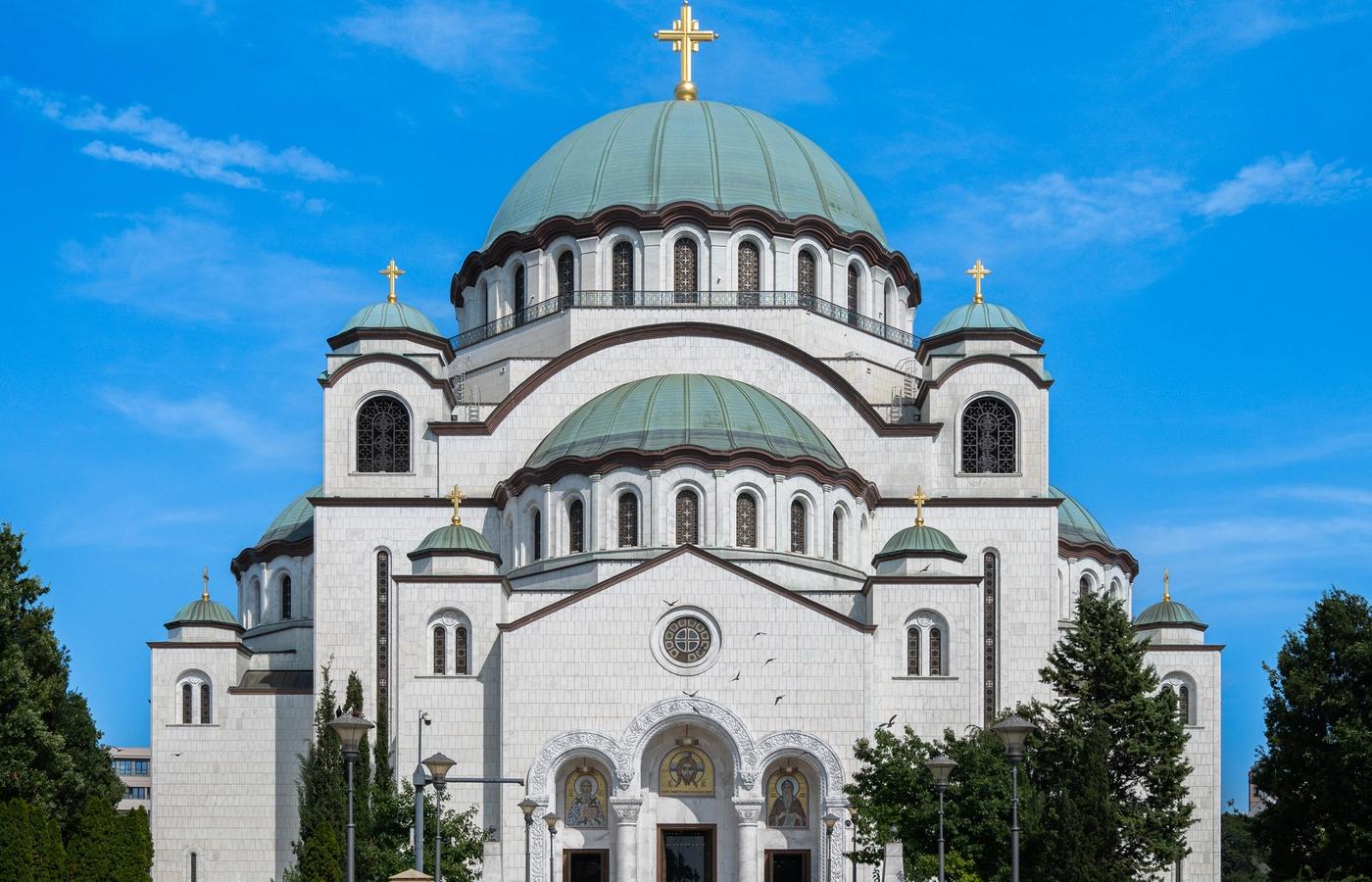
The Temple of Saint Sava (Hram Svetog Save) is the largest church in Serbia and one of the largest Serbian Orthodox churches in the world. The neo-Byzantine cross-shaped structure measures 91 metres long, 81 metres wide and 82 metres tall to the top of its central dome, which alone weighs 4,000 tonnes. It stands on the Vracar plateau where the Ottomans burned the relics of Saint Sava, the founder of the Serbian Orthodox Church, in 1595 - construction on the church began in 1935 to commemorate that site.
The exterior white marble and grey granite finish was completed in 2004 but interior work continues into 2026. The mosaic-covered central dome, unveiled in 2017, uses more than 15,000 square metres of gold-leaf mosaic laid by Russian and Serbian artists. The crypt beneath the main sanctuary is the most rewarding part of a visit, with polished marble floors, modern iconography and the tomb of Patriarch Irinej. Open daily 07:00-20:00 with free entry. Do not confuse the Hram (temple) with the smaller adjacent Sveti Sava parish church.
Pro Tip: Enter through the crypt on the north side first, then climb to the main sanctuary through the interior stairs for the best sightline up into the mosaic dome. Dress modestly (shoulders and knees covered) and remove hats. Come Sunday morning around 10:00 for the choir.
5Ada Ciganlija - Belgrade's River Island Beach and Adventure Park
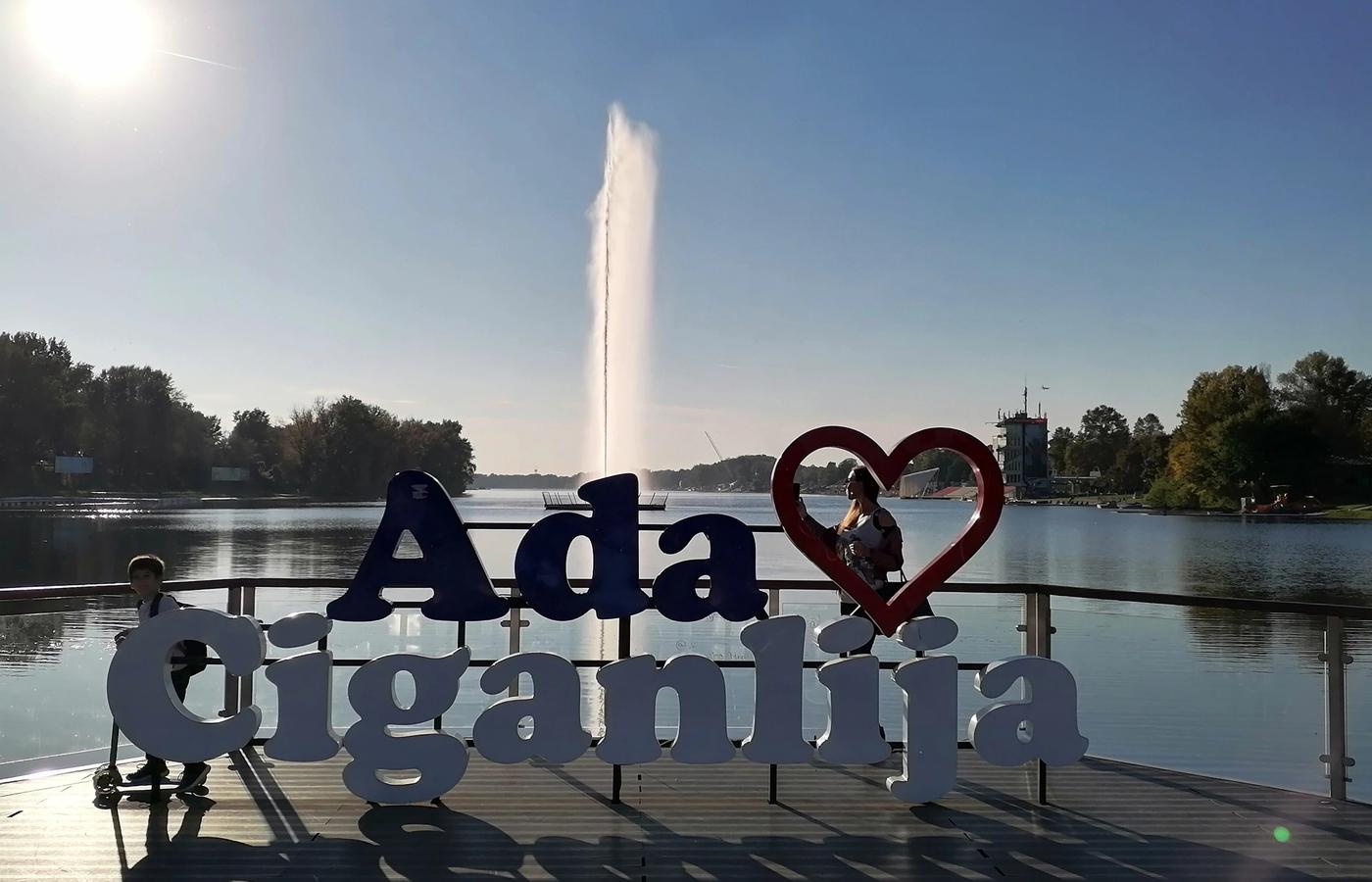
Ada Ciganlija is a former Sava river island converted into Belgrade's summer beach and adventure park. In the 1960s the city dammed both channels around the island and built an artificial lake, then imported white sand for 8 kilometres of gravel-and-sand beach. Locals just call it Ada. From May to September this is the city's outdoor centre - up to 300,000 people visit on a hot weekend.
The lake is safe for swimming (regularly water-tested), with roped-off sections and lifeguards from June to August. On the shore you can rent bicycles and inline skates for around 200 RSD per hour, play tennis, football, basketball, beach volleyball or golf, and use the outdoor calisthenics parks. Adventure Park adds bungee, water skiing, kayaking and a ropes course open May-September for 800 RSD per round. In winter the lake freezes and the ski simulator on the north bank stays open year-round. Bike paths link Ada to Zemun, Dorcol and New Belgrade along the Sava.
Pro Tip: Walk or cycle to the western tip of the island (Ada Medjica) for quieter beaches with the fewest crowds. Bring your own picnic - the on-site cafes charge tourist prices - and pick up burek and yogurt from any Trznica bakery on the way in.
6Nikola Tesla Museum - The Only Museum Dedicated to the Serbian Inventor
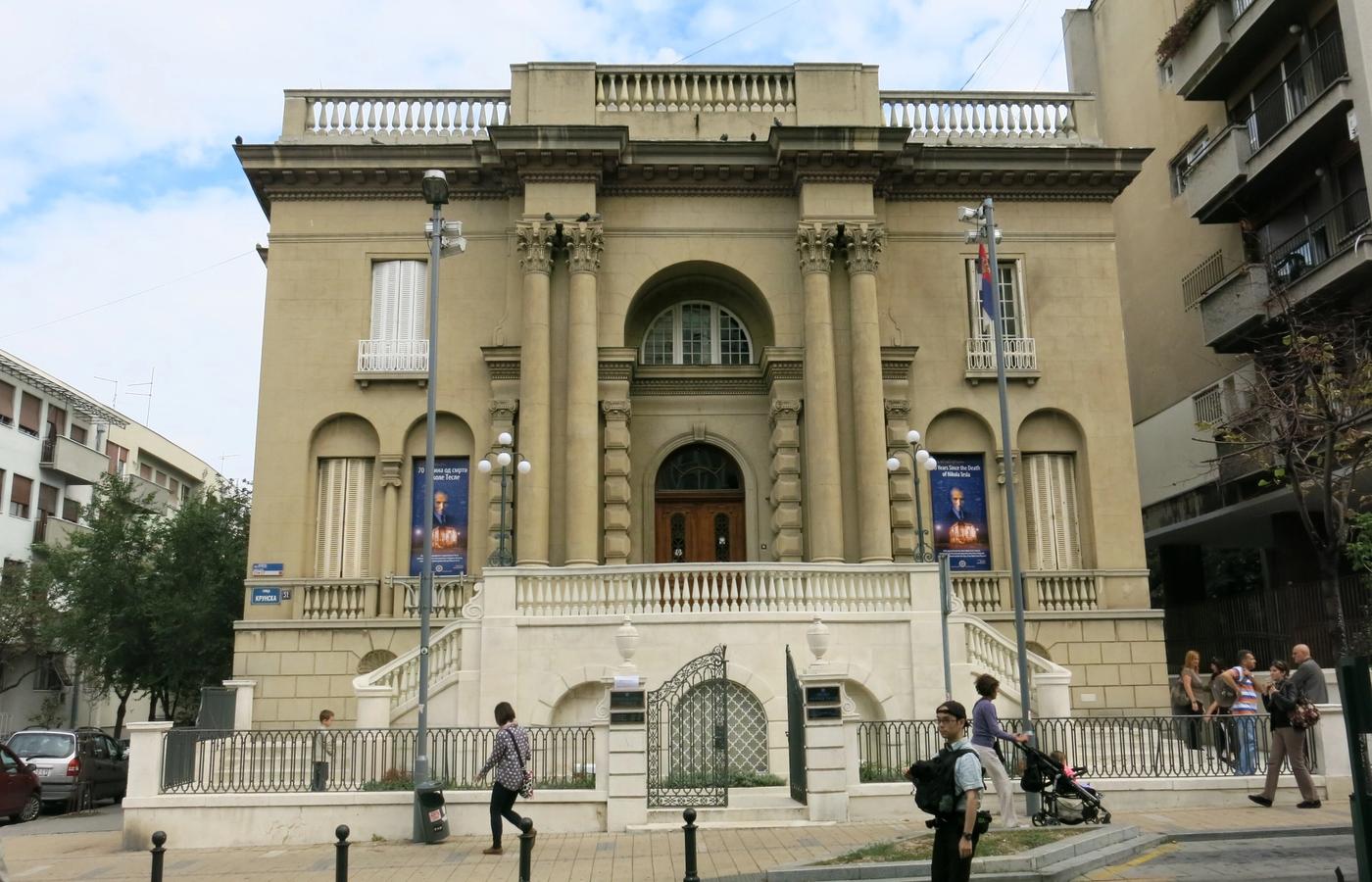
The Nikola Tesla Museum holds the world's only complete collection of the Serbian-American inventor's personal effects, laboratory instruments and the golden urn containing his ashes. Founded in 1952 and housed in a 1927 villa on Krunska street, the museum's collection includes more than 160,000 original documents, 2,000 books and 1,200 objects that were transferred from the United States by Tesla's nephew Sava Kosanovic after Tesla's death in 1943.
The 45-minute English tour departs at the top of every hour Tuesday to Sunday 10:00-20:00 and costs 500 RSD (300 for students). The demonstrations - a Tesla coil sparking 500,000 volts, a spinning egg powered by a rotating magnetic field, and fluorescent bulbs lit by wireless energy transmission - are led by engineering students from Belgrade University. The rear rooms hold the original prototypes for the AC induction motor and the polyphase generator. The urn with Tesla's ashes sits in a golden globe in the main hall.
Pro Tip: Arrive 30 minutes before the top of the hour in July and August - English tours cap at 25 people and often fill up. Ask the guide to run the Tesla coil demonstration twice; they usually will if the group is engaged. The museum wifi password is TeslaBG17.
7Republic Square and the National Museum - Belgrade's Cultural Meeting Point
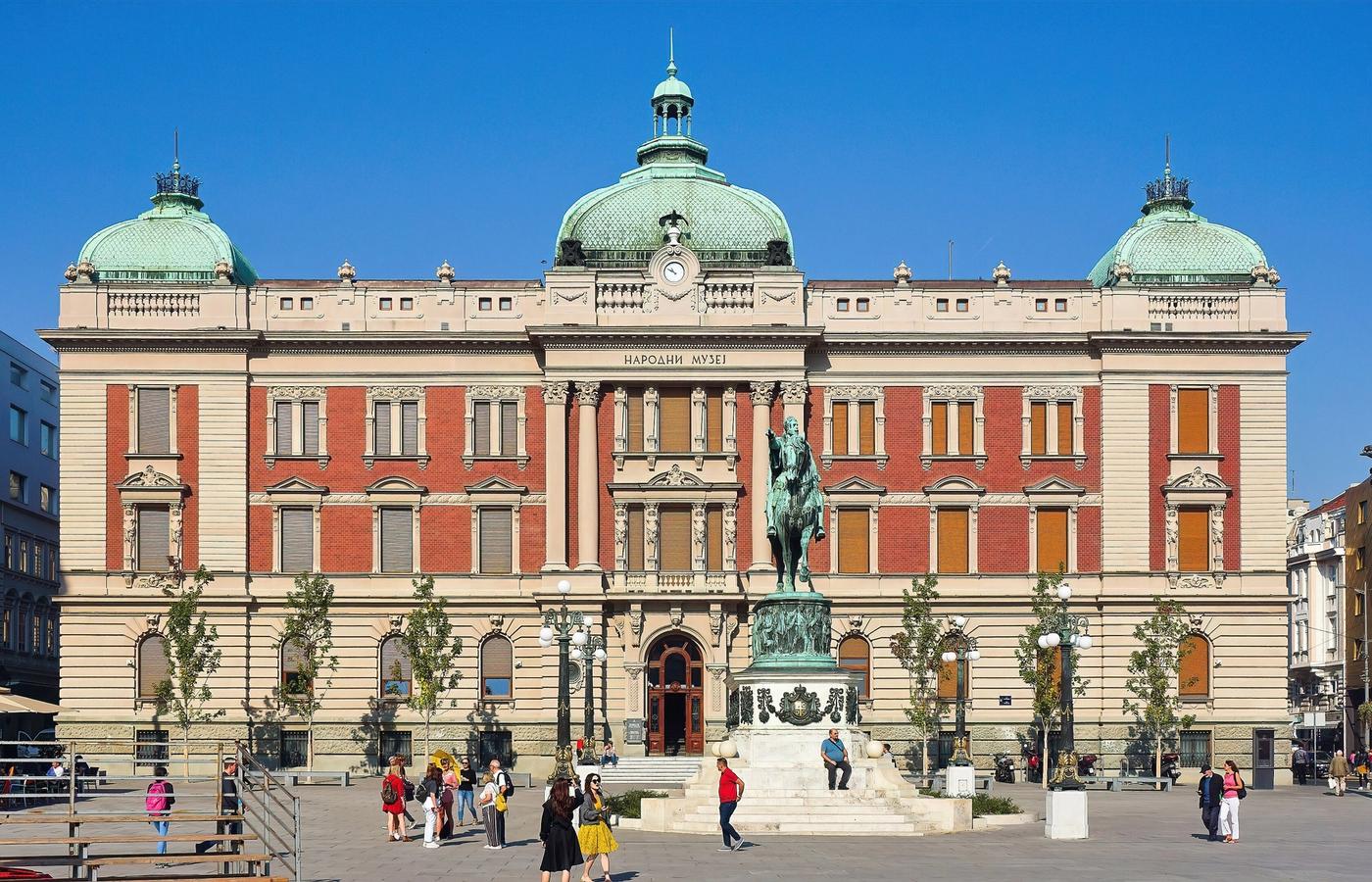
Republic Square (Trg Republike) is Belgrade's most important public space, the natural meeting point for the whole city. The 1882 bronze equestrian statue of Prince Mihailo Obrenovic in the middle - Serbs simply say we'll meet 'kod konja' (by the horse) - points at the direction the Ottoman troops retreated after the 1867 handover of the Turkish-held cities. The square is flanked by the neo-Renaissance National Theatre (1869) and the National Museum, and opens south into the shopping streets Vase Carapica and Terazije.
The National Museum reopened in 2018 after a 15-year restoration. Its 400,000-object collection spans Tuesday, Wednesday, Friday and Sunday 10:00-18:00, Thursday and Saturday 12:00-20:00, and closed Monday. Admission is 300 RSD and free on Sundays. Highlights include the 4th millennium BC Vinca Culture figurines, the Miroslav Gospel (Serbia's oldest surviving book, from 1180), a strong 19th century French collection with 22 Renoir paintings, a Van Gogh landscape and works by Picasso, Chagall, Modigliani and Kandinsky.
Pro Tip: Enter the National Museum from the side door on Vase Carapica, not the front - the queue is always shorter. Head straight to the second floor for the French Impressionists before the crowds, then work down through the archaeology on floor one and the Serbian medieval frescoes in the basement.
8Zemun Old Town and Gardos Tower - The Habsburg Quarter on the Danube
Zemun feels like a different city. Until 1918 it sat inside the Austro-Hungarian empire while Belgrade proper was Ottoman - and the Danube between them was the frontier. The pastel-coloured Habsburg townhouses, the neat river promenade and the Baroque church spires still declare that heritage. The Zemun quay (Kej Oslobodjenja) is Belgrade's most popular waterfront strip, packed with fish restaurants like Saran at number 53 and a paved cycle path that reaches Ada Ciganlija in one hour.
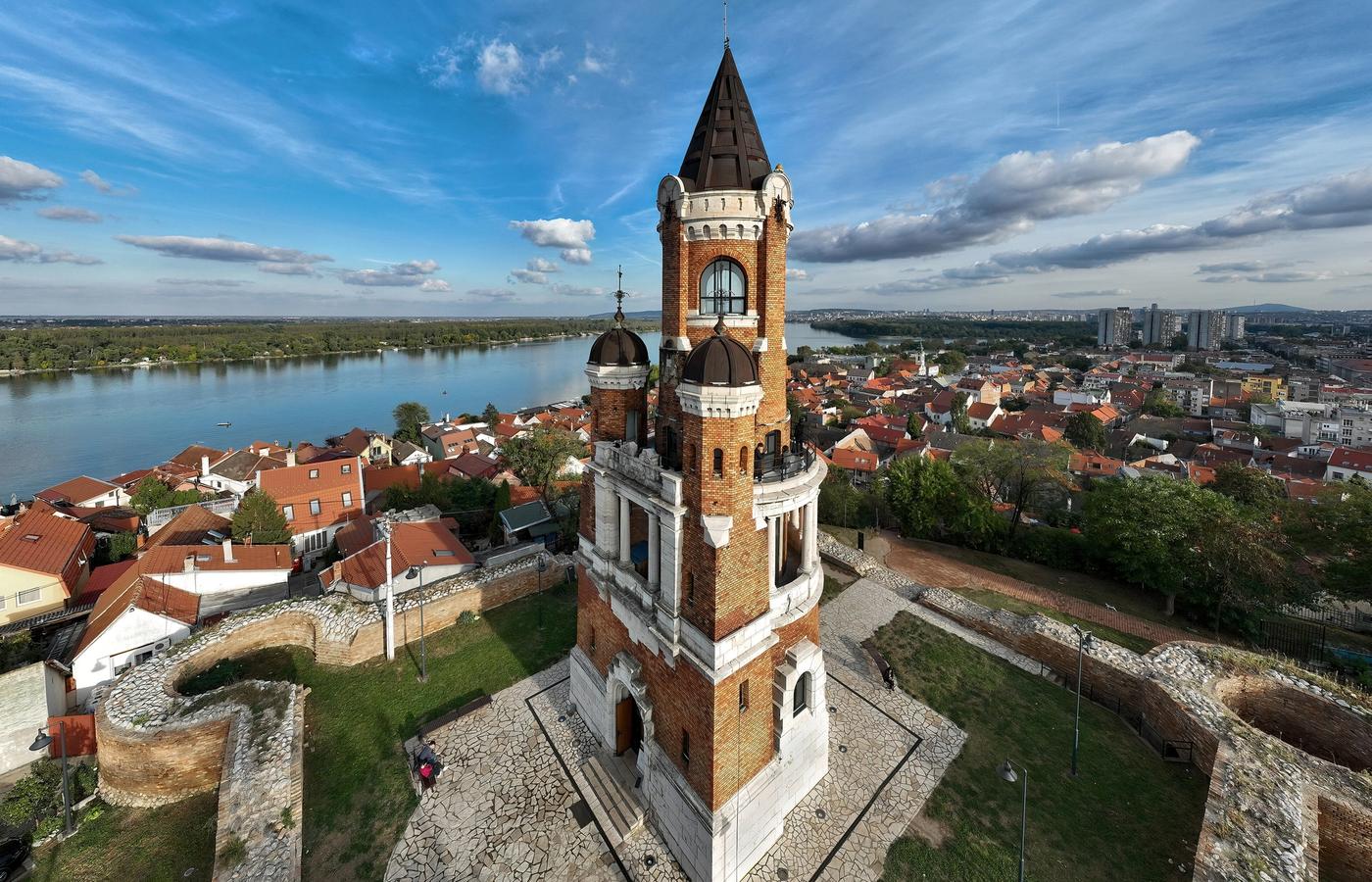
Above the old town rises Gardos Hill, crowned by the 36-metre Sibinjanin Janko Tower - officially the Millennium Tower, built by Budapest in 1896 to mark 1,000 years of Hungarian statehood. The climb up Grobljanska cobbled lane past the 1745 Nikolajevska Church takes 10 minutes and the view from the top platform covers the confluence of the Sava and Danube, the fortress, New Belgrade and the Pancevo bridge. Salas 034 restaurant at Sindjeliceva 34 does the classic Vojvodina slow-cooked lamb (Monday-Saturday 13:00-23:00, Sunday 10:00-22:00).
Pro Tip: Come at 18:00 in summer for sunset from Gardos Tower, then walk down to Kej Oslobodjenja for grilled Danube fish at Saran. Return by bus 15 to Zeleni Venac (25 minutes) or by taxi for around 700 RSD.
9Splavovi - Belgrade's Legendary Floating Nightclubs on the Sava and Danube
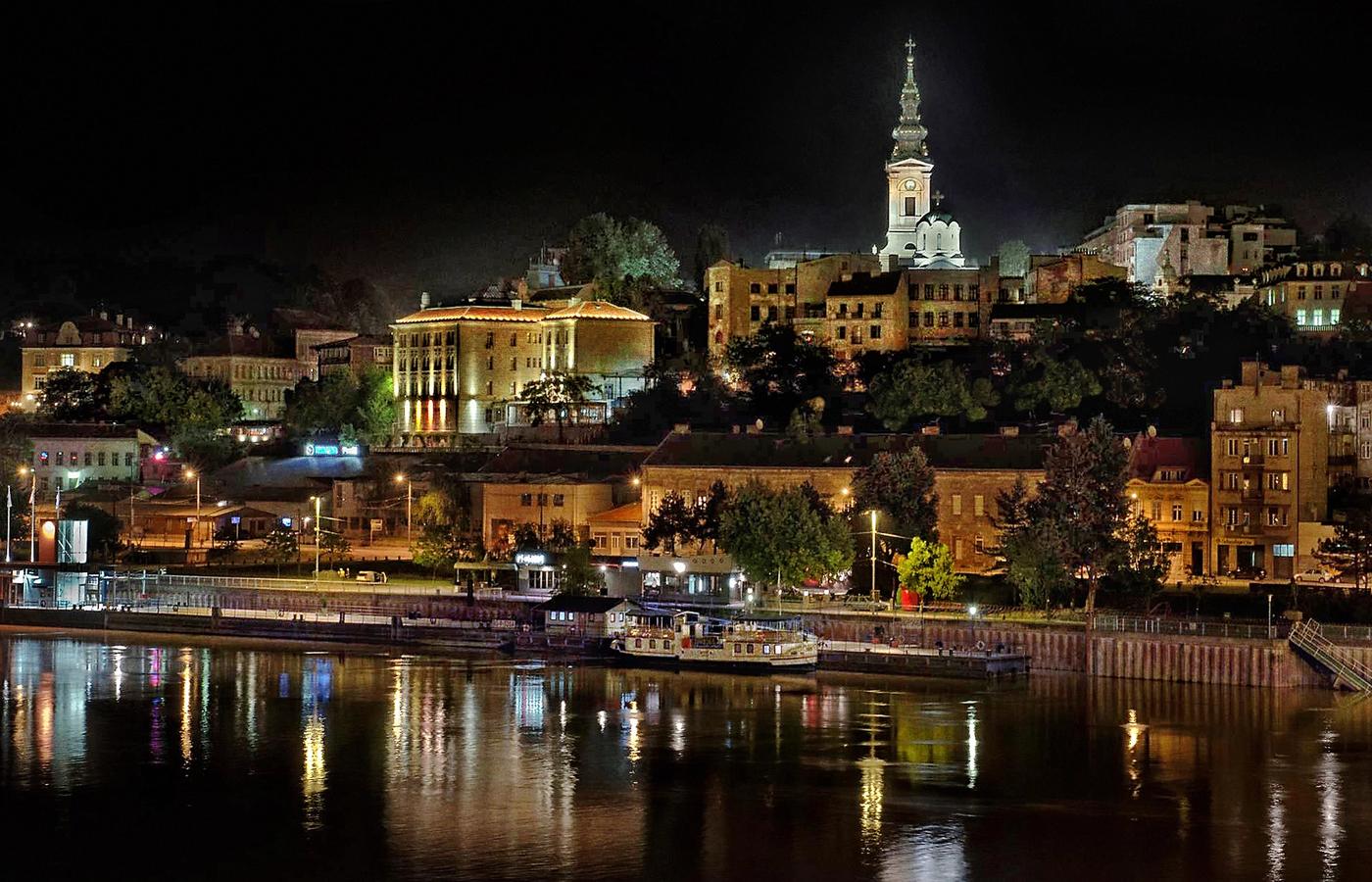
Splavovi (literally 'rafts') are the barge-mounted restaurants and nightclubs that line the Sava and Danube riverbanks. This is what makes Belgrade one of the loudest and latest-closing nightlife cities in Europe. The two main strips are Bulevar Nikole Tesle on the Danube in front of the Hotel Yugoslavia in New Belgrade (mostly nightclubs) and Sava Promenada across from Beton Hala on the Sava (mixed restaurants and clubs).
The New Belgrade Danube strip is where you find the biggest venues - Freestyler, Barutana, Lasta and 20/44 are legendary summer names. Music runs the full range: turbo-folk, techno, deep house, hip-hop and Serbian rock. Most rafts open around 23:00 and close at sunrise. Entry is usually free for foreign guests but headline nights use guest lists - ask your hotel to phone ahead. There is no cover on most nights but drinks run 400-800 RSD. Dress code is smart-casual; sandals and shorts do not get past the door.
Pro Tip: Do not turn up before midnight - splavovi genuinely fill only after 01:00. Arrive by taxi (around 500 RSD from Republic Square) rather than public transport since buses stop around 00:30. In winter the summer rafts shut and the party moves to Klub 20/44 and Drugstore in Stari Grad.
10Day Trip to Novi Sad and Petrovaradin Fortress - The Athens of Serbia on the Danube
Novi Sad, 80 km north of Belgrade, is the capital of Vojvodina and Serbia's second-largest city. Locals nickname it the 'Athens of Serbia' for its late-Habsburg architecture and university tradition. The compact Old Town clusters around Trg Slobode and the neo-Gothic Name of Mary Church, with the pedestrian Zmaj Jovina street running east to the Bishop's Palace. Soko high-speed trains from Belgrade Centar (Prokop) station take about 35 minutes; check fares before you travel.
Across the Danube looms Petrovaradin Fortress, built by the Habsburgs between 1692 and 1780 to guard against Ottoman advance. It is one of the largest star-shaped fortresses in Europe, covering 112 hectares with 16 kilometres of underground tunnels. The upper terrace holds the iconic clock tower (with hour and minute hands reversed so bargemen could read time from the Danube) and the small Museum of Novi Sad. From 2000 to 2025 the fortress hosted EXIT Festival every July; the festival left Serbia after its 2025 edition. The Novi Sad Cathedral and the Serbian National Theatre are back on the north bank.
Pro Tip: Take the 09:00 train from Belgrade Prokop for a full day. Combine the fortress with lunch in the pastel-yellow Petrovaradin lower town, then cross the Varadin bridge to Zmaj Jovina for coffee. On the way back, add a stop at a Fruska Gora monastery like Krusedol.
Get hotel deals for Belgrade
Price drops, new stays and local tips for Belgrade, straight to your inbox.
No spam, unsubscribe anytime.

CEO and co-founder
Tomas is the co-founder and director of trip1, an European company specializing in reservation services. He launched the company in 2025 with a focus on building scalable, efficient operations.
10 Best Things to Do in Belgrade, Serbia - FAQ
Start with Belgrade Fortress and Kalemegdan Park, where the Pobednik statue looks over the meeting of the Sava and Danube. Then walk Knez Mihailova to Republic Square and the National Museum, and eat in Skadarlija's bohemian kafanas. Add the vast Temple of Saint Sava, with its gold mosaic dome, the Nikola Tesla Museum, and sunset from Gardos Tower in Zemun.
Two to three days. The fortress, Knez Mihailova, Republic Square and Skadarlija fit into one afternoon and evening. A second day covers the Temple of Saint Sava and the Tesla Museum in Vracar, then Zemun at sunset, and in summer you can add a half-day at Ada Ciganlija. Use a third day for Novi Sad, about 35 minutes away on the Soko high-speed train.
Yes, it is one of Europe's more affordable capitals. Belgrade Fortress, Kalemegdan Park, Knez Mihailova, Skadarlija and the Temple of Saint Sava are all free, and most paid sights cost a few hundred dinars. City buses, trams and trolleybuses have been free for everyone since January 2025. Even at the floating clubs on the rivers, drinks typically cost 400 to 800 RSD.
Yes, the centre is. Belgrade Fortress, Knez Mihailova, Republic Square and Skadarlija sit within a compact 20-minute walk in the old town. The Temple of Saint Sava and the Tesla Museum in Vracar are further south, and Zemun is across the Sava, about an hour by bike along the river path. For longer hops, city buses, trams and trolleybuses are free.
Yes, in most places a visitor goes. English is widely spoken by younger people and by staff in hotels, restaurants, bars and tourist information centres. Older people and staff at markets or offices outside the centre may speak little. Serbian is written in both Cyrillic and Latin letters, so many signs and menus are easy to read, and a few words such as hvala (thank you) are appreciated.
No. The currency is the Serbian dinar (RSD). Hotels often quote prices in euros, but you pay in dinars. Cards are widely accepted in established shops, restaurants and hotels in Belgrade, and ATMs are everywhere. Exchange offices (menjačnica) are on almost every street corner, and exchange machines take euros, US dollars and British pounds. Carry some cash for markets and small cafés.