

Guides · Barcelona
A Photographic Journey Through Barcelona's Gothic Quarter

co-founder
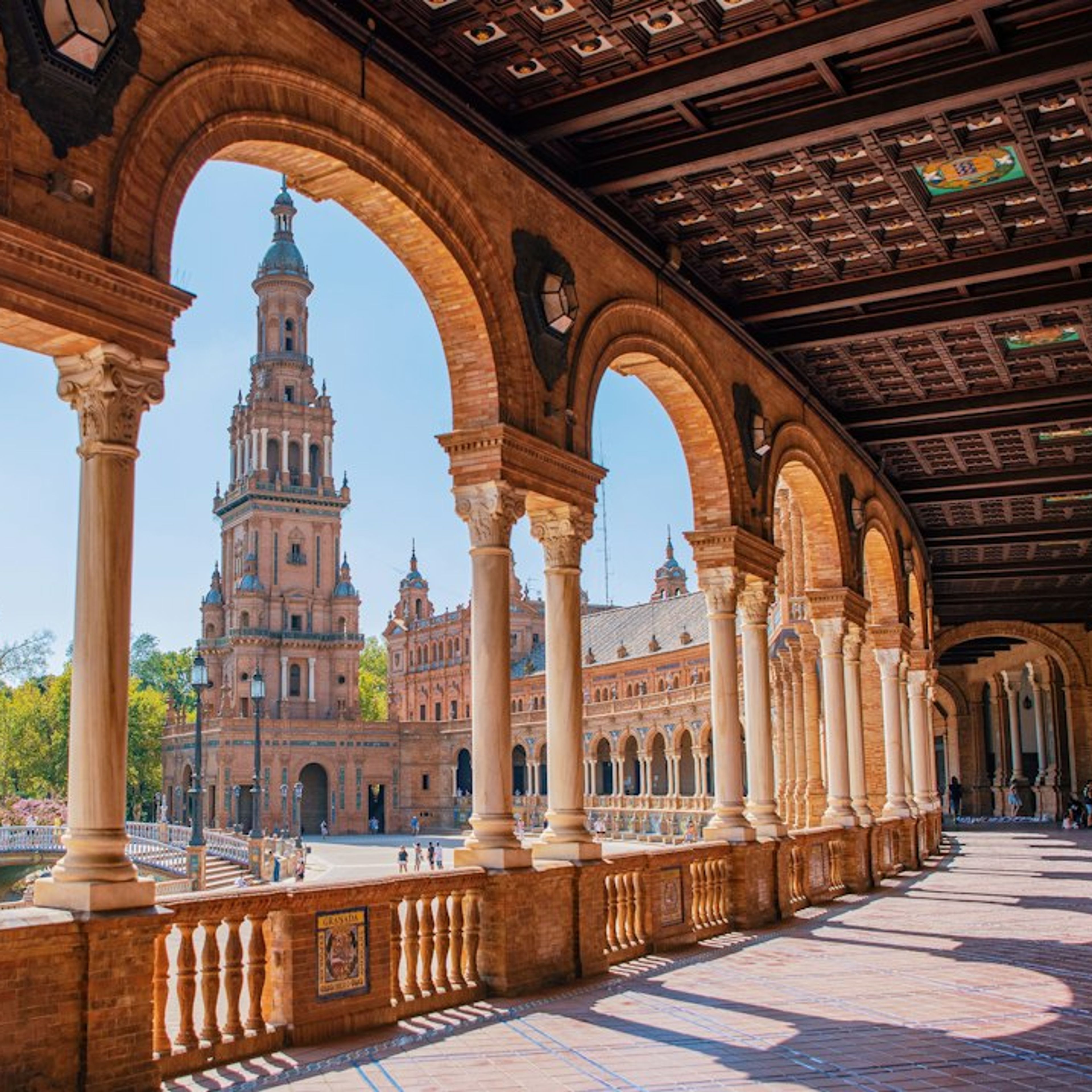
Barcelona's oldest neighborhood is often presented through its landmarks, but its true character emerges between them. Walking through Time itself: the Gothic Quarter with a Film Camera revealed a city where Roman foundations, medieval architecture and contemporary urban life continue to exist side by side.
A Different Introduction to Barcelona
Barcelona attracts millions of visitors every year with its beaches, seafood paella, Gaudí's architecture, Miro’s artworks and Mediterranean lifestyle. Yet before reaching the famous landmarks, the city introduces itself through something less obvious - its ability to blend centuries of history into everyday life.
My visit to Barcelona came during a company team-building trip, leaving one free day to explore the city. Rather than following a strict itinerary, the Gothic Quarter became the focus of the day. It was also my first time visiting this part of Barcelona, making every street and square an unexpected discovery rather than a destination already familiar through guidebooks.
To document the experience, I carried two film cameras: a Leica M6 loaded with 35mm film and a Hasselblad 500CM shooting medium format. While each camera offered a different way of seeing the city, together they encouraged a slower approach - one built around observation rather than simply collecting landmarks.
Entering the Gothic Quarter
The transition into Barcelona's historic center happens almost unnoticed.
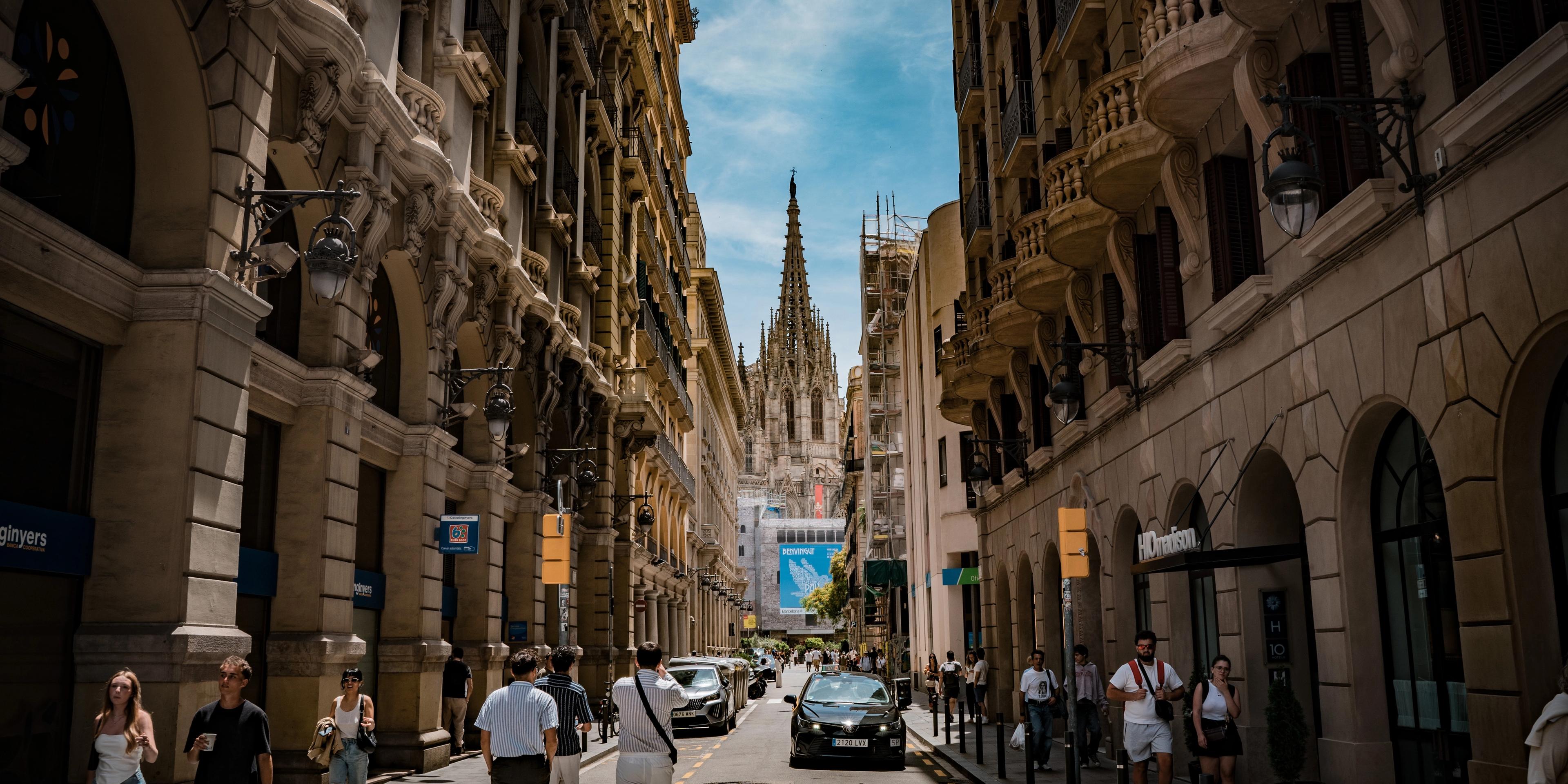
Wide boulevards lined with elegant nineteenth-century buildings gradually narrow into medieval streets where stone façades replace modern storefronts and traffic gives way to pedestrians. The city's rhythm changes almost immediately. Distances become shorter, streets become quieter, and every corner reveals another layer of architectural history.
Unlike many preserved historic districts across Europe, Barcelona's Gothic Quarter remains a functioning neighborhood. Apartments overlook cafés, restaurants occupy centuries-old buildings, and residents continue their daily routines among visitors exploring the city's oldest streets.
This coexistence gives the district a sense of authenticity that cannot be recreated through preservation alone. History here isn't separated from modern life - it continues to serve it.
Architecture Built Across Generations
One of Barcelona's defining characteristics is that it was never built during a single era.
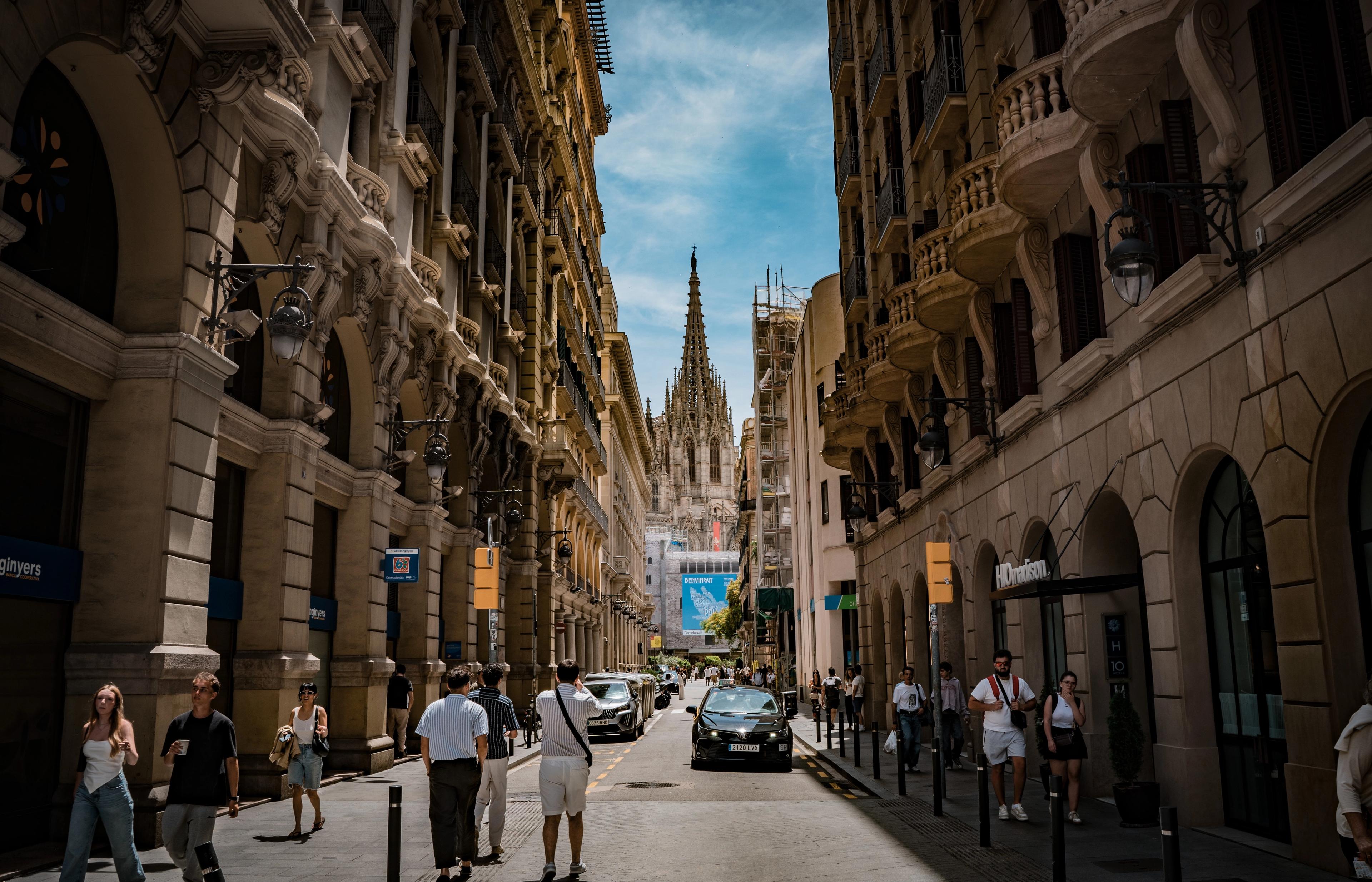
Roman walls still survive beneath medieval buildings. Gothic churches stand beside nineteenth-century apartment houses. Modernist architecture appears only a few streets away from structures that have remained largely unchanged for centuries.
Rather than replacing one another, each generation has contributed another layer to the city.
Walking through the Gothic Quarter makes this especially visible. Decorative balconies overlook Roman foundations. Modern lighting illuminates medieval courtyards. Contemporary businesses occupy buildings originally designed for entirely different purposes hundreds of years ago.
The city constantly evolves without abandoning its past.
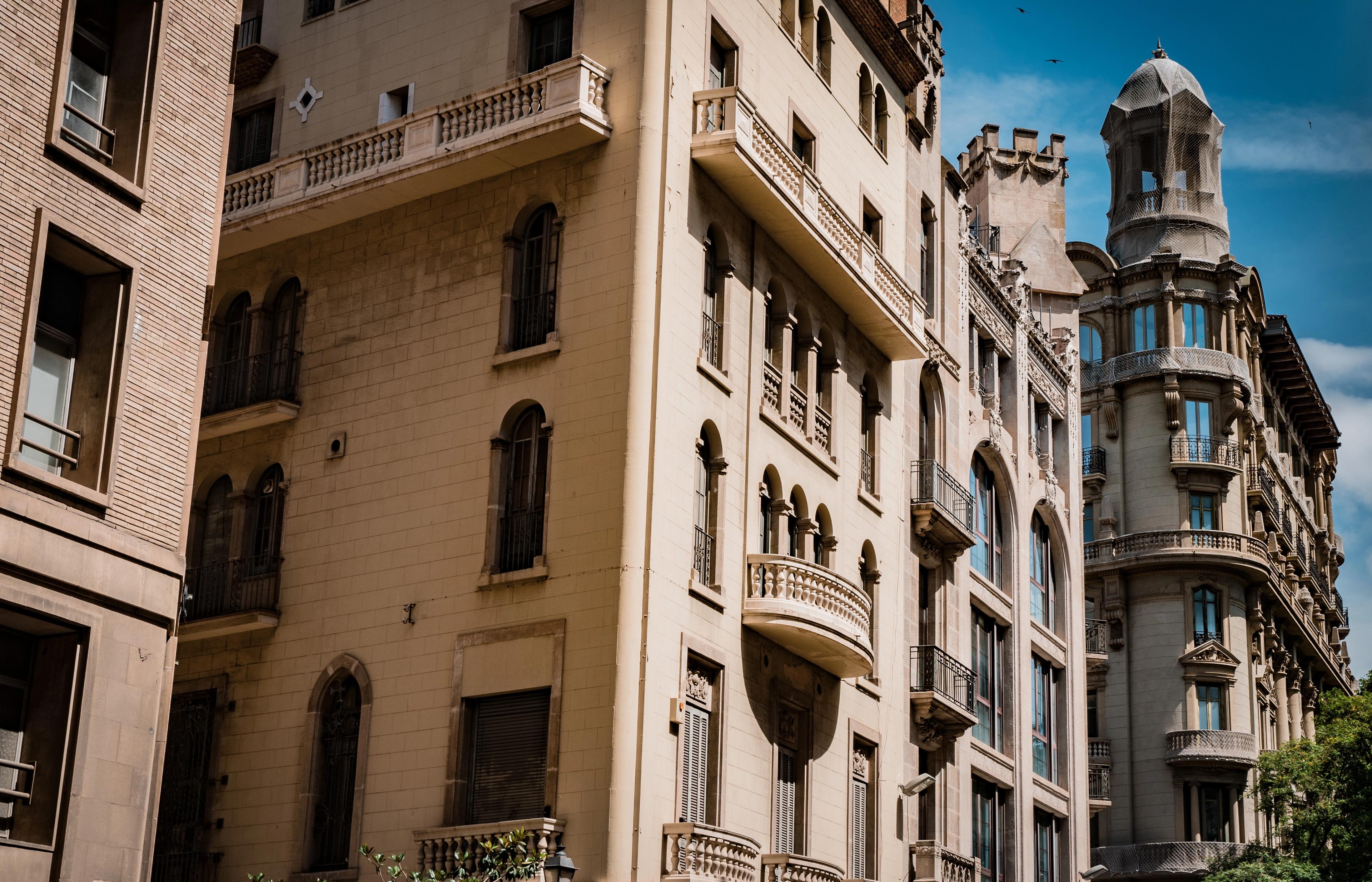
Barcelona Cathedral: A Monument That Still Belongs to the City
At the center of the district stands Barcelona Cathedral, one of the most recognizable landmarks in the Gothic Quarter.
Its elaborate Gothic façade dominates the surrounding square, yet the cathedral feels remarkably integrated into everyday life rather than isolated as a tourist attraction. Office workers cross the square during lunch breaks, visitors gather with cameras, and local residents continue to use the surrounding streets as part of their daily routines.
Inside, stained-glass windows transform the stone interior with changing light throughout the day. The architecture demonstrates how medieval builders used proportion, height and natural illumination to create spaces intended not only for worship but also for contemplation.
Outside, the contrast becomes equally striking.
Thousands of people move through the square every day, while the cathedral remains almost unchanged, quietly observing generations come and go.
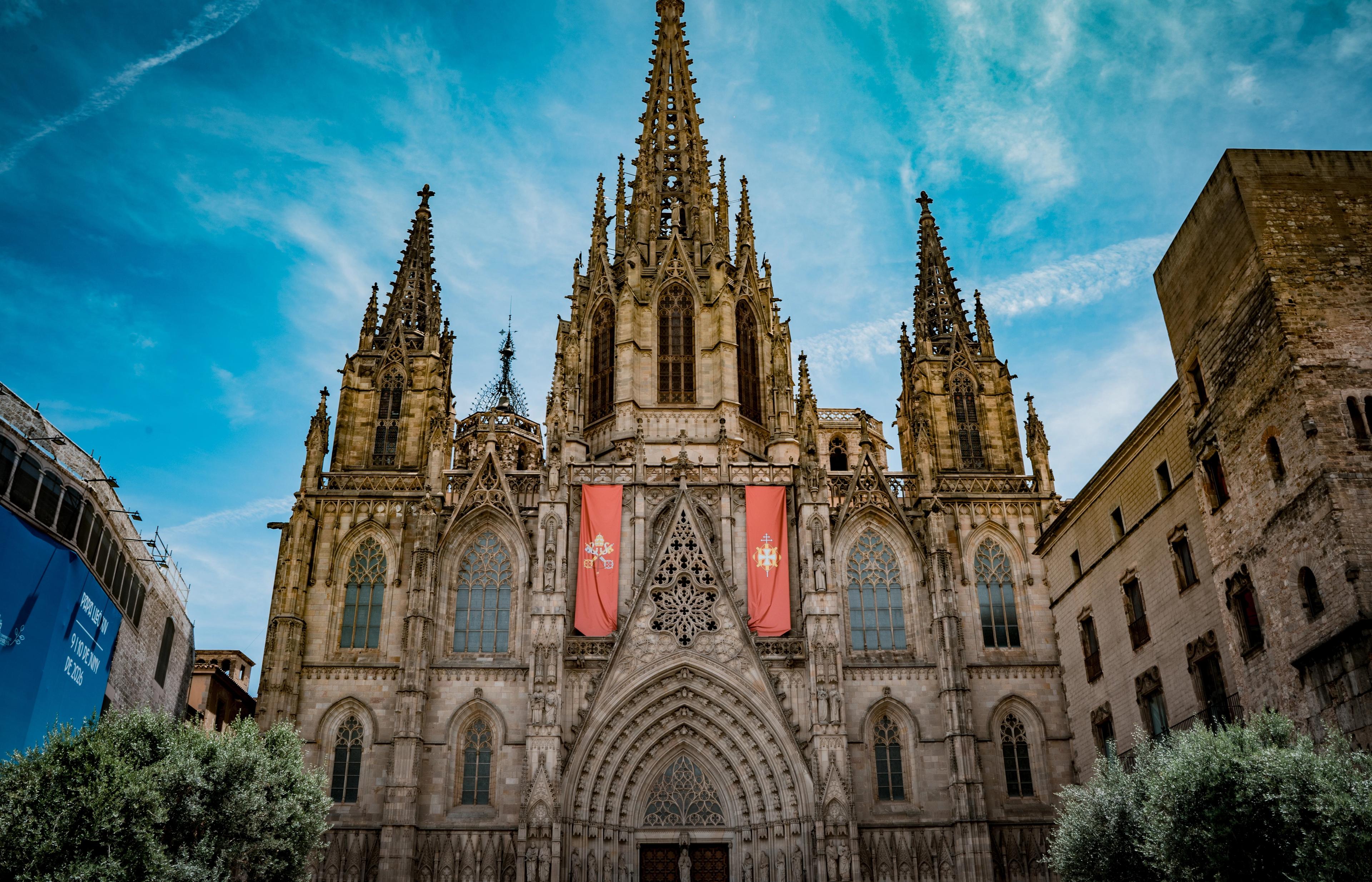
Street Art, Football and Contemporary Identity
Barcelona's historic center doesn't attempt to freeze itself in time.
Modern expressions appear throughout the district, often in places where visitors least expect them. One medieval wall features a large mural of Diego Maradona, while another carries commentary on modern football culture. These additions don't compete with the surrounding architecture - they simply become another chapter in the city's visual history.
The Gothic Quarter demonstrates that cultural heritage doesn't end with preservation. Cities remain relevant because each generation contributes something of its own.
The result is a neighborhood where centuries-old churches, contemporary street art, independent cafés and local businesses comfortably share the same streets.
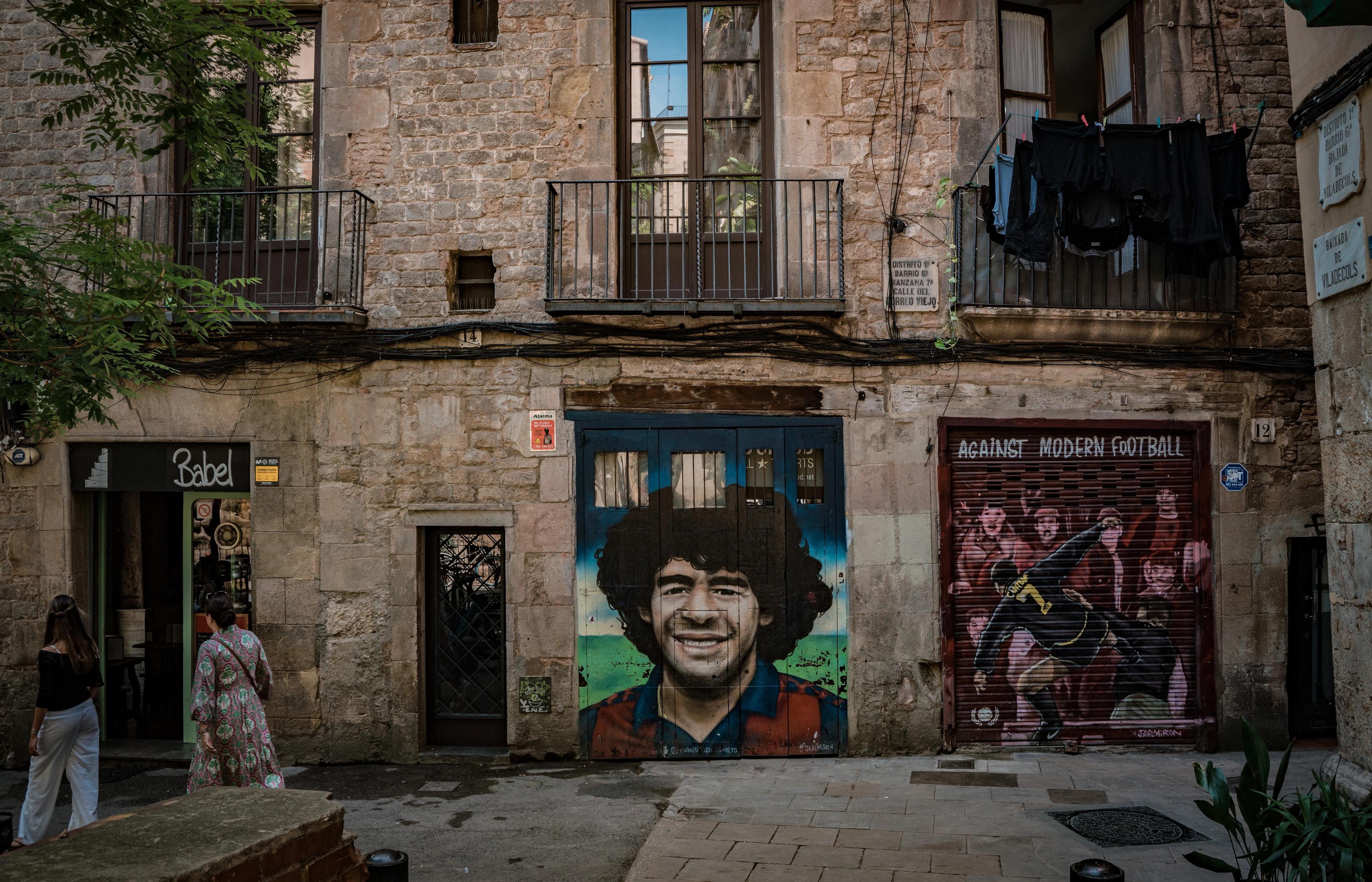
Looking Beyond Eye Level
Barcelona rewards visitors who occasionally stop looking straight ahead.
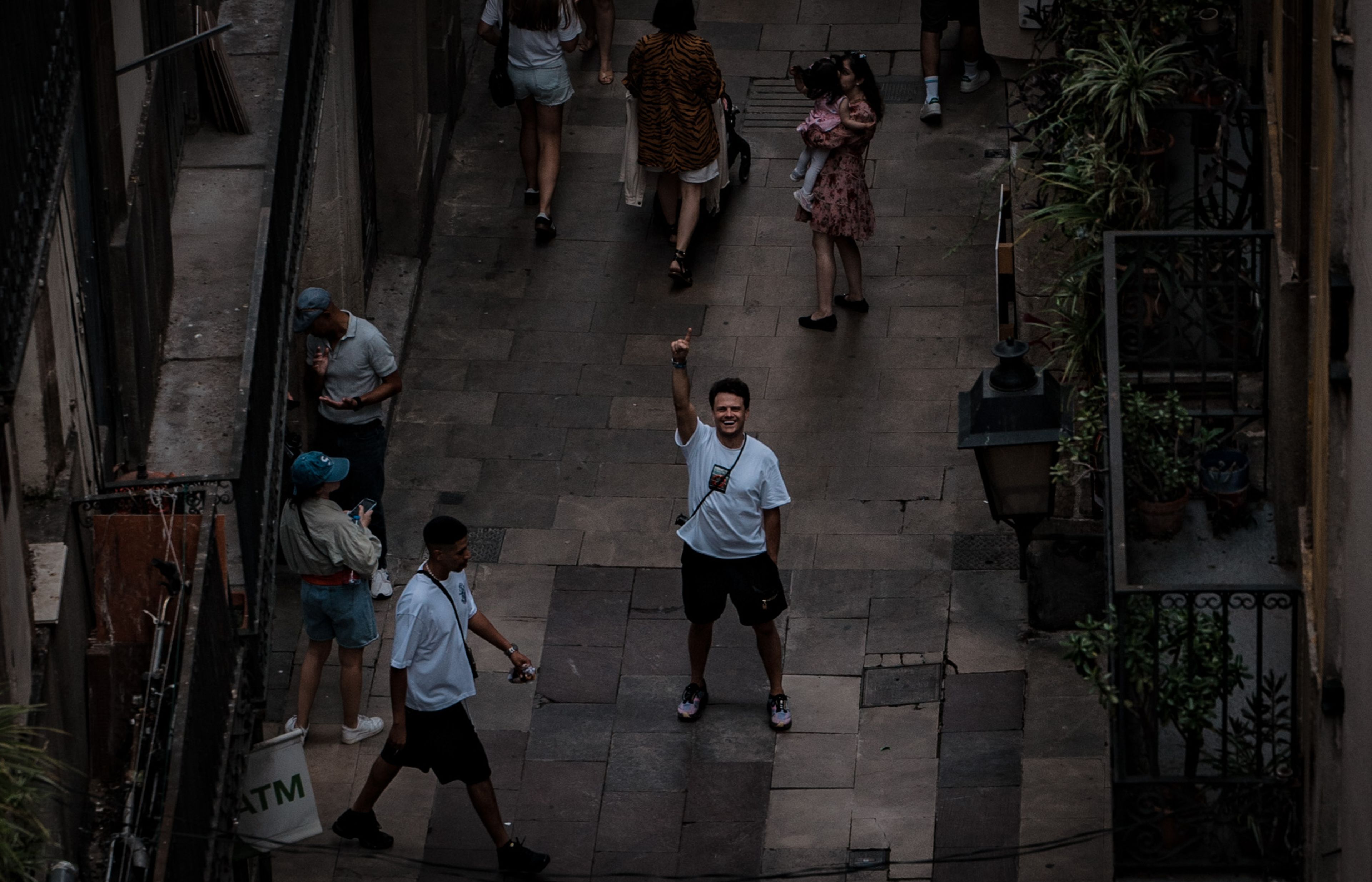
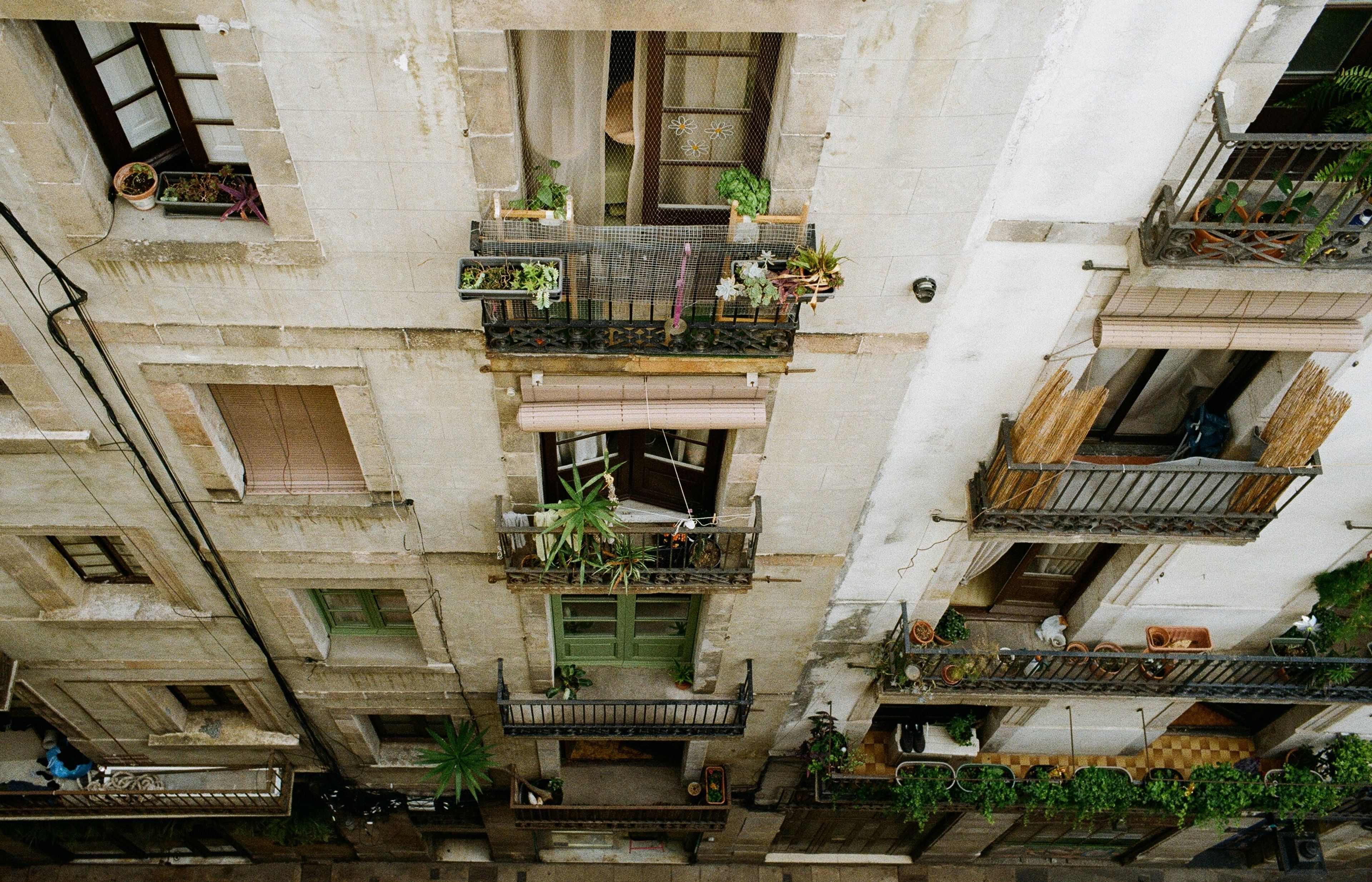
Many of the city's most interesting details exist above street level: elaborate balconies, carved stonework, decorative windows and architectural ornamentation that often disappear in the movement of crowds below.
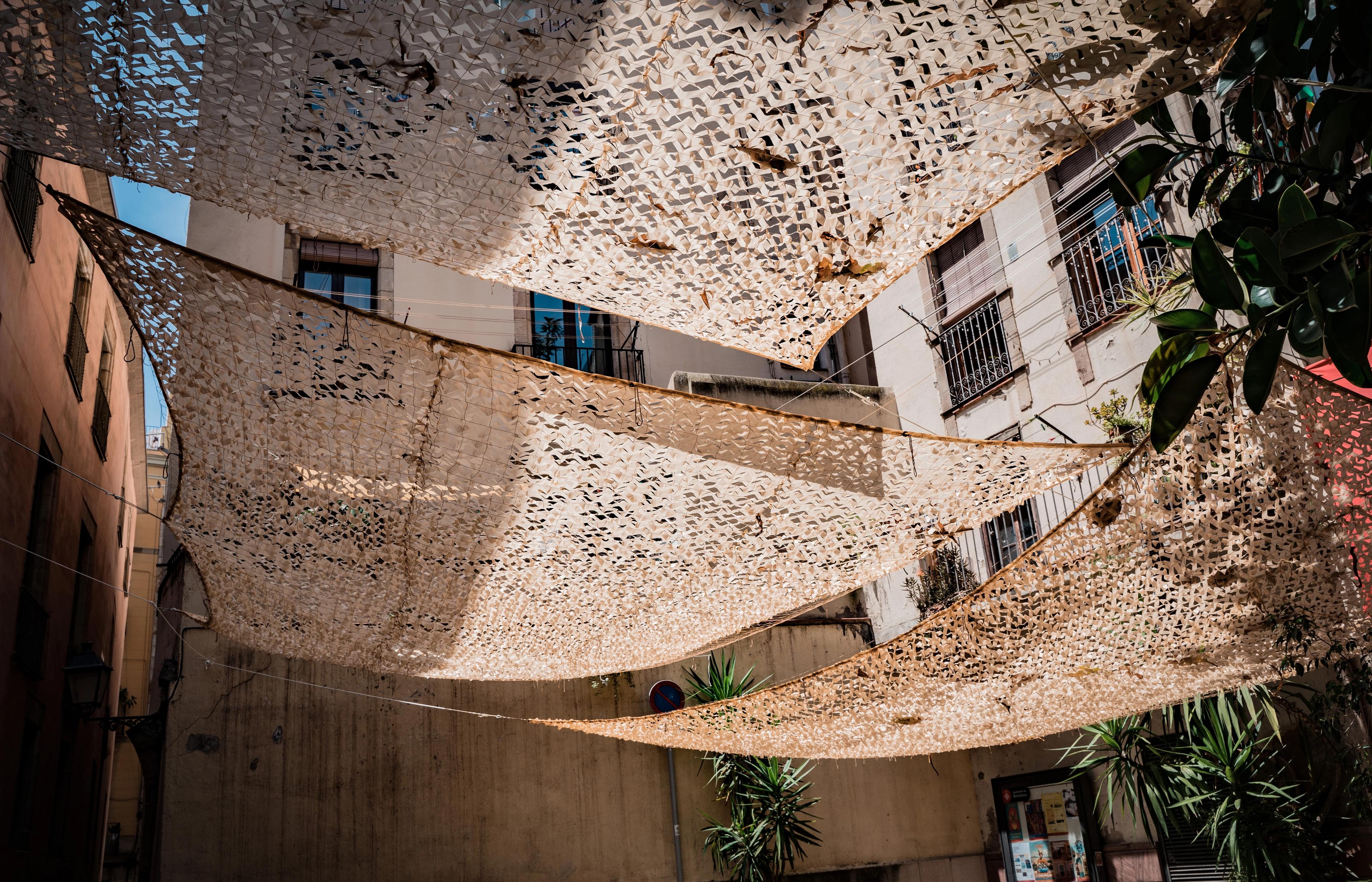
Temporary shade installations stretched across narrow streets during the summer months create constantly changing patterns of light and shadow, while apartment balconies continue to display laundry, plants and evidence of everyday life.
These details remind visitors that the Gothic Quarter isn't an open-air museum. It remains a living neighborhood shaped as much by its residents as by its history.
Sagrada Família: Barcelona's Living Landmark
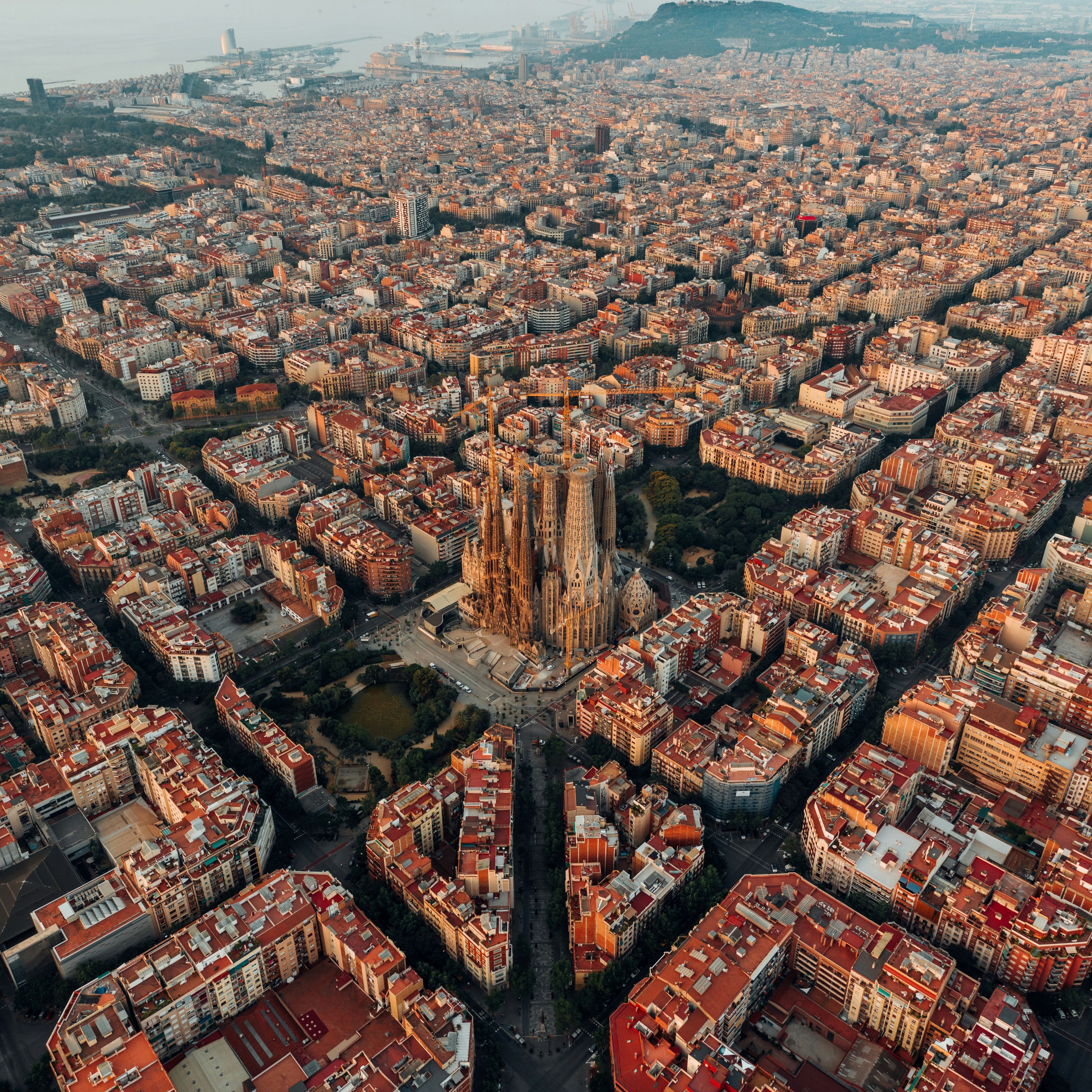
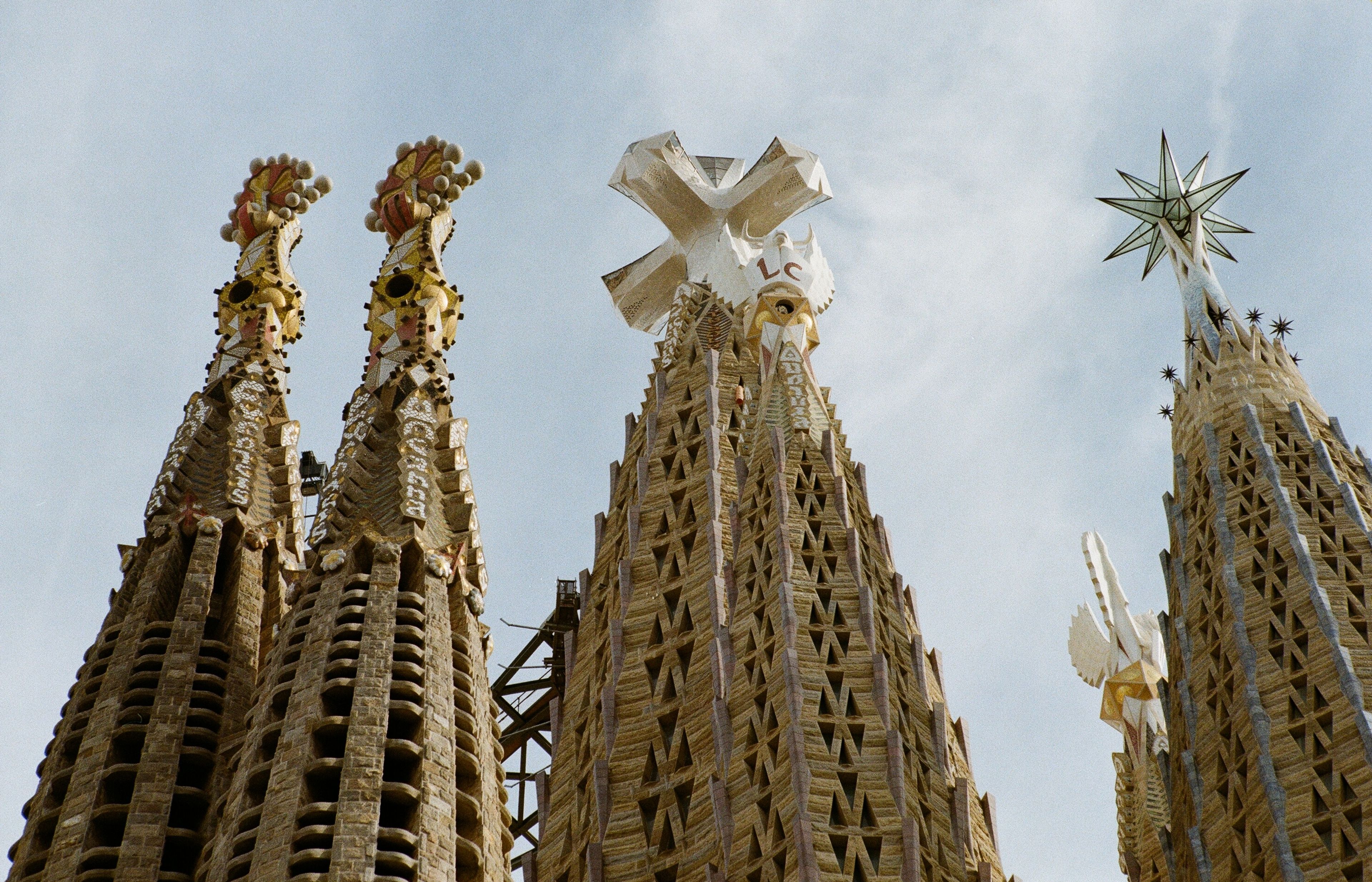
No visit to Barcelona is complete without seeing the Sagrada Família. Designed by Antoni Gaudí, the basilica has been under construction since 1882 and is expected to reach structural completion in 2026, marking the centenary of Gaudí's death. More than Barcelona's most recognizable landmark, it represents a project spanning multiple generations, where traditional craftsmanship continues to shape one of the world's most ambitious architectural works. Watching visitors admire it from the plaza was a reminder that while people come and go, great architecture continues to outlive them.
A City That Moves While Its Architecture Remains
Perhaps the most striking observation throughout the day wasn't any single building, but the relationship between the city and its inhabitants.
Airplanes crossed the sky above Gothic towers.
Cars filled avenues only blocks away from medieval streets.
Cruise ships brought thousands of new visitors into the city.
Tourists photographed cathedrals while elderly couples quietly shared public squares.
Children played beside buildings older than many nations.
Everything around the architecture remained in constant motion.
The architecture itself hardly moved at all.
Barcelona's buildings have watched countless generations arrive, leave, build, renovate and reinterpret the city around them. Each generation briefly becomes part of a much longer narrative before handing the city to the next.
Sharing More Than a Meal
No exploration of Barcelona feels complete without experiencing its food culture.
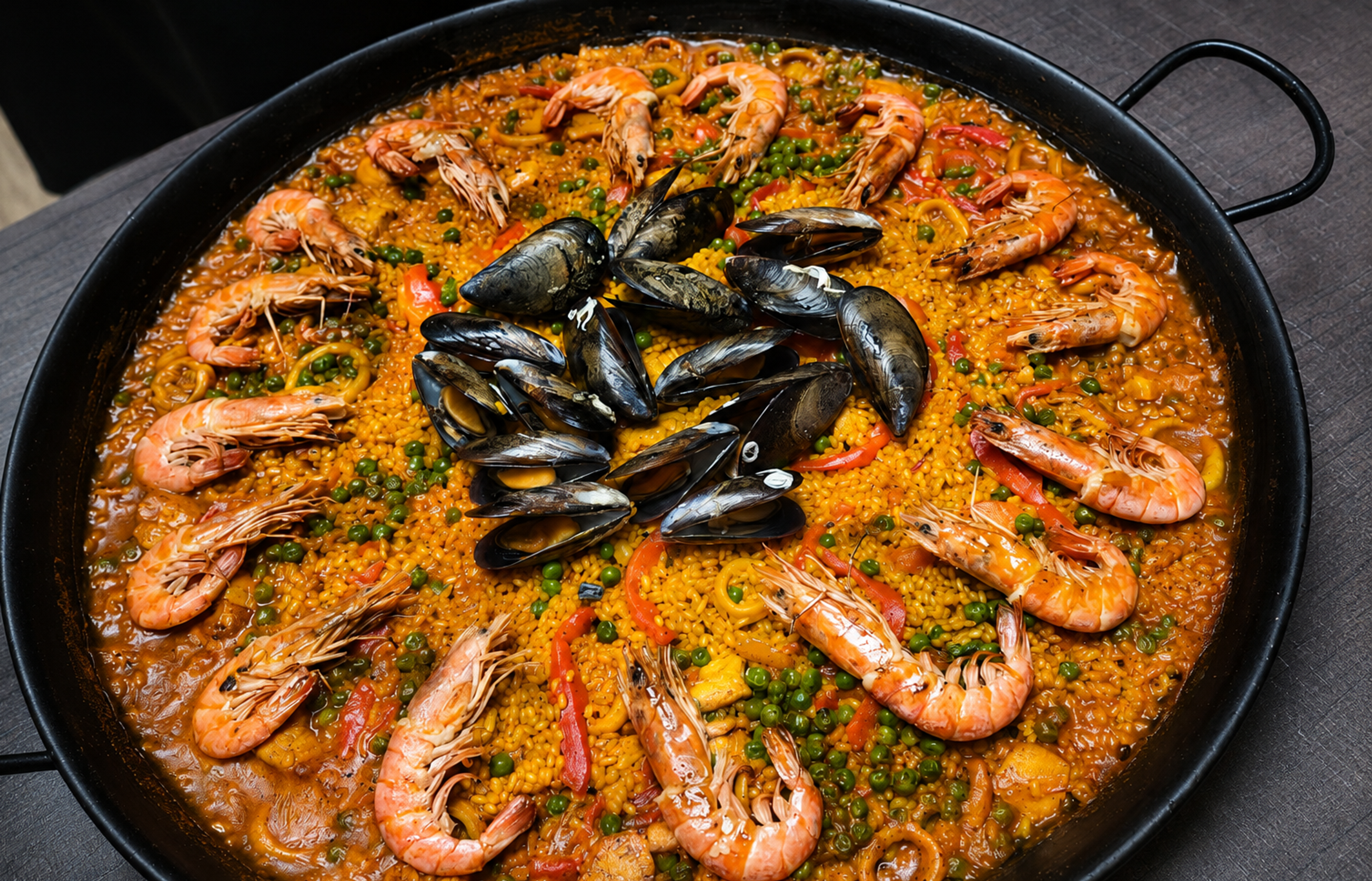
Rather than serving individual portions, traditional seafood paella is often prepared in large pans designed for sharing. The meal becomes less about efficiency and more about conversation, encouraging people to remain at the table long after the last bite.
This slower rhythm mirrors much of Barcelona itself.
The city rarely rewards rushing. Whether wandering narrow medieval streets, sitting beneath the shade of a public square or simply watching life unfold from a café terrace, Barcelona consistently invites visitors to spend more time observing than consuming.
Why Barcelona's Gothic Quarter Continues to Inspire
Barcelona's Gothic Quarter is often described as one of the city's major tourist attractions, but reducing it to a collection of landmarks overlooks what makes it remarkable.
Its greatest strength lies in coexistence.
Roman foundations support medieval buildings. Gothic cathedrals stand alongside contemporary street art. Residents share public spaces with visitors from around the world. Historic architecture continues to serve modern purposes without losing its identity.
Photographing the district with a Leica M6 and Hasselblad 500CM reinforced a simple realization: cities are never finished. They evolve continuously, shaped by every generation that temporarily calls them home or, if only for a single day, has the opportunity to walk their streets.
The Gothic Quarter remains one of the clearest examples of that ongoing process - a place where history isn't preserved behind barriers but continues to unfold in everyday life. Light is the whole subject here, and the Gothic Quarter's narrow streets hold shadow until late morning, so check Barcelona weather before planning a shoot around the golden hour rather than the opening times. Photographers working a wider Catalan trip often continue to Valencia, three hours south on the AVE. The hotels in Barcelona inside the Ciutat Vella put you on these streets before the tour groups arrive, which is the single thing that changes what you can photograph.
Get hotel deals for Barcelona
Price drops, new stays and local tips for Barcelona, straight to your inbox.
No spam, unsubscribe anytime.

co-founder
trip1.com co-founder covering aesthetics of street, arts, urban, culture, graffiti and everything that catches an eye.
A Photographic Journey Through Barcelona's Gothic Quarter - FAQ
Being Barcelona's oldest neighbourhood, where Roman walls survive beneath medieval buildings and Gothic churches stand beside 19th-century apartments. Its centrepiece is Barcelona Cathedral and its stained glass. It is also a working neighbourhood, with residents' balconies of plants and laundry above cafes and shops, and modern touches such as a large Diego Maradona mural on a medieval wall.
Yes. It is the part of Barcelona where centuries of history sit inside everyday life rather than behind barriers, and it rewards slow walking: narrow streets, carved stonework above eye level, quiet squares and the cathedral. A focused walk takes two to three hours. Staying in the Ciutat Vella puts you on these streets before the tour groups arrive.
No. La Rambla is the long tree-lined boulevard that forms the Gothic Quarter's western edge, running from Placa de Catalunya to the port. The Gothic Quarter lies to its east, between La Rambla and Via Laietana, in the Ciutat Vella district. Step off La Rambla near Liceu metro (L3) and you are in its medieval lanes within a minute.
About 3 km, which is roughly 35 to 40 minutes on foot or around 15 to 20 minutes by metro to Sagrada Familia station on lines L2 and L5. The two make a good contrast in one day: the Gothic Quarter's medieval streets, and Gaudi's basilica, under construction since 1882, whose central Tower of Jesus Christ reached its full height in 2026.
Only at worship times, mainly in the morning, and a free visit does not include the rooftop or the choir. For the full visit you need the cultural visit ticket, 16 euros in 2026, or 14 euros for students up to 25, which covers the interior, cloister, choir and rooftop terraces. Cultural visits run 9:30 to 18:30 on weekdays, with shorter hours at weekends.
Early morning, before about 9am, when the lanes are empty. The narrow streets hold shadow until late morning, so plan around the light rather than opening times. The golden hour before sunset warms the cathedral and the upper balconies, and in summer the shade sails strung across the streets throw shifting patterns of light and shadow even at midday.