

Guides · Bath
10 Top Places to Visit in Bath, England

CEO and co-founder
This guide ranks the 10 top places to visit in Bath, England, and gives you the practical detail you actually need on the day. Every entry below carries an exact street address with its postcode, the walking time from Bath Spa railway station or the relevant First Bus route, how far it sits from the city centre, and a Pro Tip drawn from how the place really works rather than how the brochure describes it. Prices are quoted in pounds sterling for 2026.
Bath is small. You can cross the whole historic core on foot in about 20 minutes, which means eight of the ten entries here are within an easy stroll of each other and you will rarely need transport. The city is also a UNESCO World Heritage city, inscribed in 1987 and built almost entirely from local Bath stone, an oolitic limestone quarried on the hills above town. That single material is why the terraces, crescents and shopfronts share one honey colour, and why the place photographs so well in late afternoon light.
The order runs outward from the thermal springs at the centre to the Georgian set pieces on the northern slopes, then east across the River Avon, and finally up to two green spaces on the ridge. Follow it top to bottom and you get a route that mostly walks itself. One distinction worth fixing in your head before you book anything: the Roman Baths is a museum where the water cannot be entered, and Thermae Bath Spa is the modern building where you actually bathe. Most visitors come out from London for the day, which is the single biggest reason the crescents are crowded from eleven until four and quiet either side of that. The ridge walks at the end of this list are the part that turns on the forecast rather than the ticket, so check Bath weather before you decide which day to spend on them. Staying the night is what buys you the empty hours, and the hotels in Bath inside the Georgian centre put the springs, the abbey and the crescents within ten minutes on foot.
1The Roman Baths - Britain's Best Preserved Ancient Thermal Complex
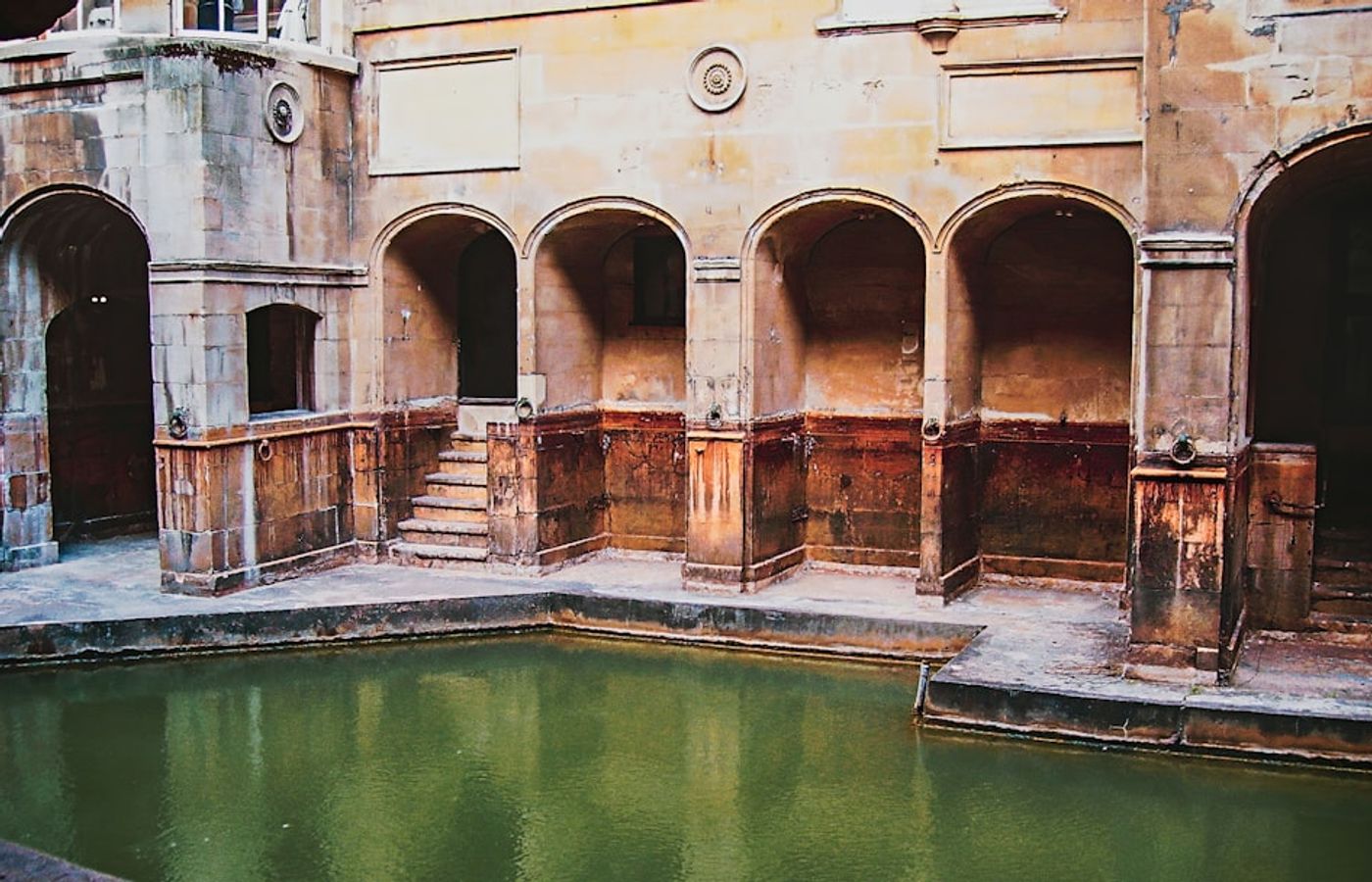

The Roman Baths sit on top of Britain's only hot spring, which pushes out roughly 1.17 million litres of water a day at 46 degrees Celsius. The Romans arrived in the AD 60s, called the settlement Aquae Sulis and built a temple to Sulis Minerva alongside the bathing complex. What survives is a layered site: the lead-lined Great Bath at Roman floor level, the Sacred Spring, the temple pediment with its carved Gorgon's head, and a museum holding around 12,000 Roman coins thrown in as offerings, plus the curse tablets inscribed by bathers who had their clothes stolen.
Be clear about one thing before you arrive. This is a museum, not a bathing venue. The water in the Great Bath is untreated, open to the air and passes through Victorian lead pipework, so touching it is discouraged and entering it is prohibited. Entry in 2026 runs about GBP 28 on quiet winter weekdays and up to roughly GBP 39 in peak summer, with timed slots and an audio guide included. Allow at least 90 minutes, more if you read the interpretation panels properly.
Pro Tip: Book the first slot of the day or the last two hours before closing. Coach groups dominate between 11am and 3pm, and in high summer the site stays open until 10pm with the Great Bath lit by torchlight, which is the version worth queueing for.
2Bath Abbey - The Last Great Medieval Church Built in England
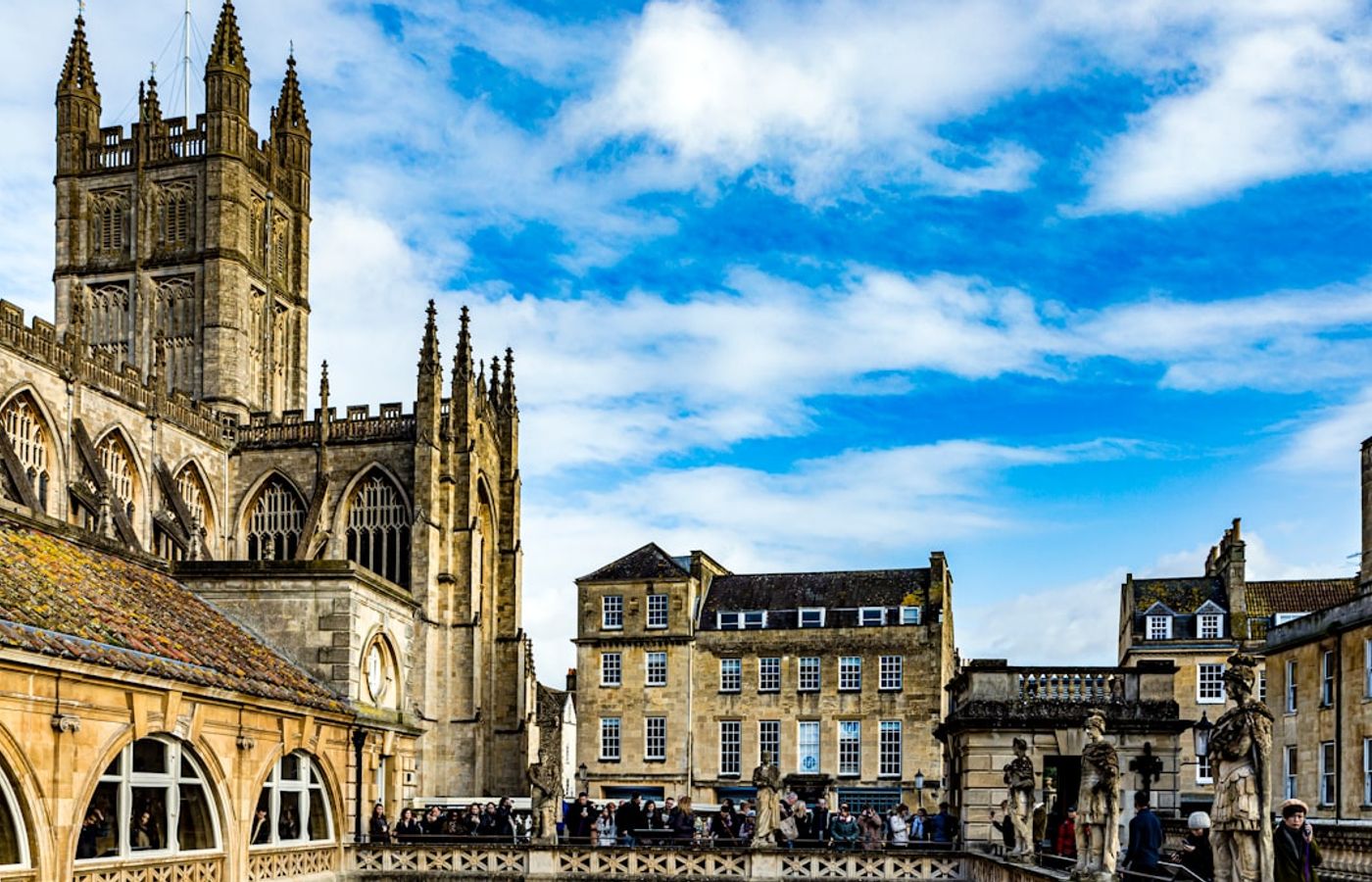

Bath Abbey stands about 20 paces from the Roman Baths entrance, so the two pair naturally. The current church was begun in 1499 by Bishop Oliver King, replacing a Norman cathedral that had fallen into ruin, and it is often described as the last great medieval church built in England. The fan vaulting over the nave, restored by George Gilbert Scott in the 1860s, is the feature people photograph. The west front is the odder one: carved stone ladders with angels climbing up and, notably, one climbing down, illustrating the bishop's dream.
Inside, 891 wall memorials make the floor and walls a dense record of Georgian Bath's dead. The Footprint project completed in 2021 relaid the collapsing floor and installed an underfloor heating system powered by the thermal springs next door, which is a neat piece of engineering continuity. Entry is by suggested donation of around GBP 8. The Tower Tour, roughly GBP 12, climbs 212 steps to a walkway directly above the vaulting and out onto the roof.
Pro Tip: Time the Tower Tour for the top of the hour and you will be standing next to the bells when they ring. Tours run roughly hourly and are capped at small groups, so book at the abbey shop as soon as you arrive rather than at the end of your Roman Baths visit.

3The Royal Crescent and No. 1 Royal Crescent - Georgian Bath at Full Scale
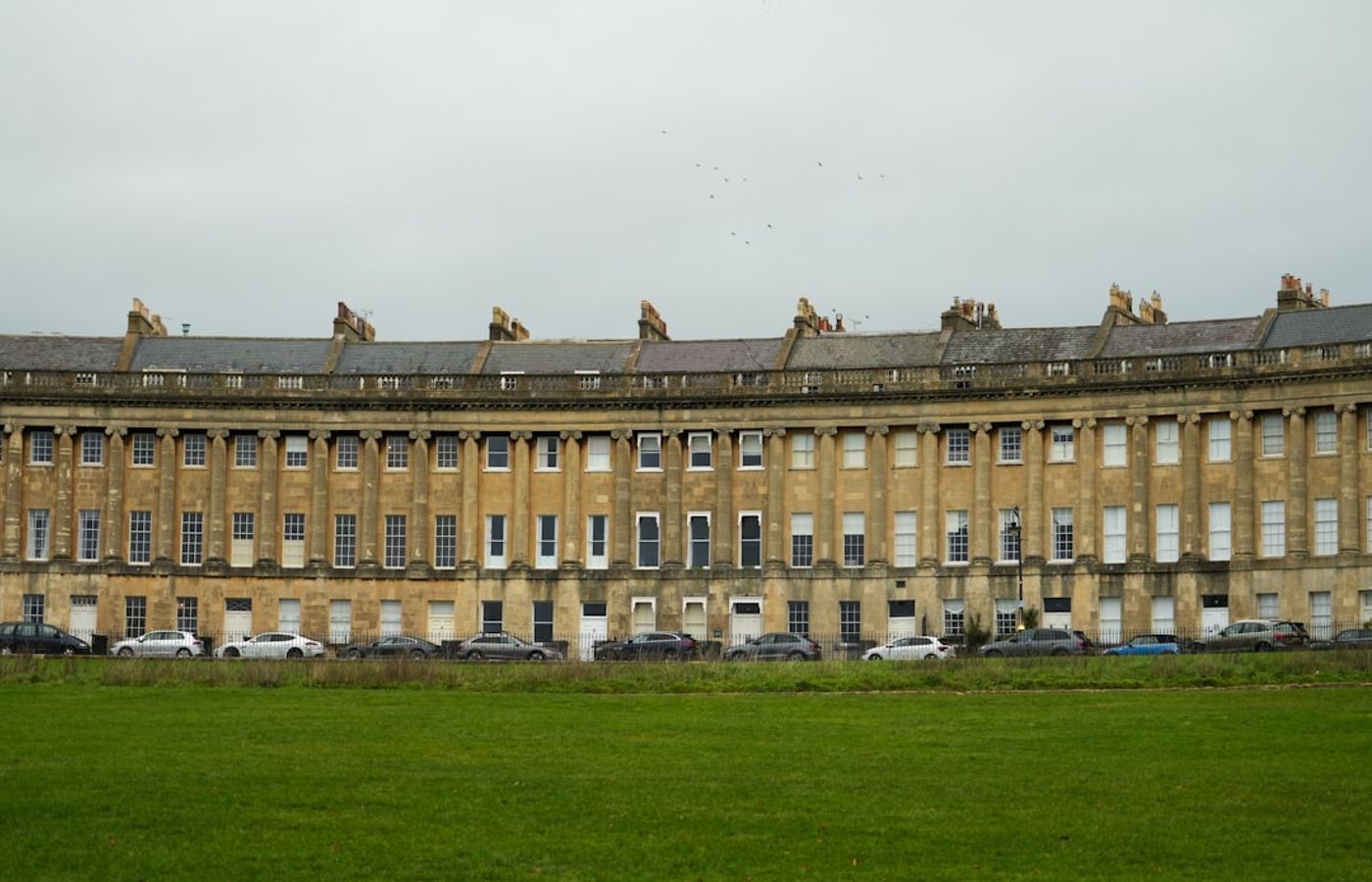

The Royal Crescent is a sweep of 30 terraced houses built between 1767 and 1774 to a design by John Wood the Younger, fronted by 114 Ionic columns and facing a broad lawn that drops away towards Royal Victoria Park. It is the single most recognisable piece of Georgian architecture in Britain. The trick behind the facade is worth knowing: the uniform front was sold as a shell, and each buyer commissioned their own architect for the interior and the rear, so the back of the Crescent is a jumble of different rooflines and window sizes.
No. 1 Royal Crescent, at the eastern end, is the house you can go inside. Restored by the Bath Preservation Trust to how it looked between 1776 and 1796, it runs across two buildings and takes in the withdrawing room, the gentleman's bedroom, the kitchen and the servants' quarters. Admission is around GBP 15 for adults, and the visit takes about an hour. Everything is presented without rope barriers, which makes it far more convincing than most house museums.
Pro Tip: For the classic photograph of the full curve, stand on the ha-ha at the bottom of the lawn rather than on the pavement. Early morning before 9am gives you the whole crescent lit and empty, and the grass is public land so nobody will move you on.
4The Circus - John Wood's Circular Masterwork
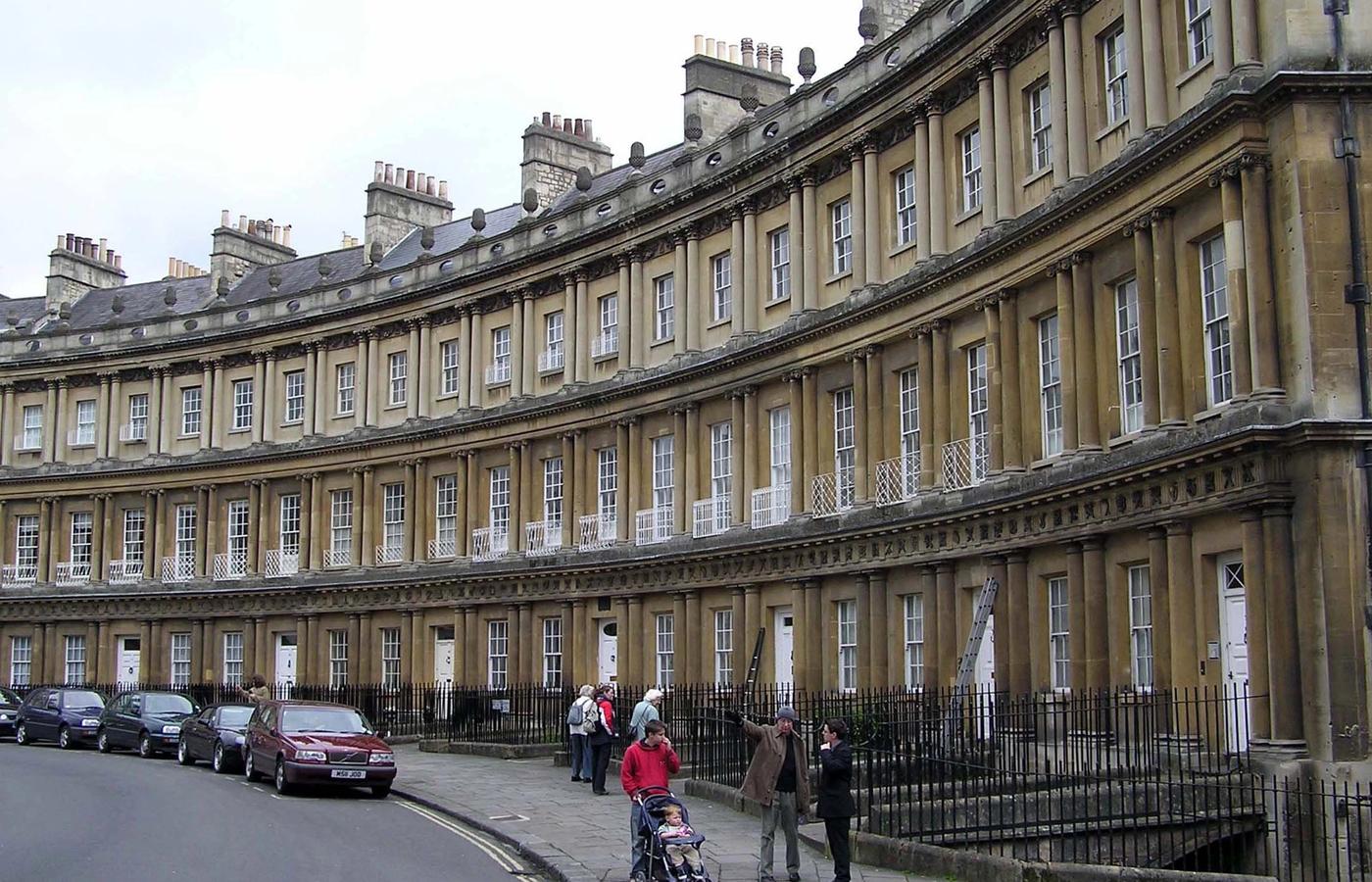
Walk 200 metres east from the Royal Crescent along Brock Street and the street opens into the Circus, a ring of 33 houses split into three curved segments by three entrances. John Wood the Elder designed it in 1754 and died three months after the foundation stone went down, leaving his son to finish the job by 1768. The three tiers of columns run Doric, Ionic and Corinthian from bottom to top, and 525 carved emblems circle the frieze above the ground floor, covering everything from serpents to nautical instruments.
Wood was interested in Druidic and Masonic geometry, and the Circus has almost exactly the same diameter as the stone circle at Stonehenge. Seen from above it forms a circle, with Gay Street as the line connecting it to Queen Square, a layout often read as a key symbol. Five large plane trees fill the centre, planted in the 1820s and still the subject of periodic local arguments. There is no ticket and no opening time - it is a residential street, and Thomas Gainsborough lived at No. 17.
Pro Tip: Stand in the middle of the grass under the plane trees and speak at normal volume. The curved facades bounce your own voice back at you from all sides, an acoustic quirk most visitors walk straight past. People still live here, so keep noise down after dark.
5Pulteney Bridge and Pulteney Weir - Shops Across the River Avon
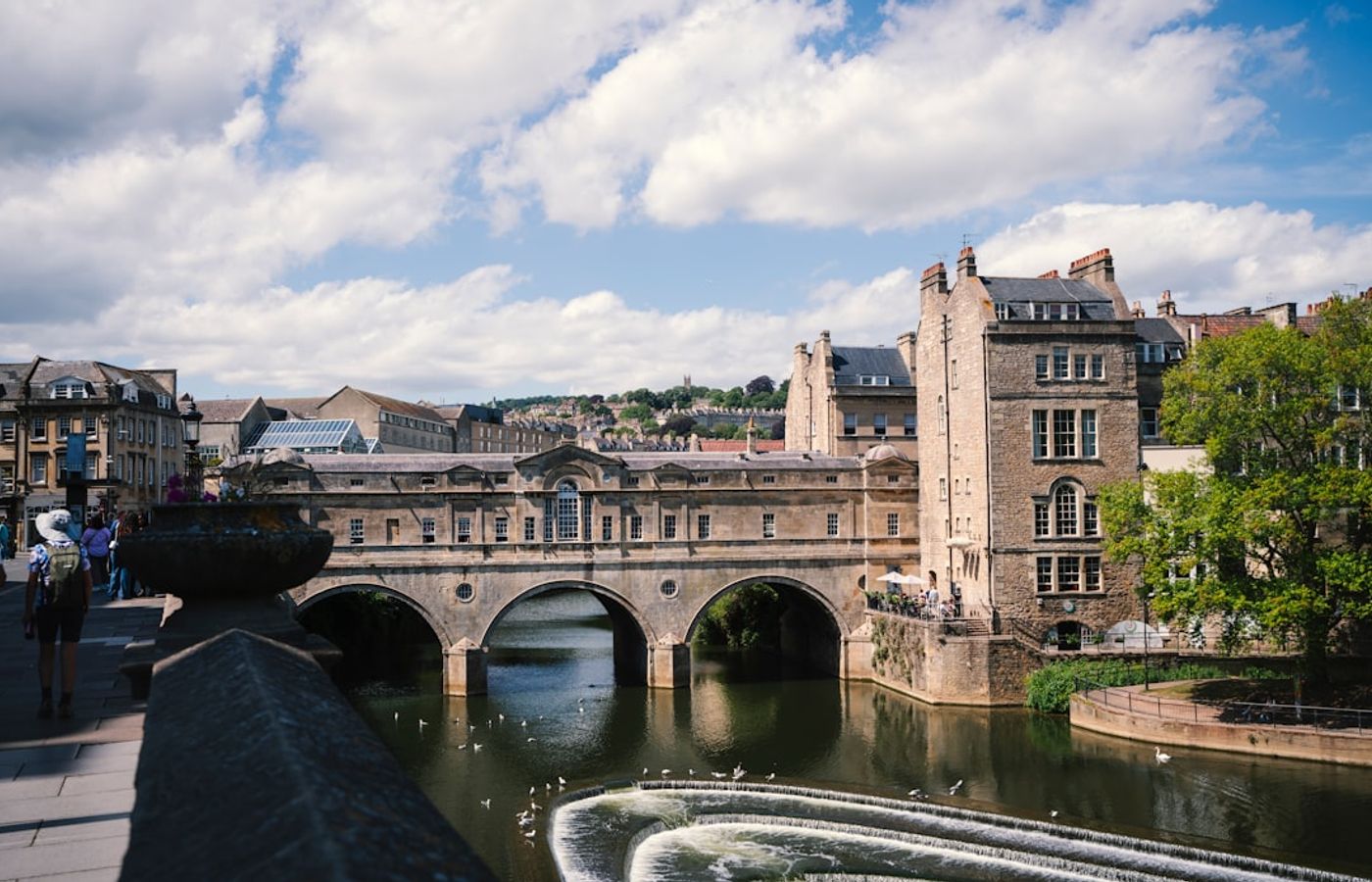
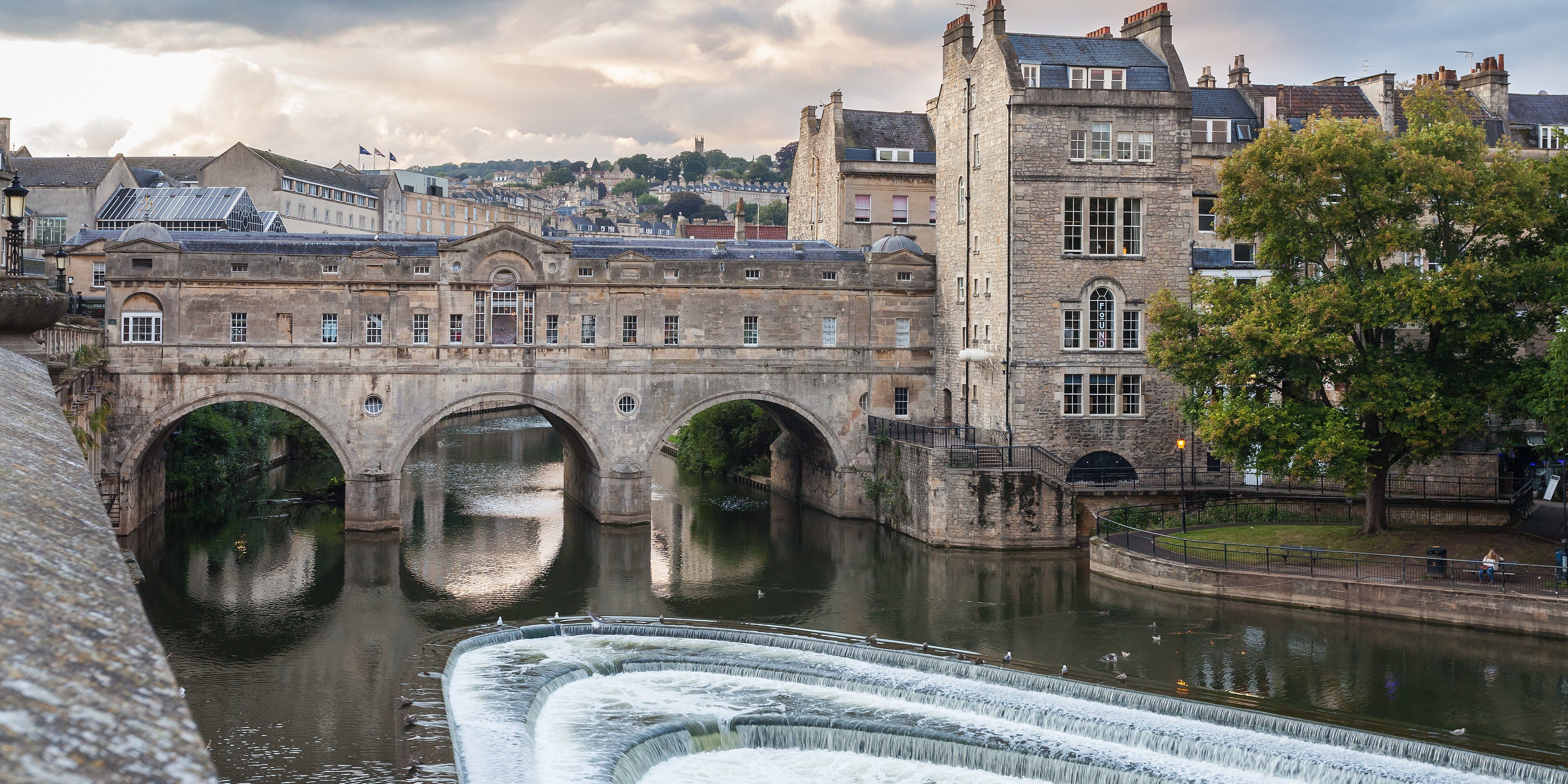
Pulteney Bridge is one of only four bridges anywhere with shops built across its full span on both sides, alongside the Ponte Vecchio in Florence, the Rialto in Venice and the Krämerbrücke in Erfurt. Robert Adam designed it in Palladian style and it opened in 1774, connecting the city to the Bathwick land the Pulteney family wanted to develop. Cross it and you would barely register you are over water, because the shopfronts block the view on both sides.
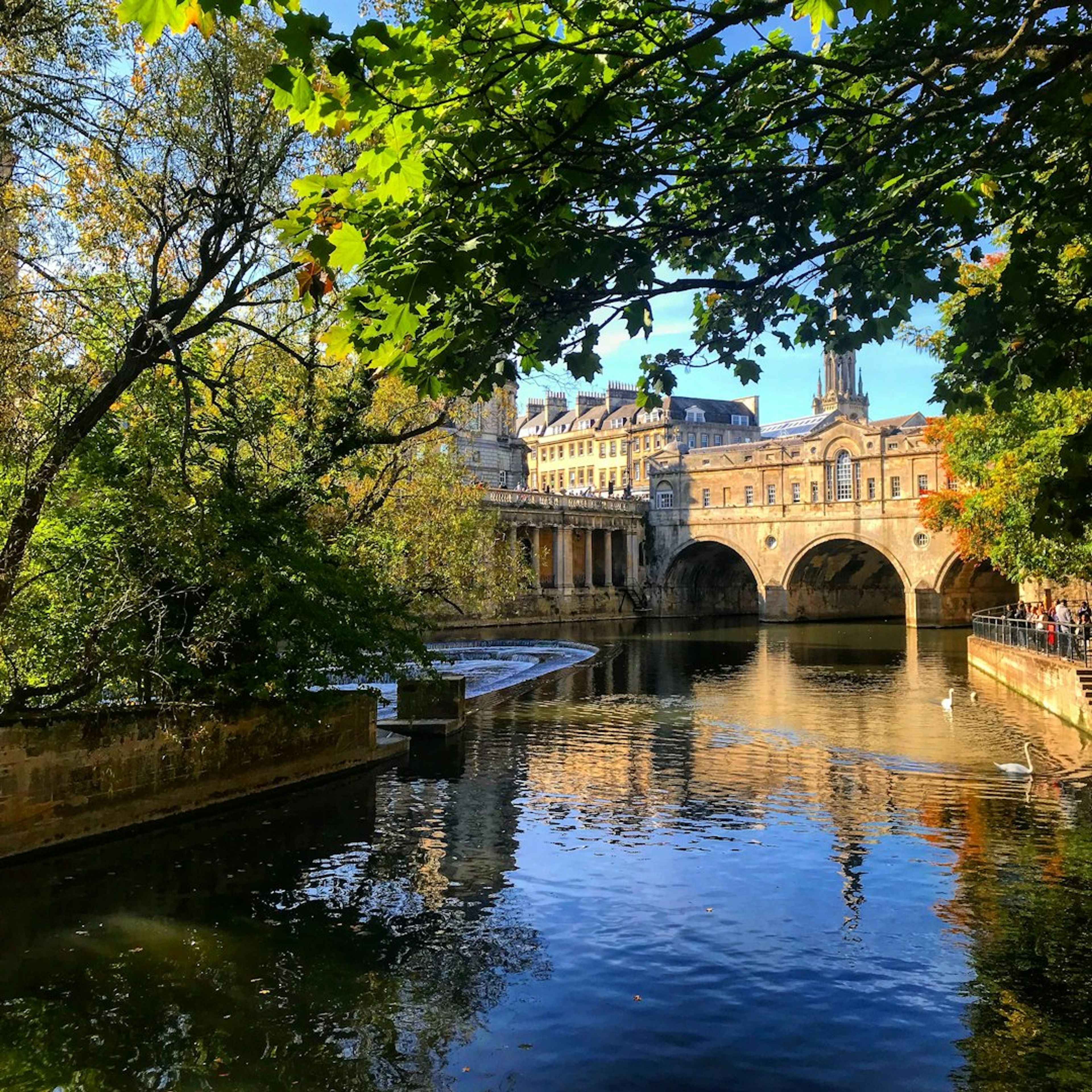
The picture everyone wants is the bridge above Pulteney Weir, the three-stepped horseshoe cascade rebuilt in its current form in 1972 as part of the city's flood defences. The best vantage point is Grand Parade on the west bank, or from Parade Gardens below for a small admission fee. Boat trips run from Pulteney Weir landing stage upstream towards Bathampton between roughly April and October, typically around GBP 12 for an hour on the water. There is no charge for the bridge itself.
Pro Tip: Go down the steps beside Grand Parade to the riverside walkway for the low angle that puts the weir in the foreground and the bridge behind it. After heavy rain the weir runs hard and the shot improves considerably, though the lower path can close when the Avon is high.
6Thermae Bath Spa - The Only Place You Can Actually Bathe in the Thermal Water
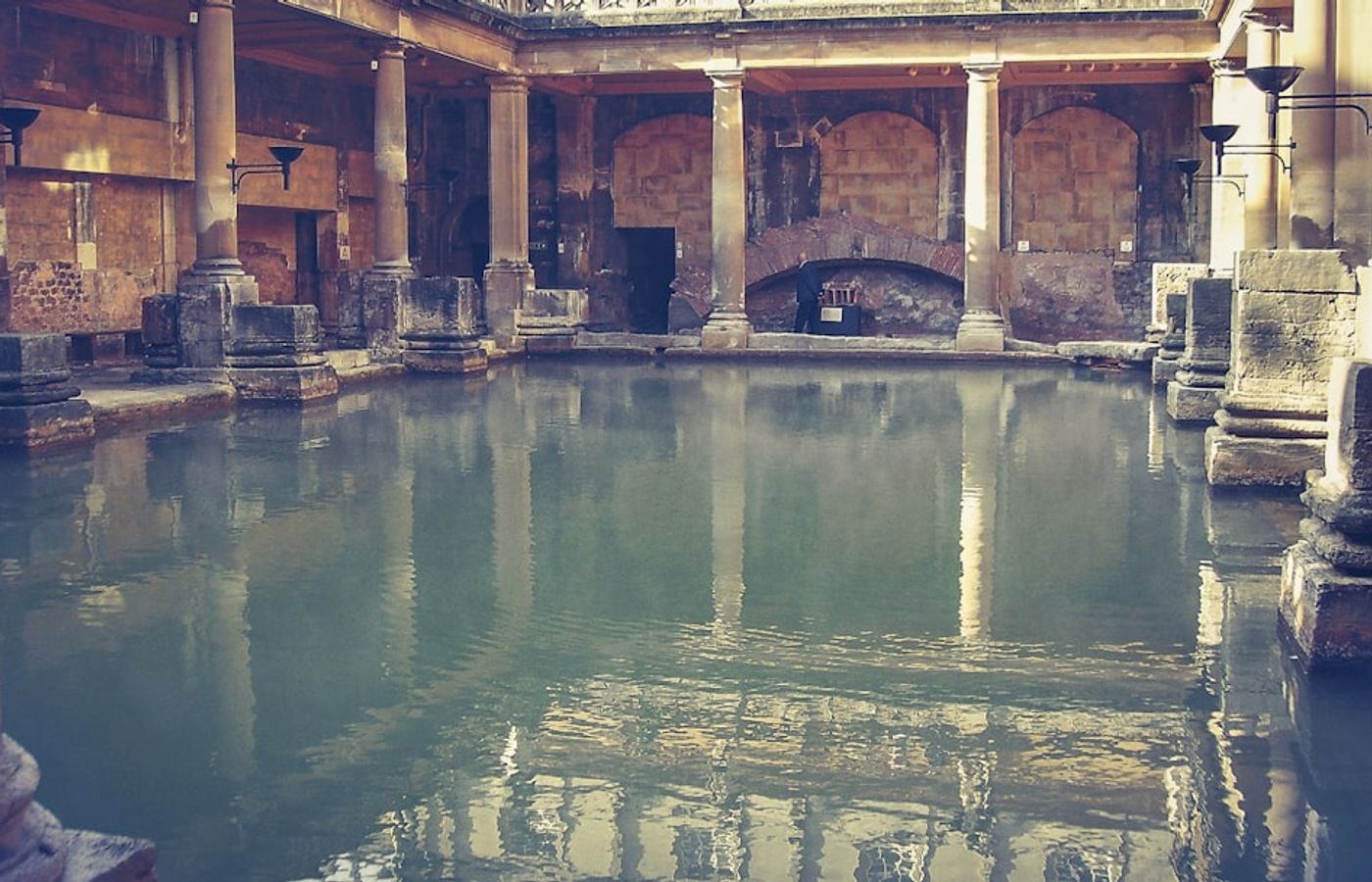
This is where you get in the water. Thermae Bath Spa draws from the same three springs that feed the Roman Baths, but filters and treats the supply so it is safe to bathe in, which is exactly why the Roman site next door has to stay look-only. The complex opened in 2006 and combines the Nicholas Grimshaw-designed New Royal Bath, a glass and Bath stone cube, with the restored Georgian Cross Bath a few steps away on Bath Street.
The open-air rooftop pool is the reason to come. It holds water at around 33.5 degrees Celsius and looks straight across the rooftops to Bath Abbey and the green hills beyond. Below it sit the Minerva Bath and four aroma steam rooms built into glass pods. A two-hour session runs about GBP 45 on weekdays and slightly more at weekends, with towel, robe and slippers included. Minimum age is 16 for the New Royal Bath, and swimwear is required throughout.
Pro Tip: Book a session that starts about an hour before sunset. You get the rooftop pool in daylight, then watch the abbey floodlights come on with steam rising off the water. Last entry is typically 90 minutes before closing, so check the cut-off when you book.
7The Jane Austen Centre - Regency Bath Through Its Most Famous Resident
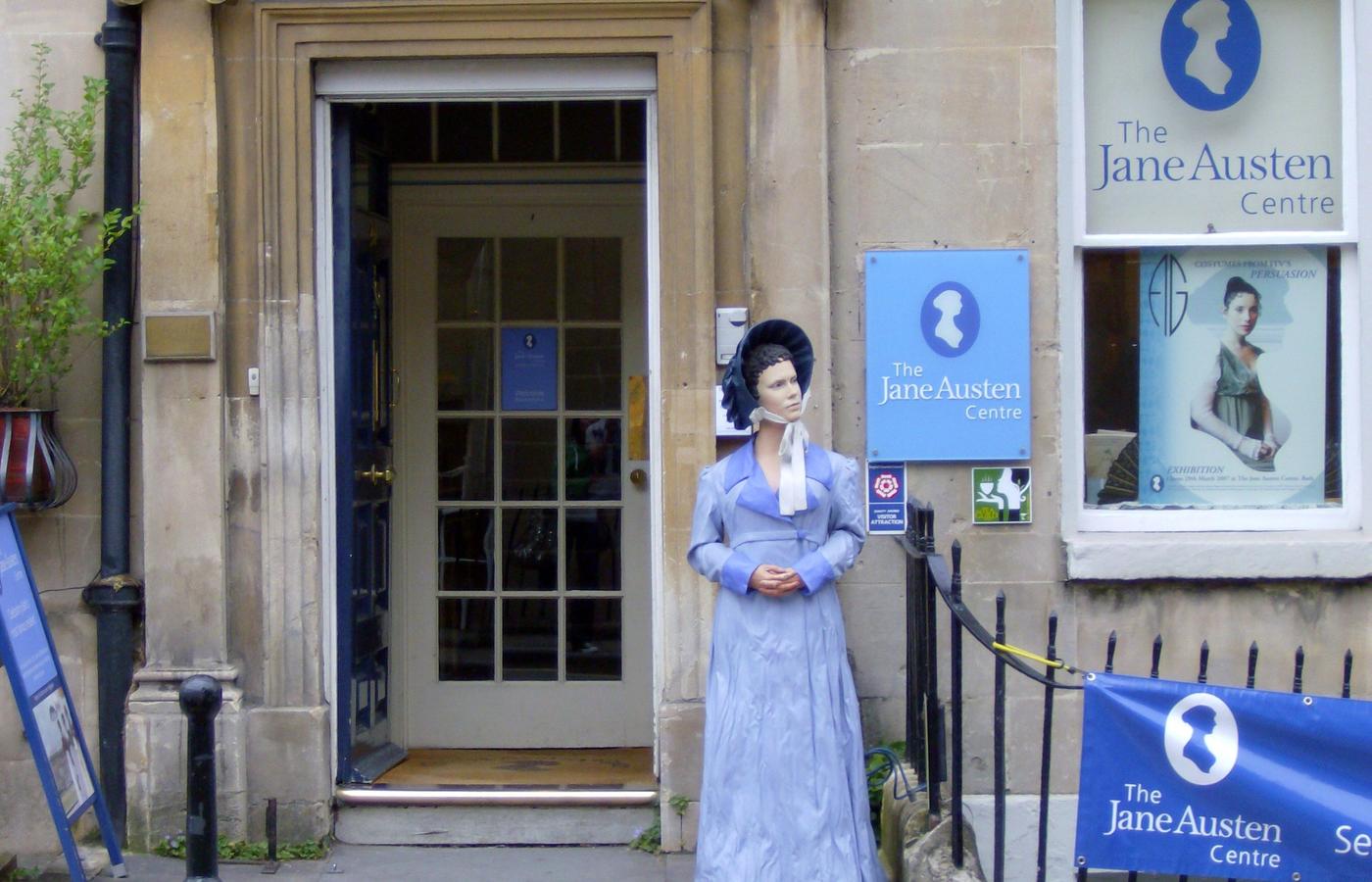
Jane Austen lived in Bath from 1801 to 1806 and set two novels here, Northanger Abbey and Persuasion, neither of them especially flattering about the place. The Centre occupies a Georgian townhouse on Gay Street, a few doors from No. 25 where Austen actually stayed in 1805. The visit starts with a costumed 15-minute introductory talk covering her time in the city, then moves through rooms of Regency dress, letters, film adaptations and a waxwork reconstruction of her likeness based on family descriptions.
It is a small museum and it knows it. Purists sometimes find the costumed staff and the dressing-up box too theatrical, but the talk is genuinely informative about how the Bath season worked, and about why Austen wrote so little during her years here. Admission is roughly GBP 16 for adults, and an hour covers it. The Regency Tea Room upstairs serves a decent cream tea for about GBP 20. In September the Jane Austen Festival fills the streets with costumed promenaders.
Pro Tip: If your interest in Austen is literary rather than costume-based, skip the waxwork and walk five minutes to the Assembly Rooms on Bennett Street instead, where the ballroom and octagon she describes in Northanger Abbey survive at full scale and cost nothing to look at.
8The Holburne Museum and Sydney Gardens - Art at the End of Great Pulteney Street
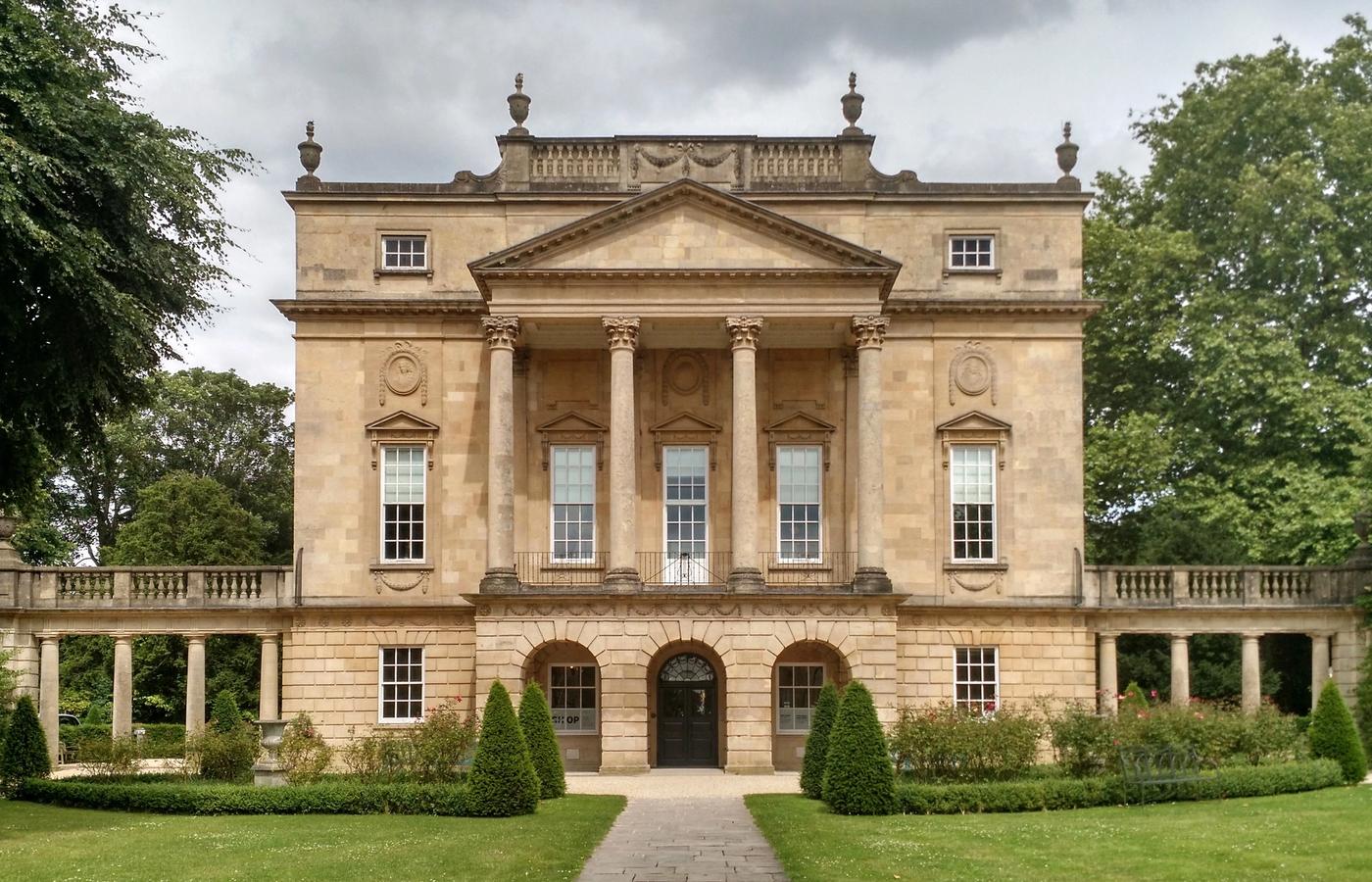
Great Pulteney Street runs 320 metres dead straight from Pulteney Bridge and terminates at the Holburne Museum, which was built in 1799 as the Sydney Hotel and converted to house Sir William Holburne's collection in 1916. The permanent holdings cover Gainsborough portraits painted during his Bath years, Thomas Lawrence, Italian bronzes, majolica and 18th-century silver. Entry to the permanent collection is free, with temporary exhibitions charged separately at around GBP 12.
The 2011 extension by Eric Parry, a ceramic and glass block grafted onto the Georgian rear, caused a long planning fight and is now widely admired. Behind it lies Sydney Gardens, the oldest surviving 18th-century pleasure garden in Britain, reopened in 2023 after a major restoration. Jane Austen lived across the road at 4 Sydney Place and walked here regularly. The Kennet and Avon Canal cuts through the gardens under two cast-iron footbridges, and Brunel's Great Western Railway runs through a cutting alongside.
Pro Tip: The Garden Cafe at the back of the Holburne has a glass wall facing Sydney Gardens and is one of the few genuinely quiet places to eat in central Bath. Combine the museum with the canal towpath, which runs from the gardens all the way to Bathampton in about 40 minutes.
9Prior Park Landscape Garden - A Palladian Bridge Above the City
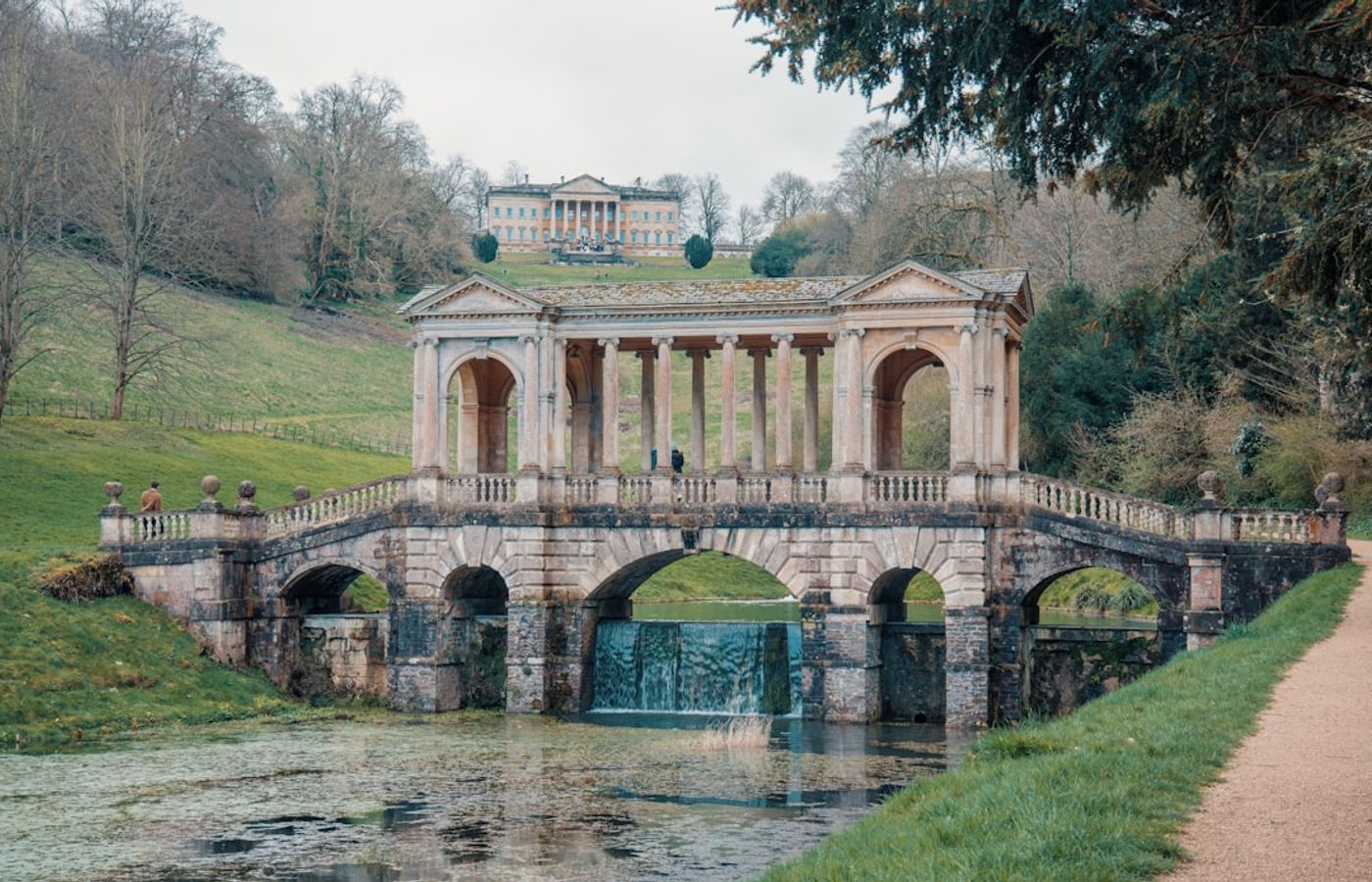
Ralph Allen made his fortune from the Bath stone quarries and from reforming the postal service, and Prior Park is where he spent it. The garden was laid out from the 1730s in a steep valley below his mansion, with input from Alexander Pope and Capability Brown. The centrepiece is a Palladian bridge completed in 1755, one of only four of its kind in the world, sitting between two lakes at the bottom of the combe with the whole of Bath framed behind it.
The National Trust took the garden on in 1993 and has since reopened the Wilderness at the top, including the Serpentine Lake, the Cascade and the restored Gothic Temple. Adult admission is around GBP 8 and free to National Trust members. The site is genuinely steep, with a 400-metre descent and climb on grass and gravel paths, so wear proper shoes. There is no visitor car park, which is deliberate - the Trust wants you to arrive on foot or by bus.
Pro Tip: Walk down through the garden and leave by the lower gate onto Prior Park Road, then follow the Widcombe route back into town rather than climbing the hill again. It saves your legs and drops you at Widcombe Parade, a 10-minute walk from Bath Spa station.
10The Bath Skyline Walk - Six Miles of Hills, Meadows and Rooftop Views
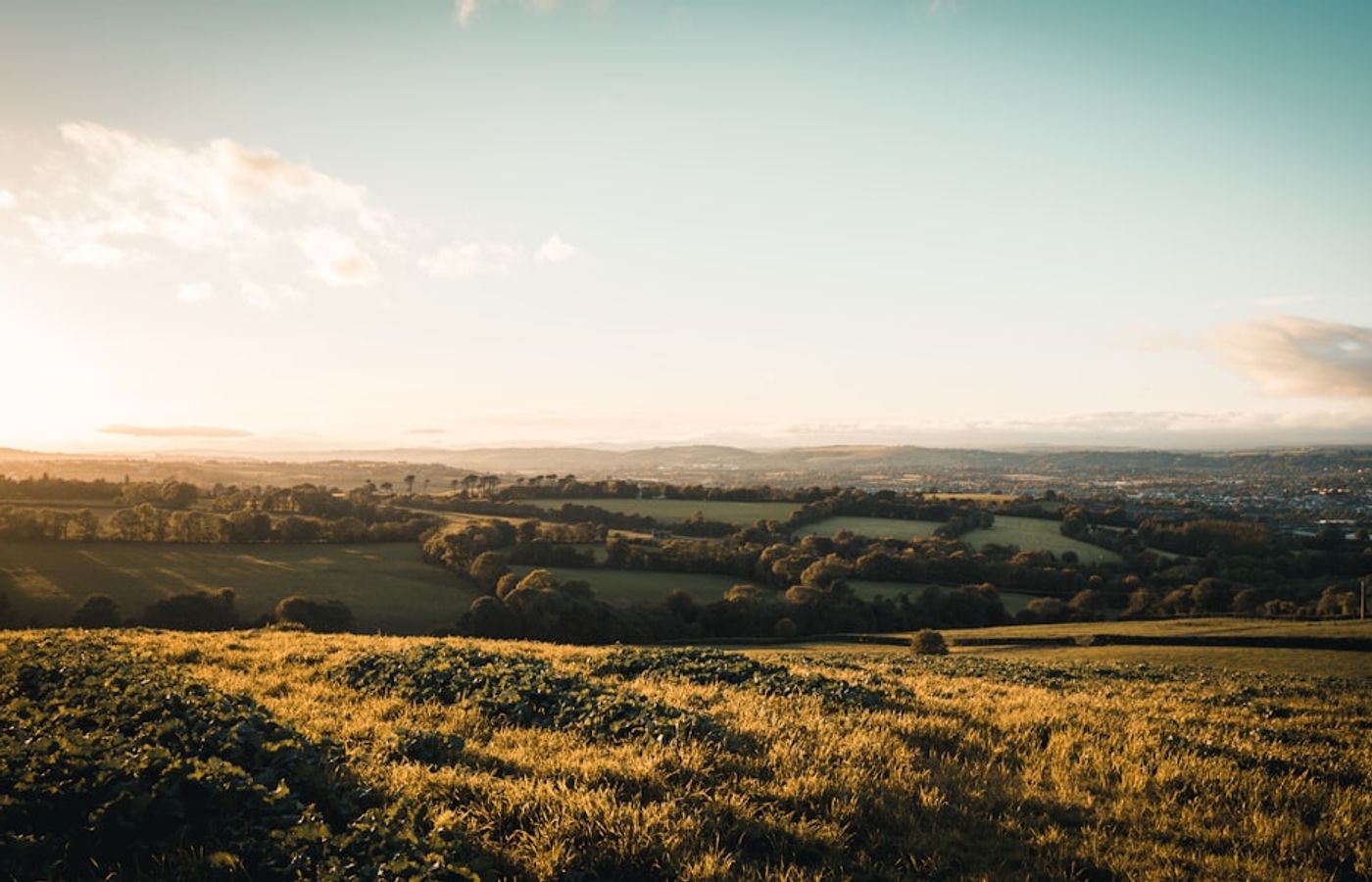
The Bath Skyline is a six-mile waymarked circular walk managed by the National Trust across the hills wrapping the eastern and southern edges of the city. It links beech woodland, limestone meadows, an Iron Age hillfort at Bathampton Down, disused stone quarries and a run of viewpoints that show you exactly how the Georgian city sits in its bowl. Sham Castle, an 18th-century folly facade built for Ralph Allen in 1762 to improve the view from his townhouse, sits directly on the route.
Allow three to four hours at a steady pace. The route is free, open all year and waymarked with National Trust discs, though a downloaded map helps at the field boundaries where the signage thins out. Sections cross grazed pasture with cattle, and the ground stays muddy well into spring. Two of the best viewpoints, at Bathwick Fields and above Prior Park, can be reached on short there-and-back walks of under an hour if the full loop is too much.
Pro Tip: Walk it anticlockwise starting from Bathwick Hill. You climb the steepest section first while fresh, and you finish on the descent through Widcombe with the abbey tower ahead of you, which is a far better ending than grinding uphill at hour four.

CEO and co-founder
Tomas is the co-founder and director of trip1, an European company specializing in reservation services. He launched the company in 2025 with a focus on building scalable, efficient operations.
Climate averages · 1991–2020
When is the best time to visit Bath?
The best time to visit Bath is between May and October, the most comfortable stretch of the year on these averages.
Best time · May–OctoberRainfall
- Jan4°
- Feb5°
- Mar7°
- Apr9°
- May12°
- Jun15°
- Jul17°
- Aug17°
- Sep14°
- Oct11°
- Nov7°
- Dec5°
More of United Kingdom
10 Top Places to Visit in Bath, England - FAQ
Not comfortably. Eight of the ten sit inside a 20-minute walking radius, so a determined visitor could tick them off superficially, but Prior Park Landscape Garden and the Bath Skyline walk each need half a day on their own. Two days is the realistic minimum, and three lets you slow down.
Start at the Roman Baths and Bath Abbey, which share Abbey Church Yard. Walk north to the Circus and the Royal Crescent, then loop back east over Pulteney Bridge to the Holburne Museum and Sydney Gardens. Save Thermae Bath Spa for the evening, and give Prior Park and the Skyline walk their own morning.
Four of them. The Roman Baths uses timed entry and sells out on summer weekends. Thermae Bath Spa strongly recommends pre-booking a session. No. 1 Royal Crescent and Prior Park Landscape Garden both work on timed slots in peak months. Bath Abbey, the Circus, Pulteney Bridge and the Skyline walk need nothing.
Budget roughly GBP 110 to GBP 140 per adult for everything in 2026. The Roman Baths runs about GBP 28 to GBP 39 depending on the day, a two-hour Thermae Bath Spa session about GBP 45, No. 1 Royal Crescent about GBP 15, and the Holburne Museum charges only for temporary exhibitions. The Circus, Pulteney Bridge and the Skyline walk are free.
No. The Roman Baths is a museum, and its water is untreated, open to the air and unsafe to enter, so the Great Bath is strictly look-only. If you want to actually get in the thermal water, book Thermae Bath Spa on Hot Bath Street, which filters and treats the same spring source for bathing.
Several worthwhile stops did not make the top ten. The Fashion Museum, the American Museum and Gardens at Claverton Manor, the Herschel Museum of Astronomy, the Museum of Bath Architecture and the Saturday antiques trade on Walcot Street all reward extra time. Day trips to Stonehenge, Lacock and the Cotswolds are also within an hour of Bath.

Related travel guides
10 Best Restaurants in London
Best restaurants in London for 2026: 10 verified-open rooms, from a GBP 20 Punjabi grill to two-star tasting menus, with real prices and booking advice.
5 Best Things to Do in Edinburgh During Halloween
Five things to do in Edinburgh during Halloween 2026, from Rosslyn Chapel to the Blair Street vaults, timed around the Samhuinn Fire Festival.