
Guides · Crete
5 Best Autumn Hikes in Crete

CEO and co-founder
Hiking in Crete is at its best in autumn. The summer heat that turns the island's gorges into ovens has eased, the sea is still warm enough for a swim at the end of the trail, and the tour crowds of July and August have thinned. This guide picks the 5 best autumn hikes in Crete, from Imbros Gorge in the south-west to Richtis Gorge in the east, each with the trailhead address, how to get there, distance and difficulty, and a Pro Tip.
Crete in October brings coastal highs of about 24 to 26°C, a sea near 23°C and cool mornings in the mountains. The one catch is timing. Samaria Gorge, the island's most famous hike, normally closes for the season at the end of October and can shut earlier after heavy rain, so this list leads with Imbros, the reliable late-season alternative that stays open year-round. Clocks go back on Sunday 25 October 2026, moving sunset to around 17:15.
Three hikes cluster in the south-west near Chania and Chora Sfakion, and two lie in the far east near Sitia and Agios Nikolaos, so plan them as separate bases. Most gorges are one-way walks that end at the sea or a village, so arrange a taxi, bus or boat back before you start, and carry plenty of water.
1Imbros Gorge - The Reliable Late-Season Gorge Walk
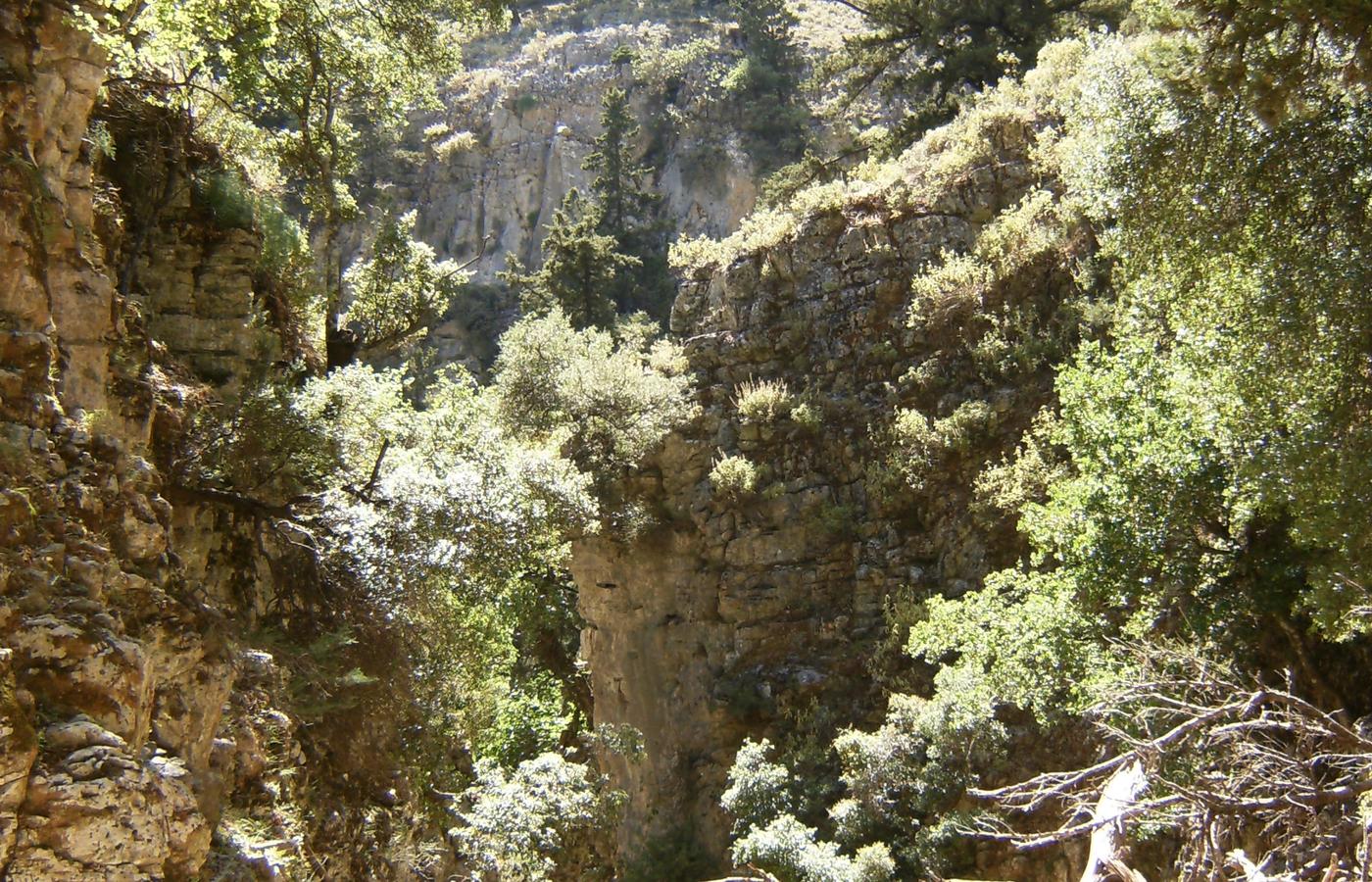

Imbros Gorge runs about 8 km downhill from the village of Imbros, at around 780 metres, to Komitades near the south coast, and takes most walkers two to three hours. The path follows an old mule route used by locals for centuries, through cypress, oak and wild olive, and at its narrowest the rock walls close in to barely two metres apart. A small entry fee is collected at the top.
Unlike Samaria, Imbros is open year-round, which makes it the best choice for Crete in late October and after Samaria closes. It is also easier and less crowded, a good introduction to Cretan gorge hiking. The descent is steady rather than steep, but the stony path is uneven, so proper shoes matter.
From Komitades, local taxis run back up to Imbros for those who left a car, and Chora Sfakion's harbour tavernas are a short ride away for a seafood lunch.
Pro Tip: Start by 09:30 to enjoy the narrowest section in soft morning light, then take a taxi from Komitades to Frangokastello beach for a swim and lunch beside the Venetian castle.
2Samaria Gorge - Europe's Longest Gorge Before It Closes
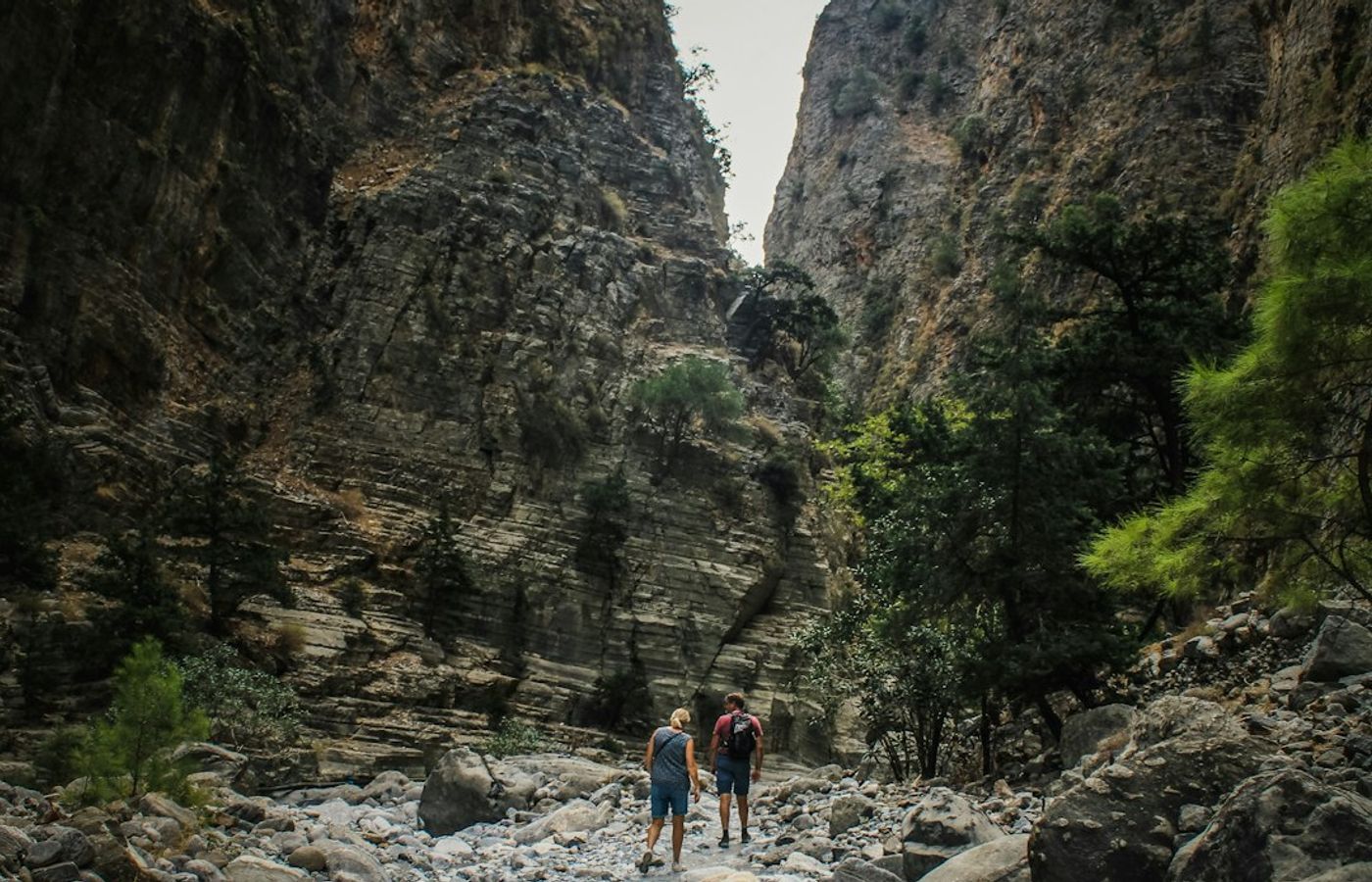

Samaria Gorge, in the heart of the White Mountains, is often described as the longest gorge in Europe, a 16 km descent from Xyloskalo on the Omalos plateau, at about 1,230 metres, to Agia Roumeli on the Libyan Sea. The highlight is the Portes, or Iron Gates, where the walls rise hundreds of metres and close to about 4 metres apart. It is a national park and UNESCO biosphere reserve, home to the rare kri-kri wild goat.
The gorge is open only in the warmer months, usually until the end of October, and the park authorities can close it at short notice, sometimes from mid-October, after heavy rain because of flash-flood and rockfall risk. It takes five to seven hours, and there is no road out of Agia Roumeli: you finish with a ferry to Chora Sfakion or Sougia. An entry fee is charged at the gate.
Organised day trips from Chania and Rethymno handle the bus and boat connections, which makes the logistics much easier.
Pro Tip: Check the gorge status the evening before, plan it for early October if possible, and keep Imbros as a backup. Catch the first bus, and check the last ferry time from Agia Roumeli, which shortens in autumn.

3Aradena Gorge - A Wild Descent to Marmara Beach
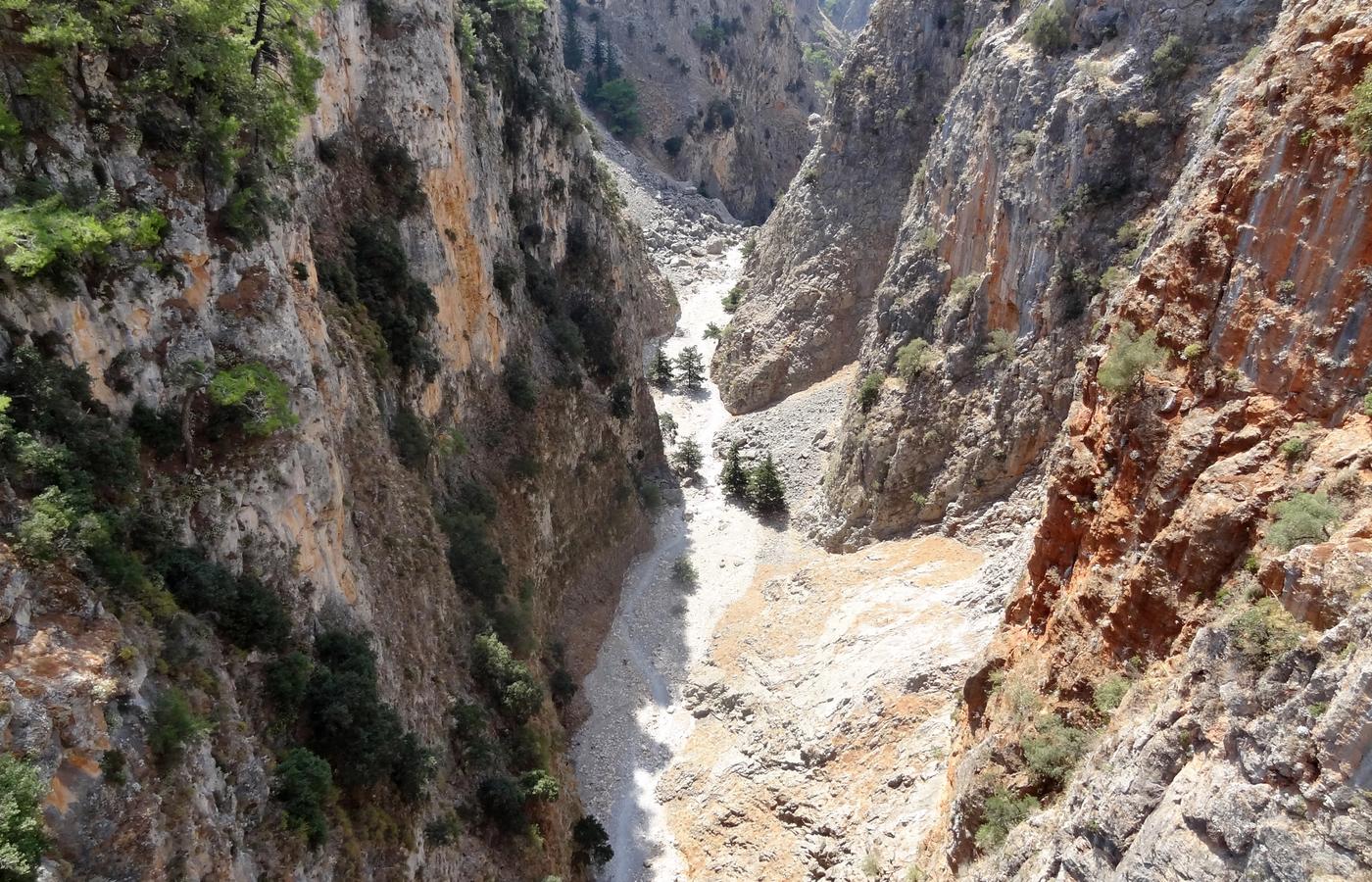

Aradena Gorge begins beneath a metal bridge spanning a 138-metre drop beside the abandoned village of Aradena, and descends about 6 km to Marmara Beach, a pebble cove with turquoise water and sea caves. It is wilder and more rugged than Imbros or Samaria, with sections of boulder scrambling and a short stretch with a fixed ladder, and it takes three to four hours.
This is a hike for experienced walkers with good footwear, and it should be avoided after rain. The reward is solitude and a swim at Marmara, where a small taverna usually operates into October. From the beach, boats run along the coast to the car-free village of Loutro and on to Chora Sfakion, or you can walk the coastal path to Loutro in about an hour.
Boat schedules thin out in late October, so confirm times before descending.
Pro Tip: Stay a night in Loutro, take a morning taxi to Aradena, and finish with a swim at Marmara before the afternoon boat back. Carry more water than you think you need, as there is none in the gorge.
4Zakros Gorge - The Valley of the Dead to a Minoan Palace
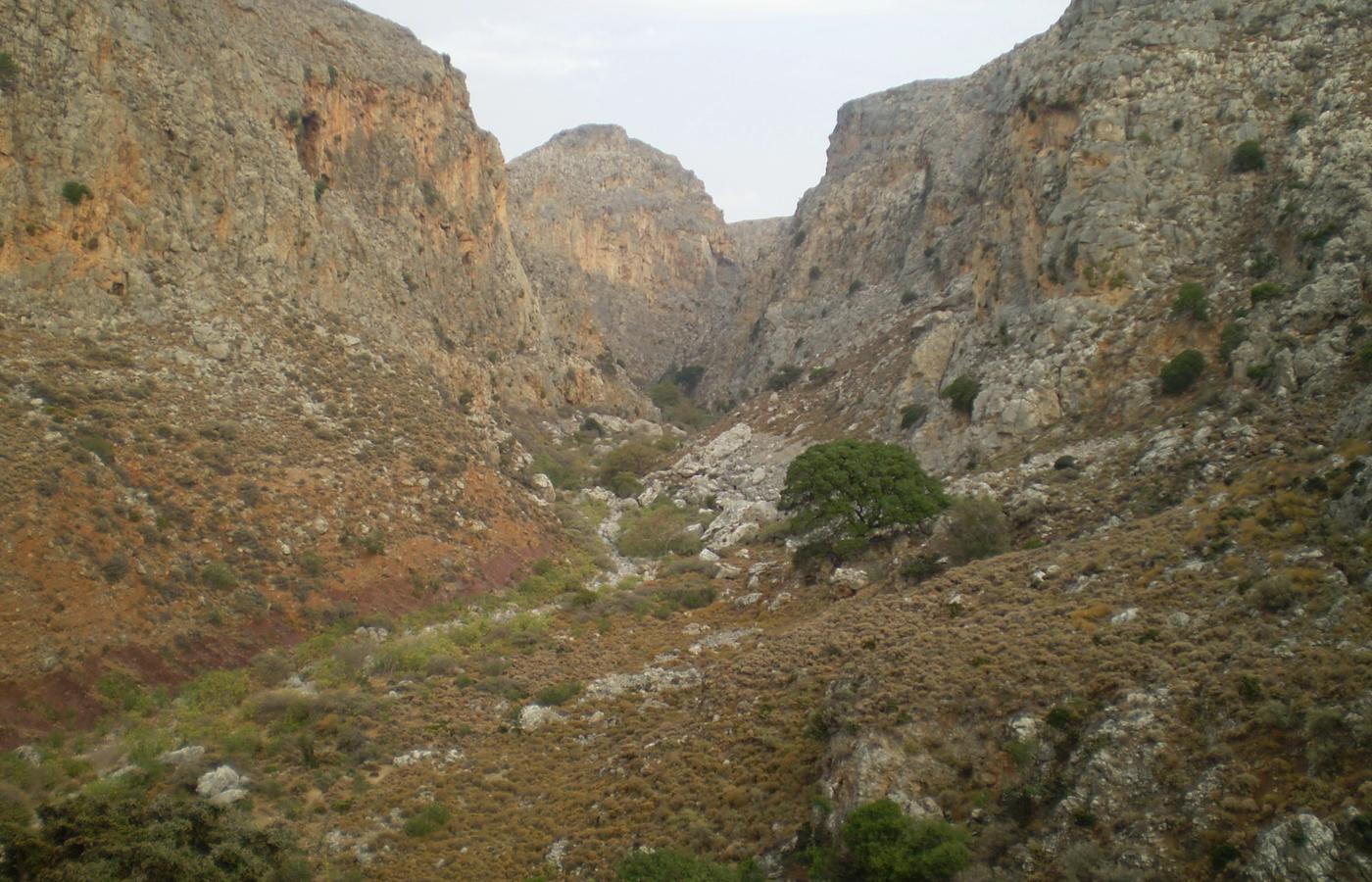
Zakros Gorge, known as the Valley of the Dead, runs about 8 km from the village of Ano Zakros down to Kato Zakros on the east coast. The name comes from Minoan burial caves in the gorge walls, and the walk ends beside the ruins of the Palace of Zakros, the fourth-largest Minoan palace on Crete, next to a quiet pebble beach.
The trail is moderate and takes about two to three hours, through oleander, carob and plane trees, and it is one of the easiest ways to combine hiking, archaeology and a swim in one day. Eastern Crete is also drier and less visited than the west, which makes it a good October choice. The archaeological site charges a small entry fee and has shorter hours outside summer.
Kato Zakros has a handful of seafront tavernas, and taxis can take you back up to Ano Zakros.
Pro Tip: Start in the morning so you reach the Palace of Zakros before it closes, then swim and have lunch in Kato Zakros. Combine it with Vai palm beach, 30 minutes' drive north, on the same day.
5Richtis Gorge - A Waterfall Walk to the Sea
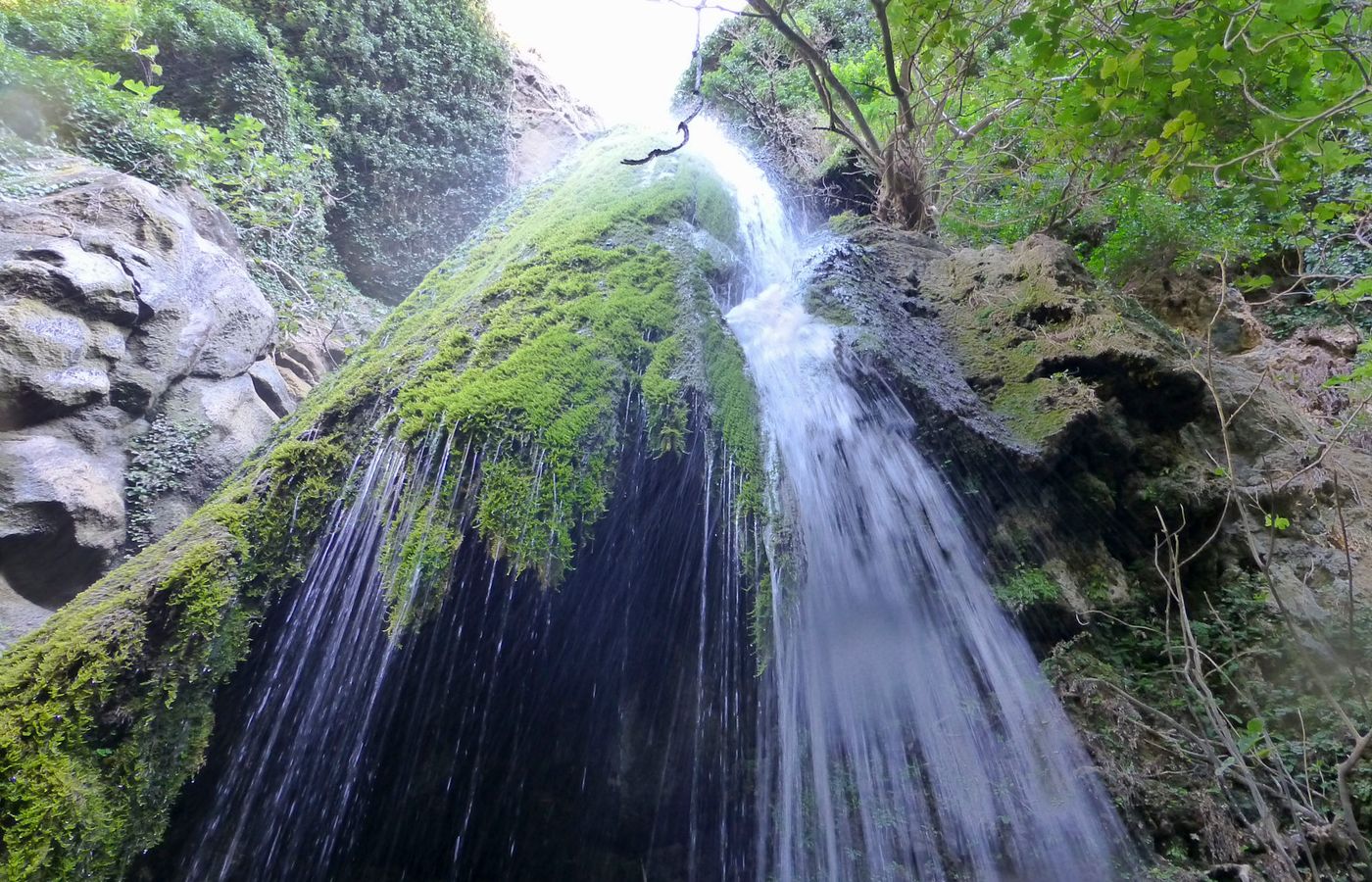
Richtis Gorge is a green, shaded ravine that descends about 4 km from the village of Exo Mouliana to Richtis Beach on the north coast. Along the way the path crosses a stone bridge and passes old watermills before reaching a 15-metre waterfall that drops into a pool, one of the few year-round waterfalls in eastern Crete.
It is one of the gentlest and most rewarding walks on the island, suitable for families, and takes about two hours one way. The dense plane trees keep it cool, and the stream crossings are easy in autumn when water levels are low. The trail ends at a quiet pebble beach where a swim is still pleasant in October.
Most walkers return the same way, since the beach track is rough for cars.
Pro Tip: Walk down to the beach in the morning, swim, then stop at the waterfall on the way back up when it is in the afternoon shade. Bring shoes that can get wet for the stream crossings.
Get hotel deals for Crete
Price drops, new stays and local tips for Crete, straight to your inbox.
No spam, unsubscribe anytime.

CEO and co-founder
Tomas is the co-founder and director of trip1, an European company specializing in reservation services. He launched the company in 2025 with a focus on building scalable, efficient operations.
5 Best Autumn Hikes in Crete - FAQ
Usually, but only until late October. The national park normally closes the gorge for the season at the end of October, and it can close earlier, sometimes by mid-October, after heavy rain because of flash-flood and rockfall risk. Check the official status the day before, and treat Imbros Gorge as your backup.
Samaria Gorge is the most famous, a 16 km descent through Europe's longest gorge. For autumn, though, Imbros Gorge is the most reliable choice: shorter at about 8 km, open year-round and far less crowded. Aradena suits experienced hikers, while Richtis and Zakros in eastern Crete combine a gorge walk with a beach or Minoan ruins.
Crete in October is warm and mostly dry, with coastal highs around 24 to 26°C, sea temperatures near 23°C and cooler air in the mountains. The first autumn rains usually arrive later in the month, which can close Samaria. It is ideal hiking weather compared with summer, when gorges trap heat.
Most are moderate but tiring. Samaria is long, at 16 km with a steep 1,200-metre descent on loose stone. Imbros, Richtis and Zakros are easier half-day walks, and Aradena is the hardest, with boulder scrambling. Wear proper hiking shoes, carry at least two litres of water and start early.
No. All five trails are well trodden and can be walked independently. The challenge is logistics, since most gorges are one-way walks. Organised day tours from Chania, Rethymno or Heraklion handle transport, which is especially useful for Samaria with its bus and boat connections. Independent hikers can use KTEL buses and taxis.
Chania is the best base for the western gorges, Samaria, Imbros and Aradena, with bus connections and tours. For the eastern hikes, Richtis and Zakros, stay near Agios Nikolaos or Sitia. Crete is large, about 260 km long, so splitting a trip between west and east saves hours of driving.