
Guides · Nara
10 Best Things to Do in Nara

CEO and co-founder
This guide covers 10 things to do in Nara, Japan, ordered so that most of them link into one walking day. Nara was the imperial capital from 710 to 784, and the temples built in those seventy-four years still stand within a 30-minute radius of Kintetsu Nara Station. Every entry below gives you the exact street address with its Japanese postal code, the closest station along with a realistic walk or bus time, and a Pro Tip built on opening hours, ticket prices in yen, and the hour the coach parties turn up.
Entries one through seven sit inside or immediately beside Nara Park, so you can string them together on foot without touching a timetable. Todai-ji, Kasuga Taisha and Kofuku-ji form a rough triangle across the northern half of the park. Isuien Garden and the lanes of Naramachi fill the gaps between them. Mount Wakakusa rises straight behind Kasuga Taisha, which makes it a late-afternoon add-on rather than a separate outing.
The final three - Yakushi-ji, Toshodai-ji and Horyu-ji - lie southwest of the city and need a train or a bus. Yakushi-ji and Toshodai-ji are ten minutes apart on foot, so pair them. Horyu-ji deserves half a day on its own. One day in Nara? Do the park cluster and nothing else. Two days? Give the second morning to the southwestern temples and leave the afternoon loose.
1Nara Park - Where 1,200 Wild Sika Deer Roam Free
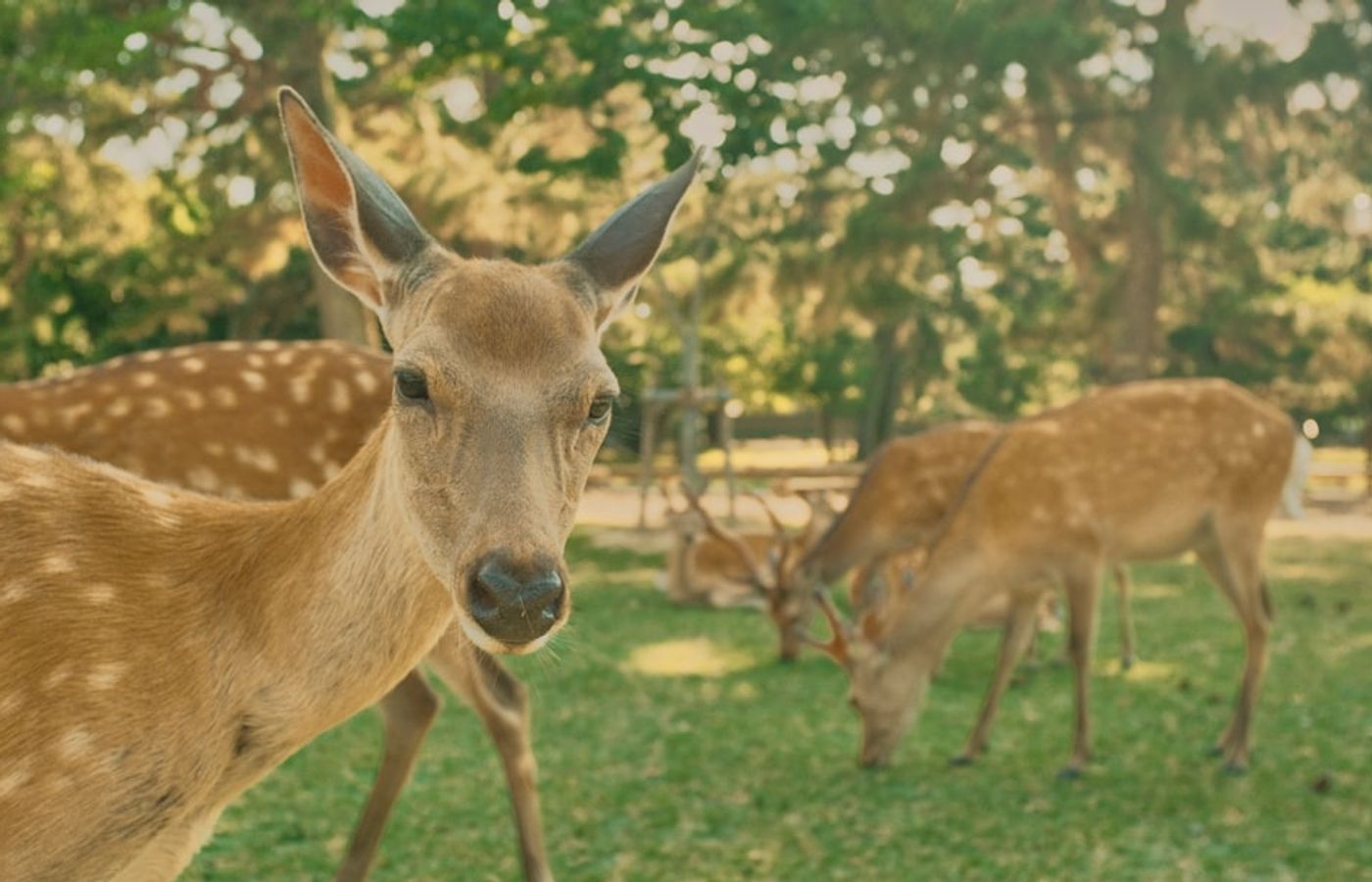

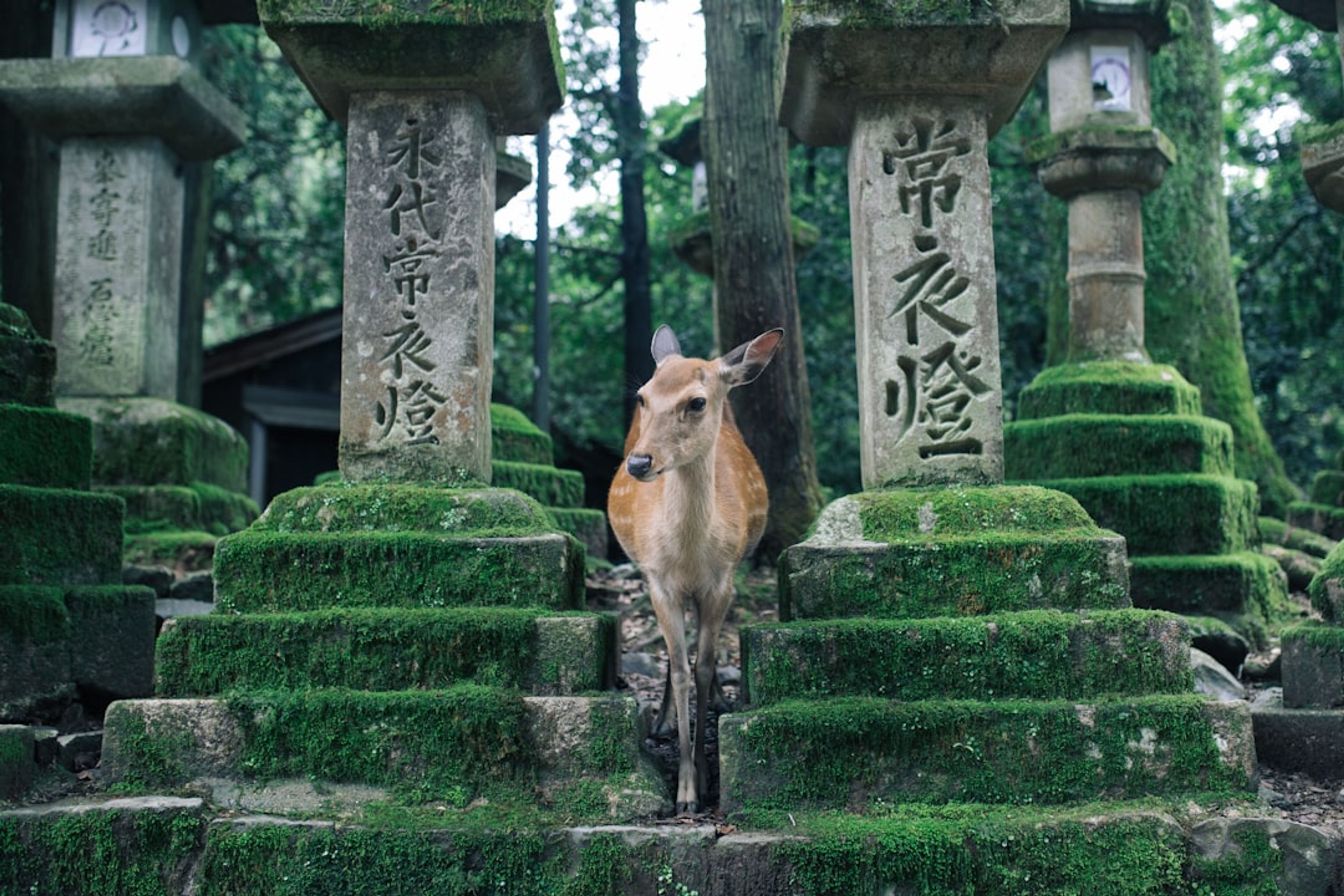
Nara Park spreads across roughly 660 hectares at the foot of Mount Wakakusa and acts as the connective tissue for almost everything else on this list. About 1,200 wild sika deer live in it. They are not tame pets. They have been protected as national natural treasures since 1957, they are genuinely wild, and they will headbutt you if you hold food for too long. Vendors sell shika senbei, the flat rice crackers made for the deer, at 200 yen a bundle from stalls near Nandaimon Gate and along Noborioji-dori.
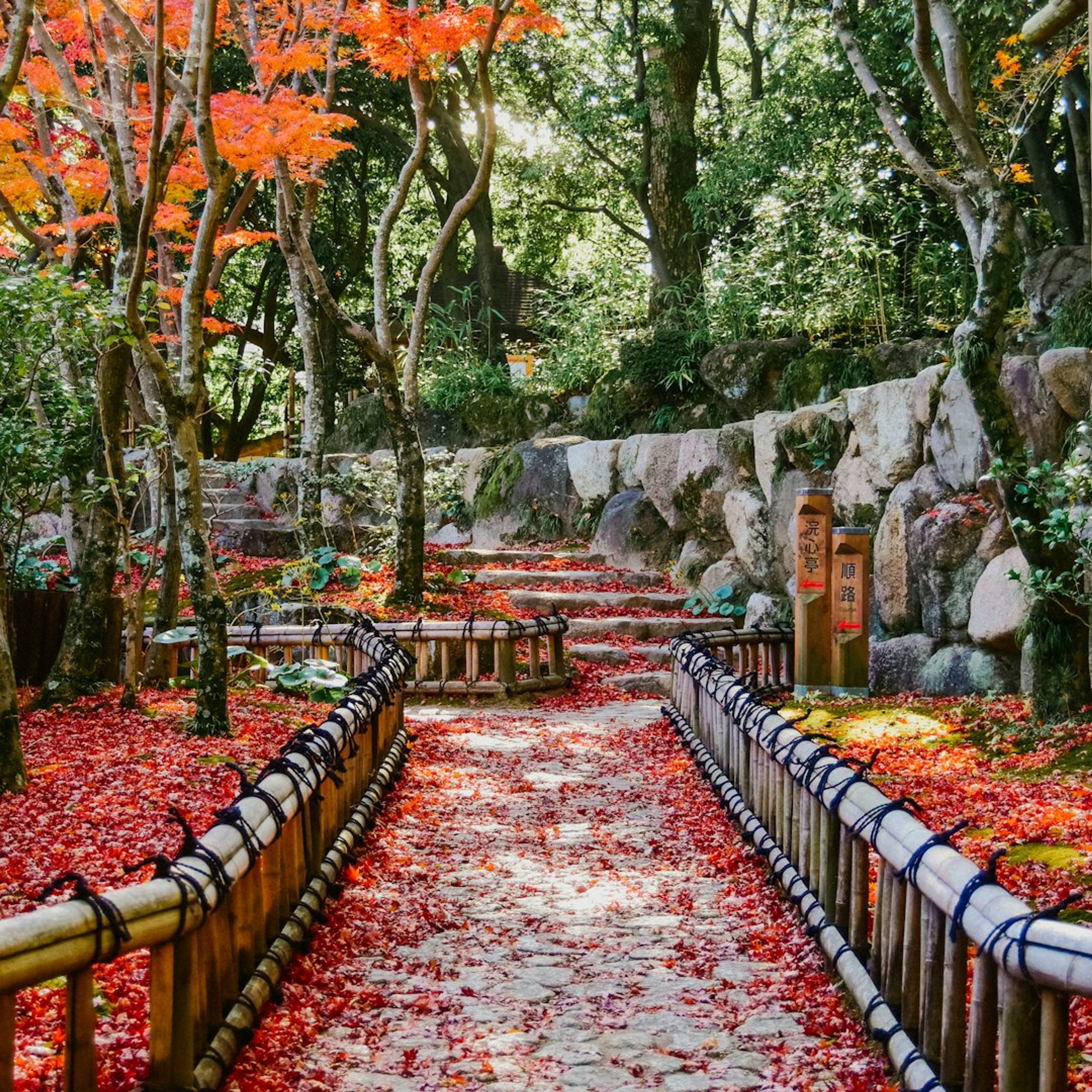
Bow to a deer and many of them bow back, a habit learned across generations of cracker transactions. Once you have fed them, show open palms so they understand the supply has run out. The park itself is free and never closes. Between 7am and 9am you get the deer, the reflections on Sagiike Pond and the paths toward Todai-ji without a single coach party. Cherry blossom peaks in early April. The maples turn from mid to late November.
Pro Tip: Buy the deer crackers last, not first. The moment you are holding a bundle the deer trail you in a pack and you will not get a clean photograph of anything else. Feed them near the Ukimido pavilion on Sagiike Pond, where the crowd density is far lower than at Nandaimon Gate.
2Todai-ji - Home of Japan's Largest Bronze Buddha
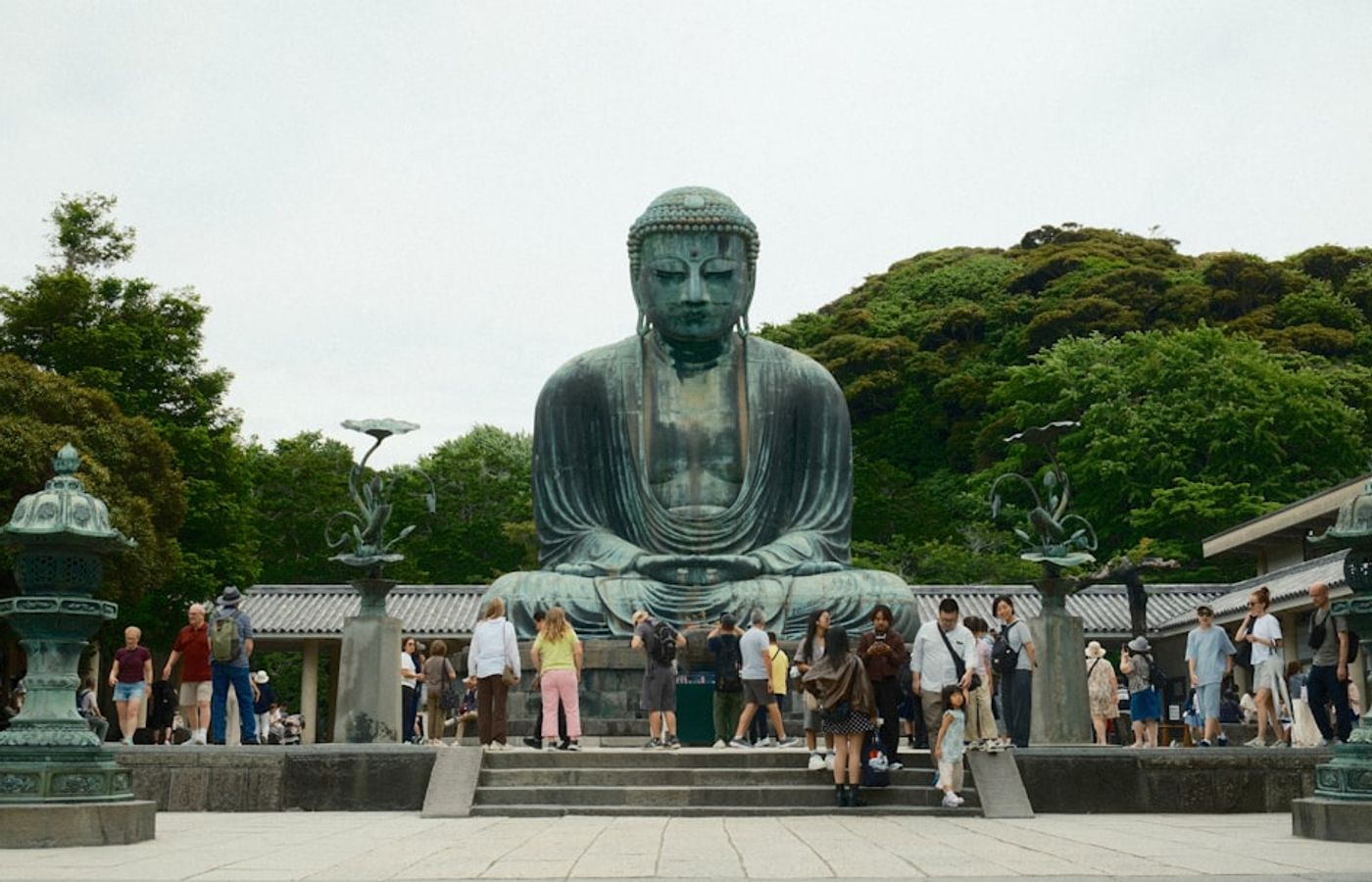

Todai-ji was consecrated in 752, and its Great Buddha Hall, the Daibutsuden, is still among the largest wooden buildings on the planet at 57 m wide and 48 m tall. The hall you walk into today was rebuilt in 1709 and is roughly two thirds the width of the original. Inside sits the Daibutsu, a seated bronze Vairocana Buddha standing 15 m high, cast from something close to 500 tonnes of copper and bronze in a project that came near to bankrupting the Nara court.
Admission is 800 yen for adults and 400 yen for children. The hall opens 7:30am to 5:30pm from April to October and 8am to 5pm from November to March. Behind the Buddha stands a wooden pillar with a hole cut at its base, said to match the width of the Daibutsu's nostril; squeezing through it supposedly grants enlightenment, and children manage the manoeuvre with considerably more grace than adults. On the approach, Nandaimon Gate shelters two 8.4 m Nio guardians carved by Unkei and Kaikei in 1203.
Pro Tip: Be at the gate for the 7:30am summer opening. That buys you about twenty minutes with the Great Buddha before the first school groups arrive from Kintetsu Nara Station, and the hall is quiet enough to hear the floorboards.

3Kasuga Taisha - Three Thousand Lanterns in the Cedar Forest
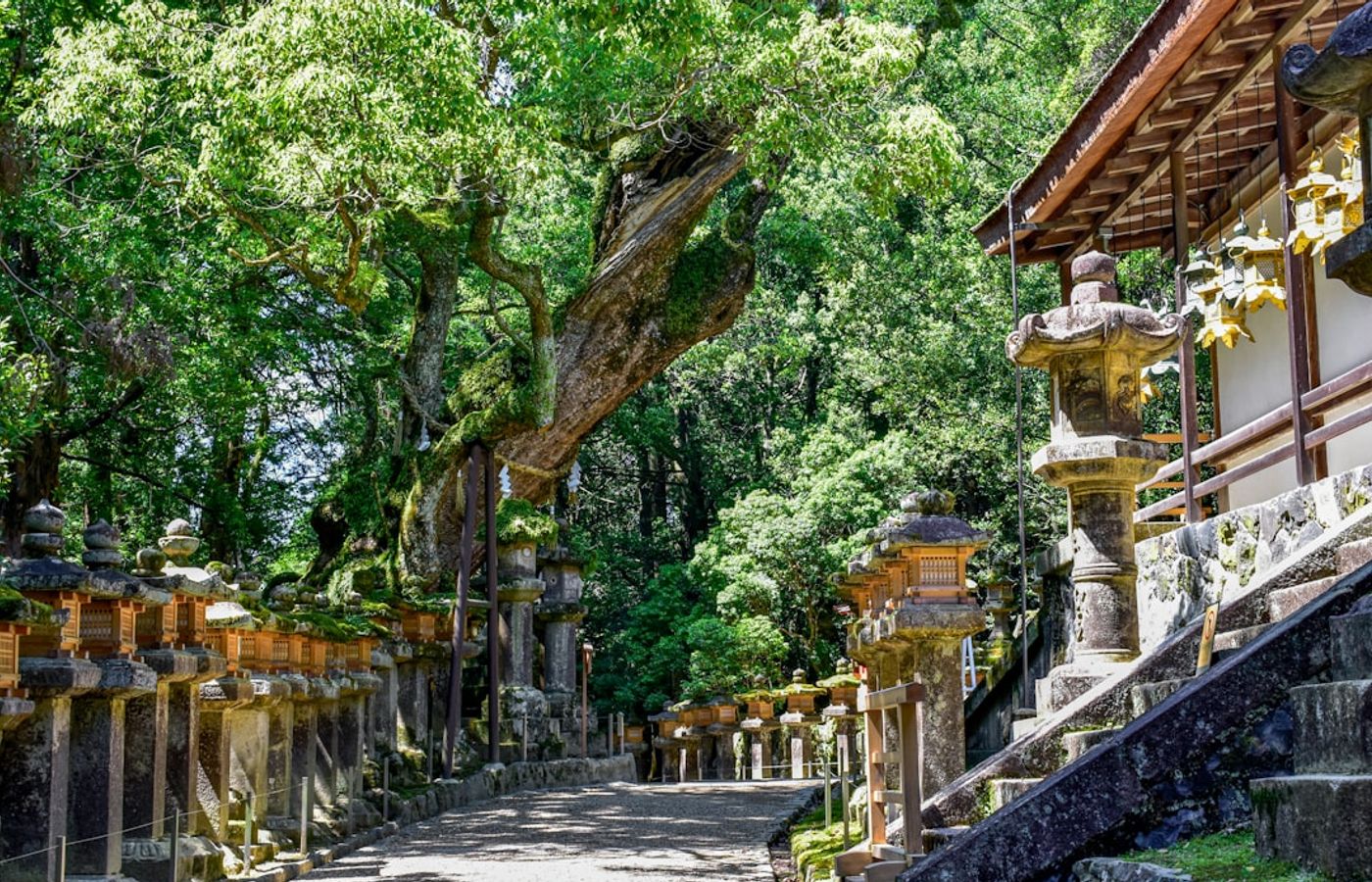

Kasuga Taisha was founded in 768 as the tutelary shrine of the Fujiwara clan, and for centuries it was demolished and rebuilt every twenty years under the shikinen zotai tradition. Around 2,000 stone lanterns line the wooded approach, and roughly 1,000 bronze lanterns hang from the corridors of the inner shrine. Donors have been paying for them since the Muromachi period. Many still carry the carved family name of the merchant who gave it.
The outer grounds cost nothing. The inner area is 700 yen and opens 6:30am to 5:30pm from April to September, 7am to 5pm the rest of the year. Inside, the Fujinaya corridor is kept dark with its bronze lanterns lit, which is the closest you get to the full effect outside a festival date. Every lantern on the site is lit twice a year: Setsubun Mantoro on 3 February and Chugen Mantoro on 14 and 15 August.
Pro Tip: Walk in along the Omotesando approach from Nara Park instead of riding the bus to the upper stop. Those 20 minutes through cedar forest, past ranks of moss-covered stone lanterns with deer crossing the path, are the better half of the visit.
4Kofuku-ji - The Five-Storey Pagoda Above Sarusawa Pond
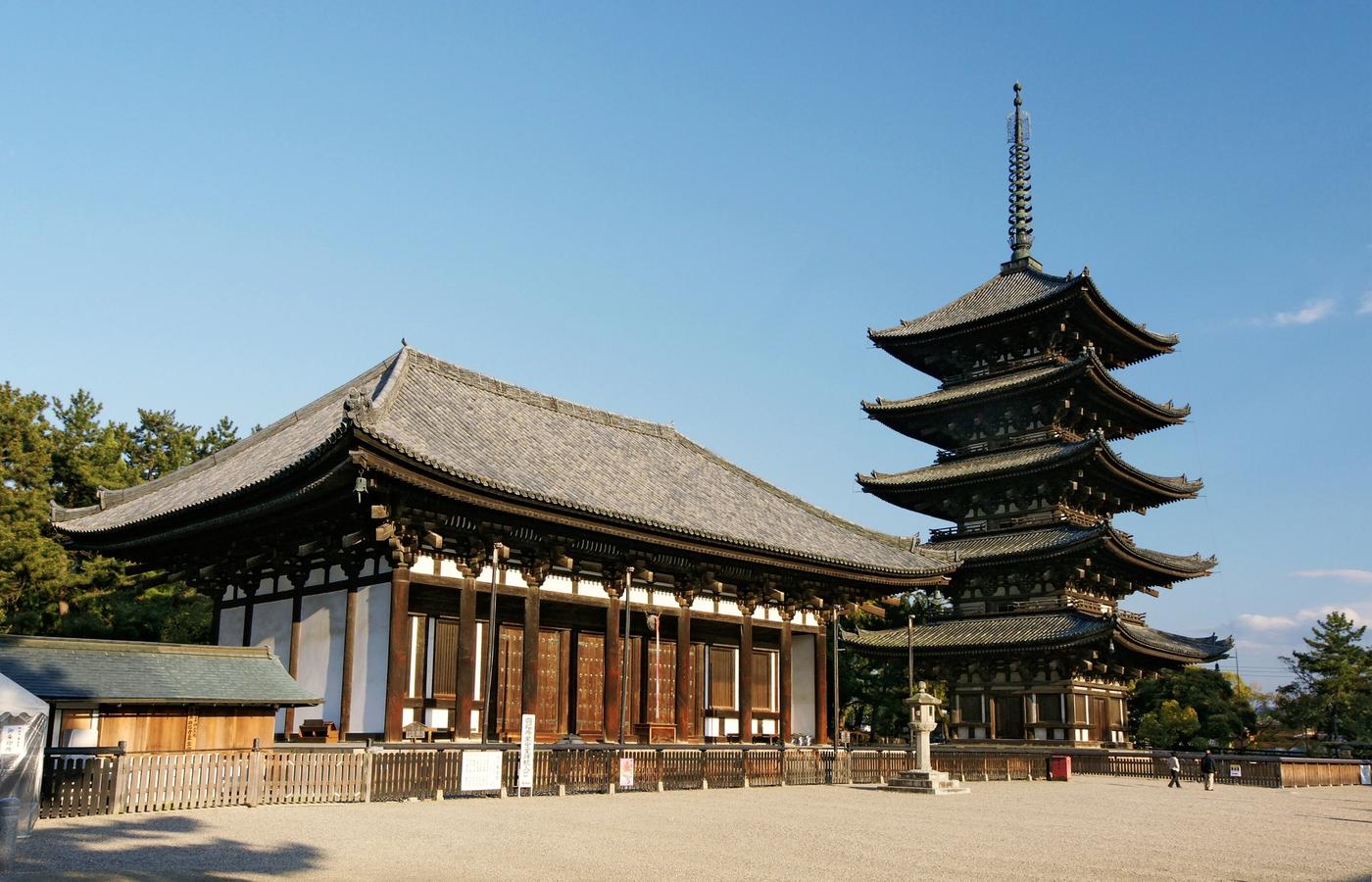
Kofuku-ji occupies the rise directly above Sarusawa Pond, five minutes from Kintetsu Nara Station, which makes it the natural first stop of any Nara day. Its five-storey pagoda reaches 50.1 m, second only to To-ji in Kyoto among Japanese wooden pagodas. The version standing now went up in 1426, after five separate fires. The temple relocated here in 710 alongside the capital itself and at its peak held some 175 buildings.
One caveat worth knowing before you plan around it: the pagoda entered a full dismantling and repair cycle in 2023 and is expected to remain under a protective cover until roughly 2031. The National Treasure Museum charges 700 yen and holds the three-faced, six-armed Ashura figure of 734, a dry-lacquer sculpture that pulls its own crowd. The reconstructed Central Golden Hall, reopened in 2018, is 500 yen. Grounds are free and unfenced at all hours.
Pro Tip: Treat Kofuku-ji as a ten-minute warm-up on the walk from the station to Todai-ji rather than a destination in itself. While the pagoda is wrapped, the Ashura statue is the only thing here worth paying for, so put your 700 yen into the National Treasure Museum and skip the Central Golden Hall.
5Isuien Garden - Borrowed Scenery and a Teahouse Pond
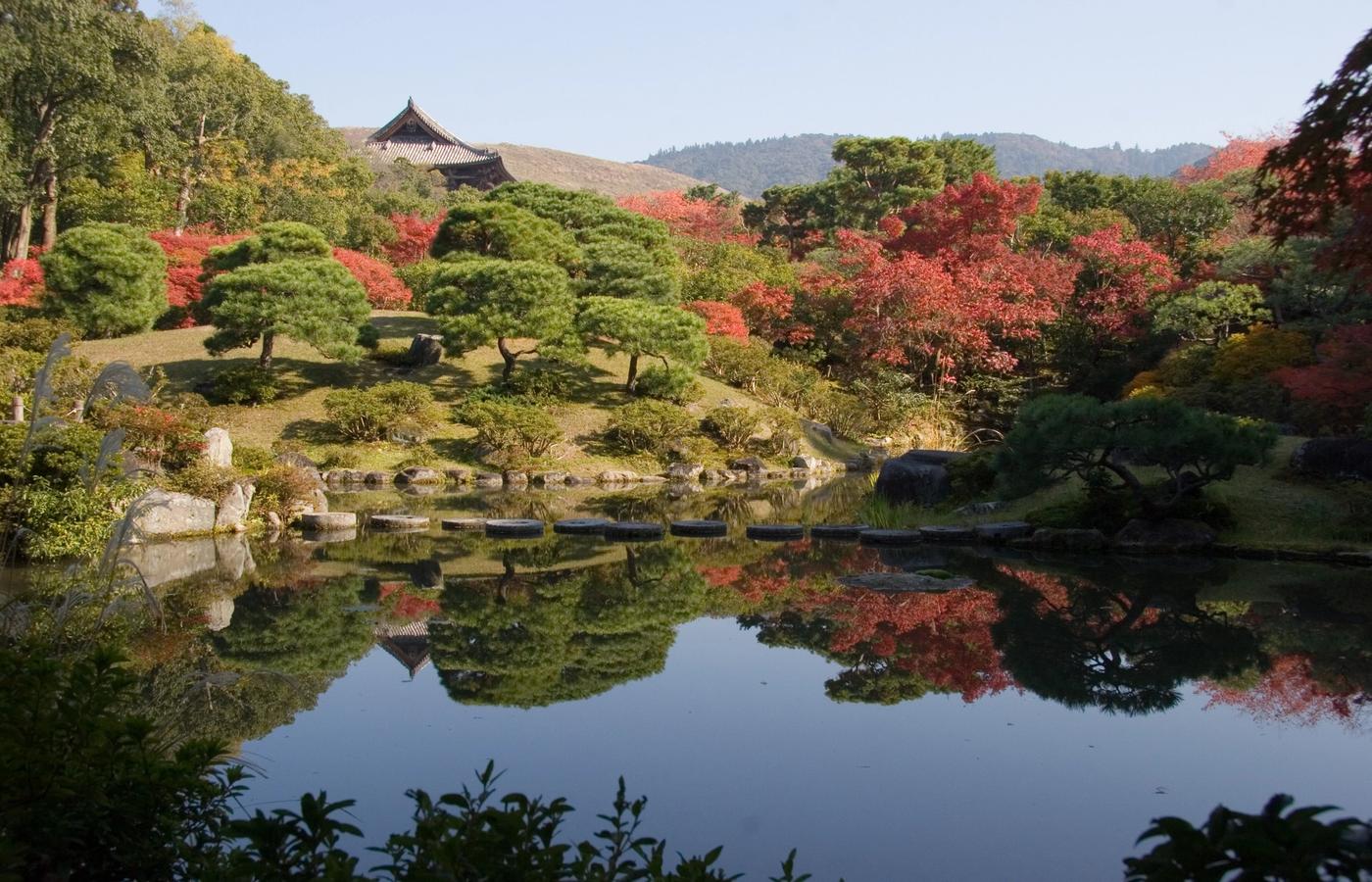
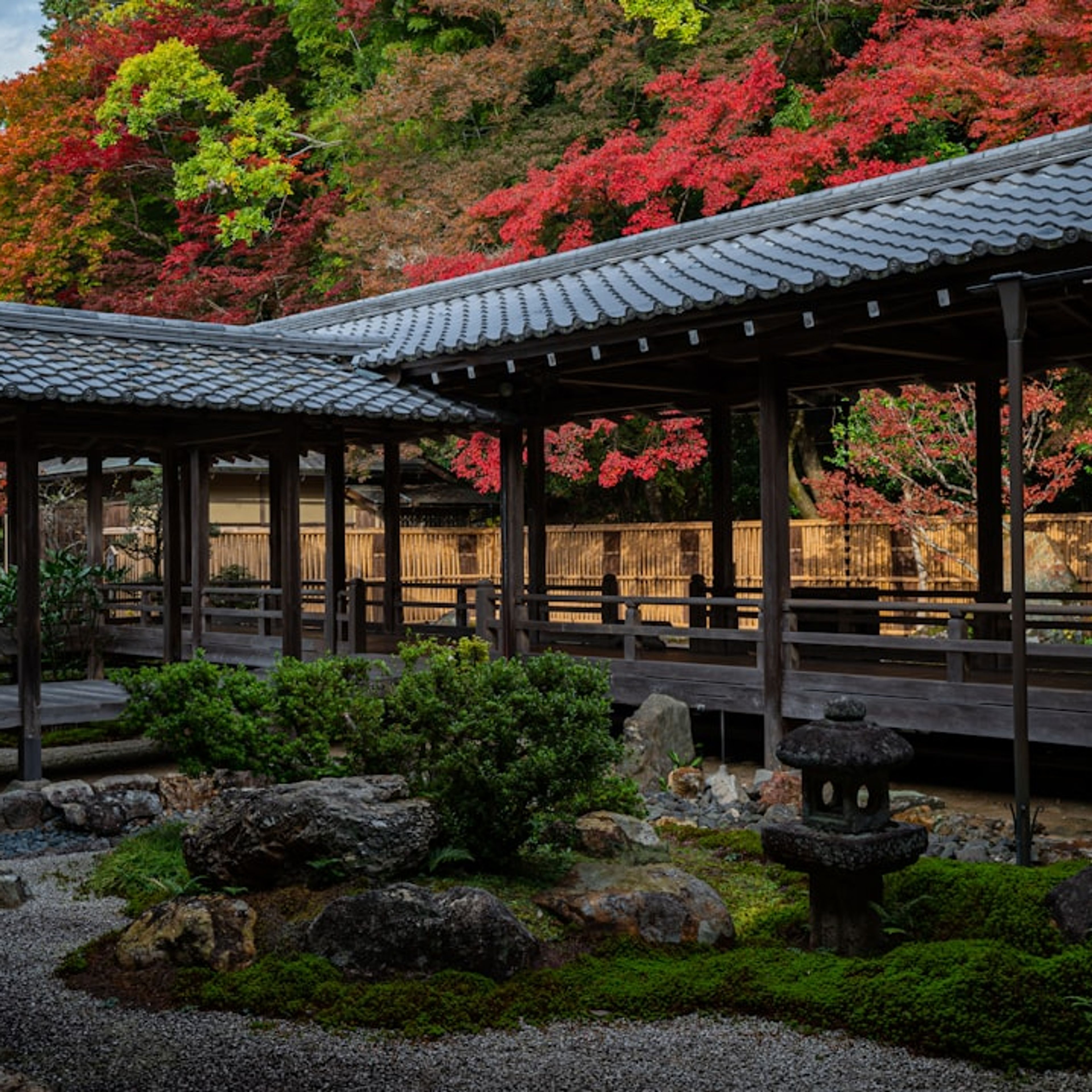
Isuien is Nara's only stroll garden built on the shakkei principle, in which distant scenery is deliberately pulled into the composition. Stand at the rear pond and the tiled roof of Todai-ji's Nandaimon Gate and the bare slopes of Mount Wakakusa sit inside the frame as though someone had planted them there. The garden comes in two halves laid out more than two centuries apart: the front section dates from 1673, the rear from 1899.
Entry is 1,200 yen and includes the Neiraku Museum next door, with its collection of Chinese bronzes and Korean ceramics. Hours run 9:30am to 4:30pm, closed Tuesdays and from late December into mid-January. Sanshu, the teahouse by the front pond, serves matcha and warabi mochi looking straight over the water. Forty-five minutes covers the circuit at a walking pace. Budget an hour and a half if you stop for tea, which you should.
Pro Tip: Come on a weekday in late November. The maples over the rear pond peak about a week later than the ones out in Nara Park, and if you arrive for the 9:30am opening you get the front pond to yourself for a good twenty minutes before anyone else drifts in.
6Naramachi - The Old Merchant Quarter South of Sarusawa Pond
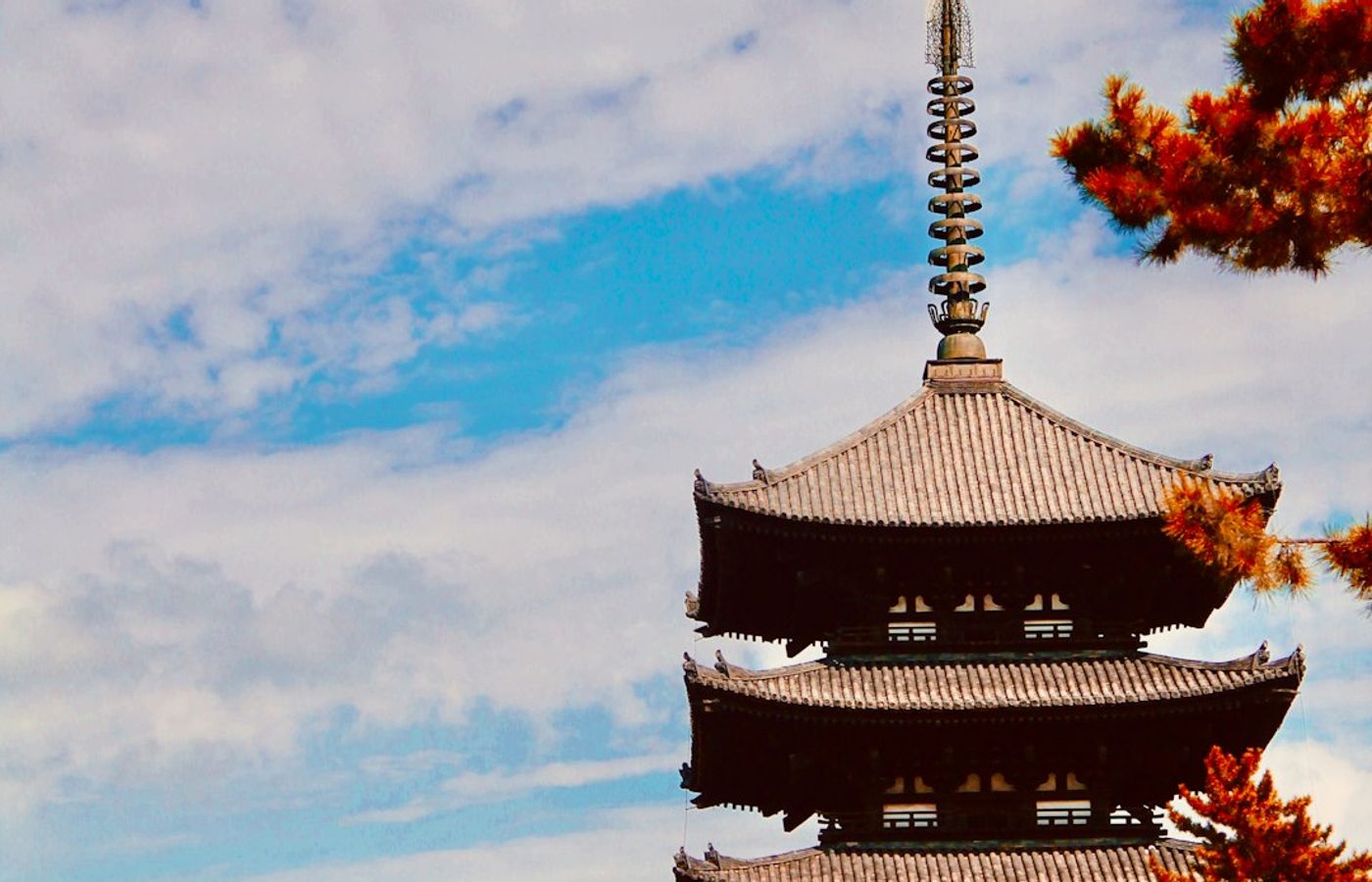
Naramachi is the grid of narrow lanes south of Sarusawa Pond where Nara's merchant families lived and traded from the Edo period onward. The houses are machiya: skinny street frontages running back a very long way, a shape produced by property tax assessed on width rather than area. Watch the doorways for clusters of small red cloth balls. These are migawari-zaru, monkey charms that take on misfortune in place of the household, hung one per family member.
Naramachi Koshi-no-Ie is a restored machiya, free to enter, open 9am to 5pm and closed Mondays. It shows the layout properly: the earth-floored corridor running front to back, the light well, the storehouse at the rear. Naramachi Nigiwai-no-Ie is a second free option a few streets over. Past the museums the quarter runs on small kissaten, shops selling Nara-zarashi bleached linen, and sake bars. Almost none of it is signposted in English.
Pro Tip: Save Naramachi for around 5pm, once the temple gates have shut. The lanes stay lit and the restaurants open while Nara Park empties, and most day-trippers are already on the train back to Kyoto by then.
7Mount Wakakusa - The Grass Hill With the Best View in Nara
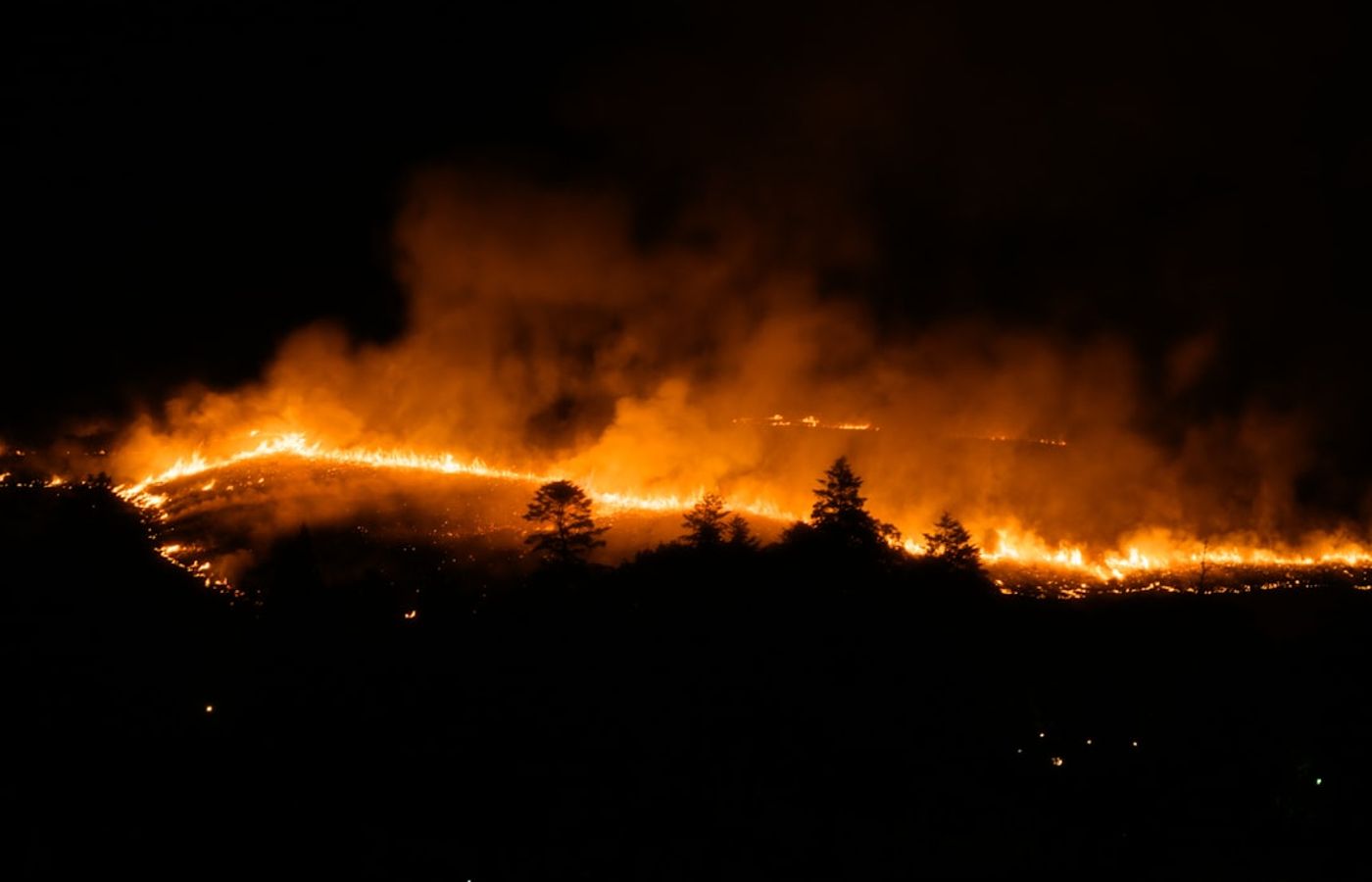
Mount Wakakusa rises 342 m directly behind Nara Park, a bare grass dome stacked in three tiers. The climb from the northern gate takes 30 to 40 minutes at a steady pace up a stepped path, and the first tier alone hands you the roof of Todai-ji, the Kofuku-ji pagoda and the whole Nara basin running west toward Osaka. Deer graze the slope right up to the summit and pay you no attention whatsoever.
Admission is 150 yen for adults, 80 yen for children. The mountain opens from the third Saturday of March until the second Sunday of December, 9am to 5pm, and shuts completely through winter. On the fourth Saturday of January the entire hillside is set on fire for Wakakusa Yamayaki, a controlled burn watched by tens of thousands from the park below, with fireworks going up around 6:15pm before the grass is lit.
Pro Tip: Start the climb an hour before the 5pm closing. The 4pm light across the basin is the whole reason to do this, and you will be coming down as everyone else has already gone. Wear shoes with grip - the grass turns slick after rain and the descent is steeper than it looks from below.
8Yakushi-ji - Twin Pagodas From the Eighth Century
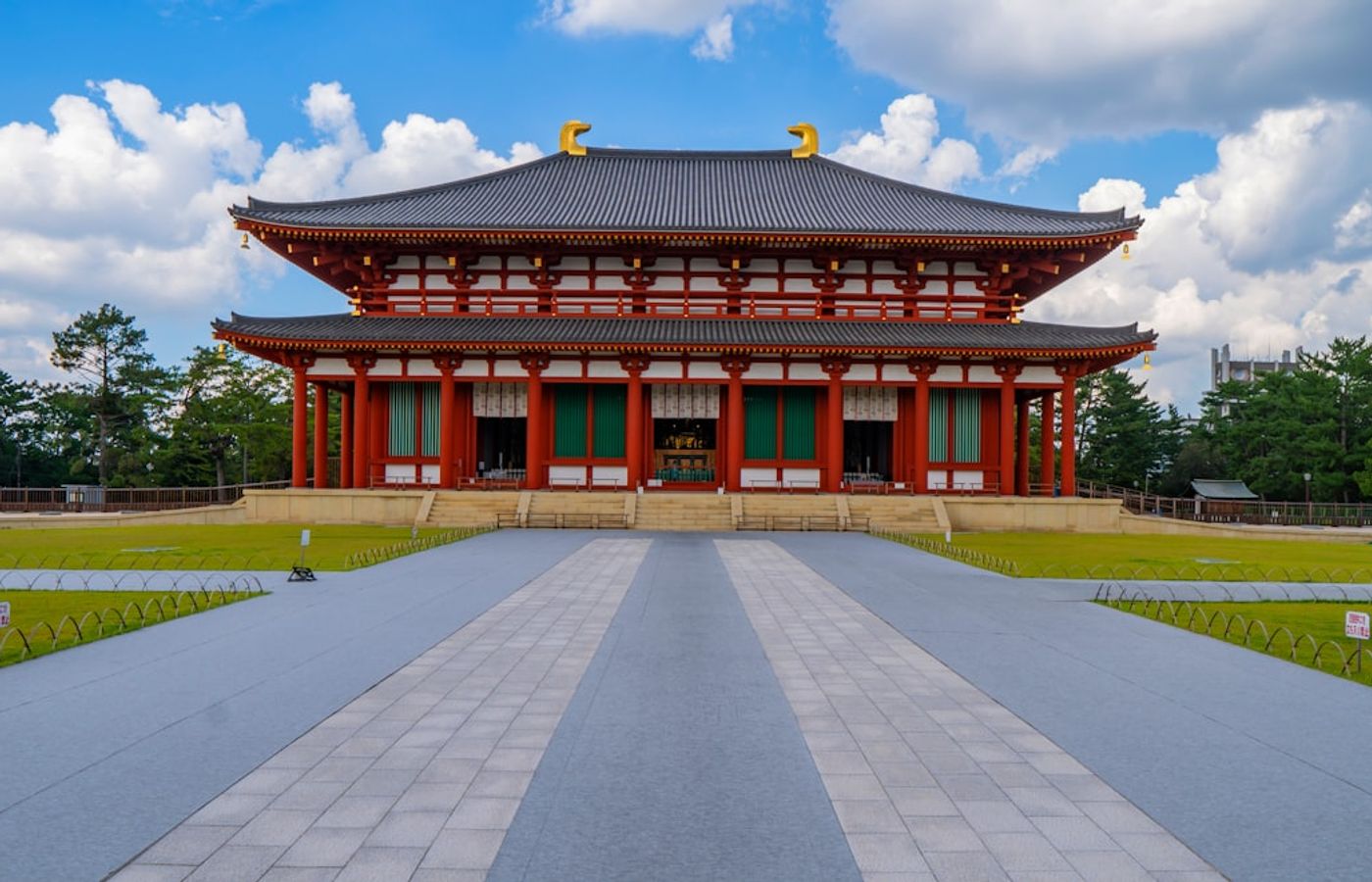
Yakushi-ji was founded in 680 by Emperor Tenmu as a prayer for his consort's recovery and moved to its present site in 718. The East Pagoda is the only original structure still standing, raised in 730, and its alternating full and half roofs create a visual rhythm that a nineteenth-century American scholar is said to have described as frozen music. It emerged in 2020 from a complete dismantling and repair programme that ran for twelve years.
The West Pagoda facing it is a 1981 reconstruction, painted in the vermilion and green the eighth-century originals would have carried, which makes the pair a useful before-and-after lesson in what age does to timber. The bronze Yakushi Triad in the Golden Hall dates to the late seventh or early eighth century and is a National Treasure. Entry is 1,100 yen, open 8:30am to 5pm with last admission at 4:30pm. Yakushi-ji is one of the eight components of the Historic Monuments of Ancient Nara inscribed by UNESCO in 1998.
Pro Tip: Yakushi-ji and Toshodai-ji sit ten minutes apart on foot, so do them in one trip and do them in that order. Start at Yakushi-ji for the 8:30am opening, walk north afterwards, and you will reach Toshodai-ji before the tour buses get there around 11am.
9Toshodai-ji - The Temple Built by a Blind Chinese Monk
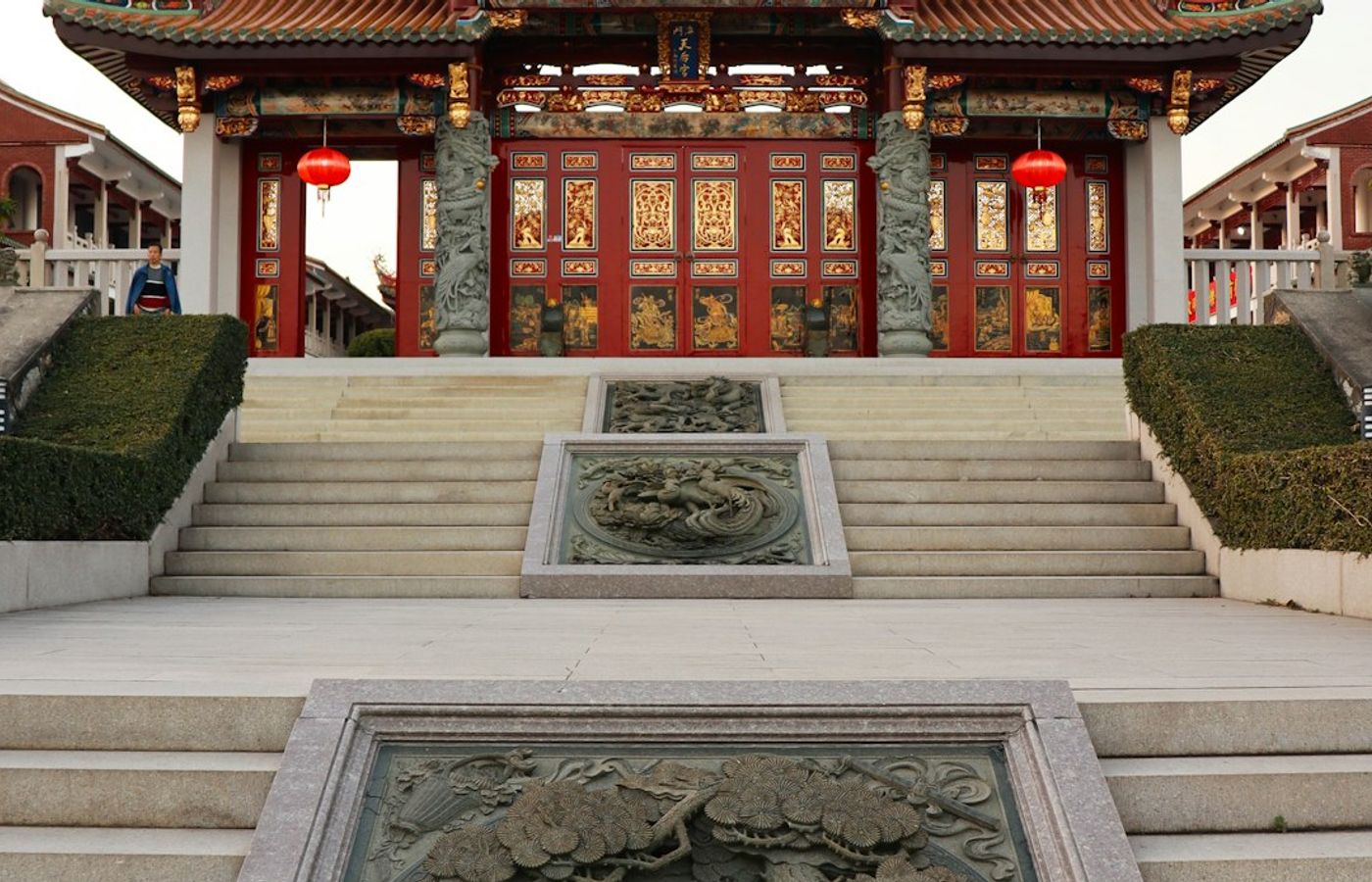
Toshodai-ji was founded in 759 by Ganjin, a Chinese priest who attempted the crossing to Japan five times over eleven years, lost his sight to infection somewhere along the way, and finally landed on the sixth attempt in 753. He came to install a proper system of monastic ordination. The Kondo, the main hall, went up around 780 and is the only surviving golden hall of the Nara period with its original eight-pillar entrance colonnade intact.
A ten-year dismantling and reassembly of that hall finished in 2009, with every timber catalogued on the way out and back in. Inside stand a 3 m dry-lacquer Rushana Buddha, a thousand-armed Kannon and a Yakushi Nyorai, all National Treasures. Entry is 1,000 yen, open 8:30am to 5pm with last entry at 4:30pm. Ganjin's seated portrait statue, the oldest sculpture of its kind in Japan, is displayed for only three days each June around the anniversary of his death.
Pro Tip: Walk here from Yakushi-ji instead of waiting for a bus. The lane between the two runs through ordinary Nishinokyo suburbs and takes ten minutes. Toshodai-ji draws a fraction of Todai-ji's numbers, so a 3pm arrival on a weekday gets you the Kondo almost to yourself.
10Horyu-ji - The Oldest Wooden Buildings on Earth
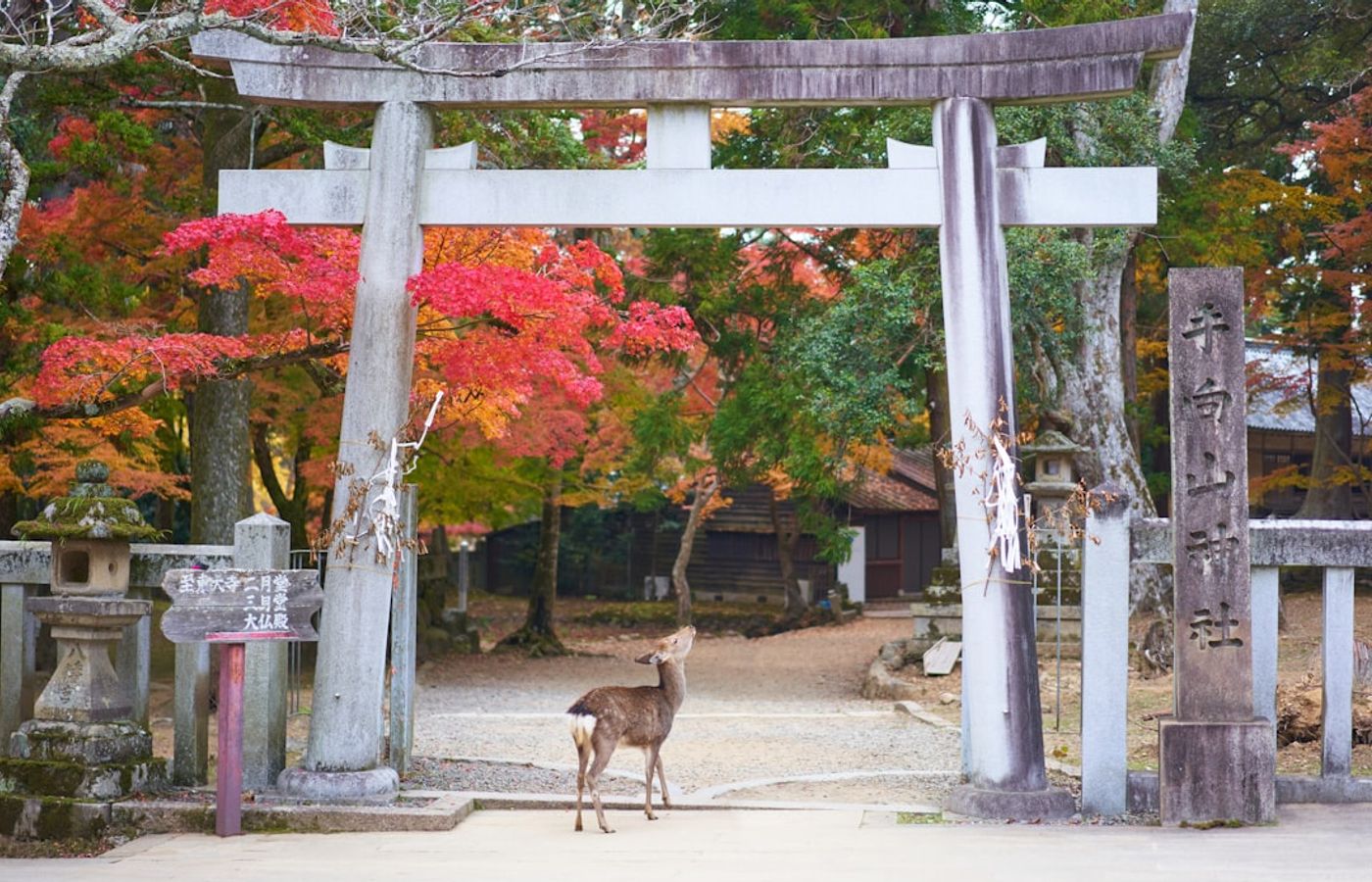
Horyu-ji, out in Ikaruga town southwest of Nara city, holds the oldest surviving wooden buildings anywhere in the world. The Kondo and the five-storey pagoda in the Western Precinct date to roughly 700, rebuilt after a fire in 670 destroyed the original foundation laid by Prince Shotoku in 607. Tree-ring dating on the pagoda's central pillar put the felling year at 594. Horyu-ji became Japan's first UNESCO World Heritage site in 1993.
The complex covers around 187,000 square metres and holds some 2,300 registered cultural properties. Entry is 1,500 yen and covers the Western Precinct, the Great Treasure Gallery and the Eastern Precinct with its octagonal Yumedono hall of 739. Hours are 8am to 5pm from February to early November and 8am to 4:30pm the rest of the year. Give it three hours at the very least; the walk between the two precincts eats fifteen minutes on its own.
Pro Tip: Ride the JR Yamatoji Line from JR Nara Station to Horyuji Station, 11 minutes and 230 yen, and go first thing in the morning. Pick up Yakushi-ji and Toshodai-ji on the way back rather than the other way round, because Horyu-ji after a morning in Nara Park leaves you too tired to look at any of it properly.

CEO and co-founder
Tomas is the co-founder and director of trip1, an European company specializing in reservation services. He launched the company in 2025 with a focus on building scalable, efficient operations.
10 Best Things to Do in Nara, Japan - FAQ
Not all ten. The first six cluster inside Nara Park and can be walked in a single full day. Yakushi-ji, Toshodai-ji and Horyu-ji sit west and southwest of the city and need a second day, or at least a dedicated half-day by bus.
Walk east to west through Nara Park. Start at Kofuku-ji beside Kintetsu Nara station, cross to Todai-ji, continue up to Kasuga Taisha through the lantern-lined forest path, then drop back through Isuien Garden and Naramachi. Climb Mount Wakakusa at the end for sunset. Save the western temples for a separate day.
None of them. Every temple, shrine and garden on this list sells tickets at the entrance and queues are short outside the autumn colour season. Nara Park itself is open ground with no gate or admission at all.
Around JPY 5,000 per adult, roughly EUR 30. Individual admissions are modest: Todai-ji is JPY 800, Kofuku-ji's Eastern Golden Hall JPY 500, Isuien Garden JPY 1,200 and Horyu-ji JPY 1,500. Nara Park, Kasuga Taisha's outer precinct, Naramachi and Mount Wakakusa cost nothing or almost nothing. Deer crackers are JPY 200 a bundle.
Generally yes, but they are wild animals rather than pets. More than a thousand sika deer roam freely between Kofuku-ji, Todai-ji and Kasuga Taisha, and most will bow for the crackers sold at park stalls. They can nip or headbutt if you tease them or hold food too long, and they will eat maps, tickets and paper bags given the chance.
Three additions for a longer stay. Nigatsu-do, on the hillside above Todai-ji, has a free wooden veranda with the best view over the city and almost no crowds. The Nara National Museum holds an exceptional Buddhist sculpture collection. Yoshino, an hour south by Kintetsu train, is the most famous cherry blossom site in Japan in early April.