

Guides · Nara
5 Best Places to See Autumn Leaves in Nara

CEO and co-founder
This guide covers the 5 best places to see autumn leaves in Nara, and it splits cleanly into two halves. The first two entries are inside Nara city and reachable on foot from Kintetsu-Nara Station, which makes them a single easy day. The last three sit outside the city in three different directions and each needs a half day of its own, mostly because of bus timetables rather than distance. Each entry gives the exact address with postal code, the station or stop with line and walk time, 2026 hours and fees in yen, and a Pro Tip.
Nara's autumn advantage over Kyoto is length. Nara Prefecture colours from late October to early December, and because Nara Park mixes early ginkgo with late maple, there is usable colour across roughly six weeks rather than a two-week scramble. The trade-off is that the best pure maple sites, Tanzan Shrine and Shoryakuji, are the hardest to reach, and one of them has no regular bus at all outside the foliage season.
Two things to settle before you go. Come in on the Kintetsu Express from Kyoto Station, 760 yen and 45 to 55 minutes, because Kintetsu-Nara Station is 5 to 10 minutes from the park while JR Nara is a 20 minute walk away. And understand that autumn is the deer rutting season, September to November, when Nara Prefecture warns that stags turn temperamental. That is the same period the leaves turn, so read the safety notes in the first entry before you buy a packet of crackers. Most people do this as a day trip and never see the park at dawn, which is its best hour by a distance; the hotels in Nara near the park are what make that possible. Peak colour moves by a fortnight from year to year, so check Nara weather in the run-up rather than booking to a fixed week. Kyoto is the usual base if you would rather not stay over.
1Nara Park - Ukimido, Daibutsu-ike and Todai-ji, All Free Except the Hall
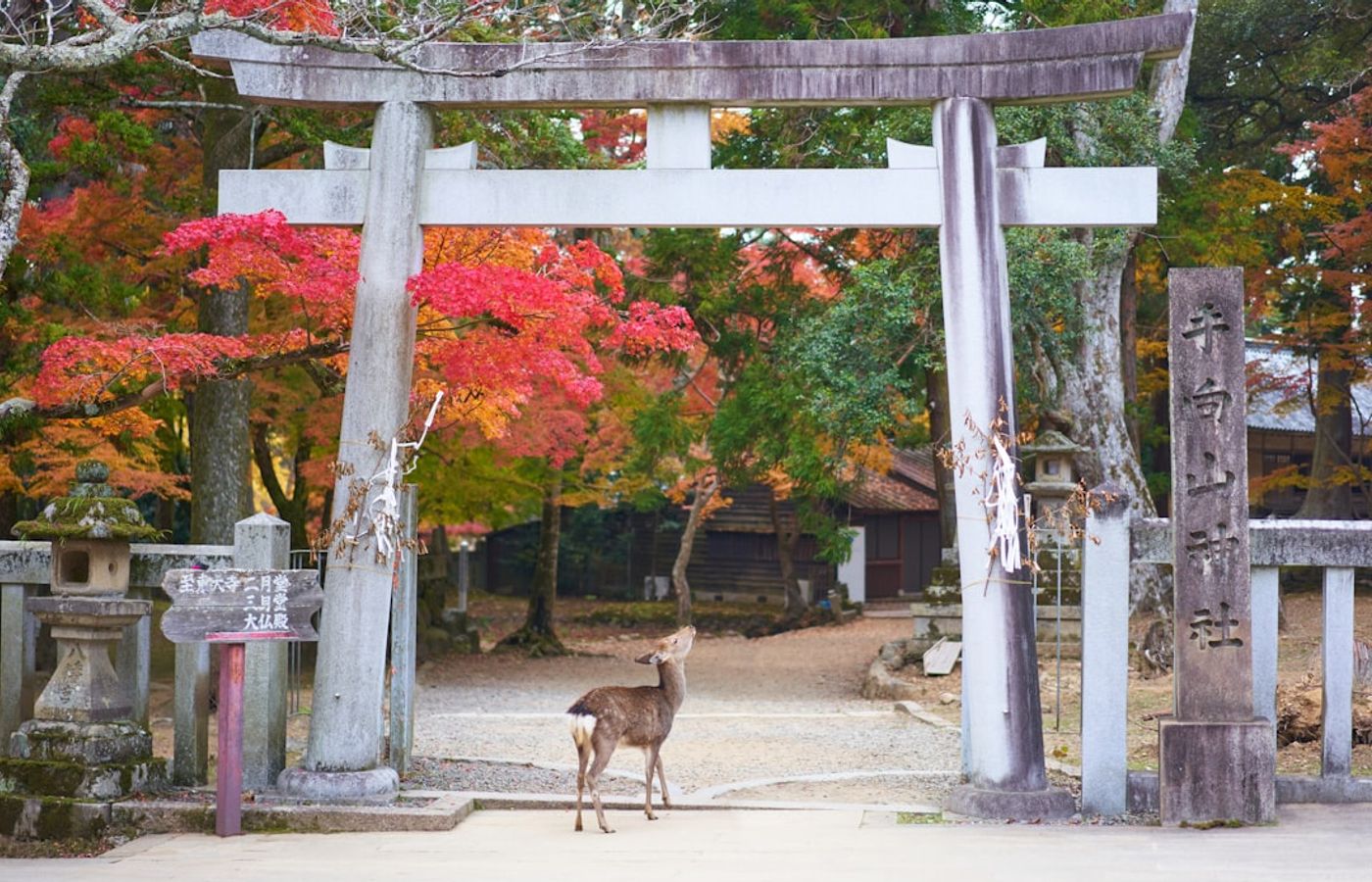

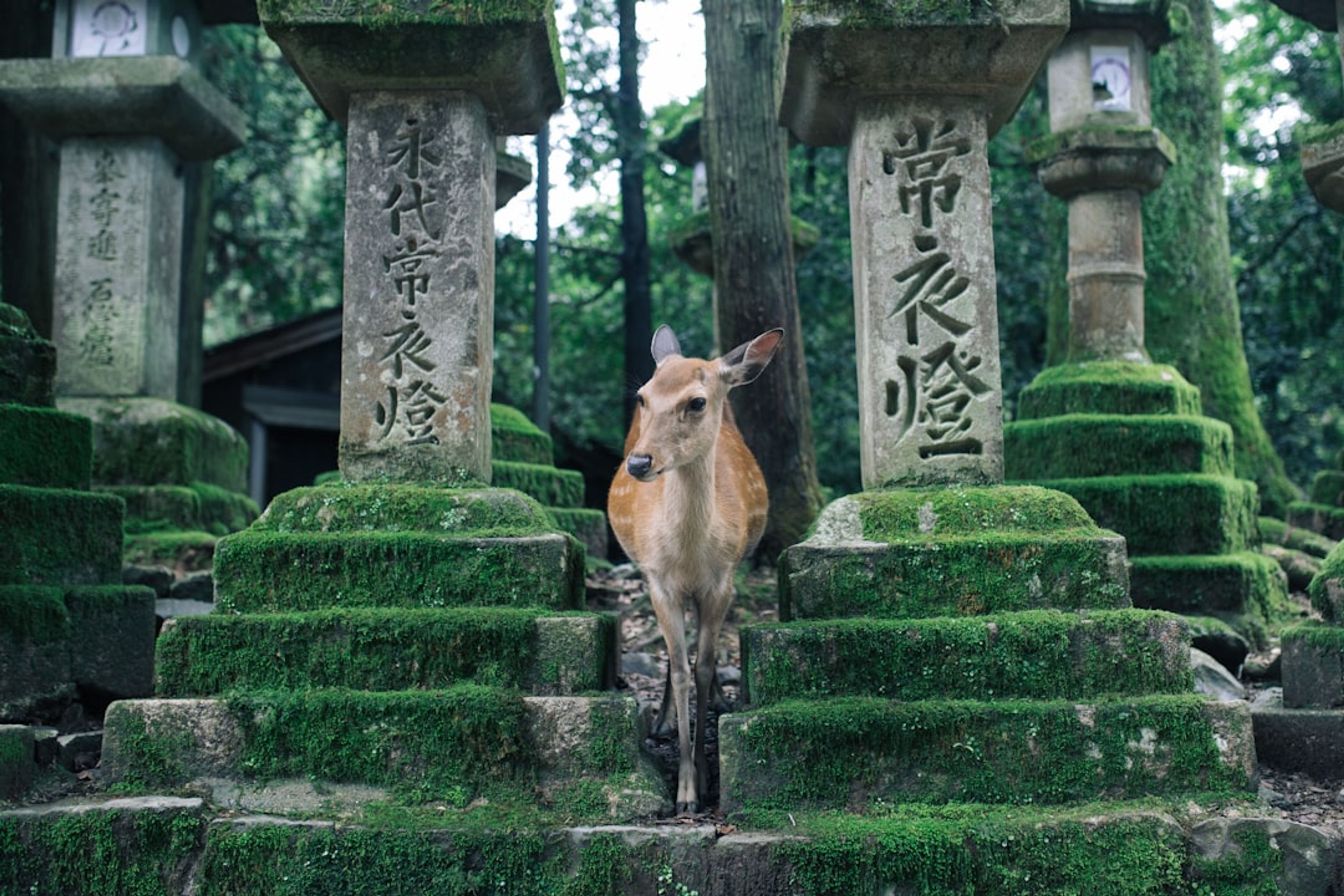
Nara Park is the best-value autumn in Kansai, because the three views worth walking for cost nothing. Ukimido, a hexagonal pavilion out on Sagi-ike pond, gives you maple reflections with deer in frame and is the signature Nara autumn photograph. Daibutsu-ike, the pond behind Todai-ji's Great Buddha Hall, sets large ginkgo and maple against the hall roof and is by far the quietest major view in the park. Sarusawa Pond, five minutes from Kintetsu-Nara, frames Kofuku-ji's five-storey pagoda. Todai-ji itself is one of the Historic Monuments of Ancient Nara inscribed by UNESCO.
The park is open around the clock and free. The Great Buddha Hall charges 800 yen and its November to March hours are 8:00 to 17:00, 30 minutes later than in summer, with a 1,200 yen combined ticket including the museum. Peak colour runs late October to early December. Now the honest part: this is not a quiet garden stroll. Nara Prefecture's own guidance warns that stags become prone to attacks during the September to November rut. Feed only the shika-senbei crackers sold on site, keep maps and paper bags out of sight because deer eat them, and carry your rubbish out, since the park has no bins.
Pro Tip: Walk to Daibutsu-ike before 8:00 and skip the Great Buddha Hall queue entirely for the first hour. Almost every visitor funnels from the Nandaimon gate straight into the hall, which means the pond behind it, with the best framing in the park, is empty at the exact hour the light is best.
2Kasuga Taisha and the Kasugayama Primeval Forest - Lanterns Under Old Growth
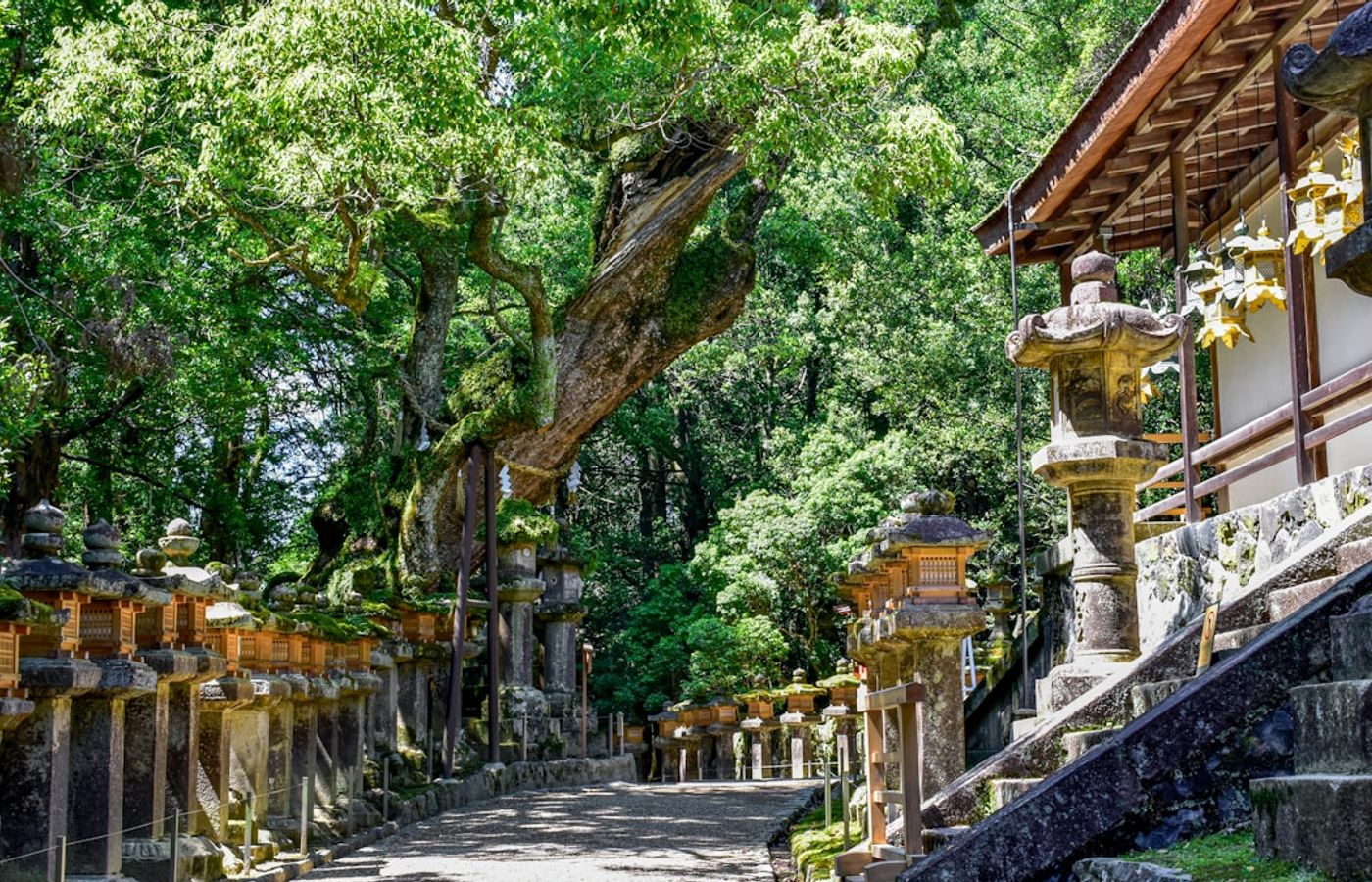

Kasuga Taisha earns its place less for its own maples than for the approach: a long lantern-lined path under towering cryptomeria, with maple and ginkgo colour breaking through where the canopy opens. The outer precinct is free. Special worship of the main sanctuary costs 700 yen, the museum 300 yen, and the Manyo Botanical Garden 500 yen, though note the garden closes on Tuesdays from June to March. November to February worship hours are 7:00 to 17:00, opening 30 minutes later than in October.
Behind the shrine sits the Kasugayama Primeval Forest, a UNESCO-listed old-growth forest that has been protected from logging since the ninth century, with trails and no fee. Be realistic about what that means in practice: it is genuinely wild, unlit, unpaved, without shops or facilities, and shared with boar. Sunset in Nara falls around 17:00 in late November, so entering the forest after 15:00 is a poor idea. Peak colour here is mid to late November.
One seasonal event is worth timing a visit around. Shika no Tsunokiri, the traditional antler cutting, takes place at Shikaen about seven minutes on foot from the Kasuga Taisha approach, and it exists precisely because rutting stags injure people and each other between September and November. Sessions ran over two days in early November in 2025, standing room only with a full turnover between them, so confirm the 2026 dates before building a day around it.
Pro Tip: Walk out from Kintetsu-Nara rather than taking the bus, following the park path past Ukimido, and arrive at Kasuga Taisha around 9:00. Then take the short Mikasayama trail rather than committing to the primeval forest proper, which gives you the old-growth atmosphere without the daylight risk.

3Tanzan Shrine - Nara Prefecture's Best Pure Maple Site, on an Hourly Bus
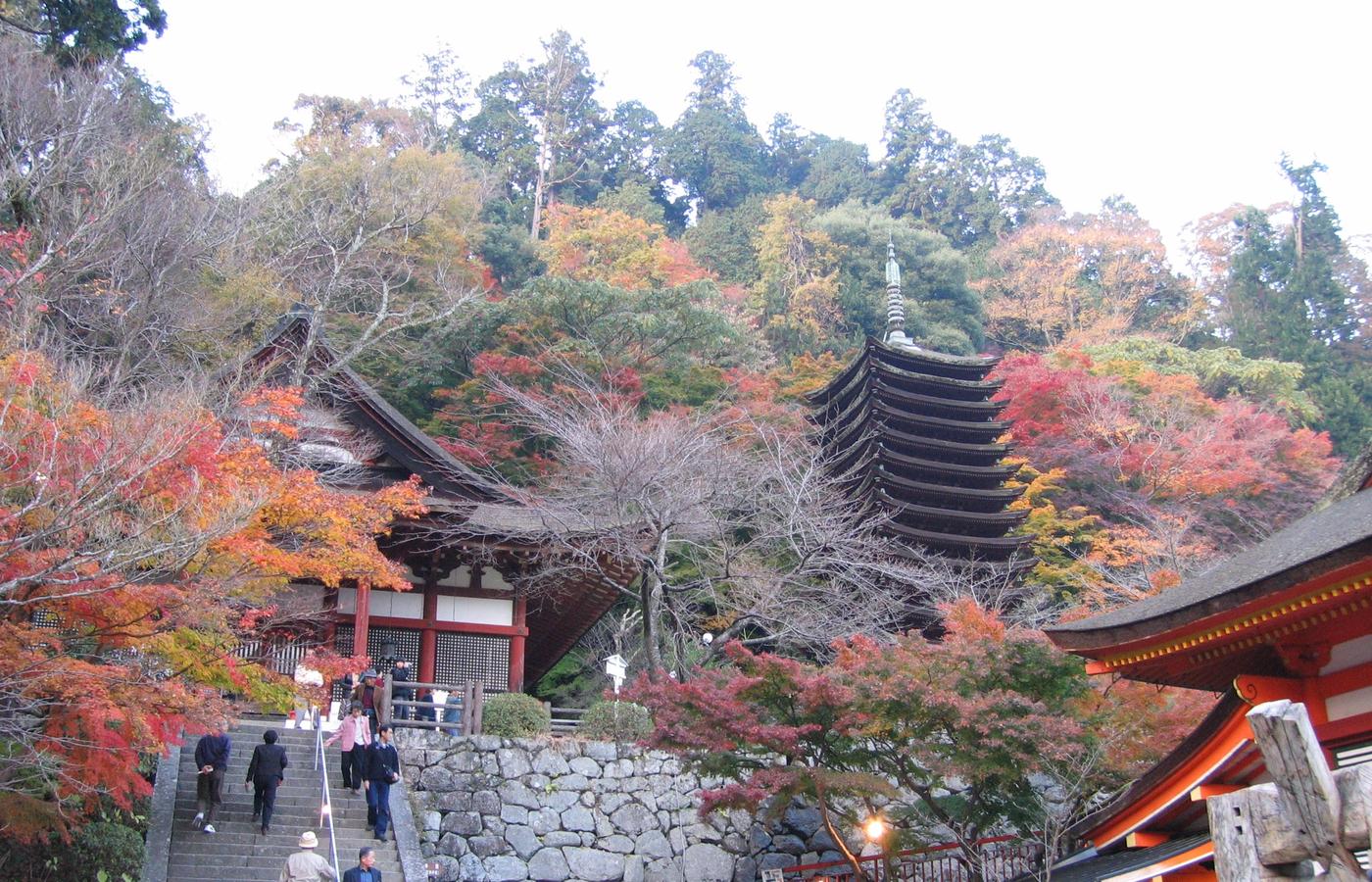

If you want maples rather than deer, Tanzan Shrine is the strongest autumn site in Nara Prefecture. Around 3,000 maples surround a hillside compound whose centrepiece is the world's only wooden thirteen-storey pagoda, an Important Cultural Property, and in peak week the pagoda is effectively inside the colour. Admission is 700 yen and hours are 8:30 to 16:30, extended during the illumination period. Peak runs mid November to early December, later than Nara Park.
The bus is the whole problem and it deserves a paragraph. Service from Sakurai Station runs roughly once an hour with a genuine gap around 11:50, so missing one leaves you an hour on a mountainside with almost no facilities. The illumination runs from sunset to about 20:30 in the same mid-November to early-December window, but the last bus down is around 17:25, which means night viewing effectively requires a car or a taxi. Autumn parking surcharges apply, and the compound is all steep stone steps with no accessible route.
Pro Tip: Photograph the outbound timetable at Sakurai Station platform 1 the moment you arrive, and pick your return bus before you walk up. Take the 9:50 up and the 13:50 down, which brackets the midday gap and gives you three unhurried hours.
4Hasedera - The Longest Autumn Window and 399 Covered Steps
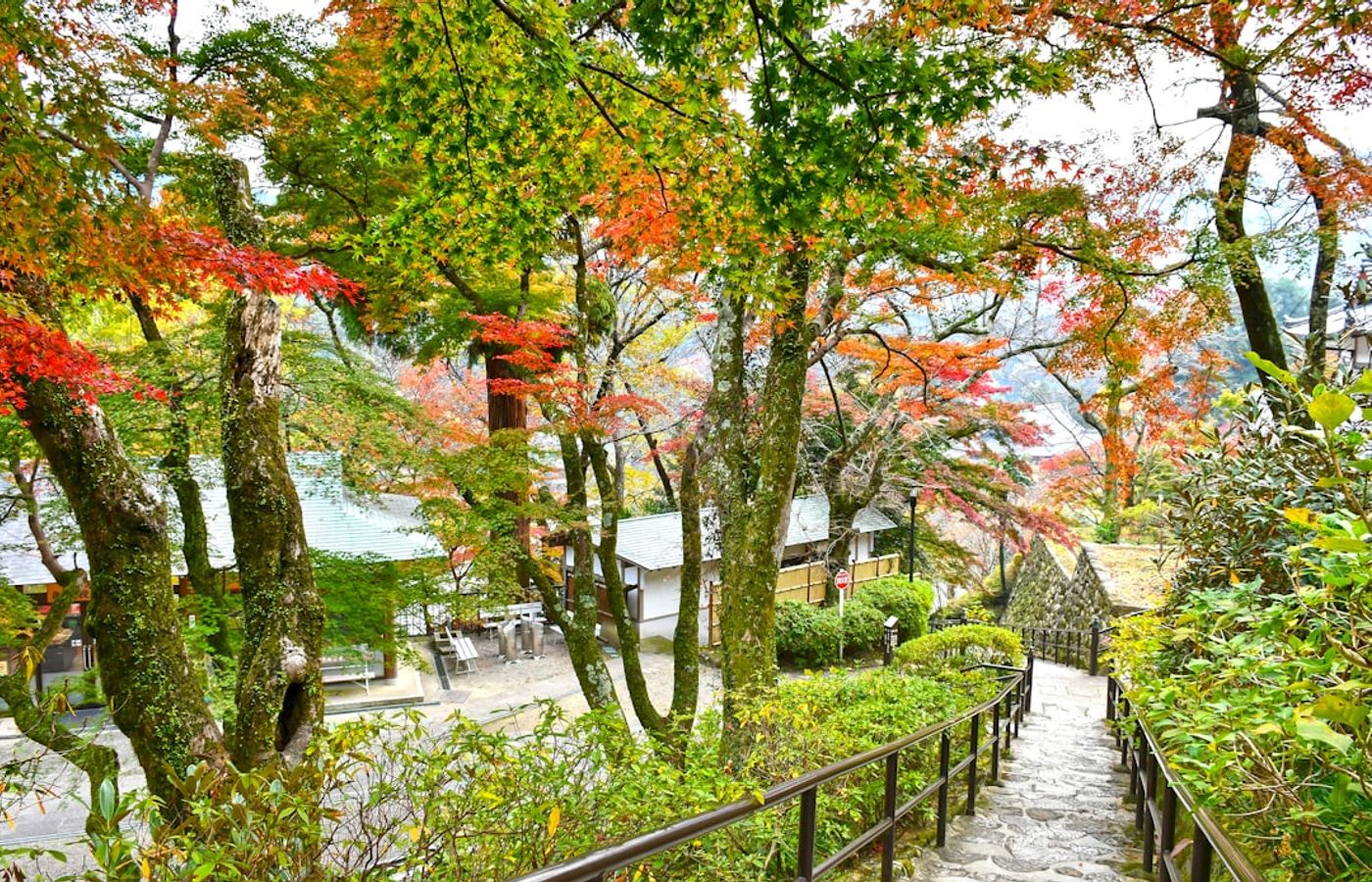
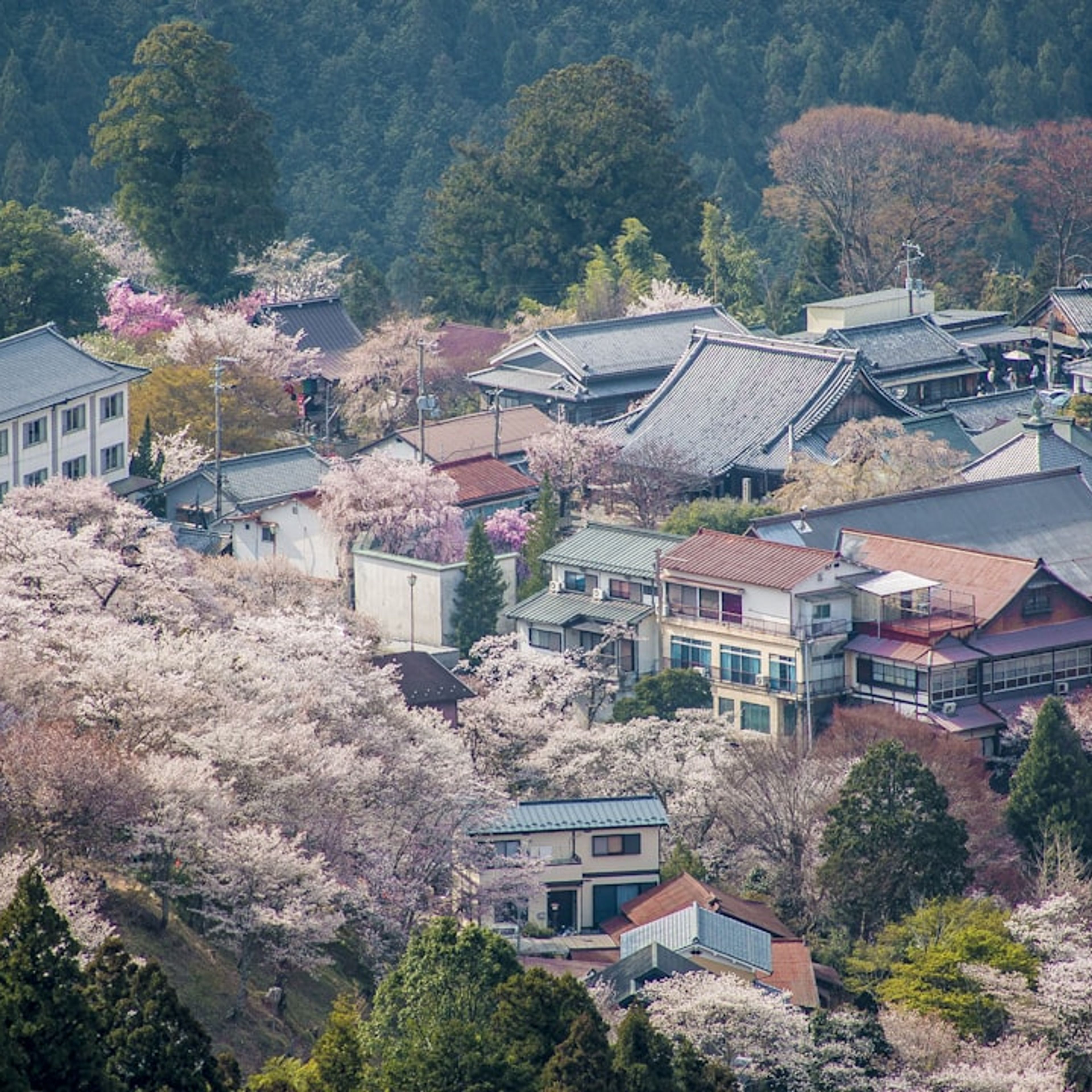
Hasedera is the forgiving option, because its autumn window is the longest of anything in this guide. Colour is present from late October to early December, best from mid November onwards, and the temple's Momiji Matsuri has historically run from early October to early December. That flexibility matters in a year like 2026, where the season may arrive late. Admission is 500 yen and October and November hours are 9:00 to 17:00. An autumn special viewing of the National Treasure main hall carries a supplement.
The defining feature is the Noboriro, a covered corridor of 399 stone steps climbing from the Nio gate to the main hall, itself an Important Cultural Property. Photographed from below with maples on both sides it is the reason to come, and it is also a real barrier for anyone with limited mobility, with no alternative route. Two other honest notes: Hasedera's headline season is peonies in late April, so autumn signage and English support are thinner, and there is nothing else nearby, making this a dedicated trip rather than a stop.
Getting the timing right matters more here than at any other site on this list. Because Hasedera sits in a valley at Sakurai, its colour arrives later than Nara Park's and holds longer, which makes it the site to keep in reserve if you arrive at the very end of November and find the city already past its best. Trains on the Kintetsu Osaka Line run often enough that you can decide on the morning itself rather than committing days ahead.
Pro Tip: Climb the Noboriro first and photograph it on the way back down, when you are looking through the corridor toward the light rather than into shadow. Take the 9:00 opening: the approach street's kusa-mochi shops open by then and the corridor is empty for the first 40 minutes.
5Shoryakuji - 3,000 Maples and a Bus That Runs Three Weeks a Year
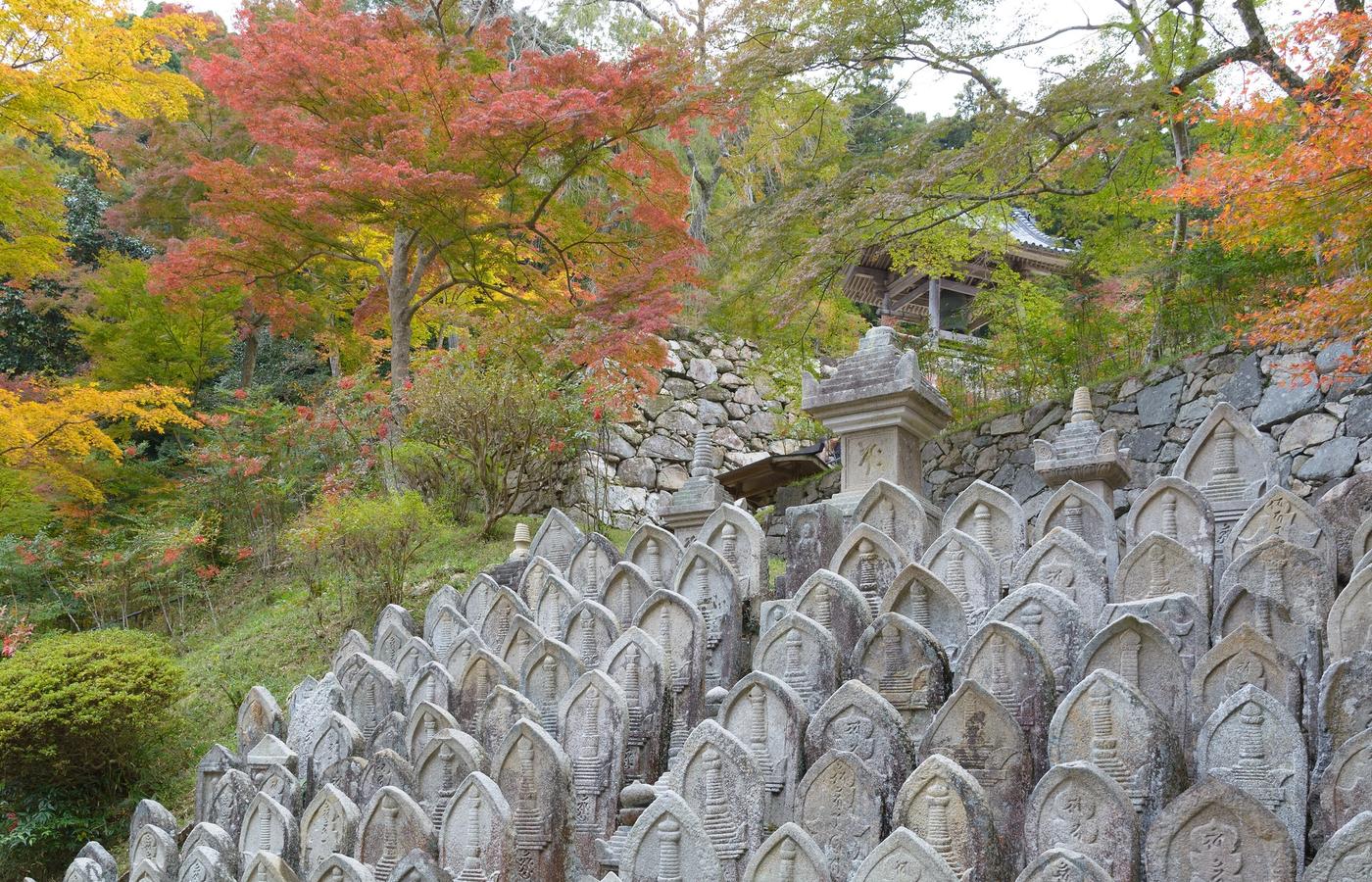
Shoryakuji is known locally as Nishiki-no-sato, the village of brocade, for the roughly 3,000 maples that turn across its valley. Admission is 500 yen, or 800 yen including the special viewing of a Heian-period Buddha normally kept from view. Hours are 9:00 to 16:00, extended to 17:00 during the foliage season from 3 November to early December. Peak colour is mid to late November, with usable colour from early November to early December.
The access is the story here, and it cuts both ways. Shoryakuji has no scheduled bus for most of the year, which is exactly why it stays quiet while Nara Park fills. For about three weeks in the foliage season, Nara Kotsu runs direct buses from JR Nara and Kintetsu Nara stations, and that service is the only practical way in without a car. Confirm the 2026 operating dates before you build a day around it. There are no shops or restaurants at the temple, and parking carries a seasonal charge.
Pro Tip: Ring Nara Kotsu or ask at the Nara City tourist information centre on arrival to confirm the seasonal bus dates, then go on a weekday in the last third of November. Pay the extra 300 yen for the special viewing while you are there, since the temple is only open for it in season.
Get hotel deals for Nara
Price drops, new stays and local tips for Nara, straight to your inbox.
No spam, unsubscribe anytime.

CEO and co-founder
Tomas is the co-founder and director of trip1, an European company specializing in reservation services. He launched the company in 2025 with a focus on building scalable, efficient operations.
5 Best Places to See Autumn Leaves in Nara - FAQ
Nara Park and Kasuga Taisha in the city, then Tanzan Shrine, Hasedera and Shoryakuji outside it. In the park, Ukimido pavilion and Daibutsu-ike pond behind Todai-ji are free and best at dawn. Tanzan Shrine has around 3,000 maples around a wooden thirteen-storey pagoda, and Hasedera has the longest season. The city pair makes one walkable day.
A slightly late season. Japan Meteorological Corporation's forecast of 1 October 2026 expects leaves to turn later than average across most of Japan, with nearby Kyoto's maples six days late. Weathernews expects Nara Park to peak around 23 November. Forecasts change through the autumn, so check again in early November and keep a flexible day.
Late October to early December, with the main maple colour from mid to late November. Nara Park mixes early ginkgo with late maple, so there is colour for about six weeks. The park is open around the clock and free; only the Great Buddha Hall charges, 800 yen, open 8:00 to 17:00 from November. Arrive before 8:00 for empty ponds.
Yes, if you want maples rather than deer. Around 3,000 maples surround the world's only wooden thirteen-storey pagoda, best from mid November to early December. Entry is 700 yen, 8:30 to 16:30. The catch is the hourly bus from Sakurai Station, with a gap around midday and a last bus near 17:25, so night illumination needs a taxi or car.
Yes. Take the Kintetsu Express from Kyoto Station for 760 yen, 45 to 55 minutes, to Kintetsu-Nara Station, 5 to 10 minutes from Nara Park. JR Nara is a 20-minute walk away. A day covers Nara Park and Kasuga Taisha on foot, but Tanzan Shrine, Hasedera and Shoryakuji each need half a day, and dawn in the park needs a night in Nara.
The maples. Nara Park and Kasuga Taisha colour through the month, Tanzan Shrine and Shoryakuji peak in mid to late November, and Shoryakuji has its seasonal direct bus only for about three weeks then. Hasedera holds colour latest, so keep it for late November. November is also the deer rut: feed only shika-senbei crackers and keep paper bags hidden.