

Guides · Lisbon
5 Best Things to Do in Lisbon During Web Summit

CEO and co-founder
Web Summit runs from 9 to 12 November 2026 at the MEO Arena and the FIL pavilions in Parque das Nações, and the 2025 edition pushed 71,386 people from 157 countries through those doors in four days. That number is the premise of this guide. The best things to do in Lisbon during Web Summit are not the ones you squeeze between panels but the ones you schedule deliberately against conference hours, on transit corridors the badge crowd never touches. Dates and the daily programme are published on the official Web Summit site.
The five picks are ordered by travel time from Oriente station, the Metro Red Line stop that feeds the venue, nearest first: Telecabine Lisboa, ten minutes on foot from the FIL entrance; the Museu Calouste Gulbenkian, reopened in July 2026 after an eighteen-month refurbishment; the Estufa Fria greenhouses in Parque Eduardo VII; the Mosteiro de São Vicente de Fora up in Graça; and the Santuário Nacional de Cristo Rei across the Tagus in Almada. Not one of them appears on the standard Lisbon shortlist.
Every entry carries a street address with postal code, the nearest metro, train, bus or ferry, and one specific hour to turn up. Two of them pair cleanly: the Gulbenkian and the Estufa Fria sit 900 metres apart and share the same two metro stations, so run them as a single block. São Vicente de Fora works as an early start before a midday session, because Santa Apolónia is two stops from Oriente on Comboios de Portugal suburban trains. Cristo Rei is a half-day and there is no honest way to compress it. November is the wettest month of the Lisbon year, and Cristo Rei plus the Estufa Fria are the two entries that suffer for it, so check Lisbon weather before you decide which morning goes across the river. Delegates extending the trip usually run north to Porto, under three hours on the Alfa Pendular. The hotels in Lisbon near Oriente put the conference, the airport and the São Vicente approach on the same metro line, which is the only way the schedule below works.
1Telecabine Lisboa - The Ten Minutes of Air You Get Between Sessions
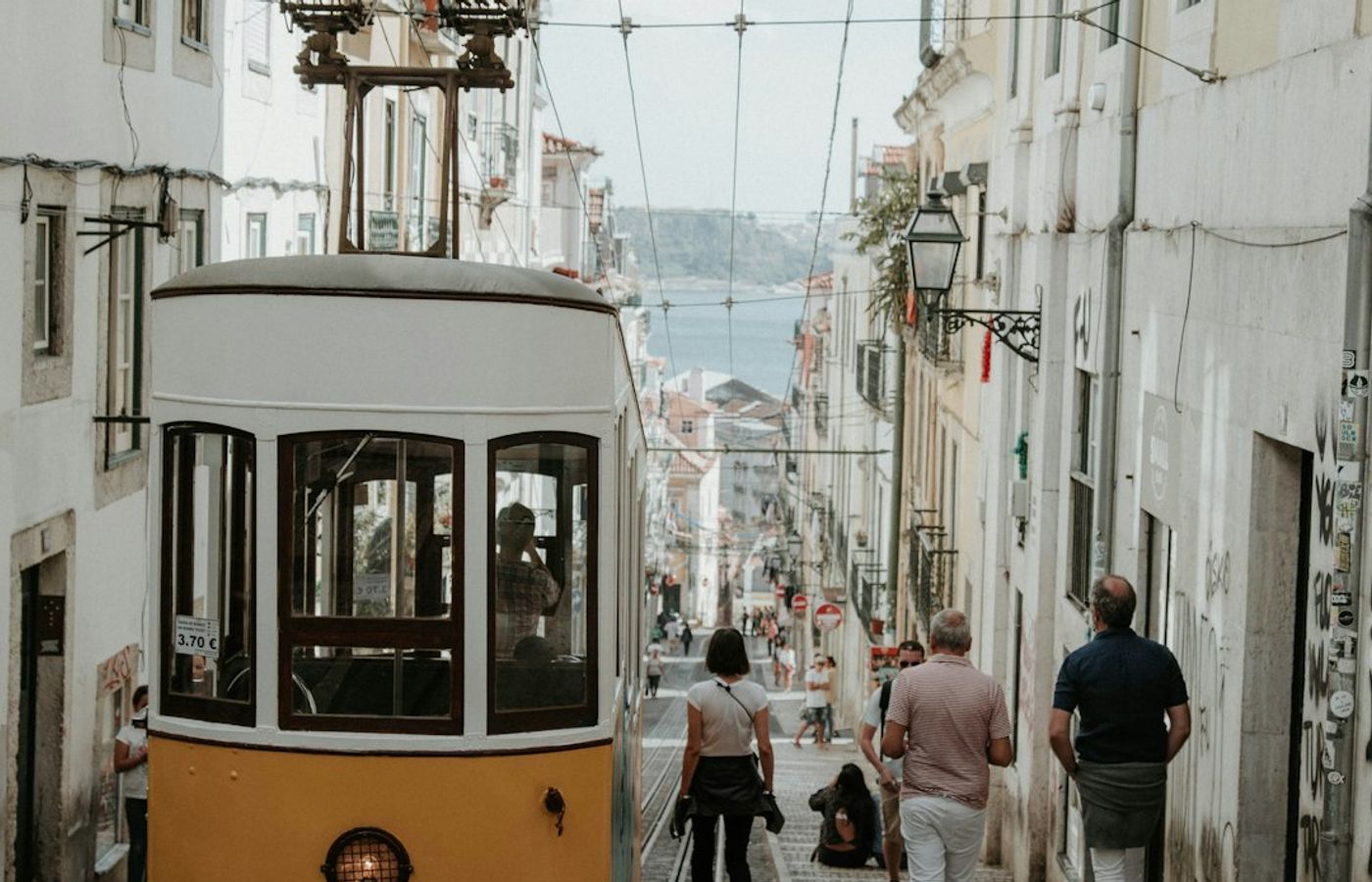

This is the only entry on the list you can reach on foot from the conference. The North Station on Passeio das Tágides sits roughly 800 metres from Oriente, about ten minutes along the waterfront, and the line runs 1,230 metres south to Passeio de Neptuno at around 30 metres above the Tagus estuary. Forty enclosed cabins carry eight passengers each, and one crossing takes eight to twelve minutes depending on wind. The system was built for Expo 98, which ran from 22 May to 30 September 1998, drew 10,128,204 visitors to a 50-hectare site and brought in 146 countries. What is now Parque das Nações is that site, rebuilt as a district.
During Web Summit the timing is awkward and you should plan around it. Winter hours from 24 October 2026 to 12 March 2027 are 11:00 to 18:00, so the cable car is shut before the first morning sessions and shut again before the evening programme begins. The realistic window is a long lunch. Adult tickets cost €7.50 one way and €9.50 return; children aged three to twelve pay €5.50 and €6.50. From the cabin you get the cleanest view anywhere of the Vasco da Gama Bridge, all 17.2 kilometres of it, opened on 29 March 1998 and still the longest bridge in the European Union.
Pro Tip: Buy a one-way adult ticket at €7.50 at the North Station on Passeio das Tágides and walk the 1.2 kilometres back along the water rather than paying €9.50 for the return. Ride at 11:00, the moment it opens. The 13:00 to 14:00 lunch hour is the only slot most delegates can use, which makes it the one to avoid.
2Museu Calouste Gulbenkian - Newly Reopened, and Shut on the Tuesday You Will Want It
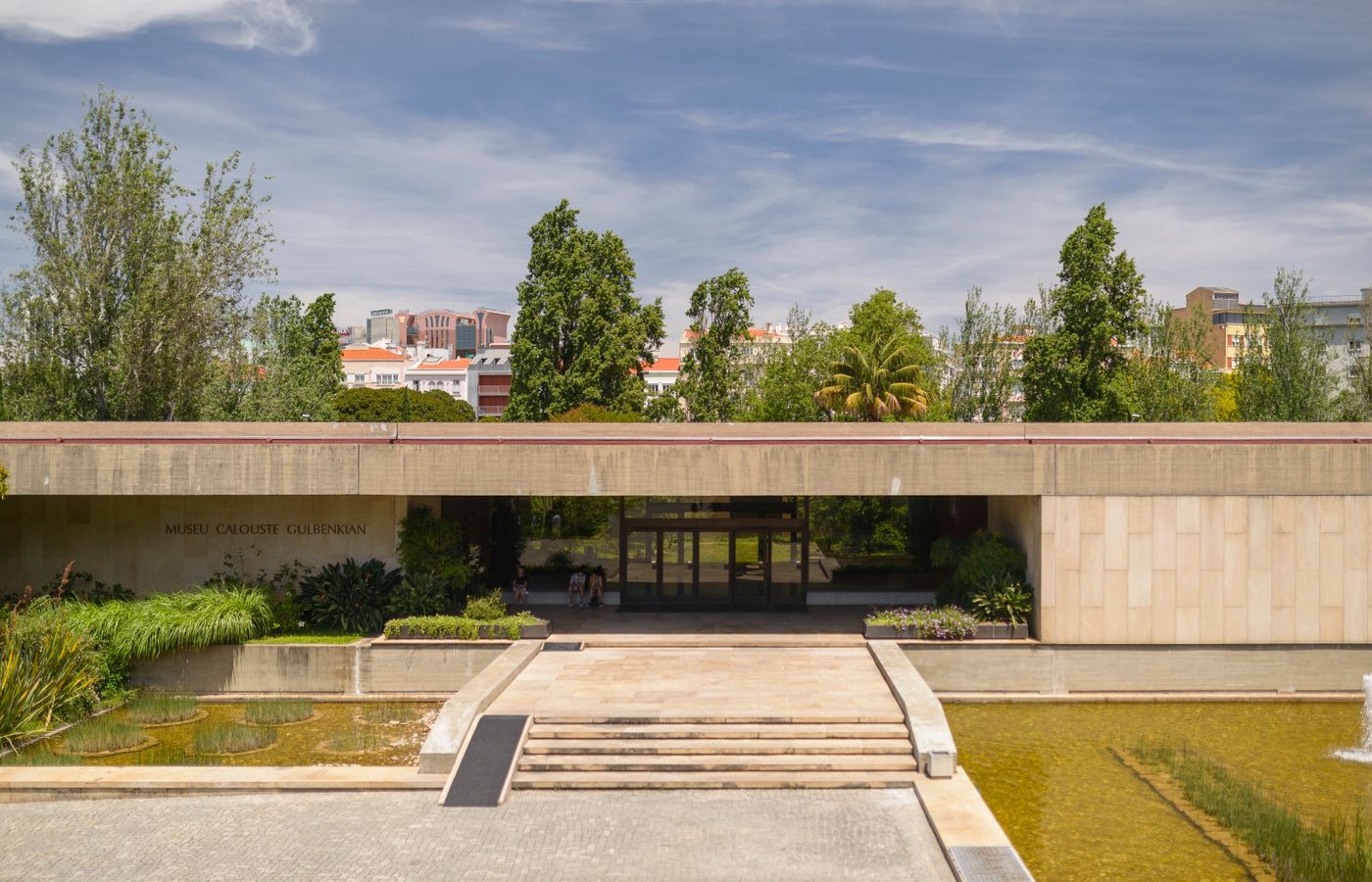

The Founder's Collection reopened in July 2026 after eighteen months of work on climate control, lighting and security, and the 1969 building by Alberto Pessoa, Pedro Cid and Ruy Jervis d'Athouguia has come through unchanged. Calouste Gulbenkian left roughly 6,000 objects; about 1,000 are on show at any one time, from Egyptian and Islamic material through to Rembrandt, Rubens and a room of René Lalique glass and jewellery. Next door, the Centro de Arte Moderna reopened on 20 September 2024 with a Kengo Kuma extension, a 100-metre canopy clad in Portuguese ceramic tiles and a holding of some 12,000 works. Gardens across the 7.5-hectare campus are free, sunrise to sunset.
One date matters more than the rest. The museum closes every Tuesday, which in 2026 falls on 10 November, the second day of Web Summit. Monday 9 November and Wednesday 11 November are the realistic weekday slots, and Sunday 8 November is free from 14:00 if you land early. Standard admission is €16 for the Founder's Collection, €12 for the Centro de Arte Moderna and €18 combined, with 25 percent off for under-30s and 10 percent off for over-65s. Weekday hours are 10:00 to 18:00, Saturdays run to 21:00, and last entry is 30 minutes before closing.
Pro Tip: Take the Red Line straight from Oriente to São Sebastião, about 17 minutes with no change, then walk five minutes to Avenida de Berna. Arrive at 10:00 on Wednesday 11 November: the galleries stay near-empty for the first hour while most delegates are still queueing for the morning keynote.

3Estufa Fria - Open at 09:00, Two Hours Before Anything Starts at the FIL
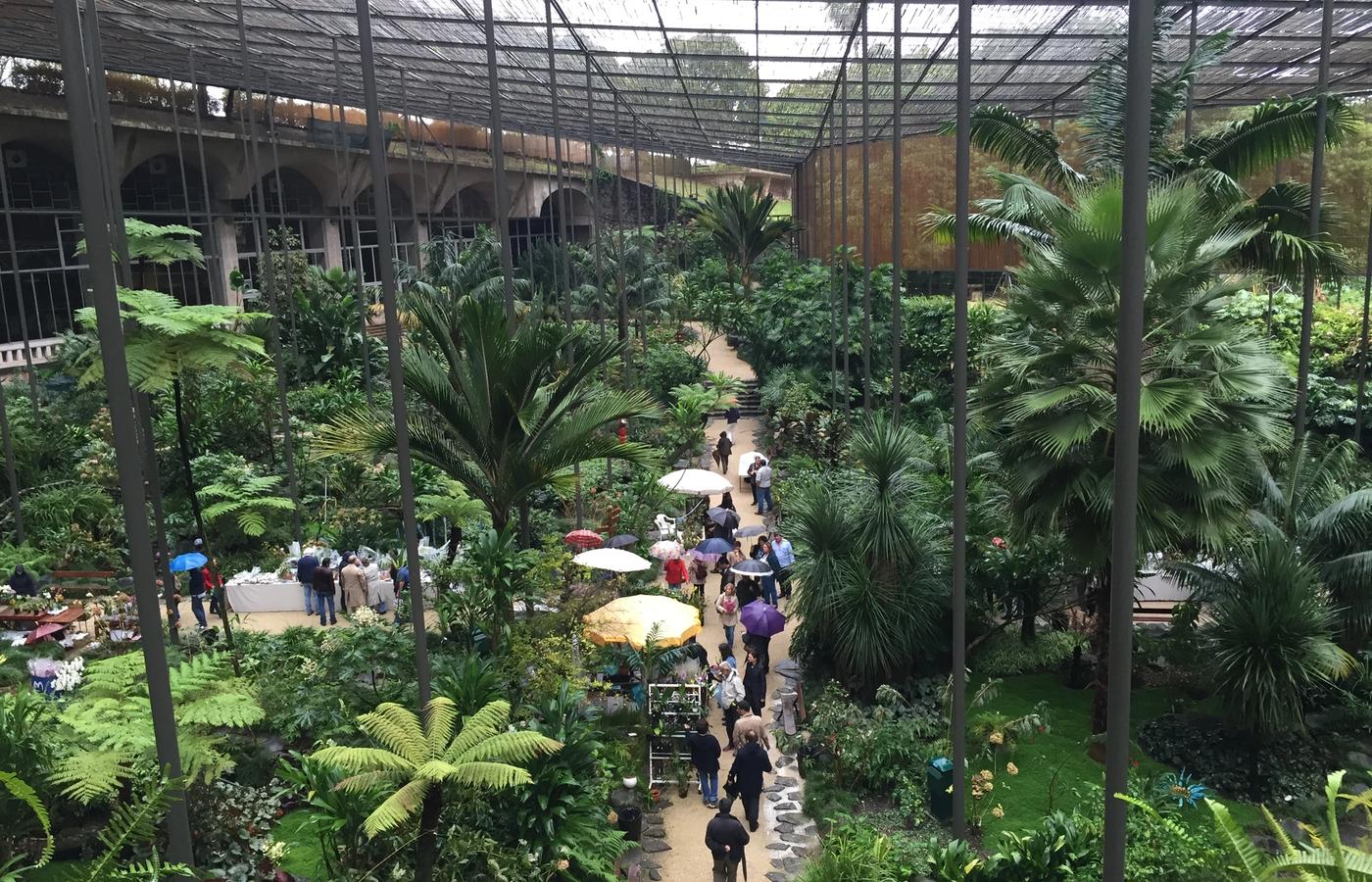

Estufa Fria is a greenhouse dropped into a disused quarry on the western flank of Parque Eduardo VII, and it opened in 1933. The original cold house covers roughly 8,100 square metres under a slatted timber roof that filters light instead of trapping heat, which is why the planting reads as ravine rather than conservatory. Two glasshouses were added in 1975: the Estufa Quente, warm and humid, and the Estufa Doce with its cacti and succulents. The whole site runs to about 1.5 hectares and reopened in April 2011 after two years of structural repairs. Streams, ponds and stone paths thread through it, and a full circuit takes 45 minutes.
What earns it a place during Web Summit is the clock. Winter hours begin at 09:00, two hours before anything opens at the FIL, and São Sebastião is on the same Red Line that runs to Oriente, so you can leave the greenhouse and be at the venue inside half an hour. Published adult admission is about €3.25, though municipal listings have also shown €3.10, so carry a coin either way; entry is free on Sundays and public holidays until 14:00. The downsides are real. It is small, and November rain leaves the stone paths genuinely slippery.
Pro Tip: Go in at 09:00 through the Alameda Edgar Cardoso gate and take the lower path first, before school groups arrive around 10:30. If you are heading on to Parque das Nações afterwards, walk the eleven minutes to São Sebastião rather than the seven to Parque: it puts you on the Red Line with no change.
4Mosteiro de São Vicente de Fora - 100,000 Tiles and a Roof Terrace Nobody Queues For
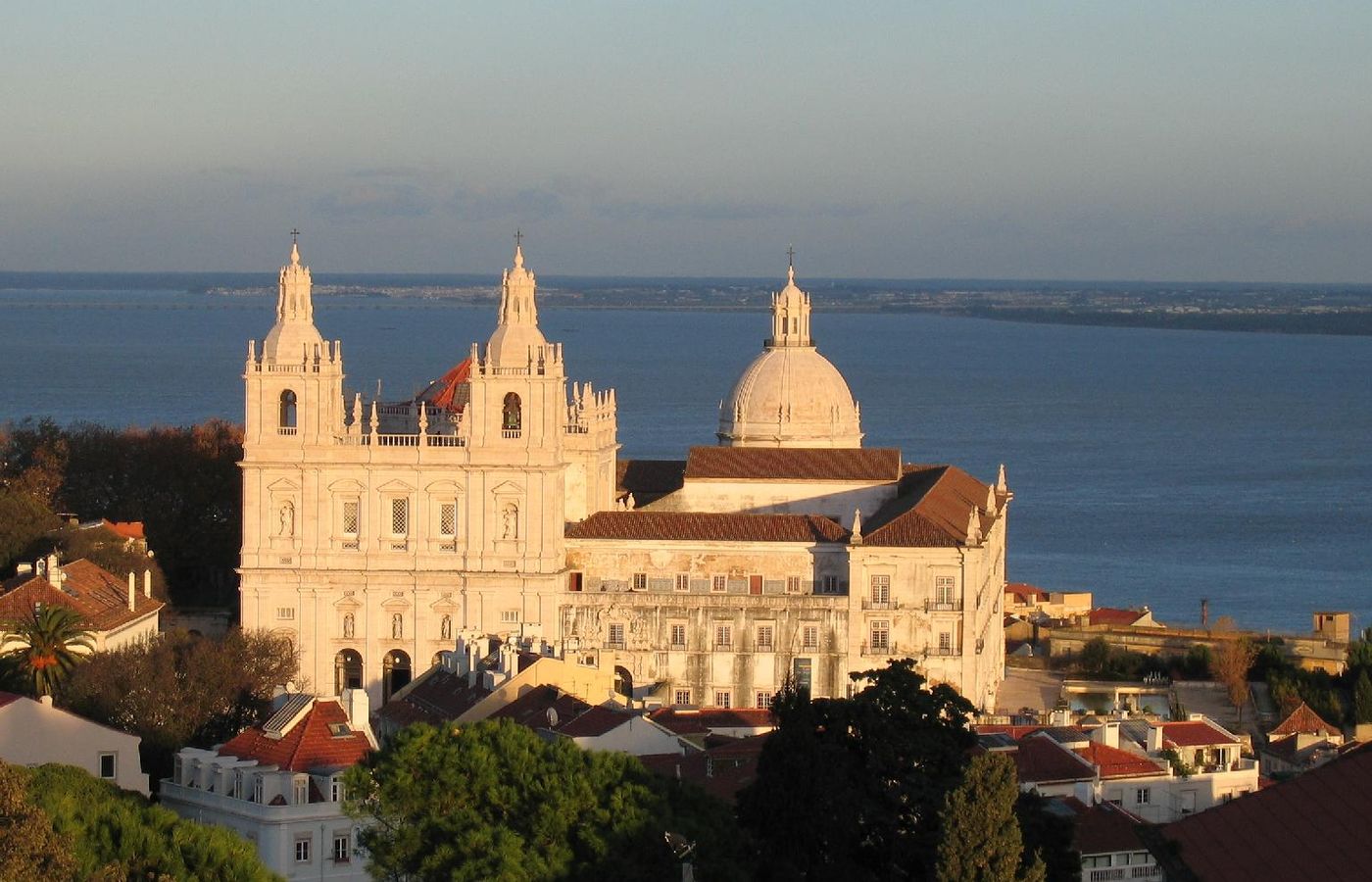
Around 100,000 azulejos remain in place on the walls and staircases here, one of the largest tile ensembles left in situ anywhere. The church was built between 1582 and 1629 to a design attributed to Filippo Terzi, and the cloisters carry an eighteenth-century cycle illustrating the fables of La Fontaine, made when Portuguese tile production had shifted to the Royal Rato factory. The former refectory was converted into the Bragança Pantheon, where the monarchs of Portugal's last royal house are buried. The roof terrace is the part most visitors skip, and it looks straight over Graça, the Tagus and the white dome of the Panteão Nacional.
Winter hours, from 1 November to 31 May, are 10:00 to 18:00 daily with last entry at 17:00. Adult admission is €8, dropping to €6 for over-65s and Lisboa Card holders and €4 for under-25s, and under-12s go free; a guided tour adds €4. During Web Summit week the free viewpoints around Graça fill with delegates at sunset, but the monastery roof shuts an hour before that, so the terrace stays quiet while the miradouros a few streets away do not. The trade-off is distance: 6.5 kilometres from the venue, and a change of mode.
Pro Tip: Ride a Comboios de Portugal suburban train from Oriente to Santa Apolónia, two stops and under ten minutes, then take Carris bus 734 to Voz do Operário. Go up to the roof terrace first and the cloister second: the tiles are lit all day, the view is not, and the terrace is at its best between 10:00 and 11:30.
5Santuário Nacional de Cristo Rei - The Ferry Is the Point and the Terrace Is the Bonus
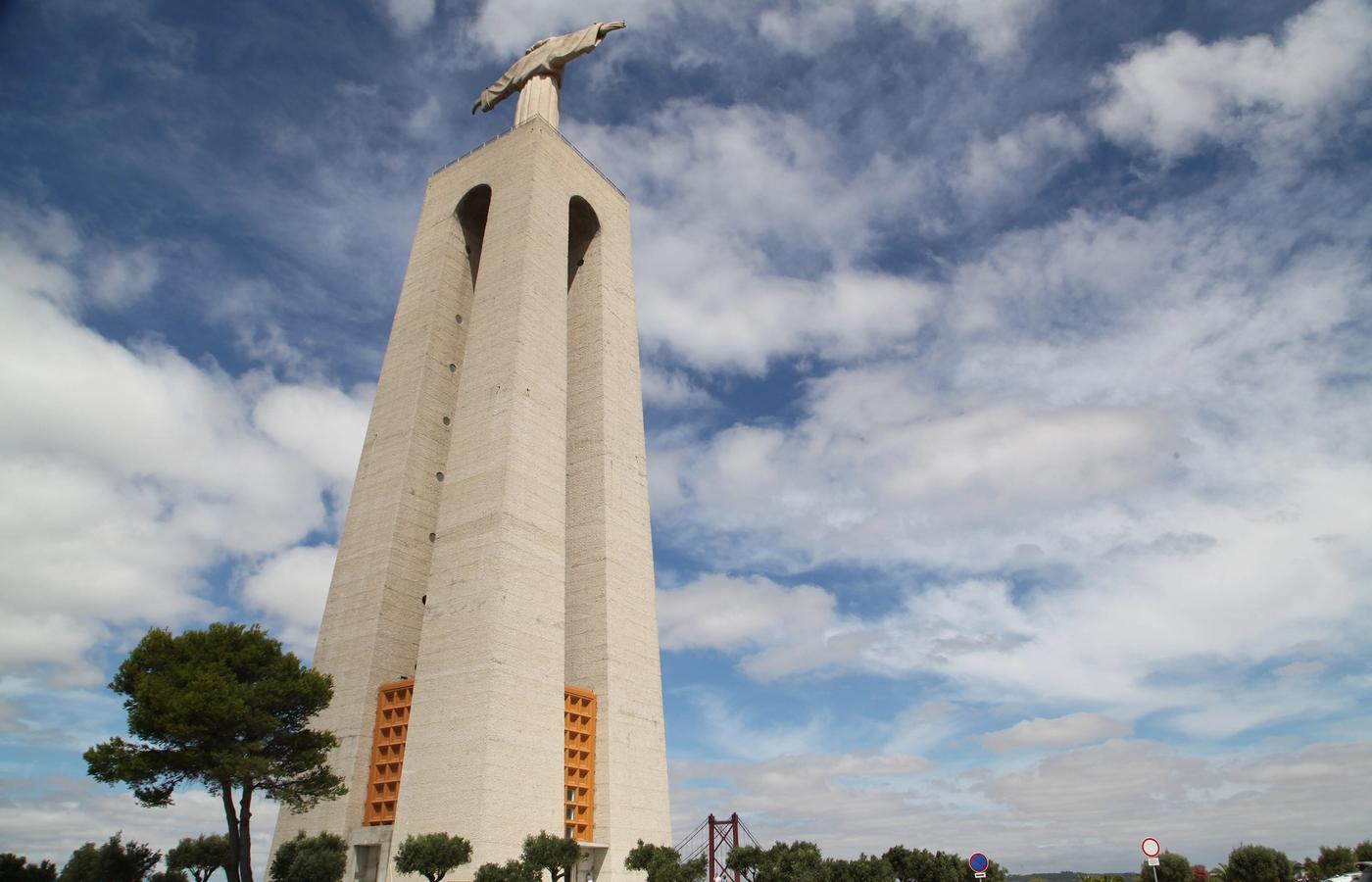
Cristo Rei earns its place mostly through how you get there. The ferry from Cais do Sodré to Cacilhas crosses the Tagus in about ten minutes for €2.00 on a standard occasional ticket, or €1.60 with zapping credit, and it runs on a corridor Web Summit traffic never reaches. From the Cacilhas terminal, Carris Metropolitana bus 3001 climbs to the Almada (Cristo Rei) terminus in roughly fifteen minutes. The monument was inaugurated on 17 May 1959, fulfilling a vow the Portuguese bishops made in 1940 if the country were spared the war. Its portico stands 82 metres tall and the statue on top adds another 28.
Terrace access costs €10 for anyone aged 13 or over and €3 for ages 8 to 12, with under-8s free, and tickets are sold on site only, so there is nothing to book ahead. October to March hours are 10:00 to 18:00 daily, last entry 17:40. Two warnings before you commit. The final approach is a staircase of 74 narrow steps, which rules out wheelchairs and makes this a poor choice for anyone with limited mobility. And it is a half-day: allow about three hours door to door from Parque das Nações, which means writing off a full block of sessions.
Pro Tip: Board a Cacilhas ferry at Cais do Sodré by 16:15 and take the first bus 3001 that follows. Sunset in Lisbon in mid-November falls at roughly 17:25, which puts you on the terrace as the light goes down behind the Ponte 25 de Abril while still clearing the 17:40 last-entry cut-off.
Get hotel deals for Lisbon
Price drops, new stays and local tips for Lisbon, straight to your inbox.
No spam, unsubscribe anytime.

CEO and co-founder
Tomas is the co-founder and director of trip1, an European company specializing in reservation services. He launched the company in 2025 with a focus on building scalable, efficient operations.
5 Best Things to Do in Lisbon During Web Summit - FAQ
It is a large technology conference held every November at the MEO Arena and the FIL pavilions in Parque das Nacoes. The 2025 edition drew 71,386 people from 157 countries over four days. Expect talks, an exhibition floor of startups and investors, and evening Night Summit events, with crowded trains into Oriente around 09:00 and from 18:00.
From 9 to 12 November 2026 in Lisbon, at the MEO Arena and the FIL pavilions in Parque das Nacoes, the former Expo 98 site on the Tagus. The nearest stop is Oriente on the Metro Red Line, which also runs straight to the airport. November is Lisbon's wettest month, so pack a rain jacket for the walk between halls.
Prices rise in stages as the event gets closer. In early October 2026 a General Attendee ticket costs 995 euros (809 euros before tax), against a regular price of 1,595 euros, and a VIP ticket costs 1,950 euros. Startup packages and group discounts are also offered. Buy only through the official Web Summit website.
Founders, investors, company leaders, journalists and government delegations from around the world. The 2025 edition had 71,386 attendees from 157 countries, including 1,857 investors and 2,725 startups, with AI the largest industry on the exhibition floor. Many delegates stay near Oriente, which keeps the conference, the airport and the city centre on the same metro line.
Plan sights around conference hours, on routes the badge crowd does not use: Telecabine Lisboa, ten minutes on foot from the venue; the Museu Calouste Gulbenkian (closed on Tuesday 10 November); the Estufa Fria greenhouses, open from 09:00; the tiled Mosteiro de Sao Vicente de Fora; and Cristo Rei across the Tagus by ferry, which needs about three hours.
Take the Metro Red Line to Oriente, then walk to the MEO Arena and FIL. The line is busiest around 09:00 and again from 18:00, so travel outside those times if you can. For sights, the Red Line also reaches Sao Sebastiao for the Gulbenkian, suburban trains run two stops to Santa Apolonia, and Cristo Rei uses the Cais do Sodre ferry.