Guides · Marseille
10 Top Places to Visit in Marseille

CEO and co-founder
This guide covers the 10 top places to visit in Marseille, France, ranked so you can build a route rather than tick off a checklist. Each entry gives the exact street address with its arrondissement postcode, the nearest Marseille Metro station, tram line or RTM bus number with a walk time, how far the site sits from the Vieux-Port, and a Pro Tip drawn from how the place actually works on the ground.
The 10 entries fall into three clusters. Six of them ring the Vieux-Port and the northern quarters: Le Panier, MuCEM and Fort Saint-Jean, Cathedrale La Major, the Marche des Capucins in Noailles and Palais Longchamp are all reachable on foot or with a single metro hop. The southern coast holds two more, Basilique Notre-Dame de la Garde on its limestone ridge and La Corniche running down past the Vallon des Auffes.
Two entries need planning. Chateau d'If and the Frioul islands depend on a boat schedule that the mistral can cancel. Calanques National Park needs a half-day at minimum, because the bus out to Luminy runs close to an hour each way before you take a single step on the trail. Give the Calanques their own morning and the remaining nine places fit comfortably into two more days. Both of those depend on an early start from the right side of town, and the hotels in Marseille around the Vieux-Port put the boat quay and the Luminy bus within reach without a cross-city transfer first. The mistral is the variable that decides whether either runs at all, so check Marseille weather in the days before rather than assuming the season. Visitors comparing the coast usually weigh this against Nice, which is calmer and a good deal more polished.
1The Vieux-Port - Marseille's Working Harbour and Natural Starting Point

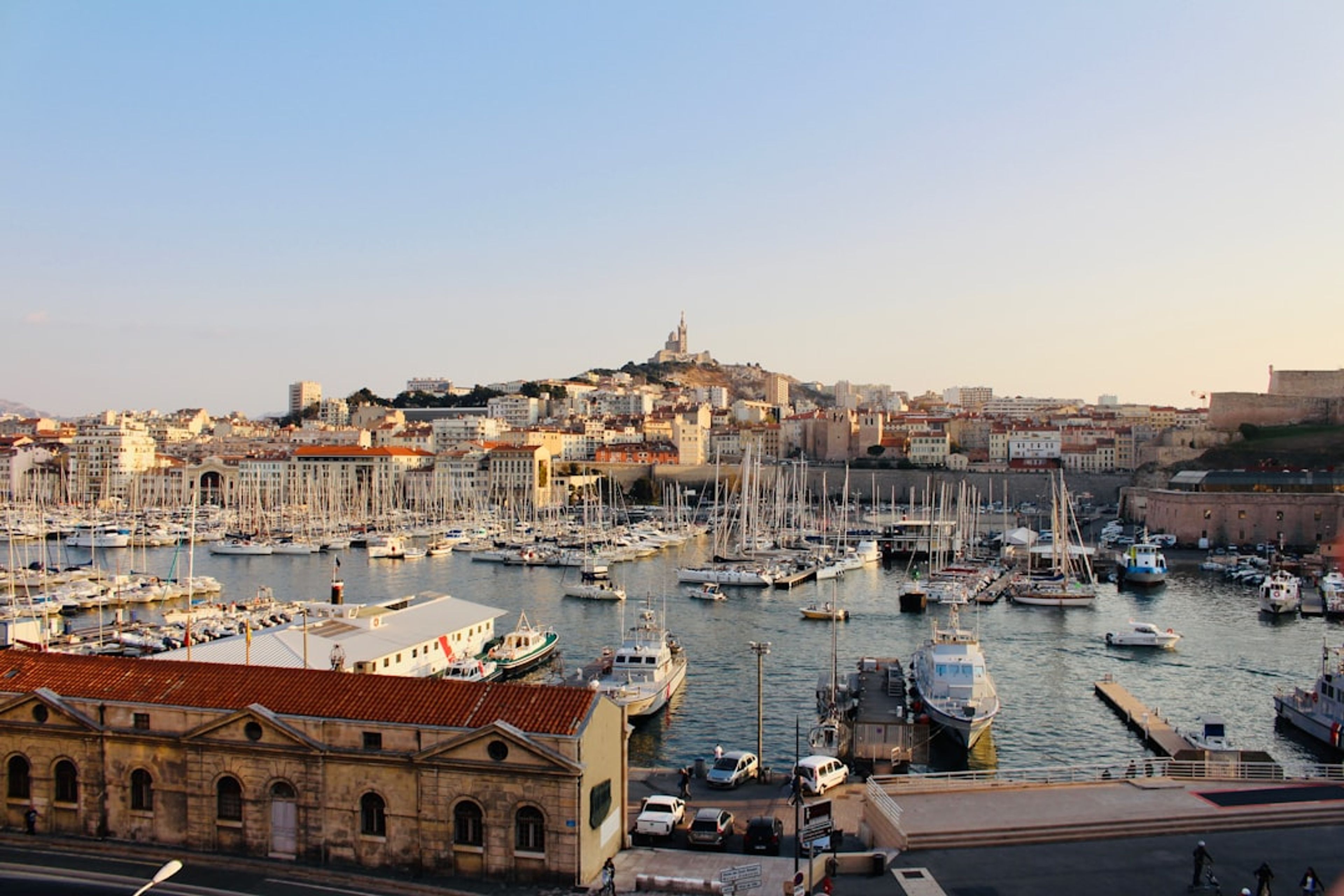
Marseille grew out of this rectangular inlet. Greek sailors from Phocaea landed here around 600 BC and the harbour has been in continuous use ever since, which makes it one of the oldest working ports in Europe. The water now holds several thousand pleasure boats rather than cargo. Two long quays frame it: Quai du Port on the north side, Quai de Rive Neuve on the south, and between them they carry most of the city's cafe traffic.
The fish market runs every morning on the Quai de la Fraternite at the head of the harbour and packs up by about 13:00. Norman Foster's Ombriere pavilion stands beside it, a flat mirrored canopy on eight slim columns that reflects the crowd walking underneath. Ferries to Chateau d'If and Frioul leave from the same quay. A full loop of the port on foot takes roughly 35 minutes.
Pro Tip: The cross-harbour ferry between Place aux Huiles and the Hotel de Ville costs 0.50 EUR and saves a 20-minute walk around the water. It sails roughly every 10 minutes from 07:30 and the crossing takes three.
2Basilique Notre-Dame de la Garde - The Hilltop Basilica Above the City
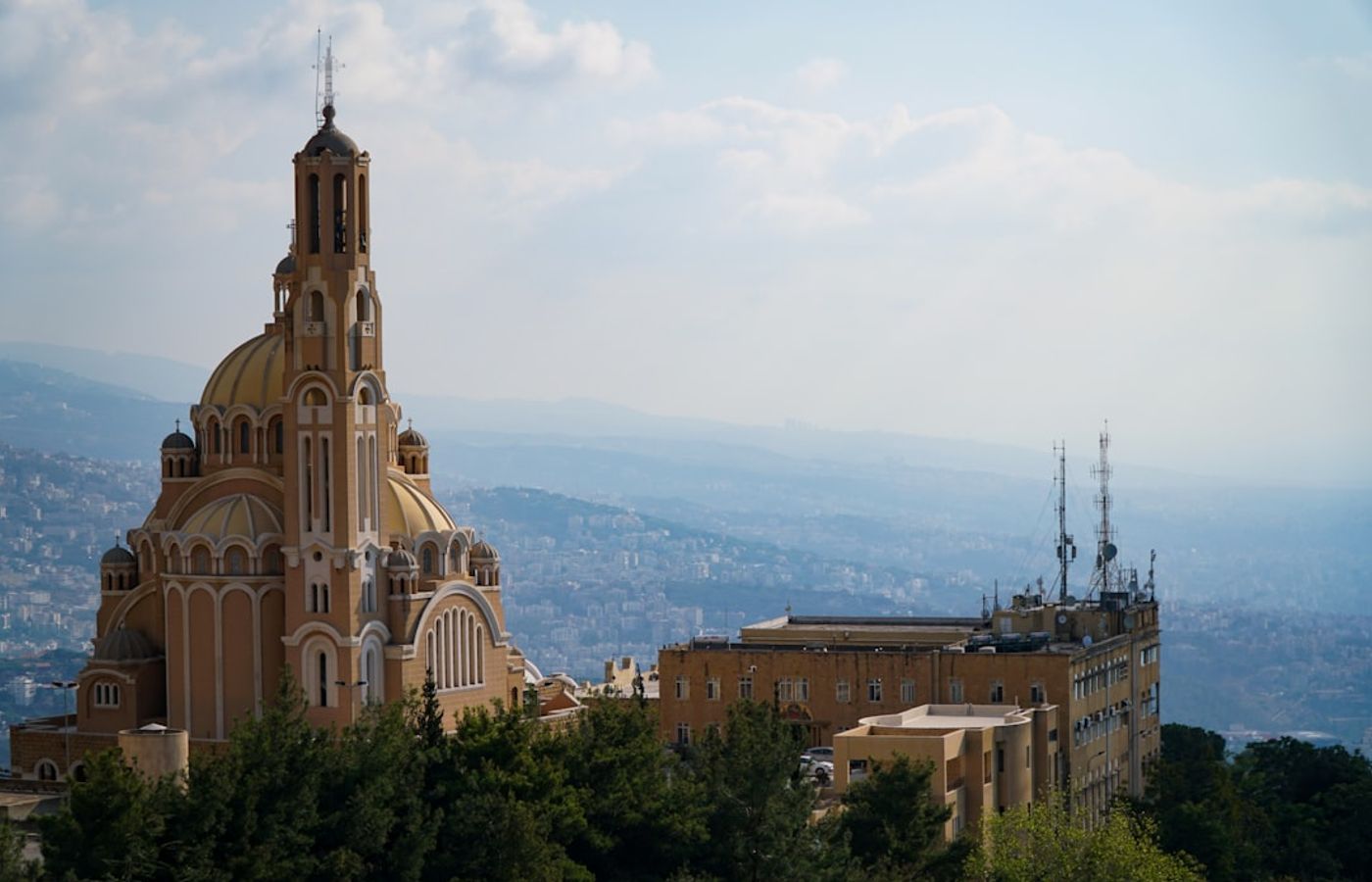

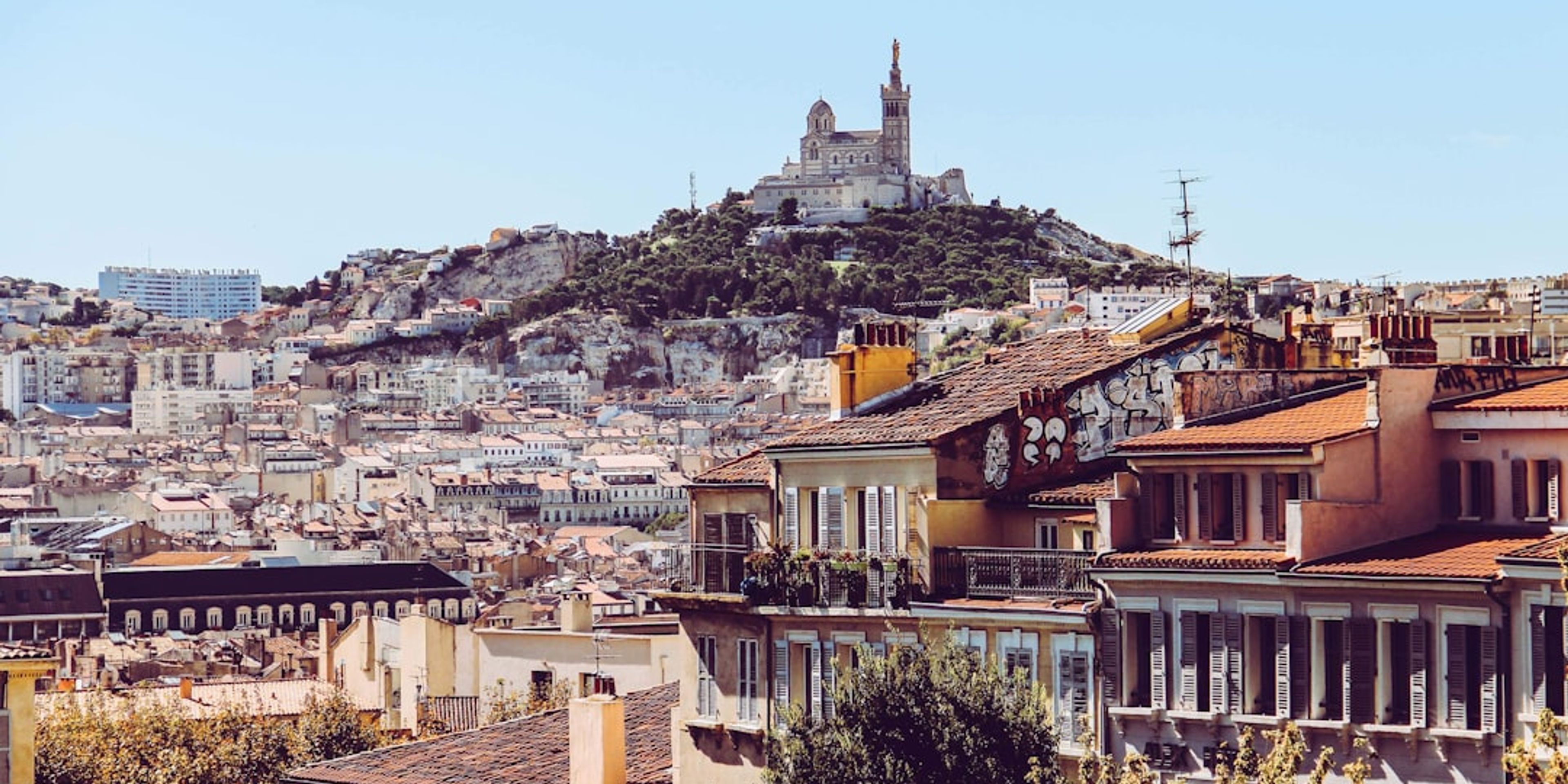
Basilique Notre-Dame de la Garde sits on a limestone outcrop 154 metres above the water, and the gilded statue of the Virgin on its bell tower adds another 11 metres. Locals call her la Bonne Mere. The current Neo-Byzantine building was consecrated in 1864 on the site of a 13th-century chapel and a 16th-century fort, and its banded green and white stonework is visible from almost every street in the city.
Inside, the walls carry ex-voto offerings left over 160 years by sailors and families: painted storm scenes, model ships, marble plaques, football shirts. Entry is free. The terrace outside gives the widest view in Marseille, taking in the Vieux-Port below, the Frioul archipelago offshore and, on clear days, the ridgeline of the Calanques to the south. An hour covers the climb, the interior and the view.
Pro Tip: Skip the 30-minute uphill slog and take RTM bus 60 from Cours Jean Ballard. Arrive about 90 minutes before sunset - the low light hits the eastern facade and the coach groups have already left.

3Le Panier - The Oldest Quarter and Its Street Art
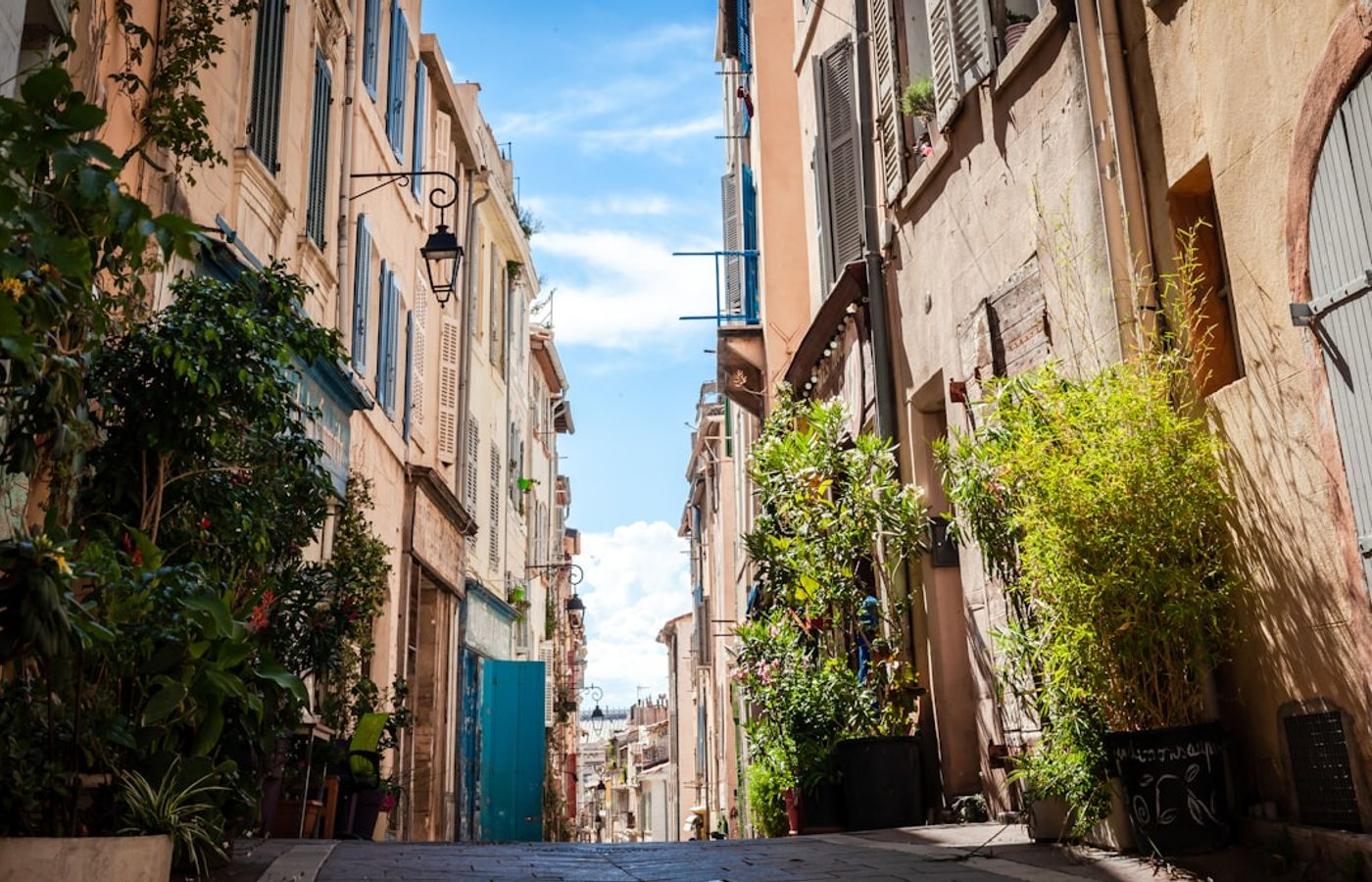
Le Panier climbs the slope above the north quay, on the ground where the Greek settlement of Massalia began. The lanes are narrow, steep and mostly stepped, so leave wheeled luggage at the bottom. Rue du Panier and Rue des Muettes carry the densest run of murals and stencil work, repainted often enough that the quarter looks different from one year to the next.
The Vieille Charite at 2 Rue de la Charite anchors the district: a 17th-century almshouse built around an oval baroque chapel, now housing two archaeology museums. Place des Moulins is the quiet heart, a shaded square where fifteen windmills once turned. Soap shops, ceramics studios and small kitchens fill the ground floors. Two hours covers the quarter at a slow pace, longer if you stop for lunch.
Pro Tip: Enter from Place de Lenche rather than the Hotel de Ville side. You walk down through the quarter instead of up, and you reach the Vieille Charite before the midday groups arrive.
4MuCEM and Fort Saint-Jean - Mediterranean Museum at the Harbour Mouth
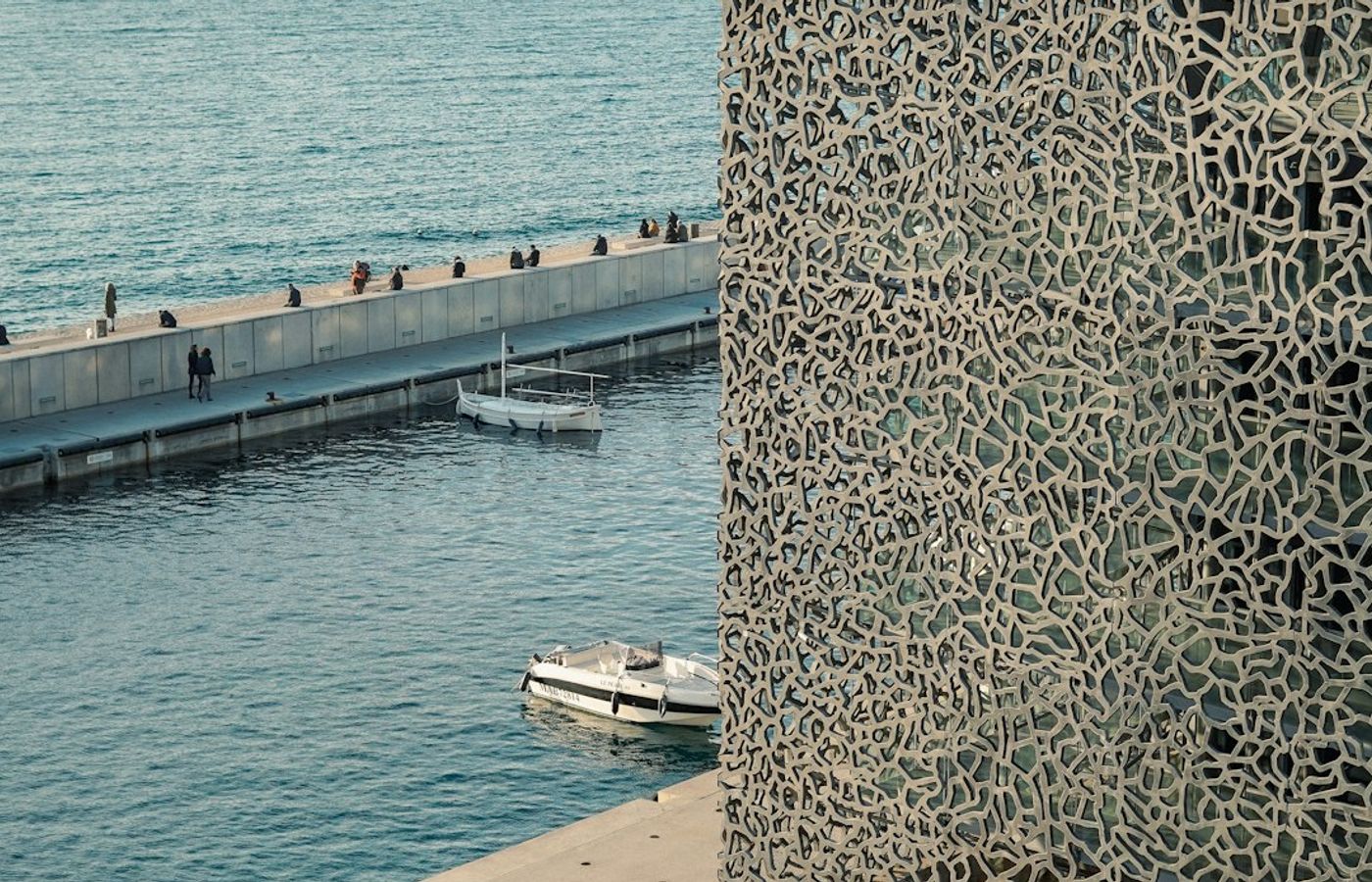
The Musee des Civilisations de l'Europe et de la Mediterranee opened in 2013, the year Marseille held the European Capital of Culture title. Rudy Ricciotti designed the main J4 building as a dark concrete cube wrapped in a fibre-reinforced lattice that filters daylight like fishing net. A 115-metre footbridge carries you across open water to Fort Saint-Jean, the fortress Louis XIV built in 1660 with its guns aimed at the city rather than the sea.
The permanent galleries trace Mediterranean history through objects, moving from agriculture and religion to trade and migration. Standard admission runs about 11 EUR and covers both sites. The fort's gardens and ramparts are free to walk, and the rooftop terrace of the J4 building looks straight down the harbour mouth towards Frioul. Two to three hours is realistic for both buildings without rushing.
Pro Tip: The Fort Saint-Jean gardens stay open later than the galleries in summer. Cross the high footbridge back to the J4 roof around 20:00 for the best light of the day without paying museum entry.
5Calanques National Park - Limestone Inlets South of the City
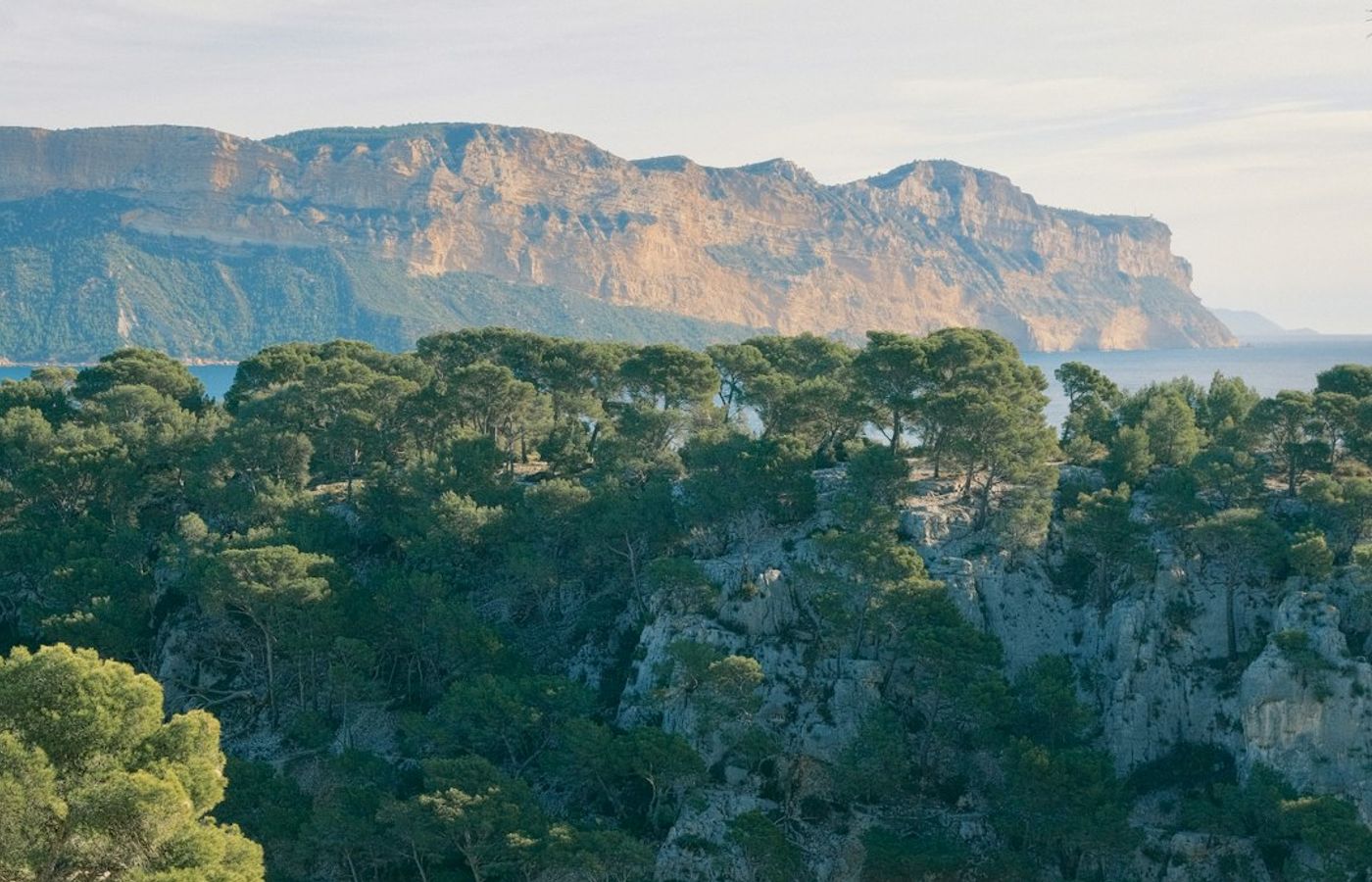
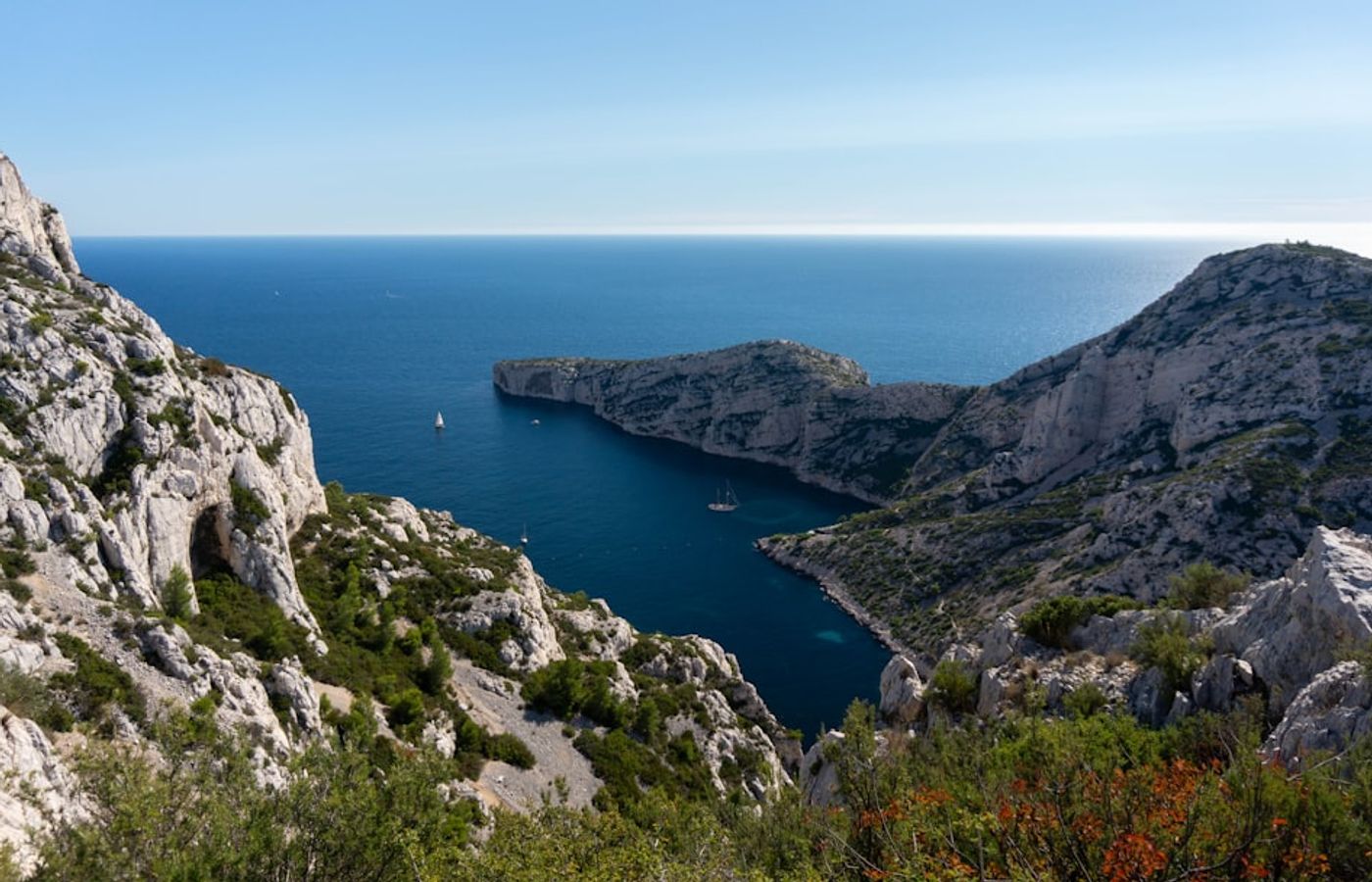
Calanques National Park runs 20 kilometres along the coast between Marseille and Cassis, protecting a chain of white limestone inlets cut by clear turquoise water. It became France's tenth national park in 2012 and remains the only one covering land, sea and a major city at once. Calanque de Sugiton and Calanque de Morgiou are the two most reachable on foot from Marseille; Sormiou has a road and a small fishing hamlet at the bottom.
The walking here is real walking - loose white rock, no shade, and 45 to 90 minutes down to most inlets from the trailheads. Carry two litres of water per person in summer. Trails close on high fire-risk days between June and September, and the park publishes each day's access status every morning, so check it before you leave your accommodation. Boat tours from the Vieux-Port cost 25 to 40 EUR and skip the hiking entirely.
Pro Tip: Sugiton has run a summer visitor quota since 2022, so reserve the free permit online the day before. Leave Luminy by 08:00 and you will be swimming before both the heat and the crowd arrive.
6Chateau d'If and the Frioul Islands - The Prison Fortress Offshore
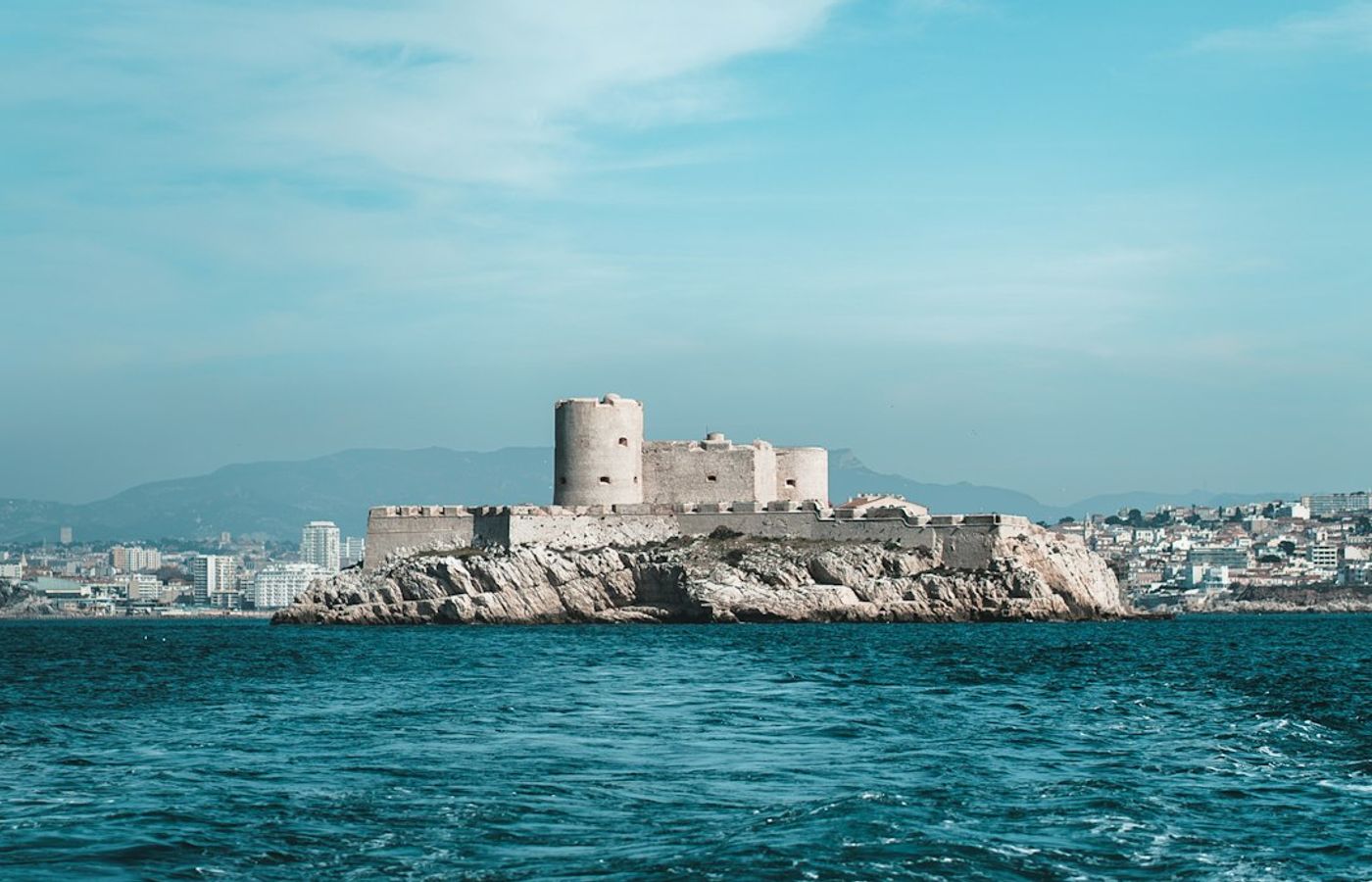
Francois I ordered a fortress on the islet of If in 1524 as a harbour defence, and within decades it had become a state prison. Alexandre Dumas set the imprisonment of Edmond Dantes here in The Count of Monte Cristo, and the cells are labelled accordingly, though no fictional escape ever took place. Admission runs about 6 EUR. The crossing from the Quai de la Fraternite takes 20 minutes each way.
The same Frioul If Express boats continue to Ratonneau and Pomegues, two dry limestone islands joined by a causeway with a sheltered harbour between them. Calanque de Morgiret and Plage Saint-Esteve are where people swim. Shade is scarce and there is one small cluster of restaurants at Port Frioul, so carry water and a hat. A combined ticket covering both stops runs about 16 EUR.
Pro Tip: Take the 09:00 boat to If, then the onward 11:00 service to Frioul instead of returning to the mainland in between. Sailings are cancelled when the mistral blows hard, so keep the day flexible.
7La Corniche and the Vallon des Auffes - The Coast Road and Its Fishing Cove
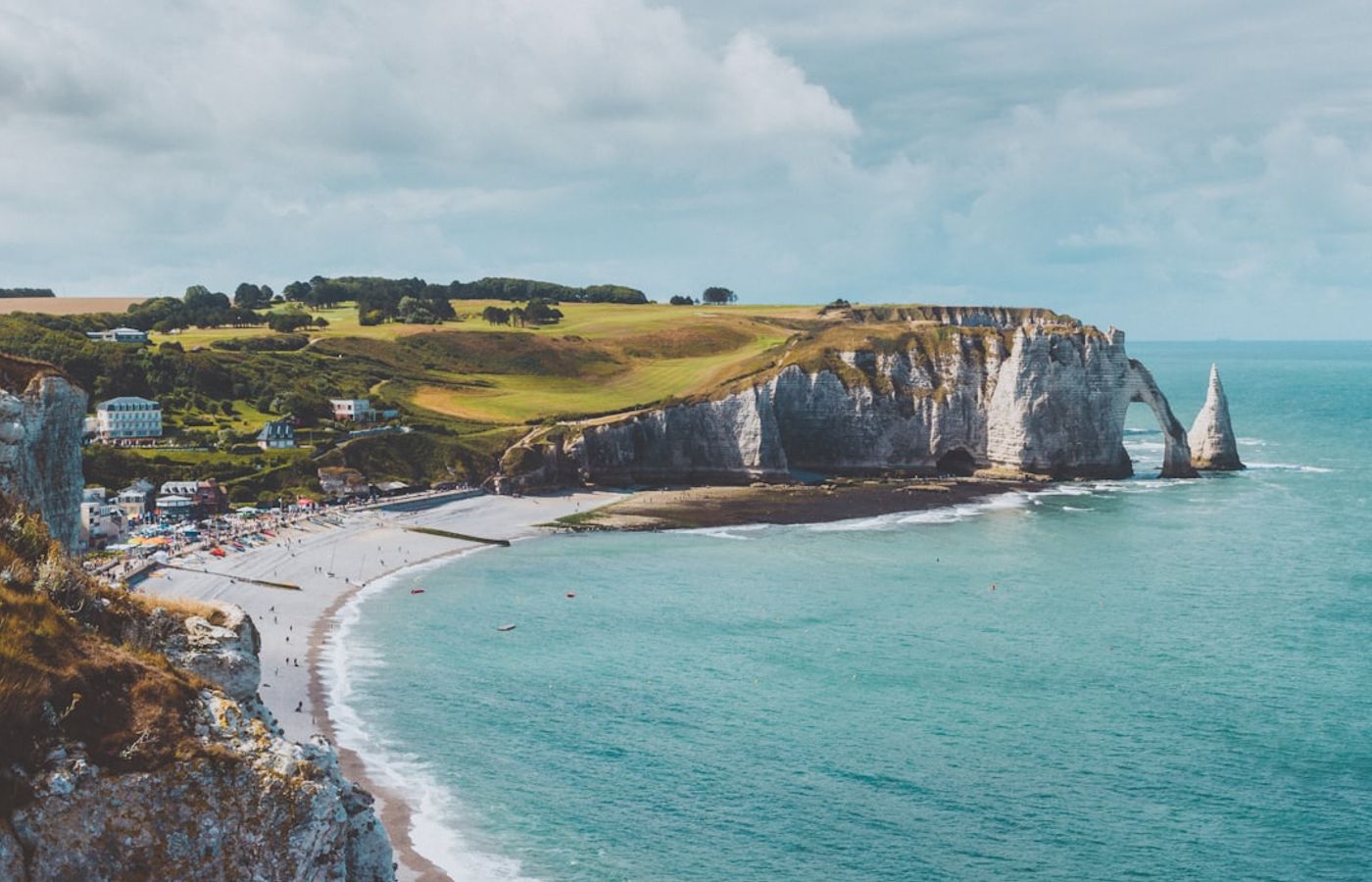
The Corniche President John Fitzgerald Kennedy runs five kilometres along the shore from the Vieux-Port to the Plages du Prado, and one stretch of its seafront bench is claimed as the longest in the world at roughly three kilometres. Rocky coves sit below the road most of the way. Traffic is constant, but the seaward footpath keeps you separated from it and the views open up after the first kilometre.
The Vallon des Auffes sits directly beneath the road viaduct about halfway along: a triangular fishing harbour barely 100 metres across, packed with wooden pointu boats and reached by a staircase most drivers never notice. The rope makers who gave the cove its name are long gone. Three or four restaurants ring the water, and walking the whole cove takes about ten minutes.
Pro Tip: RTM bus 83 stops on the viaduct directly above the cove. From there, walk south towards Malmousque for the quieter swimming rocks that Marseille residents actually use in August.
8Palais Longchamp - Monumental Waterworks and Two Museums
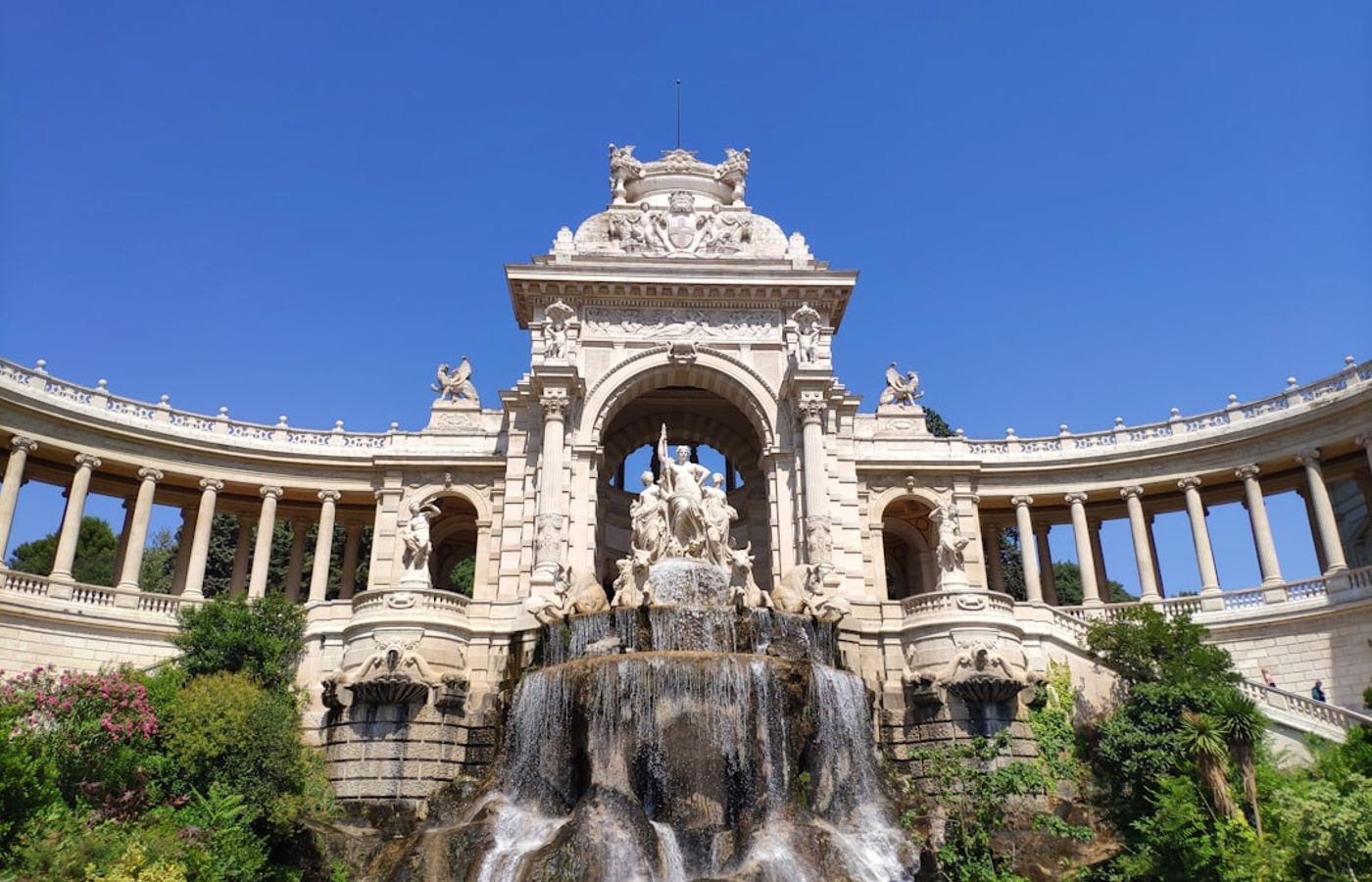
Palais Longchamp is a water monument before it is a palace. It went up between 1862 and 1869 to celebrate the Canal de Marseille, which finally brought Durance river water to a city worn down by repeated droughts and a cholera epidemic. Henry Esperandieu designed the central chateau d'eau with its stone cascade and bull-drawn chariot, flanked by two curved colonnades that reach out to a museum wing on either side.
The left wing holds the Musee des Beaux-Arts, with works by Perugino, Rubens and the Marseille caricaturist Honore Daumier. The right wing holds the Musee d'Histoire Naturelle and its 19th-century zoology gallery. Each costs around 6 EUR, and both are free on the first Sunday of the month. Behind the colonnade, the park has lawns, a pond and enough plane-tree shade for a proper break.
Pro Tip: Come after rain, when the cascade runs at full volume. The fountain is fed on a schedule and can drop to a trickle in dry months. The Cinq Avenues Longchamp metro exit puts you at the top of the steps.
9Marche des Capucins in Noailles - The City's Everyday Food Market
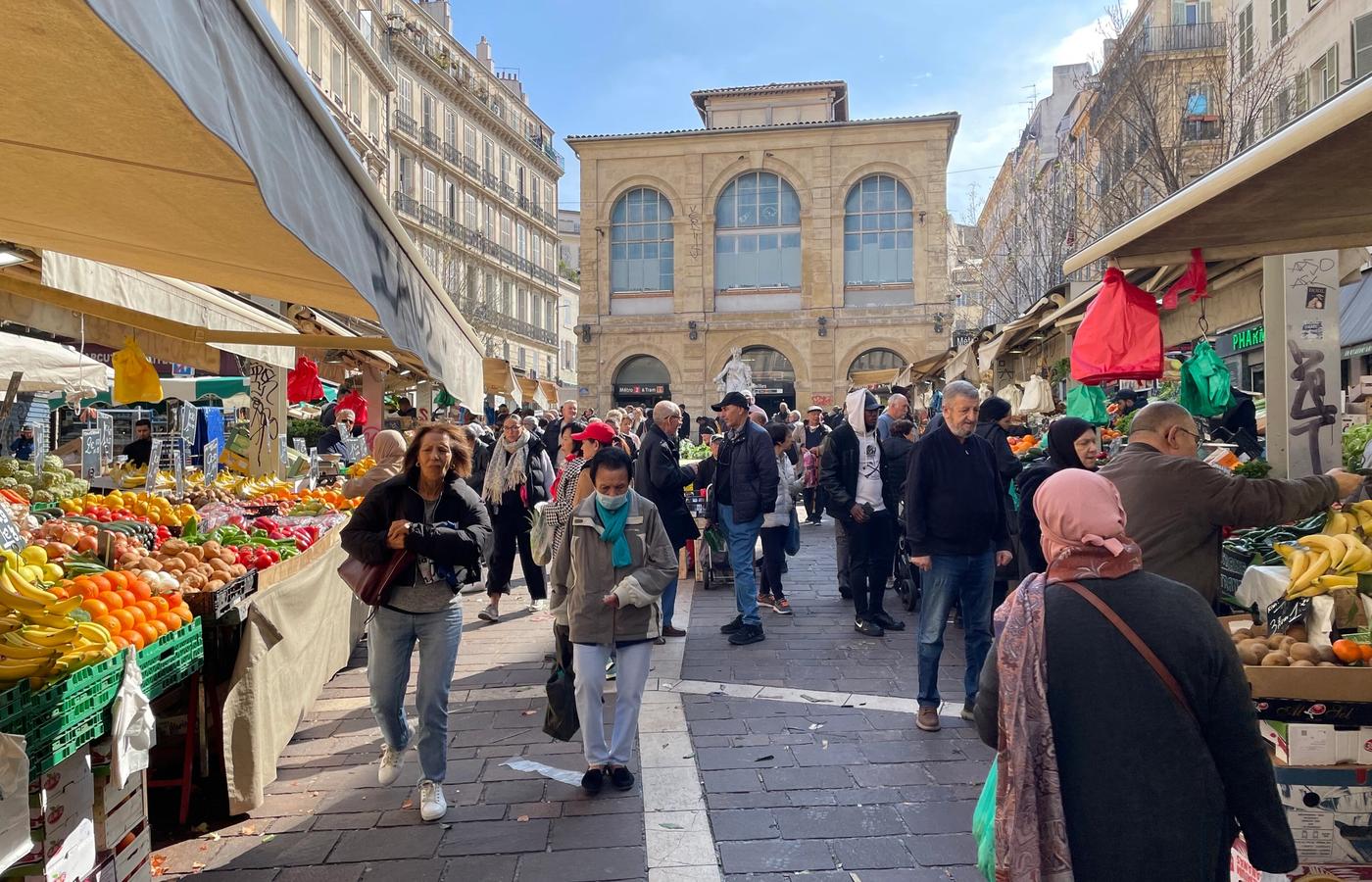
The Marche des Capucins trades six days a week on a small square behind the Canebiere, and it is where Marseille shops rather than where it poses. Noailles has been called the belly of the city for a century. Stalls sell North African spices, Comorian produce, Vietnamese herbs and Provencal fruit within a few metres of each other, at prices well below anything on the tourist quays.
Rue Longue des Capucins and Rue d'Aubagne extend the market north and south with bakeries, butchers and spice merchants. Trading starts around 08:00 and thins out after 19:00. Bring cash in small notes, because many stalls do not take anything else. The quarter is dense and can feel chaotic at midday, which is precisely the point: this is the working end of the city centre.
Pro Tip: Buy a msemen or a chichi fregi from the Rue d'Aubagne stalls for under 3 EUR and eat it standing up. Arrive before 10:00 if you want the stalls without a wall of shoppers in front of them.
10Cathedrale La Major - The Striped Cathedral at the Water's Edge
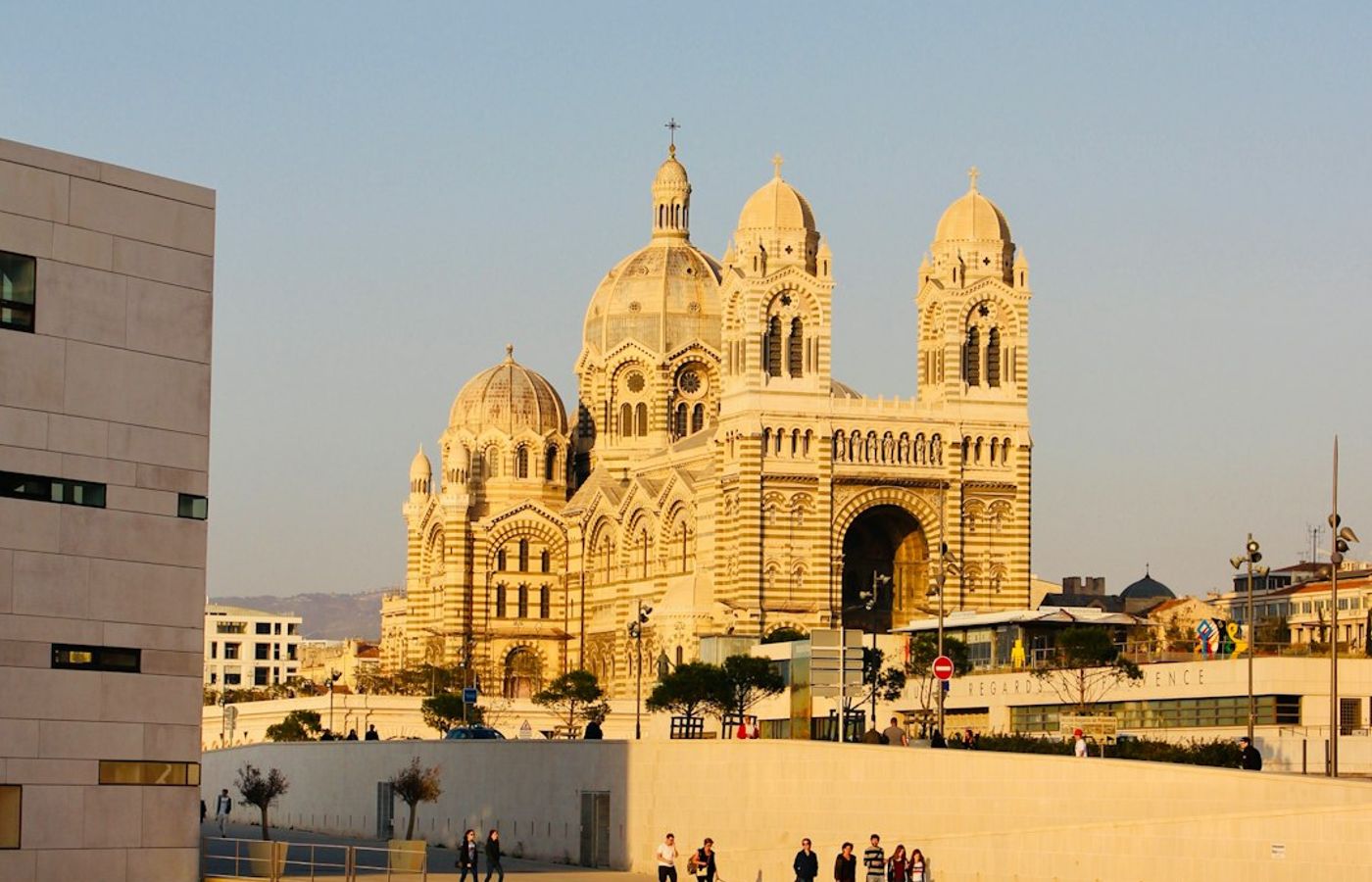
Cathedrale Sainte-Marie-Majeure, known locally as La Major, was built between 1852 and 1893 in a Neo-Byzantine style, using alternating bands of green Florentine stone and white Cassis limestone. It measures 142 metres long and holds around 3,000 people, which places it among the largest cathedrals raised anywhere in Europe during the 19th century. The domes and striped masonry read closer to Istanbul than to Provence.
Beside it stands the Vieille Major, the surviving fragment of the 12th-century Romanesque cathedral that the new building almost swallowed. Entry to both is free. The vaulted arcades running underneath, Les Voutes de la Major, have been converted into shops and cafes facing the water, and the esplanade in front links directly to the MuCEM promenade in about six minutes on foot.
Pro Tip: Pair La Major with MuCEM in one walk along the Promenade Robert Laffont. The cathedral closes between 12:00 and 14:30, so schedule the interior either side of that gap.

CEO and co-founder
Tomas is the co-founder and director of trip1, an European company specializing in reservation services. He launched the company in 2025 with a focus on building scalable, efficient operations.
10 Top Places to Visit in Marseille, France - FAQ
No. Calanques National Park alone eats a half-day, and Chateau d'If needs a return boat crossing of roughly two hours plus island time. A workable plan spreads these 10 places across three days: the Vieux-Port cluster on day one, Notre-Dame de la Garde and La Corniche on day two, the Calanques on day three.
Start at the Vieux-Port and work outward. Le Panier, MuCEM, Fort Saint-Jean and Cathedrale La Major sit within a 15-minute walk of each other, so group them. Palais Longchamp and the Marche des Capucins form a second inland loop. Save Notre-Dame de la Garde for a clear afternoon, and book the Frioul boat and the Calanques for separate mornings.
Three of them. Chateau d'If and the Frioul islands need a Frioul If Express boat ticket, best reserved a day ahead in July and August. MuCEM sells timed entry online and the queue at the door can run 30 minutes in peak season. Calanques boat tours from the Vieux-Port also fill early. The other seven need no booking.
Budget roughly 45 to 60 EUR per adult for admissions and boats. Notre-Dame de la Garde, Le Panier, La Corniche, the Marche des Capucins, Cathedrale La Major and the Calanques trails are all free. MuCEM costs about 11 EUR, Chateau d'If about 6 EUR, and the Frioul If Express return crossing about 11 to 16 EUR depending on the islands you add.
Take Marseille Metro line M2 to Rond-Point du Prado, then RTM bus 21 to Luminy for the trailhead to Calanque de Sugiton, about 55 minutes door to door. For Calanque de Sormiou, bus 23 from Rond-Point du Prado gets you to La Cayolle. Boat tours from the Vieux-Port are the no-hiking alternative and run 25 to 40 EUR.
Several worthwhile stops did not make the top 10. Cite Radieuse, the Le Corbusier housing block in the 8th arrondissement, draws architecture travellers. The Stade Velodrome runs stadium tours. Further out, Cassis and the Chateau de la Buzine sit within an hour by train or bus, and the Docks Village in the 2nd arrondissement is a quieter afternoon option when the Vieux-Port is crowded.