Guides · Paris
15 Top Things to Do in Paris, France
By Tomas Achmedovas · CEO and co-founder

CEO and co-founder
Paris delivers one of the highest concentrations of world-class things to do in Paris of any city on Earth. This guide covers 15 specific attractions - from the iron lattice of the Eiffel Tower to the Impressionist halls of the Musee d'Orsay, the Gothic grandeur of Notre-Dame Cathedral, and the royal excess of the Palace of Versailles. Each entry includes the exact street address, the nearest Metro station with line numbers and walking times, distance from the city centre, current ticket prices in euros, and a tested insider tip to help you make the most of every visit.
The 15 attractions span the full range of Paris sightseeing. You will find the city's essential museums (the Louvre, Musee d'Orsay), its most recognisable monuments (the Arc de Triomphe, the Pantheon), its historic churches (Notre-Dame, Sacre-Coeur, Sainte-Chapelle), its grand public spaces (the Champs-Elysees, Tuileries Garden, Luxembourg Garden), and two experiences that take you beyond the typical tourist trail - the Catacombs and a Seine river cruise. Versailles rounds out the list as a full-day excursion just 40 minutes from the centre by train.
Whether you have three days or a full week, this Paris travel guide gives you the factual detail to plan an efficient itinerary. Prices are current as of early 2026, and we note where advance booking is required. Read on for the complete breakdown of each attraction, starting with the one structure that defines the Paris skyline.
Check dates for Paris
See what is available on your dates.
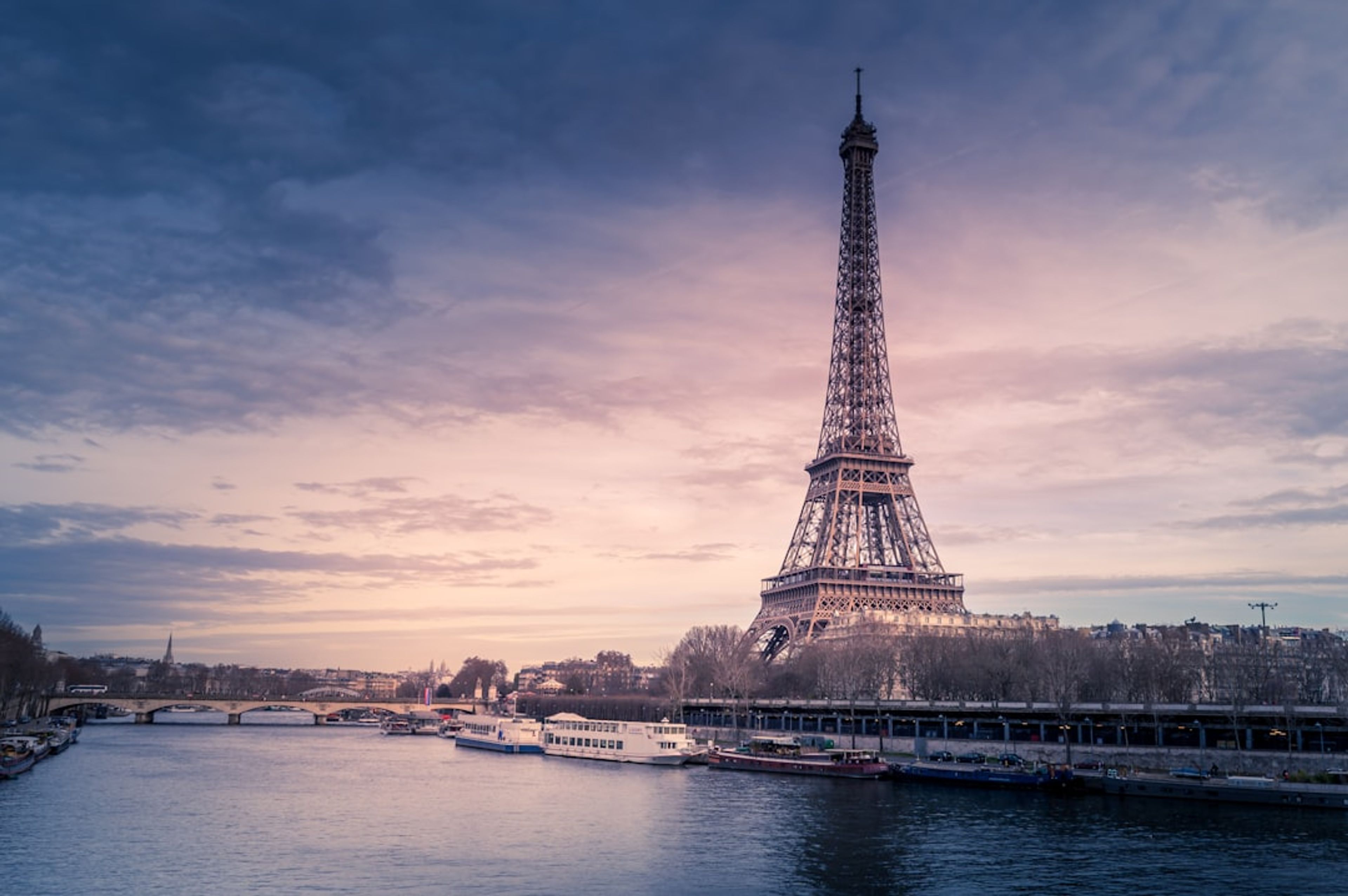
1Eiffel Tower - The Defining Landmark of Paris


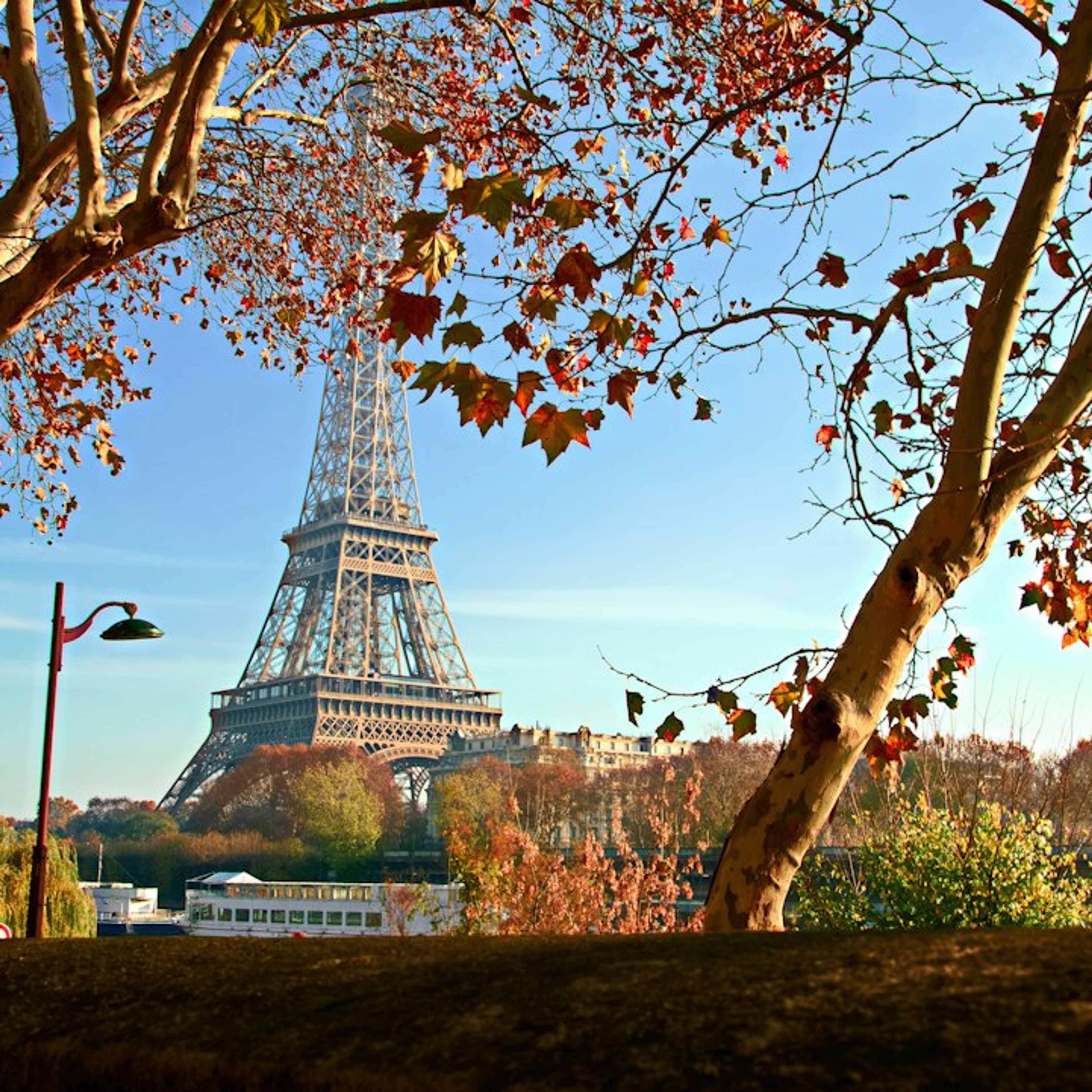
Gustave Eiffel's 330-metre iron tower was built for the 1889 World's Fair and has since become the single most recognisable structure in France. Three observation levels offer progressively more dramatic views of the city. The second floor, at 116 metres, provides the clearest sightlines toward the Trocadero gardens, the Seine, and Montparnasse. The summit, at 276 metres, puts all of Paris beneath you on clear days - you can see as far as 70 kilometres to the horizon.
Tickets to the summit by lift cost EUR 26.80 for adults. Choosing the stairs to the second floor and then the lift to the top reduces the price to EUR 20.40 and skips the longest queue. The tower is open daily from 09:30 to 23:45 in summer and 09:30 to 22:30 in winter, though hours shift seasonally. Book your time slot on the official website at least two weeks ahead during peak season - slots for the summit sell out fast. The light show runs for five minutes on the hour after dark, best viewed from the Trocadero esplanade across the river.
2Louvre Museum - The World's Largest Art Collection


The Louvre holds over 380,000 objects and displays roughly 35,000 works across 73,000 square metres of gallery space. It is, by any measure, the largest art museum in the world. The collection spans from ancient Egyptian sarcophagi and Mesopotamian reliefs to Italian Renaissance masterpieces and French Neoclassical painting. The Mona Lisa draws the densest crowds in the Denon Wing, but the museum's real depth lies elsewhere - the Winged Victory of Samothrace at the top of the Daru staircase, the vast Napoleon III apartments, and the Islamic Art galleries beneath a shimmering glass-and-metal roof.
Admission is EUR 22. The museum is open Wednesday through Monday from 09:00 to 18:00, with extended hours until 21:00 on Fridays. It is closed every Tuesday. Free entry applies on the first Friday evening of each month after 18:00 and for all visitors under 26 from the EU. Timed-entry reservations are mandatory and should be booked online at least a few days in advance. Plan a minimum of three hours; serious art lovers could spend an entire day.
3Musée d'Orsay - Impressionism in a Beaux-Arts Train Station


Housed inside a converted 1900 railway station, the Musee d'Orsay holds the world's finest collection of Impressionist and Post-Impressionist painting. The top-floor galleries contain works that changed the course of art history: Monet's cathedral series, Renoir's Bal du moulin de la Galette, Degas' ballet dancers, Van Gogh's Starry Night Over the Rhone, and Cezanne's still lifes. The building itself competes for attention - the enormous station clock on the fifth floor frames views across the Seine toward Montmartre.
Admission is EUR 16 for adults, free for under-26 EU residents. The museum is open Tuesday through Sunday, 09:30 to 18:00, with late opening until 21:45 on Thursdays. It is closed on Mondays. Timed-entry tickets should be purchased in advance online. Two to three hours is enough to see the highlights, though the ground-floor sculpture collection and the Art Nouveau decorative arts rooms deserve unhurried exploration.
Check dates for Paris
See what is available on your dates.
4Notre-Dame Cathedral - Gothic Masterpiece Reborn After Fire

Construction of Notre-Dame began in 1163 and took nearly 200 years to complete, producing one of the finest examples of French Gothic architecture anywhere. The 2019 fire destroyed the spire and much of the roof, but a painstaking five-year restoration returned the cathedral to the public in December 2024. The cleaned interior is a revelation - centuries of grime removed from the limestone to reveal warm, pale stone that transforms the nave with natural light. The three rose windows, dating from the 13th century, survived the blaze intact and remain among the most extraordinary stained-glass compositions in Europe.
Entry to the cathedral is free. It is open daily for visits, typically from 08:00 to 19:00, though hours may extend during summer. The exterior's flying buttresses and gargoyles are best appreciated from the garden at the eastern end of the island or from the Left Bank quays. Note that the tower climb, which offers close-up views of the gargoyles and a panorama over Paris, has its own separate timed ticket and limited daily capacity.
5Sacré-Coeur Basilica - Montmartre's White-Domed Crown

The Basilica of the Sacred Heart sits at the summit of Montmartre, the highest natural point in Paris at 130 metres above sea level. Built between 1875 and 1914 from Chateau-Landon travertine stone that bleaches whiter with rain, the Romano-Byzantine church dominates the northern skyline. The interior holds one of the world's largest mosaics - a 475-square-metre depiction of Christ in gold and blue that covers the apse ceiling. The front steps and terrace deliver a sweeping view south across the entire city, free and available at any hour.
Entry to the basilica is free. Climbing the 300 steps to the dome costs EUR 7 and rewards you with a 360-degree panorama that on clear days extends 30 kilometres. The basilica is open daily from 06:30 to 22:30. The surrounding Montmartre neighbourhood is worth at least two hours on its own - Place du Tertre fills with portrait artists, and the narrow lanes around Rue Lepic still feel like a 19th-century village.
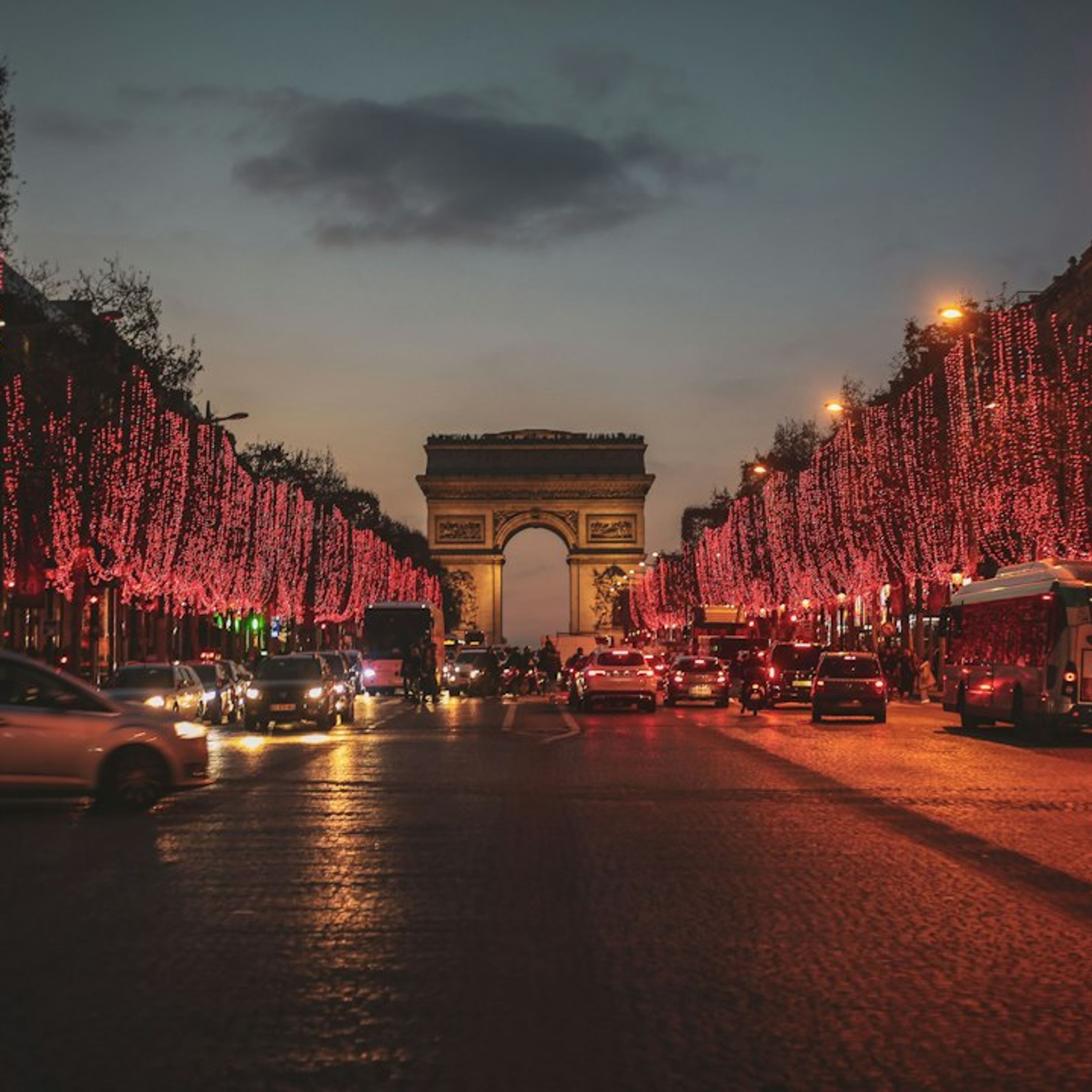
6Arc de Triomphe - Napoleon's Victory Monument and Rooftop Viewpoint

Napoleon commissioned the Arc de Triomphe in 1806 to celebrate his military victories, though the 50-metre arch was not completed until 1836 - fifteen years after his death. It anchors the western end of the Champs-Elysees and sits at the centre of the Place Charles de Gaulle roundabout, where twelve avenues radiate outward in a star pattern. Beneath the arch, the Tomb of the Unknown Soldier honours those who died in World War I, and a memorial flame is rekindled every evening at 18:30.
The rooftop terrace, reached by climbing 284 steps (no lift), costs EUR 16 for adults and offers one of the best vantage points in Paris - you can see the Eiffel Tower to the southwest and La Defense's skyscrapers to the northwest along a perfect axis. Open daily from 10:00 to 23:00 (until 22:30 October through March). Access is via an underground tunnel from the north side of the Champs-Elysees; do not attempt to cross the roundabout on foot.
7Champs-Élysées - The Grand Boulevard from Concorde to the Arc

Stretching 1.9 kilometres from the Place de la Concorde to the Arc de Triomphe, the Champs-Elysees has served as Paris's ceremonial axis since the 17th century. The lower stretch near the Grand Palais and Petit Palais is lined with chestnut trees and garden spaces, while the upper half between the Rond-Point and the Arc concentrates the flagship stores, cinemas, and sidewalk cafes. A multi-year renovation completed in recent years widened pedestrian paths, added greenery, and reduced traffic lanes, making the walk noticeably more pleasant than a decade ago.
Walking the full length takes roughly 25 minutes at a steady pace, but allow more time to detour into the Grand Palais (reopened after a major renovation) or sit at one of the terrace cafes. The avenue is free to walk and open around the clock. It transforms during major events - the Bastille Day military parade on 14 July, the Tour de France finish in July, and a massive Christmas market from late November through early January with over 200 chalets.
8Palace of Versailles - Royal Grandeur on the Outskirts of Paris

Louis XIV transformed a modest hunting lodge into the largest palace in Europe, a project that consumed 36,000 workers over several decades. The result is a complex of 2,300 rooms, 800 hectares of gardens, and an influence on European court architecture that lasted two centuries. The Hall of Mirrors - 73 metres long, lined with 357 mirrors reflecting 20,000 candles worth of chandelier light - remains the single most photographed room in France. Beyond the palace, the Grand Trianon, the Petit Trianon, and Marie Antoinette's hamlet offer a quieter counterpoint to the main building's formality.
The palace ticket costs EUR 21.50 and covers the main state apartments and the Hall of Mirrors. The full estate pass at EUR 28.50 adds the Trianon palaces, Marie Antoinette's estate, and access to the Musical Fountains show when running (weekends April through October). The palace is open Tuesday through Sunday, 09:00 to 18:30 (last entry 17:50). Closed Mondays. Pre-booking online is essential - walk-up queues can exceed 90 minutes in summer.
9Sainte-Chapelle - A Medieval Jewel Box of Stained Glass

King Louis IX built Sainte-Chapelle between 1242 and 1248 to house relics he believed to be the Crown of Thorns and fragments of the True Cross. The lower chapel is modest, but the upper chapel is one of the most extraordinary rooms in Gothic architecture - fifteen floor-to-ceiling stained-glass windows, each 15 metres tall, depict 1,113 scenes from the Old and New Testaments. On a sunny afternoon, the effect is overwhelming: the stone walls nearly vanish behind walls of coloured light in red, blue, and gold.
Admission costs EUR 11.50 for adults. A combined ticket with the Conciergerie next door costs EUR 18.50 and is worth it if you have time. Sainte-Chapelle is open daily from 09:00 to 19:00 (until 17:00 October through March). The chapel also hosts classical concerts in the evening - performances of Vivaldi and Bach surrounded by candlelight and medieval glass sell out quickly.
10Tuileries Garden - Paris's Oldest Public Park Between the Louvre and Concorde

Catherine de' Medici commissioned the Tuileries Garden in 1564, making it the oldest public park in Paris. Andre Le Notre redesigned it in 1664 in the formal French style that would later define Versailles - symmetrical paths, clipped hedges, geometric lawns, and octagonal reflecting pools. Today the 23-hectare garden stretches from the Louvre's courtyard west to the Place de la Concorde, forming the green spine of Paris's monumental axis. Two small museums sit at the western end: the Musee de l'Orangerie (home to Monet's Water Lilies) and the Jeu de Paume (photography exhibitions).
The garden is free and open daily from 07:00 to 21:00 in summer and 07:30 to 19:30 in winter. Green metal chairs around the central basin are first-come, first-served and perfect for a rest after the Louvre. In summer, a small fairground with a Ferris wheel and carnival rides appears near the Rue de Rivoli side. The gravel paths are flat and accessible throughout.
11Luxembourg Garden - The Left Bank's Elegant Green Escape

Marie de' Medici created the Luxembourg Garden in 1612 to accompany the Italianate Luxembourg Palace, which now houses the French Senate. The 23-hectare park blends formal French parterre design around the central octagonal basin with a more relaxed English-style landscape garden on its southern side. Parisians treat it as an outdoor living room - chess players gather near the Orangerie, children push model sailboats across the pond, and university students from the nearby Sorbonne fill the iron chairs with textbooks.
The garden is free and opens at 07:30, with closing times varying by season (as late as 21:30 in summer, as early as 17:00 in winter). Sculptures are scattered throughout, including a smaller replica of the Statue of Liberty and the Medici Fountain, a shaded grotto-style water feature at the northeastern end. The park also has tennis courts, a puppet theatre (Guignol du Luxembourg), and a playground that charges a small fee for children.
12The Panthéon - France's Temple of Illustrious Citizens

Originally built as a church dedicated to Saint Genevieve between 1758 and 1790, the Pantheon was repurposed during the French Revolution as a secular mausoleum for the nation's most distinguished figures. Its Neoclassical dome, modelled on St. Peter's in Rome, rises 83 metres and dominates the Left Bank skyline. The crypt holds the remains of Voltaire, Rousseau, Victor Hugo, Emile Zola, Marie Curie, Alexandre Dumas, and Simone Veil, among others. A replica of Foucault's Pendulum hangs from the dome, demonstrating the Earth's rotation in an experiment first conducted here in 1851.
Admission is EUR 11.50. Open daily from 10:00 to 18:00 (until 18:30 April through September). The colonnade gallery at the top of the dome opens seasonally and gives 360-degree views over Paris - it is less crowded than the Eiffel Tower or Arc de Triomphe rooftop viewpoints. The Pantheon is included in the Paris Museum Pass.
13Paris Catacombs - Six Million Skeletons Beneath the City Streets

The Catacombs occupy a small section of the 300 kilometres of former limestone quarry tunnels that run beneath Paris. In the late 18th century, the city's overflowing cemeteries were emptied and the remains of approximately six million people were transferred underground and arranged into walls of skulls and femurs that line 1.5 kilometres of tunnels. The experience is eerie and genuinely unlike any other attraction in the city - a 20-metre descent down a spiral staircase leads into cool, dimly lit corridors of carefully stacked bones.
Admission is EUR 29 for the standard visit and EUR 39 for a guided experience. Only 200 visitors are allowed inside at any given time, so online booking well in advance is essential - walk-up queues can stretch over two hours even on weekdays. The visit takes about 45 minutes. The tunnels maintain a constant temperature of 14 degrees Celsius, so bring a light jacket even in summer. The exit emerges on Rue Remy Dumoncel, about 700 metres from the entrance.
14Seine River Cruise - Paris from the Water

A cruise along the Seine passes nearly every major landmark on this list from a completely different angle. The standard one-hour loop operated by Bateaux Mouches and Bateaux Parisiens departs from the base of the Eiffel Tower, glides past the Musee d'Orsay and the Louvre, loops around both tips of the Ile de la Cite (passing directly beneath Notre-Dame's flying buttresses), and returns along the Left Bank. The stretch of the Seine through central Paris is a
UNESCO World Heritage Site, and viewing it from water level reveals bridge details and building facades that are invisible from the street.
Standard cruises cost EUR 16 to EUR 19 for adults. Dinner cruises run EUR 70 to EUR 150 depending on the menu. Boats depart every 30 minutes from multiple docks; the main ones are at Pont de l'Alma and near the Eiffel Tower. Cruises operate year-round, with departures from 10:00 to 22:30 in peak season. Evening cruises after dark let you see the Eiffel Tower's light show and the floodlit facades of the Grand Palais and Notre-Dame.
15Montmartre - The Hilltop Village That Shaped Modern Art

Montmartre was where Picasso, Modigliani, Toulouse-Lautrec, and Van Gogh lived and worked in the late 19th and early 20th centuries, drawn by cheap rents and creative freedom. The neighbourhood retains a village character that stands apart from the rest of Paris - cobblestone lanes climb the hill at odd angles, ivy covers stone walls, and small squares host open-air painters selling portraits and landscapes. The Bateau-Lavoir at 13 Rue Ravignan was Picasso's studio where he painted Les Demoiselles d'Avignon. The Moulin Rouge cabaret at 82 Boulevard de Clichy has operated since 1889, its red windmill still turning at the foot of the hill.
Walking Montmartre costs nothing and takes two to three hours at a comfortable pace. Start at the Abbesses Metro station (note the original Art Nouveau entrance canopy, one of only two surviving Guimard designs), climb to Place du Tertre, visit Sacre-Coeur, then wind down through the Rue Lepic past the windmills. The Musee de Montmartre at 12 Rue Cortot (EUR 14) occupies Renoir's former studio and covers the neighbourhood's artistic history with paintings, posters, and photographs.
Take this guide with you
Get every place in this guide, with addresses and map links, in your inbox — easy to open on your phone during the trip.
One email to the address on your account. No newsletter.

CEO and co-founder
Tomas is the co-founder and director of trip1, an European company specializing in reservation services. He launched the company in 2025 with a focus on building scalable, efficient operations.
15 Top Things to Do in Paris, France: Eiffel Tower, Museums & Café Culture - FAQ
Go up the Eiffel Tower, see the Louvre and the Impressionists at the Musee d'Orsay, and visit the restored Notre-Dame. Climb to Sacre-Coeur and wander Montmartre, walk the Champs-Elysees to the Arc de Triomphe rooftop, and see the stained glass of Sainte-Chapelle. Take a Seine cruise after dark, go down into the Catacombs, and give Versailles a full day.
Group sights by area. Day one: the Eiffel Tower, the Trocadero and an evening Seine cruise. Day two: the Louvre, the Tuileries Garden and the Champs-Elysees up to the Arc de Triomphe at sunset. Day three: Notre-Dame and Sainte-Chapelle in the morning, then Montmartre and Sacre-Coeur. Versailles needs a fourth day of its own.
Don't walk into a shop or cafe without saying "bonjour". Don't plan the Louvre for a Tuesday or the Musee d'Orsay and Versailles for a Monday, when they close. Don't try to cross the Arc de Triomphe roundabout on foot: use the underground tunnel. Don't over-tip, as service is included in menu prices; rounding up is plenty.
High summer, for most visitors. July brings the longest queues at the Eiffel Tower, the Louvre and Versailles, heatwaves are increasingly common, and in August some small local restaurants and shops close, especially around 15 August. Spring and autumn are calmer, with October bringing shorter queues and park colour. Winter is quietest apart from the Christmas holidays, though days are short and grey.
Adult tickets in 2026 cost 36.70 euros to the summit by lift, or 28 euros if you take the stairs to the second floor and the lift from there. The second floor alone costs 23.50 euros by lift or 14.80 euros by the 674 steps. Book a time slot on the official website, and well ahead for the summit in peak season.
32 euros for visitors from outside the European Economic Area, including Americans, since 14 January 2026; EEA visitors pay 22 euros. Under-18s go free. Booking a time slot online is recommended. The museum closes on Tuesdays and stays open until 21:00 on Wednesdays and Fridays, and the first Friday evening of each month is free, except in July and August.