
Guides · New Orleans
10 Best Things to Do in New Orleans

CEO and co-founder
This guide ranks the 10 best things to do in New Orleans, running from the Creole townhouses of the French Quarter to a cypress swamp boardwalk 40 minutes outside the city. Each entry gives the exact street address, the nearest streetcar or bus, and a Pro Tip based on how the city actually works rather than how the brochures describe it.
The order is built around routing rather than a strict ranking. Entries one to five sit within walking distance of each other across the French Quarter, Faubourg Marigny and the Warehouse District, so you can chain them across a single long day. Numbers six to eight follow the St Charles and Canal streetcar lines out through the Garden District and City Park. The last two need transport - a free shuttle to Mardi Gras World on the river, and a car or organised tour to reach the Barataria Preserve.
Costs vary sharply. Six of the ten are free to enter, and the National WWII Museum is the single biggest ticket at roughly USD 32. Where advance booking genuinely matters, the entry says so. Three days is the realistic minimum to cover the full list without rushing.
1The French Quarter - The Oldest Neighbourhood in New Orleans
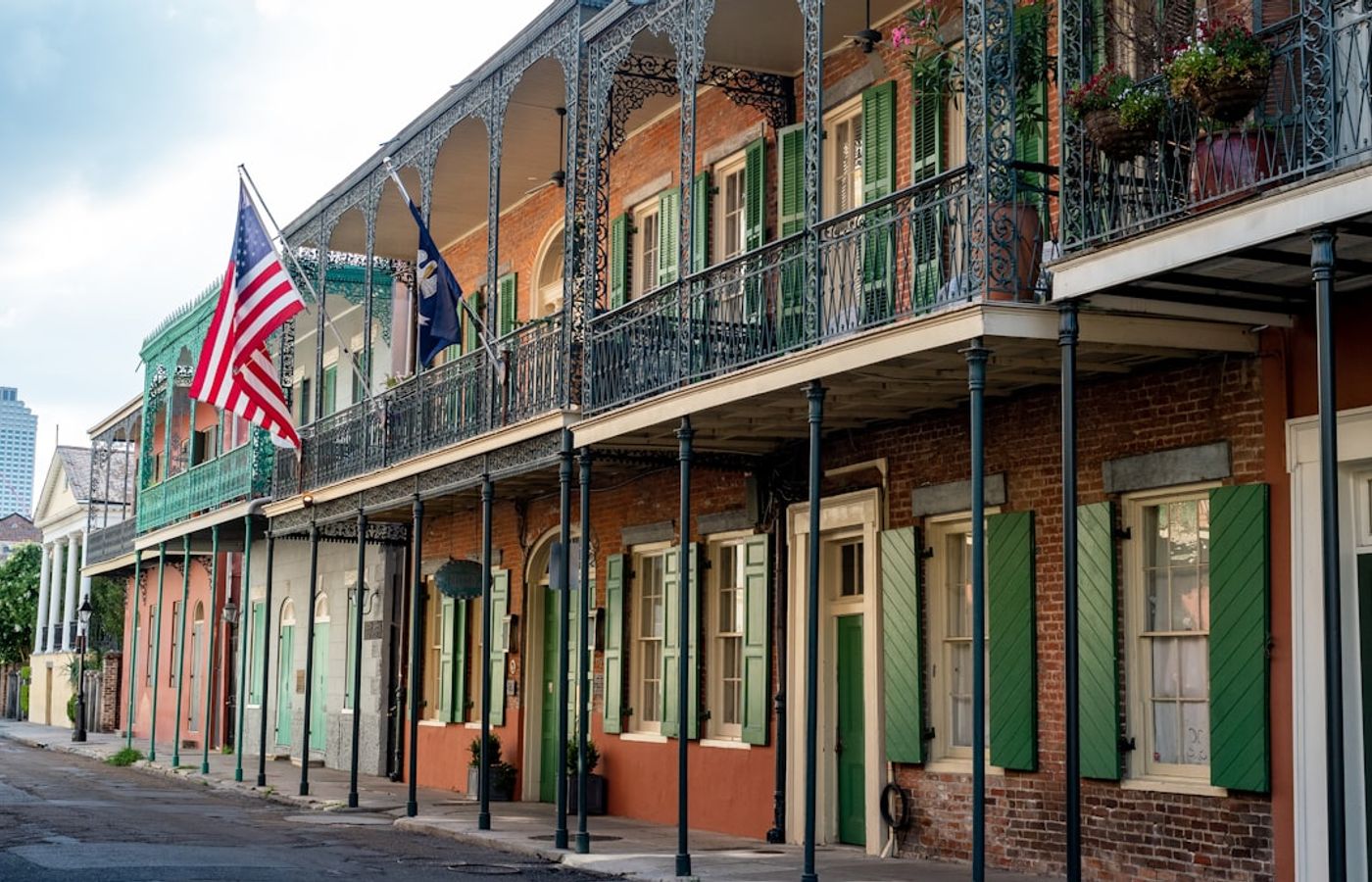

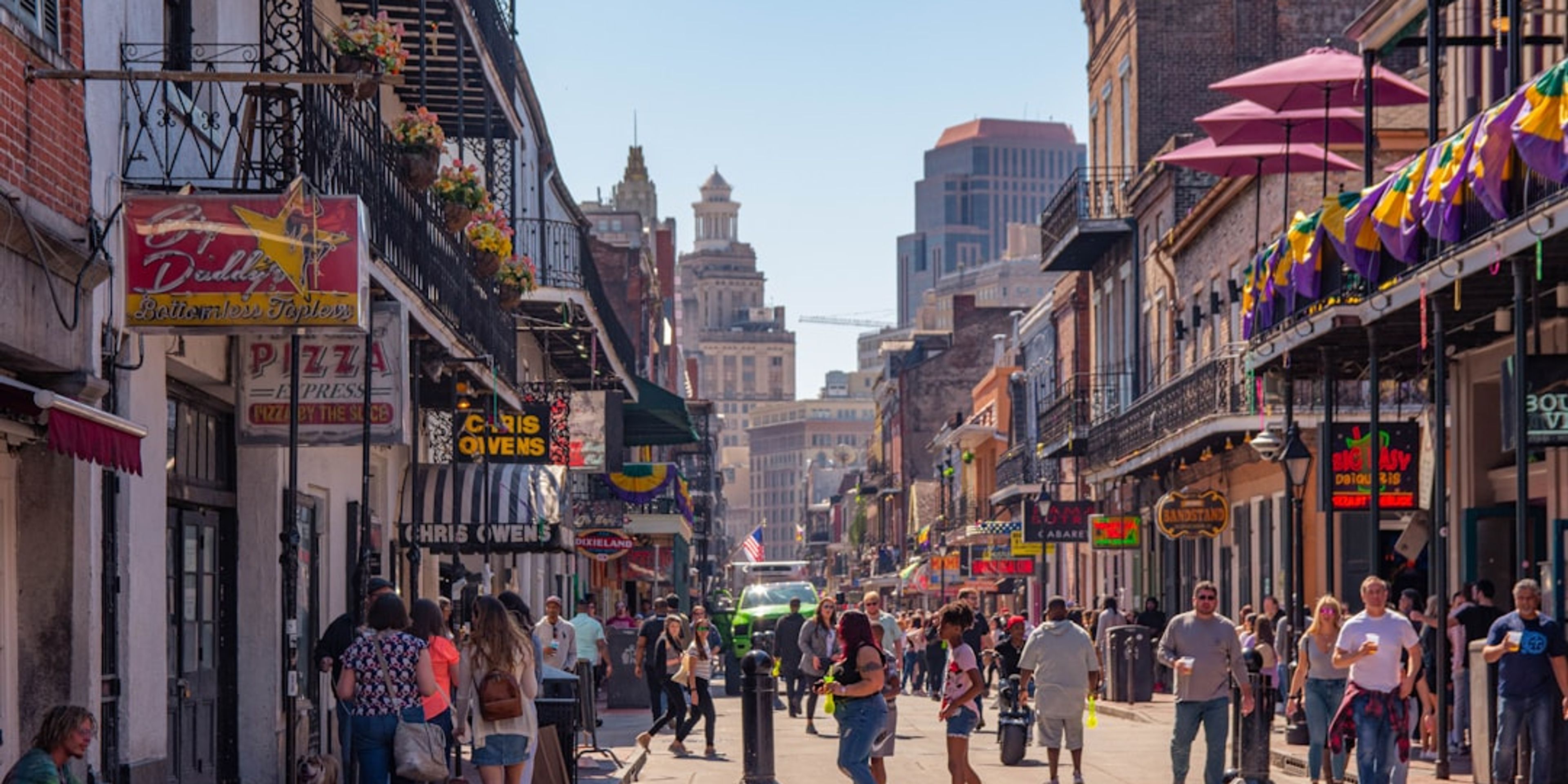
The French Quarter, or Vieux Carre, covers 78 square blocks between Canal Street and Esplanade Avenue and is where New Orleans began in 1718. Most of what stands today is Spanish rather than French. Fires in 1788 and 1794 destroyed the original timber buildings, and the rebuild under Spanish rule produced the wrought-iron galleries, brick courtyards and stucco facades that define the district now.
Royal Street is the one to walk for antique dealers, galleries and street musicians. Bourbon Street handles the noise and the frozen daiquiri bars, and works better as a 20-minute detour than a destination. Chartres, Dumaine and Governor Nicholls hold the quieter residential blocks where people actually live. The whole Quarter is a National Historic Landmark and small enough to cross on foot in under half an hour.
Pro Tip: Walk Royal Street between 11am and 4pm on a weekday, when the city closes several blocks to traffic for street performers. The same route after dark is a completely different place - gas-lit, quiet, and mostly residents walking dogs.
2Jackson Square and St Louis Cathedral - The Ceremonial Heart of the City
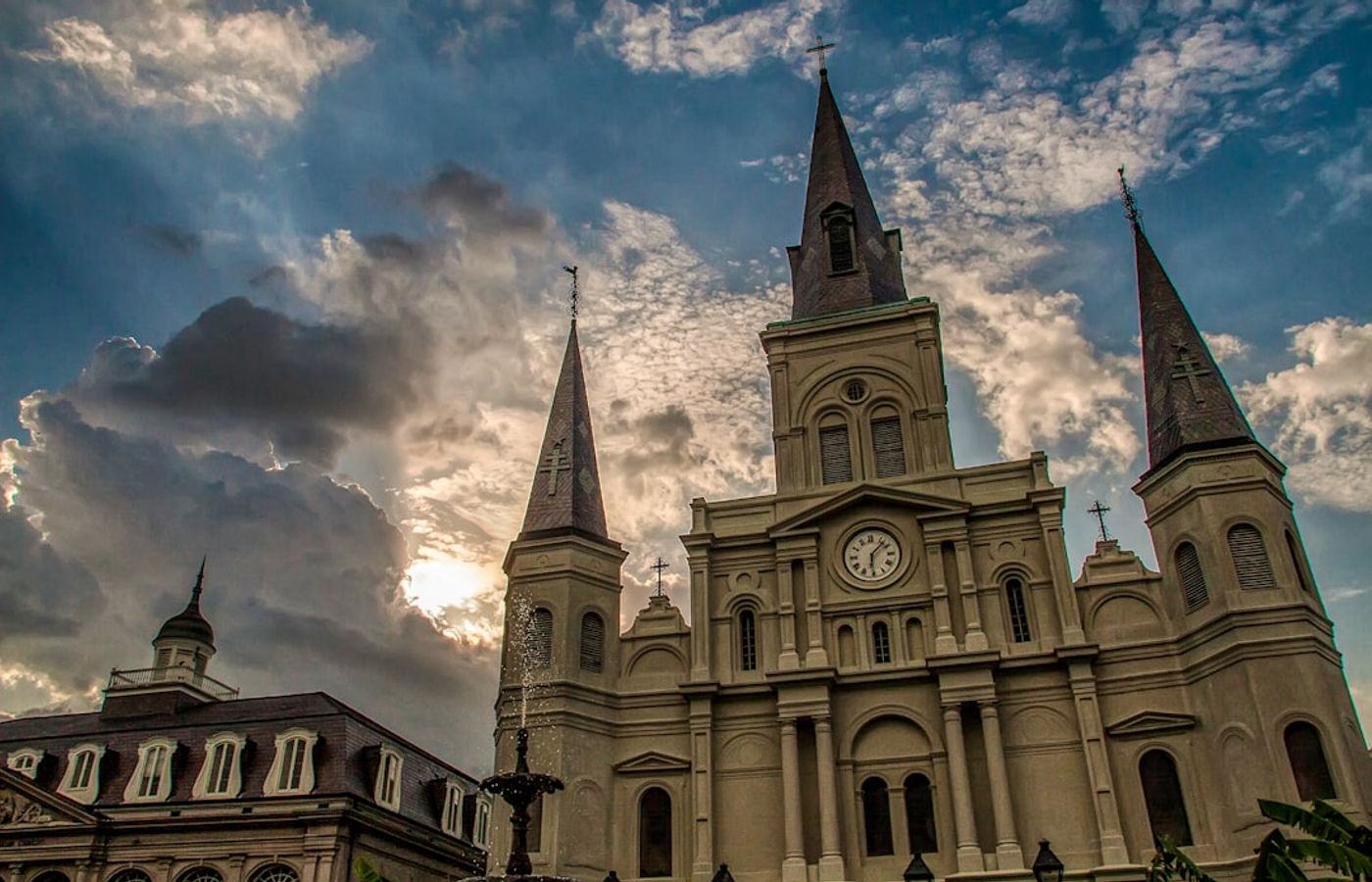

Jackson Square was laid out in 1721 as the Place d'Armes, the military parade ground of the colonial city, and renamed after Andrew Jackson following the Battle of New Orleans in 1815. His equestrian statue stands at the centre of a fenced garden, flanked by the Pontalba Buildings - red-brick rows from 1850 that are among the oldest continuously occupied apartment blocks in the United States.
St Louis Cathedral closes the northern side. The current building dates from 1850 and is the oldest continuously operating Catholic cathedral in the country, with free entry outside services. The Cabildo and the Presbytere on either side house Louisiana State Museum collections covering the Louisiana Purchase and the history of Mardi Gras. Tarot readers, brass players and portrait artists set up along the pedestrian perimeter from late morning.
Pro Tip: Cross Decatur Street and climb the steps to Washington Artillery Park for the standard head-on view of the cathedral, then continue up onto the levee behind it for the Mississippi and the passing container ships.

3Frenchmen Street and Preservation Hall - Where the Music Actually Happens
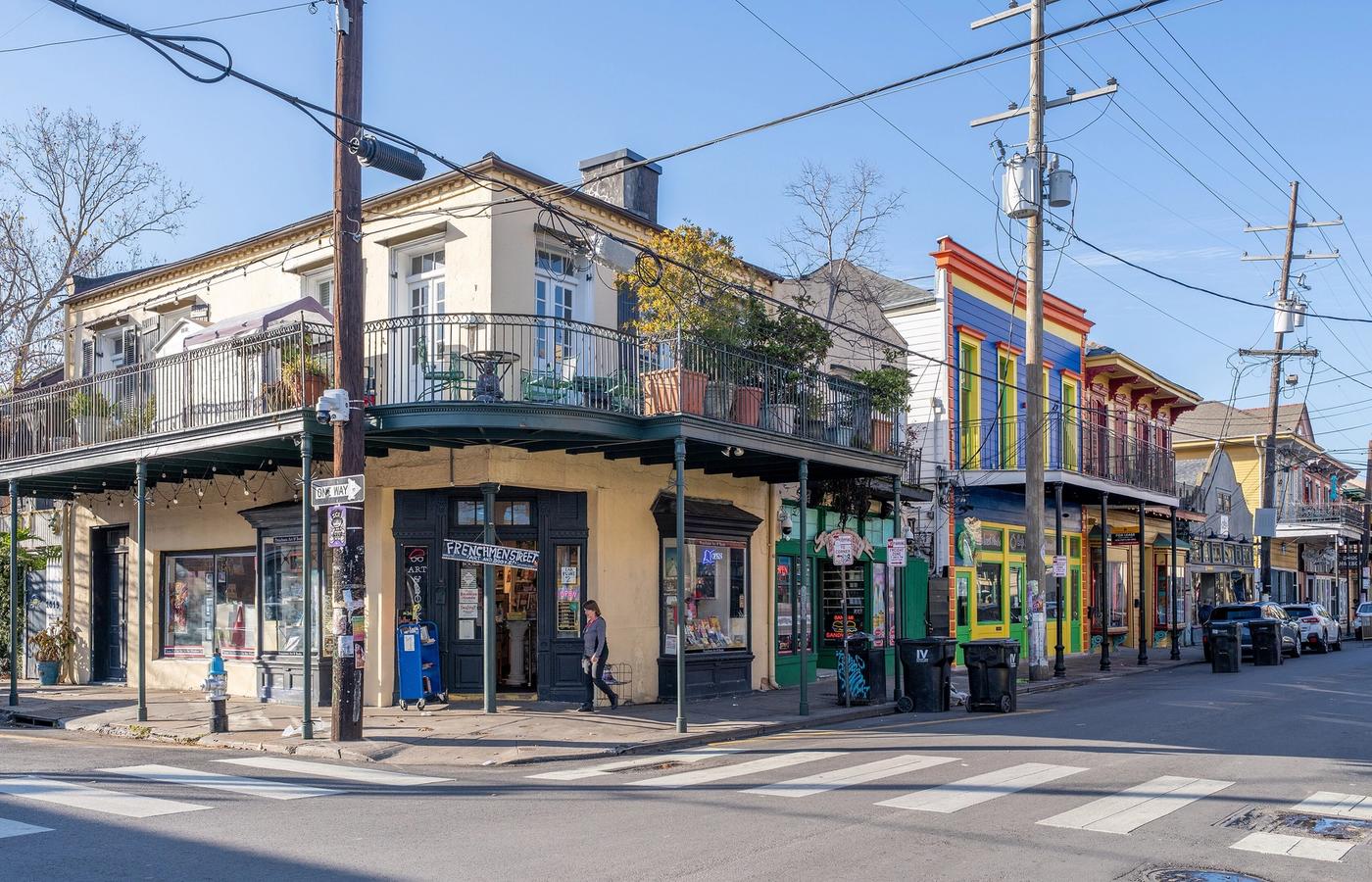

Three blocks of Frenchmen Street in the Faubourg Marigny hold more live music per square metre than anywhere else in New Orleans. The Spotted Cat, d.b.a., Blue Nile and Snug Harbor run sets from early evening until well past midnight, most with either no cover or a modest door charge, and the crowd skews local in a way that Bourbon Street stopped doing decades ago.
For traditional jazz, Preservation Hall at 726 St Peter Street is the other essential stop. It seats around 100 people on cushions and wooden benches in a bare room with no bar, no amplification and no air conditioning, and runs several 45-minute sets a night. Tickets from USD 25 sell out days ahead, so book online rather than turning up and queueing on the pavement.
Pro Tip: Frenchmen Street peaks around 10pm. Arrive at 7pm instead, catch an early set at Snug Harbor while there is still room at the bar, then work down the block as the night builds. The Frenchmen Art Market in the open lot stays open until 1am.
4The National WWII Museum - The Biggest Single Attraction in New Orleans
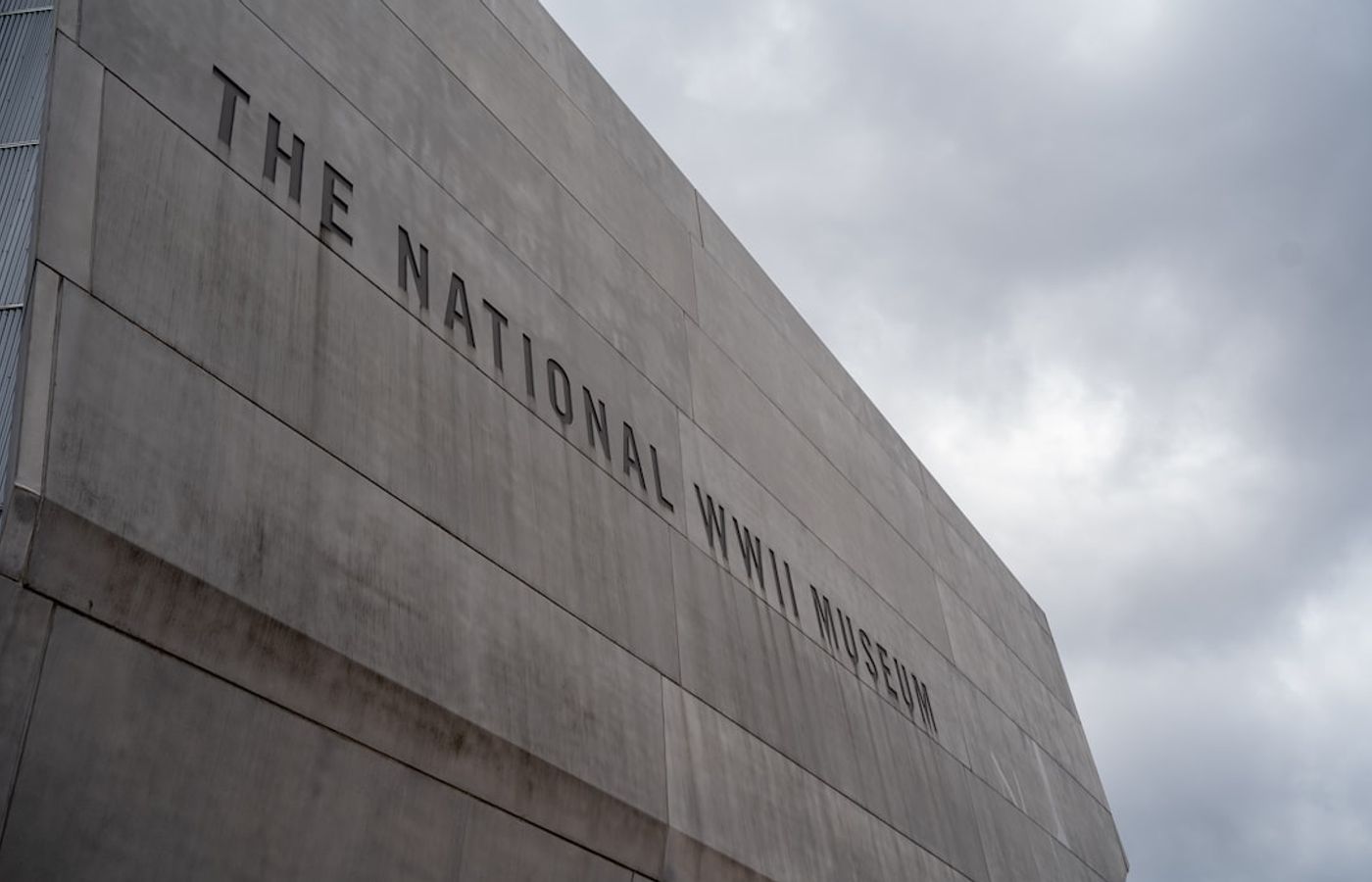
The National WWII Museum opened in 2000 as the D-Day Museum and now spreads across six pavilions in the Warehouse District. New Orleans got the museum for a specific reason: Higgins Industries built the LCVP landing craft used at Normandy in factories here, and Eisenhower later credited Andrew Higgins as the man who won the war for the Allies.
Allow four hours minimum. The Road to Berlin and Road to Tokyo galleries each absorb about 90 minutes on their own, and the Beyond All Boundaries film in the Solomon Victory Theater runs a further 45 minutes. General admission sits around USD 32 for adults, with the film and the submarine experience charged separately. Every visitor receives a dog tag that tracks one real service member's story through the galleries.
Pro Tip: Book timed entry online and arrive at 9am opening. By midday the Road to Berlin corridors bottleneck badly and the dog tag stations back up behind school groups. The rooftop bar next door is the easiest lunch break.
5The Garden District and Lafayette Cemetery No. 1 - Mansions and Above-Ground Tombs
The Garden District went up from the 1830s, built by wealthy Americans who were not welcome in the Creole French Quarter. The architecture reflects the rivalry - Greek Revival and Italianate mansions on unusually large lots, ringed by cast-iron fences and shaded by live oaks planted a century and a half ago. First Street, Prytania Street and Third Street carry the densest concentration.
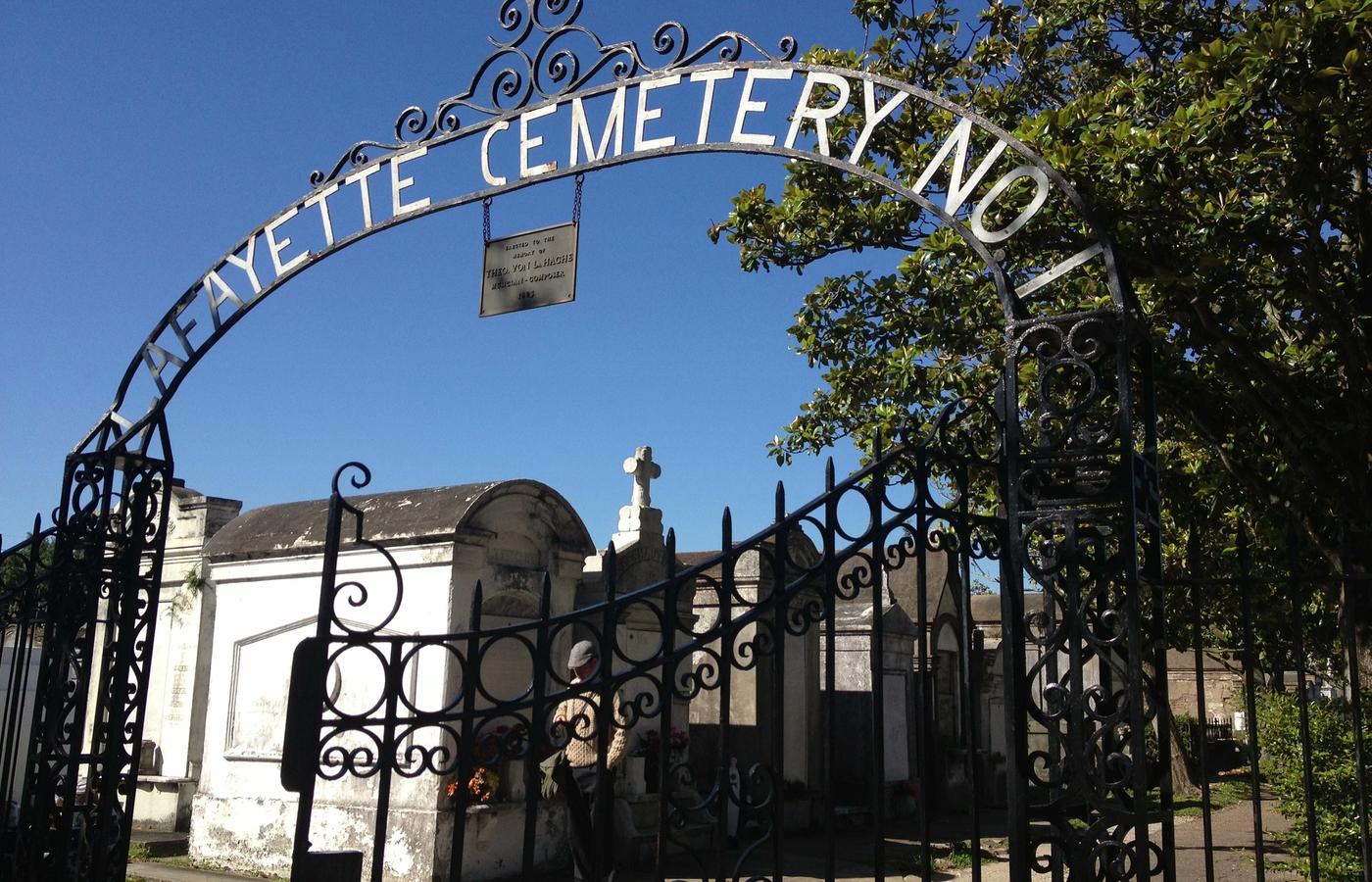
Lafayette Cemetery No. 1 at 1400 Washington Avenue holds the above-ground tombs New Orleans is known for, a practical response to a water table that sits barely a metre below the surface. The cemetery has closed for restoration work for long stretches in recent years, so confirm its status before making a special trip. Commander's Palace, serving since 1893, sits directly across the street.
Pro Tip: Start at Washington Avenue and walk downhill towards Magazine Street, which turns commercial with independent shops, bookstores and coffee. The full loop takes about 90 minutes on foot and needs no guide.
6The St Charles Avenue Streetcar - The Oldest Street Railway in the World
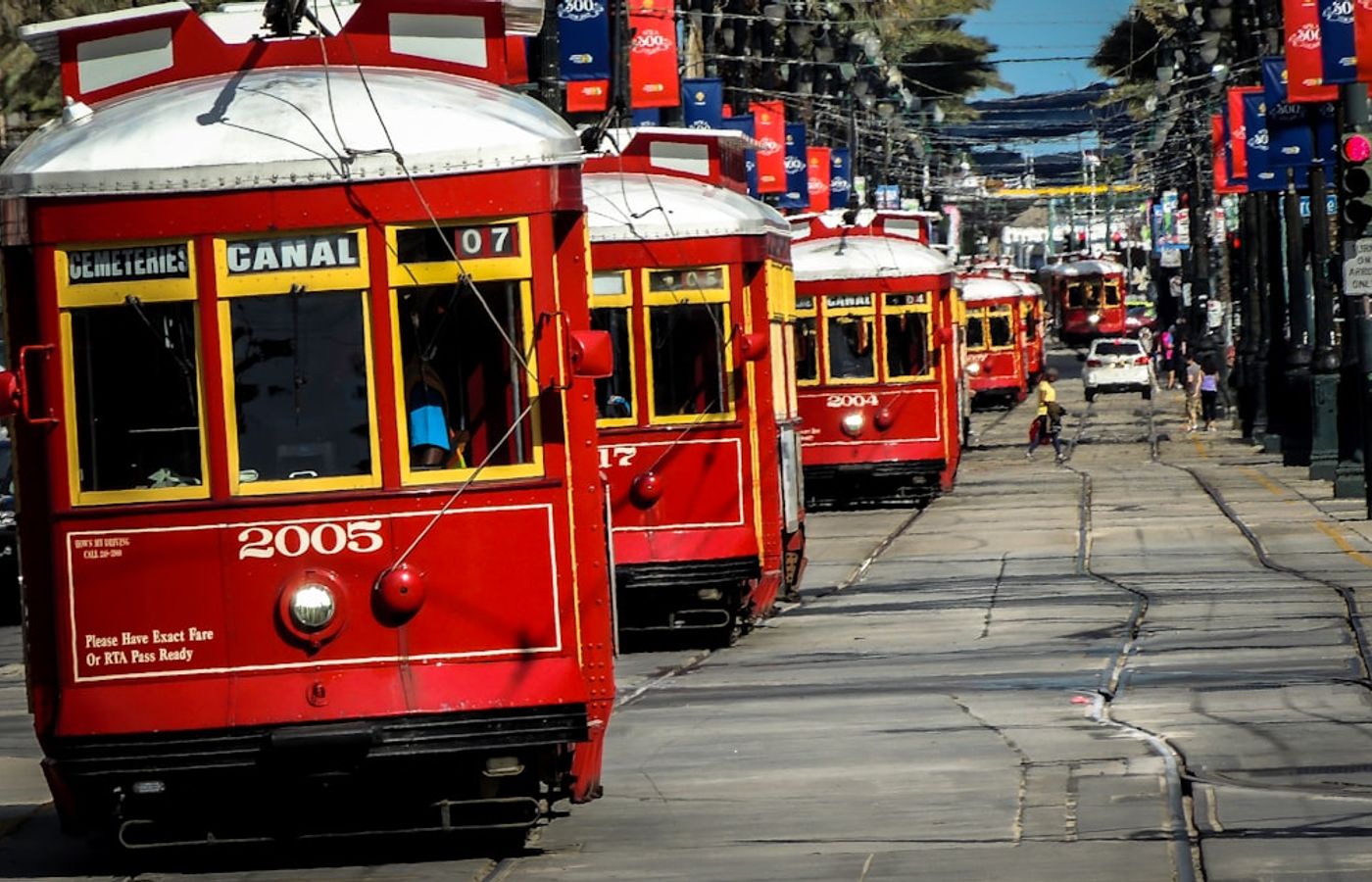
The St Charles line has run since 1835, which makes it the oldest continuously operating street railway in the world. The olive-green Perley Thomas cars date from 1923 and 1924, have varnished wooden seats and no air conditioning, and are a National Historic Landmark in their own right. Windows drop open, which is the whole appeal in summer.
The route covers 13 miles from Canal Street through the Garden District and Uptown to Carrollton, passing Audubon Park, Tulane University, Loyola University and a long parade of antebellum houses. A single ride costs USD 1.25 and a Jazzy Pass gives unlimited travel for USD 3 a day. The full run takes roughly 45 minutes in each direction, and most people ride it as an attraction rather than as transport.
Pro Tip: Sit on the left heading uptown from Canal Street for the mansion side of the avenue. Board at the Carondelet and Canal terminus rather than mid-route, where cars regularly arrive full and roll straight past waiting passengers.
7Cafe du Monde and the French Market - Beignets at Any Hour
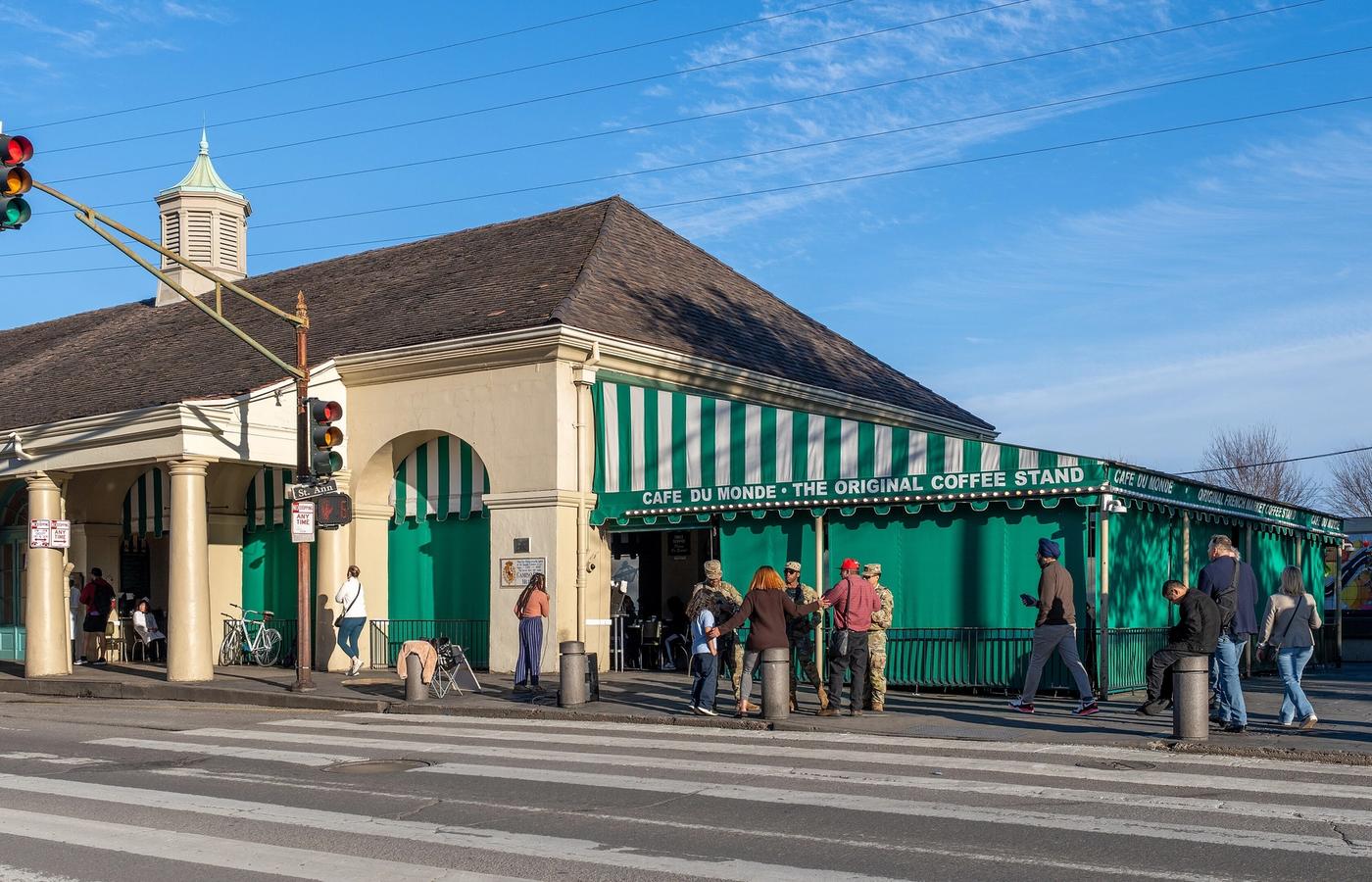
Cafe du Monde has been selling beignets and chicory coffee at the corner of Decatur and St Ann since 1862, and the original stand stays open 24 hours a day except Christmas. The menu runs to four items. Three beignets arrive under an unreasonable quantity of icing sugar for around USD 4, and the cafe au lait is cut with chicory root - a wartime substitute from the 1860s that simply never went away.
The French Market runs from Cafe du Monde down Decatur Street for five blocks, a part-covered arcade of produce stalls, hot sauce vendors, praline sellers and craft stands. It traces its origins to a Choctaw trading post on the same riverbank, which makes it one of the oldest public markets in the country. The flea market section at the Esplanade end is the least polished and the most interesting.
Pro Tip: Ignore the queue for the seated section and use the takeaway window on St Ann Street. Go at 7am or after 11pm and you will wait for nothing at all. Do not wear black - the sugar goes everywhere and there is no technique that prevents it.
8City Park and the New Orleans Museum of Art - 1,300 Acres of Live Oaks
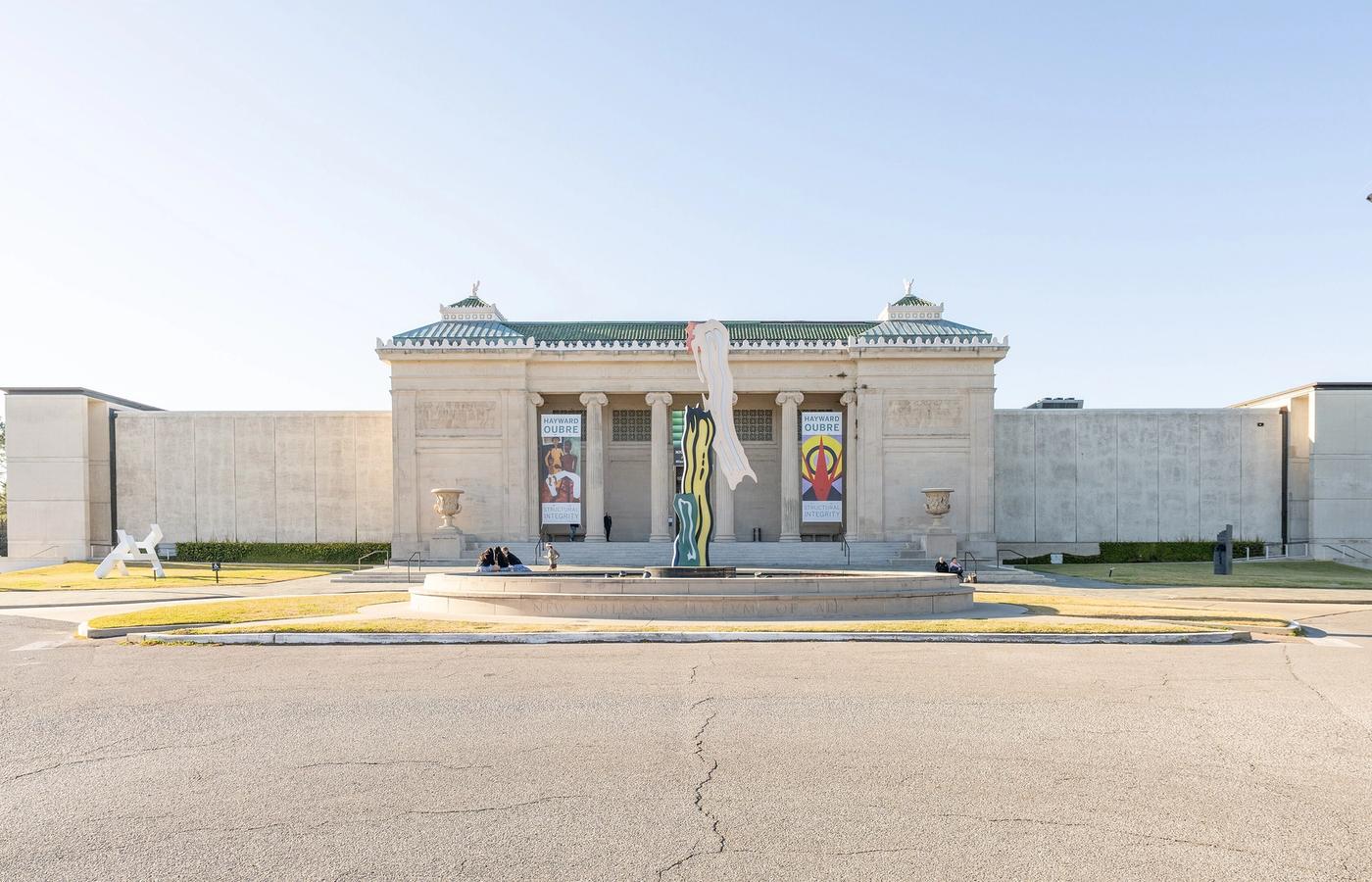
City Park covers 1,300 acres, roughly 50 percent larger than Central Park, and holds the largest surviving stand of mature live oaks in the world. Several of the trees predate the founding of the city, with the McDonogh Oak estimated at close to 800 years old. The Canal Street streetcar runs directly to the southern gate, which makes this one of the easiest escapes from the French Quarter.
The New Orleans Museum of Art anchors that entrance with a collection strong on French, American and West African work. Next to it, the Sydney and Walda Besthoff Sculpture Garden spreads more than 90 pieces across 11 acres of lagoons and oak groves, and entry is free. Storyland, the Botanical Garden and a working 1906 wooden carousel cover the family end of the park.
Pro Tip: The Besthoff Sculpture Garden opens at 10am and is at its best before noon, when light comes low through the oaks and across the water. Check the streetcar destination sign carefully - the Cemeteries branch of the Canal Street line does not reach the park.
9Mardi Gras World - Carnival Floats Under Construction Year-Round

Mardi Gras World is the working warehouse of Kern Studios, the family firm that has been building carnival floats since 1947 and produces most of the figures that roll in the major parades. The tour takes you across the sculpting and painting floor while artists are mid-project, past 30-foot papier-mache heads in various states of completion and racks of moulds going back generations.
It is the only dependable way to see Mardi Gras up close outside the two weeks of the season itself. Tours run roughly every half hour, last about an hour, include a slice of king cake and a look at the costume racks, and cost around USD 22 for adults. A free shuttle collects from several points in the French Quarter and the Central Business District.
Pro Tip: Book the first tour of the day at 9:30am. The artists are on the floor then and you see actual work happening. By mid-afternoon most of the studio has clocked off and you are walking through a quiet warehouse.
10Barataria Preserve - Cypress Swamp Half an Hour From Bourbon Street
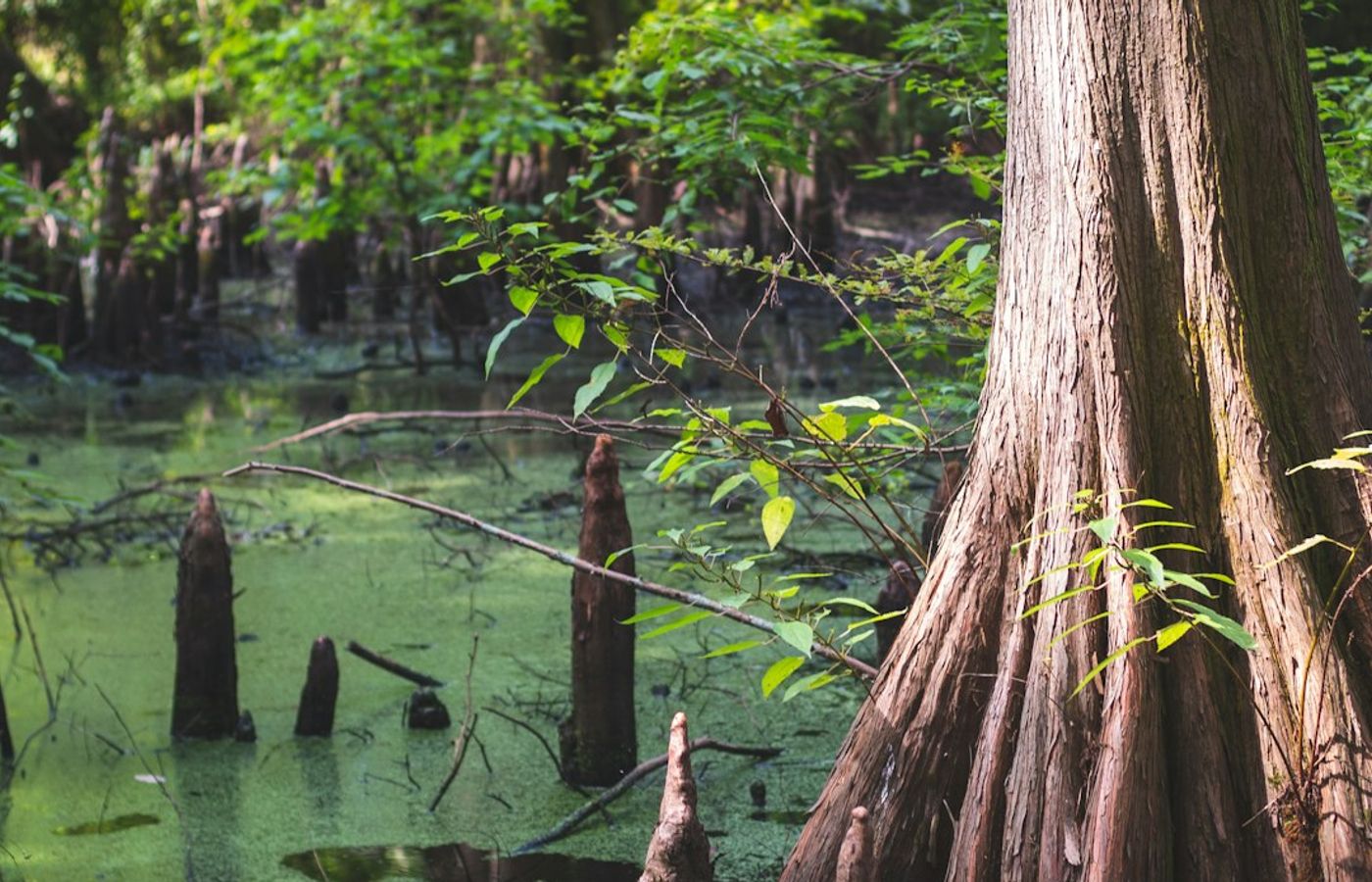
The swamp begins far closer to New Orleans than most visitors expect. Barataria Preserve in Marrero, about 40 minutes southwest of the French Quarter, protects roughly 26,000 acres of bald cypress swamp, bayou and freshwater marsh, threaded with nine miles of boardwalk and trail that cost nothing to walk. It forms part of Jean Lafitte National Historical Park and Preserve, named after the privateer who used these waterways to run goods past the New Orleans customs house.
Alligators, great blue herons, egrets and the occasional armadillo are routine sightings along the Bayou Coquille and Marsh Overlook trails, which link into a straightforward two-mile out-and-back. Rangers lead free guided walks several times a week from the visitor centre. Commercial airboat operators run from nearby landings if you want to get out on the water rather than above it.
Pro Tip: Go early morning or late afternoon between March and October, when alligators are active and the heat is survivable. Bring repellent regardless - the marsh sections of boardwalk have no shade and the mosquitoes there are relentless.

CEO and co-founder
Tomas is the co-founder and director of trip1, an European company specializing in reservation services. He launched the company in 2025 with a focus on building scalable, efficient operations.
10 Best Things to Do in New Orleans, USA - FAQ
No. A realistic pace is three to four of these per day. The first five cluster in the French Quarter, Faubourg Marigny and the Warehouse District and can be chained across one long day, but the National WWII Museum alone absorbs four hours. City Park, Mardi Gras World and the Barataria Preserve each need a separate half-day, which makes three days the sensible minimum.
Work outward from the French Quarter. Day one covers the French Quarter, Jackson Square, Cafe du Monde and Frenchmen Street in the evening. Day two takes the National WWII Museum in the morning, then the St Charles Avenue Streetcar out to the Garden District. Day three uses the Canal Street streetcar to City Park, plus Mardi Gras World or the Barataria Preserve depending on whether you have a car.
Three of them. Preservation Hall sells out most nights and should be booked online several days ahead. The National WWII Museum uses timed entry that fills at weekends and during school holidays. Mardi Gras World tours have limited capacity per slot. Everything else on this list is walk-up or free.
Budget roughly USD 80 per adult for admissions. Six of the ten are free: the French Quarter, Jackson Square, the Garden District, City Park, the Besthoff Sculpture Garden and the Barataria Preserve. The National WWII Museum is the largest single cost at around USD 32, Mardi Gras World around USD 22, and Preservation Hall from USD 25. A Jazzy Pass for unlimited streetcar travel is USD 3 a day.
Nine of the ten are. The RTA streetcar network reaches the French Quarter, the Garden District and City Park directly, and a Jazzy Pass covers unlimited rides on streetcars and buses. Mardi Gras World runs a free shuttle from several French Quarter pickup points. The Barataria Preserve is the exception, with no transit link at all - you need a car, a rideshare or an organised tour.
Three additions if you have more than three days. The Whitney Plantation on the River Road is the only former plantation in Louisiana that centres the experience of enslaved people, and it is an hour west of the city. Treme and the Backstreet Cultural Museum cover the origins of jazz and the second-line tradition. St Louis Cemetery No. 1 requires a licensed guide but holds the reputed tomb of Marie Laveau.