Guides · Cortina d'Ampezzo
5 Best Ski Slopes in Cortina d'Ampezzo

CEO and co-founder
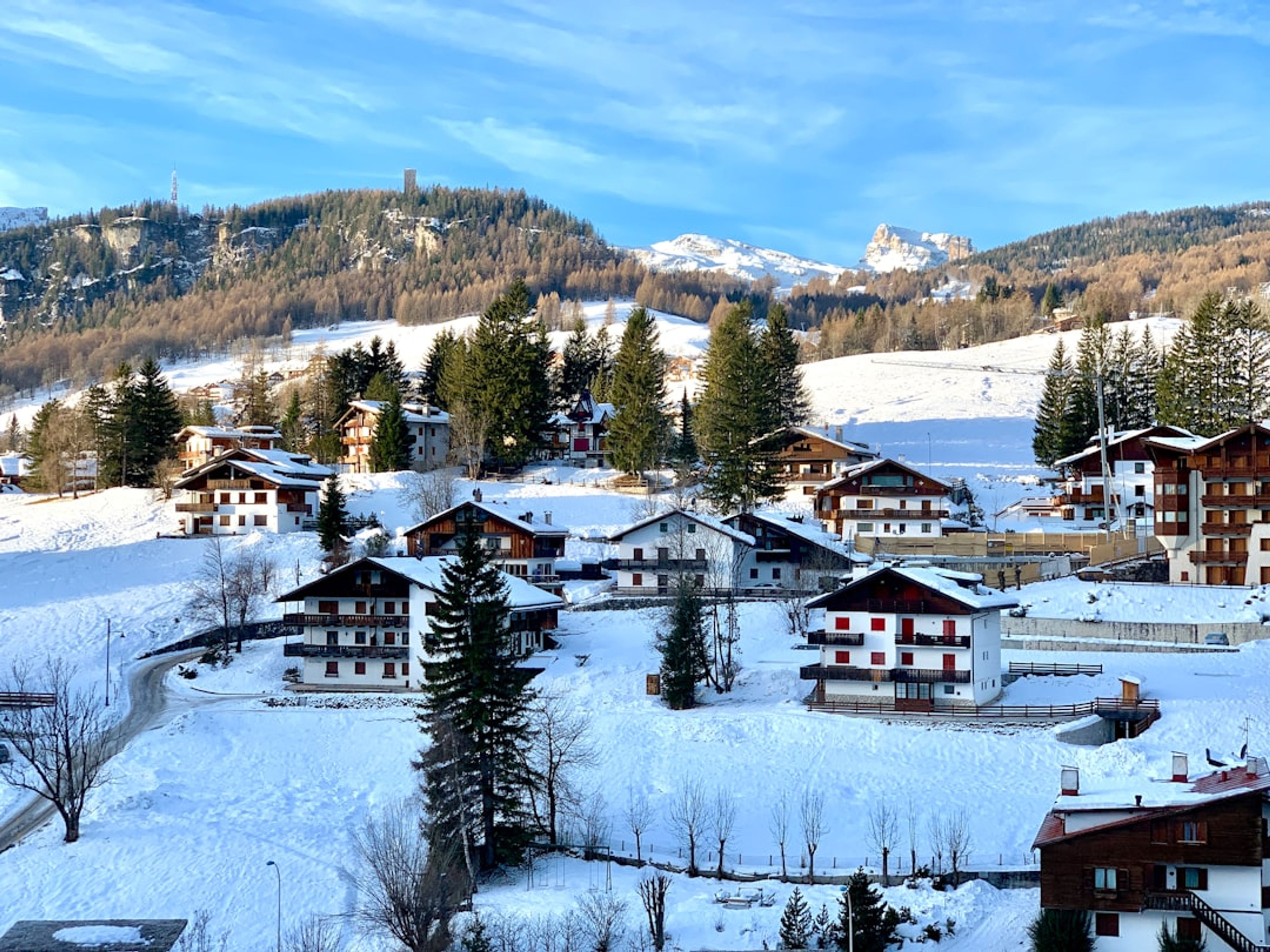
The best ski slopes in Cortina d'Ampezzo sit in four separate sectors that do not all join up on skis, which is the first thing to work out before you buy a lift pass. This guide covers five of them, ordered so the descent with the strongest reason to ski it this season comes first: the Olympia delle Tofane, which staged the women's alpine events at the Milano-Cortina 2026 Winter Olympics in February and went back to being an ordinary red piste in spring 2026.
Each entry names the lift that gets you up there, the length and vertical of the signature runs, the access point address and what the operator does and does not publish. Where a figure is disputed or simply missing - Faloria's piste kilometres, the 2026/27 pass prices, the exact reopening date of the Olympic downhill - this guide says so instead of picking a number that looks tidy.
A workable four-day order: Tofana first while your legs are fresh, Faloria on a short day because the cable car leaves from the middle of town, a full day pairing Cinque Torri with the Lagazuoi and the Armentarola run, then the Great War Ski Tour or the Sellaronda when the weather is settled. Lifts in the Cortina area generally run 08:30 to 16:30. Aggregator data puts the resort at about 120 km of piste between 1,217 m and 2,828 m, split 45 km easy, 59 km intermediate and 16 km difficult across 25 lifts, though Cortina itself does not publish those totals. Skiers weighing the Dolomites against the Swiss Alps usually have Grindelwald on the same shortlist, and the honest difference is that the terrain here is broader and lower while the scenery is the more dramatic of the two. The Sellaronda needs a settled day from first lift to last, so check Cortina d'Ampezzo weather before you commit to it rather than starting and turning back. The hotels in Cortina d'Ampezzo in the centre put the Faloria cable car within walking distance, which matters on the short days.
1Tofana and the Freccia nel Cielo - Skiing the Olympia delle Tofane
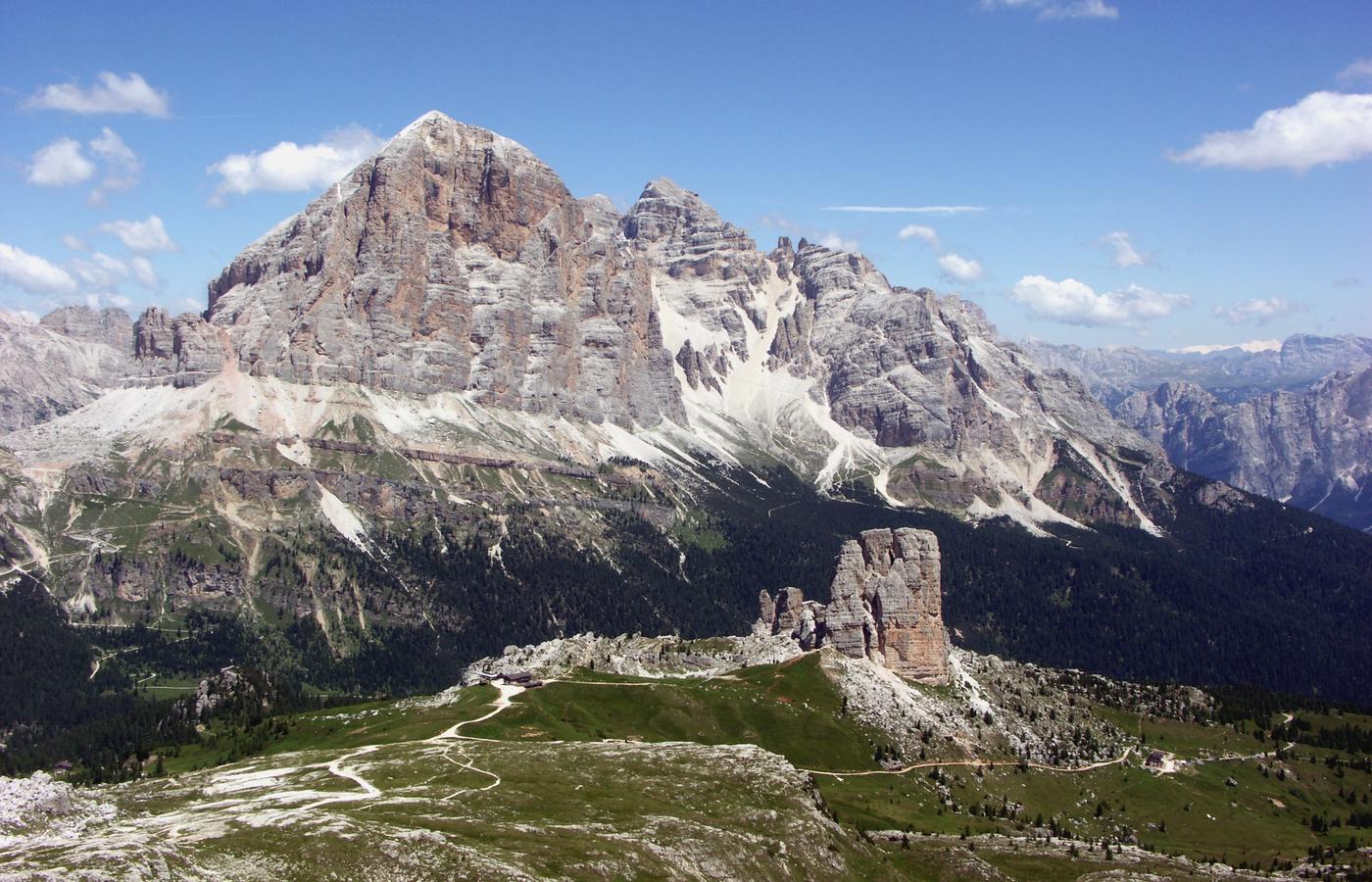

The Olympia delle Tofane is the reason to start here. It drops from 2,320 m to 1,560 m, 760 m of vertical over 2.26 km, with a maximum gradient of 33 degrees and the Tofana Schuss wall touching 64%. Along the way it throws in the Duca d'Aosta jump, the Gran Curvone and the Scarpadon. This is the home course for the women's World Cup downhill and super-G, where Lindsey Vonn took 12 of her World Cup wins, and it staged all the women's alpine and Para alpine events at Milano-Cortina 2026. Cortina reopened the Tofane sector to recreational skiers after the Paralympics in spring 2026 and extended that season, so the Olympic downhill is now simply a red piste you ski on a normal lift pass. The race pistes are served by the Duca d'Aosta and Pomedes chairlifts on the Pomedes side, not by the cable car itself.
The Freccia nel Cielo cable car climbs in three stages from the Cortina valley station at 1,224 m to Col Druscie at 1,778 m, on to Ra Valles at 2,470 m and finally to Tofana di Mezzo at 3,244 m, a total rise of about 2,020 m. The Freccia nel Cielo operator counts 47 km of slopes and 13 runs on this side of the resort. Beyond the Olympia, Forcella Rossa runs 2 km with 700 m of vertical and a 72% maximum, Vertigine Bianca is left ungroomed, Canalone and Labirinti give you steeper alternatives at altitude, Col Druscie A is the 1956 Olympic slalom slope that was used again at the 2021 World Championships, and Stries is the only run that brings you all the way back down into town.
In August 2026 the operator was still showing the 2025/26 calendar, 5 December 2025 to 12 April 2026, and had not published 2026/27 dates; the usual window is early December to mid-April. A new 10-seat gondola at Socrepes was announced in May 2026. One thing you cannot do here: the rebuilt Cortina Sliding Centre 'Eugenio Monti' remains fenced off after the Games and no date for public access has been announced.
Pro Tip: Take the first Freccia nel Cielo car at 08:30 and ski the Olympia delle Tofane before 10:00. The Tofana Schuss holds its grip while the surface is still cold, and the Duca d'Aosta and Pomedes chairlifts back up badly once the ski schools reach them mid-morning.
2Lagazuoi and the Armentarola Run - The Hidden Valley Descent
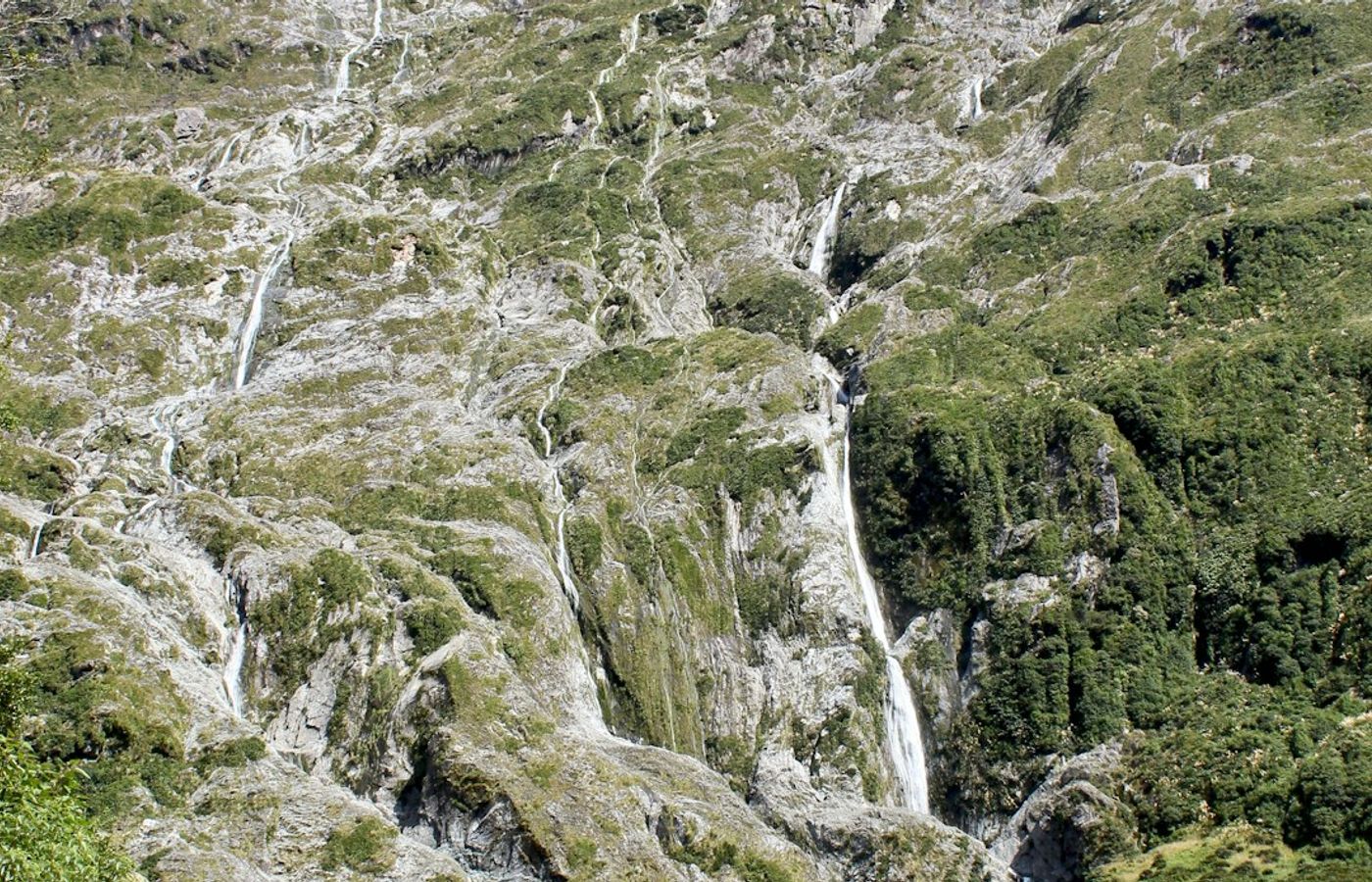
The Lagazuoi cable car lifts you from Passo Falzarego at 2,107 m to 2,732 m in three minutes, a rise of 625 m on an unusual fixed-rope design with no support pylons under the cable. About 12 km of runs drop off the top in two descents. The short one, the Lagazuoi, is a 3.5 km red with 600 m of vertical. The long one is the Armentarola, quoted at 8.5 km by most sources and 7.5 km by some, running beneath the Fanes walls past frozen waterfalls and finishing at Sass Dlacia in Alta Badia rather than anywhere near Cortina.
The Armentarola ends with the strangest lift in the Dolomites. At the run-out at Sass Dlacia the piste goes dead flat, and a team of horses tows skiers roughly 1.5 km along the level ground to the Armentarola lift and Capanna Alpina. There is a small cash fee, commonly quoted at around EUR 5, but no operator publishes a confirmed 2026/27 price, so carry coins and ask at the run-out rather than trusting a number you read online. From there the lifts feed straight into the Super8 Ski Tour and the Great War Ski Tour, and the whole sector is covered by the Dolomiti Superski pass.
Two things to plan around. The Armentarola leaves you in a different valley, so you either work back over the passes on lifts or take the ski bus home, which turns a 20-minute descent into an afternoon. And the 2026/27 season dates for the Lagazuoi lifts had not been published as of August 2026, so confirm they are running before you commit a whole day and a drive up the SR48 to them.
Pro Tip: Ski the Armentarola before lunch, ideally on the first cable car after 09:00. The lower half of the 8.5 km faces the sun, and by mid-afternoon the flat run-out to the horse tow at Sass Dlacia is slush you will be poling through for the last kilometre.

3Cinque Torri - Wide Reds Over First World War Trenches
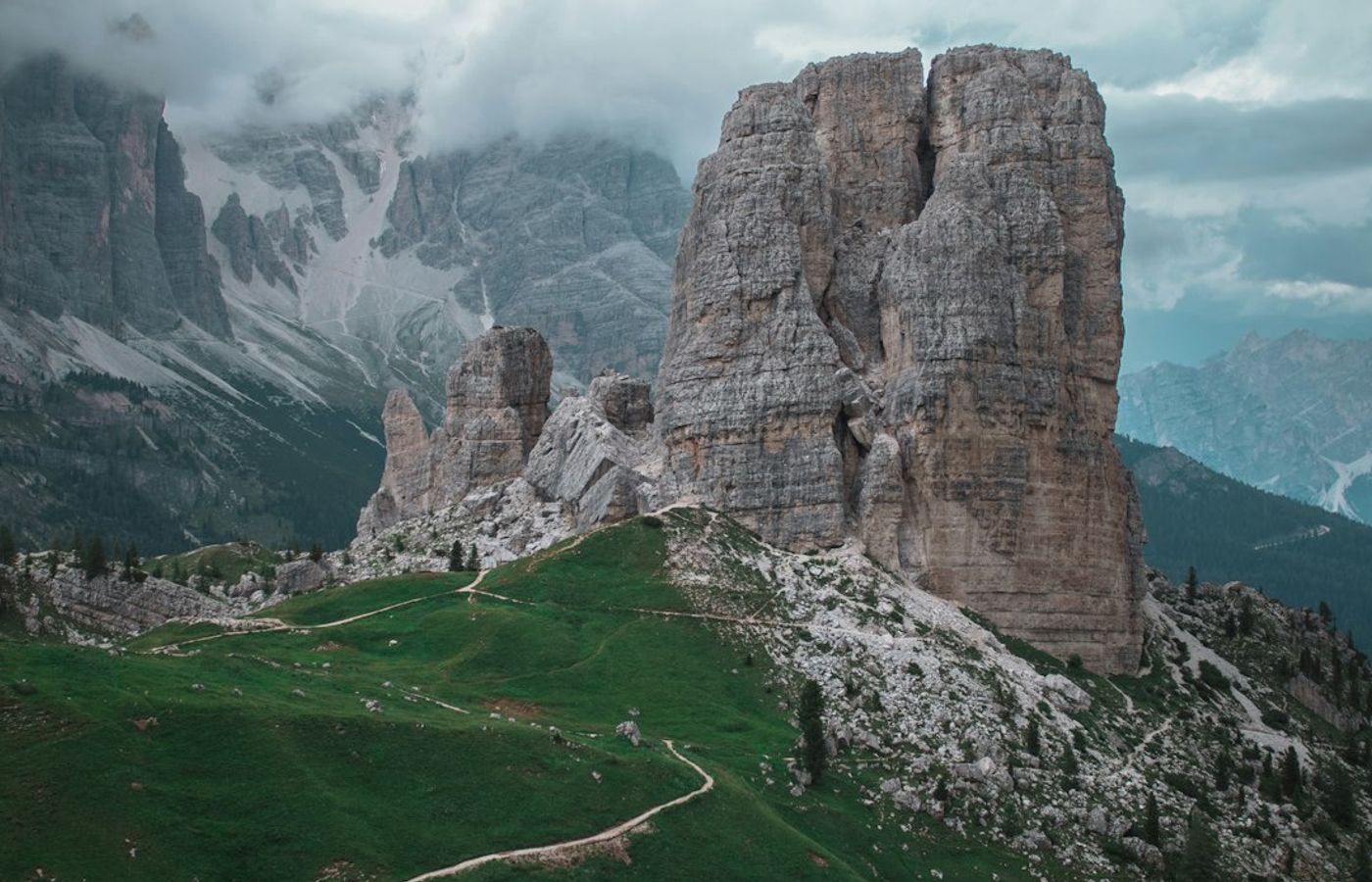
Cinque Torri is the friendliest of Cortina's sectors and the one with the most history buried under the snow. The operator counts 16 slopes served by 7 lifts: the 5 Torri chairlift from the Bai de Dones base up to Rifugio Scoiattoli at 2,255 m, then the A.A. 5 Torri, the Averau lift towards Rifugio Averau at 2,413 m, Croda Negra, and the Fedare and Forcella Nuvolau lifts. The showpiece is the Lino Lacedelli, 1,500 m long and homologated for competition, with Scoiattoli, Potor, Averau, Fedare, Croda Negra and Nuvolau filling out the rest. Total piste kilometres and exact base and top altitudes are not published by the operator, so treat any round number you find elsewhere with suspicion.
The sector doubles as the Cinque Torri open-air Great War museum, a set of restored First World War trenches and tunnels dug into the ground below the five towers, which you ski past rather than visit. It is also home to the Super8 Ski Tour, a figure-of-eight round 5 Torri and Lagazuoi: 16 km of piste plus 8 km of bus and taxibus to close the loop, blue and red the whole way, about three hours if you keep moving.
Getting here from Cortina asks you to choose. The Cortina Skyline gondola from Son dei Prade has connected the Tofana side to 5 Torri on skis since winter 2022, which is the elegant option and keeps you on the snow all day. The blunt one is the 20-minute drive west on the SR48 to the Bai de Dones car park, which is what most people do on a short day or when the wind shuts the high lifts.
Pro Tip: Book a table at Rifugio Scoiattoli for 12:30 and ski the Lino Lacedelli straight after. The competition run sits directly below the hut and empties out while everyone else is still on dessert, which gives you 1,500 m of clean piste to yourself.
4Faloria - The Cable Car That Leaves From the Middle of Town
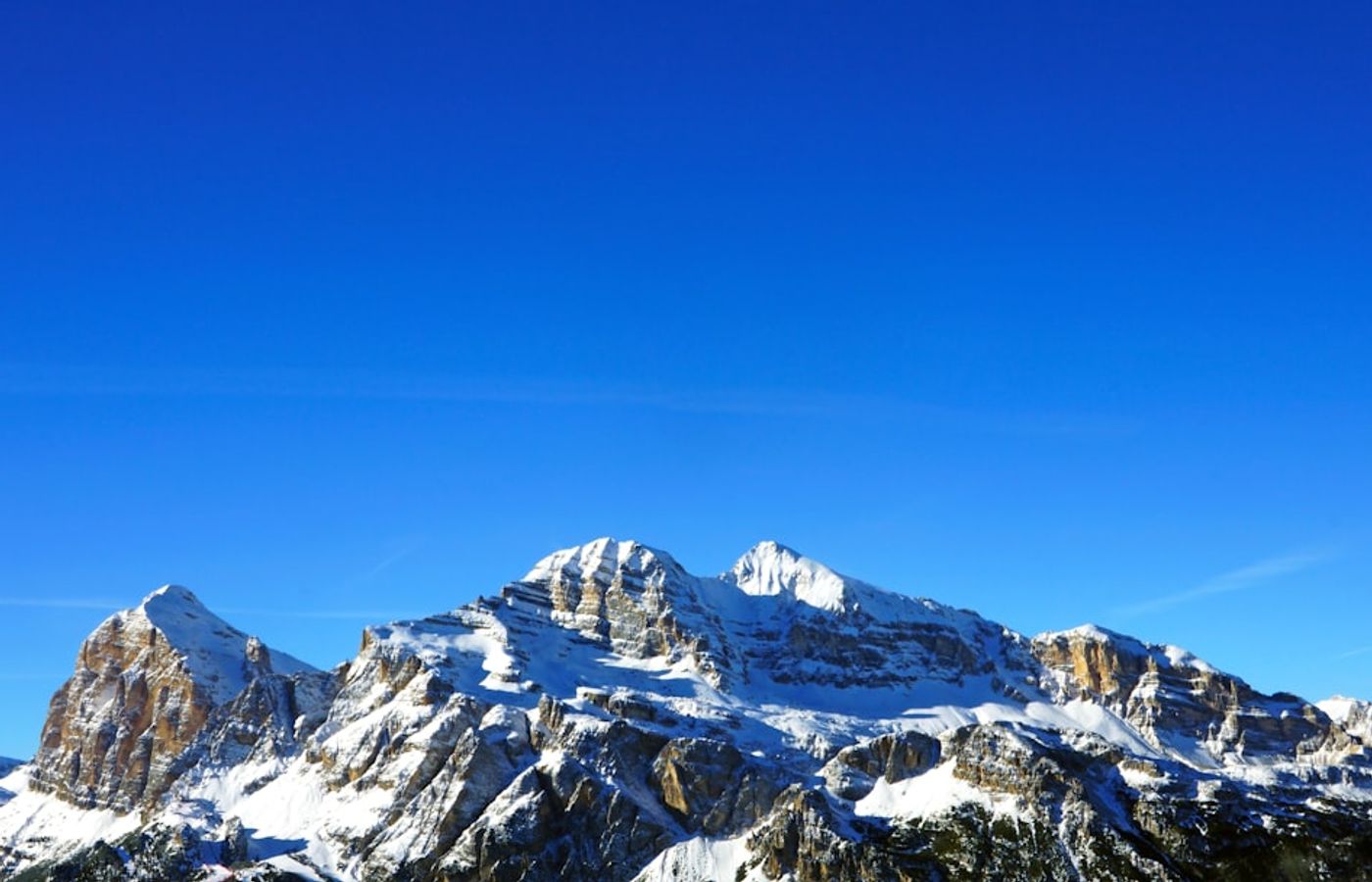
The Funivia Faloria has been running since 1939 and still starts a few minutes on foot from Corso Italia, which no other cable car in the Dolomites can claim. It covers 2,519 m of cable and 897 m of rise from Cortina at 1,225 m to Monte Faloria at 2,123 m, carrying 600 people an hour. The second way into the sector is the Cristallo four-seat chairlift from Rio Gere at 1,688 m to Son Forca at 2,220 m, with Cima Cristallo standing over it at 3,221 m. Vertical on the Faloria side comes to about 900 m.
Vitelli is the run people come back for, a long red tracking along under the Cristallo walls. The Tondi di Faloria pistes sit directly beneath the cable car line and catch the morning light. The newer black Scoiattolo is short and mean by comparison: 905 m long, 238 m of vertical, 27% average gradient and 55% at its steepest.
How big is Faloria? Nobody official will say. Bergfex puts it at about 20 km of groomed piste, other guides quote about 30 km once Cristallo and Mietres are counted in, and no operator publishes either a piste figure or a lift count for the sector. Winter 2026/27 dates and prices were also unpublished as of August 2026. For scale on single rides, the summer 2026 tariffs were EUR 21 one way and EUR 27 return on the Faloria gondola and EUR 17 or EUR 22 on the Cristallo chairlift; in winter both are covered by the lift pass instead.
Pro Tip: Save Faloria for your arrival or departure day. The valley station is a few minutes' walk from the bus terminal on Via Marconi, so you can leave your bags, ski the Tondi di Faloria and Vitelli for three hours on a half-day pass and still make an afternoon coach out of the valley.
5The Great War Ski Tour and the Sellaronda Circuit
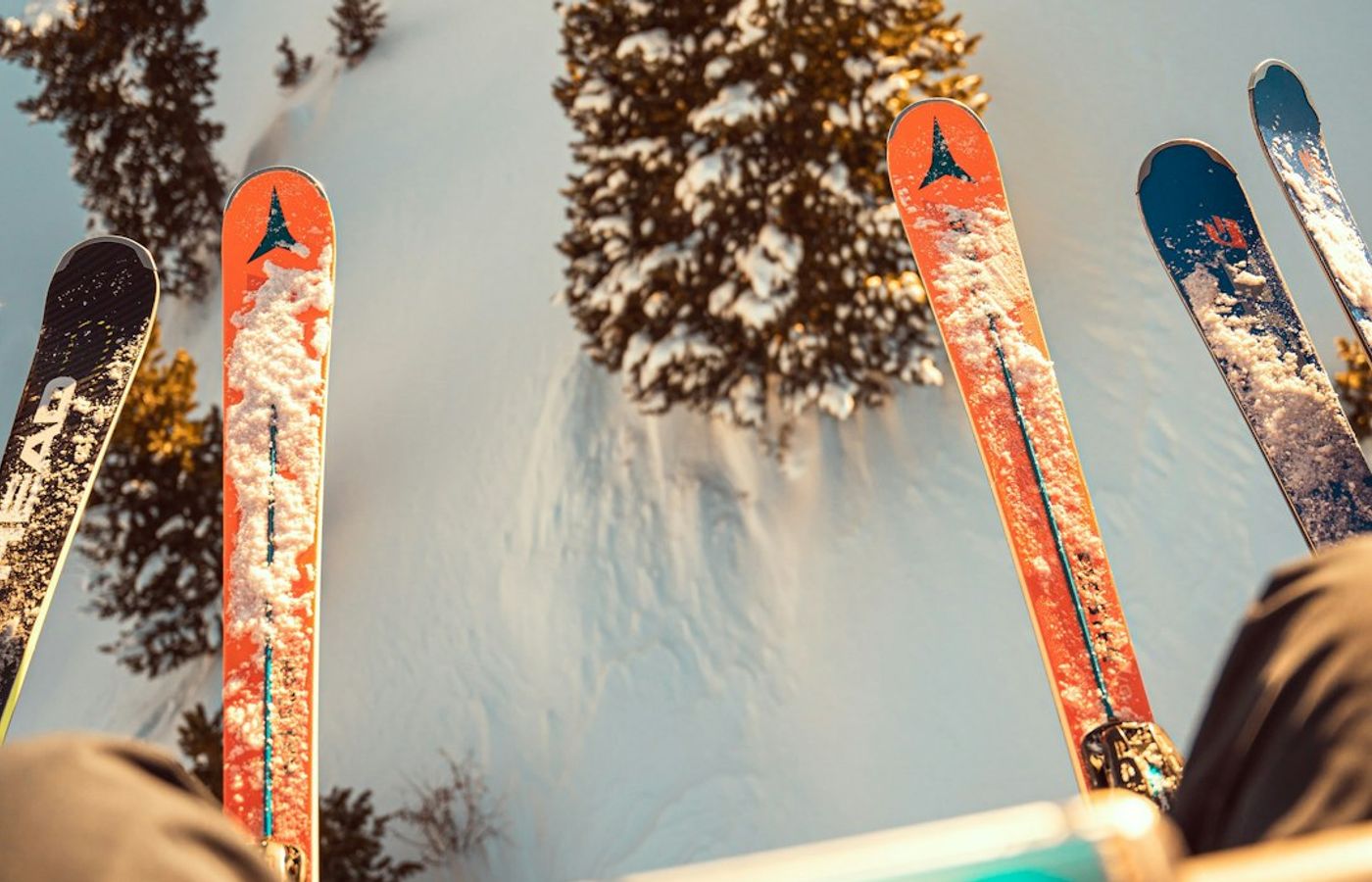
The Great War Ski Tour is the better first big circuit out of Cortina, for one practical reason: it starts inside the local ski area at Falzarego and 5 Torri instead of asking you to transfer into another valley before the clock starts. Clockwise it runs 78 to 100 km in 6.5 to 7.5 hours; counter-clockwise, 84.5 to 99 km in 7 to 8 hours. Of that total, 25 to 43 km is actual skiing, 17 to 26 km is riding lifts, 28 to 36 km is ski bus, and 1.5 km is the horse-drawn tow at Sass Dlacia, which only features on the counter-clockwise version. The route crosses Lagazuoi, 5 Torri, Arabba, Marmolada and Civetta, tops out on Lagazuoi at 2,732 m, and needs a Dolomiti Superski pass.
If the classic circuit is what you came for, the Sellaronda covers 44 km in total, 23 km of it on skis and 21 km riding lifts, around the four passes of Campolongo, Pordoi, Sella and Gardena, linking Val Gardena, Alta Badia, Arabba-Fodom and Val di Fassa in about six hours. Orange waymarks mean clockwise, green means counter-clockwise, and counter-clockwise is the usual recommendation. The honest catch from Cortina is that you do not start on the ring: you have to ski the Armentarola down into Alta Badia and work through La Villa or Corvara first, or drive 20 minutes to Bai de Dones and take the Cortina Skyline gondola and the 5 Torri chairlift. The Cortina tourist board quotes 42.1 km and 6 to 7 hours for the Cortina version of the day.
Whichever ring you pick, set off before 10:00 and be through the last pass by 15:30, because one missed lift closure turns into a taxi over a mountain road at your own expense. Both tours need the Dolomiti Superski pass, which covers over 1,200 km of slopes across 12 ski areas with Cortina among them. The mountains you spend the day crossing are a UNESCO World Heritage site, and a full circuit day is the clearest way to understand why.
Pricing is the one thing this guide cannot give you cleanly. Neither Dolomiti Superski nor Cortina Skipass had published 2026/27 rates as of August 2026, and new tariffs usually land in September or October. As a reference point only, last season, 2025/26, an adult Dolomiti Superski day pass ran EUR 77 in low season to EUR 86 in high season, with funivie.it listing a day at EUR 76, six days at EUR 357 and a season at EUR 870. The local Cortina Skipass sold a EUR 550 pre-Olympic season pass, a 10-day flexible adult pass at EUR 520 and an under-8 child season pass at EUR 275, with one free child pass per paying adult. Season dates are unconfirmed too, so plan on the usual late November to mid-April window, with some areas running into early May.
Pro Tip: Ski the Great War Ski Tour counter-clockwise if you want the horses. The 1.5 km horse-drawn tow at Sass Dlacia only appears on the counter-clockwise route, and the alternative on the clockwise version is a long skate across the flat with your poles.

CEO and co-founder
Tomas is the co-founder and director of trip1, an European company specializing in reservation services. He launched the company in 2025 with a focus on building scalable, efficient operations.
5 Best Ski Slopes in Cortina d'Ampezzo - Tofana, Lagazuoi & Sellaronda - FAQ
Yes, four ski days covers all five. Tofana fills a full day and Faloria a half day, Cinque Torri and Lagazuoi pair naturally into one day using the Super8 Ski Tour, and the Great War Ski Tour or the Sellaronda needs a full day of its own with an early start.
Start with Tofana and finish with a circuit. Ski the Olympia delle Tofane on your first full day while your legs are fresh, keep Faloria for a short day because the Funivia Faloria leaves from the middle of town, combine Cinque Torri with the Lagazuoi and the Armentarola run on day three, and save the long tours for the first settled-weather day.
The 2026/27 rates have not been published. Neither Dolomiti Superski nor Cortina Skipass had released them as of August 2026, and new tariffs usually appear in September or October. For last season, 2025/26, an adult Dolomiti Superski day pass ran EUR 77 to EUR 86 depending on the date, funivie.it listed six days at EUR 357, and the local Cortina Skipass 10-day flexible adult pass was EUR 520.
For local skiing the Cortina Skipass is enough; for the circuits it is not. The Cortina Skipass valley pass covers 120+ km across Cortina, San Vito di Cadore, Auronzo and Misurina. The Sellaronda and the Great War Ski Tour both cross into other valleys and require the Dolomiti Superski pass, which is valid across 12 ski areas and over 1,200 km of slopes.
No, not as of August 2026. The rebuilt Cortina Sliding Centre 'Eugenio Monti' opened on 5 November 2025 and took around 22,000 runs during the Games, but the track is fenced off, post-Games decommissioning is still under way, and no date for public access has been announced. The legacy plan allows for rides with professional pilots, but nothing has been scheduled.
Yes. Cortina reopened the Tofane sector to recreational skiers after the Paralympics in spring 2026, and the Olympia delle Tofane is once again a normal red piste on a standard lift pass. It drops 760 m over 2.26 km from 2,320 m to 1,560 m and is served by the Duca d'Aosta and Pomedes chairlifts rather than by the Freccia nel Cielo cable car.
Three things. The Socrepes and Pocol nursery slopes, which are where most beginners and families actually ski in Cortina and which get a new 10-seat gondola for 2026/27. The Auronzo and Misurina sectors, which the Cortina Skipass valley pass also covers. And the Cortina Skyline gondola, a lift rather than a slope, but the piece of infrastructure that makes the Tofana to 5 Torri link work on skis.