
Guides · Venice
Three Days in Venice: 2026 Itinerary for the Biennale, Grand Canal and Lido

co-founder
A photo journey through the Grand Canal, Giardini and Arsenale — with quiet evenings on the Adriatic coast.
Venice in Three Days: Art, Water and a Different Pace
Venice can be explored in three days, but it cannot be completed. On a mid-September journey from 15 to 18 September 2026, the main reason for visiting was the 61st Venice Art Biennale. Yet the most lasting impressions came just as often from the water, narrow streets, ordinary working scenes and the sudden silence of the beach on the Lido.
The decision to stay at Hotel Excelsior on Venice Lido shaped the entire trip. During the day, the historic city was a dense accumulation of visitors, palazzi, boats and artworks. Each evening, the return across the lagoon replaced crowded streets with open sand, sea and sky. It made an intense art-focused itinerary feel surprisingly spacious.
Most of these photographs were made on a Leica M6 film camera, with a smaller selection on a Leica Q3. Film imposed its own useful restraint: a limited number of frames and no instant preview and more reason to wait for the right gesture. Venice hardly needs another photograph of its monuments; finding an unexpected moment within them is more interesting.
Day 1: The Grand Canal, San Marco and the Venice Waterfront
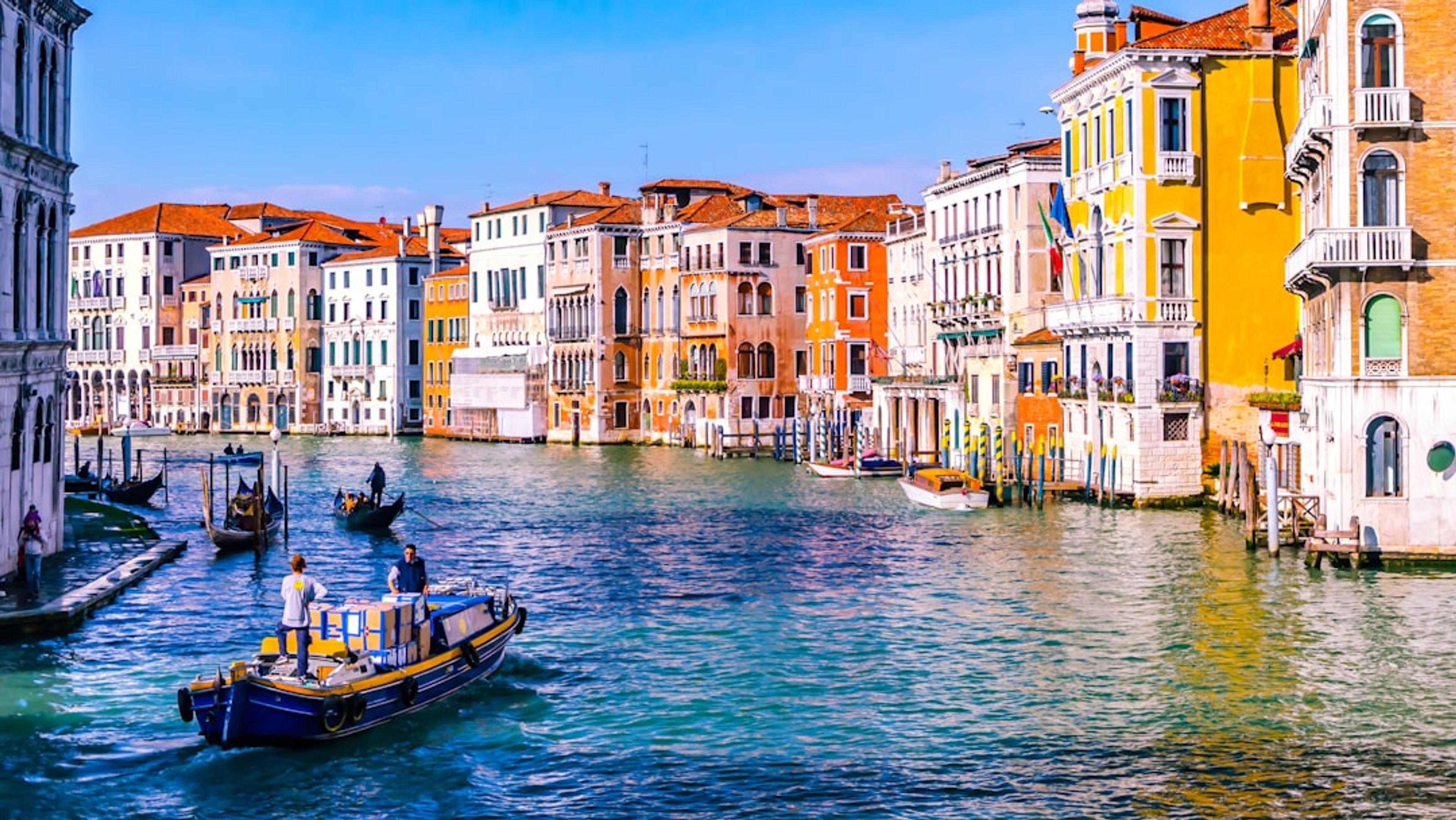
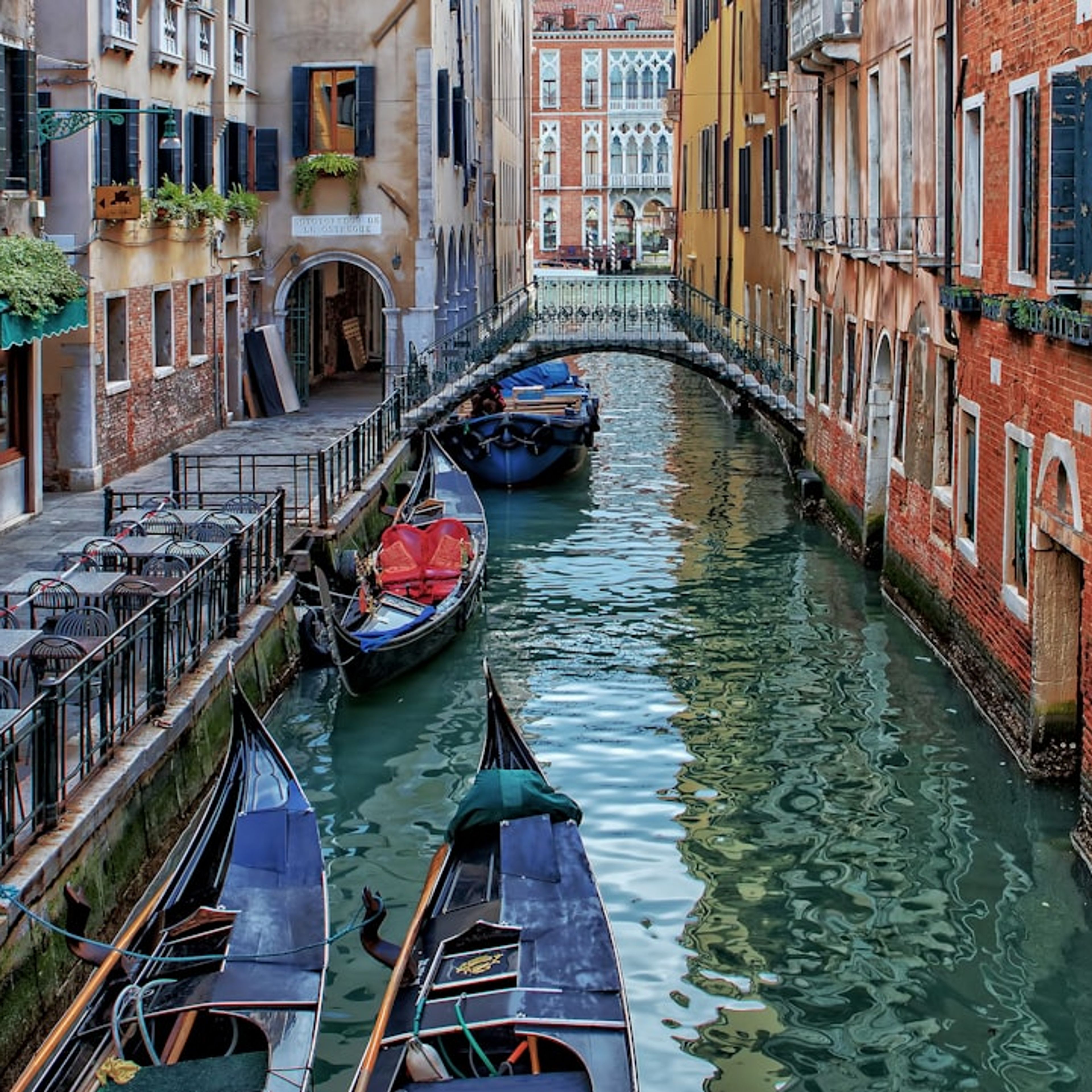
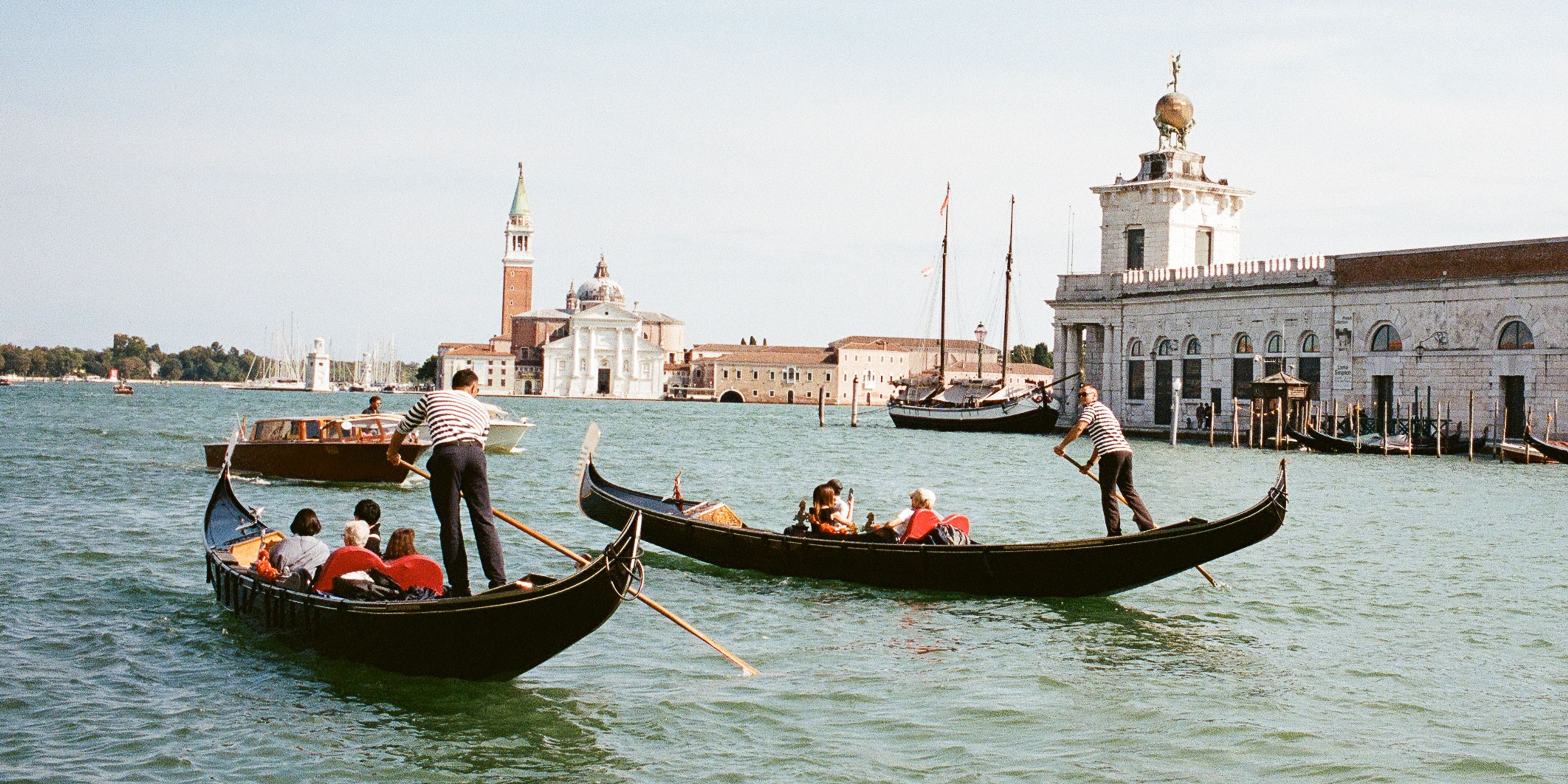
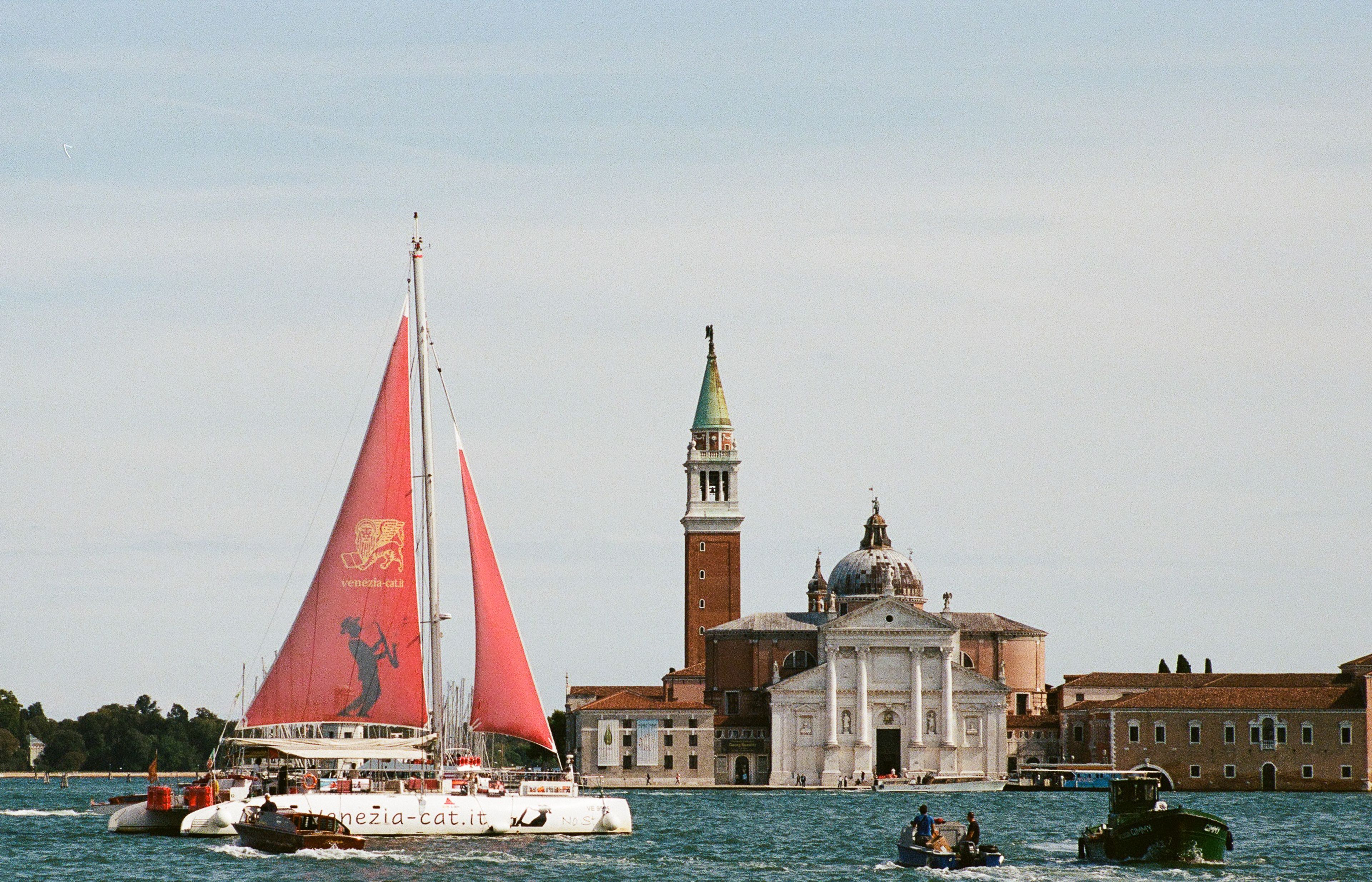
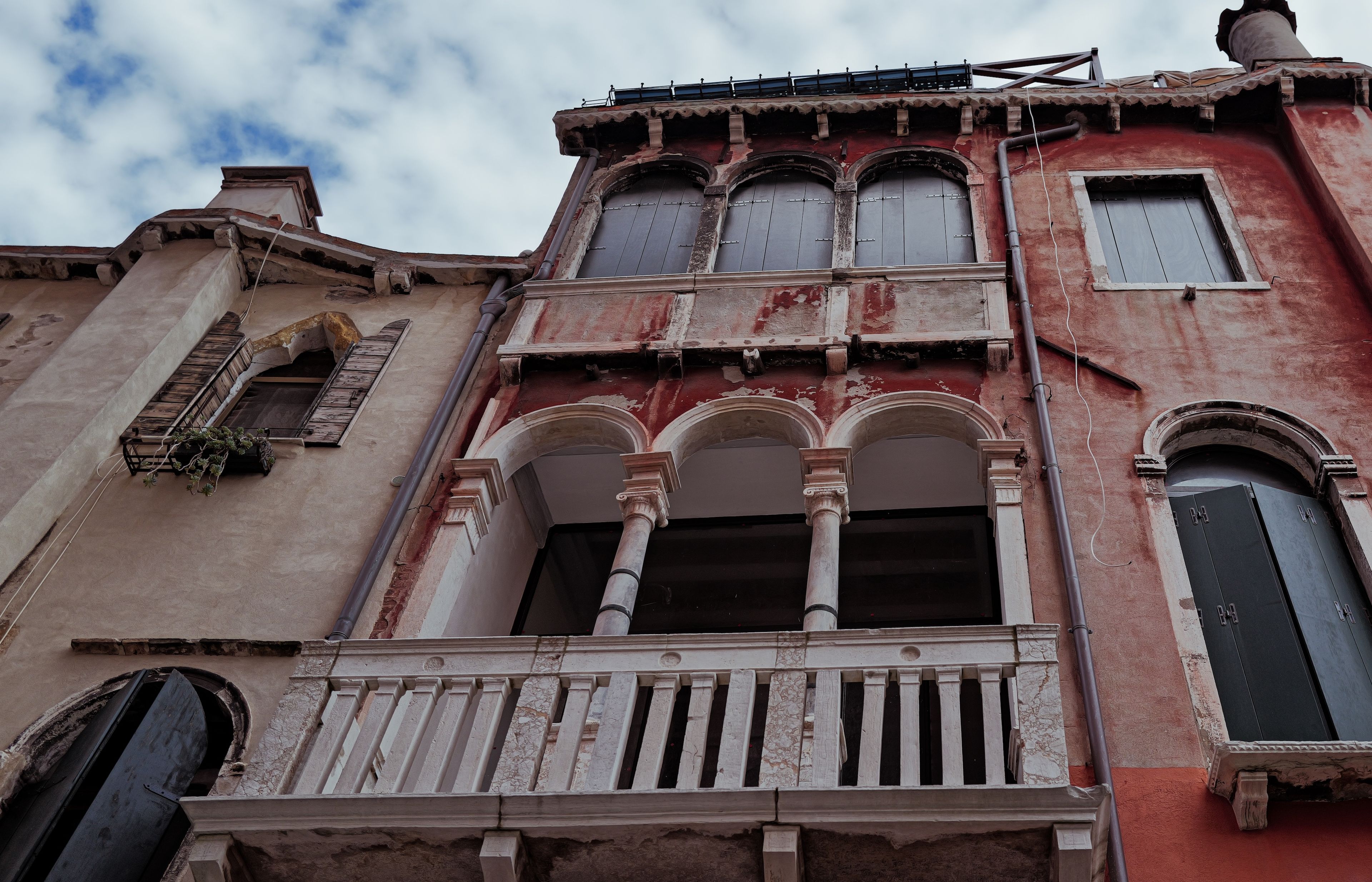
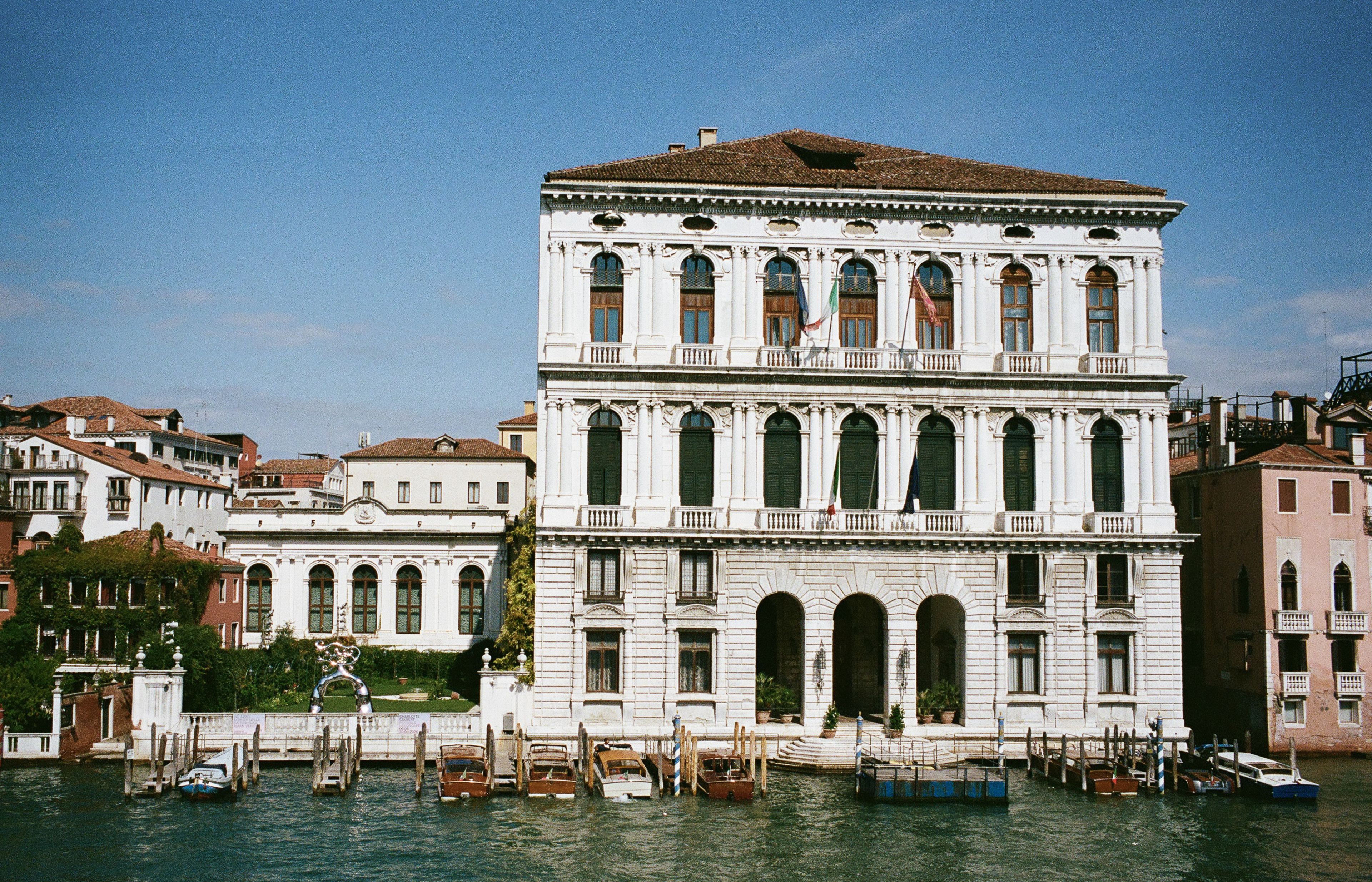
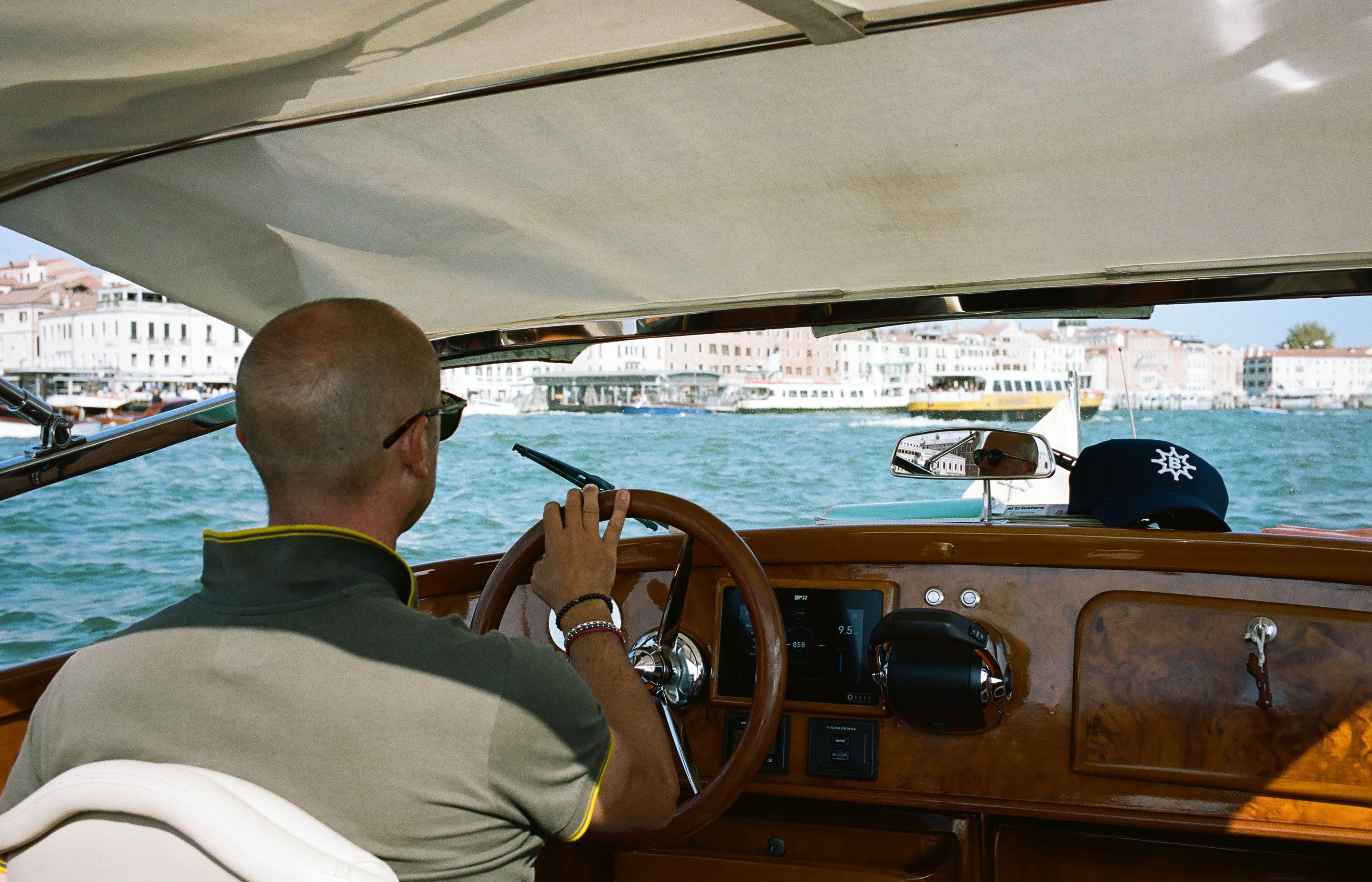
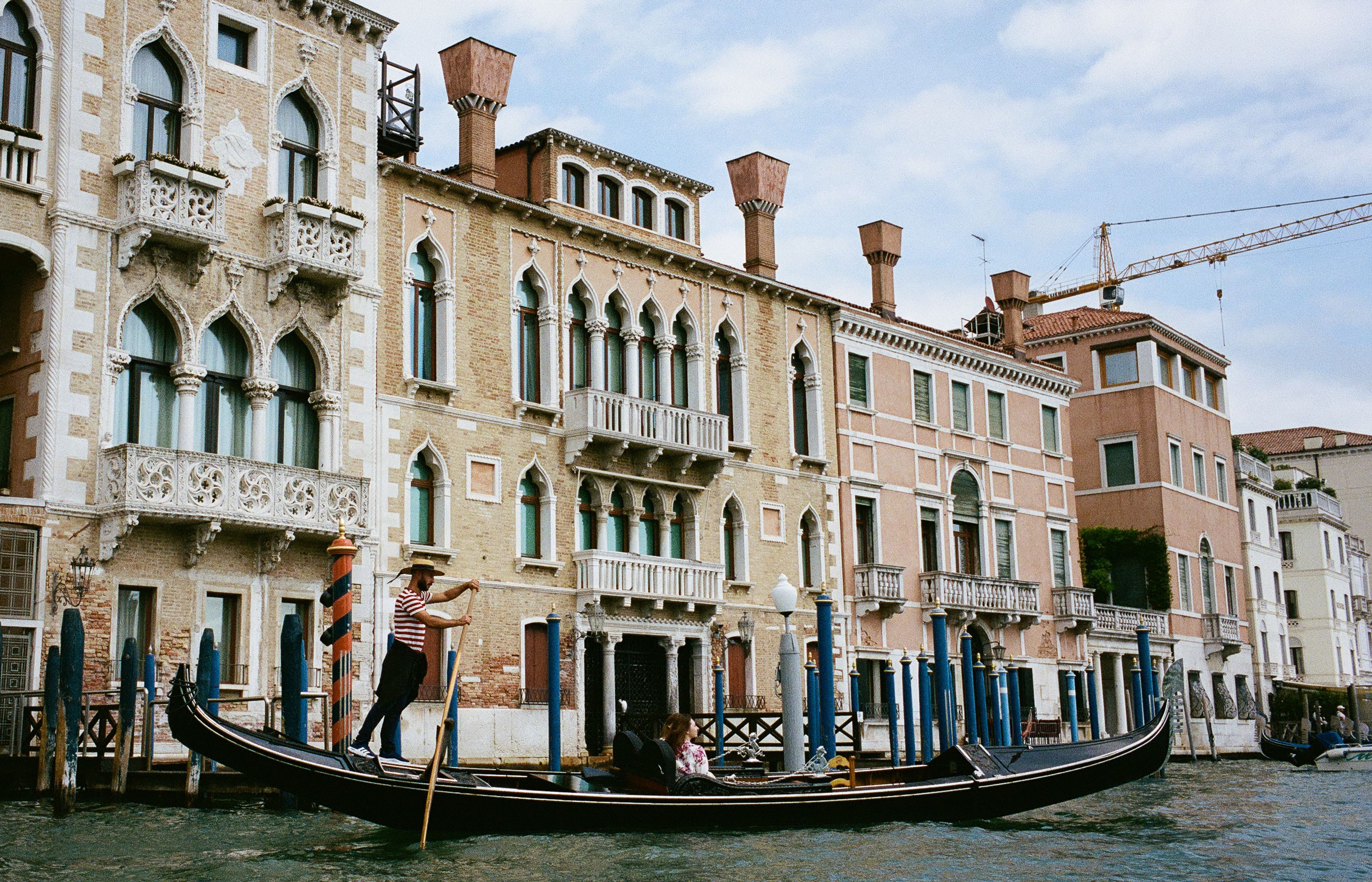
The best first introduction to Venice is from the water. Its churches and Gothic façades appear almost at boat level, while the city’s geography begins to make sense before its maze of alleys has a chance to confuse. San Giorgio Maggiore, St Mark’s Campanile and the Doge’s Palace are familiar images, but arriving by boat makes them feel less like individual monuments and more like a working waterfront.
Begin around Piazza San Marco and the Riva degli Schiavoni, then allow time for a slow walk through the historic centre. Take a vaporetto or a boat along the Grand Canal rather than trying to reach everything on foot. Venice rewards detours: it is a city where a pause at a small bridge can be more memorable than another obligatory stop.
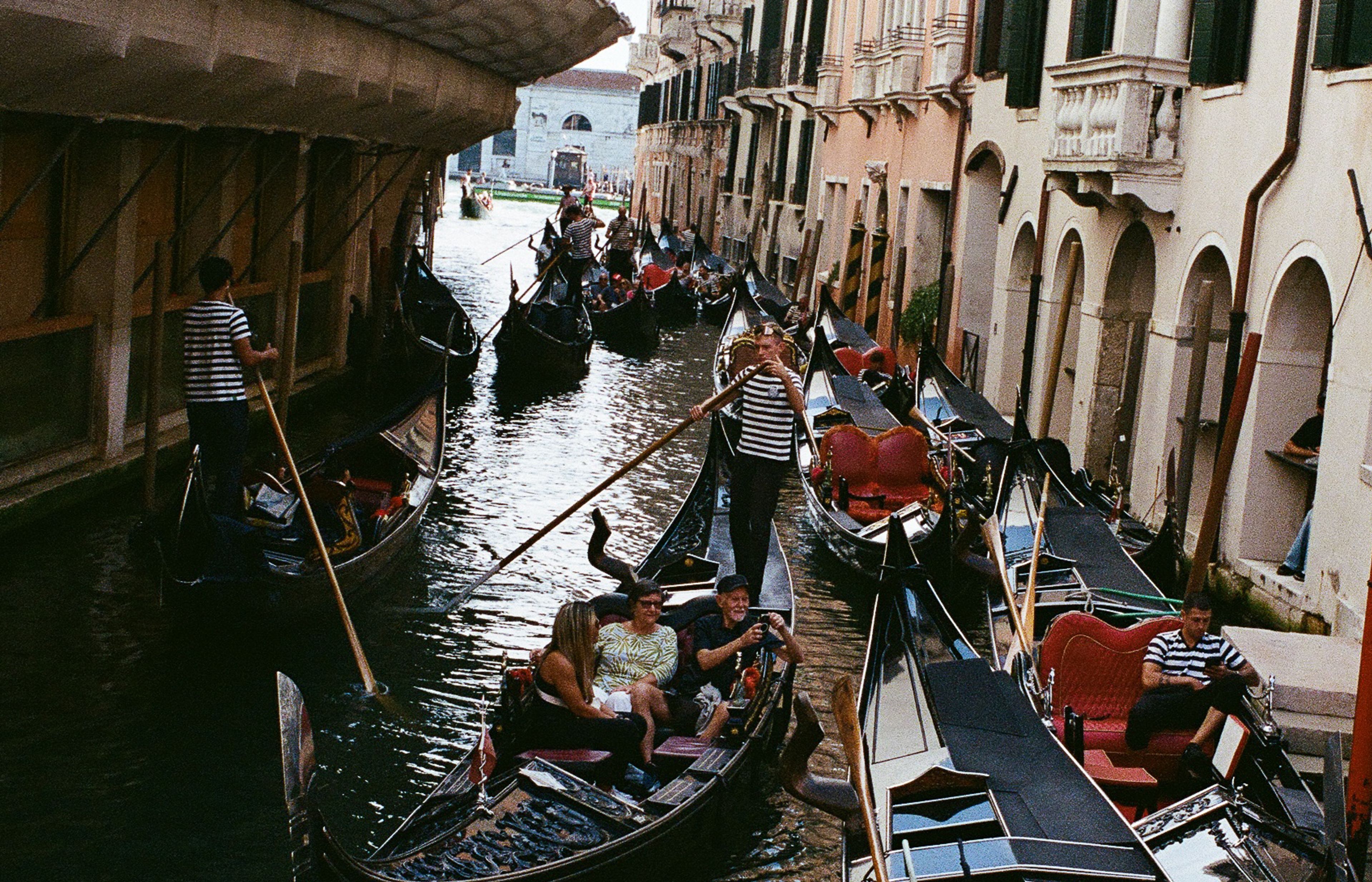
The gondoliers made an especially compelling subject for the Leica. Beyond the elegant silhouette lies a working profession: men waiting between rides, checking phones, resting, steering through heavy traffic and sharing narrow canals with delivery boats. The romantic image remains intact, but becomes more interesting when everyday labour enters the frame.
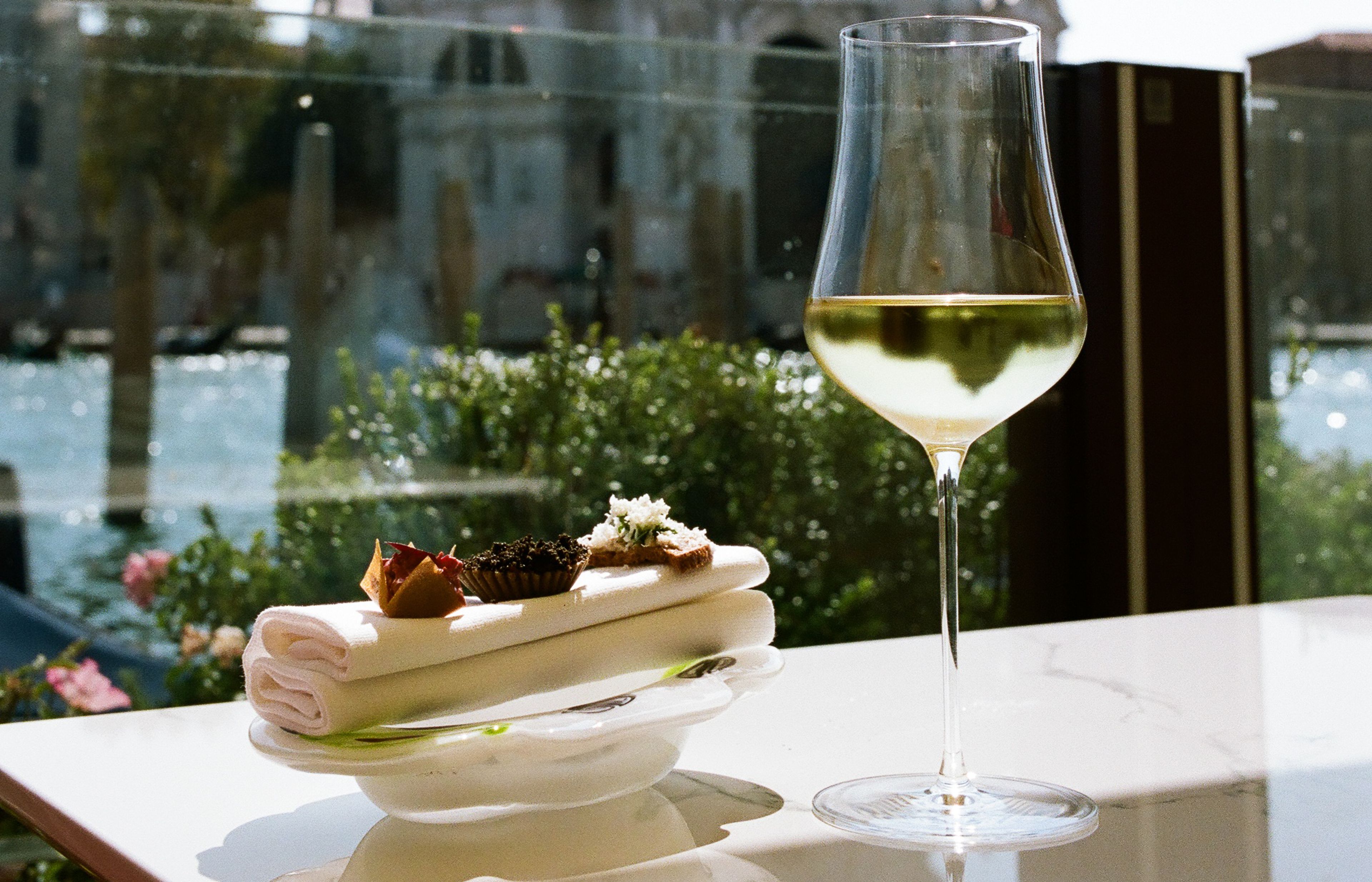
Later, a glass of white wine at The St. Regis Venice with Santa Maria della Salute across the canal provided the best sort of unplanned interval. For a short Venice trip, a quiet hour overlooking the water is not wasted time. It is often the hour that makes the entire city more legible.
Day 2: The National Pavilions at the Giardini
The 61st International Art Exhibition, Venice Biennale Arte 2026, is titled In Minor Keys. Conceived by Koyo Kouoh, the exhibition invites attention to quieter experiences and gestures that can be lost beneath grand narratives. This is a particularly fruitful idea in Venice, where even the architecture competes for attention.
The Giardini is a natural place to begin. The national pavilions are concentrated in a landscaped setting, so the walk between exhibitions becomes a welcome pause. Rather than attempting every pavilion, select a few and spend enough time inside to understand the work. On this visit, installations concerned with memory, identity, care and historical change became the most resonant thread.
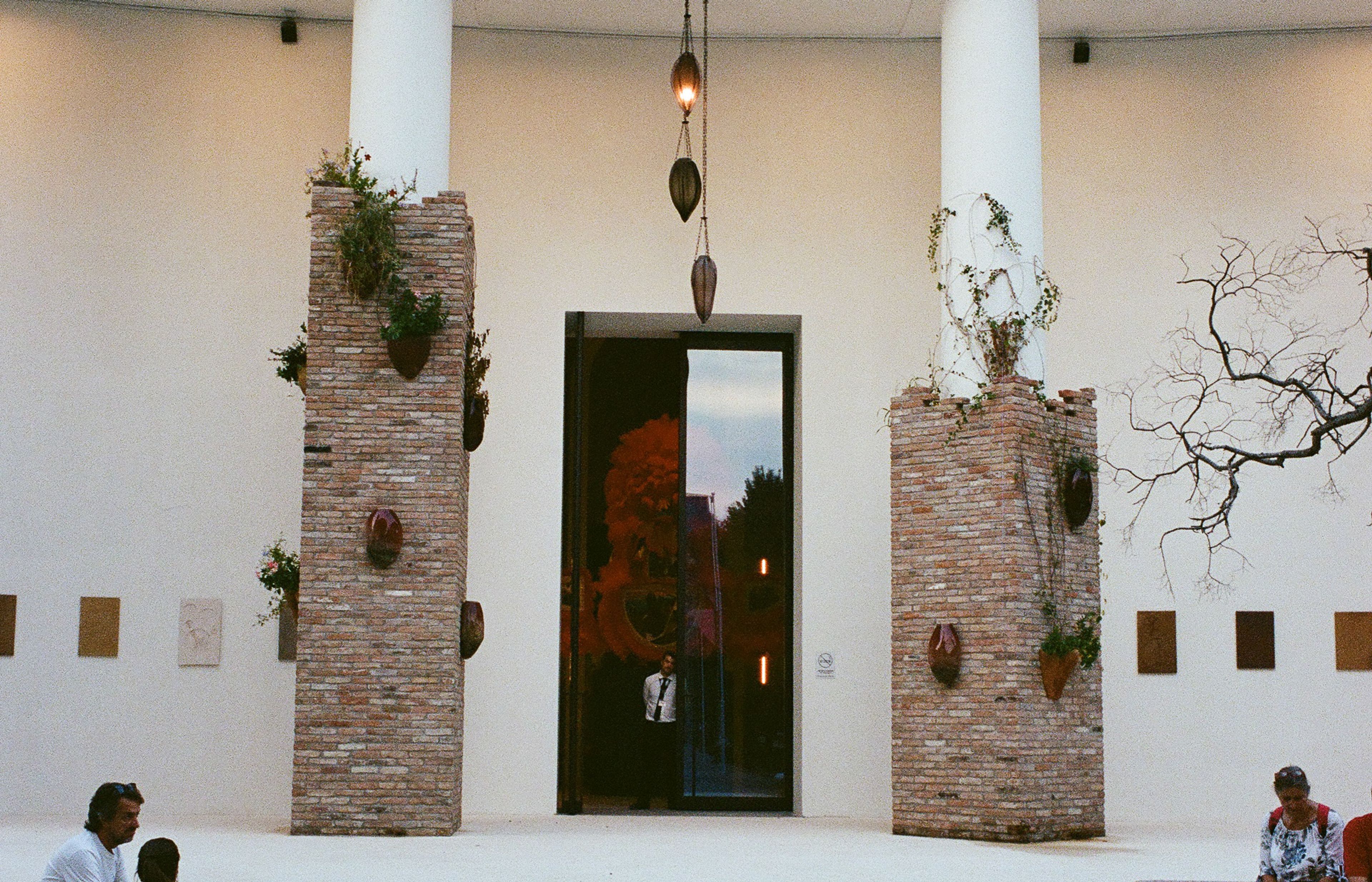
Nordic Countries Pavilion: Identity in Transformation
The Nordic Countries Pavilion presented How Many Angels Can Dance on the Head of a Pin? by Benjamin Orlow, Klara Kristalova and Tori Wrånes. Bodies, materials and memories appeared unstable and compressed, as though identity were not a finished state but an ongoing negotiation with the space and others around it. That tension also felt distinctly Venetian: in alleys, boat queues and pavilions, movement is rarely independent of the crowd.
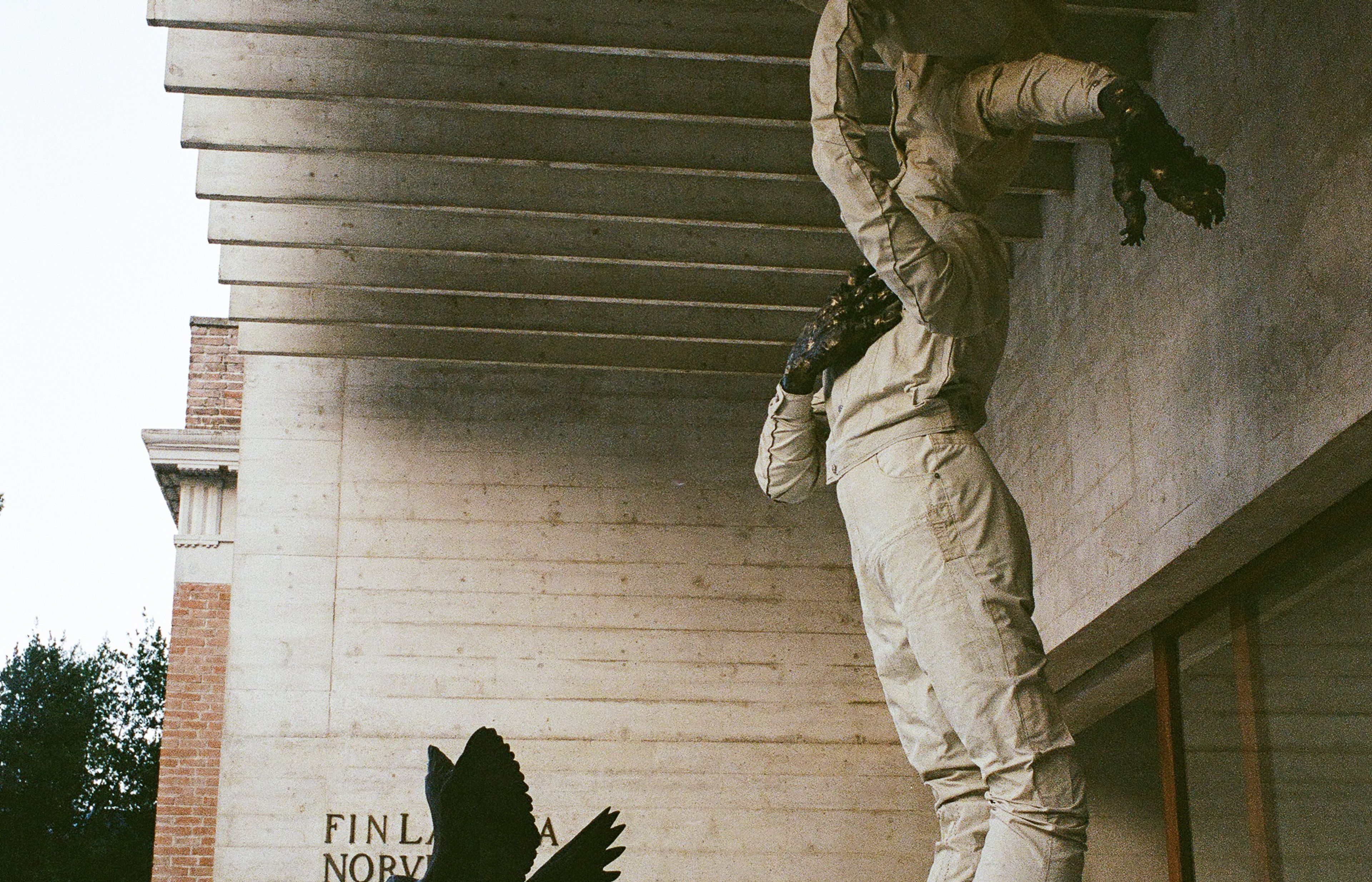
Spain and Serbia: Private and Collective Memory
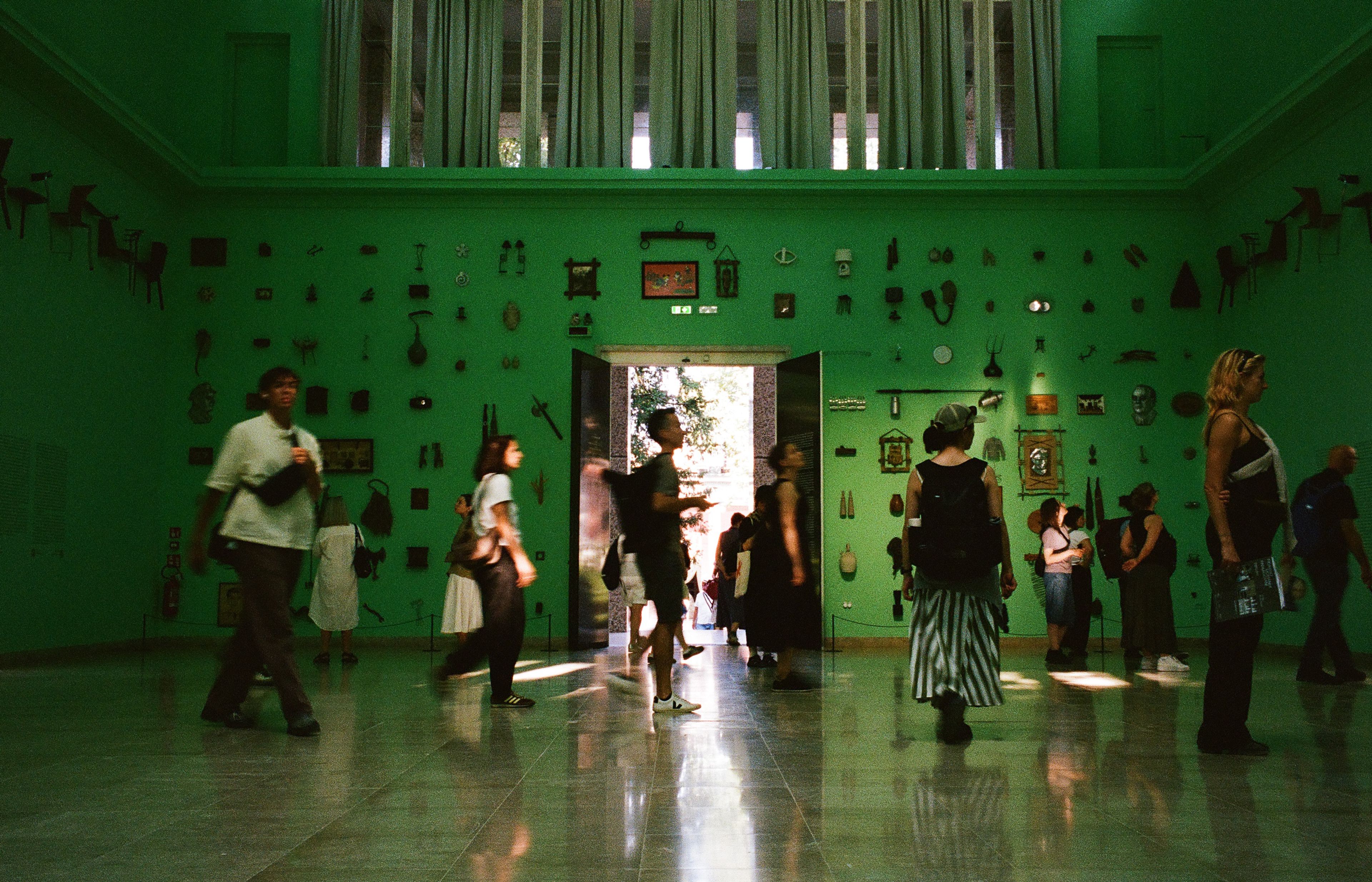
Oriol Vilanova’s Los restos at the Spanish Pavilion surrounded visitors with accumulated postcards. Once purchased, written, sent and treasured by particular people, these objects were now almost anonymous within an immense archive. The work raises an uncomfortable question: when the owner of a memory disappears, what is left of its meaning?
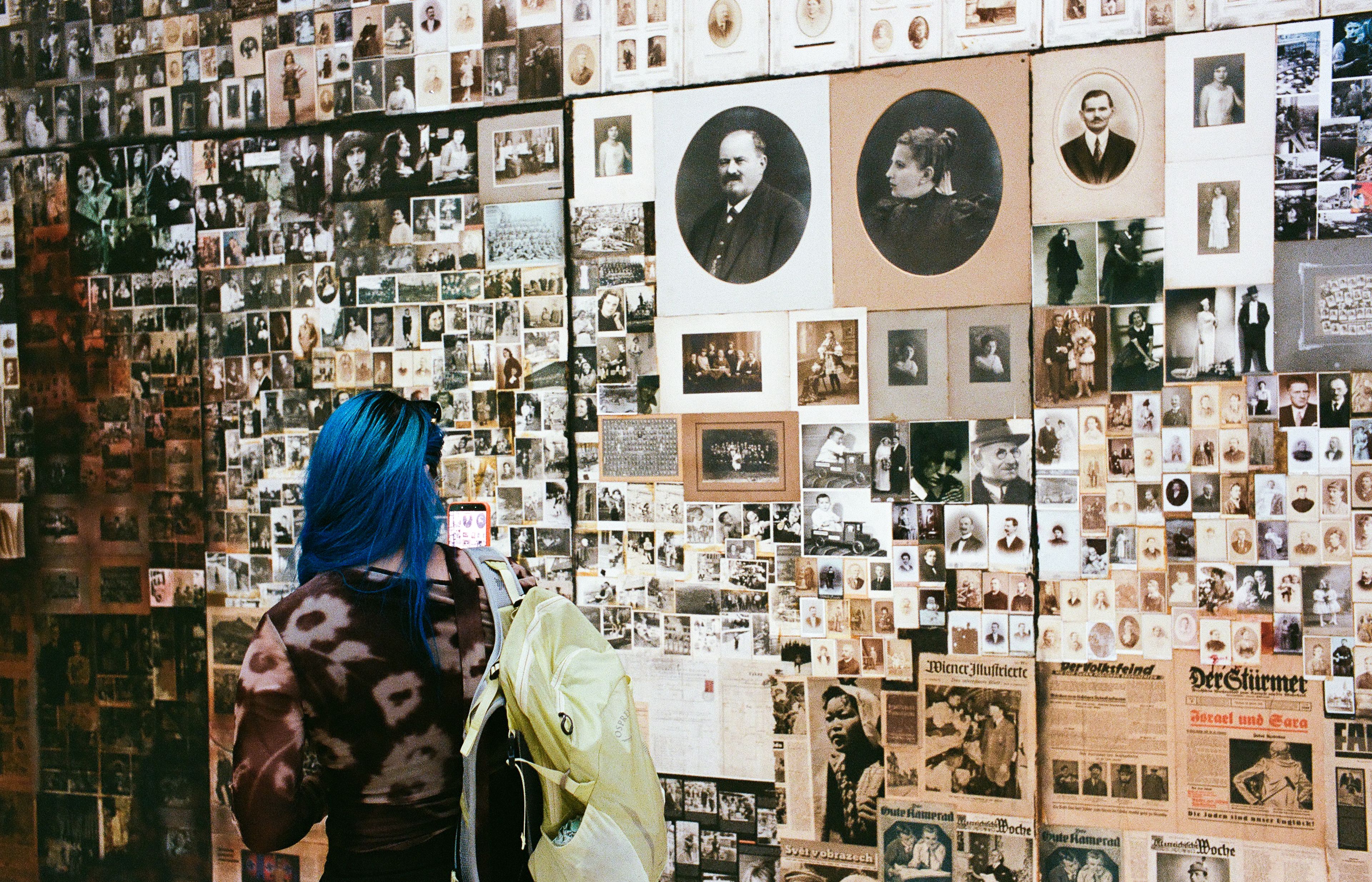
The Serbian Pavilion explored a related question on a collective scale. Historical images and archival material turned attention toward displacement, trauma and national identity. Where Spain suggested the dissolution of private meaning, Serbia confronted the political difficulty of deciding what a society remembers, and what it forgets.
Both resonated beyond the exhibitions. Venice is itself filled with material objects, buildings and rituals that have survived the people and worlds that gave them their original meanings.
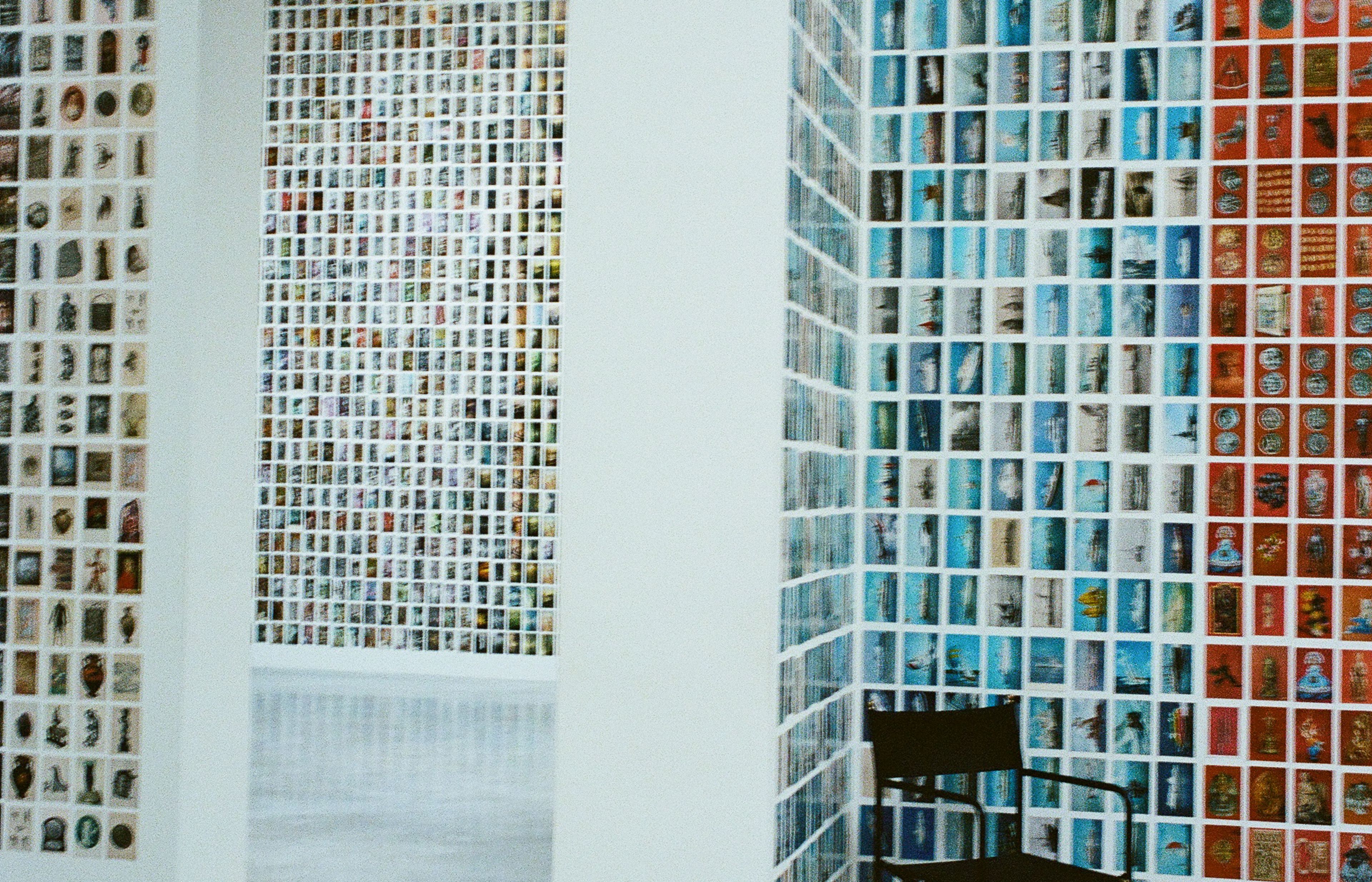
Australia: Identity as an Unfinished Journey
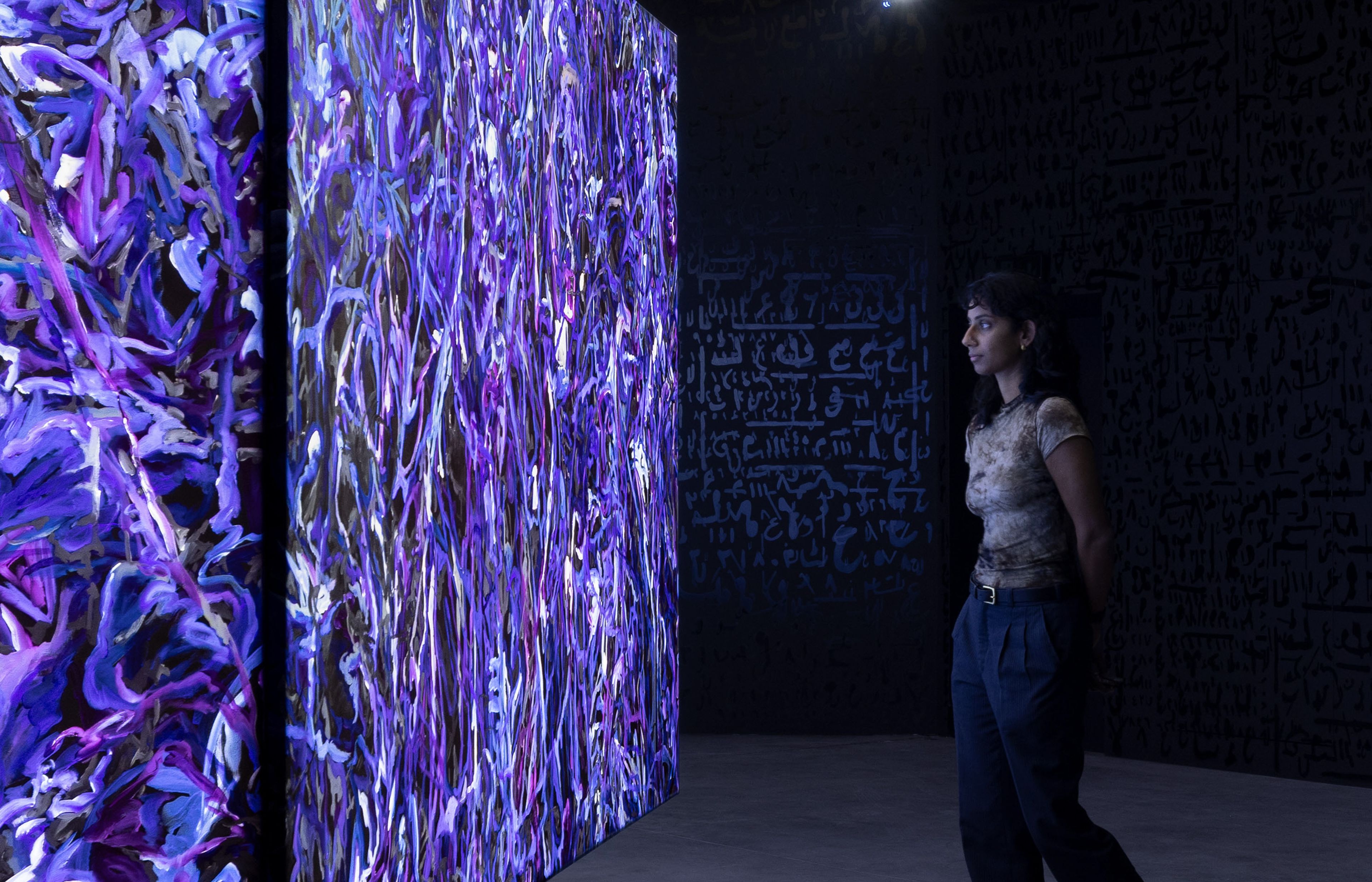
In conference of one’s self, Khaled Sabsabi drew on the Sufi poem The Conference of the Birds to explore doubt, knowledge, loss, learning and unlearning. The compelling idea was that identity is not simply discovered, but continually revised. The work held an instructive tension with the very idea of a national pavilion: a clear geopolitical label outside, and a much more complex multicultural personal history inside.
Japan: The Audience Favourite
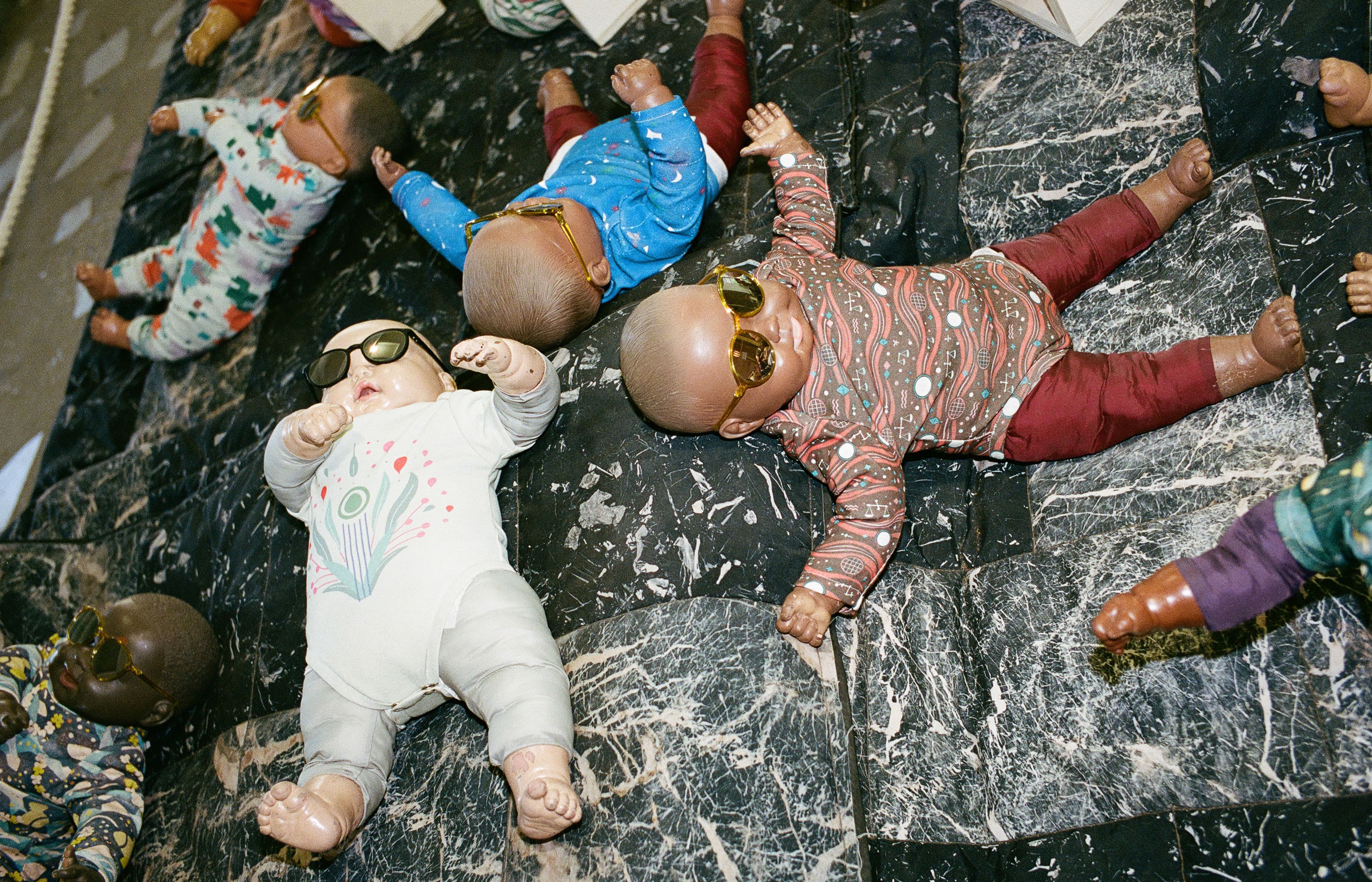
The Japanese Pavilion was undoubtedly a favourite among the visitors encountered on this trip. Ei Arakawa-Nash’s Grass Babies, Moon Babies filled the exhibition with hundreds of baby dolls wearing sunglasses, each matching a real infant in approximate size and weight. Visitors were invited to pick them up and care for them. The humour and hands-on interaction made the work immediately accessible, but its underlying question was harder: what responsibility do we have for the world inherited by the next generation?
Germany: Political History in Domestic Objects
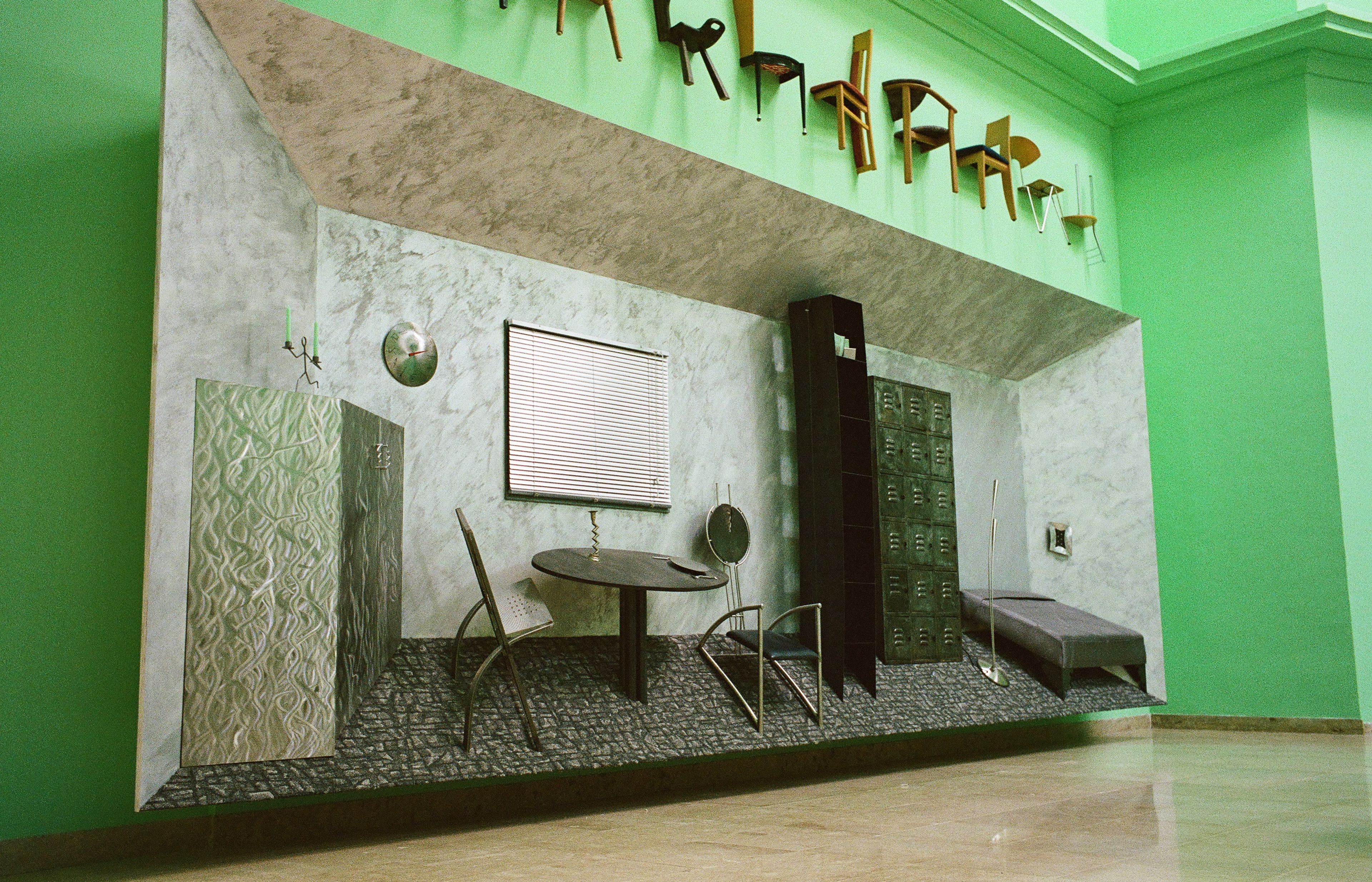
Henrike Naumann and Sung Tieu’s Ruin at the German Pavilion examined the lasting fractures of reunification through furniture, interiors and everyday material culture. Political history is often narrated as a series of major events, but it also settles into the objects people purchase, inherit and discard. The arrangement made domestic taste feel like historical evidence.
Day 3: The Arsenale, the Venice Biennale at a Different Scale
The Biennale’s Arsenale venues deserve a separate day rather than being squeezed into a Giardini marathon. The vast former maritime production halls change the rhythm of an exhibition. Works unfold across long interiors; pauses, footsteps, other viewers and even the architecture become part of the encounter. A few installations were more memorable for the situations they created than for any single object.
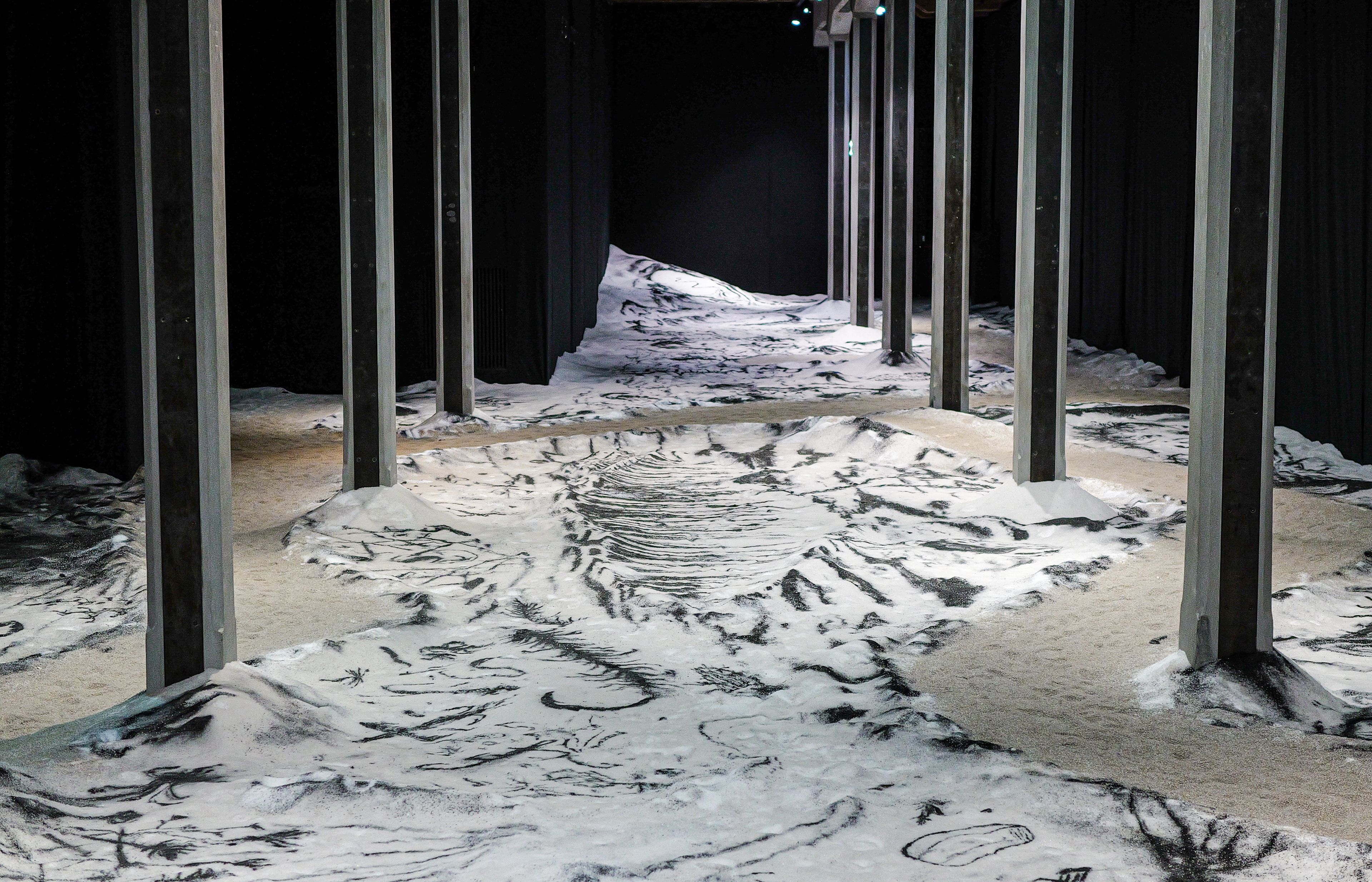
Matías Duville’s Monitor Yin Yang at the Argentine Pavilion used salt and charcoal to form an immense, walkable landscape. The dark markings across white terrain looked simultaneously like a drawing, an excavation and a terrain map. It blurred the boundary between art as an image and art as a space experienced by the body.
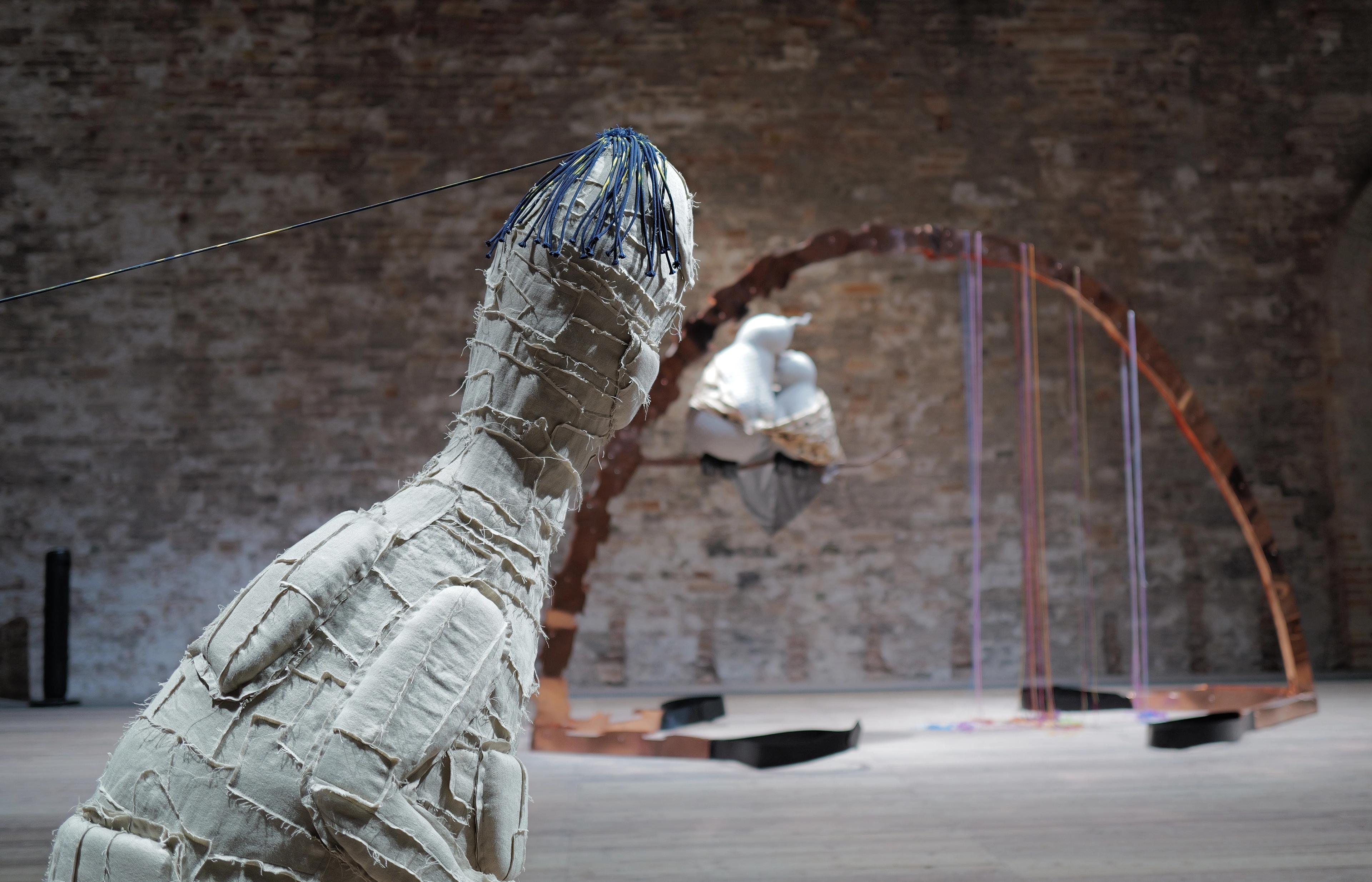
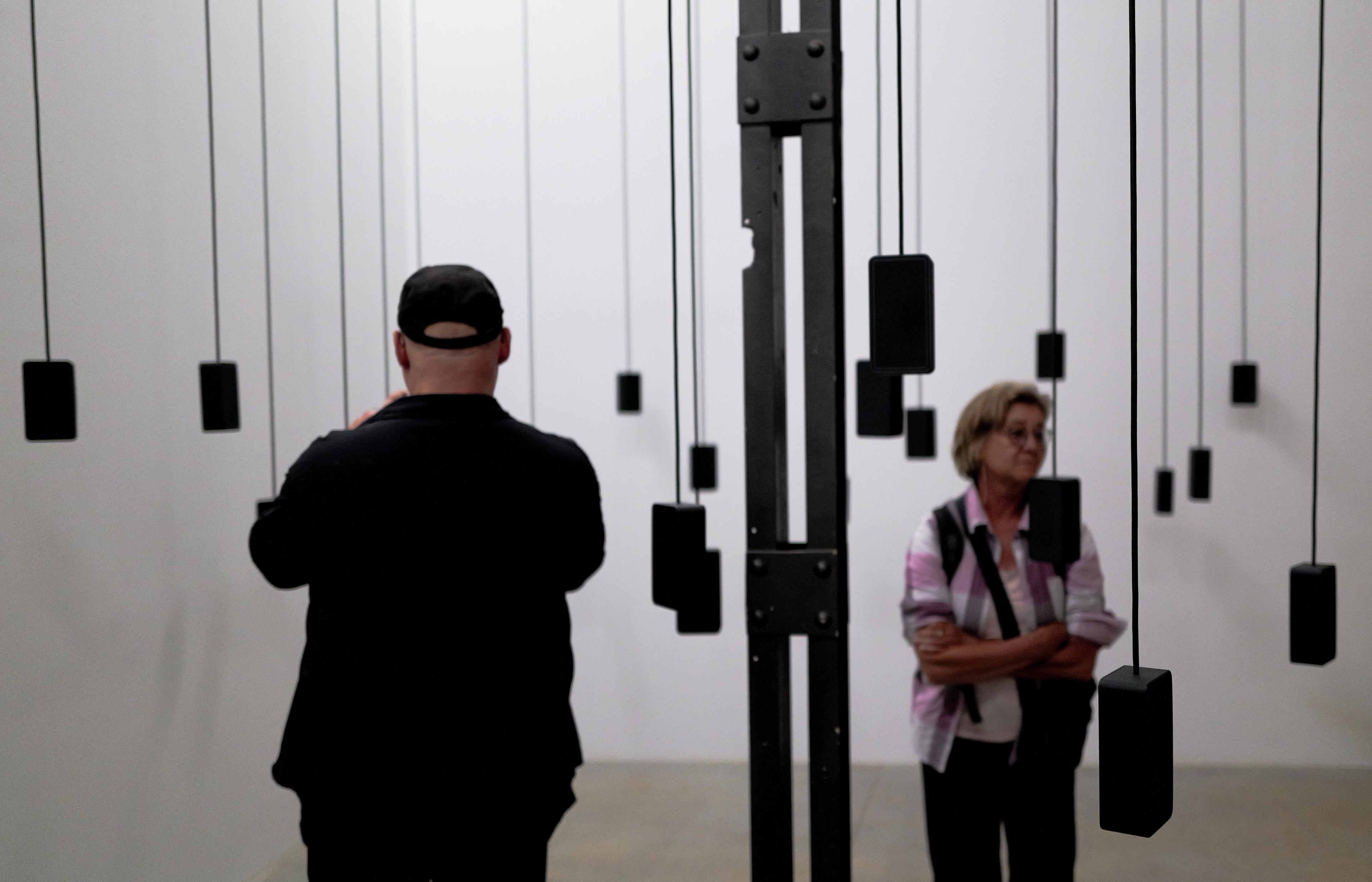
Elsewhere, suspended forms, sculptural environments and sound installations encouraged looking at the visitors themselves. A person turning away from a work, hesitating in a doorway or stopping to listen became part of the exhibition. Increasingly, the camera recorded the act of observing rather than simply the artworks being observed.
Photography at the Biennale: Observing People Observing
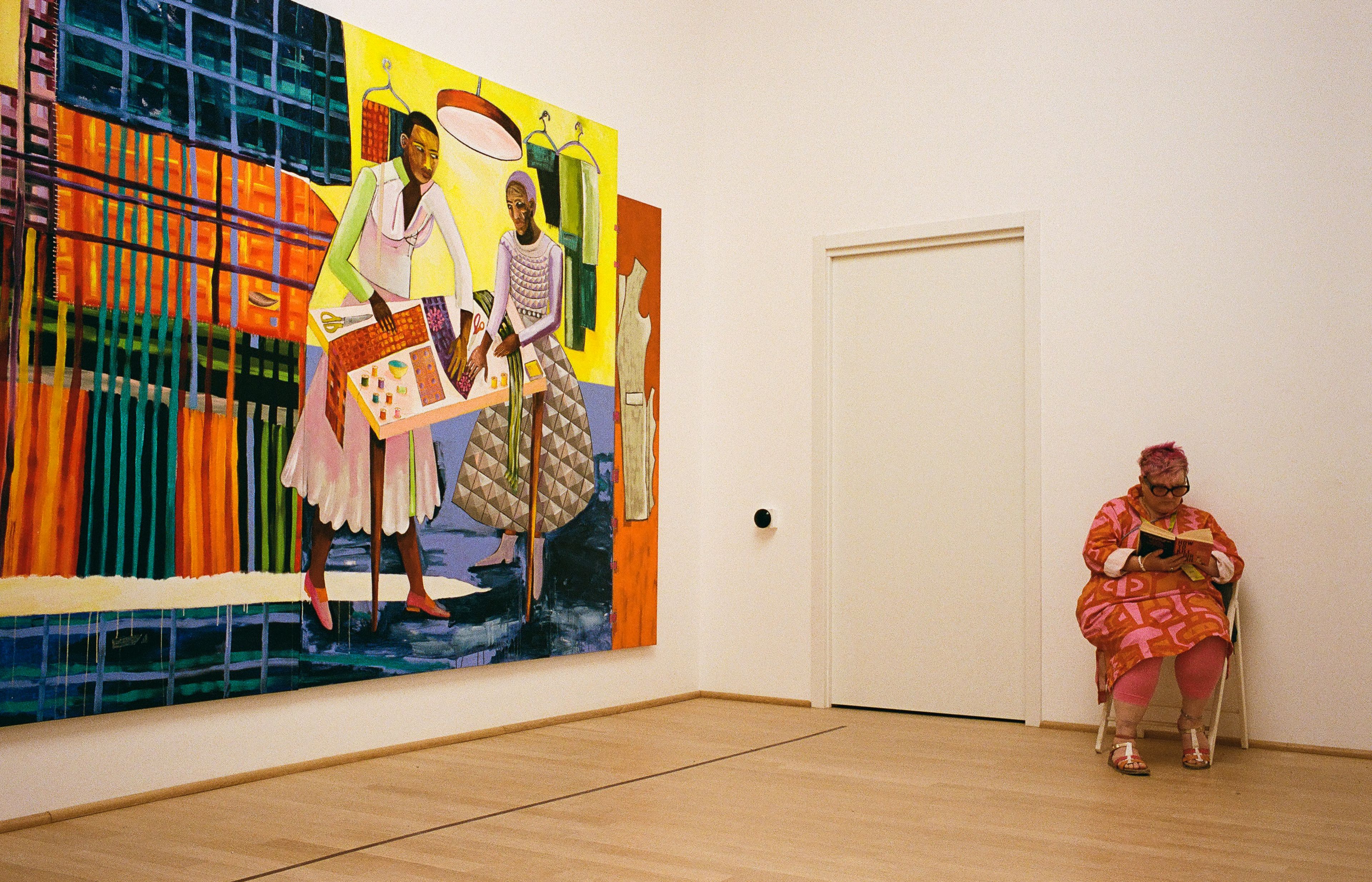
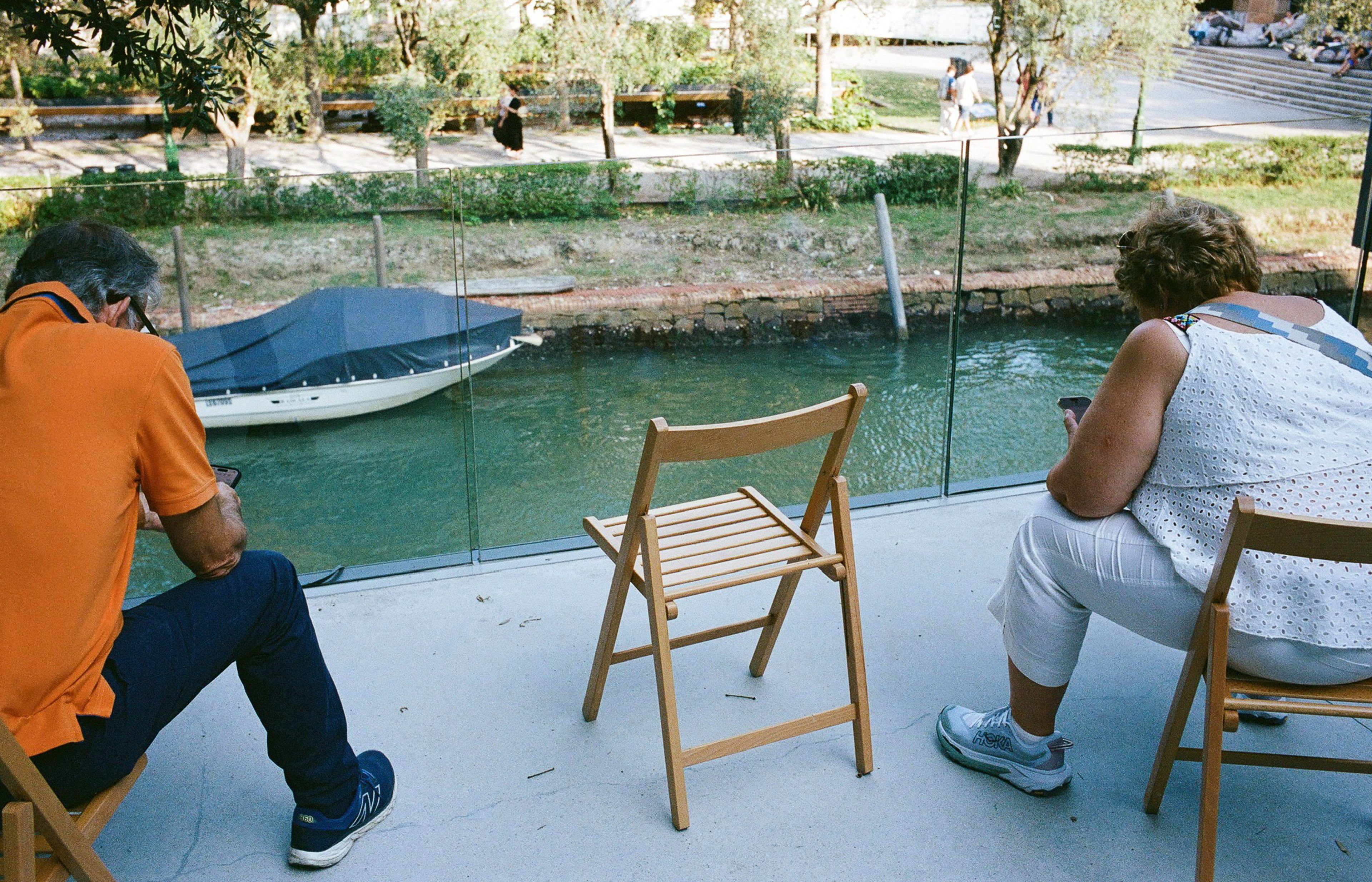
One of the most rewarding aspects of photographing an art exhibition is that artworks never quite exist alone. A reader dressed in colours that echo a painting, a spectator lifting a phone, an empty chair or a shadow passing across a wall can change the composition. These details are not interruptions to the exhibition; they show how it is experienced.
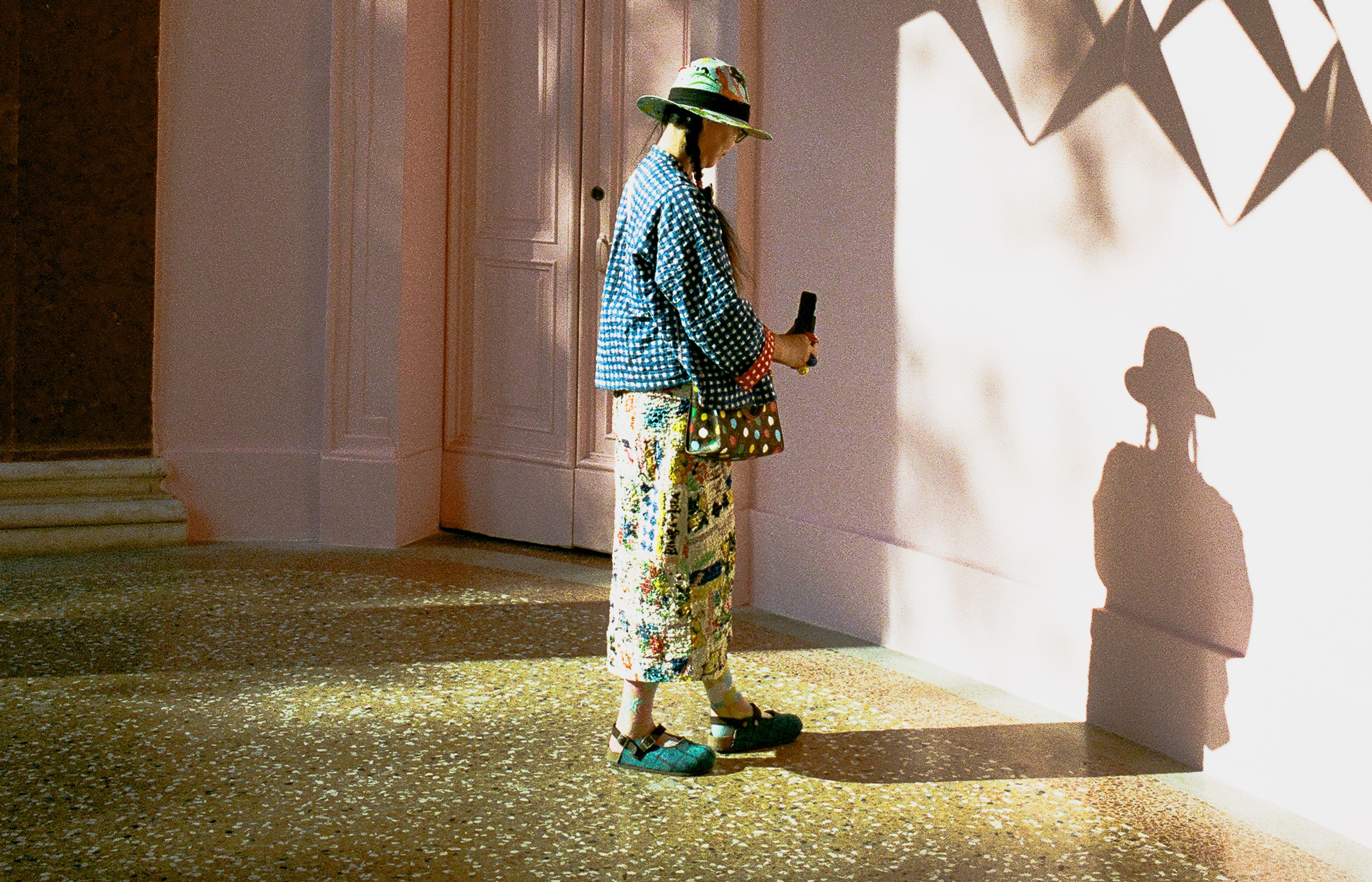
That sensibility also fits the theme In Minor Keys. Small gestures, overlooked moments and temporary alignments resist the expectation that a cultural journey must be composed entirely of masterpieces and landmarks. With a Leica M6, waiting for these scenes to develop became part of the pleasure of the visit.
Venice Beyond the Biennale: Leave Time to Get Lost
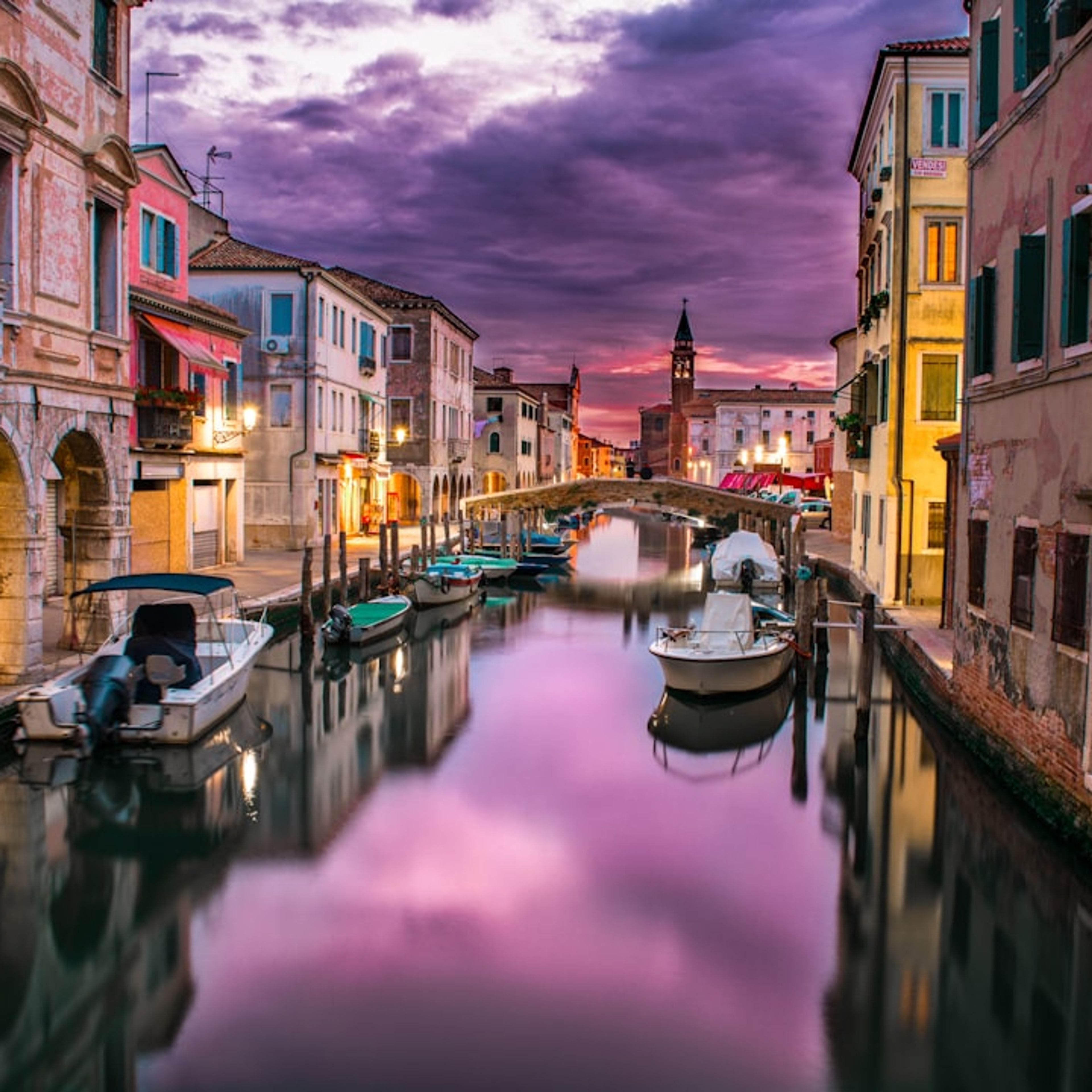
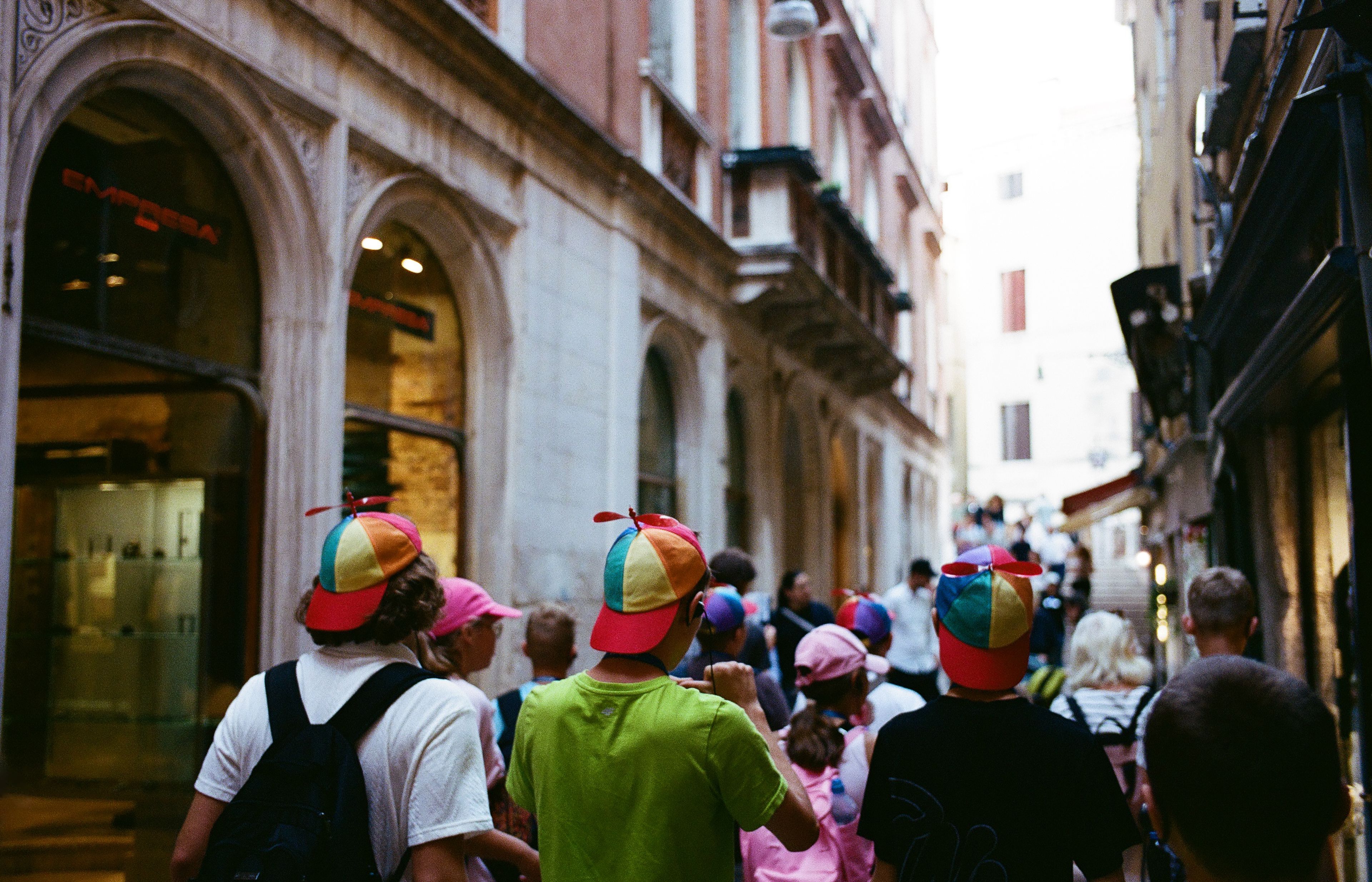
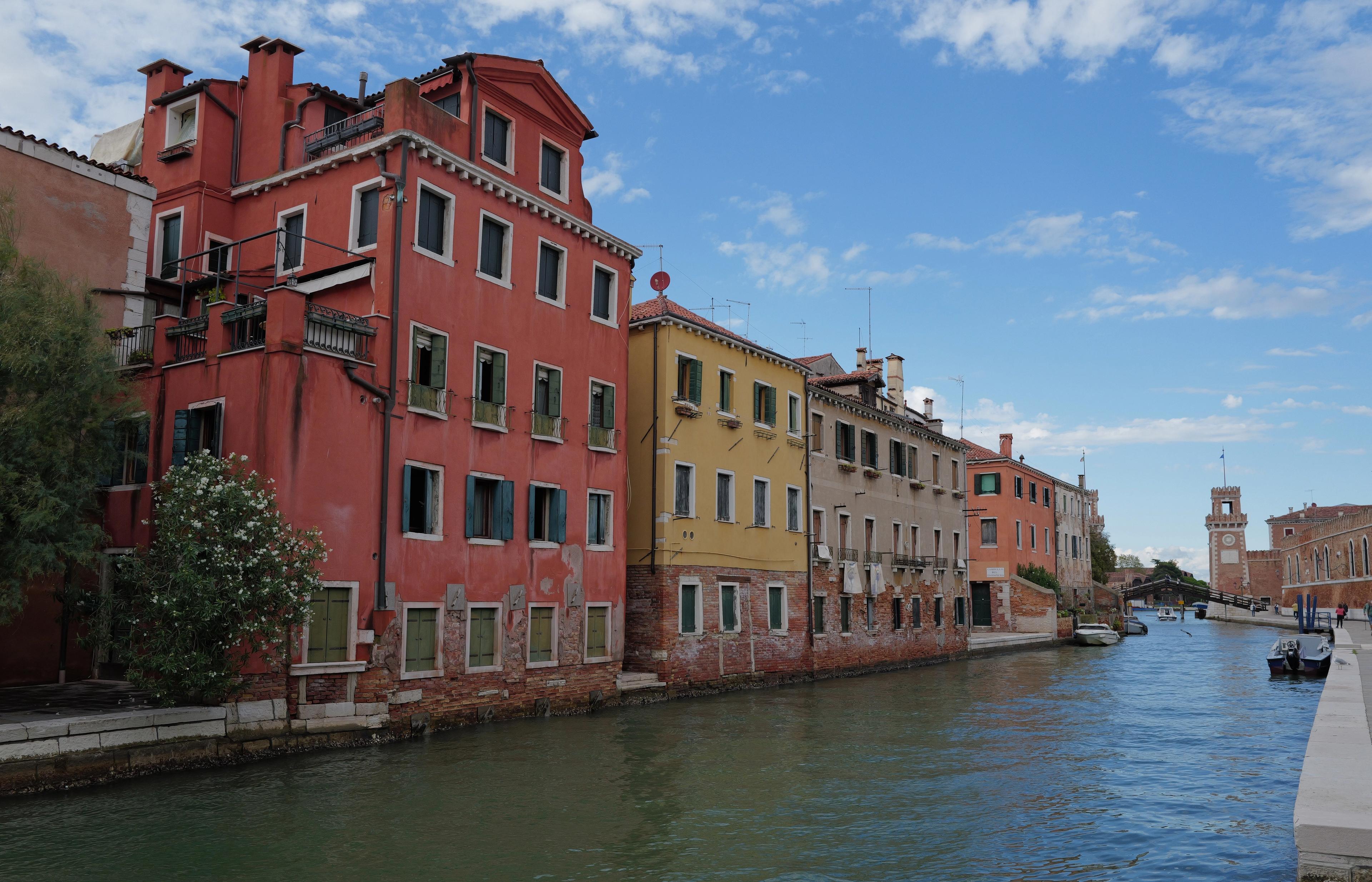
After two concentrated days of contemporary art, ordinary Venice begins to look like an outdoor installation. A line of mooring poles becomes a sculptural arrangement; a construction crane competes with a bell tower; strangers in matching hats appear like an improvised performance. It is tempting to plan another round of sights, but the stronger choice is to let the city interrupt the itinerary.
Wander beside the Grand Canal, take a vaporetto when the walk grows repetitive, and avoid treating every church and bridge as an item to tick off. The city is most rewarding when its celebrated beauty is mixed with ordinary life. With a film camera, some walks may produce no photographs at all. Then a fleeting composition suddenly justifies the wait.
Where to Stay in Venice: Why Choose the Lido?
For this trip, Hotel Excelsior on Venice Lido was more than a place to sleep. It created a deliberate contrast with the historic centre. The Lido has water on both sides: the lagoon facing Venice, and the Adriatic Sea on the opposite shore. After a long day in packed galleries and streets, the return to the island felt like leaving the intensity behind without leaving Venice altogether.
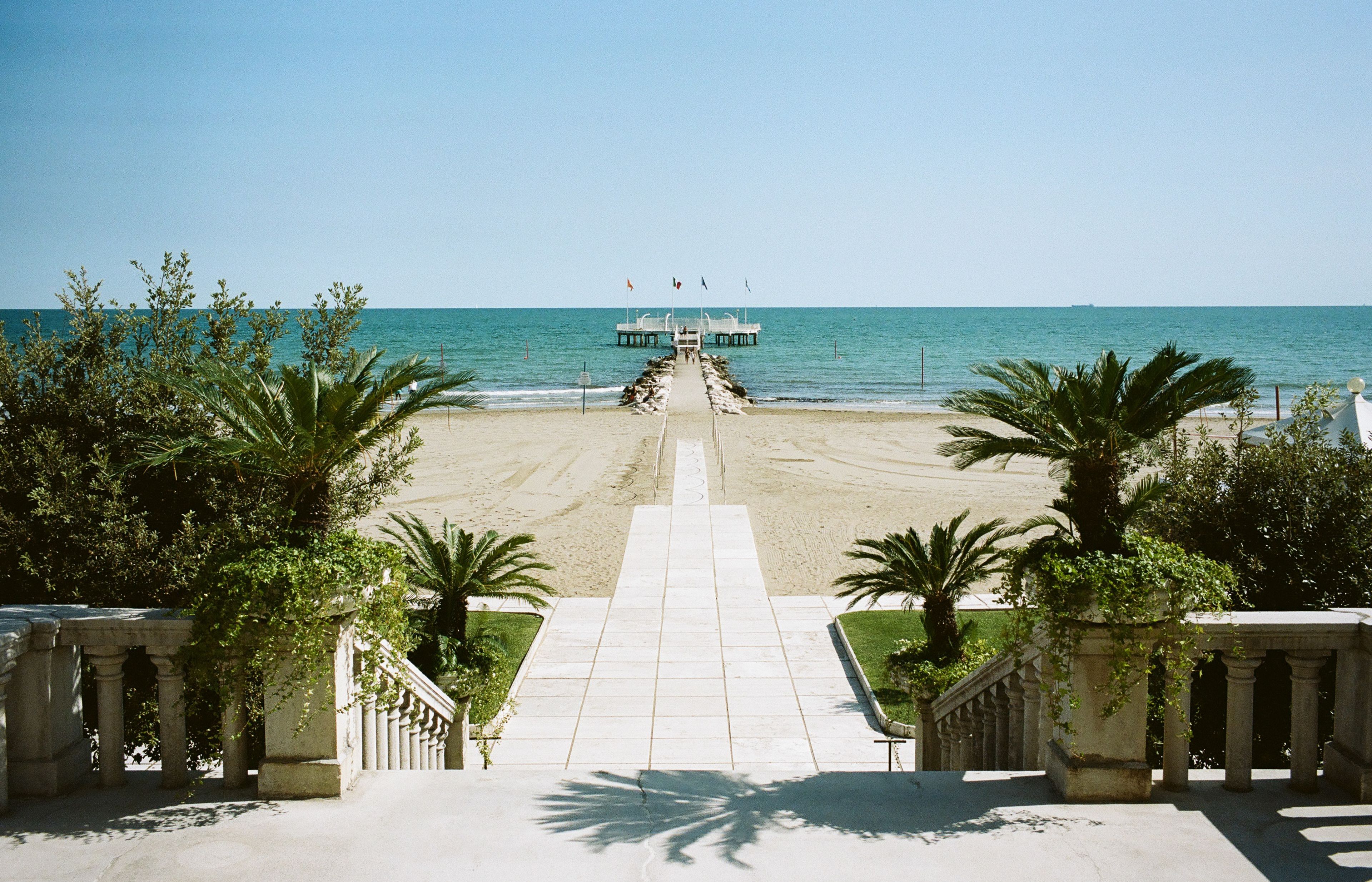
Hotel Excelsior also carries cinematic history: the first Venice International Film Festival took place on its seafront terrace in 1932, before the festival established its later venues nearby. Yet the hotel’s greatest appeal in September was simpler than glamour. A walk through the property led directly to a broad beach, where sand, low sunlight and the horizon offered a rare pause from Venice’s density.
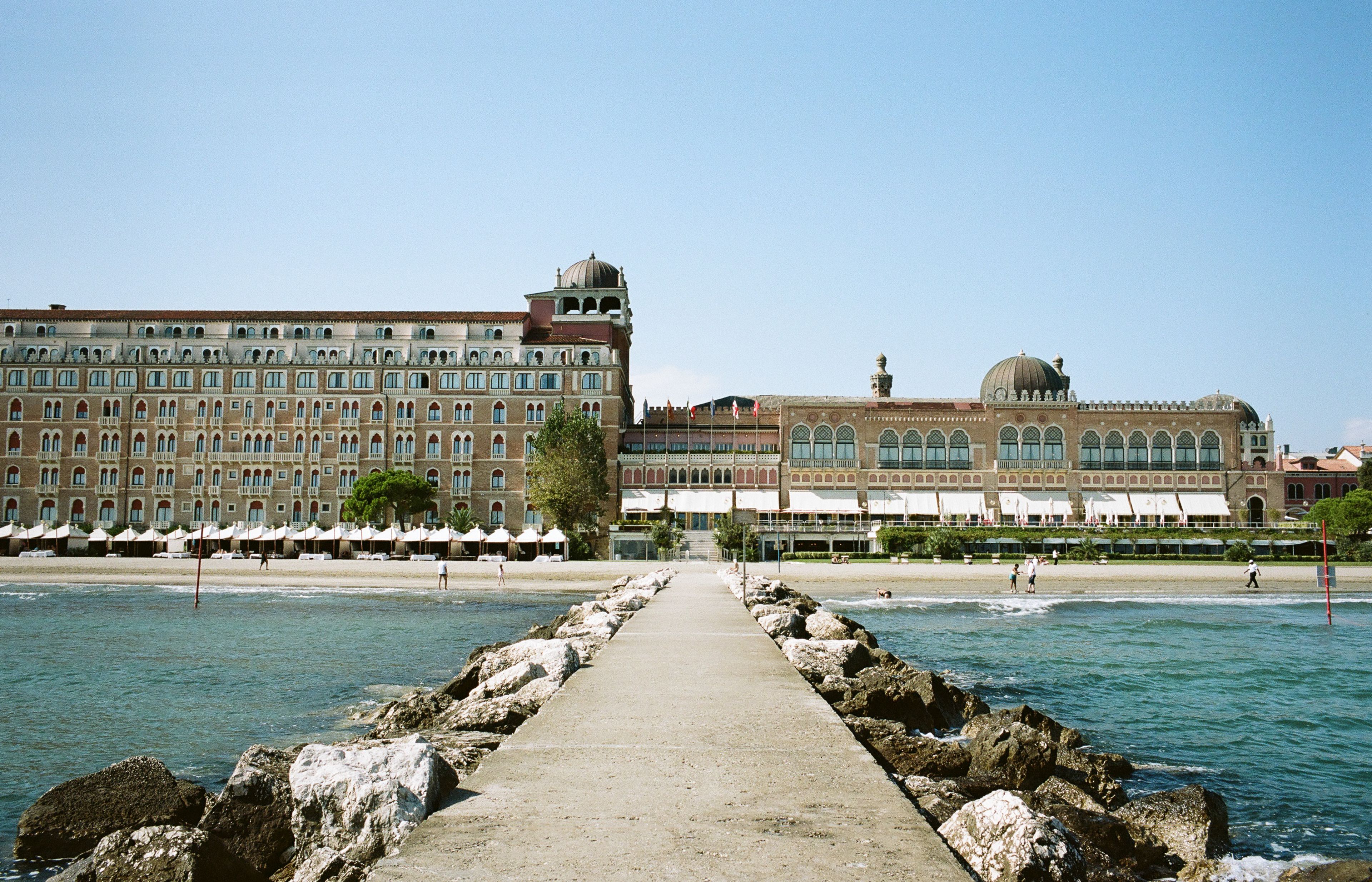
If you want to focus on walking late into the night in the historic centre, staying there may be more convenient. For travellers combining the Biennale with a slower beachside experience, however, the Lido offers an attractive alternative. Always check the available boat connections and journey time for your particular accommodation.
What Remained After Three Days in Venice
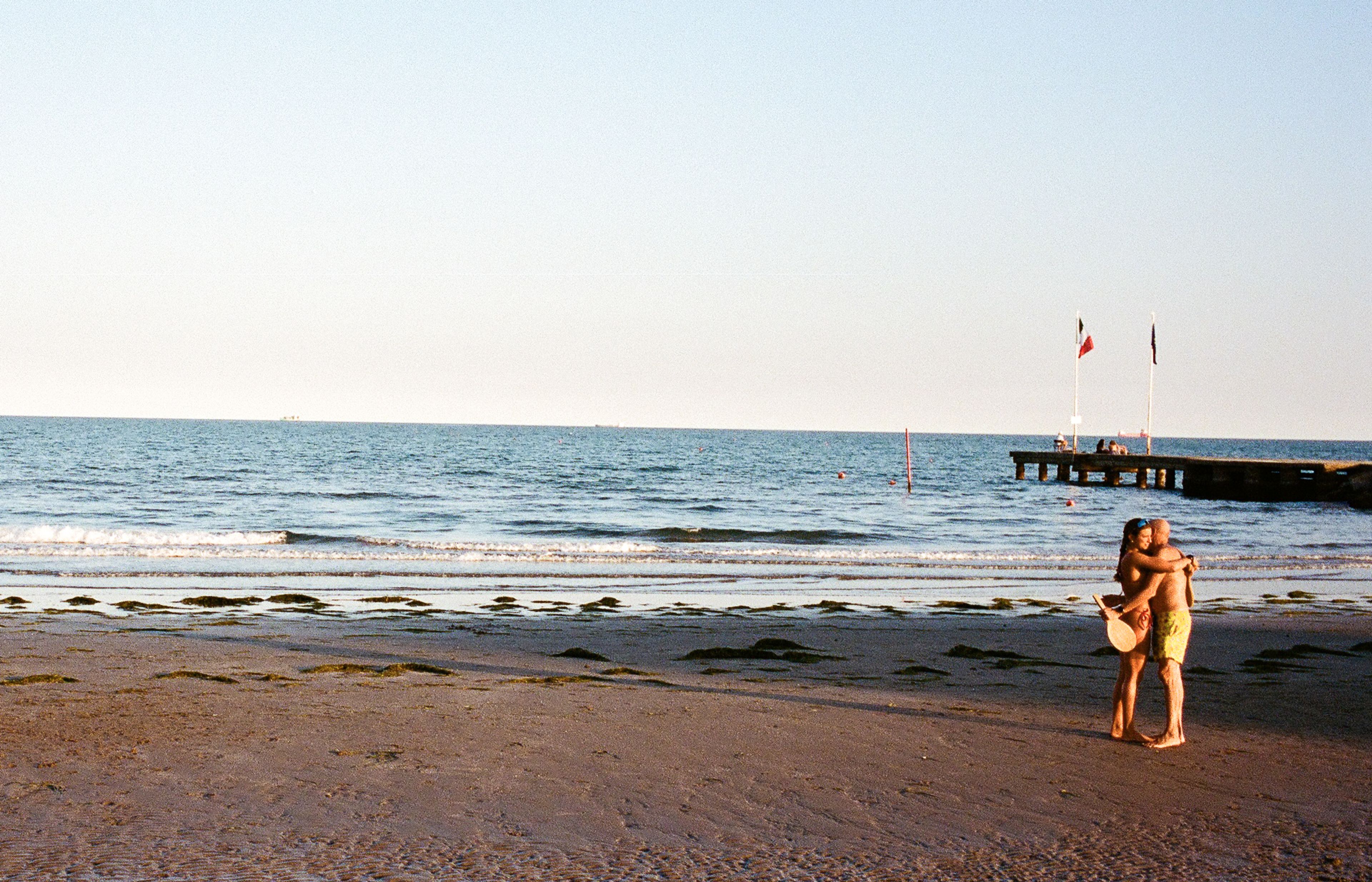
The strongest pictures from Venice were often taken between the official subjects: a gondolier asleep between rides, a visitor absorbed in looking, a glass of wine overlooking the Salute, a boat crossing the lagoon, an almost empty beach. The Biennale did not feel separate from Venice. It heightened awareness of a city that is itself a living archive, where objects, rituals and buildings continue long after their first meanings have faded.
Three days will not explain Venice, and they should not be expected to. But they can establish a memorable rhythm: water first, art next, and enough space for the city to upset the plan.
Get hotel deals for Venice
Price drops, new stays and local tips for Venice, straight to your inbox.
No spam, unsubscribe anytime.

co-founder
trip1.com co-founder covering aesthetics of street, arts, urban, culture, graffiti and everything that catches an eye.
Three Days in Venice - FAQ
Yes, three days in Venice is enough for a focused first visit. Spend one day on the Grand Canal, Piazza San Marco and Santa Maria della Salute, then give the Biennale Giardini and Arsenale a day each. Add a fourth morning if you want a museum such as the Peggy Guggenheim Collection.
Walk the historic centre and use ACTV vaporetti for longer stretches. A single 75-minute ticket costs €9.50, so a 72-hour travel card at €45 usually pays off over three days. It covers the Grand Canal, the Biennale stops at Giardini and Arsenale, and the crossing to the Lido.
Yes, Biennale Arte 2026 tickets are sold online only and need a reservation. A €30 single-access ticket includes one entry to the Giardini and one to the Arsenale, which can be used on different days. Weekdays are noticeably calmer than weekends.
Start with the Giardini, where the national pavilions sit in a landscaped park and are easy to navigate. Give the Arsenale its own day, because the former shipyard halls are long and the large installations need time. The two venues are about a 10-minute walk apart in Castello.
Stay in the historic centre if you want to walk late into the evening and reach landmarks on foot. Choose the Lido if you prefer quiet evenings and a beach after busy gallery days. The vaporetto from San Zaccaria takes around 15 minutes, so check connections to your hotel before booking.
Yes, September is one of the best months for Venice. The summer heat eases, the Biennale keeps its longer summer opening hours until late September, and the Lido beaches are quiet but still warm enough for a swim. Expect the city itself to remain busy, especially at weekends.
Only day-trippers pay the Venice access fee, and only on selected dates. In 2026 it applied on certain days between 3 April and 26 July. Visitors staying overnight in the city are exempt from the fee but pay the local tourist tax through their accommodation, so check the city's official calendar before you travel.
Yes, Biennale Arte 2026, In Minor Keys, runs until 22 November 2026. From 29 September the Giardini and Arsenale open 10:00 to 18:00, with last entry at 17:45. Both venues close on Mondays except for a few listed dates, so check the official calendar before planning your visit.