Guides · Istanbul
15 Top Places to Visit in Istanbul
By Tomas Achmedovas · CEO and co-founder

CEO and co-founder
This guide covers the 15 best places to visit in Istanbul - the mosques, palaces, bazaars, and waterfront landmarks that make this city one of the most layered destinations on earth. Each entry includes the address, nearest tram or metro stop, and a practical Pro Tip. We have organised the list starting with the Sultanahmet historic core, then the bazaar district, followed by the Beyoglu and Galata quarter, the Bosphorus waterfront, and finally the further-afield gems worth a half-day trip.
Istanbul straddles two continents and 2,500 years of continuous urban history. Within a single day you can stand inside a 1,500-year-old Byzantine cathedral, haggle for Turkish lamps in a covered bazaar older than the Renaissance, ride a ferry across the strait separating Europe from Asia, and watch the sun set over minarets from a rooftop in Beyoglu. The places to visit in Istanbul on this list span the full range - imperial Ottoman mosques, underground Roman cisterns, 19th-century European palaces, and vibrant market streets that have barely changed in 400 years.
The T1 Bagcilar-Kabatas tram line connects most of these Istanbul attractions, and an Istanbulkart transit card (TRY 70 from any metro vending machine) covers all public transport. Budget 4-5 days to see everything comfortably. Visit between April and May or September and November for mild weather without the crushing summer heat and crowds.
Check dates for Istanbul
See what is available on your dates.
1Hagia Sophia - 1,500 Years of Sacred Architecture


No list of places to visit in Istanbul can start anywhere else. Hagia Sophia (Ayasofya) has been a Byzantine cathedral, Ottoman mosque, secular museum, and - since 2020 - a functioning mosque again, all under the same vast dome. Built in 537 CE under Emperor Justinian, the structure held the record as the world's largest cathedral for nearly a thousand years. The central dome, 31 metres across and 55 metres above the floor, appears to float on a ring of 40 windows that flood the interior with light.
Inside, Byzantine gold mosaics coexist with Islamic calligraphy medallions - a visual record of the building's layered history. The Deesis mosaic on the upper gallery (depicting Christ flanked by the Virgin Mary and John the Baptist) is among the finest surviving Byzantine artworks. Since the reconversion to a mosque, entry is free for worshippers; foreign tourists pay EUR 25 (as of 2024) and access via a separate entrance on the south side. The upper gallery, which holds many of the best mosaics, reopened to visitors after restoration.
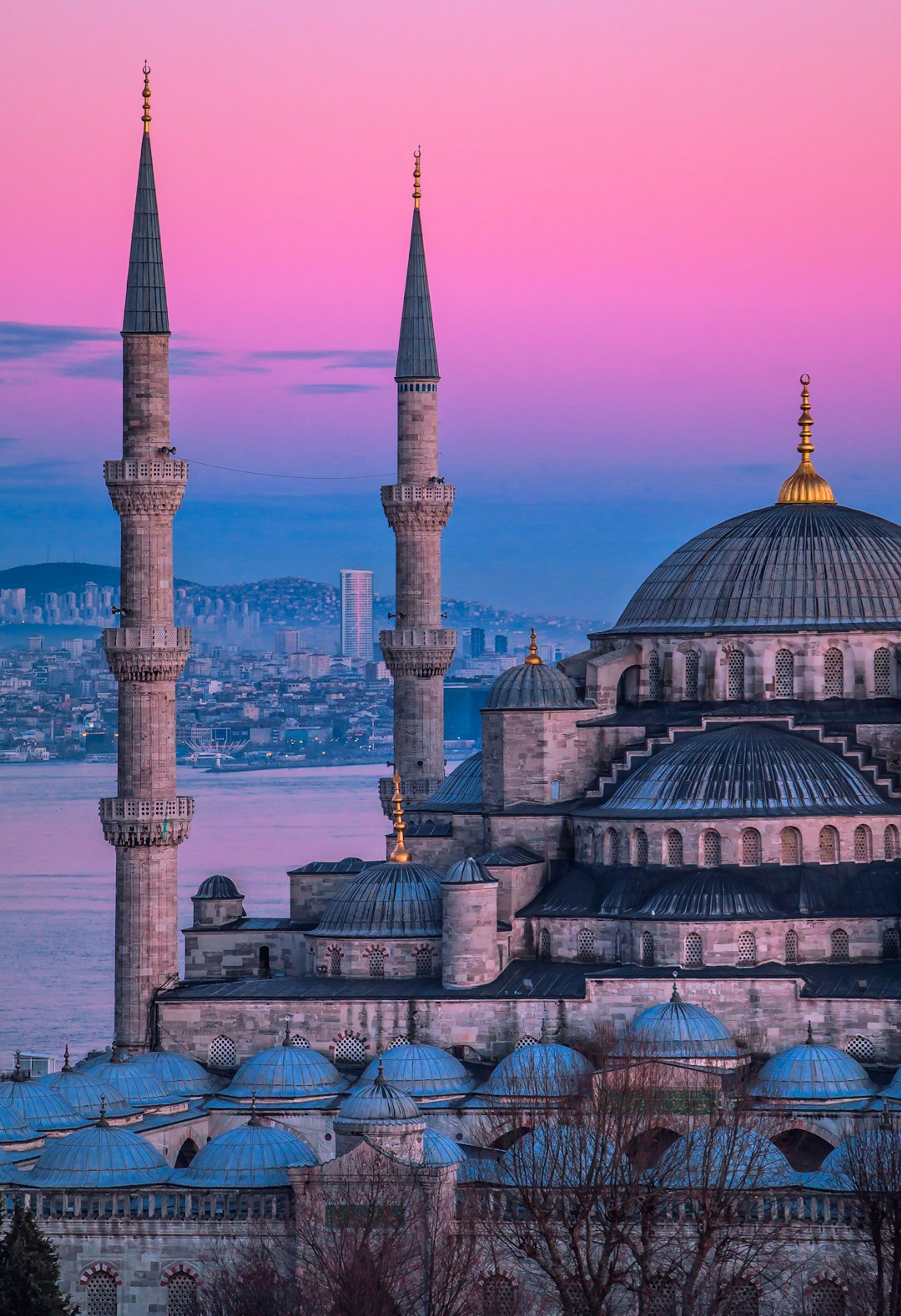
2Blue Mosque (Sultan Ahmed Mosque) - Six Minarets and 20,000 Tiles


The Blue Mosque (Sultanahmet Camii) stands directly opposite Hagia Sophia, a deliberate architectural challenge commissioned by Sultan Ahmed I in 1609. Its popular name comes from the more than 20,000 handmade Iznik tiles that cover the interior walls in shades of blue, white, and turquoise. The mosque is unique in Istanbul for having six minarets - a number that caused controversy at the time because only the Great Mosque of Mecca had as many.
The interior is a single vast prayer hall lit by over 200 stained-glass windows, with a cascade of domes rising to the 43-metre central cupola. Unlike Hagia Sophia, the Blue Mosque remains a primary place of worship and closes to tourists during the five daily prayer times (roughly 30 minutes each). Entry is free. Visitors enter through the Hippodrome-side entrance, remove shoes, and women receive complimentary headscarves and wraps. The courtyard is as large as the mosque itself and features a hexagonal ablution fountain.
3Topkapi Palace - Four Centuries of Ottoman Power


Topkapi Palace (Topkapi Sarayi) served as the primary residence and administrative centre of the Ottoman sultans for nearly 400 years, from the mid-15th century until the 1850s. The complex sprawls across a promontory overlooking the confluence of the Bosphorus, the Golden Horn, and the Sea of Marmara - arguably the most strategic viewpoint in Istanbul. The palace is organised around four successive courtyards, each more private and opulent than the last.
Highlights include the Imperial Treasury (home to the 86-carat Spoonmaker's Diamond and the Topkapi Dagger), the Sacred Relics chamber (housing items attributed to the Prophet Muhammad), and the palace kitchens that once fed 4,000 people daily. The Harem - the private quarters of the sultan, his family, and concubines - requires a separate ticket (TRY 400 / EUR 11) and is worth every lira for its tiled chambers and the ornate Imperial Hall. Main palace entry is TRY 750 (EUR 21).
Check dates for Istanbul
See what is available on your dates.
4Basilica Cistern - An Underground Cathedral of Water

The Basilica Cistern (Yerebatan Sarnici) is the largest of several hundred ancient cisterns beneath Istanbul's streets. Built in 532 CE under Emperor Justinian (the same ruler who built Hagia Sophia), this underground chamber held 80,000 cubic metres of water, supplied via aqueducts from the Belgrade Forest 19 km north of the city. The space is supported by 336 marble columns arranged in 12 rows, many salvaged from ruined Roman temples.
The two Medusa head column bases in the far northwest corner are the most famous feature - one placed sideways, one upside-down, their orientation still a mystery. After a major restoration completed in 2022, the cistern features atmospheric lighting, walkways over the shallow water, and occasional art installations. Entry is TRY 700 (EUR 20). The temperature inside stays around 9-10 C year-round, making it a welcome escape from summer heat.
5Grand Bazaar - 4,000 Shops Under One Roof

The Grand Bazaar (Kapali Carsi) is one of the oldest and largest covered markets in the world, a labyrinth of 61 covered streets and over 4,000 shops that has operated continuously since 1461. The original structure was built shortly after the Ottoman conquest of Constantinople, and over centuries it expanded into a small city within the city - complete with mosques, fountains, and its own street names. It covers roughly 30,700 square metres.
The bazaar is organised loosely by trade: jewellery along Kalpakcilar Caddesi (the main artery), leather goods in the southeast, carpets in the central halls, ceramics and lamps scattered throughout. The Old Bedesten (Ic Bedesten) at the heart of the complex is the original 15th-century core and now houses antique dealers and high-end jewellers. Haggling is expected and part of the experience - start at roughly 40-50% of the asking price. The bazaar is open Monday to Saturday, 08:30-19:00, and closed on Sundays and public holidays.
6Spice Bazaar - Istanbul's Aromatic Market Hall

The Spice Bazaar (Misir Carsisi, also called the Egyptian Bazaar) is Istanbul's second-largest covered market, built in 1660 as part of the New Mosque complex at Eminonu. The L-shaped hall contains around 85 shops selling spices, dried fruits, nuts, Turkish delight, teas, and natural remedies. The air inside is a dense mix of saffron, sumac, dried chilli, and roasted nuts - one of the most evocative sensory experiences in the city.
Unlike the Grand Bazaar, the Spice Bazaar is compact enough to see in 30-45 minutes. Prices inside the main hall tend to be tourist-inflated - the streets immediately outside the bazaar (especially Hasircilar Caddesi running uphill toward the Grand Bazaar) offer the same products at significantly lower prices and a more local atmosphere. The bazaar sits at the Eminonu waterfront, making it easy to combine with a Bosphorus ferry departure from the adjacent terminal.
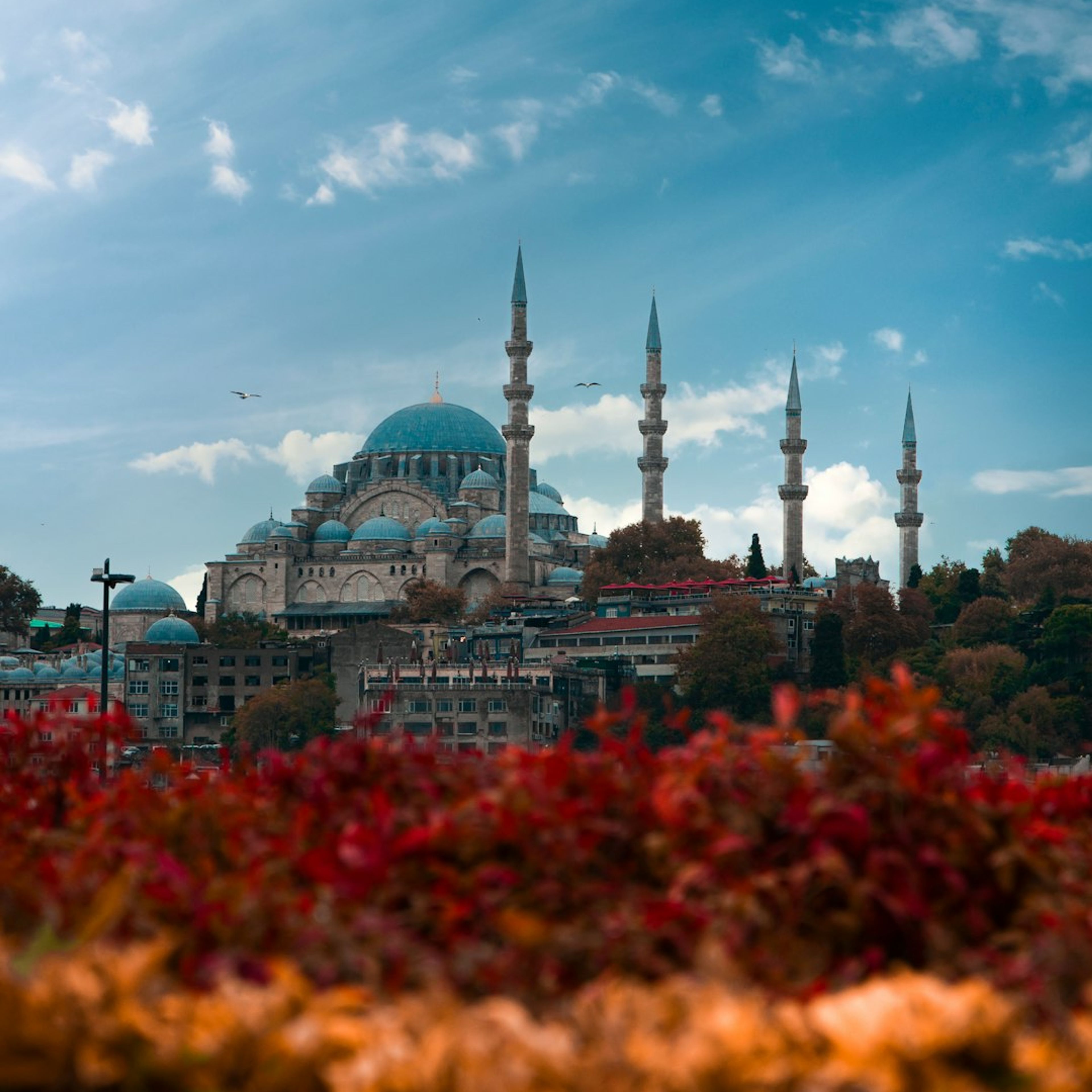
7Suleymaniye Mosque - Sinan's Ottoman Masterpiece

The Suleymaniye Mosque is widely considered the finest work of Mimar Sinan, the greatest architect of the Ottoman Empire, and many regard it as the most beautiful mosque in Istanbul. Commissioned by Suleiman the Magnificent and completed in 1557, the complex includes not just the mosque but a hospital, several madrasas (theological schools), a hamam (bath), a caravanserai, and the tombs of Suleiman and his wife Hurrem Sultan (Roxelana).
The interior is a masterclass in harmonious proportion - the central dome (53 metres high, 26.5 metres across) creates a sensation of weightless space amplified by over 200 stained-glass windows, including originals by the famed craftsman Ibrahim the Drunkard. The mosque garden terrace offers sweeping views over the Golden Horn to Galata. Unlike Hagia Sophia and the Blue Mosque, Suleymaniye sees relatively few tour groups, giving it a contemplative atmosphere that the more famous mosques lack. Entry is free.
8Galata Tower - Medieval Watchtower with Panoramic Views

The Galata Tower (Galata Kulesi) is a 67-metre stone cylinder that has dominated the Beyoglu skyline since 1348, when it was built by Genoese colonists as the apex of their fortified trading quarter across the Golden Horn from Constantinople. The tower has served variously as a prison, fire watch station, and observatory. Today it is one of Istanbul's most recognisable landmarks and a popular observation deck.
The 360-degree viewing balcony at the top (reached by elevator and a short spiral staircase) provides sweeping views over the historic peninsula, the Bosphorus, the Golden Horn, and the Asian shore. On a clear day you can see the Princes Islands in the Sea of Marmara. Entry is TRY 650 (EUR 18). The surrounding Galata neighbourhood is one of Istanbul's most vibrant - steep cobblestone streets lined with independent cafes, vintage shops, street art, and live music venues.
9Istiklal Avenue and Taksim Square - Istanbul's Beating Heart

Istiklal Caddesi is a 1.4-kilometre pedestrian boulevard running from Taksim Square to the Tunel funicular station near Galata Tower. In the late Ottoman period this was the Grande Rue de Pera, the European-style high street of the cosmopolitan Beyoglu district. Today it is the commercial and social spine of modern Istanbul - an estimated 3 million people walk its length daily on weekends. The street is lined with 19th-century apartment buildings, consulates, churches, cinemas, bookshops, and restaurants.
Key stops along the way include the Church of St. Anthony of Padua (the largest Catholic church in Istanbul), Cicek Pasaji (the Flower Passage, a historic arcade of meyhane restaurants), the Fish Market (Balik Pazari) on the side streets, and numerous rooftop bars with Golden Horn views. The nostalgic red tram runs the full length of Istiklal, though walking is faster. Taksim Square at the northern end is the symbolic centre of modern Istanbul, marked by the Republic Monument.
10Bosphorus Cruise - Where Europe Meets Asia

A cruise up the Bosphorus strait is essential for understanding Istanbul's geography - the narrow waterway that separates the European and Asian halves of the city, connecting the Black Sea to the Sea of Marmara. The shoreline is lined with Ottoman waterfront mansions (yalis), fortresses, fishing villages, and two intercontinental bridges. Seeing Istanbul from the water reveals a perspective no land-based visit can match.
The Sehir Hatlari public ferry departs from Eminonu (Pier 3) and runs two routes: the short cruise (2 hours, multiple daily departures, TRY 90 with Istanbulkart) covers the main sights between the two bridges, while the full cruise (6 hours round trip, 10:35 departure) goes all the way to Anadolu Kavagi near the Black Sea, passing Dolmabahce Palace, Ortakoy Mosque, Rumeli Fortress, Bebek Bay, and the fishing village of Sariyer. Landmarks pass on both shores simultaneously, so move between the port and starboard sides.
11Dolmabahce Palace - Ottoman Baroque on the Bosphorus Shore

Dolmabahce Palace replaced Topkapi as the main Ottoman royal residence in 1856, and its European-inspired design represents a dramatic break from traditional Ottoman architecture. The 285-metre Bosphorus-facing facade is a confection of baroque, rococo, and neoclassical elements - white marble columns, ornate gates, and formal gardens. Inside, the palace contains 285 rooms, 46 halls, 68 toilets, and a staggering 14 tonnes of gold leaf decorating the ceilings.
The Ceremonial Hall (Muayede Salonu) is the centrepiece - a 36-metre-high dome hung with a 4.5-tonne Bohemian crystal chandelier, the largest in the world. Ataturk, the founder of modern Turkey, used the palace as his Istanbul residence and died here on 10 November 1938; the clocks throughout the palace are stopped at 09:05, the time of his death. Entry is TRY 650 (EUR 18) for the main palace; the Harem is a separate ticket. Visits are guided and last about 90 minutes.
12Chora Church (Kariye Mosque) - The Finest Byzantine Mosaics in the World

The Chora Church (Kariye Camii, formerly the Church of the Holy Saviour in Chora) is home to what many art historians consider the most important surviving cycle of Byzantine mosaics and frescoes outside of Ravenna. The current building dates from the 11th century, but the extraordinary interior decoration was added between 1315 and 1321 under the patronage of Theodore Metochites, a Byzantine statesman and scholar.
The mosaics in the inner and outer narthex depict the life of Christ and the Virgin Mary in extraordinary detail and vivid colour. The parekklesion (side chapel) contains a stunning Anastasis (Resurrection) fresco showing Christ pulling Adam and Eve from their tombs. The church was converted to a mosque in 1511 and is located in the Edirnekapi neighbourhood near the Theodosian Walls, away from the main tourist cluster. This remoteness is precisely its appeal - you will share these masterpieces with a fraction of the crowds at Hagia Sophia. Entry is free.
13Hippodrome and the Sultanahmet Square

The Hippodrome (At Meydani) was the sporting and social centre of Constantinople for over a thousand years - a Roman chariot-racing arena that once held 100,000 spectators. Today the elongated Sultanahmet Square preserves its footprint, and three ancient monuments from the arena's central spine (the spina) survive in situ: the Egyptian Obelisk of Theodosius (a 3,500-year-old granite column from Luxor), the Serpentine Column (cast from Greek bronze in 479 BCE to commemorate victory over the Persians), and the rough-hewn Constantine Obelisk.
The German Fountain at the northern end was a gift from Kaiser Wilhelm II in 1901. The square itself is a natural gathering point between Hagia Sophia, the Blue Mosque, and the Basilica Cistern, so you will likely cross it multiple times. The Museum of Turkish and Islamic Arts on the western side (in the former palace of Ibrahim Pasha) is an underrated collection of carpets, calligraphy, and ethnographic displays, with a pleasant garden cafe. Entry is TRY 200 (EUR 6).
14Ortakoy and the Bosphorus Waterfront

Ortakoy is a compact waterfront neighbourhood on the European shore of the Bosphorus, directly beneath the First Bosphorus Bridge (15 July Martyrs Bridge). The centrepiece is the Ortakoy Mosque (Buyuk Mecidiye Camii), a small but ornate baroque mosque built in 1856 that sits right at the water's edge. The image of its pale facade framed against the massive suspension bridge behind has become one of Istanbul's most iconic photographs.
The Ortakoy square hosts a weekend art and craft market, and the waterfront is lined with cafes, waffle stands, and kumpir (baked potato) vendors that have become a local institution. The neighbourhood has a more relaxed, bohemian atmosphere than the historic peninsula. The Bosphorus promenade stretching south from Ortakoy toward Besiktas passes through some of Istanbul's most affluent waterfront real estate and offers continuous views across to the Asian shore.
15Princes Islands - A Car-Free Escape in the Sea of Marmara

The Princes Islands (Adalar) are a chain of nine islands in the Sea of Marmara, just 12-20 km southeast of central Istanbul. Motor vehicles are banned on all islands, making them a remarkably quiet escape from the city's chaos. The two most visited are Buyukada (the largest, with Victorian-era mansions, pine forests, and hilltop monasteries) and Heybeliada (smaller, with a naval academy and pleasant beaches).
Ferries depart from Kabatas (reached via the T1 tram terminus) roughly every hour, with the crossing taking 75-90 minutes on the Sehir Hatlari public ferry (TRY 30 with Istanbulkart) or 45 minutes on the faster IDO seabus (TRY 60). On Buyukada, rent a bicycle (TRY 50-80 per day) to circuit the island, stopping at Aya Yorgi church and monastery on the hilltop for panoramic sea views. Electric carriages have replaced the island's controversial horse-drawn phaetons. Pine-shaded waterfront restaurants serve fresh fish and meze.
Take this guide with you
Get every place in this guide, with addresses and map links, in your inbox — easy to open on your phone during the trip.
One email to the address on your account. No newsletter.

CEO and co-founder
Tomas is the co-founder and director of trip1, an European company specializing in reservation services. He launched the company in 2025 with a focus on building scalable, efficient operations.
15 Top Places to Visit in Istanbul - FAQ
Hagia Sophia, the Blue Mosque, Topkapi Palace and the Basilica Cistern, all in Sultanahmet. Then the Grand Bazaar, the Spice Bazaar and Suleymaniye Mosque, a sunset at Galata Tower and a walk down Istiklal Avenue. Take a Bosphorus ferry past Dolmabahce Palace and Ortakoy, and if you have time, see the mosaics at Chora or escape to the car-free Princes Islands.
Yes, for the main sights, though four to five days is more comfortable. Spend day one in Sultanahmet (Hagia Sophia, the Blue Mosque, the Basilica Cistern, Topkapi Palace), day two at the Grand Bazaar, Spice Bazaar and Suleymaniye Mosque, and day three on a Bosphorus cruise and in Galata and Beyoglu. A fourth day adds Chora or the Princes Islands.
April to May or September to November, when it is mild and less crowded than summer. October is a good choice: highs fall from about 22C to 17C, though expect some short rain showers. Summer brings heat and long queues at Hagia Sophia and Topkapi. Plan around closures: Topkapi Palace shuts on Tuesdays and the Grand Bazaar on Sundays.
It helps. Foreign visitors pay 25 euros for Hagia Sophia, and summer queues can pass an hour, so go at 9am or buy ahead from the official seller. Topkapi Palace sells its 2,750 lira ticket, which covers the Harem and Hagia Irene, only at the gate; the Museum Pass Istanbul includes it, can be bought online and skips the booth queue. Topkapi closes on Tuesdays.
The public Sehir Hatlari ferry from Eminonu, which is cheaper than private tour boats and covers the same water. The short cruise takes about two hours between the two bridges. The full cruise leaves at 10:35 and runs to Anadolu Kavagi near the Black Sea, with two to three hours for fish lunch and Yoros Castle before the 15:00 return. Sit on the right heading north.
Yes, in the streets of Istanbul shorts are fine, but not inside mosques. To enter Hagia Sophia, the Blue Mosque or Suleymaniye, both men and women cover knees and shoulders, women also cover their hair, and everyone removes their shoes. The Blue Mosque lends free headscarves and wraps, but carrying a scarf saves queuing. Mosques close to visitors during the five daily prayers.