

Guides · Delhi
10 Top Places to Visit in Delhi

CEO and co-founder
This guide covers 10 top places to visit in Delhi, India, chosen because each one earns the travel time in a city that sprawls across 1,484 square kilometres. Every entry below carries an exact street address with postal code, the closest Delhi Metro station and line, a walking time from that station, and a Pro Tip drawn from how the site actually works on the ground: opening quirks, queue timing, ticket tiers.
The list splits into three geographic clusters, which is also how we suggest you walk it. Old Delhi holds the first three. The Red Fort, Jama Masjid and Chandni Chowk sit within ten minutes of each other on foot, so treat them as one morning and do not try to bolt anything else onto it. New Delhi accounts for the middle stretch: India Gate and Kartavya Path, Gurudwara Bangla Sahib and Lodhi Gardens, all inside the Lutyens grid where the roads are wide and the distances short by taxi.
The southern and eastern monuments make up the rest. Humayun's Tomb, Qutub Minar, the Lotus Temple and Akshardham are spread far apart, and each deserves its own slot rather than a rushed stop between two others. Prices appear in Indian rupees with a rough euro equivalent, and wherever the Archaeological Survey of India applies its separate foreign-visitor rate, we say so plainly. Three days is the honest minimum for the full ten. Most visitors pair the city with Jaipur to the south-west, which is close enough to reach by morning train and different enough to be worth the day rather than a detour. The window that is genuinely comfortable for walking these sites is narrow, so check Delhi weather before you fix dates instead of assuming the season will do. The distances above are the real constraint, and the hotels in Delhi around the centre cut them more than any other decision you will make.
1Red Fort - The Mughal Power Seat That Anchors Old Delhi
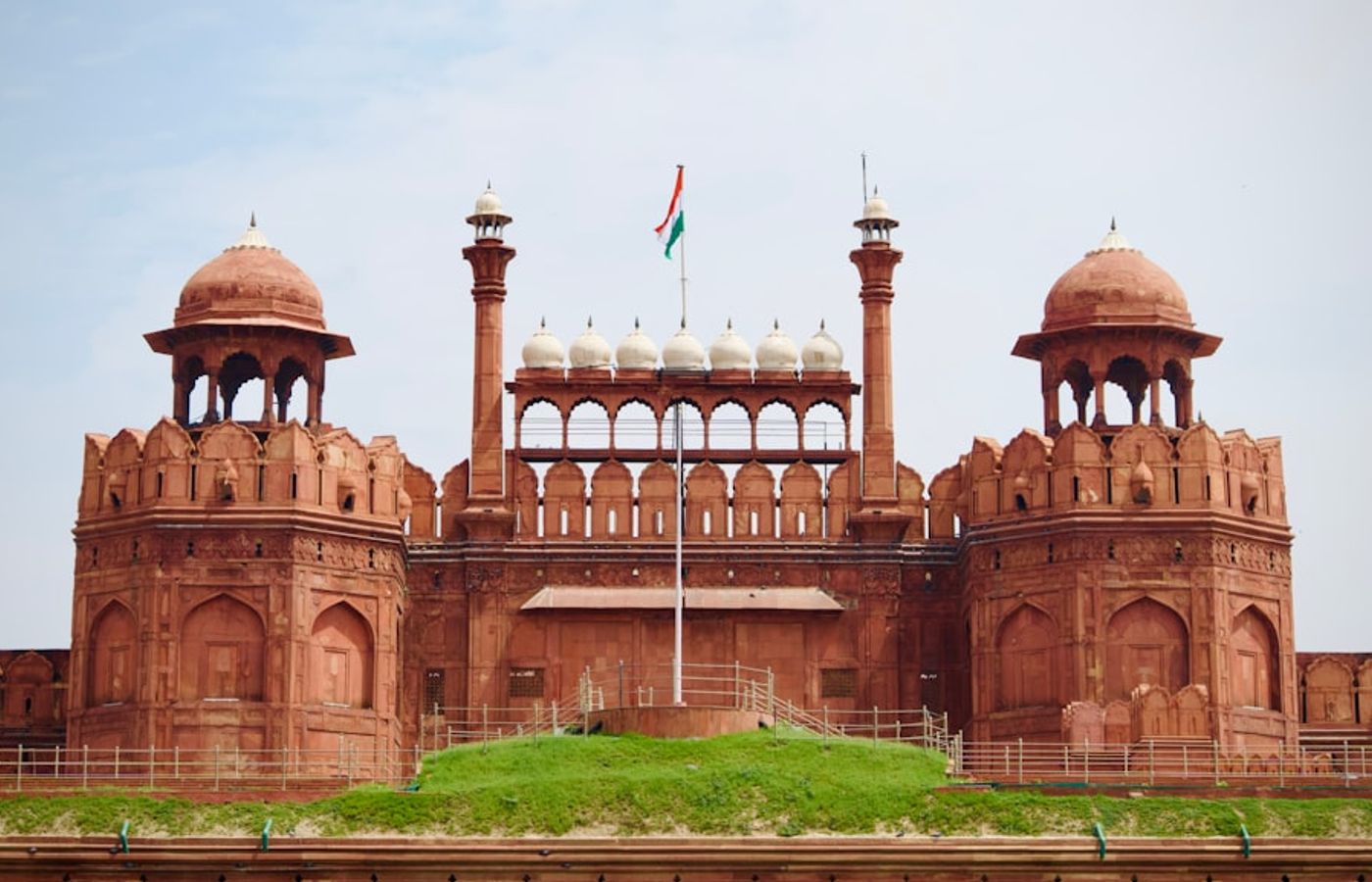

The Red Fort was completed in 1648 as the palace fortress of Shah Jahan's new capital, Shahjahanabad, and its Rajasthani sandstone walls run 2.4 km at heights reaching 33 metres. UNESCO inscribes it as the Red Fort Complex, a listing that covers the 17th-century Mughal fort together with the older Salimgarh of 1546. You enter through Lahori Gate, the same gate from which the Prime Minister addresses the country every Independence Day.
Inside, the Diwan-i-Aam and the marble Diwan-i-Khas repay the most time; the latter once held the Peacock Throne. Allow two hours. The fort closes on Mondays. Entry costs INR 35 for Indian citizens and INR 600 (roughly EUR 6.50) for foreign visitors, the separate foreign-visitor tier that the Archaeological Survey of India applies at all its monuments. The evening sound-and-light show is ticketed separately and runs in Hindi and English on alternating slots.
Pro Tip: Book the e-ticket on the Archaeological Survey of India portal the night before and be at Lahori Gate by 9:30 am. Both the ticket window and the security line roughly double after 11 am, and from April to June the open sandstone courtyards turn punishing by midday.
2Jama Masjid - India's Largest Mosque and the Best View Over Old Delhi
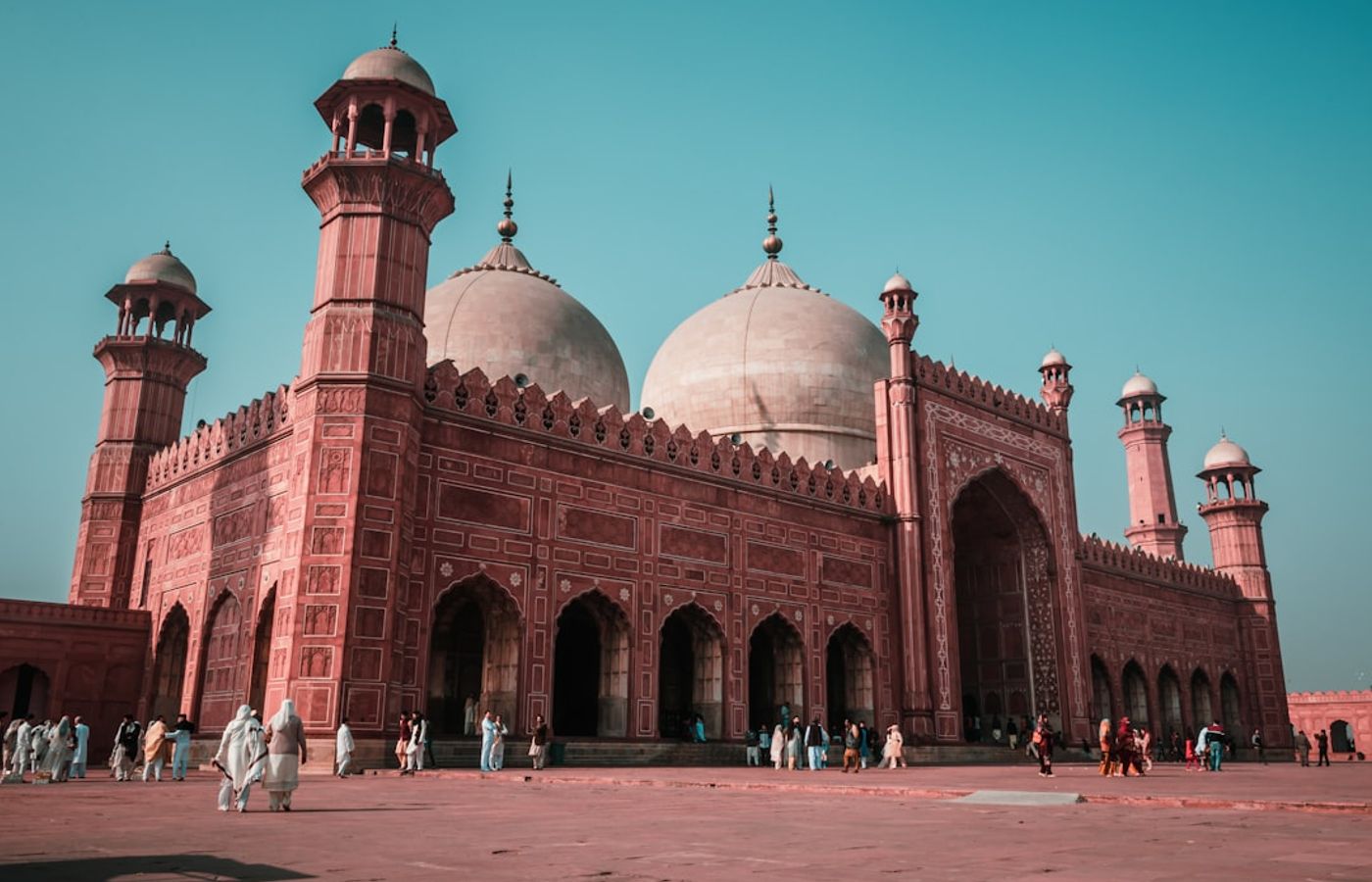

Shah Jahan finished the Masjid-i-Jahan-Numa in 1656 after six years of work by around 5,000 labourers, and the courtyard still holds 25,000 worshippers. Three marble domes crown a red sandstone prayer hall flanked by two minarets of 40 metres. The mosque faces the Red Fort across Netaji Subhash Marg, which makes the pairing obvious on any Old Delhi morning.
Entry to the mosque is free. Climbing the southern minaret costs INR 100 and delivers the finest rooftop view in Old Delhi, with the Red Fort on one side and the roofs of Chandni Chowk on the other. A camera fee of INR 300 applies. Shoulders and knees must be covered and robes are lent at the gate. The mosque shuts to visitors during the five daily prayers, and the Friday midday closure runs longer.
Pro Tip: Use Gate 3 on the eastern side for the shortest route to the minaret stair, and climb between 3 pm and 4:30 pm when the light hits the Red Fort face-on. Leave your shoes with the attendant for INR 20 rather than carrying them around the courtyard.

3Chandni Chowk - The 17th-Century Market Street Still Doing Business
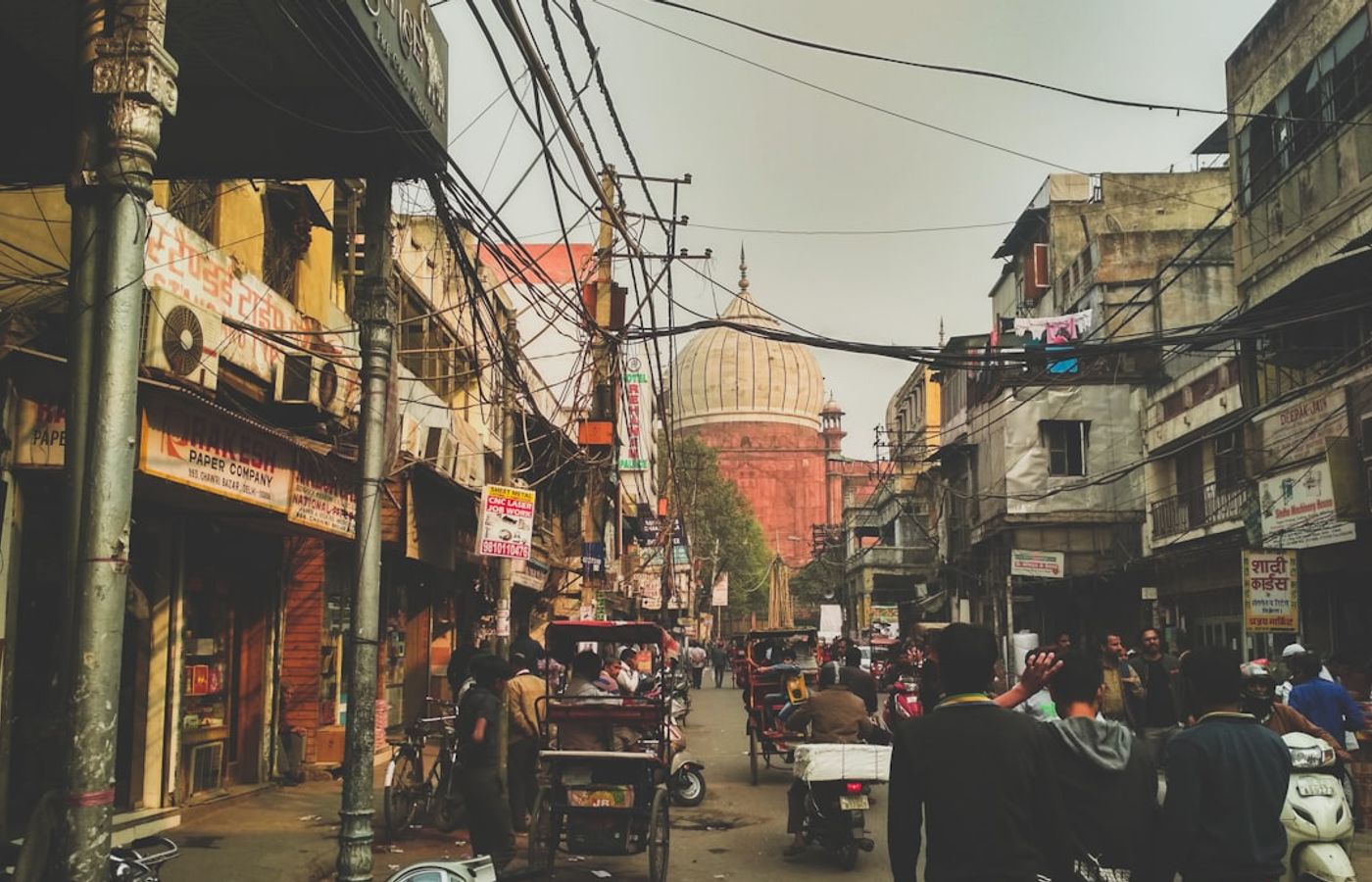

Jahanara Begum, Shah Jahan's eldest daughter, laid out Chandni Chowk in 1650 as a boulevard split by a canal that caught the moonlight, which is where the name comes from. The canal disappeared long ago. The main road now runs 1.3 km from the Red Fort to Fatehpuri Masjid with a pedestrianised central stretch, and the trade that matters happens in the lanes branching off it.
Kinari Bazaar deals in wedding trim and zari embroidery. Dariba Kalan sells silver by weight. Khari Baoli at the western end is the largest wholesale spice market in Asia. Paranthe Wali Gali is a lane barely two metres wide where three families have fried stuffed parathas since the 1870s, at INR 80 to INR 150 a plate, under EUR 2. A cycle rickshaw loop runs INR 100 to INR 200. It is loud, tight and crowded, and that is precisely the appeal.
Pro Tip: Walk the lanes between 10 am and noon on a weekday, once the wholesale trucks have unloaded and before the afternoon crush. Many shops shut on Sunday. Bring a scarf for Khari Baoli, where airborne chilli dust will have you coughing within a minute.
4Humayun's Tomb - The Garden Tomb That Set the Template for the Taj Mahal
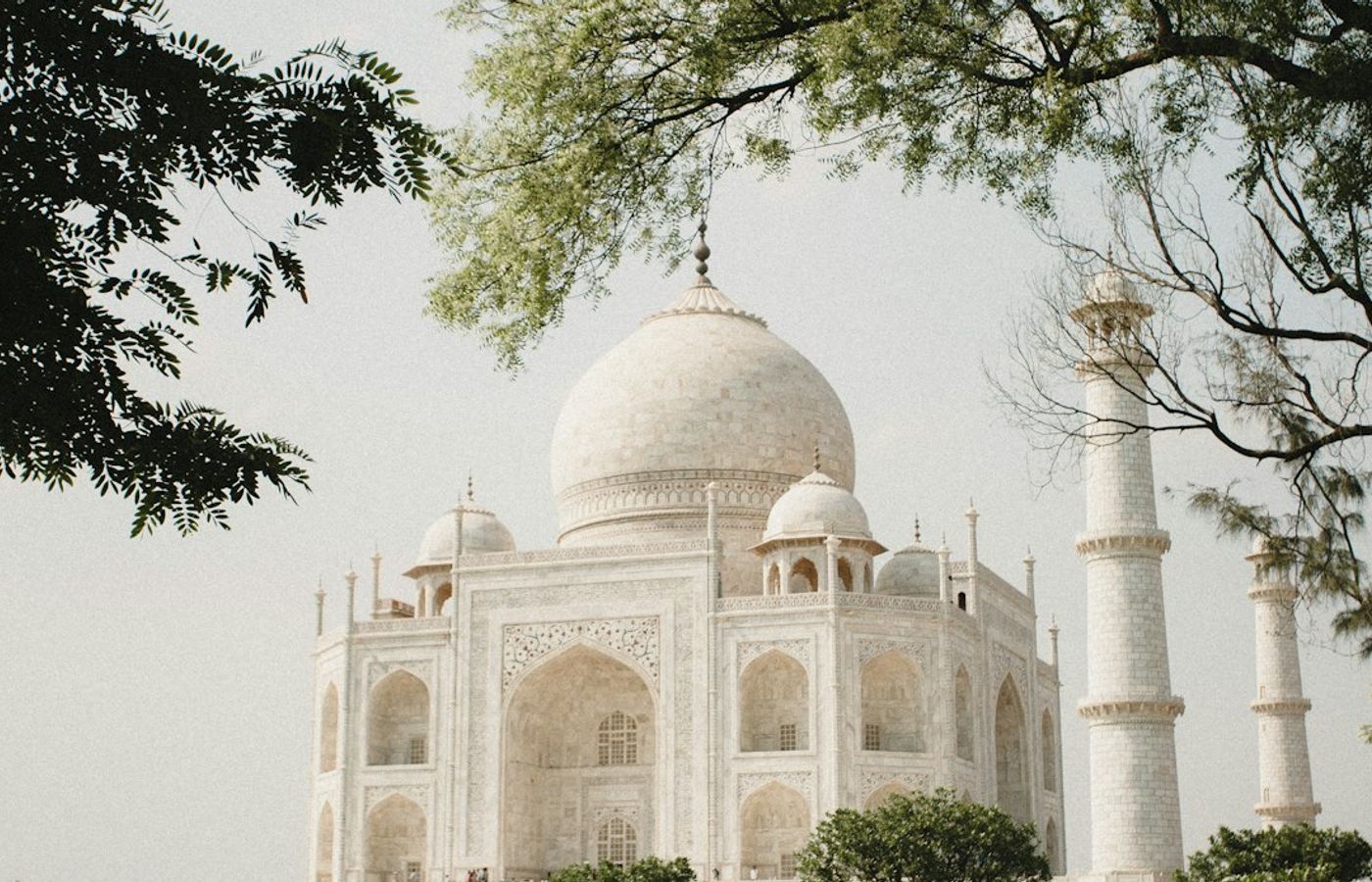
Empress Bega Begum commissioned this mausoleum for the second Mughal emperor between 1565 and 1572, making it the first garden tomb on the Indian subcontinent and the first to use the char bagh plan of four quartered gardens. The red sandstone structure and its 42.5-metre white marble dome became the direct architectural model for the Taj Mahal some 80 years later. UNESCO lists it as Humayun's Tomb, Delhi.
The wider complex contains more than 100 Mughal graves and rewards the full circuit. Isa Khan's octagonal tomb, just inside the entrance, predates the main mausoleum by 20 years and is usually empty. Entry costs INR 40 for Indian citizens and INR 600 (about EUR 6.50) for foreign visitors under the separate foreign-visitor tier, with children under 15 free. Open sunrise to sunset daily. Ninety minutes is fair; photographers will want longer.
Pro Tip: Get in within the first hour after opening and turn left to Isa Khan's tomb before walking to the main platform. You will have the great dome almost to yourself, and the low sun reads the sandstone as orange rather than flat brown.
5Qutub Minar - The Tallest Brick Minaret in the World
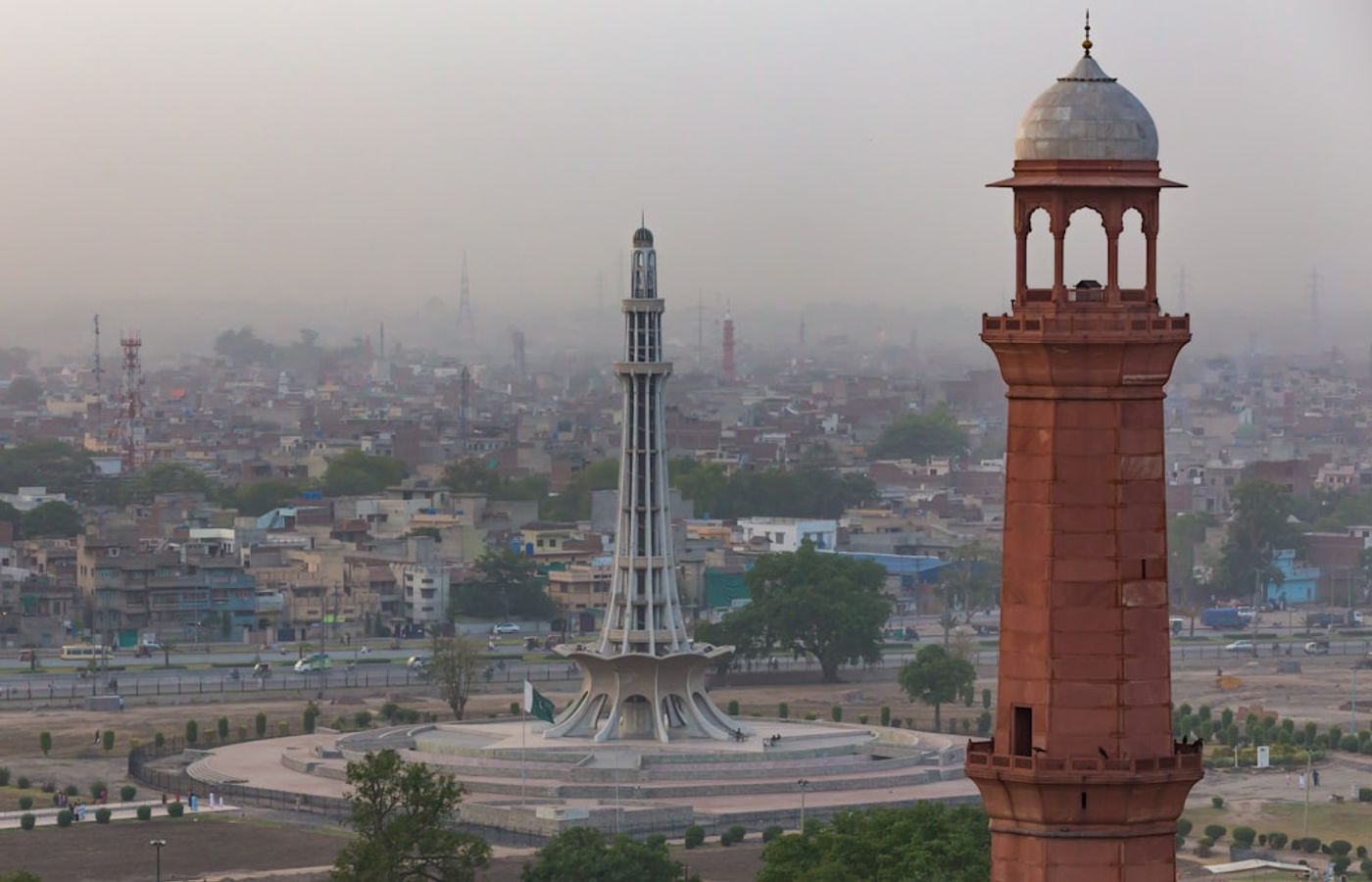
Qutub Minar climbs 72.5 metres in five tapering storeys of fluted red sandstone and marble, begun by Qutb-ud-din Aibak in 1199 and completed by his successor Iltutmish. Bands of Quranic inscription wrap every level. The surrounding Qutb complex holds the Quwwat-ul-Islam mosque, the earliest in northern India, and the 7-metre Iron Pillar of the 4th century, which has resisted rust for more than 1,600 years and remains a genuine metallurgical puzzle.
You cannot climb the tower. The internal staircase closed in 1981 after a fatal stampede and has stayed shut. That takes nothing away from the site, since the ruins around the base repay a slow hour. Entry runs INR 40 for Indian citizens and INR 600 (roughly EUR 6.50) for foreign nationals on the separate tier. Open sunrise to sunset. Mehrauli Archaeological Park adjoins the south side, costs nothing, and scatters the Jamali Kamali mosque and dozens of tombs through open scrub.
Pro Tip: Pair the ticketed complex with a free hour in Mehrauli Archaeological Park next door, and arrive after 4 pm once the tour buses have pulled out. Late afternoon light sits well on the west face of the minaret and the queue is a fraction of the morning length.
6India Gate and the Rajpath (Kartavya Path) - The Ceremonial Spine of New Delhi
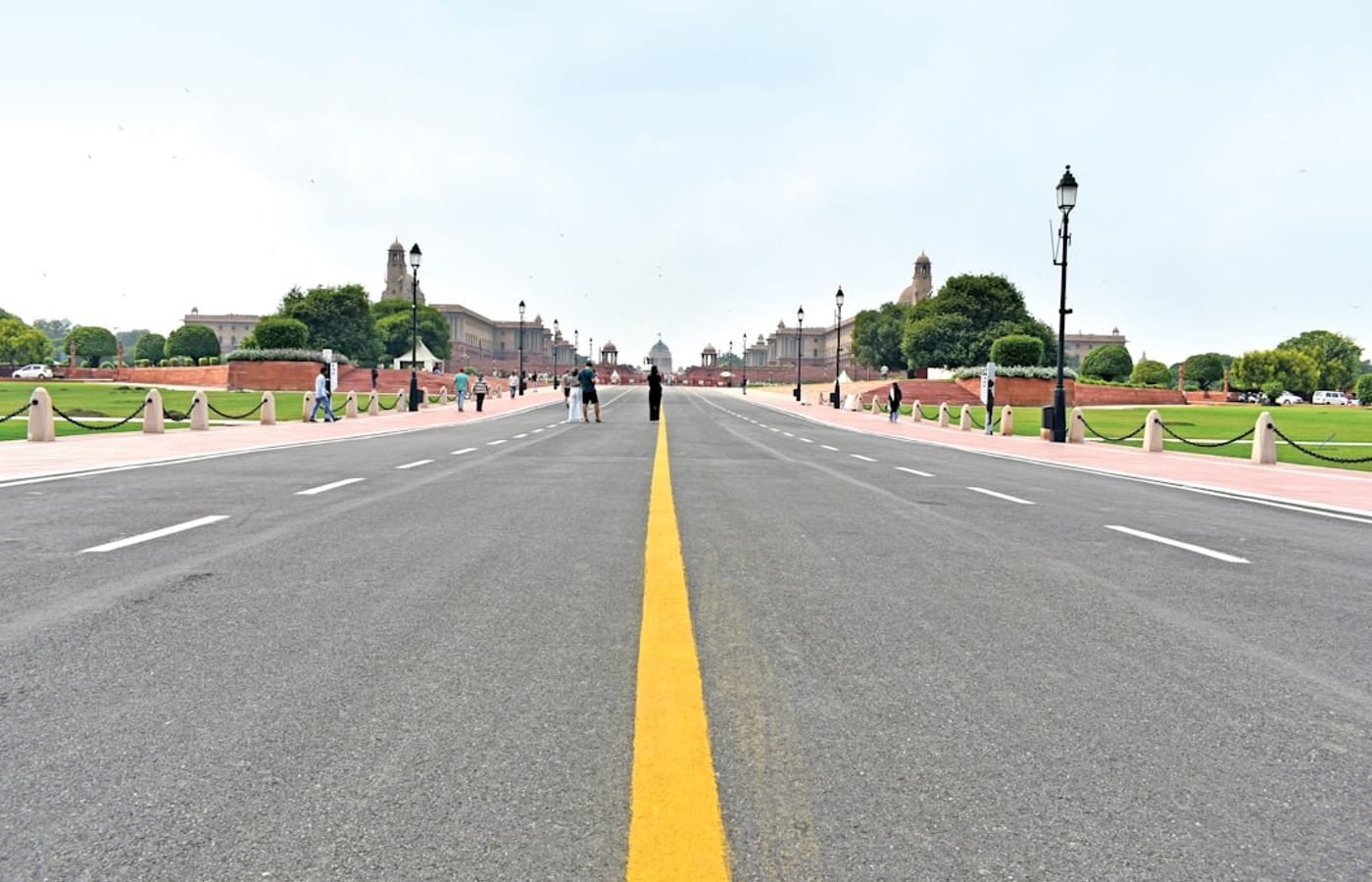
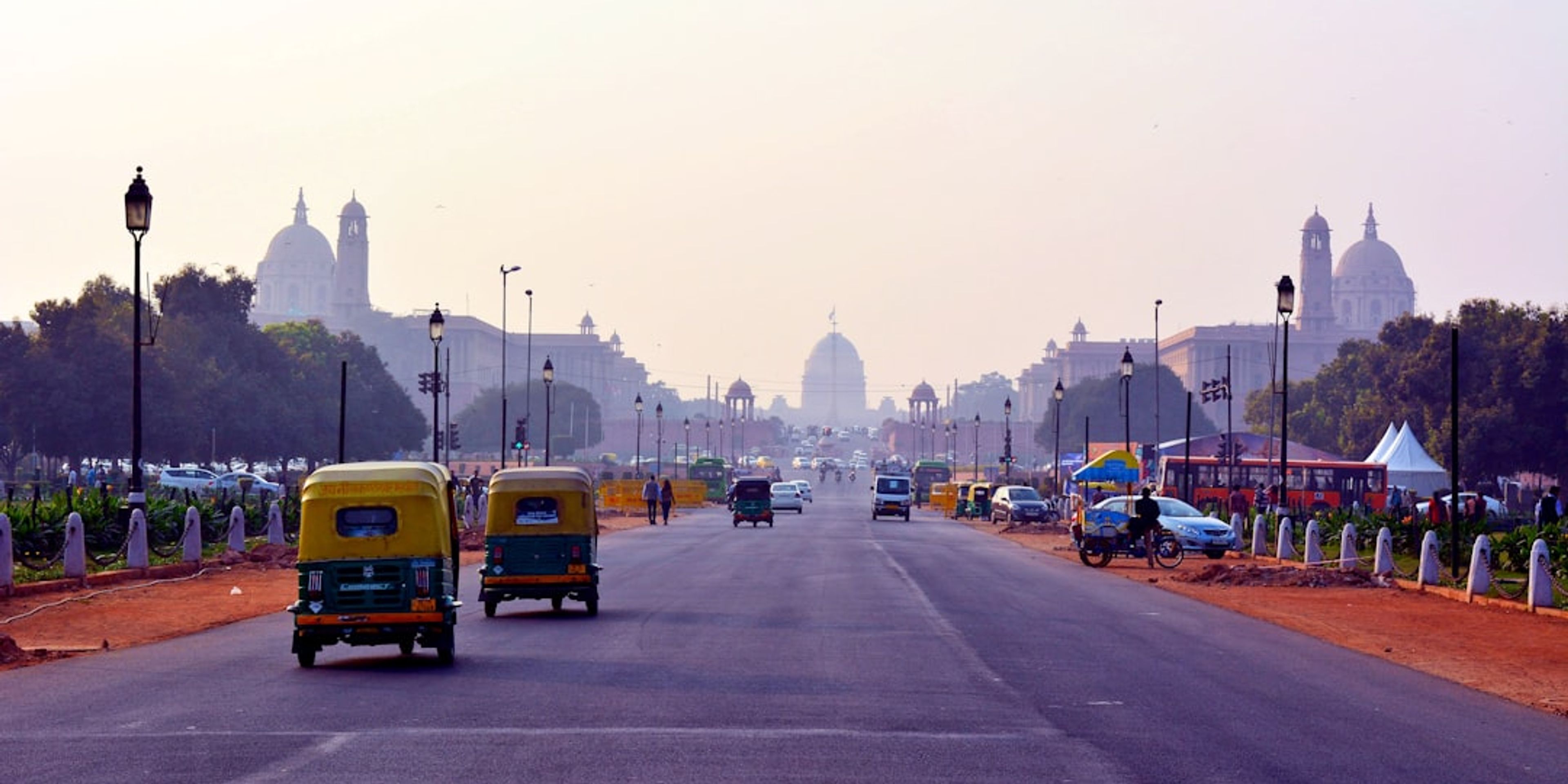
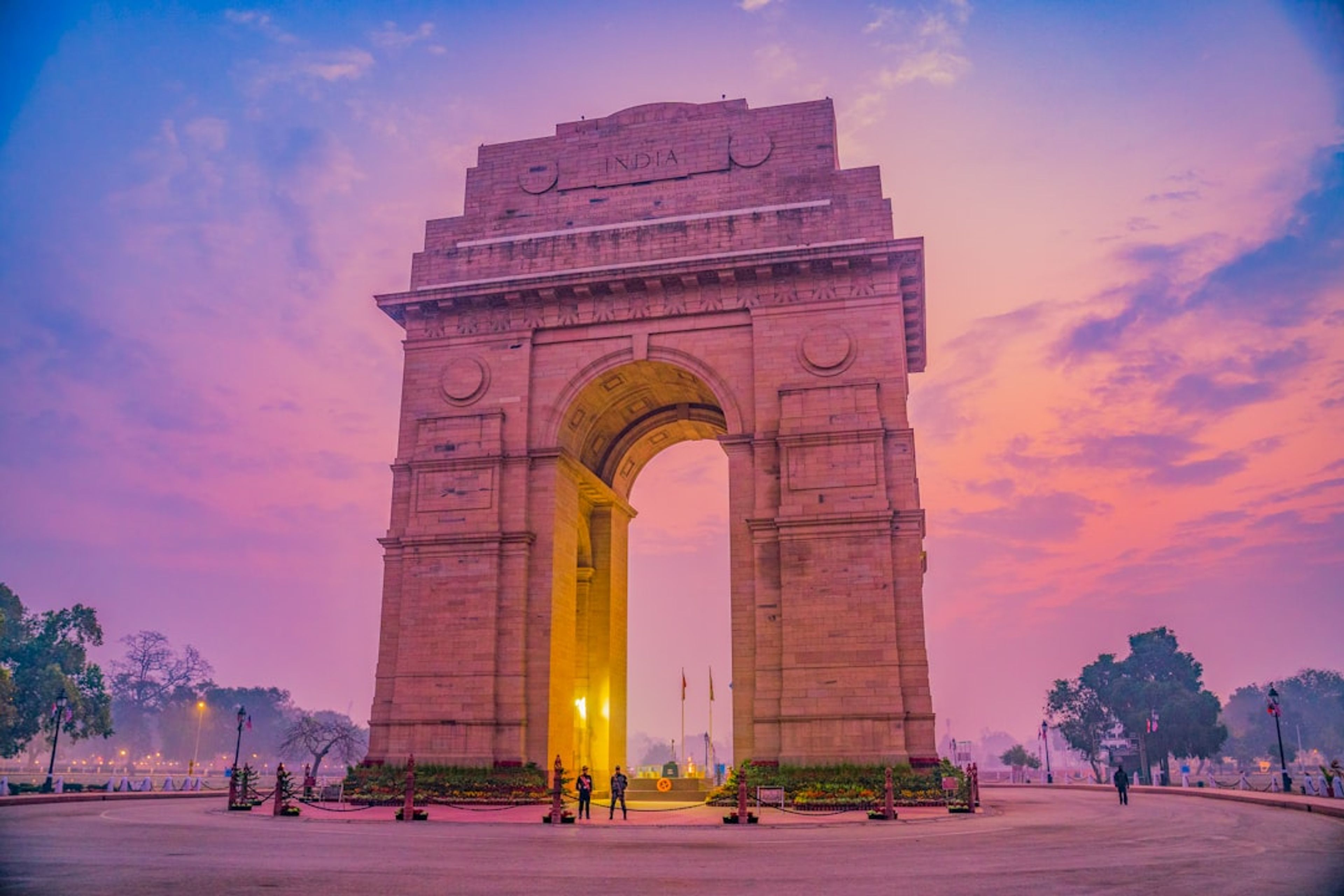
India Gate is a 42-metre arch designed by Edwin Lutyens and completed in 1931, carrying the names of more than 13,000 soldiers of the British Indian Army who died between 1914 and 1921. The National War Memorial behind it opened in 2019 and commemorates those killed since independence. The avenue running west, renamed Kartavya Path from Rajpath in 2022, ends at Rashtrapati Bhavan 2.3 km away.
The 2022 redevelopment added lawns, canals with boating, granite walkways and food kiosks along both flanks, so the promenade now functions as a public park in the evening rather than a monument you tick off in five minutes. Access is free and the arch is floodlit after dark. Rashtrapati Bhavan and its Amrit Udyan gardens require separate online booking and open only in set seasons. State food stalls near the eastern end sell regional snacks cheaply.
Pro Tip: Come after 7 pm. The arch is lit, the temperature drops several degrees, and Delhi families fill the lawns. Park on Man Singh Road and walk in rather than circling the hexagon, which gridlocks on weekend evenings.
7Lotus Temple - The Bahai House of Worship in Marble Petals
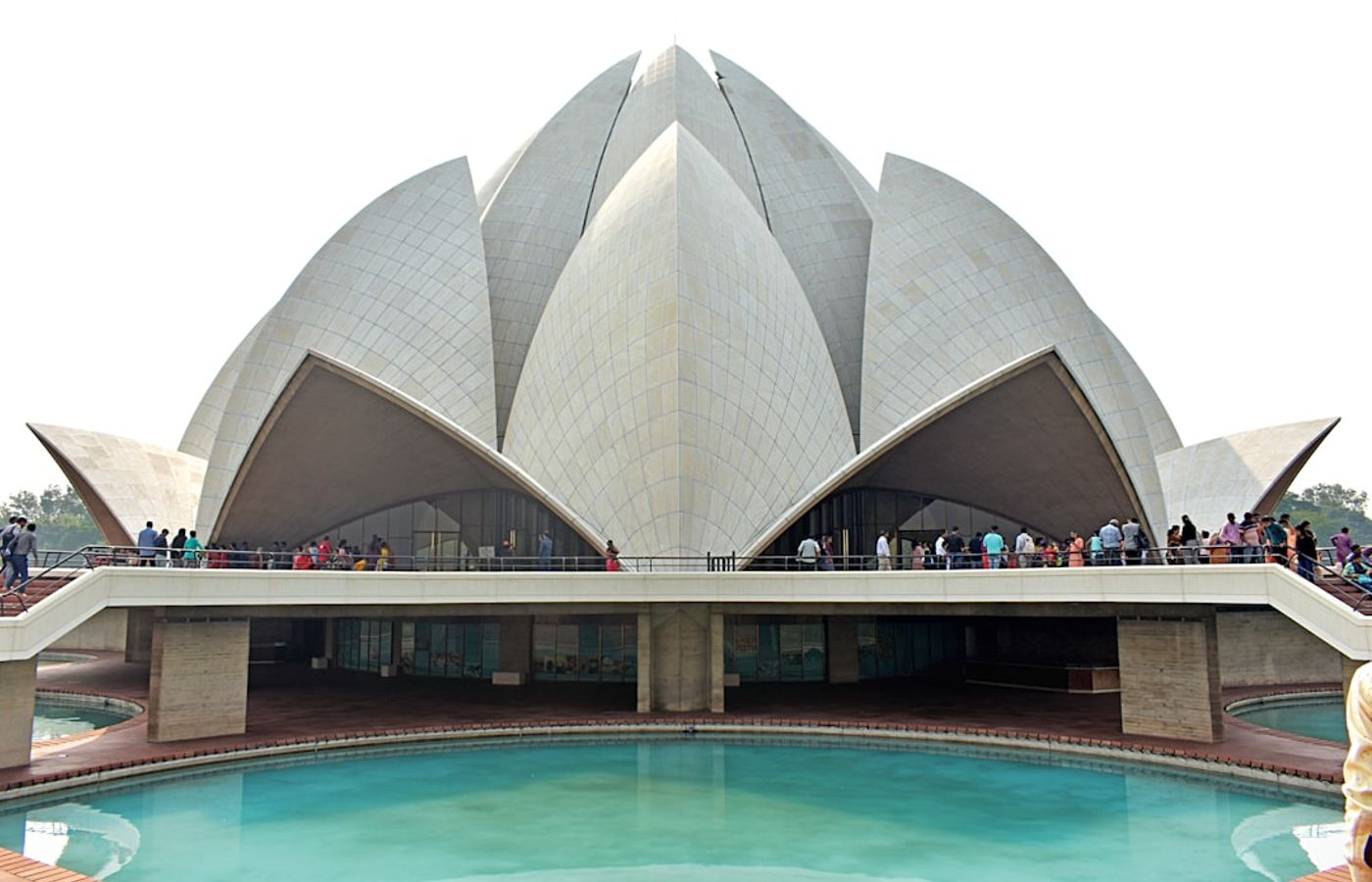
The Lotus Temple opened in 1986 as the Bahai House of Worship for the Indian subcontinent, designed by Iranian architect Fariborz Sahba. Twenty-seven petals clad in Greek Pentelic marble fold into nine sides, each with its own entrance, around a central hall seating 2,500. Nine surrounding pools cool the structure and mirror the shell. Visitor numbers have passed 100 million, which puts it among the most-visited buildings on earth.
There is no altar, no idol and no clergy. The hall exists for silent meditation and the staff enforce that silence firmly. Readings from any scripture are permitted; sermons are not. Entry is free. Shoes come off before the steps and photography inside the hall is prohibited. The weekend queue can run 45 minutes. Closed on Mondays. Twenty minutes inside is enough, and the gardens deserve another twenty.
Pro Tip: Turn up at 9 am on a weekday and the queue is five minutes instead of 45. Walk the outer garden path anticlockwise afterwards for the cleanest sightline onto all nine petal groups without other visitors in the frame.
8Akshardham Temple - The Modern Stone Complex on the Yamuna's East Bank
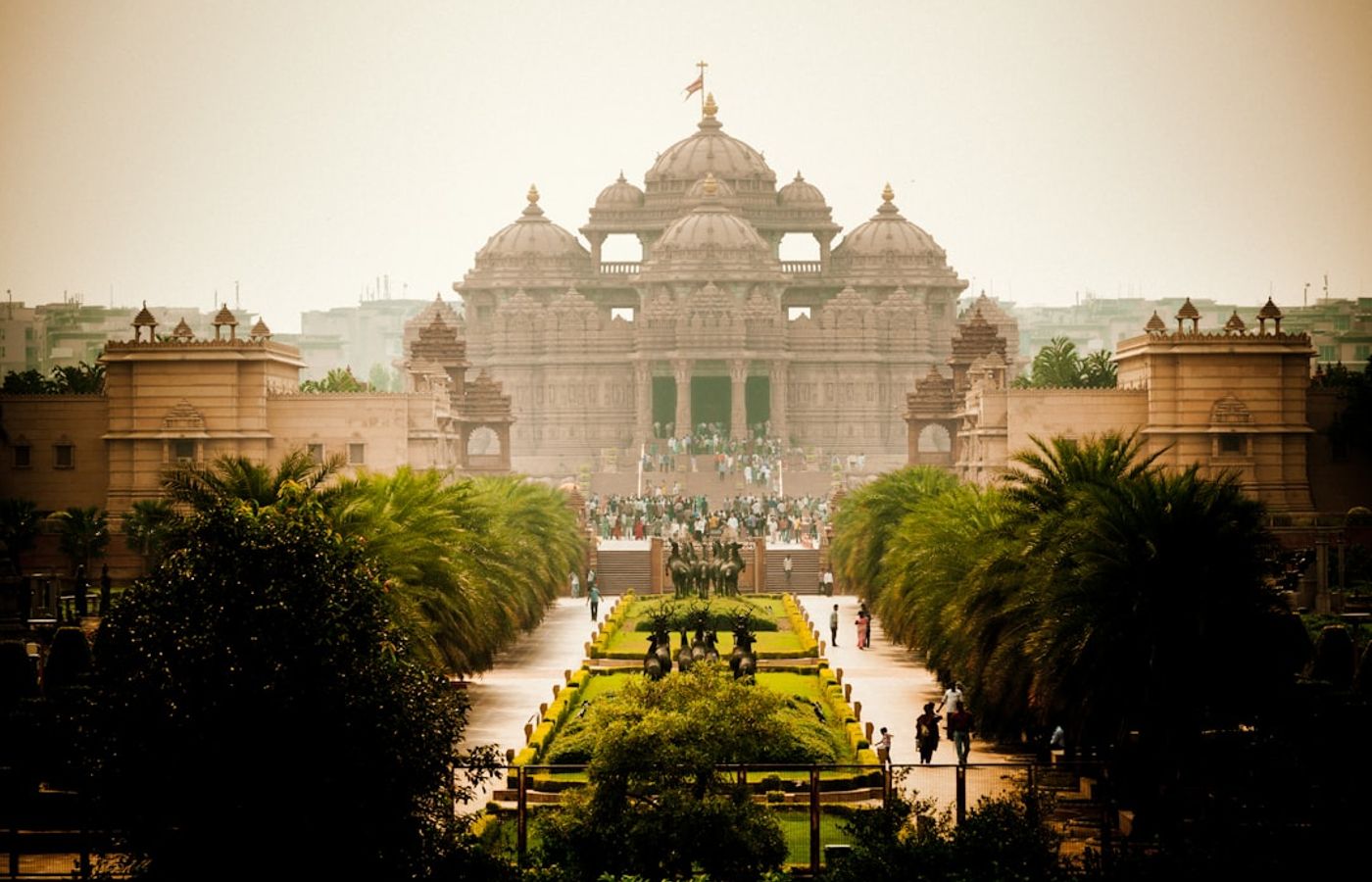
Swaminarayan Akshardham opened in 2005 on the eastern bank of the Yamuna, built from Rajasthani pink sandstone and Italian Carrara marble with no structural steel or concrete anywhere in the monument. The central shrine stands 43 metres high on 234 carved pillars, under 9 domes, with roughly 20,000 sculpted figures across its surfaces. Around 7,000 craftsmen and 3,000 volunteers worked on it. The grounds cover 100 acres.
Entry to the grounds is free. The exhibition halls, the boat ride through 10,000 years of Indian history and the musical fountain are ticketed together at around INR 220 for adults, about EUR 2.40. Security is the strictest on this list by a wide margin: no phones, no cameras, no bags, no electronics of any kind pass the gate. Closed on Mondays. Budget three hours if you take the exhibitions, ninety minutes if you do not.
Pro Tip: Leave your phone and bag where you are staying, or use a locker at Akshardham metro station, rather than joining the on-site cloakroom line that runs 30 minutes at weekends. The musical fountain at sunset is the one paid extra worth buying.
9Lodhi Gardens - Fifteenth-Century Tombs Inside a 90-Acre Public Park
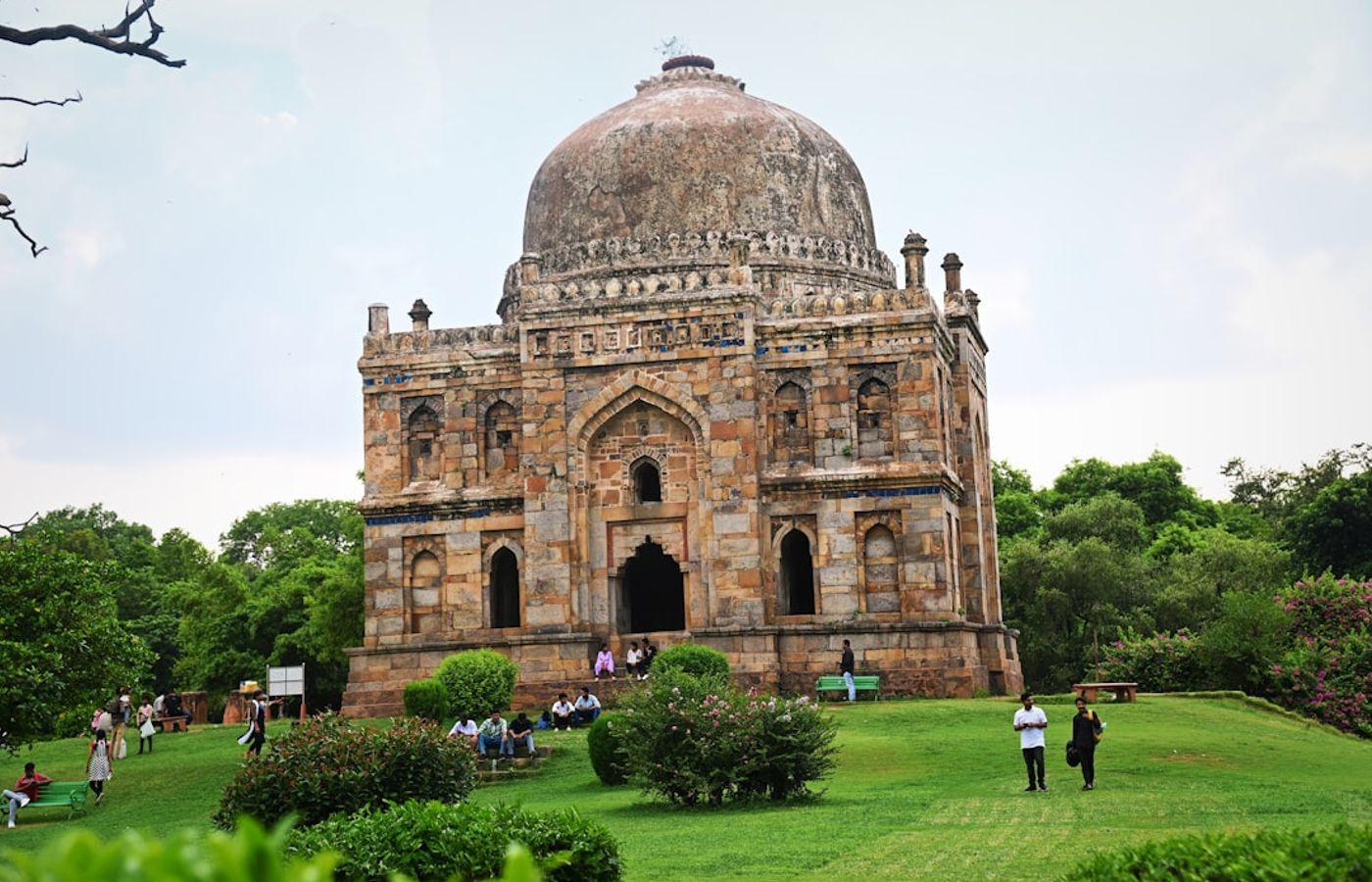
Lodhi Gardens spreads across 90 acres between Khan Market and Safdarjung's Tomb, holding the mausoleums of Sayyid and Lodhi dynasty rulers from the 15th and 16th centuries. Mohammed Shah's tomb of 1444 is the oldest structure on the site. Sikandar Lodi's tomb of 1517 sits at the northern end inside its own walled enclosure. The Bara Gumbad and Sheesh Gumbad face each other across a lawn, their domes still showing traces of blue tile.
The park took its current landscaped form in 1936 and was reworked in 1968 by the American architect Joseph Allen Stein. Delhi residents use it hard: joggers from 6 am, yoga groups on the lawns by seven, families through the late afternoon. Entry is free and the gates open from sunrise until 8 pm. There is a bonsai garden, a rose garden and a glasshouse. Nothing is roped off, so you walk straight into the tombs.
Pro Tip: Enter from the Lodhi Road gate near the India International Centre and head north. You pass Mohammed Shah's tomb, then Bara Gumbad, then Sikandar Lodi in a clean line with no doubling back. December and January fog before 8 am makes the domes photograph beautifully.
10Gurudwara Bangla Sahib - The Sikh Shrine With a Free Kitchen for Thousands
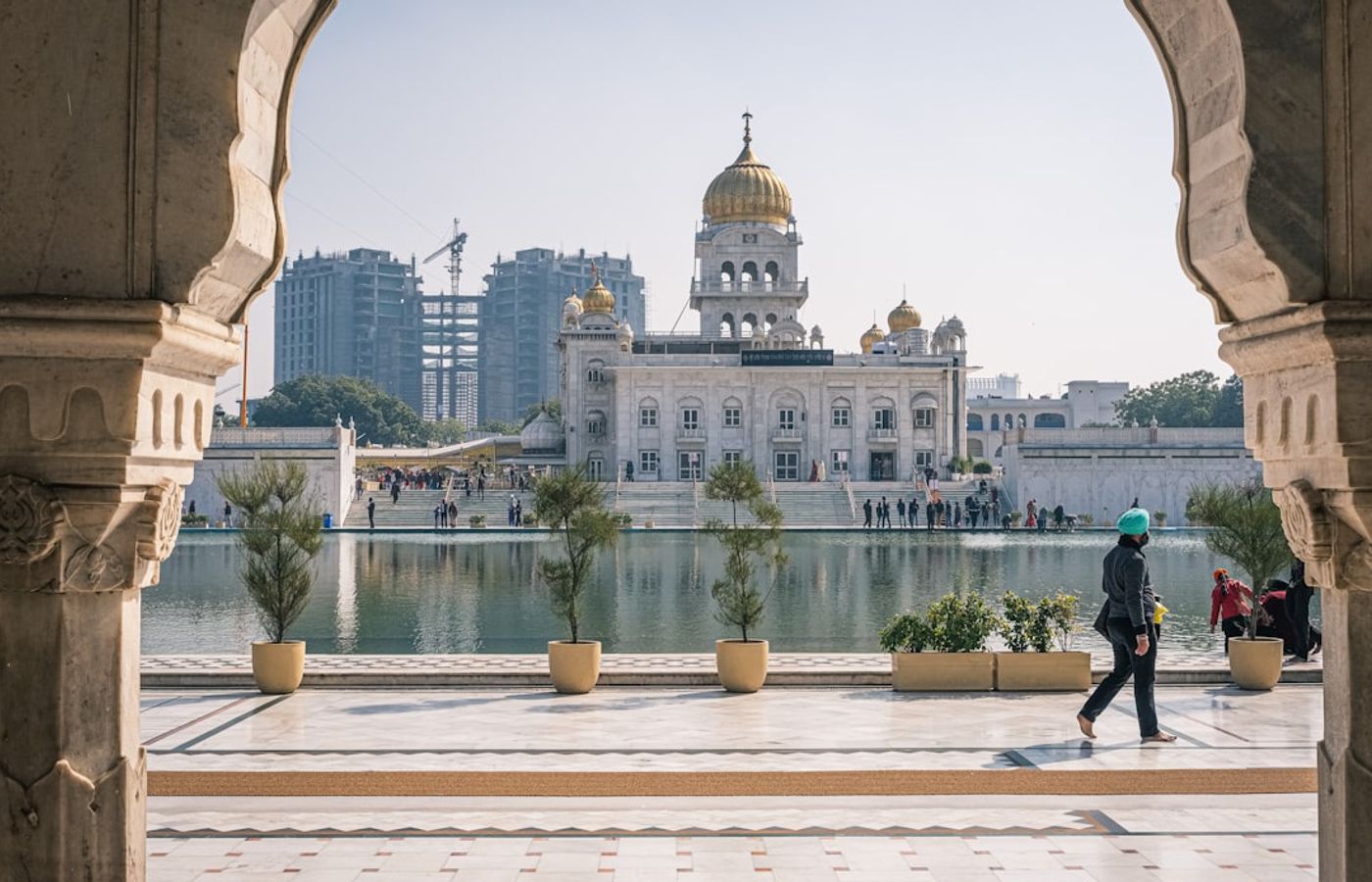
Gurudwara Bangla Sahib occupies the site of a bungalow owned by Raja Jai Singh, where the eighth Sikh Guru, Har Krishan, stayed in 1664 and treated victims of a smallpox and cholera outbreak before dying of the illness himself at the age of eight. The gilded dome and the sarovar, the large tank of water regarded as holy, define the complex. The present building dates from 1783, when Sardar Baghel Singh had it constructed.
The langar, or community kitchen, serves free vegetarian meals to tens of thousands of people daily regardless of faith, and visitors are welcome to help wash the steel plates. Entry is free and the gurudwara never shuts. Heads must be covered; orange bandanas are handed out at the entrance. Shoes go to the free deposit counter. Photography is allowed in the courtyard but not during ceremonies. Connaught Place is a fifteen-minute walk away, so this slots easily into a central Delhi afternoon.
Pro Tip: Eat in the langar rather than just looking at it. Meals run continuously and you sit on the floor in rows with everyone else. Arrive around 11 am on a weekday for the calmest turnover, and walk clockwise around the sarovar as local worshippers do.

CEO and co-founder
Tomas is the co-founder and director of trip1, an European company specializing in reservation services. He launched the company in 2025 with a focus on building scalable, efficient operations.
Climate averages · 1991–2020
When is the best time to visit Delhi?
The best time to visit Delhi is between February and April, the most comfortable stretch of the year on these averages.
Best time · February–AprilRainfall
- Jan14°
- Feb17°
- Mar23°
- Apr29°
- May33°
- Jun33°
- Jul32°
- Aug30°
- Sep30°
- Oct26°
- Nov21°
- Dec15°
More of India
10 Top Places to Visit in Delhi, India - FAQ
No, ten sites in a single Delhi day is not realistic. Four or five stops is a workable pace, because the Red Fort in Old Delhi and Qutub Minar in Mehrauli sit roughly 20 km apart and traffic swallows the gaps. Spread this list across three days and you will actually see each place rather than photograph it and leave.
Group them by district rather than by fame. Day one covers Old Delhi: the Red Fort, Jama Masjid and Chandni Chowk sit within a ten-minute walk of each other. Day two takes the New Delhi cluster of Gurudwara Bangla Sahib, India Gate and Kartavya Path, Lodhi Gardens and Humayun's Tomb. Day three heads south and east for Qutub Minar, the Lotus Temple and Akshardham.
Three of them: the Red Fort, Humayun's Tomb and Qutub Minar. All three are Archaeological Survey of India monuments selling timed e-tickets online, and buying the night before skips the counter queue entirely. Akshardham sells exhibition tickets on site only. Jama Masjid, Chandni Chowk, India Gate, the Lotus Temple, Lodhi Gardens and Gurudwara Bangla Sahib need no ticket at all.
Budget roughly INR 2,400 (about EUR 26) per foreign visitor for the full list. The Archaeological Survey of India runs a separate foreign-visitor tier: INR 600 each at the Red Fort, Humayun's Tomb and Qutub Minar against INR 35 to INR 40 for Indian citizens. Add the INR 100 minaret climb and INR 300 camera fee at Jama Masjid, plus around INR 220 for the Akshardham exhibitions. Six of the ten cost nothing.
Yes, every one of the ten sits within reach of the Delhi Metro. Lal Qila and Jama Masjid have their own Violet Line stations, Chandni Chowk is on the Yellow Line, and Qutub Minar, Kalkaji Mandir and Akshardham each have named stops. Humayun's Tomb and Lodhi Gardens need a walk of ten to fifteen minutes from JLN Stadium and Jor Bagh respectively, or a short auto rickshaw ride.
Several strong sites missed the cut on distance or overlap. The National Museum on Janpath holds the Harappan collection and needs half a day. Safdarjung's Tomb, Agrasen ki Baoli stepwell off Hailey Road, Hauz Khas Village and the free Mehrauli Archaeological Park next to Qutub Minar each repay an hour. Add the Crafts Museum near Pragati Maidan if you are shopping for textiles.

Related travel guides
10 Best Beaches in Goa
Our ranked list of the 10 best beaches in Goa, India, from quiet Cola and Agonda to busy Baga, with addresses, transport and Pro Tips.
12 Top Places to Visit in Jaipur, India
Discover the 12 best places to visit in Jaipur in 2026 - from Amber Fort to Hawa Mahal, with addresses, transit tips, and insider Pro Tips.