

Guides · Goa
10 Best Beaches in Goa

CEO and co-founder
This guide ranks the 10 best beaches in Goa, India, and nothing else - no forts, no waterfalls, no spice farms. Every entry is a stretch of sand you can walk onto, judged on the water, the crowd, the shack scene and how hard it is to reach. Some made the list because they are quiet. Others made it because they are famous, and you will probably end up there anyway.
The order runs north to south, which is also how the coast changes. North Goa - Arambol, Vagator and Ozran, Anjuna, Baga and Calangute - is denser, louder and lined with bars, markets and water sports operators. South Goa - Colva, Agonda, Palolem, Butterfly and Cola - is greener, emptier and shuts down earlier in the evening. Baga and Calangute are the two entries we are least enthusiastic about, and their write-ups say so plainly rather than dressing up the crowds.
Each entry carries an exact address with village, taluka and Goa postal code, the nearest railway station or airport plus scooter and taxi times from Panaji, the distance from Panaji itself, and a Pro Tip drawn from how the beach actually works rather than how it photographs. The season runs November to March, when the sea is flat and the shacks are up. From roughly June to September the monsoon closes most shacks, lifeguards pull the flags and swimming stops. It is a short flight from Mumbai if you are adding beach days to the end of a city trip, which is how most people who are not flying in directly end up arriving. The monsoon window is the single thing that decides whether this list works at all, so check Goa weather before booking anything between June and September. The hotels in Goa cluster along the northern and southern beach strips rather than in Panaji itself, and the two coasts make for quite different holidays.
1Palolem Beach - The South Goa Crescent That Tops the List
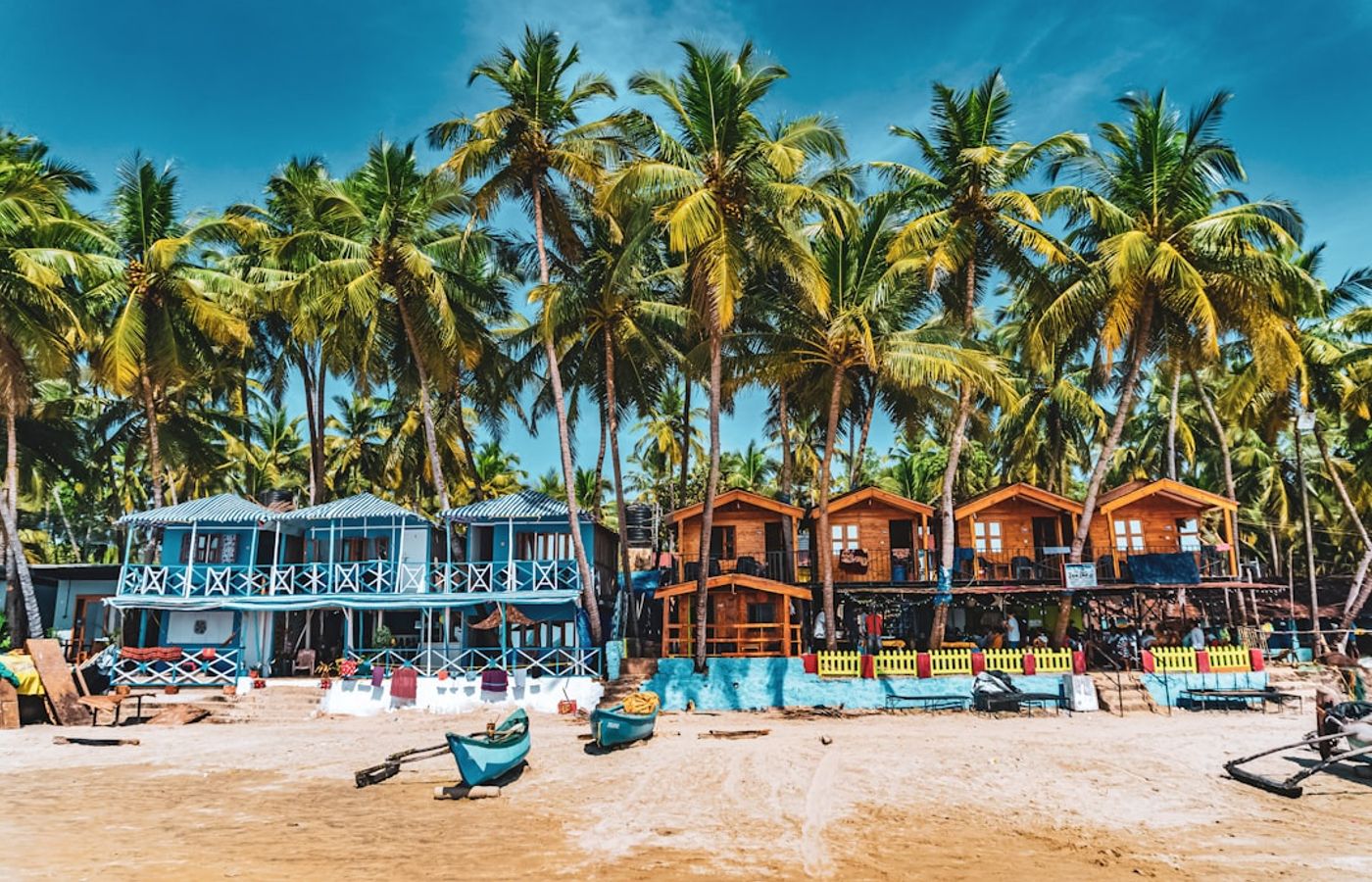

Palolem is a 1.5 km crescent of pale sand closed at both ends by rocky headlands, and that bay shape is what makes it work. The water inside the arc is shallow, warm and unusually calm, so this is one of the few places in Goa where confident swimming carries genuinely low risk. Drishti Marine lifeguards work the beach through the season. Kayaks go out from the sand at around INR 400 (EUR 4.50) an hour, and boats leave the northern end for Butterfly Beach and Honeymoon Island.
The shack scene is dense but low-rise, all wooden huts on stilts and restaurants that push tables onto the sand at sunset. Crowds skew towards long-stay backpackers, European couples and Indian families, and the bay fills properly from mid-December to early January. Silent discos with headphones replace loudspeakers after 10pm because of noise rules. Nearly everything is dismantled by late May and rebuilt in October, so a monsoon visit means an empty, beautiful, closed beach.
Pro Tip: Walk to the far southern end past the freshwater stream at low tide and cross to Canopy Rock. That corner stays near empty even on a January weekend, and you can wade back before the tide turns around 4pm.
2Agonda Beach - The Quietest Long Stretch in Canacona
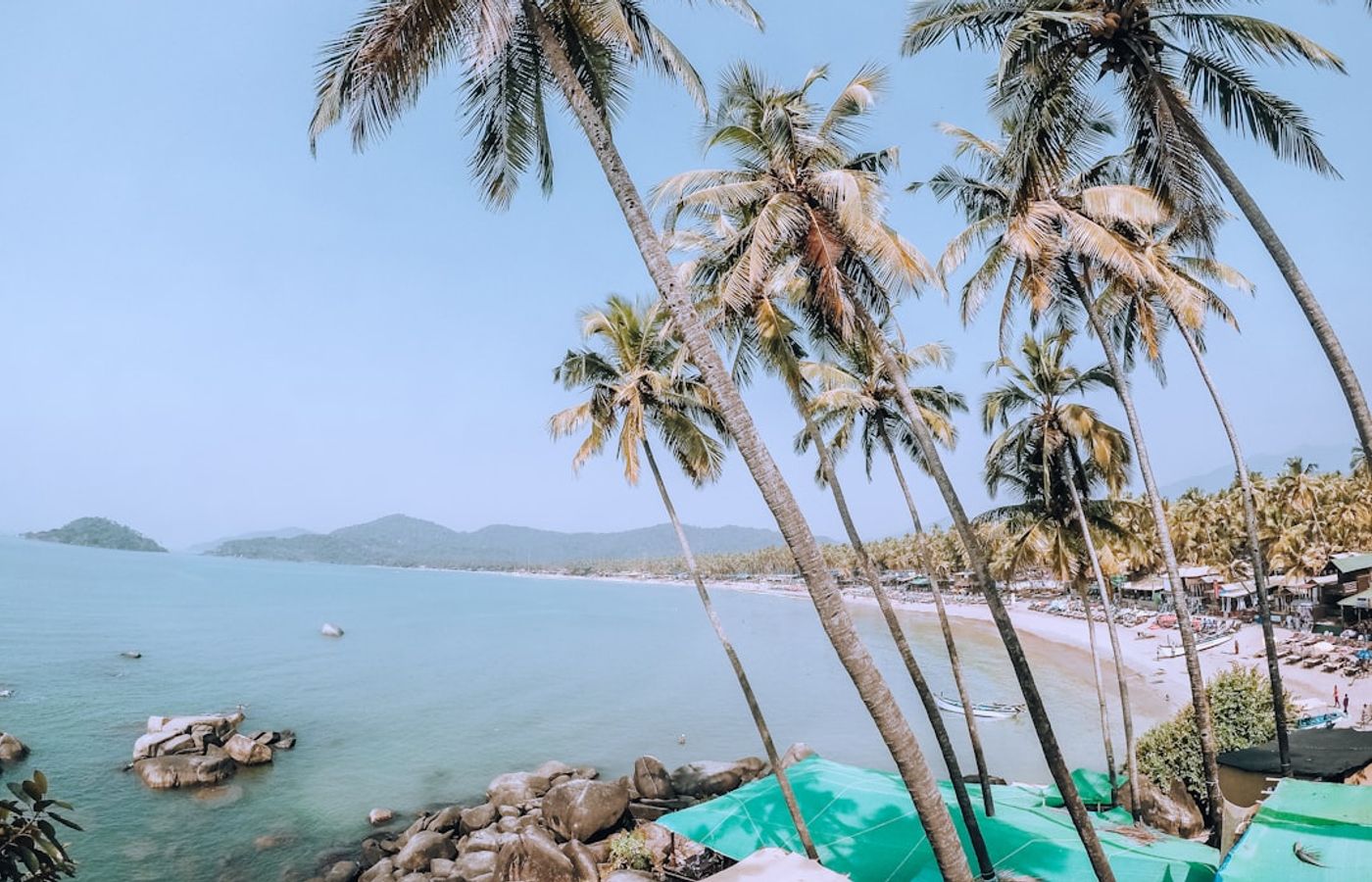

Agonda runs for roughly 3 km with almost no buildings visible from the waterline, which is exactly why people who find Palolem too busy end up here. The sand is broad and firm, backed by casuarina trees and a single lane of huts. Swimming is straightforward for most of the season, though the shore break turns punchy in November and again in March, and there is no reef to flatten the swell. Lifeguards patrol the central section. Olive ridley turtles nest at the southern end, and the marked nesting zone is roped off from November to February.
Shacks are fewer and further apart than at Palolem, with a yoga-and-early-dinner rhythm rather than a party one. Thali plates cost around INR 250 (EUR 2.75), grilled kingfish nearer INR 700 (EUR 7.50). The crowd runs older on average: couples, solo travellers on long stays, and families with small children who want shallow water without loudspeakers. Most places shut from June and reopen in mid-October once the monsoon clears.
Pro Tip: Park at the northern end near Agonda Church rather than the central lane. The southern lot fills by 10am in peak season and the walk back along the road has no shade at all.

3Anjuna Beach - Red Cliffs, Rock Pools and the Wednesday Market
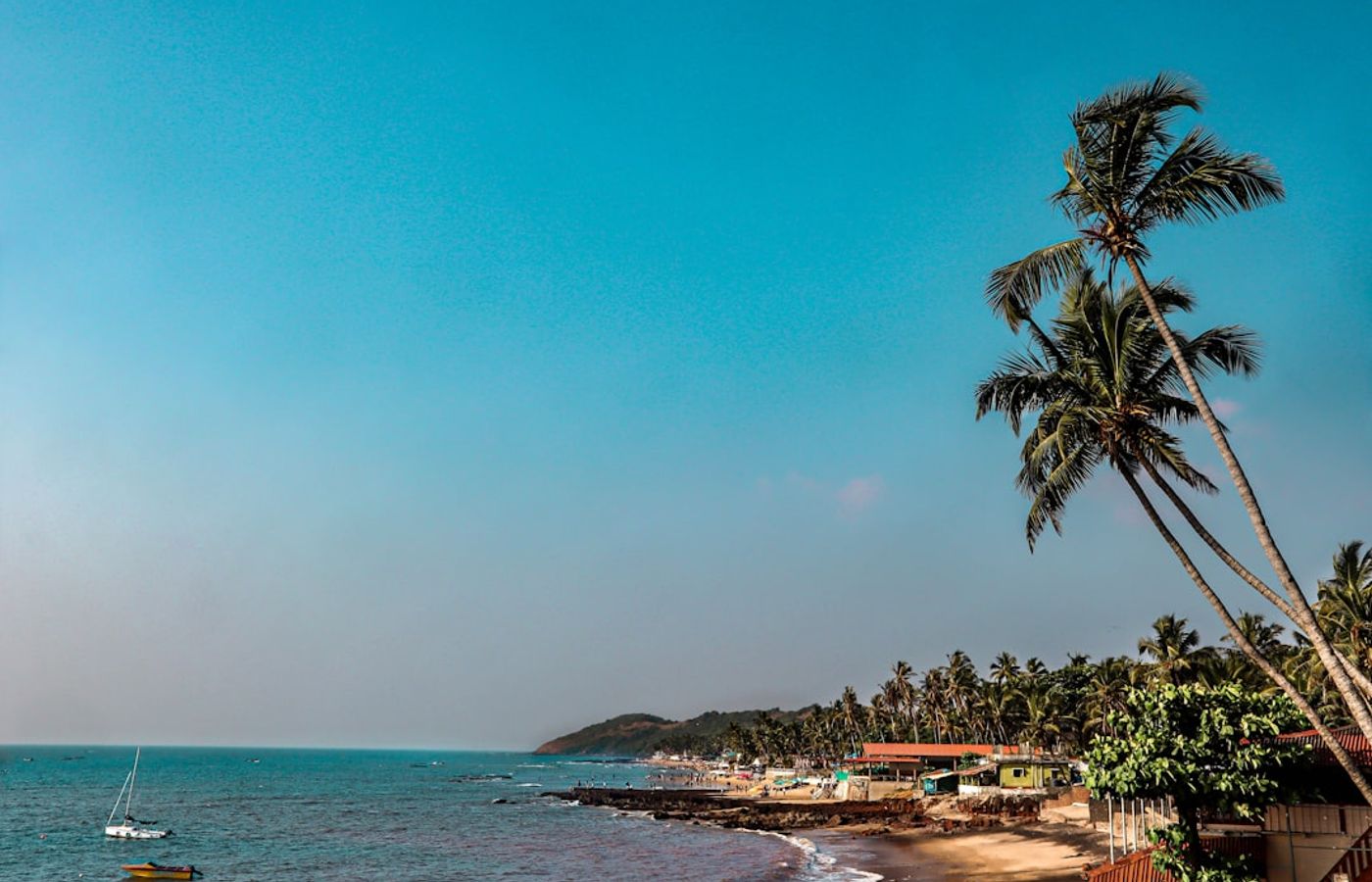

Anjuna is not a soft-sand beach. Laterite rock outcrops break the shoreline into small bays, the cliff at the northern end drops straight into the water, and the sand between is coarse and dark in patches. Swimming makes sense only in the middle section and only at low to mid tide - the rocks are sharp, the current runs hard past the headland, and lifeguard cover does not extend along the whole strip. What Anjuna Beach has instead is atmosphere and a long view, best taken from the cliff terraces above the sand.
The shack scene is scruffy and long-established, heavy on trance-era holdovers, beer at around INR 150 (EUR 1.60) and cliffside bars that open late. Every Wednesday the Anjuna Flea Market fills the ground behind the southern end from roughly 9am to 6pm, and traffic on the approach road doubles. The crowd mixes long-stay Europeans, Russian and Israeli travellers, day-trippers over from Calangute and a steady stream of scooter tourists. It empties out sharply once the monsoon arrives.
Pro Tip: Skip Wednesday unless you came for the flea market. Go on a Monday morning instead, park at the panchayat lot for about INR 50 (EUR 0.55) and walk south to the rock pools before the tide covers them.
4Baga Beach - Loud, Crowded and Honest About It
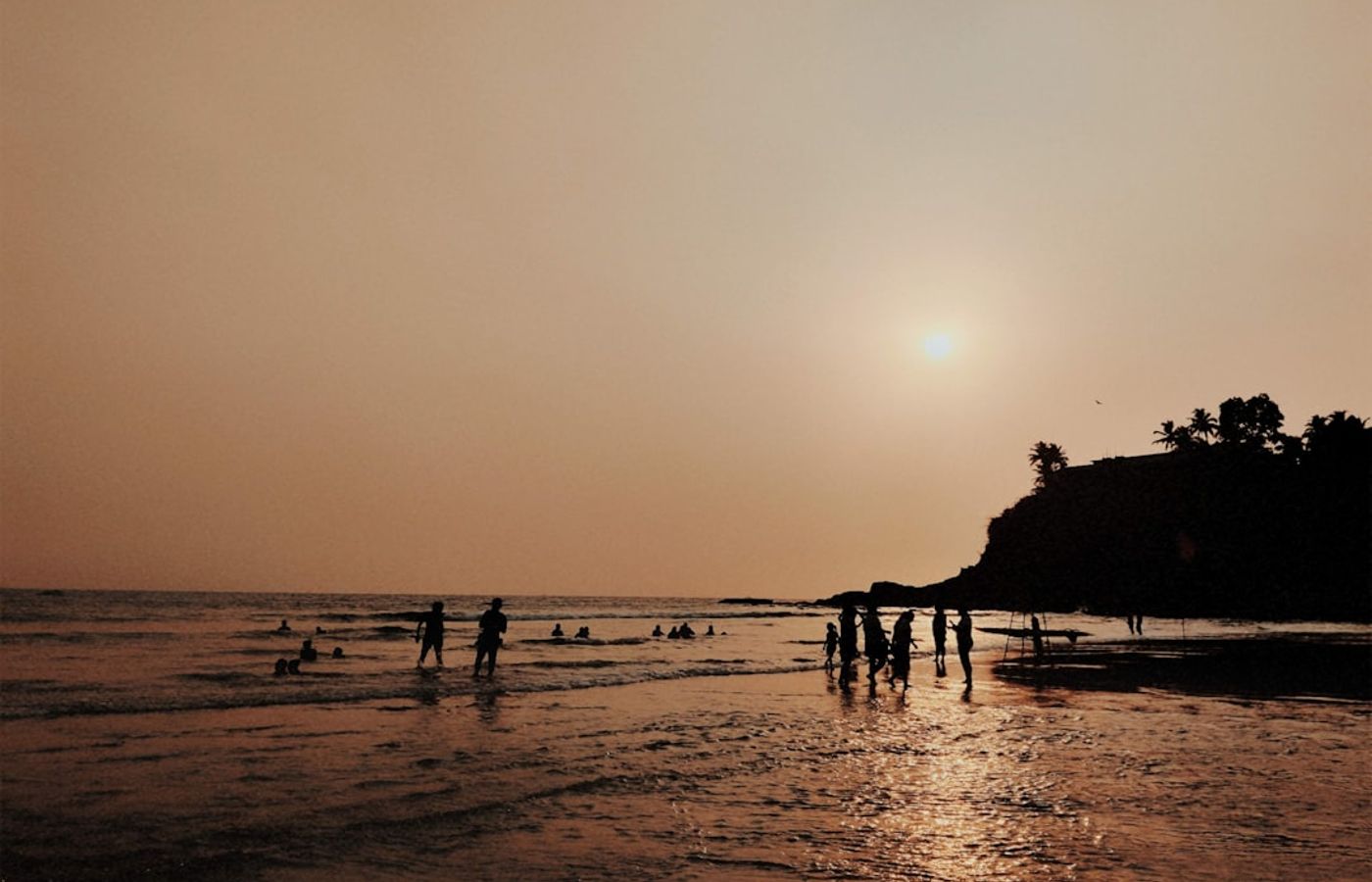
Baga is the busiest beach in north Goa and it does not pretend otherwise. The sand is wide and clean enough, but from about 9am it is packed with sunbeds, jet ski operators, parasail boats and hawkers, and the strip behind it is wall-to-wall clubs. Swimming is possible and genuinely compromised at the same time: watercraft run close to shore, the current pulls north towards the Baga river mouth, and the designated swimming zone is narrow. Lifeguards are present and they enforce the flags strictly, which is worth respecting here.
The shack scene is commercial and high-volume, with menus in four languages and prices roughly 30 percent above Agonda - a beer near INR 200 (EUR 2.20), a plate of prawns closer to INR 900 (EUR 10). Domestic package groups and stag parties dominate, especially at weekends and over New Year. If you want quiet sand, this is the wrong beach. If you want water sports and a bar still open at 2am, it delivers exactly that. Everything on the water stops during the monsoon.
Pro Tip: Come before 8am. Baga at sunrise, before the jet skis start and the beds go out, is a completely different beach, and the walk north across the Baga river towards Anjuna takes about 25 minutes at low tide.
5Calangute Beach - The Biggest and Most Commercialised
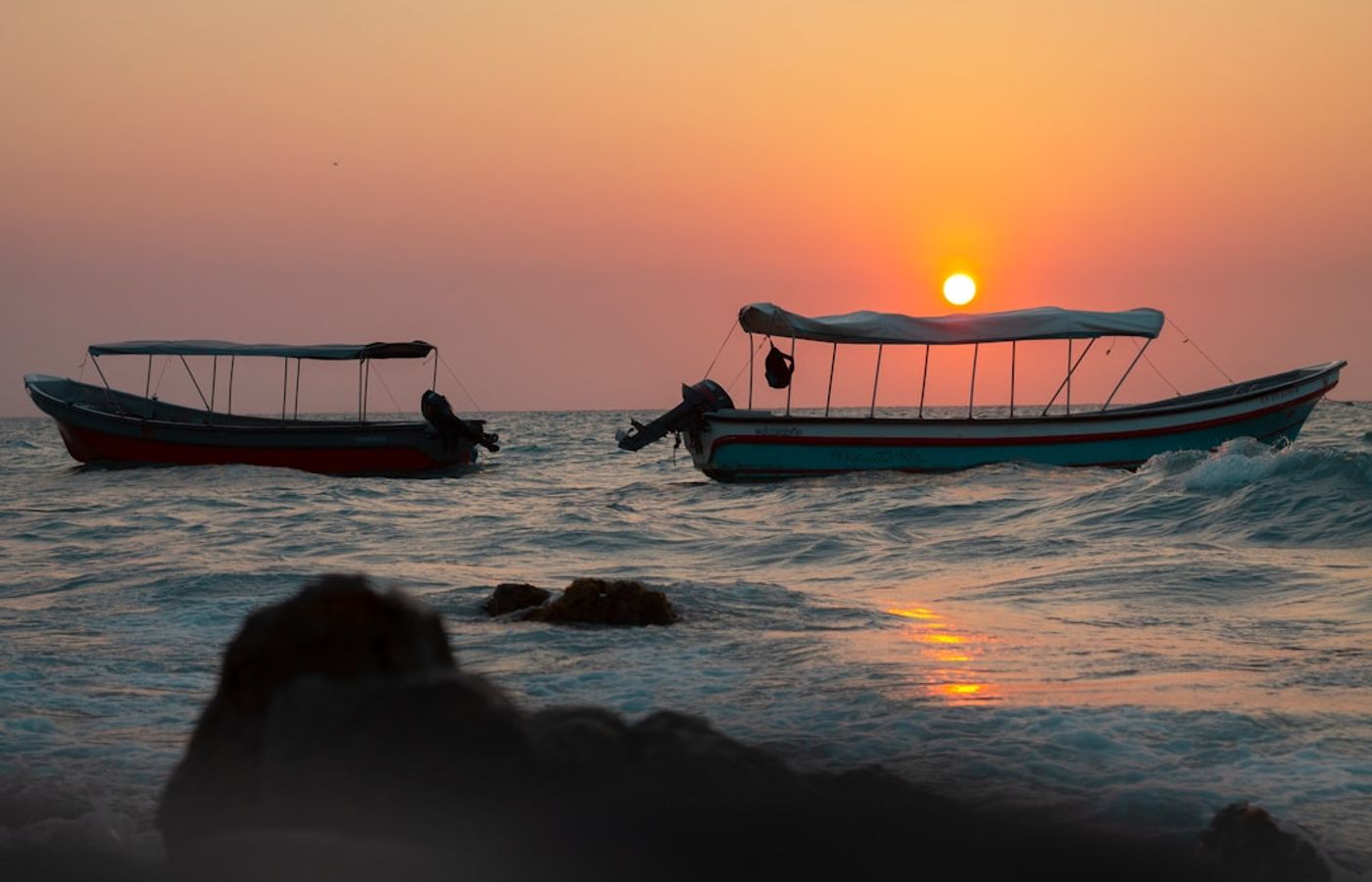
Calangute gets called the queen of Goa's beaches, which says more about its size than its quality. It is a long, straight, wide strip that merges into Baga at the north and Candolim at the south, and in peak season the central section is one of the most crowded pieces of sand in India. Swimming is manageable inside the flagged zone, but the seabed drops off unevenly and drownings happen here most years, almost always outside the flags or after drinking. Lifeguards work the central kilometre and whistle constantly.
The shack line is continuous and heavily commercial, with touts working the walkway and sunbeds at INR 300 to 500 (EUR 3.30 to 5.50) unless you eat. Behind it sits a dense grid of shops, tattoo studios and chain food outlets. Crowds are overwhelmingly domestic tour groups plus day visitors bussed in from cruise stops. Anyone after peace should treat Calangute as somewhere to pass through, not settle. Shacks come down for the monsoon and the beach reverts to grey, empty and rough.
Pro Tip: Walk 20 minutes south towards Candolim and the sunbed density halves for exactly the same water. The stretch near the old Sinquerim end is noticeably calmer and parking there costs about INR 40 (EUR 0.45).
6Arambol Beach - Sweet Water Lake and the Drum Circle
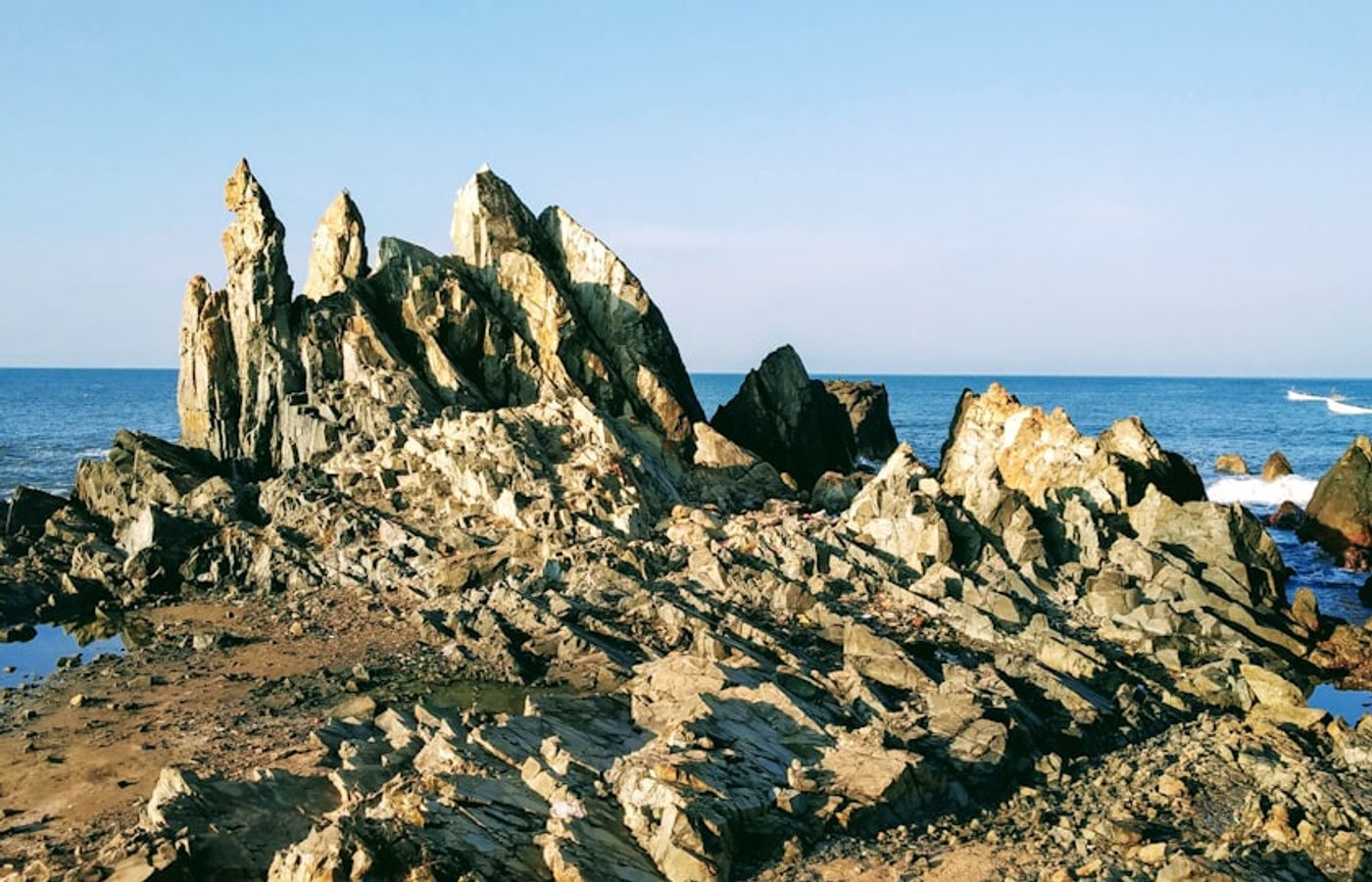
Arambol sits at the far northern end of the Goa coast and holds onto a distinctly counter-cultural feel. The main beach is a wide sweep of soft sand, and a 15-minute walk north over a rocky path leads to Sweet Water Lake, a small freshwater lagoon sitting just behind the shoreline. Sea swimming is reasonable in the main bay, with a gentle gradient and lifeguard cover in season. The rocks on the northern path get slippery, and the current stiffens noticeably as you approach the headland, so keep to the bay.
Shacks here are simple, cheap and slow: pancakes, thalis around INR 200 (EUR 2.20), and beach beds usually thrown in with lunch. The crowd is long-stay - musicians, yoga and acro groups, Russian families, and travellers who booked a week and stayed three months. A drum circle forms on the sand most evenings before sunset and runs for hours. Arambol closes down more completely than anywhere else in north Goa once the monsoon starts in June.
Pro Tip: Rent a scooter instead of relying on taxis. Arambol village is strung out along 2 km of narrow lane, a taxi back to Panaji runs around INR 1,200 (EUR 13), and parking at the beach entrance costs about INR 30 (EUR 0.35).
7Vagator and Ozran (Little Vagator) Beach - Cliffs, Coves and Sunset Crowds
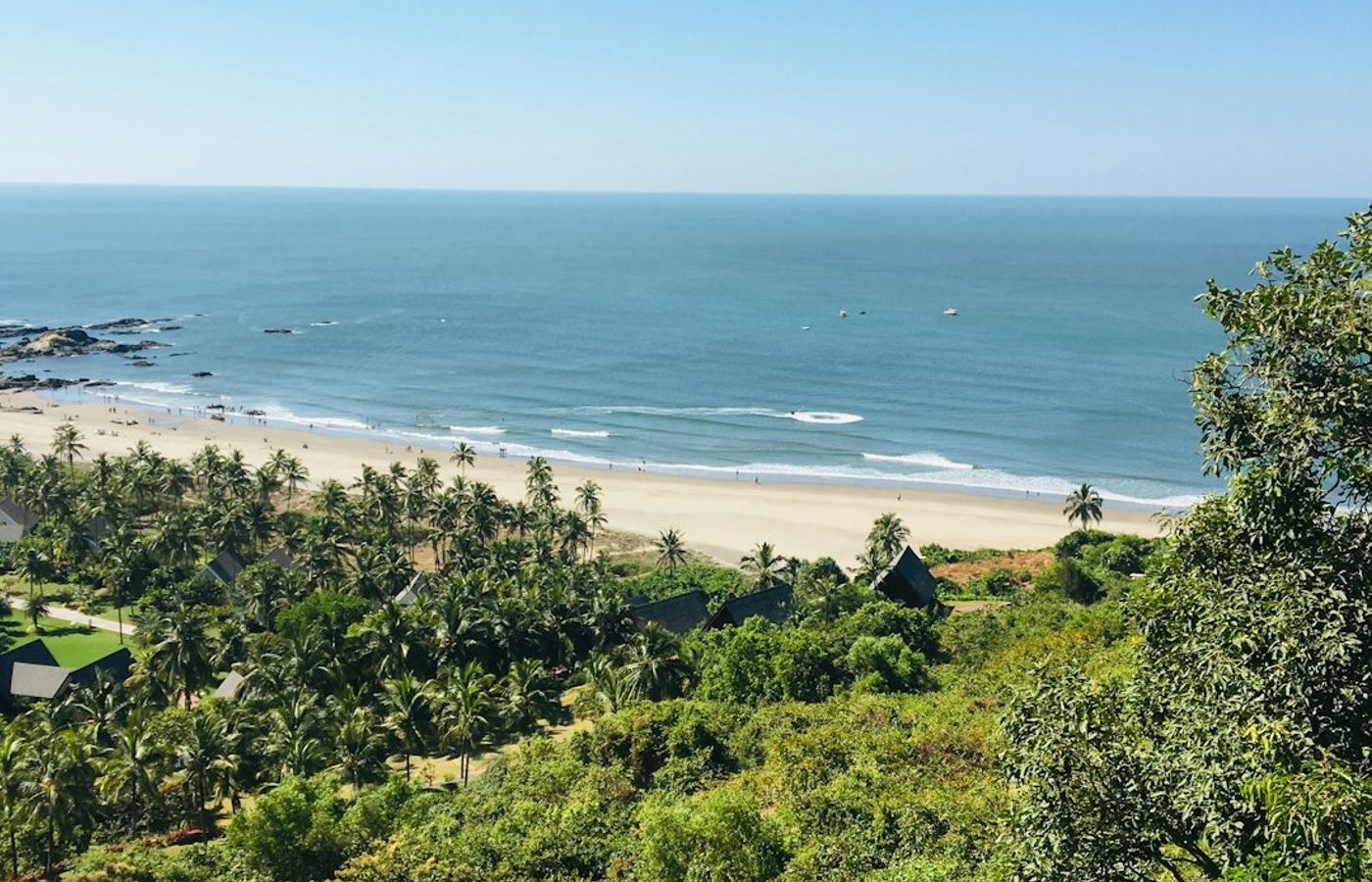
Vagator is really two beaches split by a headland: Big Vagator below Chapora Fort, and Ozran, better known as Little Vagator, in the cove to the south. Big Vagator has the wider sand and the fort view. Ozran is smaller, steeper to reach down a rough path, and keeps the carved stone Shiva face in the rocks at its southern end. Swimming is fine in the middle of either bay at low tide, but both hold rocks close in and a stronger pull near the headlands, so stay well inside the flags.
The shack scene is small on the sand and much larger on the clifftops above, where sunset bars fill from about 5pm and charge accordingly - around INR 400 (EUR 4.50) for a cocktail up top against INR 150 (EUR 1.60) for a beer on the beach. Crowds mix party travellers, Chapora Fort day-trippers and photographers chasing the cliff light. Both coves are unsafe and closed through the monsoon, when the descent path to Ozran turns to mud.
Pro Tip: Park at Big Vagator, walk the clifftop path south to Ozran and come down the steps by the Shiva rock. It takes 12 minutes, avoids the terrible Ozran access road, and the view along the way is the best part of the visit.
8Butterfly Beach - The Boat-Access Cove Near Palolem
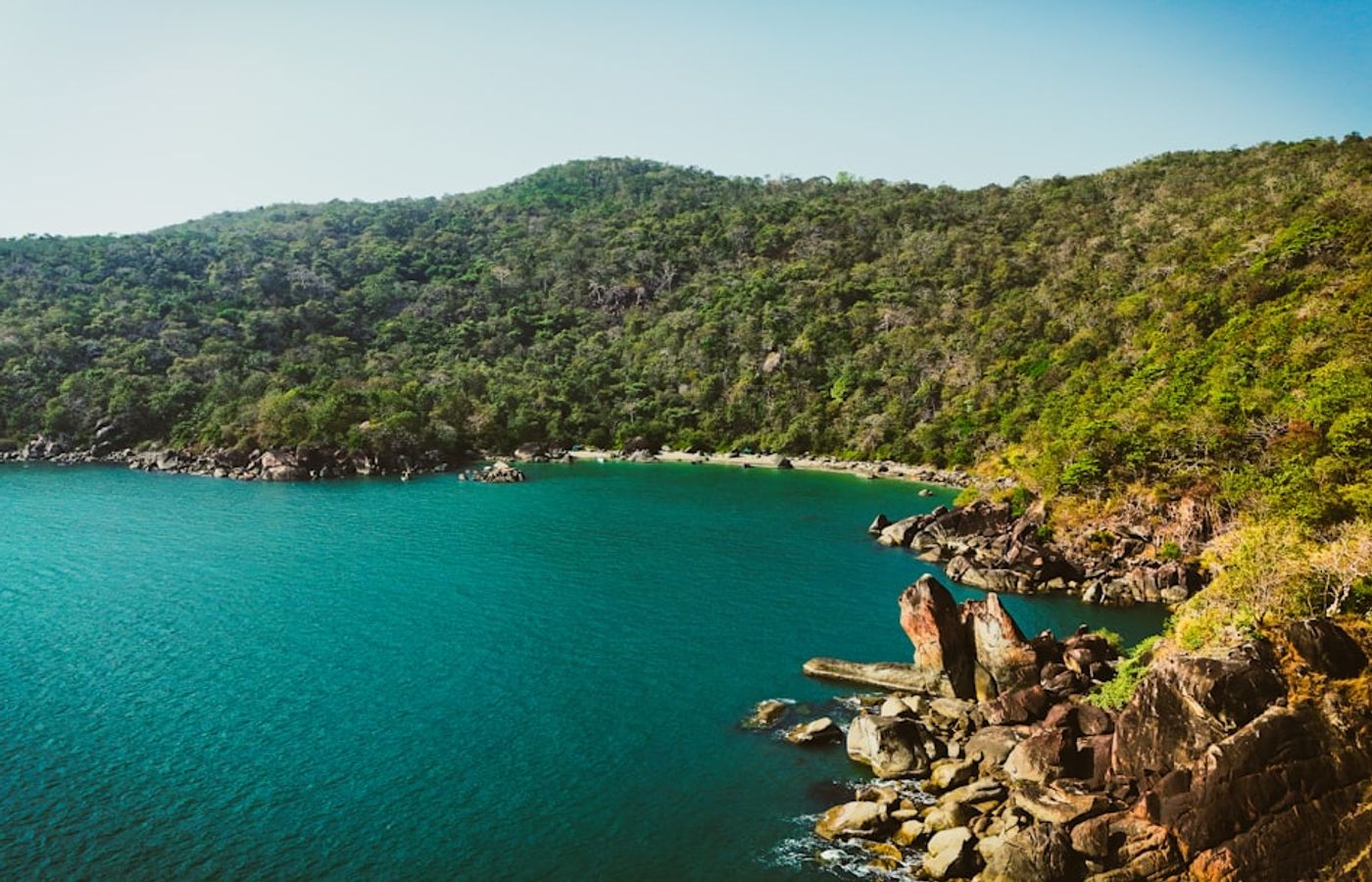
Butterfly Beach is a small horseshoe cove between Palolem and Agonda, reached by boat from Palolem in about 20 minutes or on foot down a rough forest trail from the Canacona road. There is no road access and no permanent development, which is the entire point. The water is clear, shallow and sheltered by both headlands, making it one of the calmer swims on this list, though there are no lifeguards and phone signal drops out in parts of the cove. Dolphins turn up regularly on the boat crossing.
There is no shack scene beyond one or two informal stalls selling water, coconuts and cut fruit at inflated prices, roughly INR 100 (EUR 1.10) for a coconut. Bring food and more drinking water than you think you need. The crowd arrives in waves with the boats, so the cove feels busy between 10am and 1pm and near empty after 3pm. A shared return boat costs around INR 1,500 to 2,000 (EUR 16 to 22). Crossings stop entirely from June to September when the sea turns rough.
Pro Tip: Take the last boat out of Palolem, around 2pm, and agree the pickup time in writing before you pay. Operators leave the cove by 5pm and there is no lighting on the forest trail if you miss the ride back.
9Colva Beach - The Long South Goa Workhorse
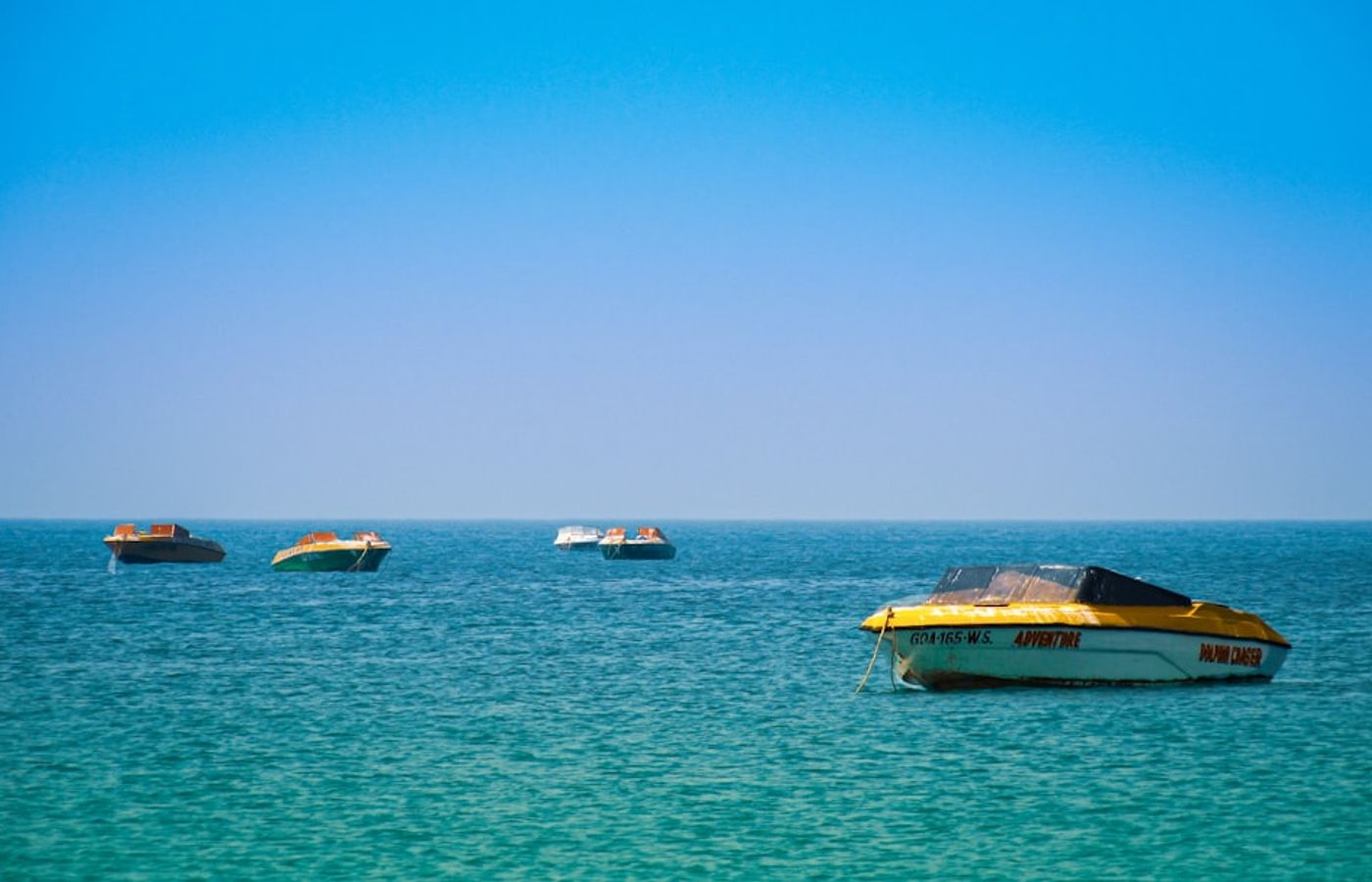
Colva is the main beach for Margao and the largest single stretch in south Goa, running roughly 2.5 km of white sand that continues on into Benaulim and Betalbatim. The central section by the church roundabout is the busy part, thick with parked taxis, souvenir stalls and pony rides. Walk ten minutes in either direction and it thins fast. Swimming is generally safe inside the flagged central zone with lifeguard cover, but the shelf drops abruptly about 20 metres out and the undertow strengthens through the afternoon.
Shacks run in a fairly continuous line along the central kilometre, cheaper and more local in feel than the Calangute equivalents, with fish curry rice around INR 250 (EUR 2.75). The crowd is heavily domestic: Indian family groups, bus tours from Margao and Karnataka, and a smaller set of long-stay Europeans down at the quieter southern end. Most shacks close for the monsoon in June, after which the central beach belongs mainly to fishing crews until October.
Pro Tip: Head south from the main entrance towards Sernabatim and the sunbeds, hawkers and pony carts disappear within 15 minutes of walking. Park in the church lot rather than the beach lot; it is two minutes further and costs about INR 30 (EUR 0.35).
10Cola Beach - The Freshwater Lagoon Behind the Sand
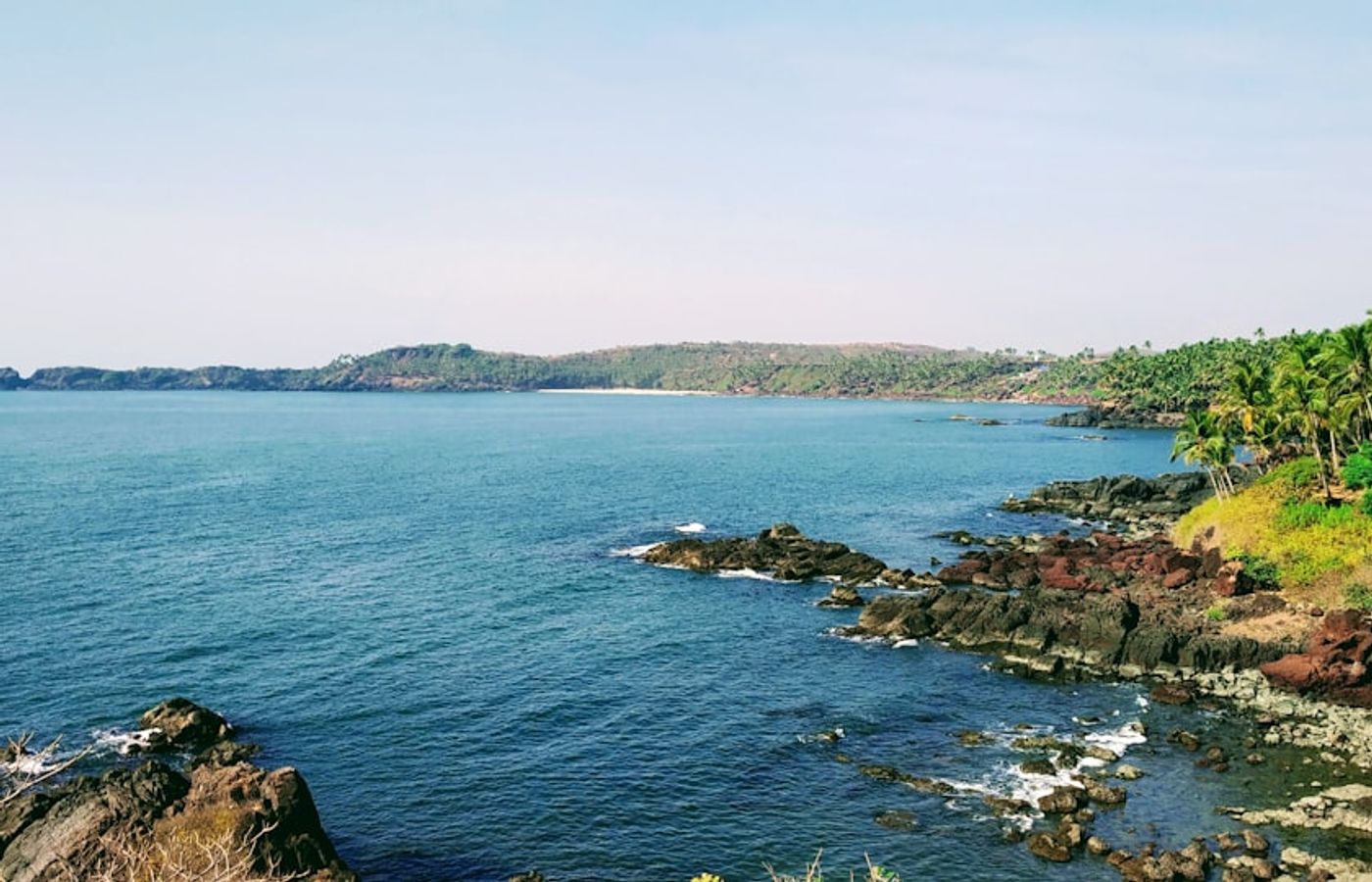
Cola, sometimes written Khola, is the beach with the lagoon. A shallow freshwater stream pools behind the sand bar in an emerald channel you can swim in, separated from the sea by only a few metres of beach. Getting there means a steep, badly rutted 2 km track off the Canacona road that most rental scooters struggle with, especially when wet. Sea swimming is decent at low tide, but the beach shelves quickly and there are no lifeguards, so the lagoon is the safer choice for weak swimmers and children.
The shack scene is minimal - a handful of tented camps with simple kitchens plus one or two beach cafes, and prices reflect the isolation at roughly INR 350 (EUR 3.80) for a basic meal. Crowds stay thin: mostly couples and small groups who came specifically for the lagoon, with a spike around midday. Nowhere else on this list is quieter except Butterfly Beach. The access track becomes effectively impassable during the monsoon and the camps close from June.
Pro Tip: Take a taxi or a 4x4 down the access track rather than a scooter, because the last kilometre is loose rock and steep. A one-way drop from Canacona costs around INR 700 (EUR 7.50), cheaper than paying for a damaged rental.

CEO and co-founder
Tomas is the co-founder and director of trip1, an European company specializing in reservation services. He launched the company in 2025 with a focus on building scalable, efficient operations.
Climate averages · 1991–2020
When is the best time to visit Goa?
The best time to visit Goa is between November and April, the most comfortable stretch of the year on these averages.
Best time · November–AprilRainfall
- Jan26°
- Feb27°
- Mar28°
- Apr30°
- May30°
- Jun28°
- Jul27°
- Aug27°
- Sep27°
- Oct28°
- Nov28°
- Dec27°
More of India
10 Best Beaches in Goa, India - FAQ
No, ten beaches in a single day is not realistic. Cola and Palolem sit around 65 km south of Arambol and Anjuna, and the coastal road slows badly through Mapusa and Margao. Give yourself three days minimum: one for the north Goa beaches, one for the south, and a spare day for the coves that need a boat or a walk.
Run the coast in one direction and never zigzag. A clean north-to-south route starts at Arambol, drops through Vagator and Ozran, Anjuna, Baga and Calangute, then crosses the Zuari bridge for Colva, Agonda, Palolem, Butterfly Beach and Cola. Each leg stays under two hours by scooter or taxi, and you finish in the quiet south rather than the loud north.
Agonda, Palolem, Cola and Butterfly Beach have the calmest water. All four shelve gently, and Drishti Marine lifeguards patrol the two larger bays through the season. Baga, Calangute, Anjuna and Vagator carry stronger rip currents plus rocky patches, so stay between the flags. Nobody should swim during the monsoon, roughly June to September, when red flags go up and most shacks come down.
Budget INR 1,500 to 2,500 per person per day, roughly EUR 16 to 27. A sunbed and umbrella runs INR 200 to 500 (EUR 2 to 5.50), usually waived if you eat at the shack behind it. Lunch with a drink lands around INR 600 to 900 (EUR 6.50 to 10). Scooter hire is INR 400 to 600 (EUR 4.50 to 6.50) a day, fuel extra.
Pick north Goa for markets, music and shack density, south Goa for quiet sand and early nights. North Goa around Anjuna, Vagator and Arambol is louder, cheaper to eat in and far busier between December and January. South Goa around Agonda and Palolem is calmer and greener. Splitting the trip works best: four nights north, three nights south, with a 90-minute transfer between them.
This list ranks beaches only, so inland Goa is missing entirely. Dudhsagar waterfall, the Fontainhas Latin Quarter in Panaji, the spice farms near Ponda and the Bhagwan Mahaveer Wildlife Sanctuary all deserve a day. Several good stretches of sand also missed the cut, among them Ashwem, Morjim, Mandrem, Betalbatim, Patnem and Galgibaga, where olive ridley turtles nest between November and February.

Related travel guides
10 Top Places to Visit in Delhi
The 10 top places to visit in Delhi, India, from the Red Fort to Qutub Minar, with exact addresses, Delhi Metro stops, ticket prices and pro tips.
12 Top Places to Visit in Jaipur, India
Discover the 12 best places to visit in Jaipur in 2026 - from Amber Fort to Hawa Mahal, with addresses, transit tips, and insider Pro Tips.