
Guides · Hiroshima
10 Best Things to Do in Hiroshima

CEO and co-founder
This guide covers the 10 best things to do in Hiroshima, a city that carries two UNESCO World Heritage Sites and one of the most visited memorial landscapes in the world. Each entry gives the exact address, the Hiroden tram or JR line that reaches it, and a Pro Tip on timing. Several of these places commemorate the atomic bombing of 6 August 1945, and the guide treats them as sites of remembrance rather than sightseeing stops.
The list is ordered for routing. Entries one to three sit inside the Peace Memorial Park and take a full morning together. Entries six to nine spread across central Hiroshima within tram reach of each other and fill an afternoon. Entries four and five are on Miyajima, roughly 50 minutes away by JR Sanyo line and ferry, and deserve a separate day. The Mazda Museum sits east of the city on the JR line and needs an advance booking.
Costs are low by Japanese standards. The Peace Memorial Museum charges JPY 200, Hiroshima Castle JPY 370 and Shukkei-en JPY 260, and the Peace Memorial Park itself is free. Two days covers everything here without hurrying, and a Japan Rail Pass covers both the shinkansen in and the Miyajima ferry. The ferry timetable is what shapes the second day, and the hotels in Hiroshima near the station or the Peace Park put both the shinkansen and the tram within a few minutes on foot. The island is the one entry that genuinely turns on the forecast, since the shrine gate is a low-tide and clear-light proposition, so check Hiroshima weather before choosing which day to give it. Most visitors arrive from Kyoto or Osaka, either of which is under two hours away.
1Hiroshima Peace Memorial Park - The Centre of the City's Memory
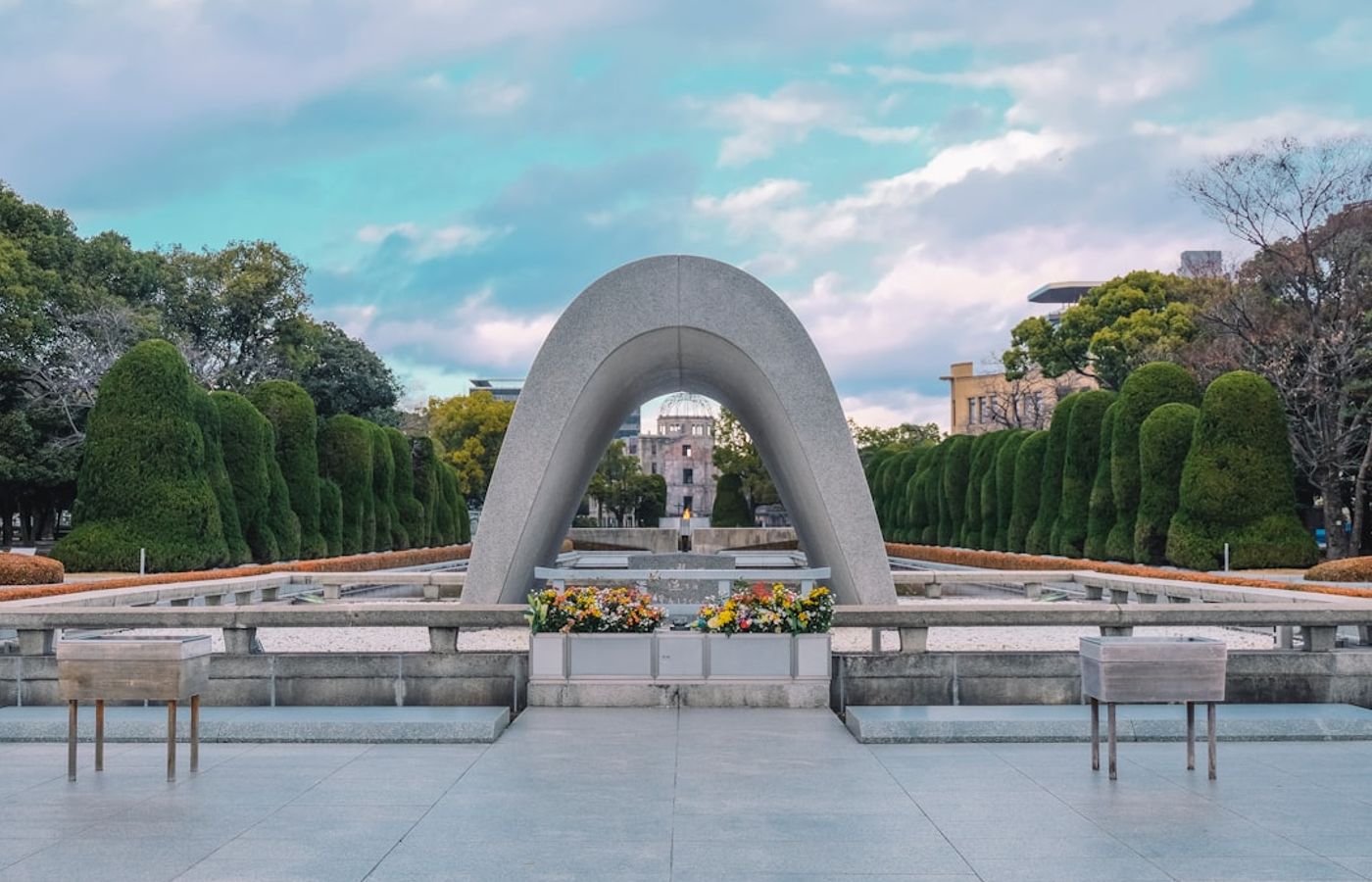

The Peace Memorial Park occupies 12 hectares of the delta that was once Nakajima, a dense commercial district of shops and homes destroyed on 6 August 1945. Rather than rebuild, the city set the ground aside as a memorial. The architect Kenzo Tange won the 1949 design competition and laid the park on a single axis linking the museum, the cenotaph and the Atomic Bomb Dome.
The Cenotaph for the A-bomb Victims holds a register of every confirmed name, now well past 300,000. The Flame of Peace has burned since 1964 and is intended to be extinguished only when the last nuclear weapon is gone. The Children's Peace Monument, raised for Sadako Sasaki, is surrounded by glass cases of folded paper cranes sent from schools worldwide. Entry to the park is free and open at all hours.
Pro Tip: Come at 7am. The park is empty, the light is low across the river, and you can read the monument inscriptions without moving around groups. Volunteer English-speaking guides gather near the rest house from mid-morning and are free.
2The Atomic Bomb Dome - The Building Left Standing
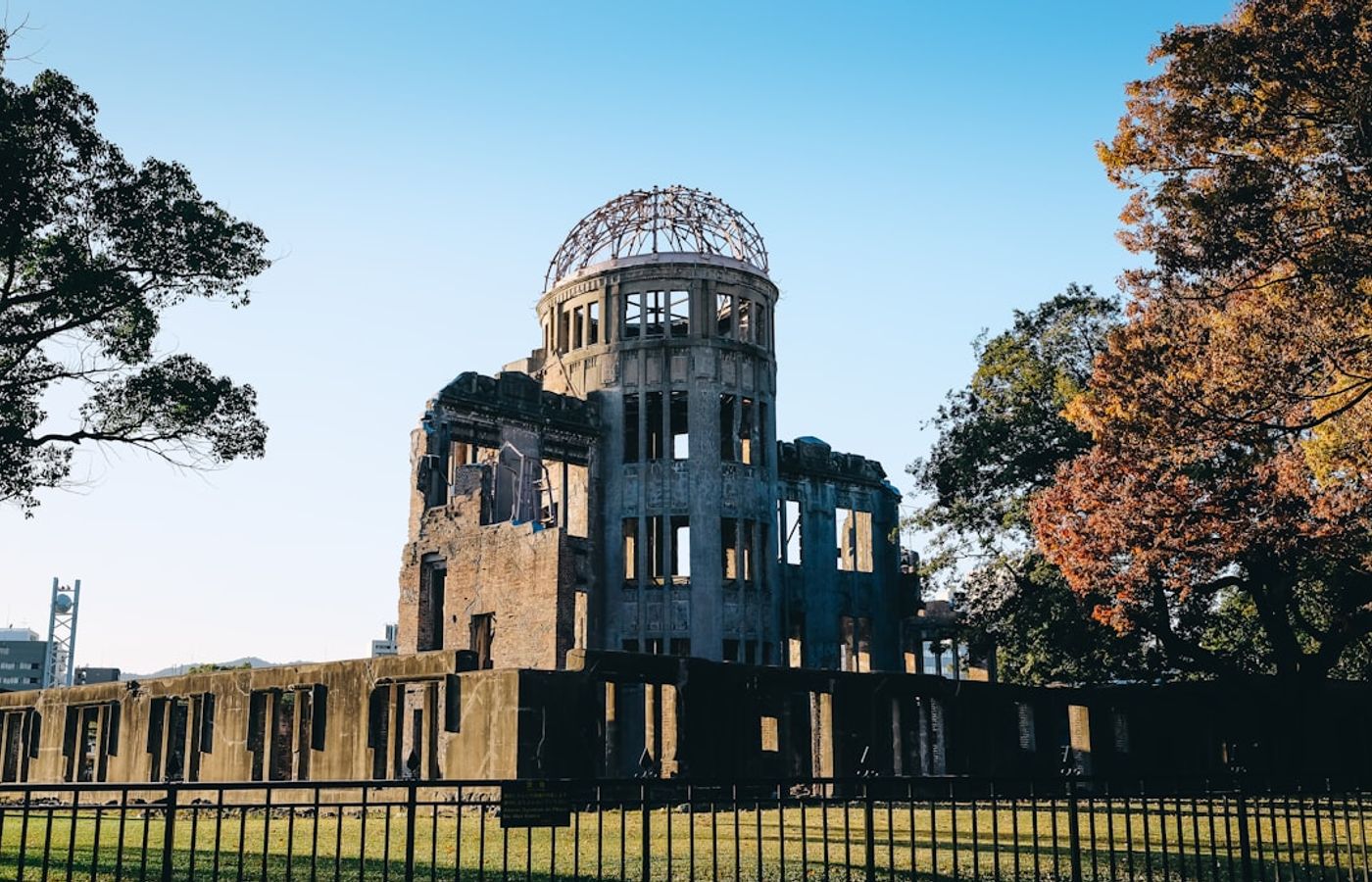

The building was the Hiroshima Prefectural Industrial Promotion Hall, completed in 1915 to a design by the Czech architect Jan Letzel. The bomb detonated almost directly overhead at roughly 600 metres, and because the blast came from above rather than the side, the vertical walls and the steel frame of the dome survived while everything around collapsed. It has been listed as the Hiroshima Peace Memorial UNESCO World Heritage Site since 1996.
The city debated demolishing it for two decades. A campaign led in part by the diary of a girl who died of leukaemia caused by radiation exposure secured its preservation in 1966, and the ruin has since been stabilised three times without being restored. You cannot enter, and the site is viewed from a path around the perimeter. Information boards in English explain the structure and the decision to keep it.
Pro Tip: Walk the full circuit rather than stopping at the front. The view from the Motoyasu river bank on the park side, with the dome reflected in the water, is the angle most people miss because the tram stop puts you on the road side.

3Hiroshima Peace Memorial Museum - The Most Difficult Two Hours in Japan
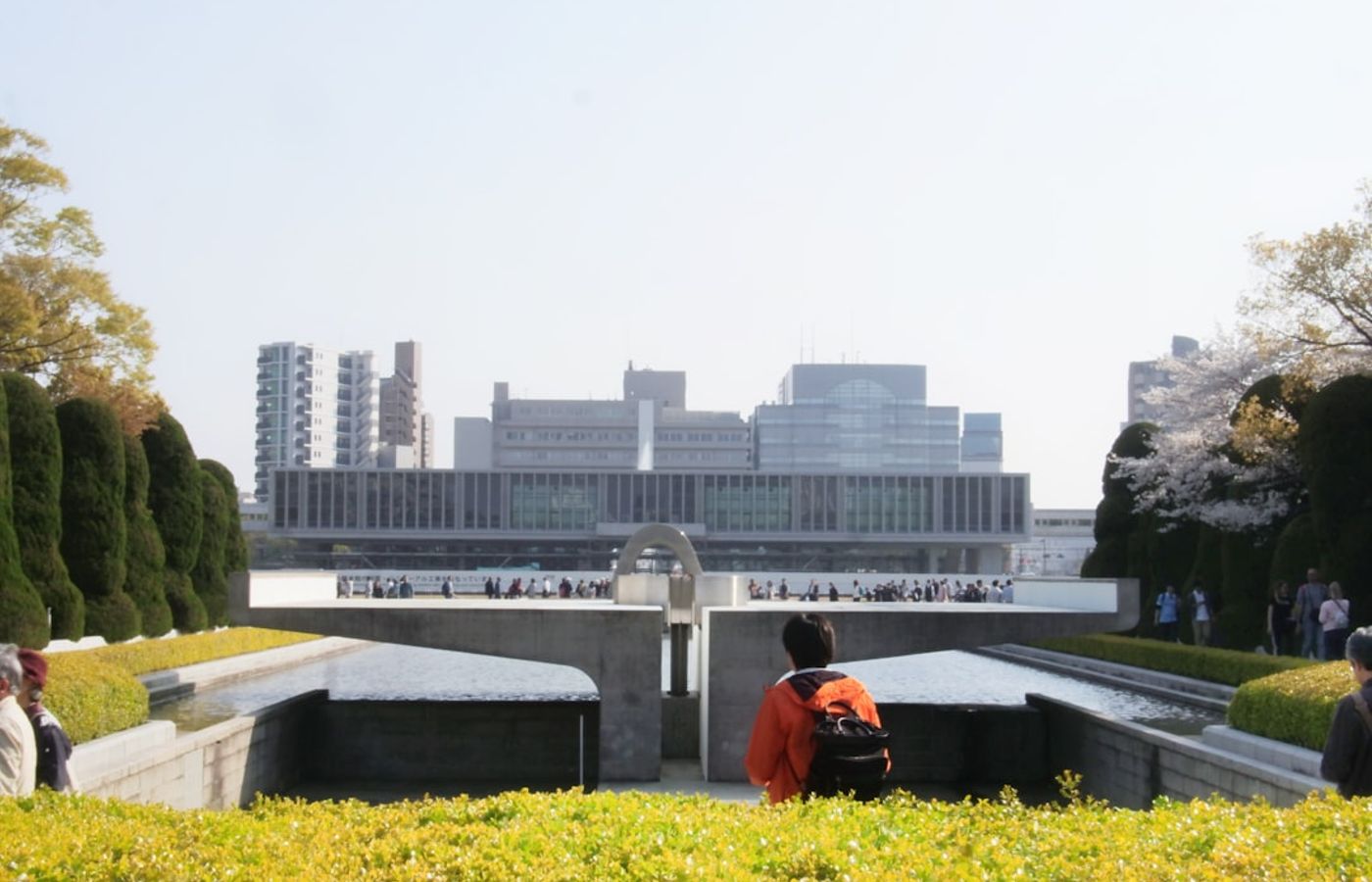

The museum opened in 1955 and reopened in 2019 after a full redesign that moved the personal accounts to the front of the visit. The Main Building now leads with belongings recovered from the dead: a child's tricycle, a school uniform, a watch stopped at 8:15. The scientific and political material on the development and use of the weapon follows in the East Building.
Admission is JPY 200 for adults, deliberately kept low, and audio guides are available in several languages. Allow two hours. The museum is direct about what happened and does not soften the photographic material, and staff are used to visitors needing to sit down partway through. The upper floor holds a quiet space and a view over the park axis to the dome.
Pro Tip: Go at 8:30am opening, before the school groups arrive at around 10am. Plan nothing demanding for the two hours afterwards - most people want to walk by the river rather than move straight to the next attraction.
4Itsukushima Shrine on Miyajima - The Torii Gate Standing in the Sea
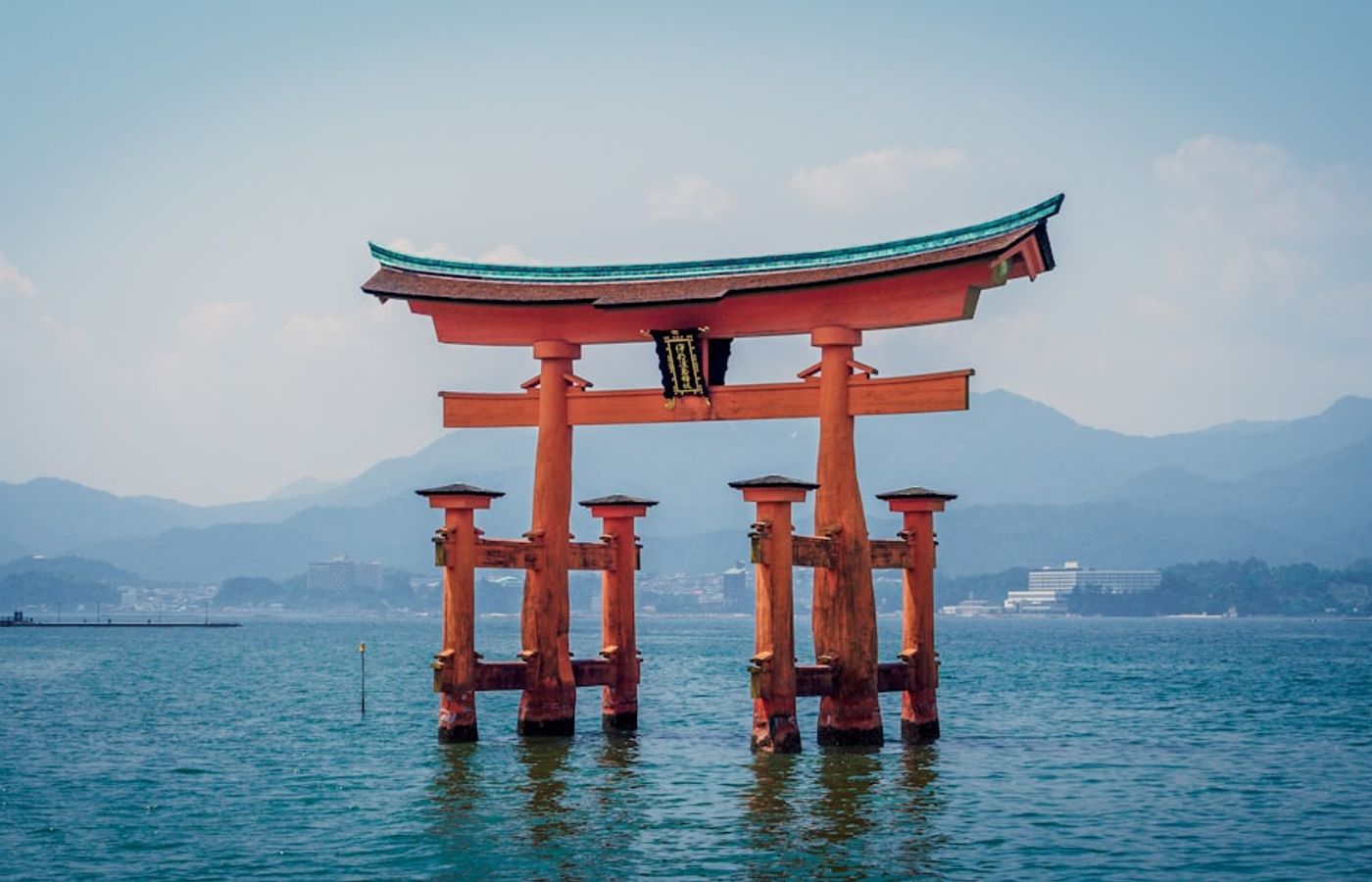
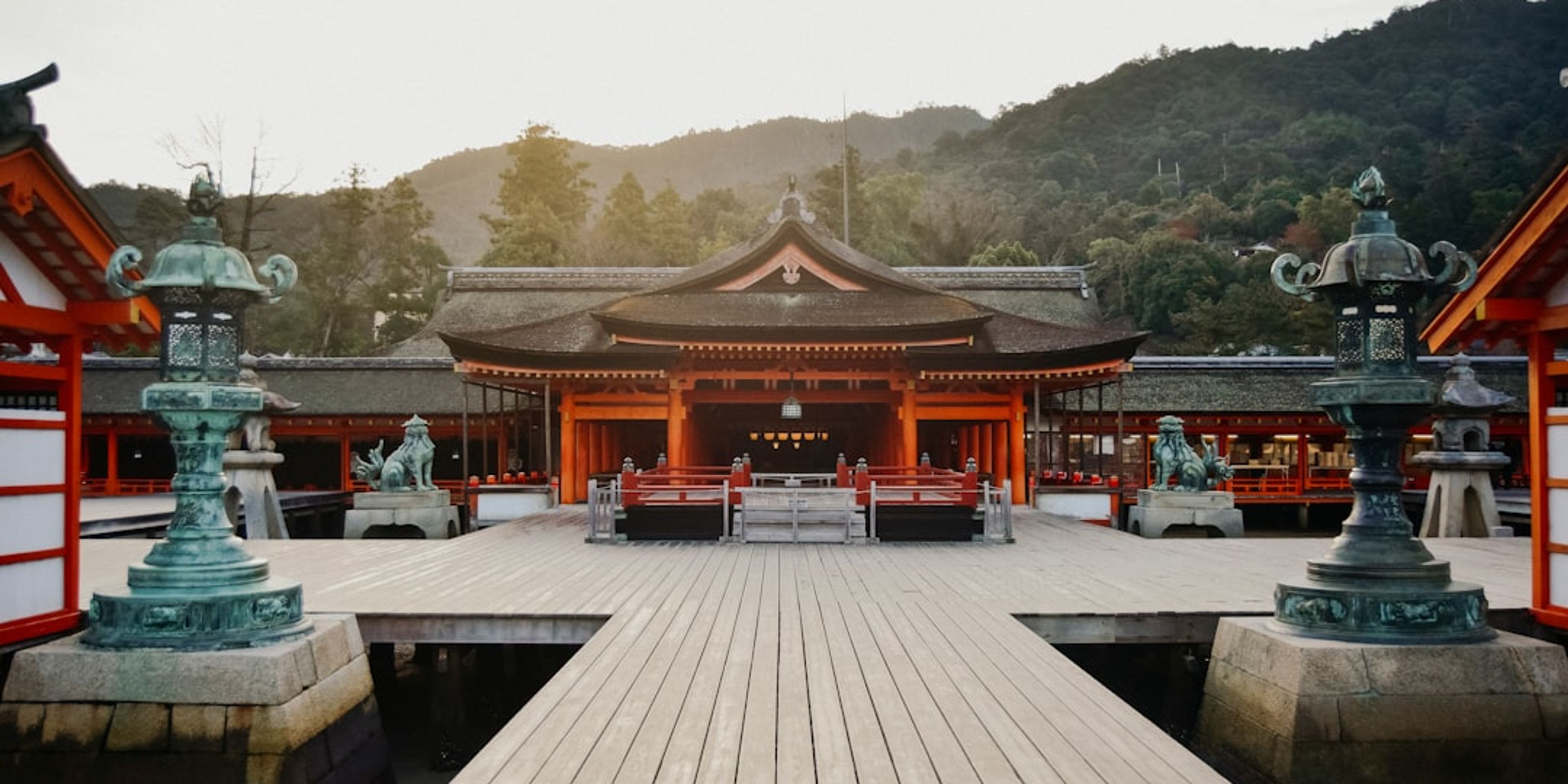
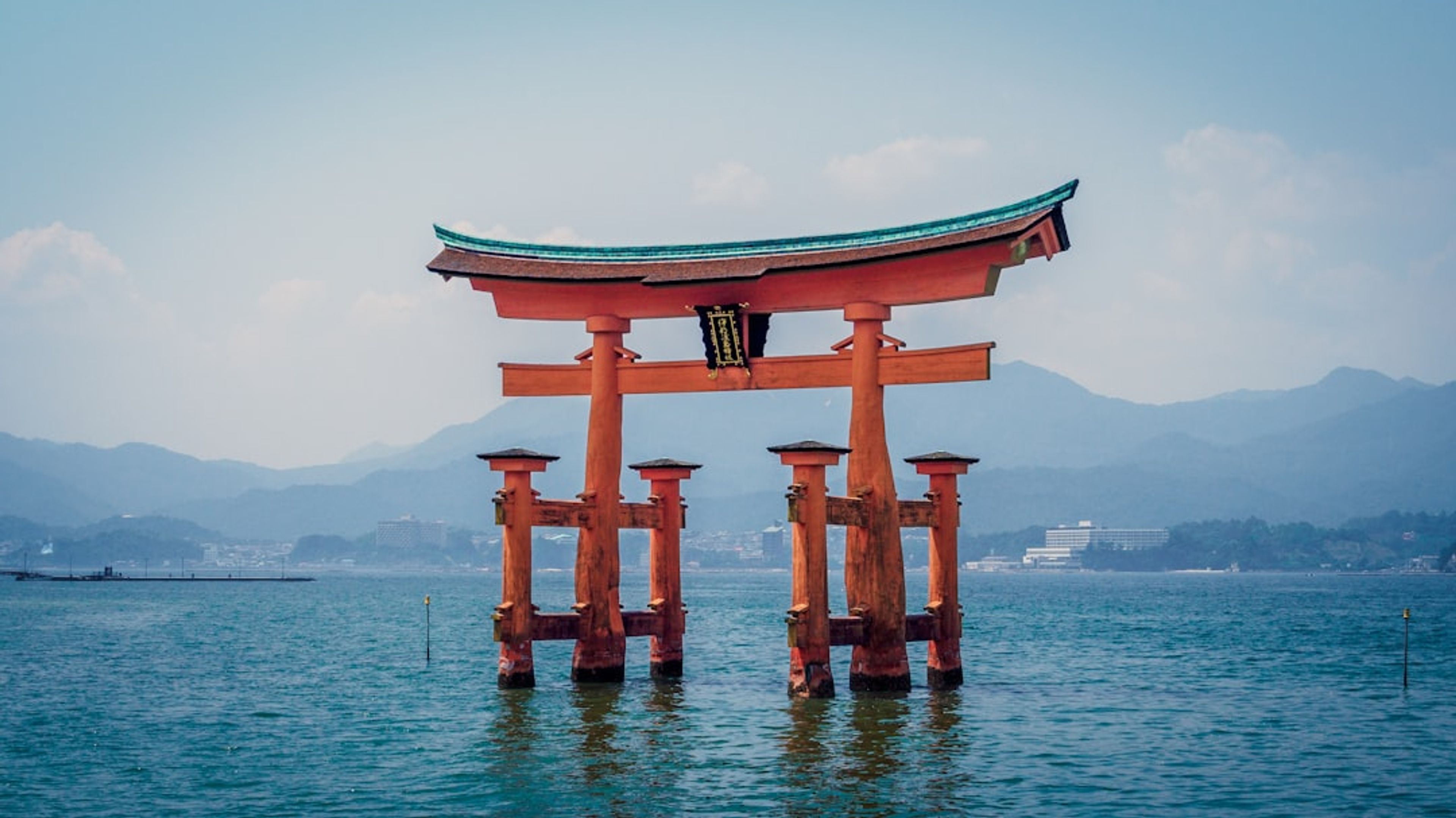
Itsukushima Shrine was founded in 593 and rebuilt in its current form in 1168 by Taira no Kiyomori. The whole complex is built on piers over a tidal flat because the island itself was considered sacred ground that commoners could not set foot on. At high tide the corridors appear to float; at low tide you can walk out across the sand to the base of the torii.
The vermilion Great Torii stands 16 metres tall and is not fixed to the seabed. It holds position by its own weight, with stones packed into the box-shaped crossbeam. The current gate is the eighth, dating from 1875, and completed a major restoration in 2022. Shrine entry is JPY 300, and the island also carries Senjokaku hall, a five-storey pagoda and free-roaming deer.
Pro Tip: Check the tide table before you commit to a time. High tide gives the floating shot, low tide lets you walk to the gate, and the two are roughly six hours apart. Stay past 5pm when the day trippers leave and the shrine is lit.
5Mount Misen - The Summit Above Miyajima
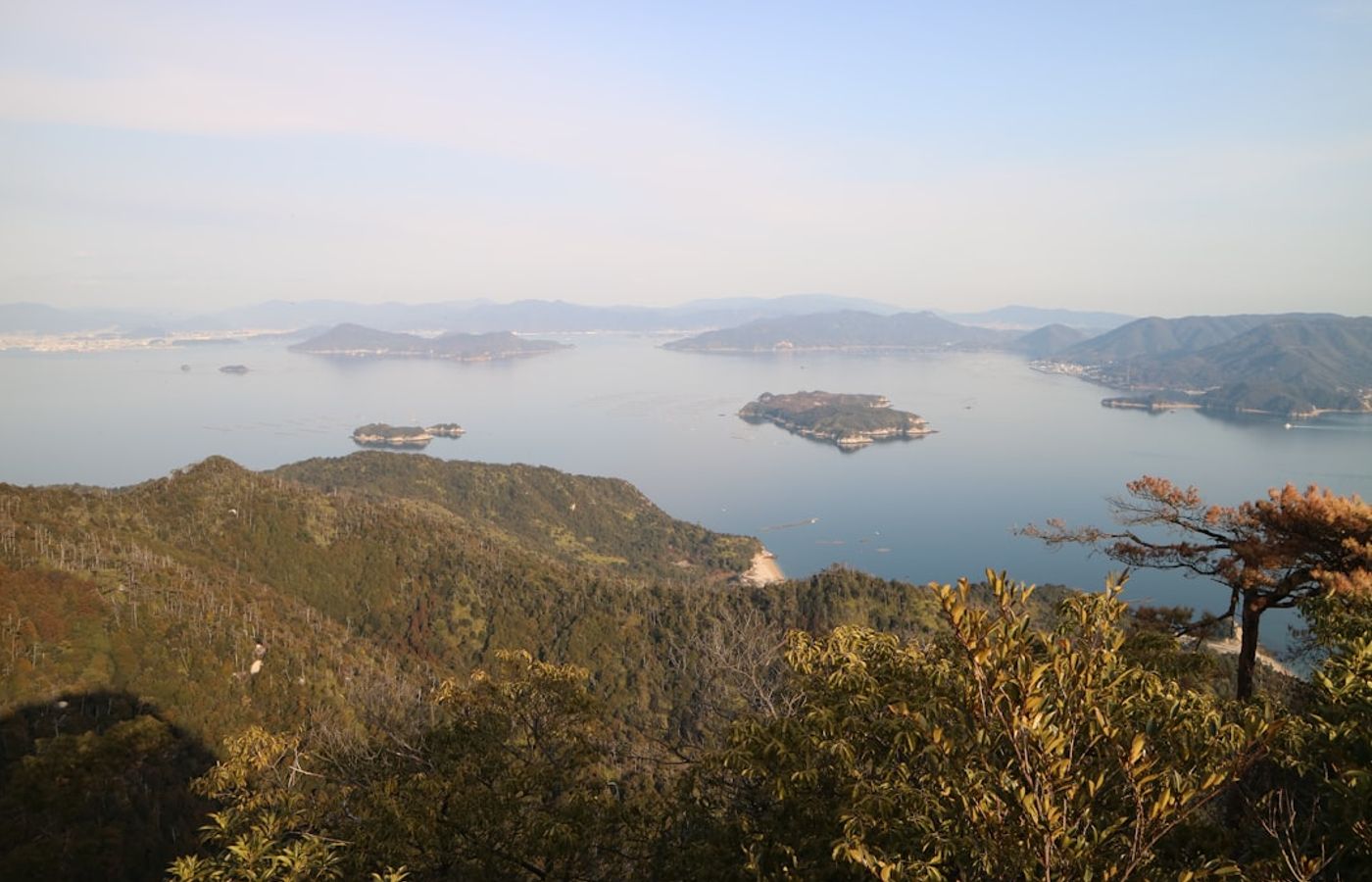
Mount Misen rises 535 metres above the shrine and is the reason to give Miyajima a full day rather than three hours. The summit looks north across the Seto Inland Sea and its scattered islands, and on a clear day the view runs as far as the mountains behind Hiroshima. Primeval forest covers the upper slopes and has never been logged.
The Miyajima Ropeway climbs most of the way for around JPY 2,000 return, leaving a 20-minute uphill walk to the true summit. Three hiking routes run from the base instead, taking 90 minutes to two hours. Near the top, Reikado Hall keeps a flame said to have burned since Kobo Daishi lit it in 806, and it was used to light the Flame of Peace in the memorial park.
Pro Tip: Take the ropeway up and walk the Daisho-in route down. The descent passes the best temple on the island and takes about 90 minutes, and it removes the queue for the return ropeway that builds sharply after 3pm.
6Hiroshima Castle - The Carp Castle, Rebuilt in Concrete
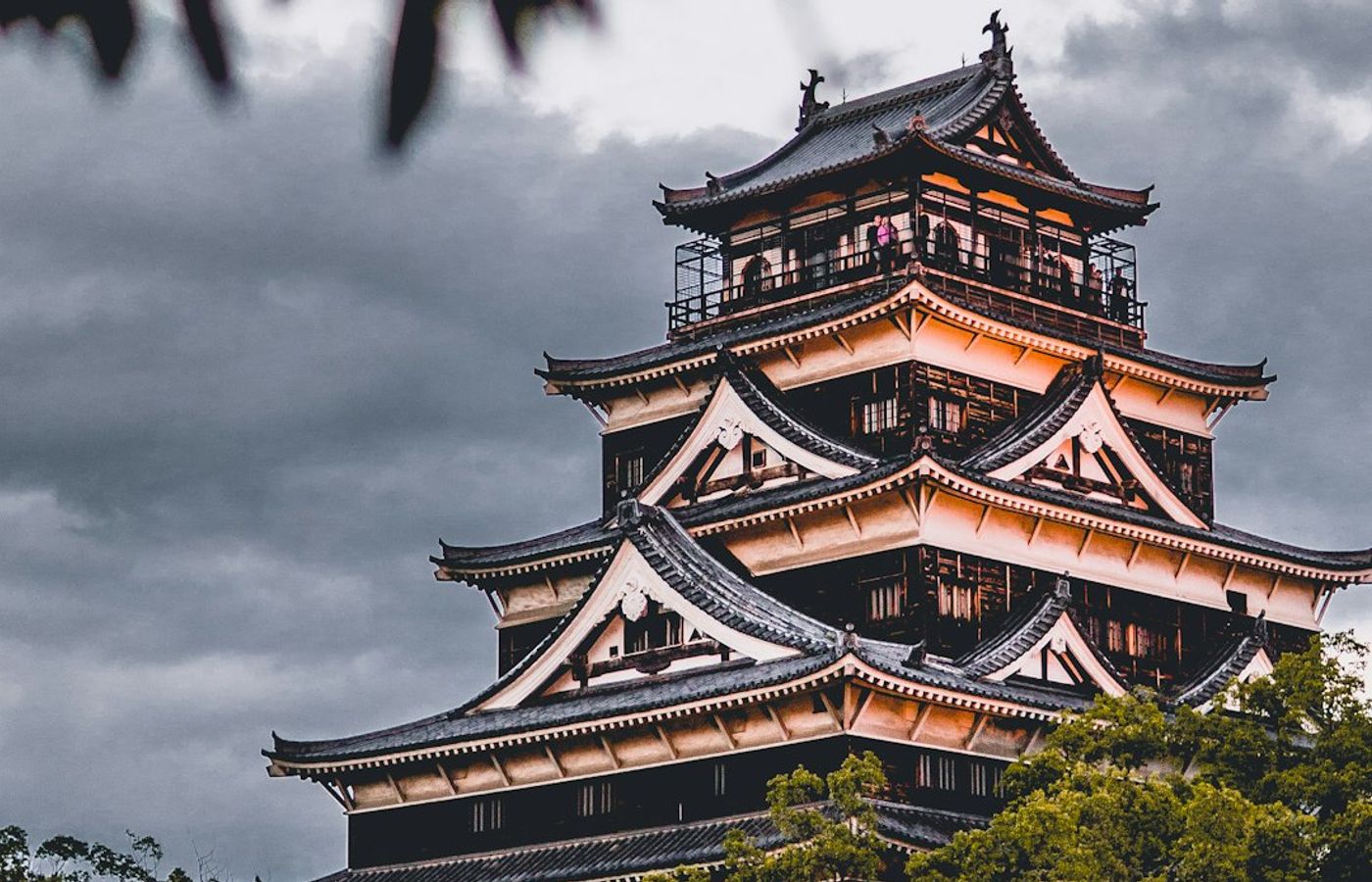
Mori Terumoto built Hiroshima Castle in 1589 on the river delta, and the city grew up around it. The five-storey keep survived until 1945, when it was destroyed by the bomb. The current structure is a 1958 concrete reconstruction of the exterior, housing a museum of Hiroshima's history as a castle town rather than a restored interior.
The grounds are more rewarding than the keep. The moat, stone walls and reconstructed Ninomaru gate complex are free to walk, and a eucalyptus and a willow inside the grounds survived the blast and are marked as A-bombed trees. Admission to the keep is JPY 370 and the top floor gives a clear view over the city towards the mountains.
Pro Tip: Combine the castle with Shukkei-en Garden, which is a 15-minute walk east along the Kyobashi river. Cherry blossom fills the moat banks in early April and the castle grounds stay open and floodlit into the evening during that period.
7Shukkei-en Garden - A Miniature Landscape From 1620
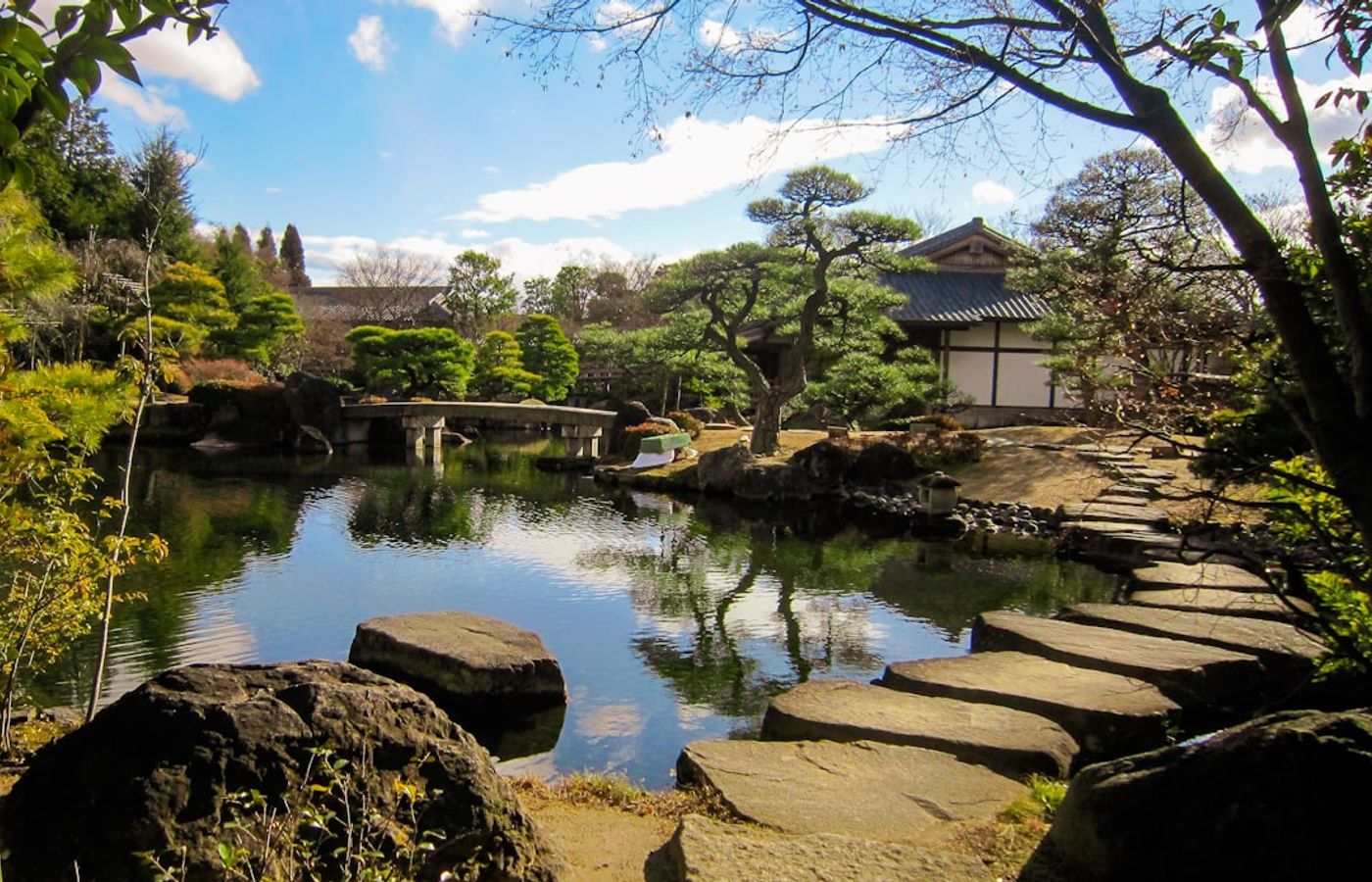
Shukkei-en was laid out in 1620 for Asano Nagaakira, the feudal lord of the domain, and the name translates roughly as shrunken-scenery garden. It compresses valleys, mountains and forests into a circuit around a central pond, with a rainbow-arched bridge at its middle and tea houses at intervals along the path. The whole loop takes about 40 minutes at a slow walk.
The garden sits 1.3 km from the hypocentre and was destroyed in 1945, then used as a refuge by survivors, many of whom died there. Several trees survived and still grow, marked with plaques. Restoration work began in the late 1940s and the garden reopened to the public in 1951. Admission is JPY 260, and koi and turtles fill the pond in numbers.
Pro Tip: Walk the circuit anticlockwise, which is the direction the sightlines were designed for. The Seifukan tea house serves matcha for around JPY 500 and looks straight across the pond to the bridge.
8Okonomimura - Four Floors of Hiroshima-Style Okonomiyaki
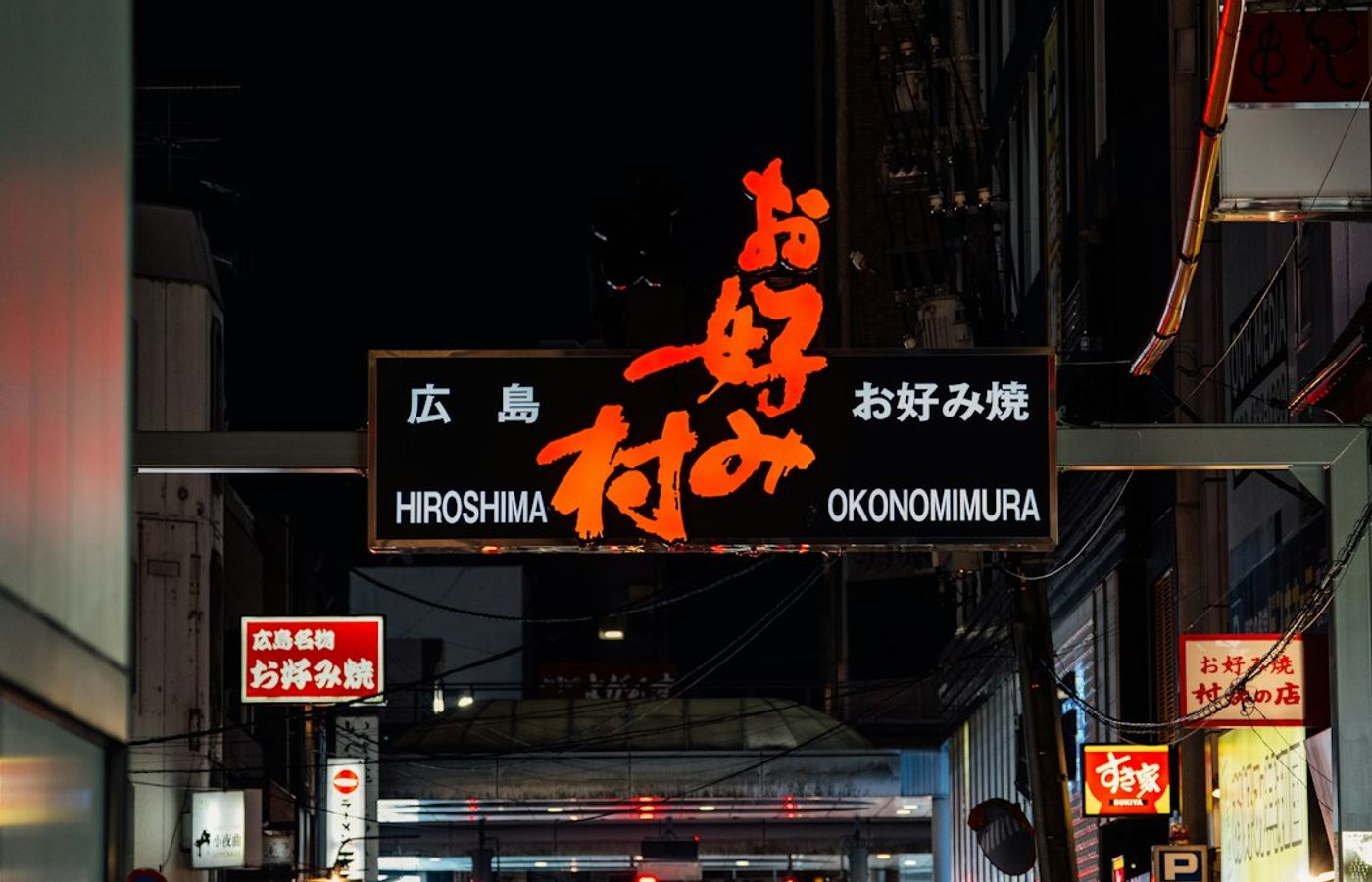
Hiroshima-style okonomiyaki is layered rather than mixed, which is the argument the city has with Osaka. A thin crepe goes down first, then a mound of shredded cabbage, bean sprouts, pork belly, a nest of fried yakisoba or udon noodles, and an egg on top, finished with a sweet-savoury sauce. It is assembled in front of you on a hot plate and eaten with a metal spatula.
Okonomimura stacks around 24 small independent stalls across four floors of one building in Shintenchi, each with its own griddle counter and its own regulars. The format dates to post-war street carts that were gathered into a permanent building in 1992. Expect to pay JPY 900 to 1,400 and to sit at the counter rather than a table.
Pro Tip: Skip the second floor, which catches most of the tourist traffic, and climb to the third or fourth where the stalls are quieter and the cooks have more time. Ask for soba rather than udon if you want the crisper version.
9Hiroshima Orizuru Tower - The Best View Over the Peace Park
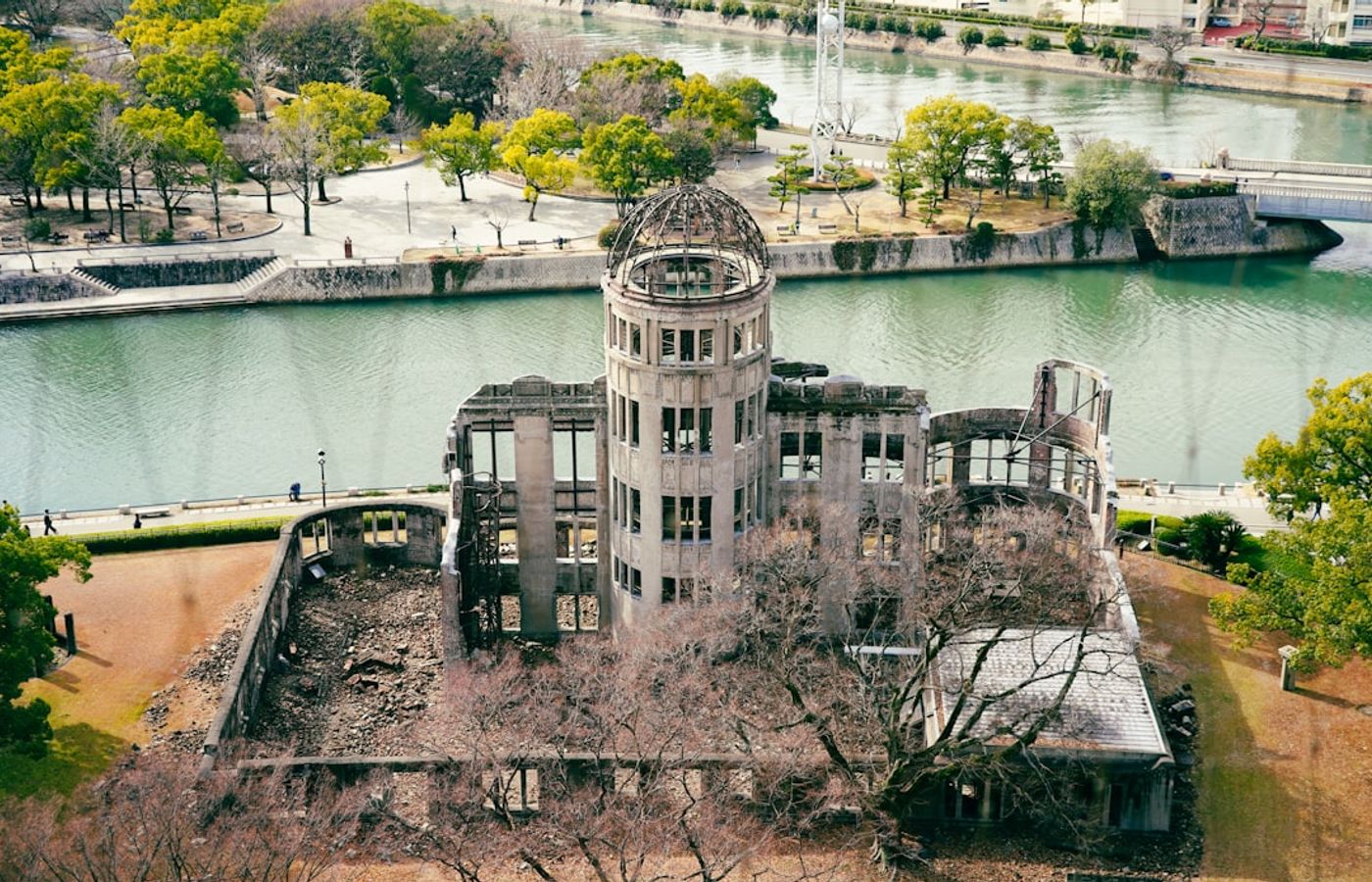
Orizuru Tower opened in 2016 in a converted office block next to the Atomic Bomb Dome. Its open-air top floor, the Hiroshima Hills observation deck, gives the only elevated view over the entire Peace Memorial Park, with the dome directly below and the mountains behind the city. On clear days Miyajima is visible to the southwest.
The building takes its name from the paper crane, orizuru. Visitors fold one at the top and drop it into a glass-walled shaft that runs the full height of the building, slowly filling as a public artwork. Admission is around JPY 2,200. A spiral wooden ramp, rather than a lift, takes you back down the outside of the structure.
Pro Tip: Go in the last hour before sunset. The deck faces west over the park and the light drops behind the mountains, and the ground floor cafe and shop stay open later than the observation level if you want to wait out a shower.
10Mazda Museum - The Rotary Engine and a Working Assembly Line
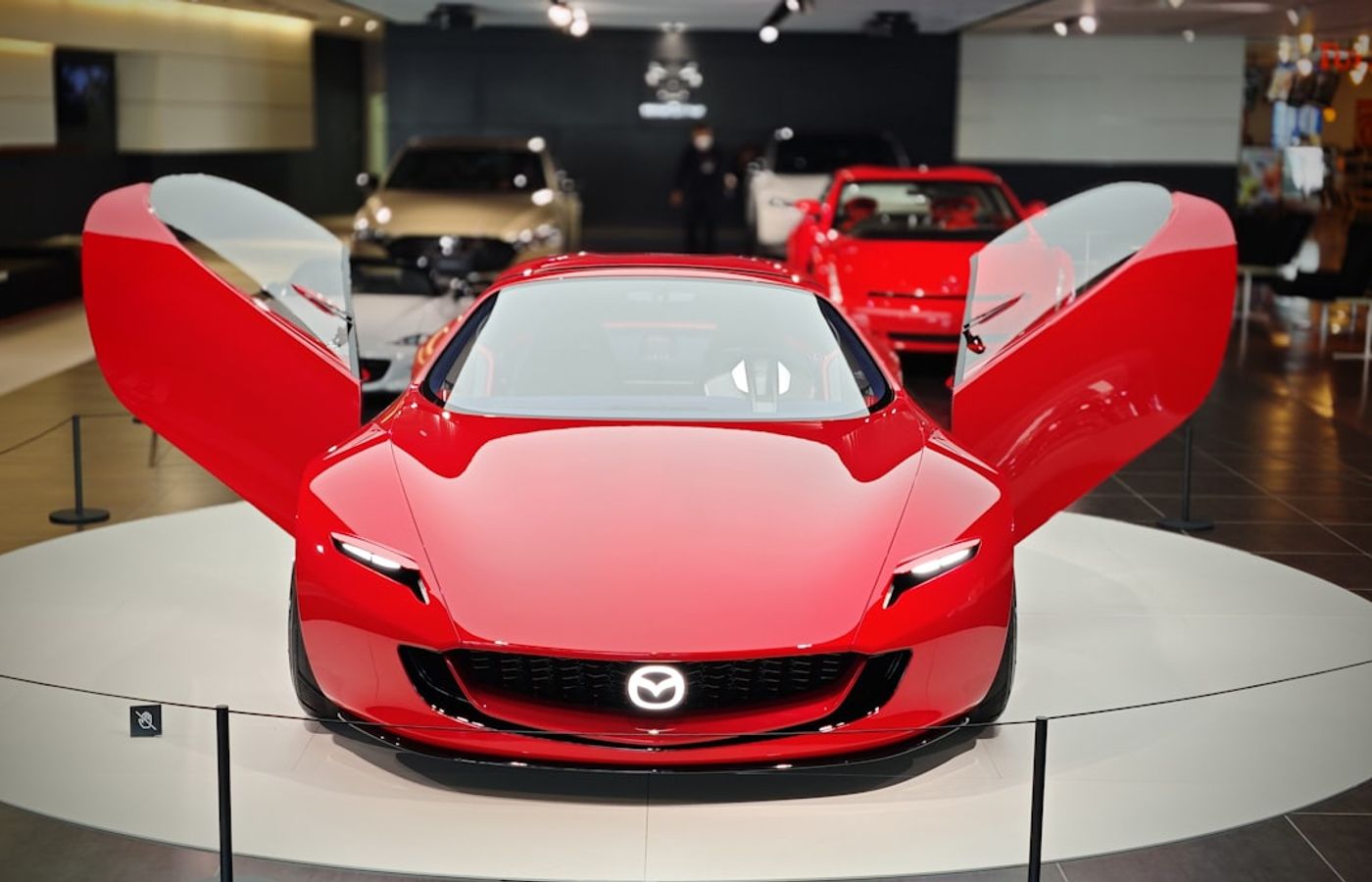
Mazda has been headquartered in Hiroshima since 1920 and the company played a substantial part in the city's recovery, sheltering local government offices in its buildings after 1945. The museum covers that history alongside the engineering the firm is known for, in particular the Wankel rotary engine that Mazda took into mass production when other manufacturers abandoned it.
The tour ends on a walkway above a working section of the Ujina assembly line, with finished cars moving below. Historic vehicles on display run from the 1931 three-wheeled truck through the Cosmo Sport to Le Mans-winning racers. Entry is free but strictly by advance reservation, and English-language slots are limited and go weeks ahead.
Pro Tip: Book the moment your dates are fixed, weeks rather than days out. Tours run on weekdays only and do not operate during factory shutdowns in August and over New Year, so check the closure calendar before planning around it.

CEO and co-founder
Tomas is the co-founder and director of trip1, an European company specializing in reservation services. He launched the company in 2025 with a focus on building scalable, efficient operations.
Climate averages · 1991–2020
When is the best time to visit Hiroshima?
Monthly temperatures, rainfall and sunshine — not a live forecast.
See Hiroshima weatherMore of Japan
10 Best Things to Do in Hiroshima, Japan - FAQ
No, and the Peace Memorial sites should not be rushed. Two days is the minimum: one for the Peace Memorial Park, museum, castle and garden, and a second for Miyajima. The museum alone deserves two hours, and most visitors want time to sit afterwards.
Begin with the Peace Memorial Park early, when it is quietest. Walk the park to the Atomic Bomb Dome, then the museum, then break for lunch at Okonomimura. Use the afternoon for Hiroshima Castle and Shukkei-en Garden, which sit close together north of the centre. Give Miyajima a full second day.
Only one. The Mazda Museum runs guided tours by advance reservation and English slots are limited, so book weeks ahead. The Peace Memorial Museum, Hiroshima Castle, Shukkei-en and the Miyajima sites all sell tickets at the door, though the museum queues from mid-morning.
Roughly JPY 4,000 per adult, about EUR 24. Admission is deliberately low at the memorial sites: the Peace Memorial Museum is JPY 200, Hiroshima Castle JPY 370, and Shukkei-en JPY 260. Itsukushima Shrine on Miyajima is JPY 300 and the Mount Misen ropeway around JPY 2,000 return. The Peace Memorial Park itself is free.
It is possible but tight. Allow three hours for the Peace Memorial Park and museum in the morning, then take the JR Sanyo line and ferry to Miyajima for the afternoon, roughly 50 minutes each way. You will miss Mount Misen and the island after dark, which is when Miyajima is at its best.
Three worthwhile additions. The Hiroshima National Peace Memorial Hall for the Atomic Bomb Victims sits beside the museum and is free, quieter and deeply affecting. The island of Okunoshima, two hours east, is known for its rabbit population and its wartime poison gas history. Onomichi and the Shimanami Kaido cycling route make a good day out east.

Related travel guides
10 Best Places to See Autumn Leaves in Kyoto
The 10 best places to see autumn leaves in Kyoto in 2026, with confirmed illumination dates, admission fees, station walk times and reservation rules.
5 Best Places to See Autumn Leaves in Nara
The 5 best places to see autumn leaves in Nara in 2026, with fees, station walk times, bus timetable warnings and honest advice on the rutting deer.