

Guides · Sintra
10 Best Things to Do in Sintra

CEO and co-founder
This guide covers the 10 best things to do in Sintra, Portugal, ordered so you can build two sensible days instead of one exhausting sprint. Every entry below carries an exact street address, the nearest Sintra train station connection or Scotturb bus route, its distance from the Sintra historic centre, and a Pro Tip based on how each site actually behaves at peak hours.
Geography matters here more than in most towns. The famous palaces do not stand in Sintra village - they sit on the wooded ridge of the Serra de Sintra, several kilometres above it and roughly 400 metres higher. Climbing on foot to Pena Palace takes about an hour on a steep forest path. That is why the Scotturb 434 bus loop, which links the train station, the historic centre, the Moorish Castle and Pena Palace, does most of the heavy lifting for visitors. The 435 covers the western sights, and the 403 runs out to the coast.
One booking decision shapes the whole trip. Pena Palace sells timed entry slots and they do sell out, often several days ahead in summer, so reserve online before you leave Lisbon. Be warned that the palace fills to shoulder-to-shoulder density from roughly 10:30 onwards, which makes the first slot of the morning worth the early train. The wider Cultural Landscape of Sintra is a UNESCO World Heritage Site, and the listing is worth reading before you go.
One practical note before the list. Almost everyone comes out for the day and leaves on the late afternoon train, which is why the palaces are unbearable between eleven and four and quiet either side; the hotels in Sintra in the historic centre are what buy you the early and late hours the day-trippers never see. The hilltop sites sit in their own microclimate and are frequently in cloud when the coast is clear, so check Sintra weather on the morning itself rather than trusting a Lisbon forecast. Most visitors base themselves in Lisbon and treat this as a half-hour train ride, which works, but it does mean seeing the place at its worst hour.
1Pena Palace - Portugal's Most Photographed Romanticist Palace
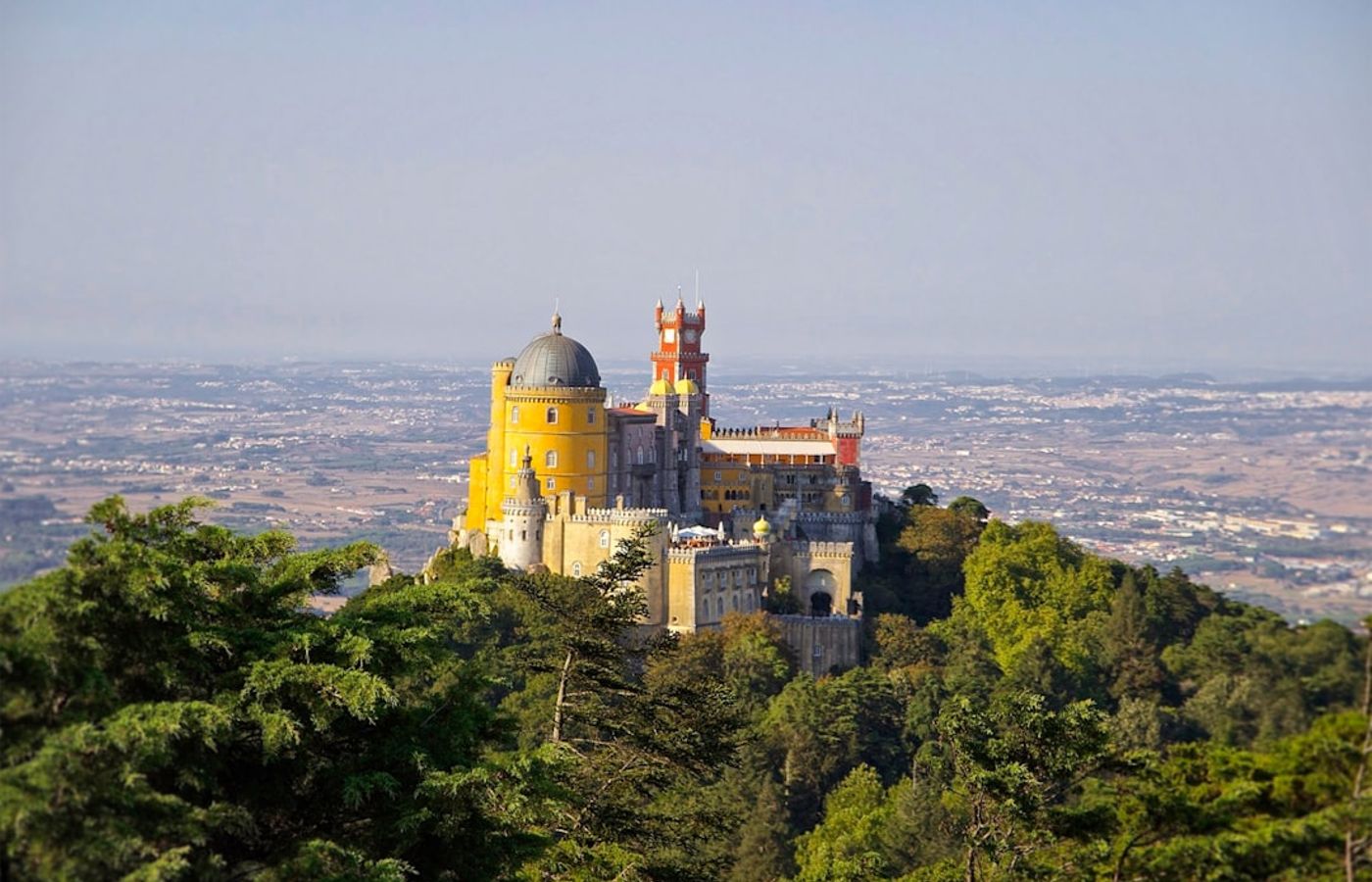

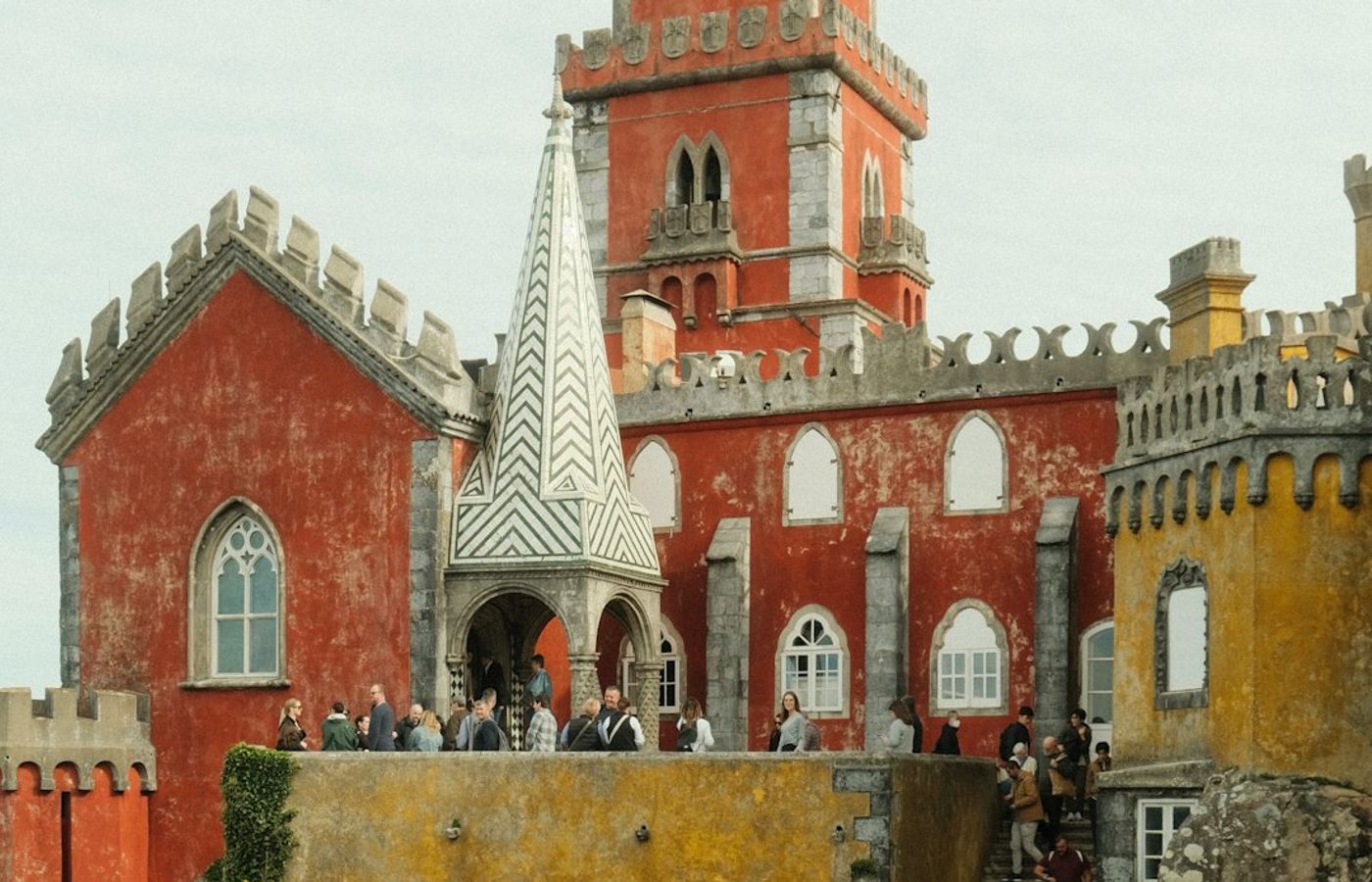
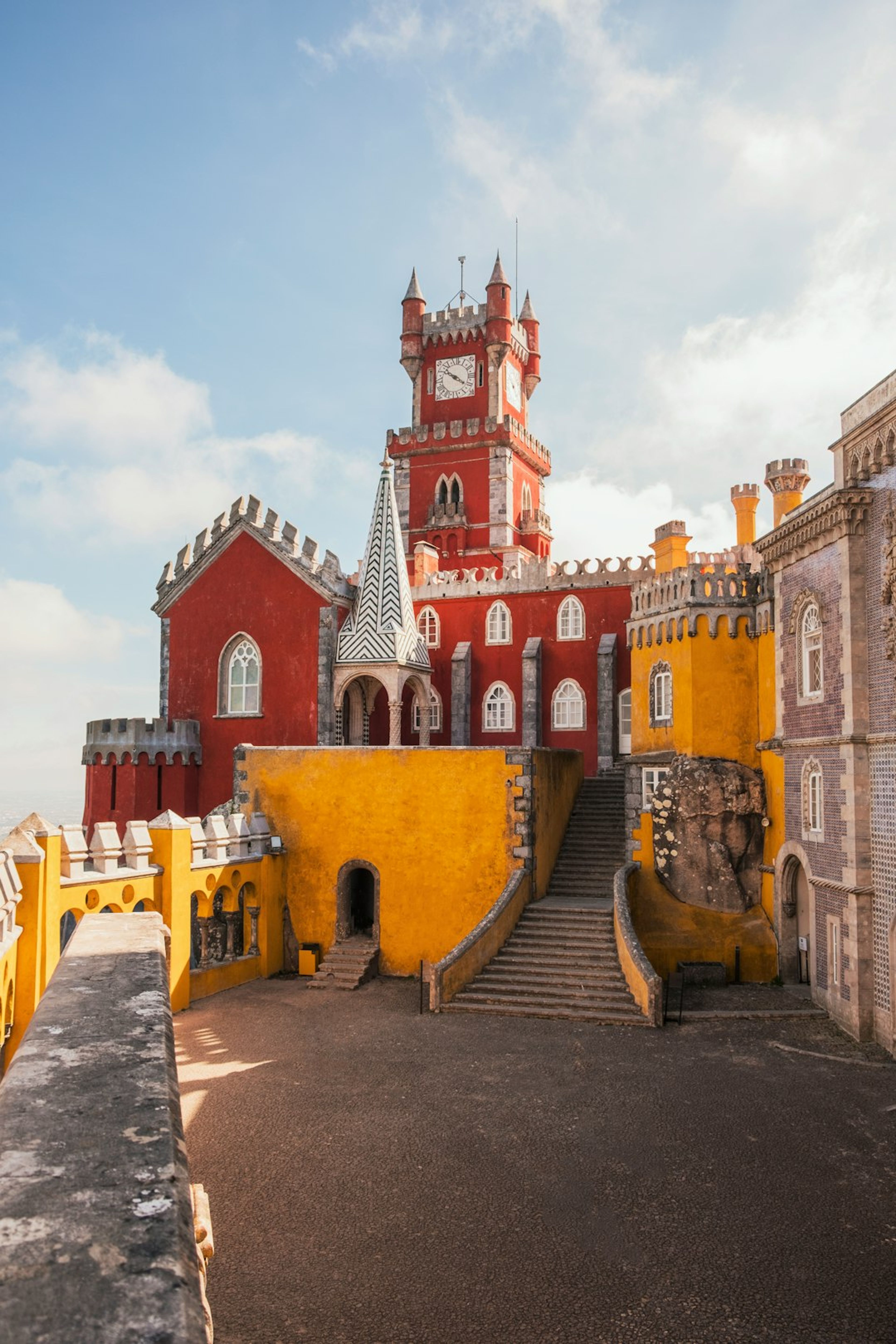
Pena Palace (Palacio Nacional da Pena) crowns the highest ridge above Sintra at 480 metres, painted in the yellow and terracotta red that turns up in every photograph of the town. King Ferdinand II commissioned it in 1838 on the ruins of a Hieronymite monastery, and the result mixes Neo-Gothic, Neo-Manueline and Neo-Moorish detail into a single building. The restored royal apartments inside preserve the interiors much as the royal family left them when they fled in 1910.
Be realistic about the crowds. From about 10:30 until mid-afternoon the terraces and the narrow interior corridors are extremely crowded, and the timed-entry system controls the flow into the palace but not onto the viewing platforms. Admission including the surrounding park costs around 20 EUR for an adult in 2026. Allow two hours.
Pro Tip: Book the earliest available slot, catch the 07:41 train from Lisbon Rossio, and walk the last stretch up from the park gate rather than queueing for the shuttle bus. You will have the terraces close to yourself for perhaps 20 minutes.
2Quinta da Regaleira - The Initiation Well and Its Underground Tunnels
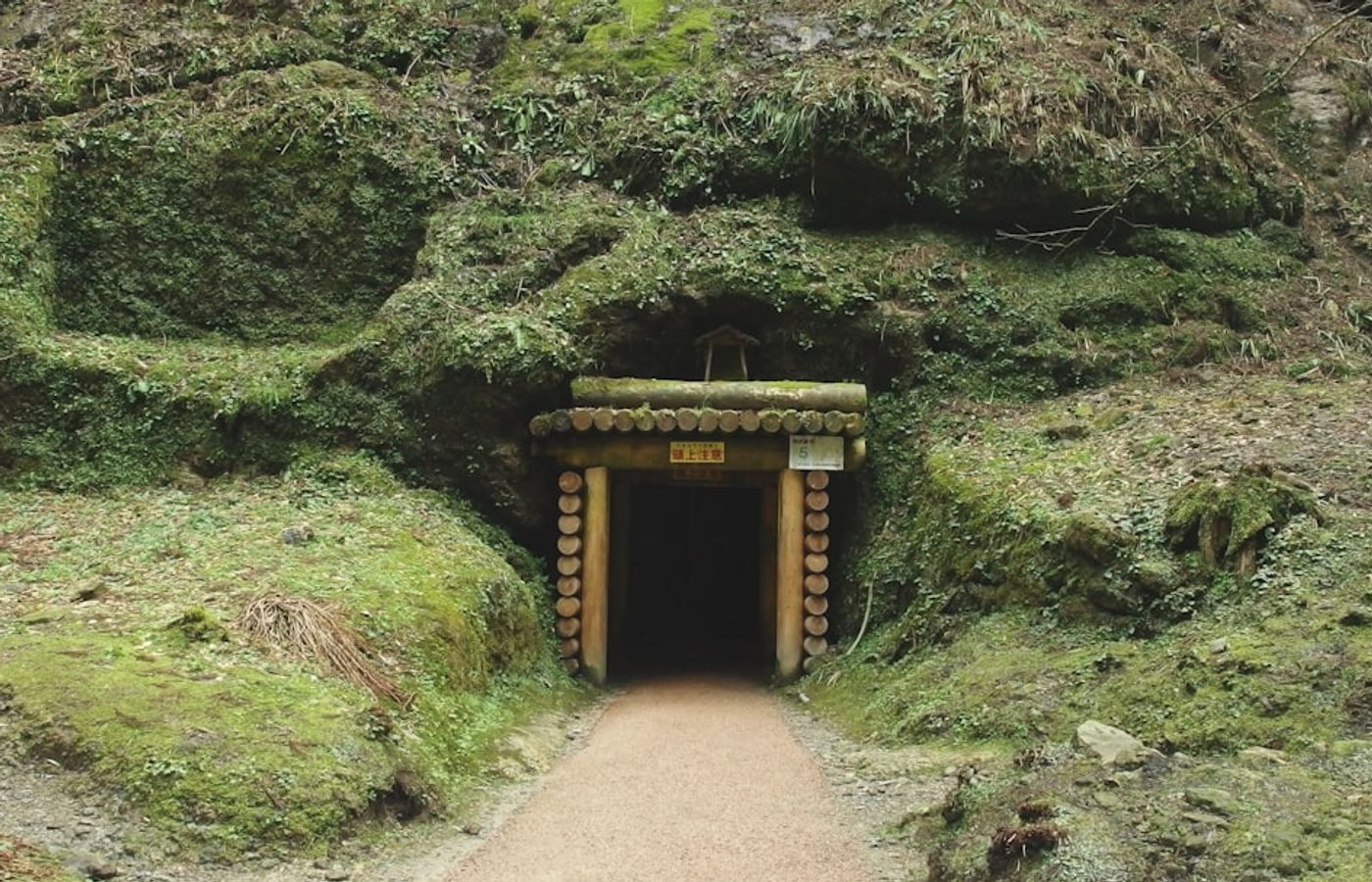

Quinta da Regaleira is the estate that Brazilian millionaire Antonio Augusto Carvalho Monteiro built between 1904 and 1910 with Italian architect Luigi Manini. The house itself is handsome enough. The gardens are the real draw: four hectares of grottoes, artificial lakes, stone towers and carved symbols tied to Freemasonry, the Knights Templar and alchemy.
The Initiation Well is the centrepiece - a 27-metre inverted tower with nine spiralling levels of stone steps dropping into a tunnel network that emerges beside a waterfall. Entry costs about 15 EUR and the site needs two hours to explore properly. Wear shoes with grip. The tunnel floors stay wet year-round and the worn granite gets genuinely slippery.
Pro Tip: Enter the Initiation Well from the lower tunnel rather than the top. The queue at the upper entrance regularly runs 20 minutes while the bottom approach is often empty, and climbing upward into the light makes for better photographs.

3Castelo dos Mouros - Ninth-Century Ramparts With the Widest View in Sintra
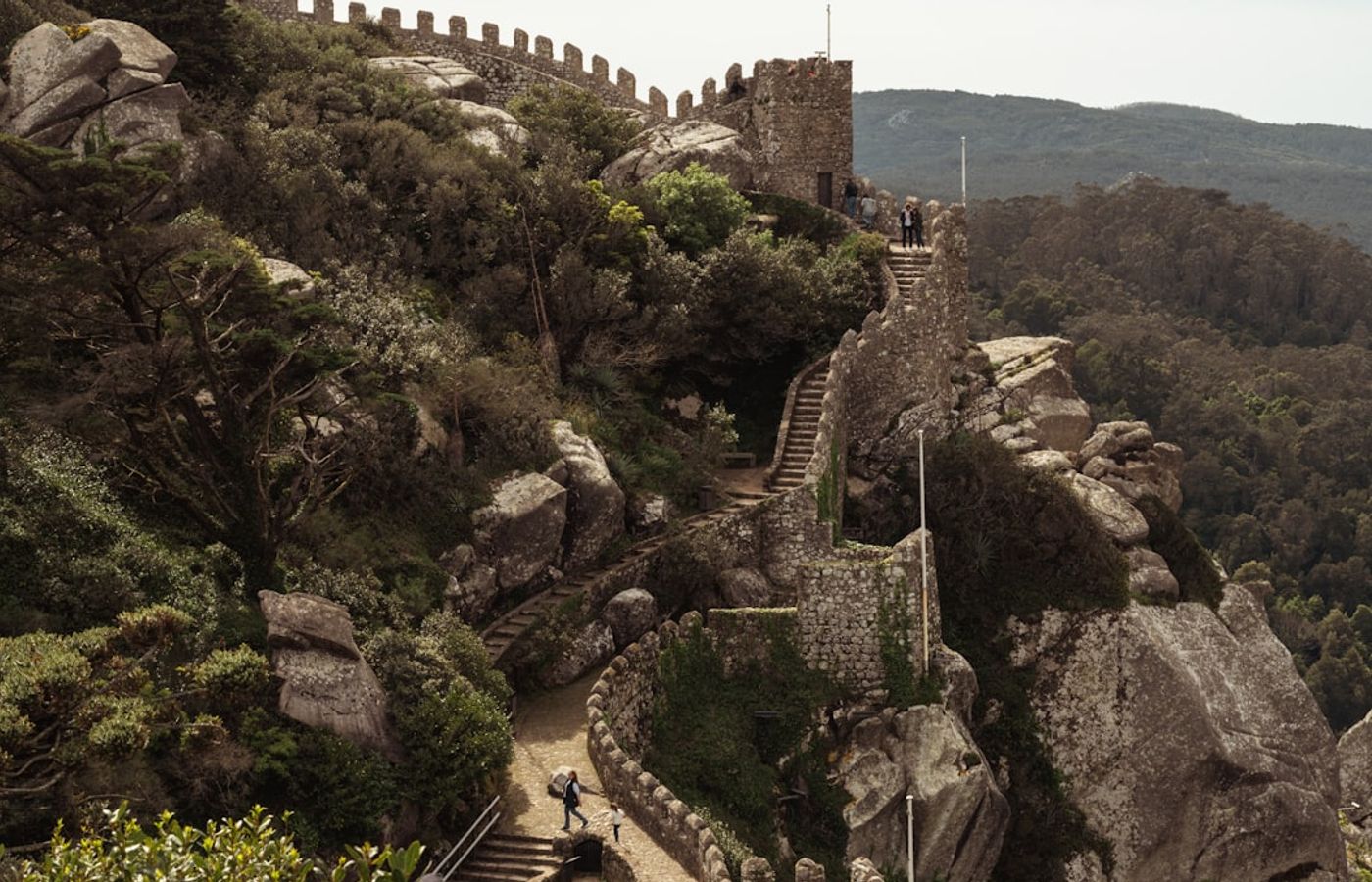

The Moorish Castle (Castelo dos Mouros) predates everything else on this list. Muslim builders raised it in the 8th and 9th centuries as a lookout over the Atlantic approach to Lisbon, and Afonso Henriques took it in 1147. What survives is a serrated line of granite wall running along two rocky peaks, consolidated in the 1840s by the same King Ferdinand II who built Pena Palace.
Walking the full rampart circuit takes about 45 minutes and involves several hundred uneven steps beside low parapets. The payoff is a 360-degree view across the Sintra hills, the Atlantic coastline and, on clear days, Lisbon itself. Admission is roughly 12 EUR. There is almost no shade anywhere on the walls, so summer afternoons here are punishing.
Pro Tip: Walk down from Pena Palace to the Moorish Castle instead of waiting for the 434 bus between them. The signposted forest path takes about 15 minutes downhill, saves a fare, and drops you at the castle's lower gate.
4Sintra National Palace - The Twin Chimneys in the Middle of Town
Sintra National Palace (Palacio Nacional de Sintra) is the one you can reach without a bus. Its two white conical kitchen chimneys, 33 metres tall, have defined the town skyline since the 15th century. This is the best-preserved medieval royal palace in Portugal, occupied more or less continuously by the monarchy from the early 1400s until 1910.
The tiled rooms carry the story. The Sala das Pegas has 136 magpies painted across its ceiling, reportedly King Joao I's answer to court gossip, while the Sala dos Brasoes displays 72 noble coats of arms beneath a gilded dome. Admission costs around 13 EUR and 75 minutes covers it. It is also the least crowded of Sintra's major palaces.
Pro Tip: Come between 13:00 and 15:00, when the coach groups are up at Pena Palace. Buy the ticket at the door rather than online - this palace rarely sells out and the counter queue on Largo Rainha Dona Amelia moves quickly.
5Monserrate Palace - Mughal Domes and a Garden of 3,000 Plant Species
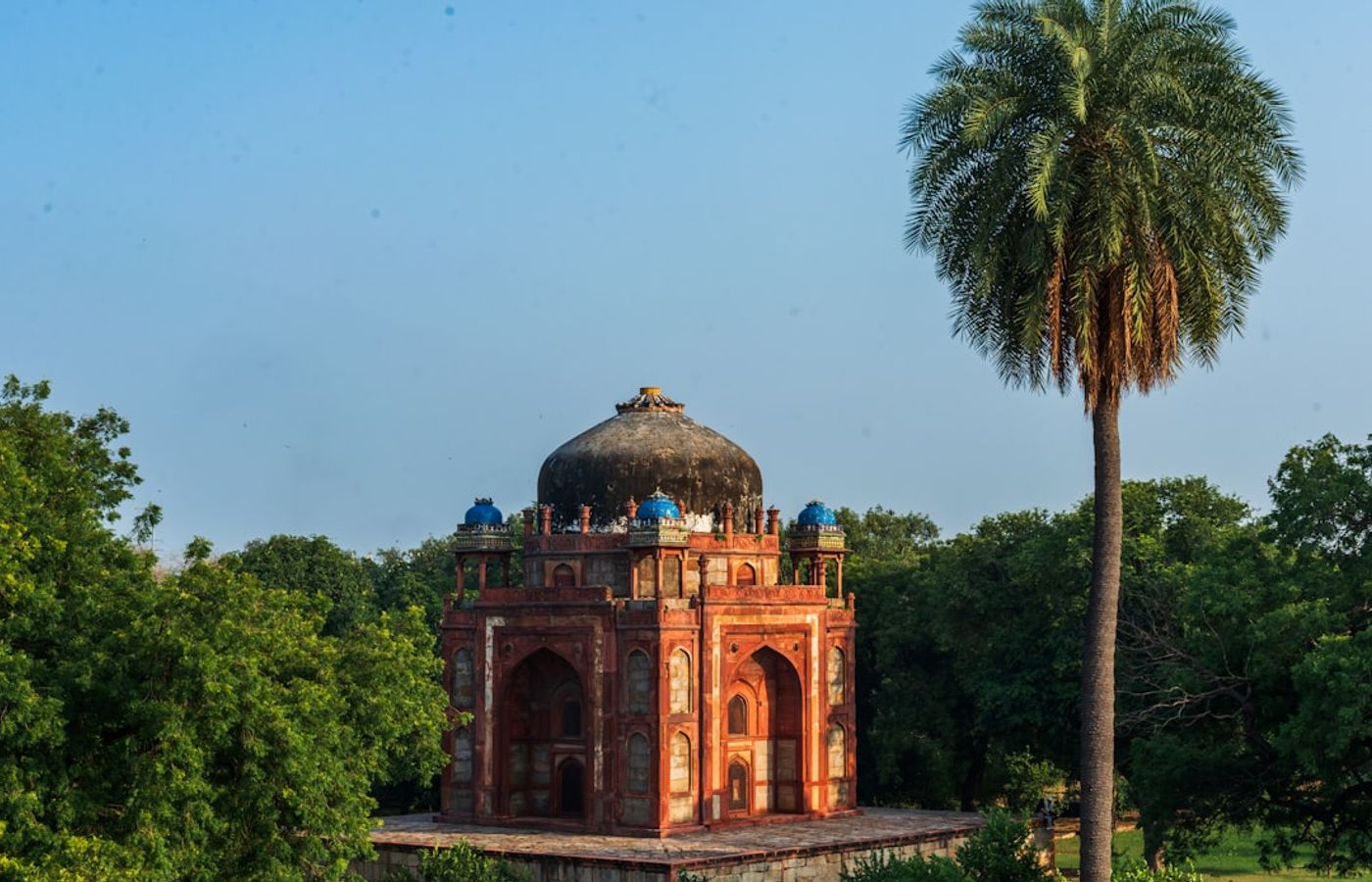
Monserrate Palace repays the extra bus ride. Sir Francis Cook, an English textile merchant, rebuilt it in 1858 to a design by James Knowles that borrows Mughal domes, Moorish arcades and Gothic tracery, then had the interior stonework carved into something closer to lace than masonry. Lord Byron stayed on the estate in 1809 and wrote about it in Childe Harold's Pilgrimage.
The 33-hectare park matters as much as the house. Cook's gardeners arranged it into geographic zones - a Mexican garden of agaves, a Japanese section, a fern valley fed by an artificial waterfall - holding more than 3,000 plant species. Entry runs about 12 EUR. Because most day-trippers never get this far west, you can walk the lawns in near silence even in August.
Pro Tip: Take the 435 bus out to Monserrate first thing, then walk the 4 km back downhill to town along Estrada de Monserrate. The road is quiet, shaded most of the way, and passes the Seteais viewpoint.
6Parque da Pena - 200 Hectares of Imported Forest Below the Palace
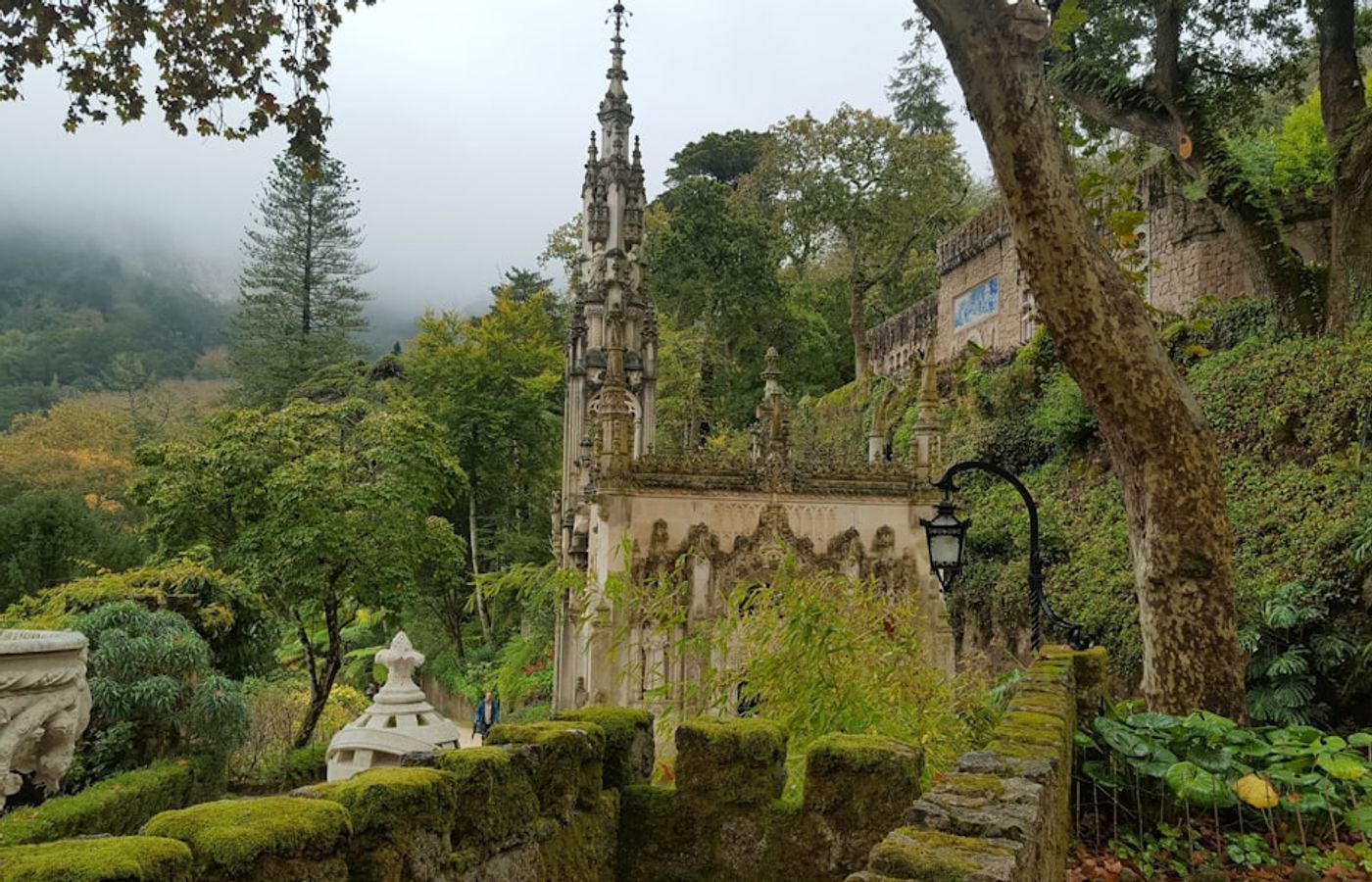
Most visitors photograph Pena Palace and leave, which means the 200-hectare park below it stays quiet all day. Ferdinand II planted it from the 1840s with species shipped in from across the Portuguese empire: North American sequoias, Chinese ginkgos, Australian tree ferns, Himalayan rhododendrons. Gravel paths thread between them past ponds, stone follies and shaded benches.
Cruz Alta, at 528 metres, is the highest point in the Serra de Sintra and a 30-minute uphill walk from the palace. On a clear morning the view stretches from Cascais to the Tagus estuary. The Chalet da Condessa d'Edla, the Swiss-style cottage Ferdinand built for his second wife, sits at the western edge and needs its own ticket. Park-only admission is around 10 EUR.
Pro Tip: Your Pena Palace ticket already includes Parque da Pena, so do not pay twice. Head straight for Cruz Alta after the palace visit; ten minutes of walking leaves almost every other visitor behind.
7Cabo da Roca - The Westernmost Point of Continental Europe
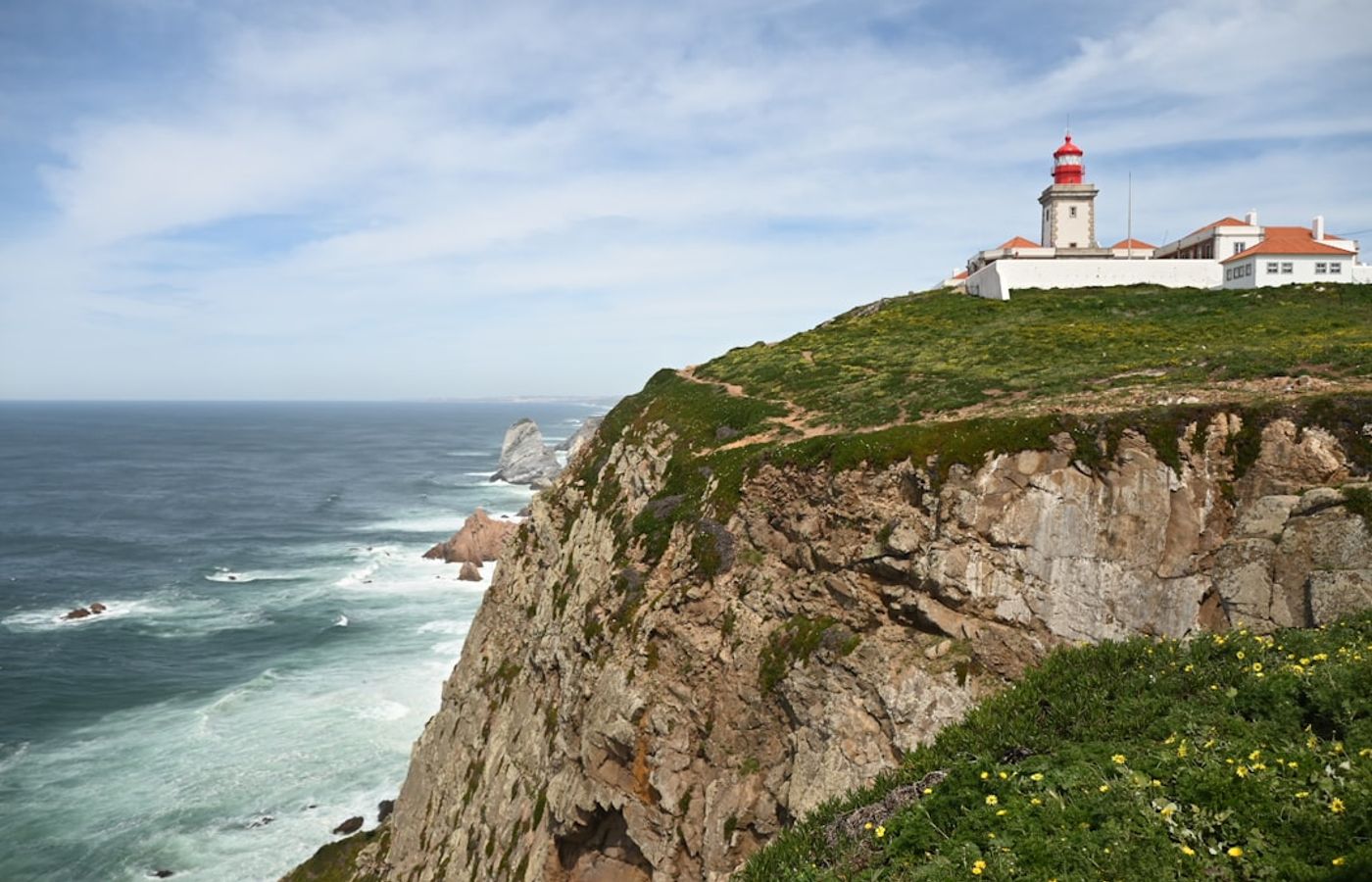
Cabo da Roca is where the European mainland runs out. Cliffs drop 140 metres straight into the Atlantic, a red-topped lighthouse has worked the headland since 1772, and a stone monument carries Camoes' line about the land ending and the sea beginning. There is a visitor centre, a small cafe and a car park. That is the whole of it.
Come for the weather rather than the facilities. Wind on this headland regularly hits 50 km/h even in July, and afternoon fog can erase the view within minutes. The clifftop path heading north towards Praia da Ursa gives better angles than the monument itself. Access costs nothing, and the 403 bus fare from Sintra is roughly 4.50 EUR each way.
Pro Tip: Check a coastal webcam before boarding the 403 - the cape is fogged in on a large share of summer afternoons. Roughly an hour before sunset gives the clearest air and the emptiest cliff path.
8Praia da Adraga and Praia Grande - Atlantic Beaches Below the Cliffs
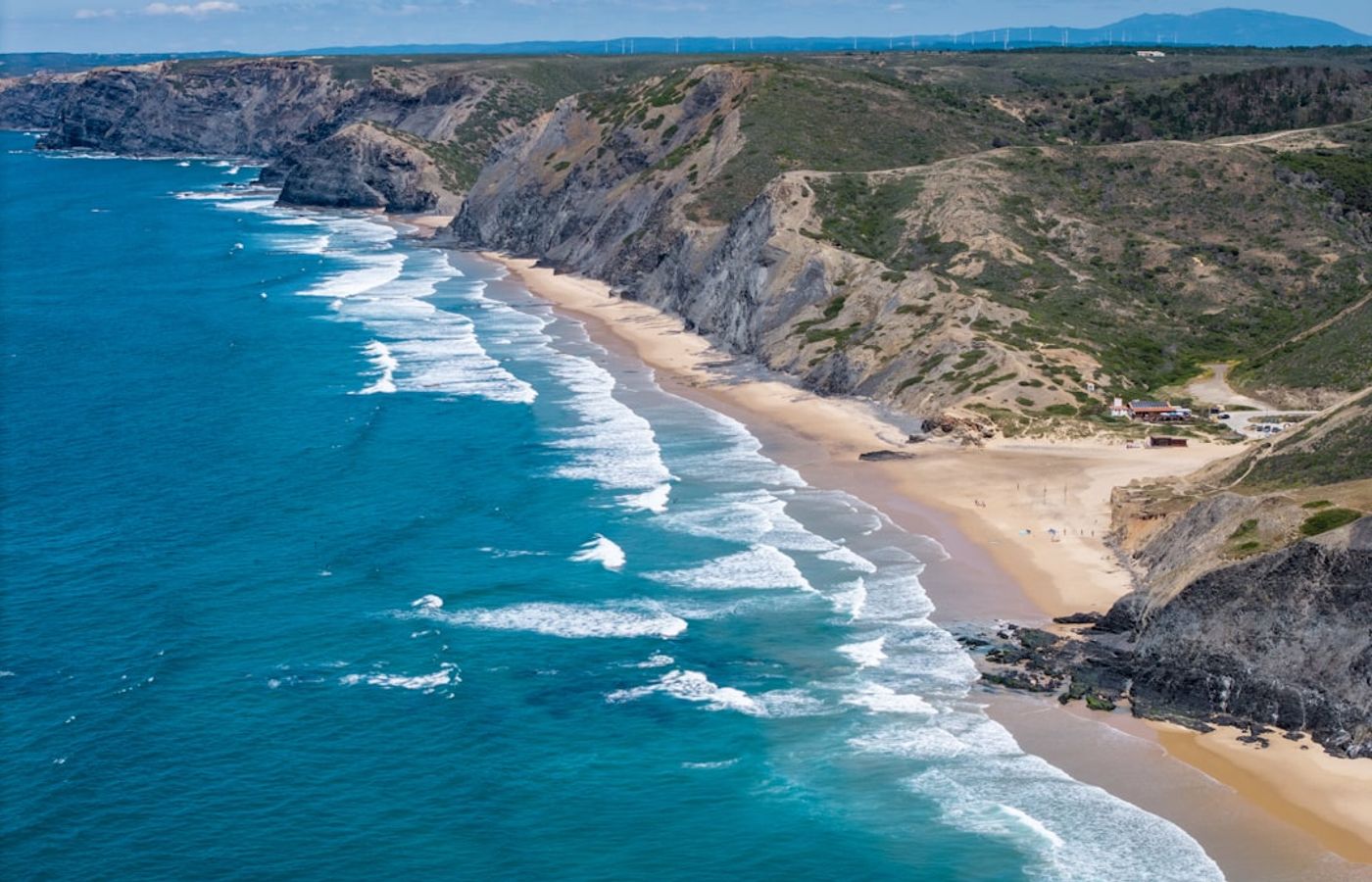
Two beaches sit within a few kilometres of each other on the Colares coast, and they serve different purposes. Praia da Adraga is the smaller and more dramatic - a curve of sand hemmed in by black rock stacks and a natural arch, with one long-standing seafood restaurant at the top of the access road. Praia Grande is exactly what the name says: a 1.1 km sweep favoured by surfers, backed by Europe's largest saltwater swimming pool.
The Atlantic here is cold, typically 16 to 18 degrees Celsius in summer, and the rip currents are real. Lifeguards patrol both beaches from June through September. Praia Grande has the easier parking and the fuller row of cafes. Praia da Adraga has the better rock pools at low tide. Neither charges entry, though sunbed hire runs about 15 EUR a day.
Pro Tip: Reach Praia da Adraga on a weekday before 11:00 - the access road holds fewer than 60 cars and fills fast. At Praia Grande, the fossil dinosaur footprints on the northern cliff face are visible at low tide.
9Convento dos Capuchos - A 16th-Century Monastery Lined With Cork
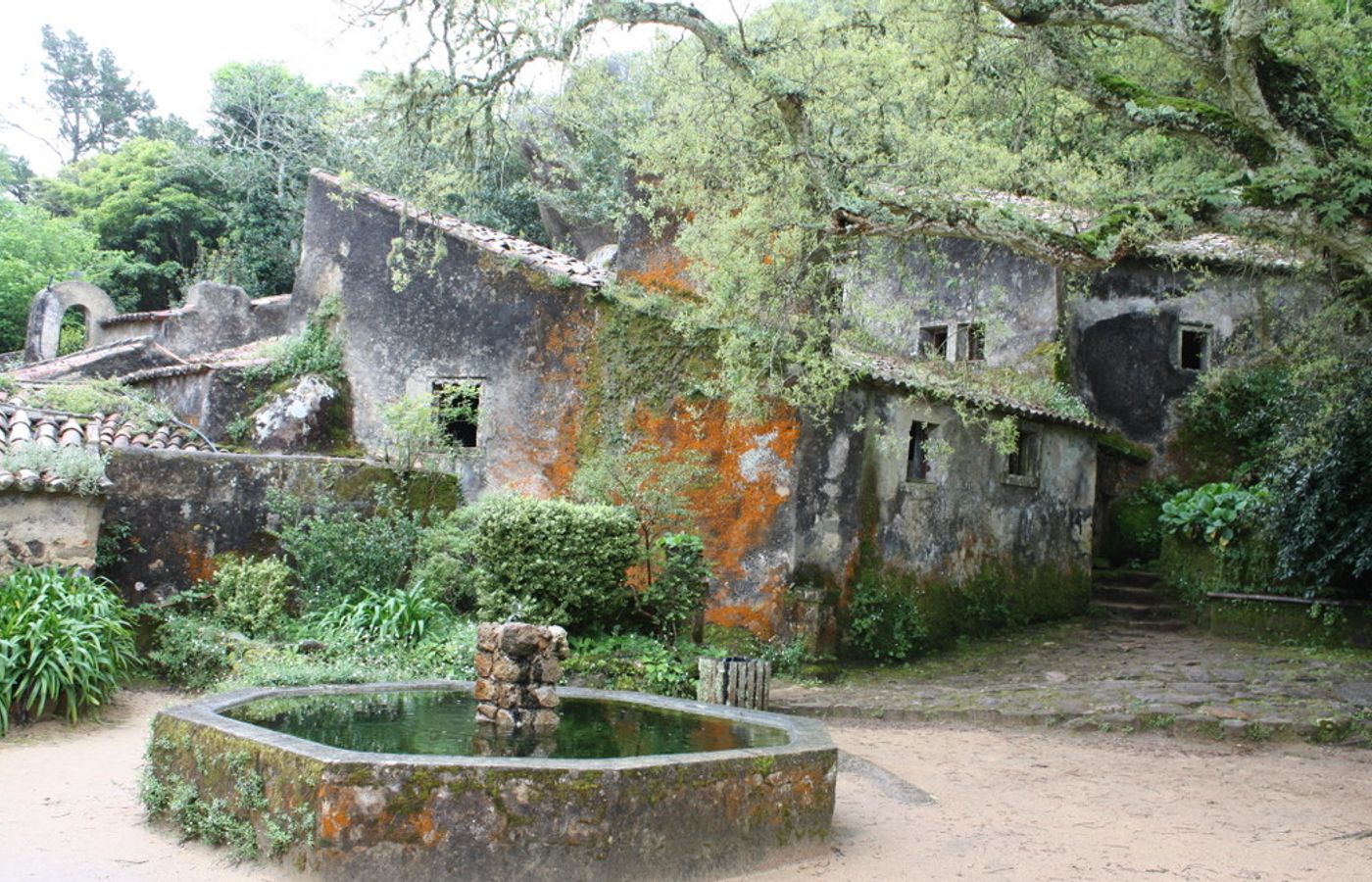
Convento dos Capuchos is the oddest place in the Serra de Sintra and the least visited on this list. Franciscan friars founded it in 1560 and lined the cells, doorframes and corridors with cork slabs for insulation, which is why locals still call it the Cork Convent. Eight friars lived here at a time, in rooms barely long enough to lie down in.
Getting there is the obstacle. No regular bus route reaches it, so plan on a taxi at around 20 EUR each way from Sintra, or a long walk through the forest. Admission is roughly 8 EUR. What you get in return is real solitude: moss on granite, doorways under 1.5 metres high, and no sound but wind in the trees. Give it 45 minutes.
Pro Tip: Pair Convento dos Capuchos with the Peninha viewpoint two kilometres further on and use one taxi for both. Ask the driver to wait - the fare for waiting time beats arranging a second pickup from a spot with patchy phone signal.
10Sintra Historic Centre - Travesseiros, Queijadas and the Old Streets

The town itself deserves more than the twenty minutes most day-trippers give it. Sintra Vila is a compact grid of cobbled lanes below the National Palace, and it is where the two pastries worth crossing the country for are made. Travesseiros are long puff-pastry pillows filled with almond and egg cream, dusted in sugar, served warm. Queijadas are small crisp-shelled tarts of fresh cheese, cinnamon and sugar, documented in Sintra since the 13th century.
Rua das Padarias is the street to walk. Piriquita has baked travesseiros there since 1862 and sells them for about 1.60 EUR each; the queue moves faster than it looks. Beyond the pastry, the lanes hold tile workshops, the Museu Anjos Teixeira in a converted watermill, and the small Igreja de Sao Martinho. Late afternoon, once the coaches have gone, the centre empties out.
Pro Tip: Buy travesseiros at 08:30 before heading up the hill. The first batch comes out of the oven warm and there is no queue. Eat them on the 434 bus rather than lining up again at 16:00 with everyone else.

CEO and co-founder
Tomas is the co-founder and director of trip1, an European company specializing in reservation services. He launched the company in 2025 with a focus on building scalable, efficient operations.
Climate averages · 1991–2020
When is the best time to visit Sintra?
The best time to visit Sintra is between May and October, the most comfortable stretch of the year on these averages.
Best time · May–OctoberRainfall
- Jan12°
- Feb13°
- Mar15°
- Apr16°
- May19°
- Jun21°
- Jul23°
- Aug24°
- Sep22°
- Oct19°
- Nov15°
- Dec13°
More of Portugal
10 Best Things to Do in Sintra, Portugal - FAQ
No, one day is not enough. A realistic single day covers four or five of these stops. The palaces sit on separate hilltops connected by slow bus roads, queues at Pena Palace can run 30 minutes, and Cabo da Roca alone absorbs half a day. Two full days works far better.
Start at Pena Palace the moment it opens. Walk downhill to the Moorish Castle, then take the Scotturb 434 bus back to town for Sintra National Palace and Quinta da Regaleira. Keep Monserrate Palace, Convento dos Capuchos, Cabo da Roca and the beaches for a second day using the 435 and 403 routes.
Pena Palace is the one that genuinely needs a timed entry slot booked online days ahead. Quinta da Regaleira and Monserrate Palace also run timed entry between June and September. The Moorish Castle, Convento dos Capuchos, Cabo da Roca, the beaches and the town centre need no booking whatsoever.
Budget roughly 85 to 110 EUR per adult in 2026. Pena Palace with the park runs about 20 EUR, Quinta da Regaleira 15 EUR, the Moorish Castle 12 EUR, Sintra National Palace 13 EUR, Monserrate 12 EUR and Convento dos Capuchos 8 EUR. Cabo da Roca, both beaches and the historic centre cost nothing.
Take the Linha de Sintra train from Lisbon Rossio station. The journey lasts about 40 minutes and costs roughly 2.40 EUR each way. From Sintra train station the Scotturb 434 bus loops up to the Moorish Castle and Pena Palace, the 435 serves Quinta da Regaleira and Monserrate Palace, and the 403 continues to Cabo da Roca.
A few worthwhile places sit outside this list of 10. The Chalet da Condessa d'Edla inside Parque da Pena, the Museu Anjos Teixeira beside the old water mill, the gardens of Palacio de Seteais, and the cliff village of Azenhas do Mar all reward a third day in the Sintra hills.

Related travel guides
5 Best Autumn Hikes in Madeira
The 5 best autumn hikes in Madeira for 2026, with the new tiered trail fees, mandatory booking rules, current closures and honest weather advice.

5 Best Things to Do in Lisbon During Web Summit
Five things to do in Lisbon during Web Summit 2026, with exact addresses, metro lines, ticket prices and the hour to turn up at each one.