

Guides · San Diego
10 Top Places to Visit in San Diego

CEO and co-founder
The best places to visit in San Diego are spread across a coastline that stretches from Torrey Pines in the north down to the Mexican border, and the trick to a good trip is choosing a route that respects the geography rather than fighting it. Southern California's second-largest city runs on a mild Mediterranean climate, with daytime temperatures sitting between 18 and 24 degrees Celsius most of the year, which is why locals treat the beach, the canyons, and the museum parks as everyday backdrops rather than seasonal treats. The best time to visit San Diego is March through May or September through November, when the crowds thin, the marine layer lifts by mid-morning, and hotel rates settle back to reasonable levels.
You can build a three-day itinerary around downtown, Balboa Park, and one beach day, or stretch to five days if you want to include Coronado, La Jolla, Torrey Pines, and a slower pace with kids. San Diego neighborhoods each carry their own personality: Little Italy leans culinary and walkable, the Gaslamp Quarter runs on nightlife and Victorian architecture, La Jolla trades on sea caves and cliff walks, and Old Town holds the Spanish and Mexican roots of the region. This guide covers the ten attractions that anchor a first visit and gives you the practical detail - transit, admission, hours, and a Pro Tip - that separates a smooth day from a frustrating one.
1Balboa Park and San Diego Zoo - The 1,200-Acre Cultural Heart


Balboa Park) covers 1,200 acres in the middle of the city and holds seventeen museums, several performing-arts venues, formal gardens, and the world-famous San Diego Zoo. The Spanish Colonial Revival buildings along El Prado were built for the 1915 Panama-California Exposition and still house the San Diego Museum of Art, the Museum of Us, and the Fleet Science Center. Park grounds are free and open 24 hours; museum hours are typically 10:00 AM to 5:00 PM. Individual museum admission runs $18 to $22 per adult in 2026, or you can buy the Explorer Pass for $79 (single-day, one-week window) covering most venues. The San Diego Zoo sits on the northern edge of the park and is home to more than 12,000 animals; 2026 single-day tickets are $74 for adults and $64 for children ages 3 to 11, with zoo hours running 9:00 AM to 6:00 PM in summer and 9:00 AM to 5:00 PM in winter. Free tram rides move you between the main entrance areas, which matters because the site sits on rolling terrain.
Pro Tip: Arrive at the zoo when gates open at 9:00 AM. The animals are most active in the cool morning hours, parking lots fill by 10:30 AM on weekends, and the panda and koala exhibits build significant lines by midday. Free parking is available in the surface lots but plan on a 5 to 10-minute walk to any entrance.
2La Jolla Cove and Tide Pools - Sea Lions and Sea Caves
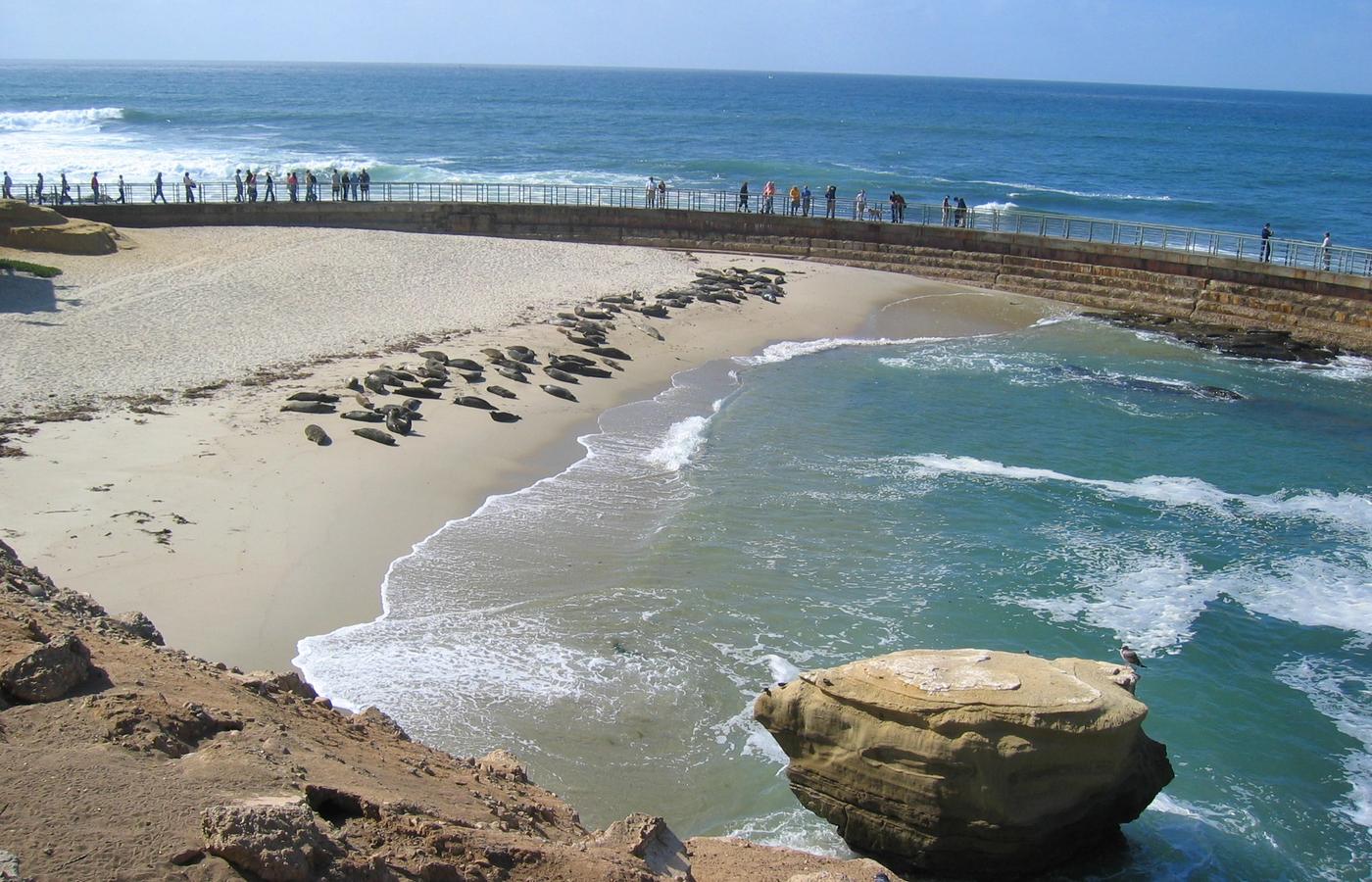

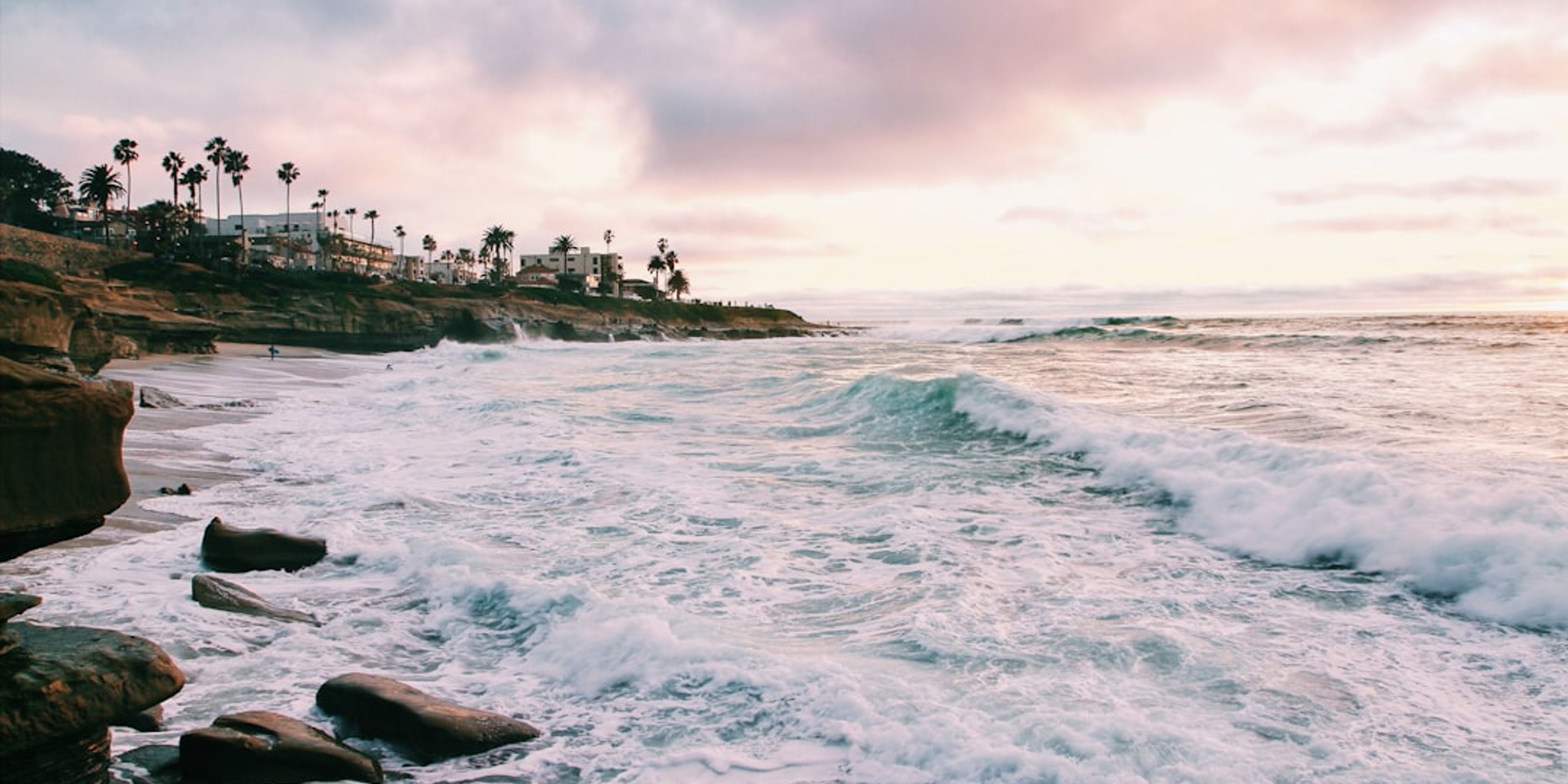
La Jolla Cove is a small, sheltered beach carved into sandstone bluffs, and it is the single most photographed spot on the San Diego coast. The cove itself is protected as part of the San Diego-La Jolla Underwater Park Ecological Reserve, which means the water is clear, snorkeling visibility often reaches 9 metres, and the resident colony of California sea lions and harbor seals treats the rocks as a permanent haul-out. The tide pools at Children's Pool Beach, a 10-minute walk south along the Coast Walk, are best explored during minus tides (check the NOAA tide chart before you go); expect to see hermit crabs, sea anemones, and sea stars in the shallow rocky basins. Coast Walk itself is a 30-minute flat path along the cliff edge with view platforms over the seven La Jolla sea caves. The cove and tide pools are free to visit and open 24 hours, though lifeguard service runs 9:00 AM to sunset. Snorkel gear rentals from shops on Prospect Street run about $25 per day in 2026.
Pro Tip: Come at low tide in the morning for the best tide-pool viewing and calmer water for snorkeling. Parking on Coast Boulevard and Prospect Street is metered ($2.50 per hour) and fills fast; if you arrive after 10:00 AM on a weekend, park at the free spots along Torrey Pines Road and walk down.

3Gaslamp Quarter - Downtown's 16-Block Victorian District
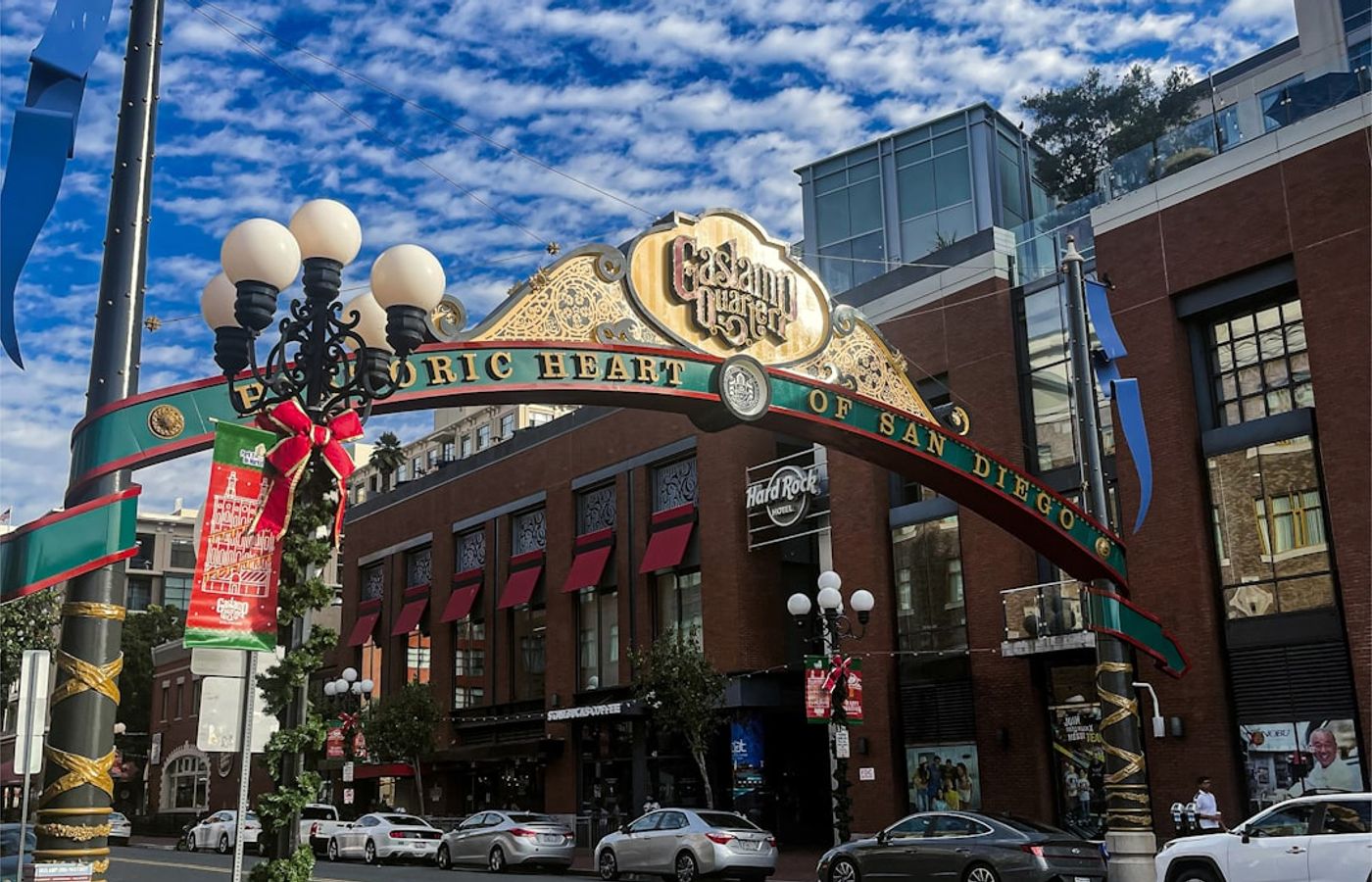

The Gaslamp Quarter is a 16-block National Historic District running along Fifth Avenue between Broadway and Harbor Drive, and it holds the highest concentration of Victorian-era commercial buildings on the West Coast. Ninety-four buildings from the 1860s through the 1910s survive here, restored during the redevelopment that started in the 1970s. The Gaslamp Museum at the William Heath Davis House (410 Island Avenue) is the district's small anchor museum, open Tuesday through Saturday 10:00 AM to 5:00 PM with $10 adult admission in 2026, and it runs 90-minute guided walking tours at 11:00 AM every Saturday for $20 per person. The rest of the area is a walkable grid of restaurants, rooftop bars, live-music venues, and shops. Petco Park (home of the San Diego Padres) sits on the eastern edge, which means the district doubles as pre-game territory during baseball season from April through September. The Gaslamp is entirely walkable in an evening; most travelers spend 2 to 3 hours here across dinner and a stroll.
Pro Tip: Weekend nights get loud after 10:00 PM on Fifth Avenue between F and Market streets. If you want the architecture without the bar crowds, walk the district between 4:00 PM and 7:00 PM, then move west toward Little Italy or the Embarcadero for a calmer dinner.
4Coronado Island and Hotel del Coronado - The White-Sand Beach Escape
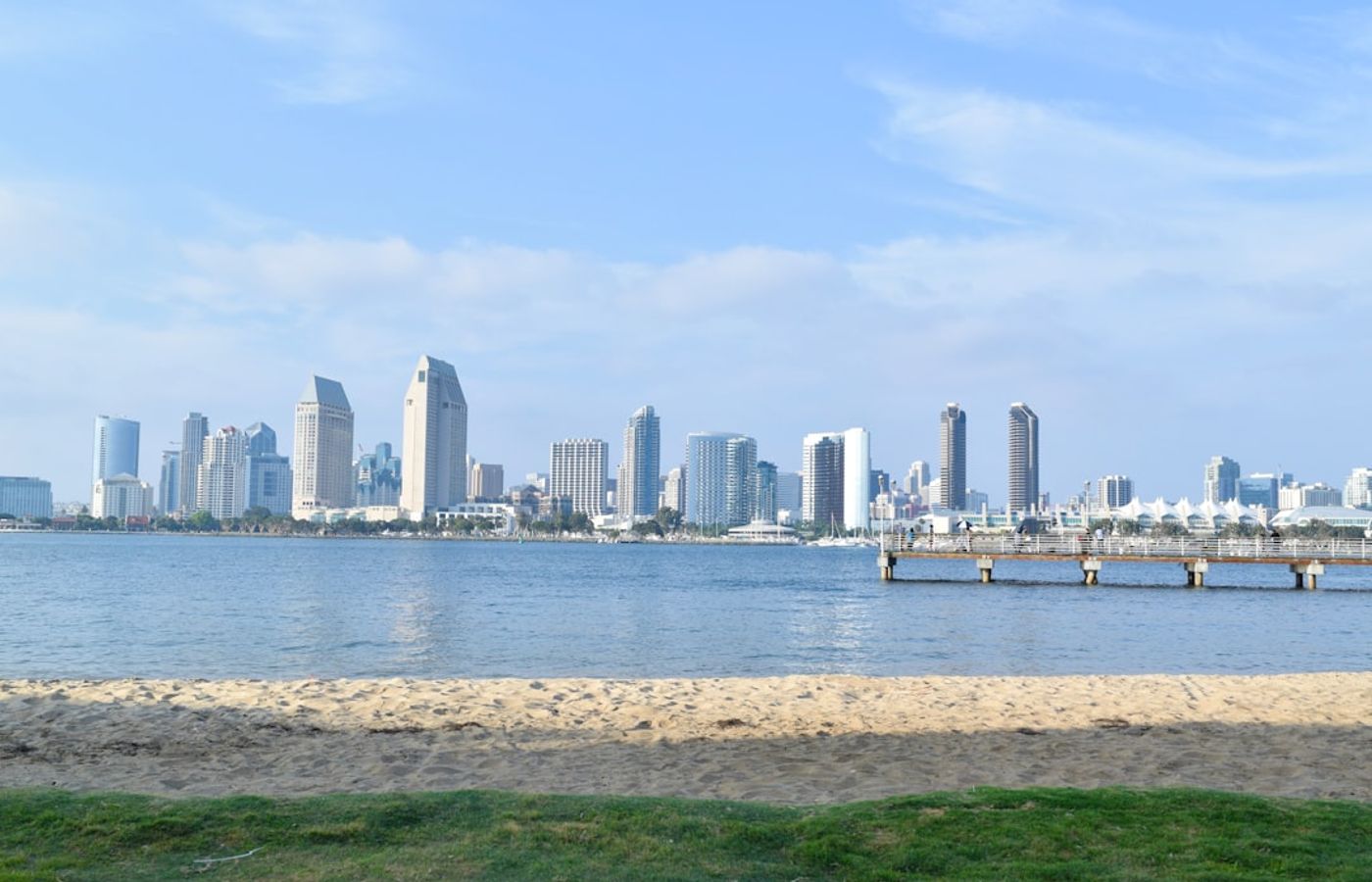
Coronado is a tied island connected to the mainland by the Coronado Bridge and a narrow strand of beach running south to Imperial Beach. The 1888 Hotel del Coronado, a Victorian wooden building with a red conical roof, is a National Historic Landmark and remains a working hotel and public destination. Non-guests are welcome to walk the beach directly in front of the hotel (Coronado Beach), which is consistently ranked among the top beaches in the United States by Dr. Beach for its wide sand, gentle break, and the flecks of mica that make the sand sparkle. The beach is free and open 24 hours, with lifeguard service from 9:00 AM to sunset. Orange Avenue, the main street inland from the hotel, runs 8 blocks of shops and restaurants, and the whole village is flat and walkable. Bike rentals from the ferry landing run $10 per hour or $30 per day in 2026 and are the most efficient way to cover Coronado Beach, the Silver Strand, and the Naval Amphibious Base viewpoints.
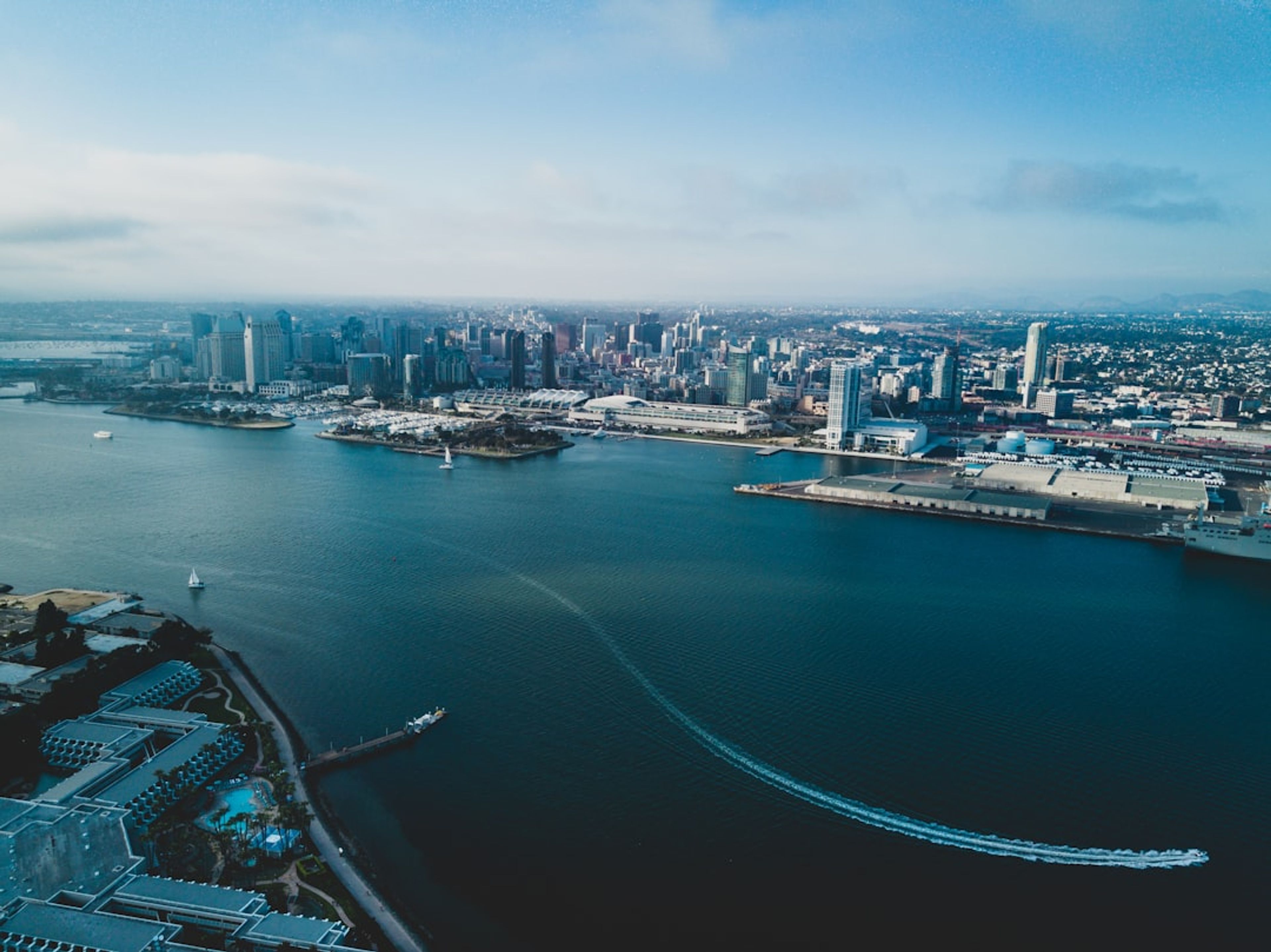
Pro Tip: Take the ferry over rather than driving. The bridge has no pedestrian access, parking on the island is metered and hard to find in summer, and the ferry crossing delivers the best photo of the downtown skyline you will get on the whole trip.
5USS Midway Museum - Aircraft Carrier on the Embarcadero

The USS Midway served as an active United States Navy aircraft carrier from 1945 to 1992, longer than any other American carrier in the twentieth century, and has been anchored at Navy Pier on the San Diego Embarcadero as a museum since 2004. The self-guided audio tour covers more than sixty exhibits across the hangar deck, the flight deck, engine rooms, sleeping quarters, and the ship's bridge. Twenty-nine restored aircraft, including an F-14 Tomcat, an F-4 Phantom, and an SH-60 Seahawk helicopter, are on display on the flight deck with cockpit-access opportunities on several. The museum is open daily 10:00 AM to 5:00 PM (last entry 4:00 PM). Adult admission in 2026 is $34, seniors are $29, retired military are $24, youth (5-12) $24, and active-duty military plus dependents enter free. Budget 3 to 4 hours for a proper visit; docents (many are Navy veterans) run short talks throughout the day and are worth stopping for.
Pro Tip: Wear closed-toe shoes and be ready for narrow ladders below deck. Weekends and school holidays get crowded by 11:00 AM; arrive at the 10:00 AM opening if you want to walk the flight deck without waiting for cockpit access.
6Sunset Cliffs Natural Park - Point Loma's Cliff-Top Sunset Walk
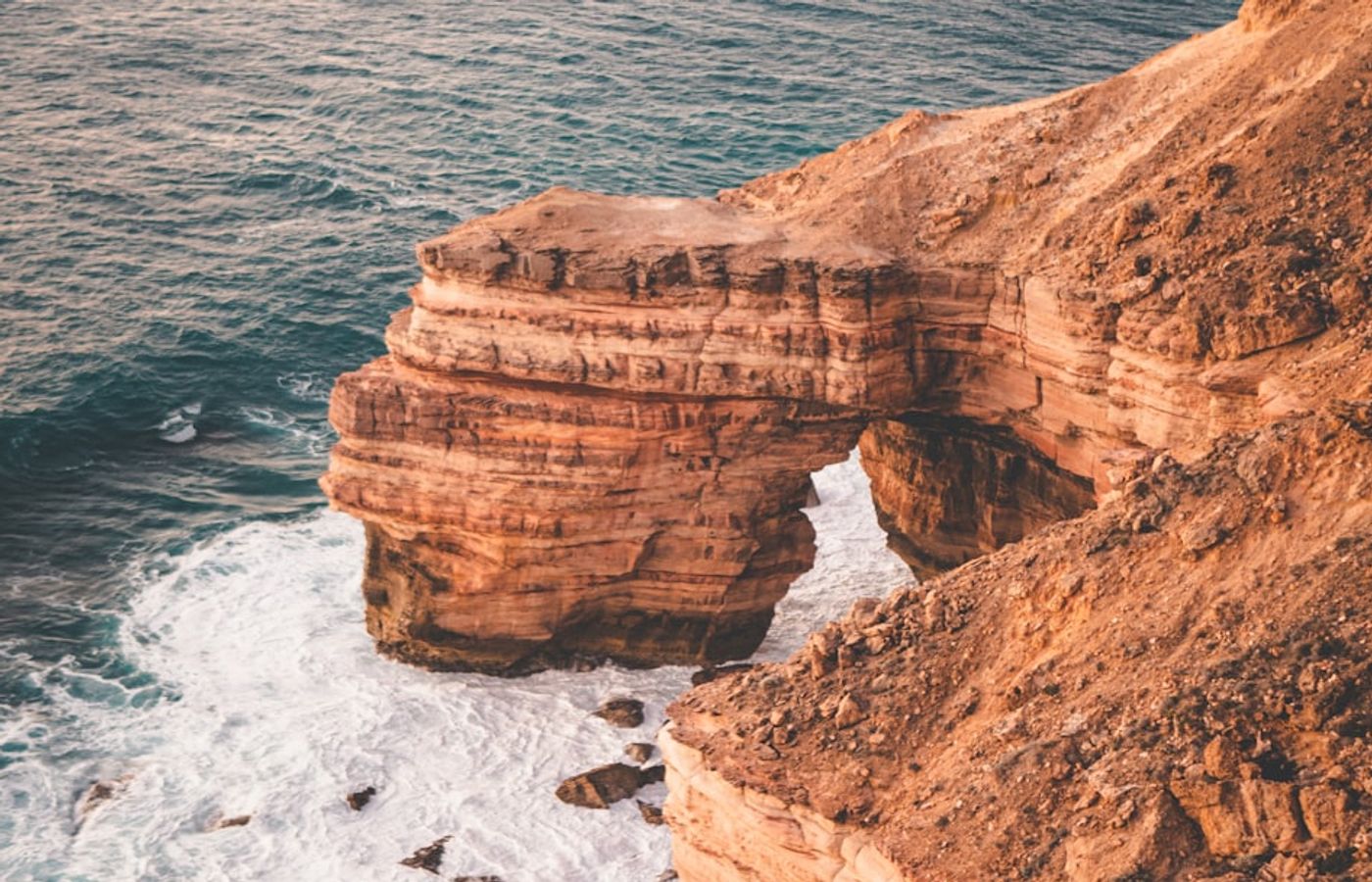
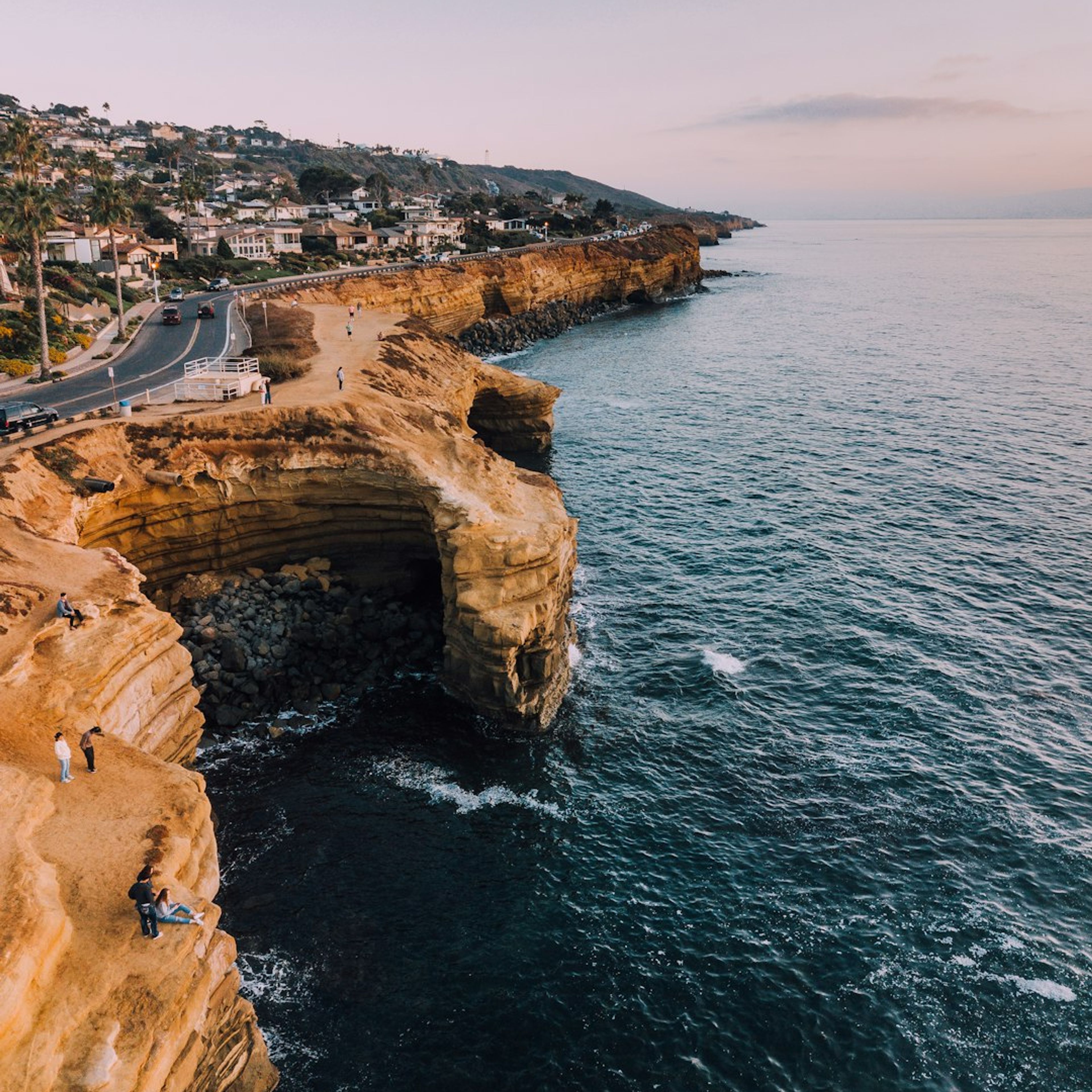
Sunset Cliffs Natural Park is a 68-acre strip of sandstone bluffs running roughly 1.5 miles along the western edge of the Point Loma peninsula. The cliffs rise between 15 and 90 metres above the Pacific, and the unpaved trail along the top is one of the best free walks in the city. Sea caves have been eroded into the softer layers below, and at low tide you can climb down at the Ladera Street access point to explore small pocket beaches. The park is open 24 hours; the paved parking areas along Ladera Street and Osprey Street close at 10:30 PM. There is no admission fee. The name is literal - the cliffs face due west and the sunset views over the Pacific are the reason most people come. Arrive 45 minutes before sunset to find parking and a spot on the bluff. The trail runs unfenced along the cliff edge in several sections, so keep back at least 3 metres from the drop and watch children carefully.
Pro Tip: The Osprey Point overlook (32.7188, -117.2571) at the southern end of the park has the widest ocean view and the smallest crowds. Bring a wind layer even in summer; the marine breeze picks up at sundown and temperatures can drop 5 degrees Celsius in twenty minutes.
7Old Town San Diego State Historic Park - The Birthplace of California
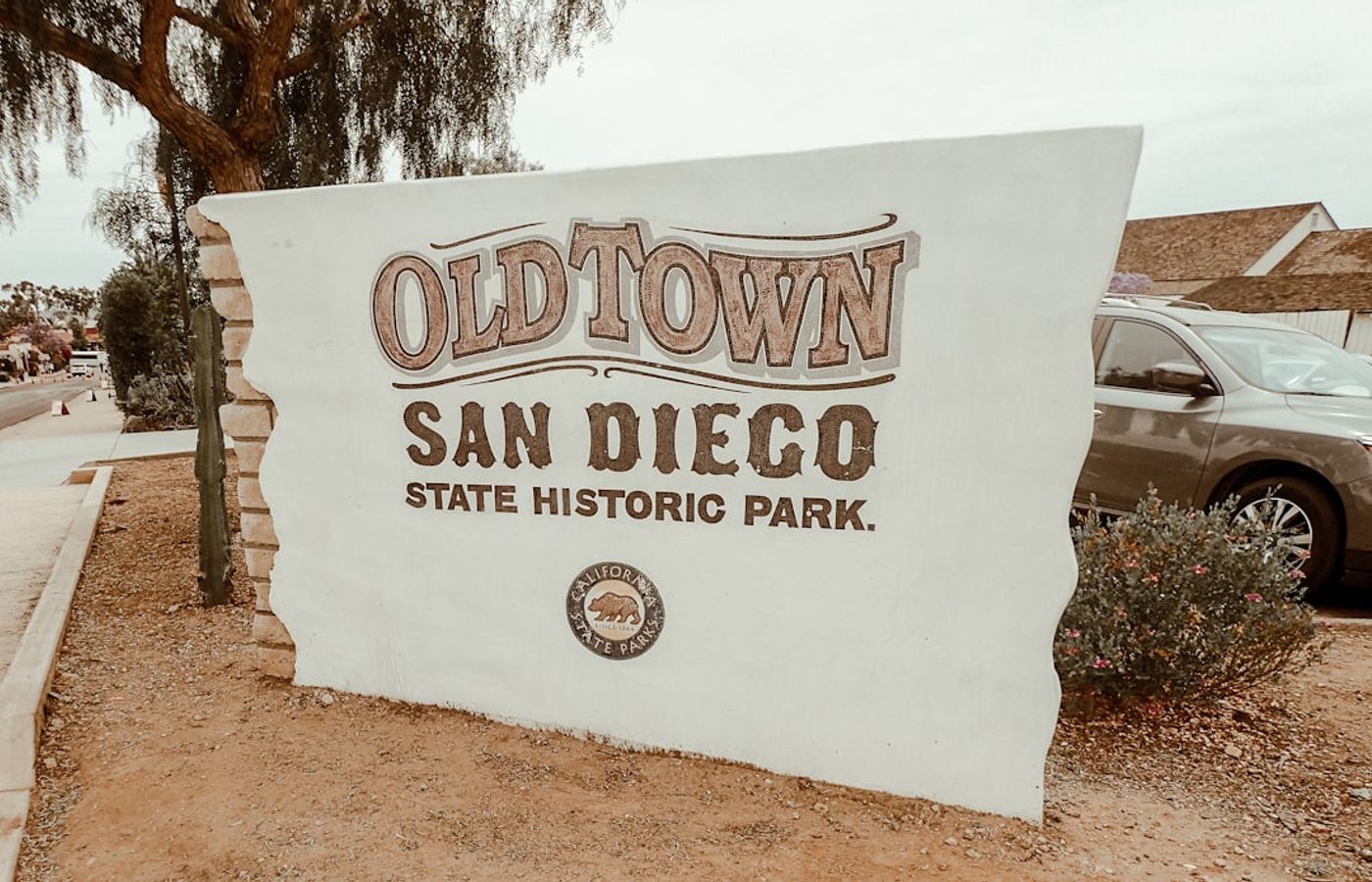
Old Town San Diego State Historic Park preserves the site of the first Spanish settlement on the West Coast, established in 1769 as part of the Mission San Diego de Alcala expedition. The park covers 12 acres and holds five original adobe buildings from the 1820s through the 1850s alongside reconstructed schoolhouses, blacksmith shops, a stagecoach depot, and the Casa de Estudillo, a 13-room adobe mansion built in 1827. Admission to the park is free and the outdoor grounds are open 10:00 AM to 5:00 PM daily. Interior exhibits and the museum buildings run the same hours; some are volunteer-staffed and close earlier on quiet weekdays. Costumed interpreters demonstrate traditional crafts, and free 45-minute walking tours run daily at 11:00 AM and 2:00 PM from the Robinson-Rose House visitor center. The park is surrounded by a working commercial district of Mexican restaurants and souvenir shops - the Fiesta de Reyes plaza at the north edge is the busiest lunch stop and hosts live mariachi music most weekend afternoons.
Pro Tip: Old Town is one of the best options in San Diego with kids because everything is walkable, the historic buildings are hands-on, and lunch is inexpensive. Skip the parking lot ($10 to $15) and take the trolley from downtown; the transit center drops you directly at the park's north gate.
8Torrey Pines State Natural Reserve - Coastal Sandstone and Rare Pines
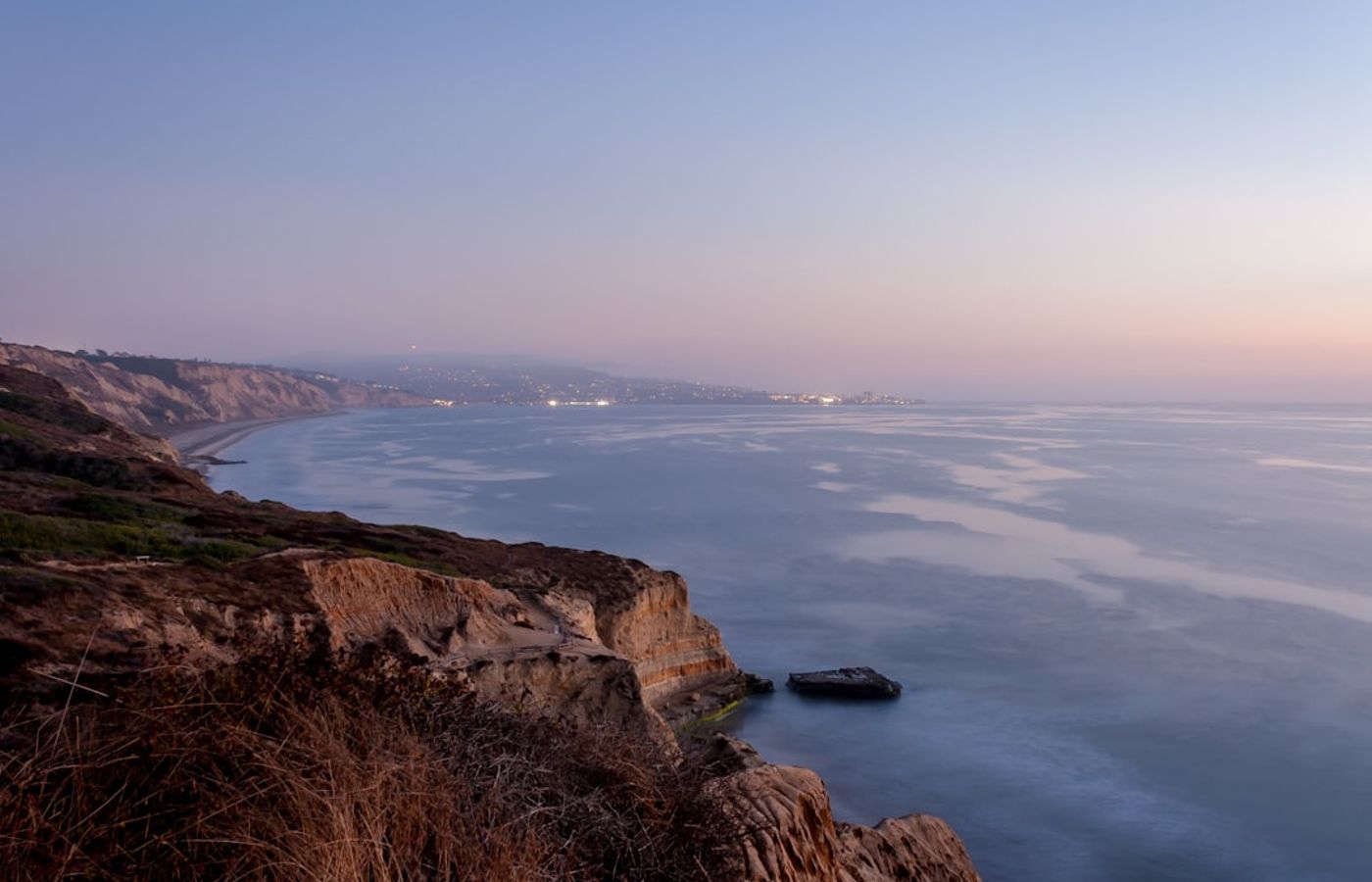
Torrey Pines State Natural Reserve protects one of only two remaining wild populations of the Torrey pine (Pinus torreyana), the rarest pine species in the United States. The reserve covers 2,000 acres of coastal sandstone bluffs, chaparral, and beach, and eight signed trails run through it. The most popular routes are the Guy Fleming Trail (0.7 miles, mostly flat, ocean views), the Razor Point Trail (1.4 miles round trip, moderate, cliff-edge overlooks), and the Beach Trail (1.5 miles round trip, descends to Torrey Pines State Beach). The reserve is open daily from 7:15 AM to sunset. Parking inside the main lot at the top of the hill costs $10 to $25 per vehicle depending on the day and season in 2026 (weekends and summer are highest); free parking is available on the north end of Torrey Pines State Beach with a 20-minute uphill walk to the trailhead. Dogs, drones, food, and beverages other than water are not allowed inside the reserve to protect the plant communities.
Pro Tip: Aim for the first parking window after 7:15 AM or come after 3:00 PM. Midday summer heat on the exposed sandstone can hit 32 degrees Celsius with no shade, and the reserve caps entry at 400 vehicles - once the lot is full, the ranger station turns cars around.
9Little Italy - The Piazza-Anchored Food Neighborhood
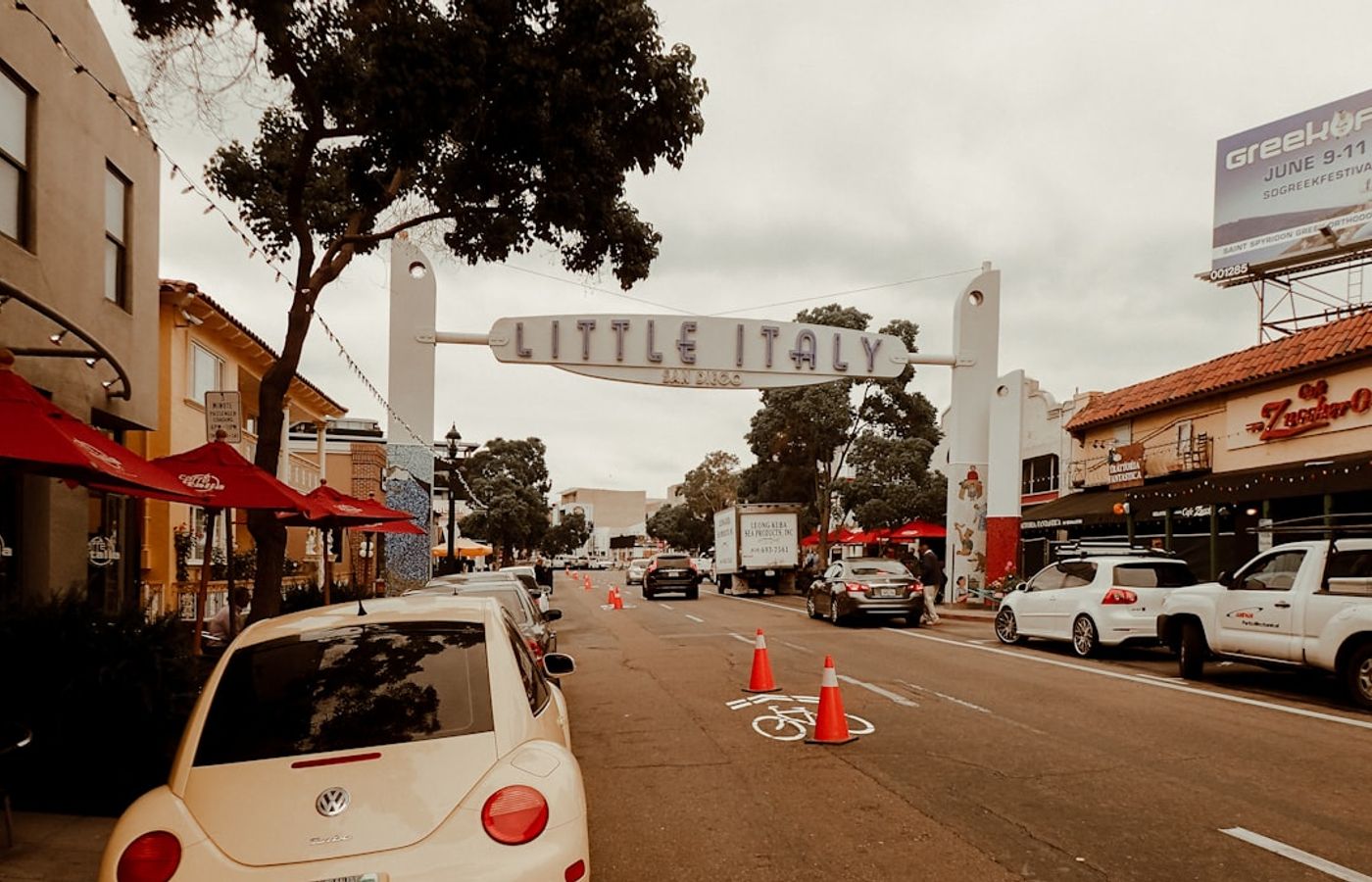
Little Italy is a 48-block district running from Ash Street to Laurel Street between the waterfront and Interstate 5, and it is the most concentrated food and design neighborhood in the city. The Italian fishing community that founded the area in the 1920s is still visible in the family-run restaurants along India Street, but the district has been reshaped over the past decade by design studios, roasters, and one of the largest weekly farmers markets in California. The Little Italy Mercato runs every Saturday 8:00 AM to 2:00 PM and every Wednesday 9:30 AM to 1:30 PM on West Cedar Street with more than 200 vendors. Piazza della Famiglia at 1490 India Street is the central plaza, opened in 2018, and is the anchor point most travelers use for lunch, coffee, or an evening aperitivo. The district is entirely walkable from end to end in 20 minutes and works well as an afternoon or dinner destination after a morning at Balboa Park or the harbor.
Pro Tip: Saturday morning at the Mercato is the best time to see the neighborhood at full pace, but restaurant reservations for dinner sell out on Fridays and Saturdays 2 to 3 weeks in advance. Book ahead if you want a specific spot, or walk in for lunch when tables are easier.
10Cabrillo National Monument - Point Loma's Tide Pools and Lighthouse
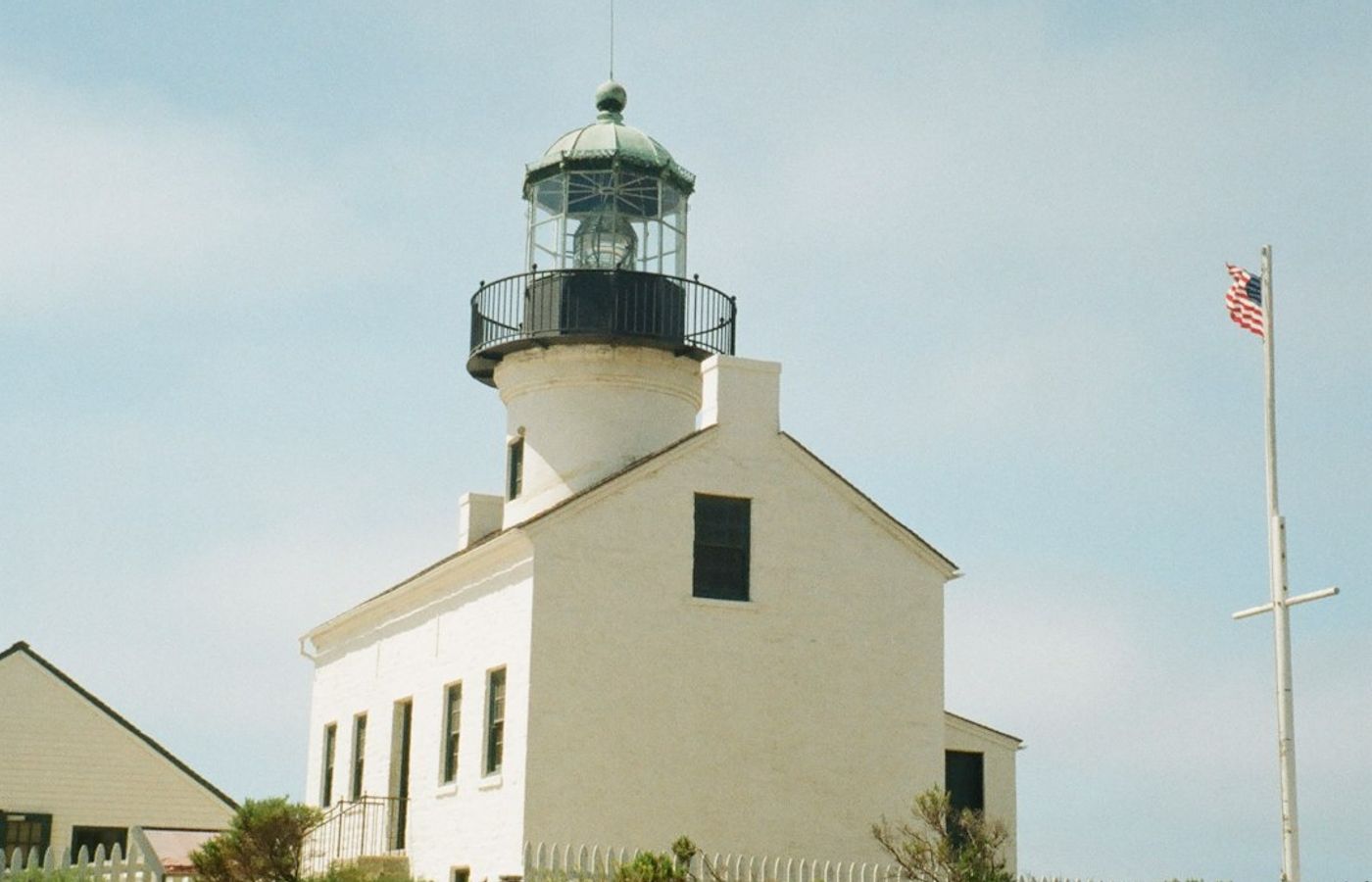
Cabrillo National Monument sits at the southern tip of the Point Loma peninsula and commemorates the 1542 landing of Juan Rodriguez Cabrillo, the first European to set foot on the West Coast of what is now the United States. The 160-acre park is managed by the National Park Service and combines three main sights: the 1854 Old Point Loma Lighthouse restored to its 1880s appearance, the panoramic overlook of San Diego Bay and the downtown skyline, and the Point Loma tide pools on the west-facing shore. The park is open daily 9:00 AM to 5:00 PM; entrance fees in 2026 are $20 per vehicle, $15 per motorcycle, or $10 per pedestrian or cyclist (valid for seven days), and the America the Beautiful annual pass covers admission. The visitor center runs a 15-minute introductory film and holds a small exhibit on Cabrillo's expedition and the region's military history. The tide-pool area at the western base of the peninsula (accessed by a separate road down to sea level) has some of the best rocky-shore ecology in Southern California; check NOAA tide charts and plan your visit for a low tide of 0.6 metres or less.
Pro Tip: December through February brings the Pacific gray whale migration past Point Loma, and the monument's whale overlook is one of the best free viewing spots on the coast. Bring binoculars, dress for wind, and check the daily sightings board at the visitor center.
Get hotel deals for San Diego
Price drops, new stays and local tips for San Diego, straight to your inbox.
No spam, unsubscribe anytime.

CEO and co-founder
Tomas is the co-founder and director of trip1, an European company specializing in reservation services. He launched the company in 2025 with a focus on building scalable, efficient operations.
10 Top Places to Visit in San Diego, California - FAQ
Balboa Park and the San Diego Zoo, La Jolla Cove with its sea lions and sea caves, the wide beach in front of the Hotel del Coronado, and the USS Midway Museum on the Embarcadero. Add a sunset at Sunset Cliffs, the free Old Town San Diego State Historic Park, the coastal trails of Torrey Pines, Little Italy for food, and the lighthouse and tide pools at Cabrillo National Monument.
The San Diego Zoo, home to more than 12,000 animals on the northern edge of Balboa Park. A 1-day pass is $78 for adults and $68 for children aged 3 to 11, a little less on value days, and includes the guided bus tour and the Skyfari aerial tram. Arrive at the 9:00 AM opening, when the animals are most active and before the lots fill on weekends.
La Jolla, where sandstone bluffs frame La Jolla Cove, sea lions haul out on the rocks and the flat 30-minute Coast Walk passes above seven sea caves. Sunset Cliffs in Point Loma is the best place to watch the sun go down over the Pacific, and Coronado Beach sparkles with flecks of mica. Visit La Jolla at low tide in the morning for the tide pools and calm water.
Spend day one in Balboa Park and the San Diego Zoo, day two downtown at the USS Midway Museum, Little Italy and the Gaslamp Quarter, and day three on the coast at La Jolla Cove, ending with sunset at Sunset Cliffs. With five days, add Coronado by ferry, the Torrey Pines trails, Old Town and Cabrillo National Monument at a slower pace.
March to May or September to November, when crowds thin, the morning marine layer lifts by mid-morning and hotel rates settle. Days sit between 18 and 24 degrees Celsius most of the year, though May and June mornings are often grey. From December to February, grey whales migrate past Point Loma, and the Cabrillo National Monument overlook is a free place to watch.
Yes. The San Diego Zoo, Balboa Park's Fleet Science Center, the La Jolla tide pools and Coronado's gentle beach all suit children, and Old Town's hands-on historic buildings come with inexpensive lunches. On the USS Midway, children can climb into several cockpits, but wear closed-toe shoes for the narrow ladders. On the unfenced Sunset Cliffs trail, keep children well back from the edge.