
Turkey weather in January
January is a city and interior month in Turkey, not a coast holiday. Istanbul and the Marmara are in the wet, cold part of the year. The plateau is colder still. The far south is the mildest corner of the map, which is not the same as swimming weather.
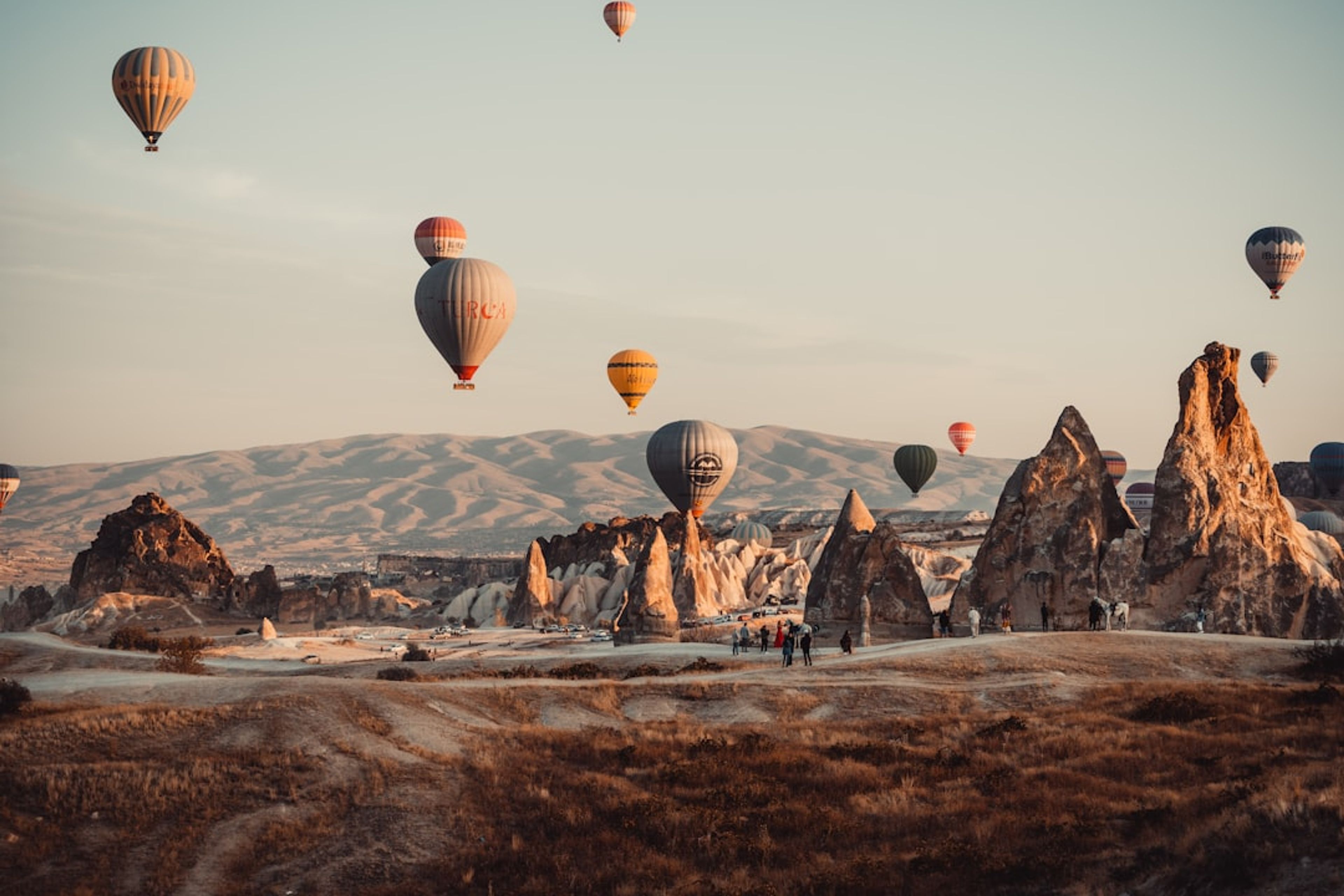
Treat it as museums, hamams, food and, if you like that sort of thing, snow in Cappadocia. The Antalya strip is open in a quiet, off-season way. It is not the brochure summer, and it should not be sold as one.
Of the twelve months in Turkey, January is the coldest and the sixth wettest.

- Average temp
- 2°C (35°F)
-2–5°C · 28–41°F
- Rainfall
- 36 mm
Not much rain
- Sunshine
- 2.6 h
hours per day
What is Turkey like in January?
Daytime
Days are short. In Istanbul and along the Marmara you want a proper coat, not a festival jacket. Inland and in the east the cold is drier but sharper, especially once the sun drops behind the plateau.
The Mediterranean fringe is the gentle exception: you can walk Antalya or Kas without full winter kit, then feel the difference the moment you go up into the Taurus. Do not plan long outdoor days as the default.
Rain
This is one of the wetter stretches of the year, and it is not evenly spread. The Black Sea and the north-west take the brunt. Istanbul in January is a rain-and-ferry city.
The south is drier than Istanbul, which still means showers, not a dry season. Waterproof shoes matter more than a rain plan for the beach, because the beach is not why you are here.
Evening
Evenings are cooler. A layer helps after sunset.
What should I pack for Turkey in January?
A warm mid-layer
Nights drop to around -2°C (28°F).
January compared with December and February
January in Turkey is 2.1°C cooler than December and about as wet as it, which averages 4°C (38°F).
January in Turkey is 1.5°C cooler than February and about as wet as it, which averages 3°C (37°F).
Daylight in Turkey in January
On 15 January the sun is up for 9 hours 39 minutes in Turkey, rising about 08:08 and setting about 17:47 local time.
January ends 43 minutes longer than it begins, so the last week of the month is a different length of day from the first.
That is 5 hours 21 minutes short of June, the longest-lit month here.
Turkey weather by month
TemperatureRainfall
How January compares with the rest of the year
January is highlighted. Every other month links to its own page.
| Month | Average | Rainfall |
|---|---|---|
| January | 2°C / 35°F | 36 mm |
| February | 3°C / 37°F | 37 mm |
| March | 7°C / 45°F | 44 mm |
| April | 12°C / 53°F | 49 mm |
| May | 17°C / 62°F | 49 mm |
| June | 21°C / 69°F | 36 mm |
| July | 24°C / 76°F | 15 mm |
| August | 24°C / 76°F | 13 mm |
| September | 20°C / 67°F | 19 mm |
| October | 14°C / 58°F | 33 mm |
| November | 8°C / 47°F | 33 mm |
| December | 4°C / 38°F | 42 mm |
Similar weather in January
Other destinations whose January averages sit close to this one.
Check another month
This is the month you are reading. Change either side to look at another.
FAQs about Turkey in January
January climate averages for Turkey, 1991–2020.
Turkey averages 2°C (35°F) in January, ranging from about -2°C (28°F) at night to 5°C (41°F) in the afternoon. That is a 1991–2020 average, so an individual week can run either side of it.
Barely. January sees only about 36 mm, so rain is unlikely to affect your plans.
No. January averages 2°C (35°F) against 3°C (37°F) in February — 1.5°C cooler.
January is 2.1°C cooler than December, and about as wet.
It is outside the easiest window. The most comfortable stretch here is May to October; January sits outside it, which usually means more heat, more rain, or both — worth it if you would rather have the place to yourself.
About 2.6 hours of sun a day on the 1991–2020 average, so daylight is short on useful sun.
This page does not show today's weather. It is a 1991–2020 climate normal from Meteostat — a long-run average of what January is usually like, which is what you want when booking months ahead. For today or the coming week, check a live forecast.
About 9 hours 39 minutes of daylight in mid-January, against 15 hours in June and 9 hours 21 minutes in December.
On 15 January, sunrise is about 08:08 and sunset about 17:47 local time. Both shift across the month — the month ends 43 minutes longer than it starts.