
Guides · Da Nang
10 Best Things to Do in Da Nang
By Tomas Achmedovas · CEO and co-founder

CEO and co-founder
This guide covers 10 things to do in Da Nang, Vietnam, ordered so you can group them into efficient days instead of criss-crossing the coast twice. Every entry gives the exact street address, how long a Grab or taxi takes from the city centre, the distance from the Han River, and a Pro Tip based on how the place actually works - the hours that matter, the fee in Vietnamese dong, and when the crowds land.
The order follows Da Nang's geography. Entries one to seven sit inside the city or on its immediate edge: the beachfront along Vo Nguyen Giap street, the Han River bridges, the Museum of Cham Sculpture, and the Son Tra Peninsula headland rising straight up behind the port. All of them are under twenty minutes by car from Han Market. Ba Na Hills and its Golden Bridge are the outlier at 35 km west, and that one eats a full day.
The last three entries run south and north along the coast. Marble Mountains, Non Nuoc Beach and Hoi An line up on the same 30 km stretch towards Quang Nam province, so treat them as one southern run. Hai Van Pass goes the other way, 25 km north, and pairs with nothing. Prices are 2026 rates in Vietnamese dong with a rough euro equivalent. One thing to plan around: the city has no metro, so every transit note below is a bus route, a taxi or a Grab. Most itineraries put Hanoi at the other end of the trip and treat this as the middle stop, which is the right way round if you are working north to south rather than doubling back. The pass and the beaches are the first things the autumn rains take out, so check Da Nang weather before you fix which day goes where. The hotels in Da Nang along My Khe keep the coast road and the southern run on your doorstep.
Check dates for Da Nang
See what is available on your dates.
1My Khe Beach - Da Nang's Main City Beach
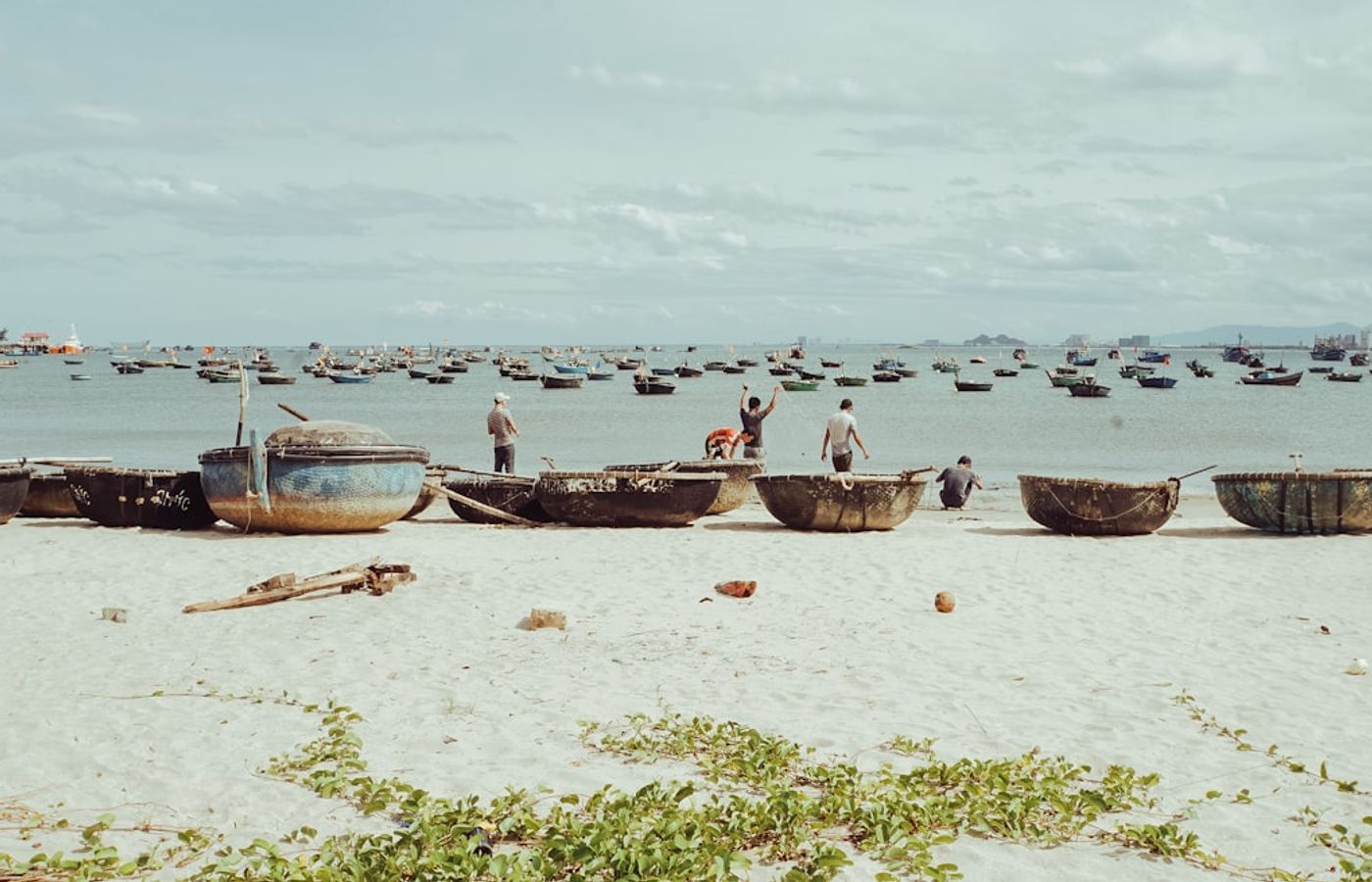

My Khe Beach runs roughly 10 km along Vo Nguyen Giap street and it is the single reason many travellers put Da Nang on the itinerary at all. The sand is pale and fine, the shelf drops away gently, and the water stays warm from March through September. Lifeguards patrol the marked swimming zones between 05:00 and 18:00. Red flags go up when the current turns, which happens regularly from October to December during the northeast monsoon.
Mornings belong to residents. From about 05:00 the water fills with locals swimming before work, and the carts along the promenade sell banh mi for 20,000 to 30,000 VND (under 1 EUR). A sun lounger rents for 50,000 VND (about 1.80 EUR) for the day. By midday in June and July the sand is too hot to cross barefoot, so the beach empties out until late afternoon and fills again around 16:30.
2The Golden Bridge at Ba Na Hills - The Stone Hands Holding a Walkway
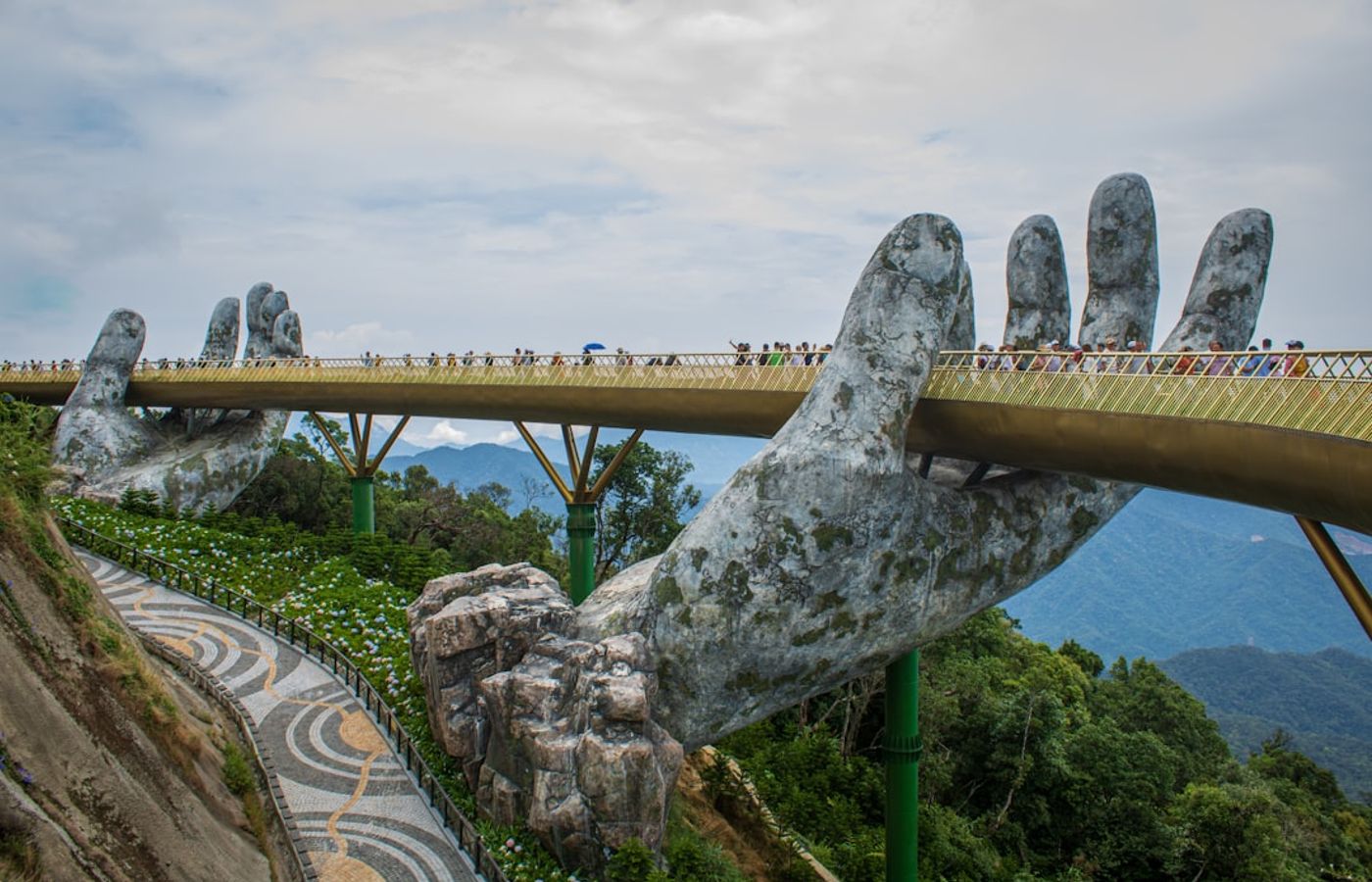

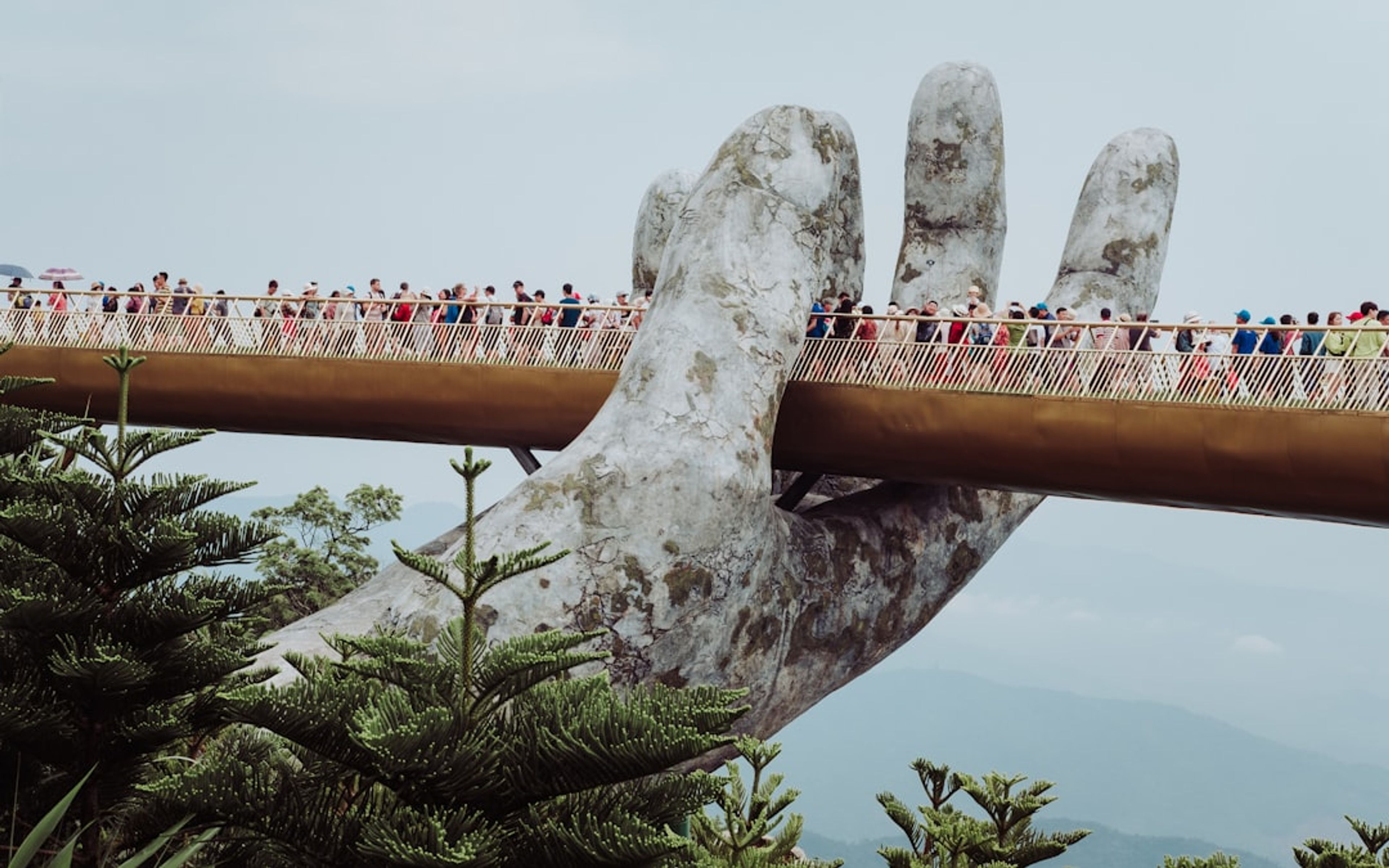
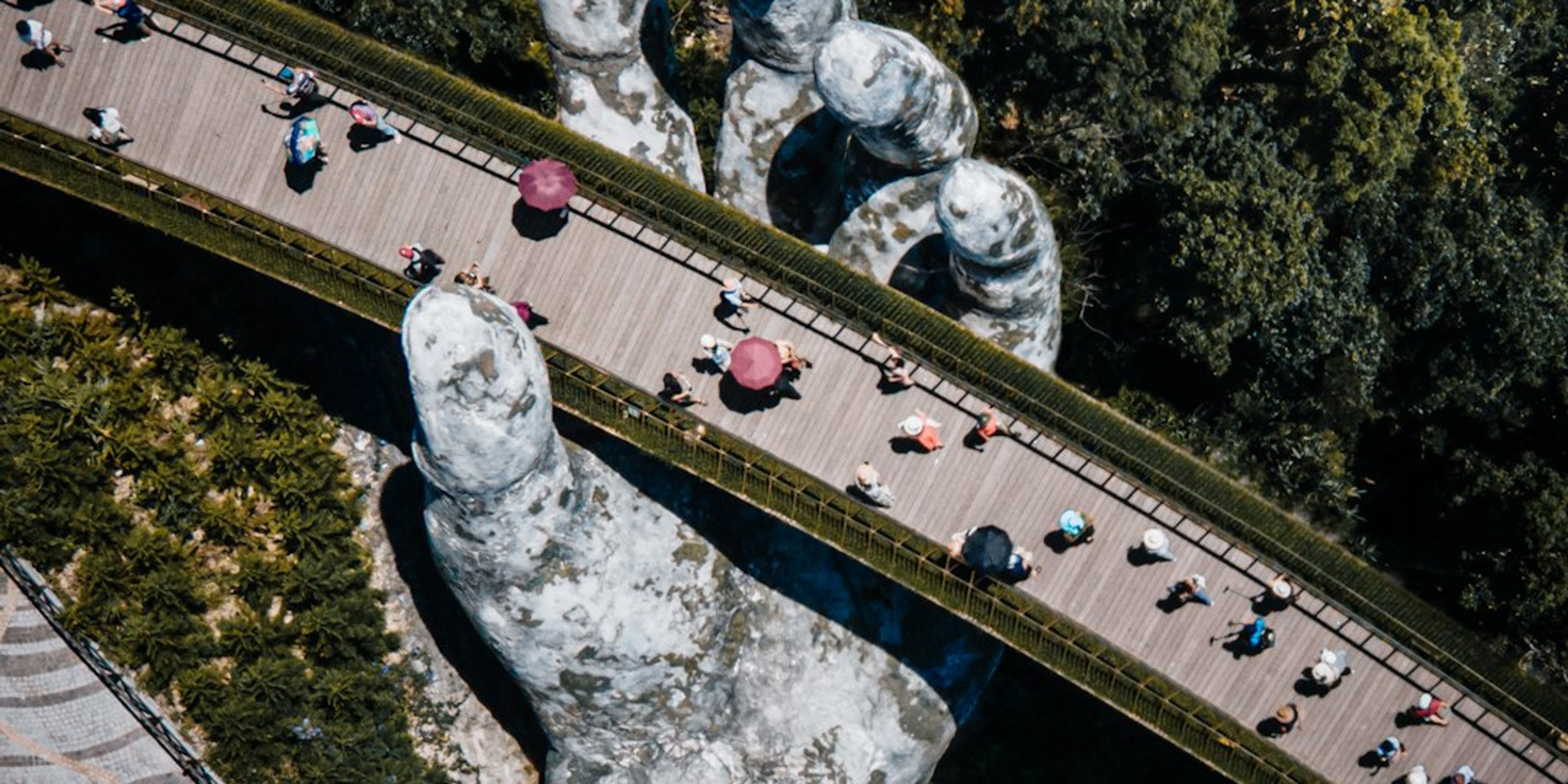
The Golden Bridge opened in June 2018 at 1,414 metres above sea level, and the pair of giant weathered hands appearing to lift a 150-metre walkway made it one of the most photographed structures in Southeast Asia within weeks. Reaching it means the Sun World Ba Na Hills cable car, which holds several world records for length and elevation gain. The ride climbs more than 1,300 metres in about 20 minutes.
A combined cable car and park ticket costs roughly 900,000 VND (about 33 EUR) for adults in 2026, with reduced rates for children under 1.4 metres tall. That price also covers the French Village, the gardens and the indoor games hall. Expect cloud. The summit sits inside it for much of the year, and afternoon visibility during the rainy season from September to December can drop to a few metres, which turns the famous view into white nothing.
3Marble Mountains - Five Limestone Peaks Full of Cave Temples
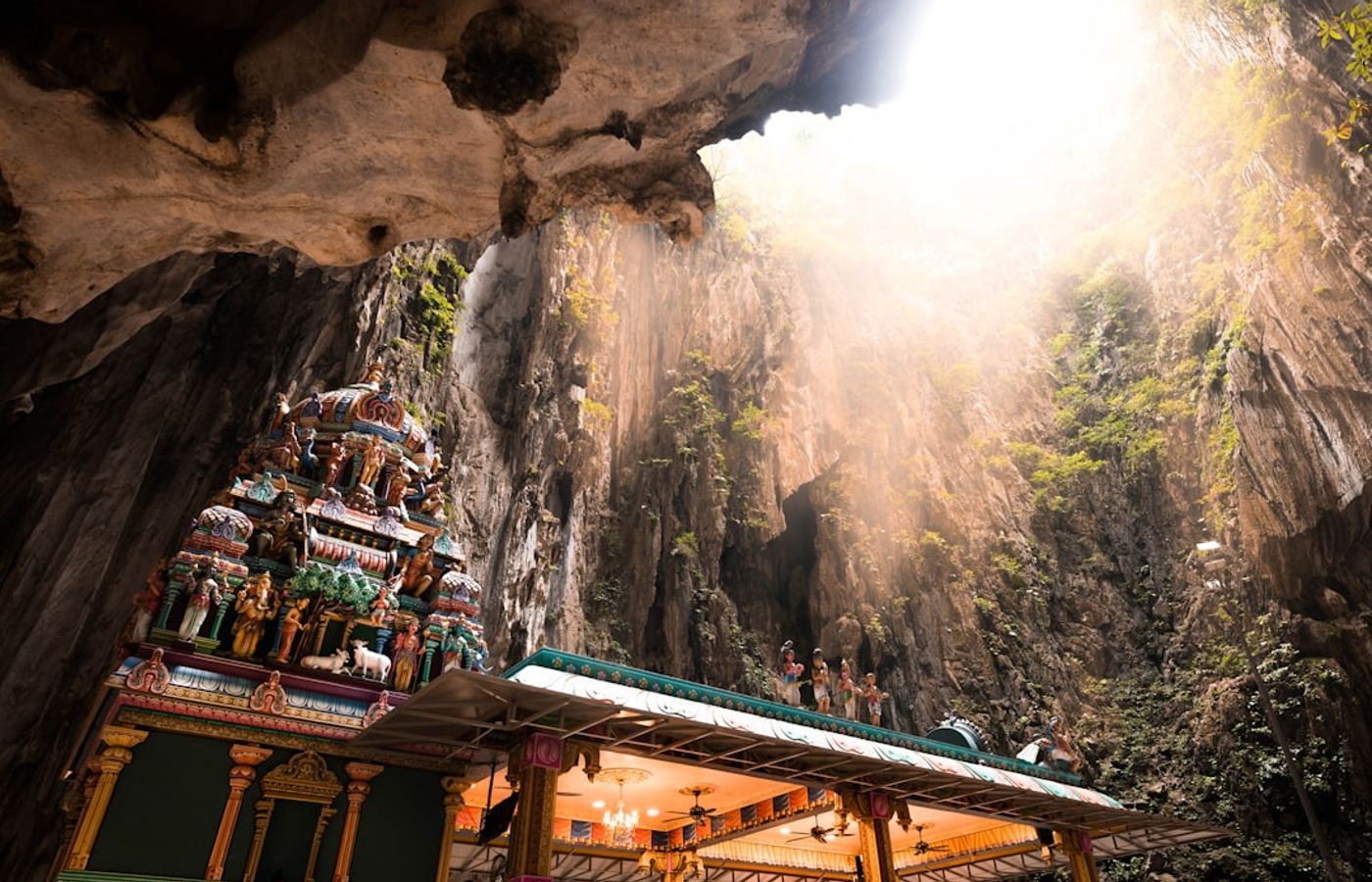

The Marble Mountains are five limestone and marble outcrops named after the five elements, and only Thuy Son (Water) is open to visitors. Entry costs 40,000 VND (about 1.50 EUR), with another 15,000 VND for the glass lift that skips the first 150 steps. Inside Thuy Son you get Huyen Khong Cave, a huge chamber where daylight falls through holes in the roof onto a Buddha statue, plus Tam Thai Pagoda and a scatter of smaller shrines.
American forces used these caves as a field hospital during the war while Viet Cong fighters used them as a base at the same time, and the site signage covers that directly. Allow ninety minutes minimum. The steps are steep, uneven and slippery after rain, and the upper viewpoints have almost no shade, so the 11:00 to 14:00 window in summer is genuinely punishing. Footwear with grip matters more here than at any other stop on this list.
Check dates for Da Nang
See what is available on your dates.
4Dragon Bridge - The Fire-Breathing Crossing Over the Han River
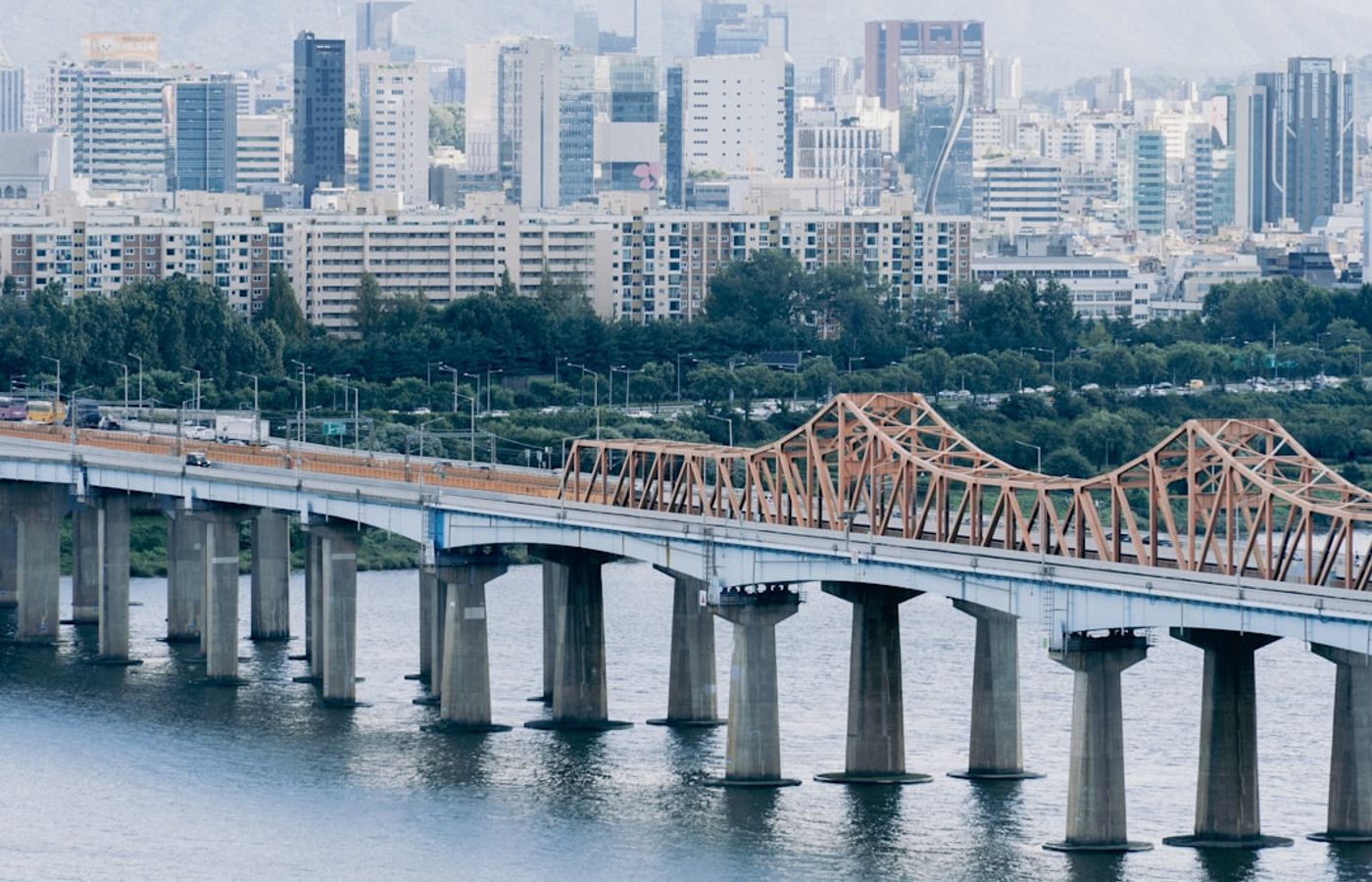
Cau Rong, the Dragon Bridge, opened in March 2013 on the thirty-eighth anniversary of the city's liberation and carries a 666-metre steel dragon across the Han River. At 21:00 every Saturday and Sunday, plus public holidays, the head breathes fire nine times and then sprays water over the deck. The whole show lasts about fifteen minutes and pulls a serious crowd onto both riverbanks well before it starts.
The best free viewpoint is the eastern riverside walkway near Tran Hung Dao street, where the dragon shows its full profile against the city lights. Arrive by 20:15 for a front position. The bridge deck itself closes to traffic from about 20:30 on show nights, and the water spray reaches the first few rows standing on it. On weekdays there is no performance - the bridge simply cycles through colours after dark.
5Son Tra Peninsula and the Lady Buddha at Linh Ung Pagoda - The Green Headland Above the City
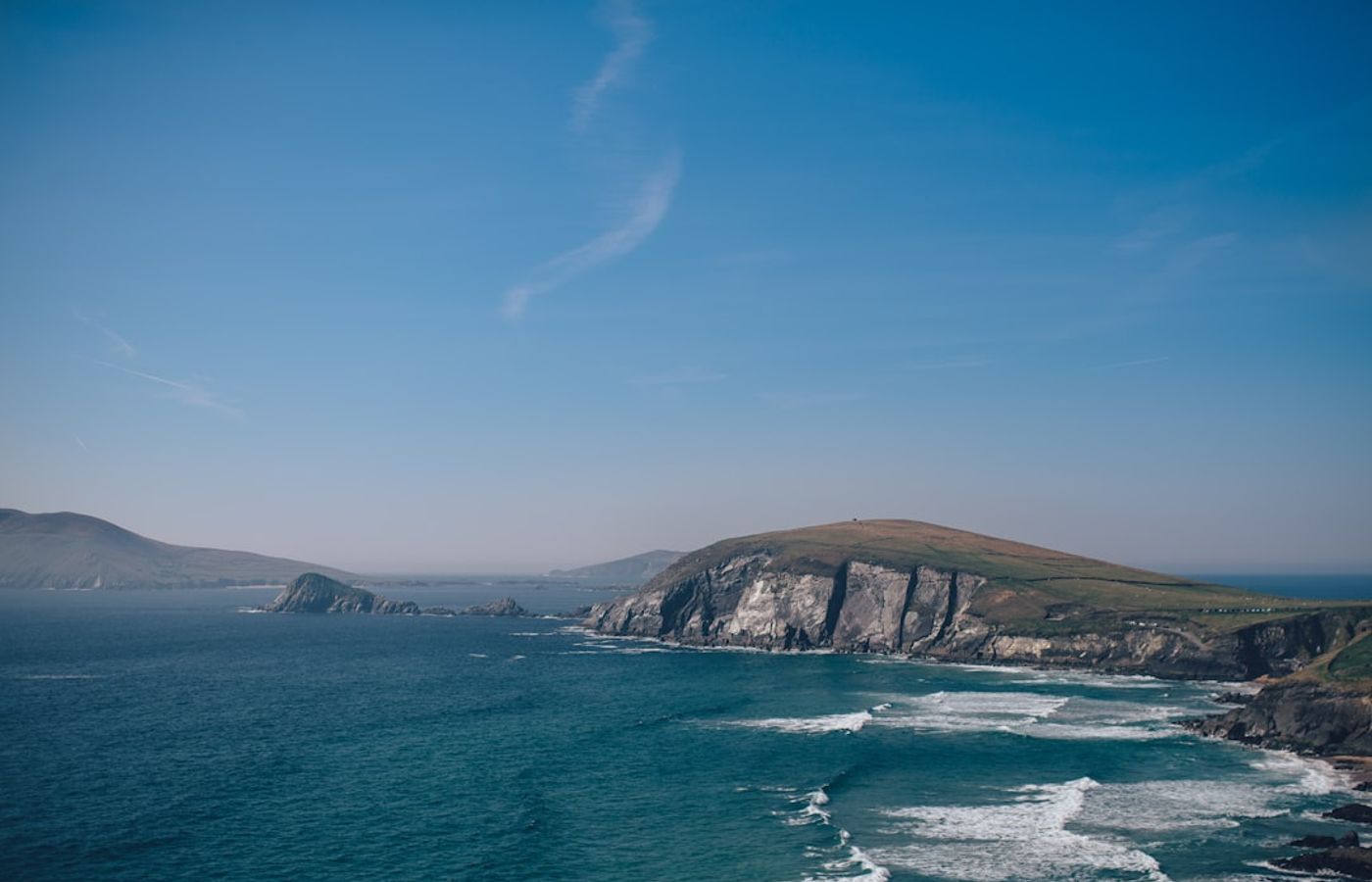
Son Tra Peninsula is a forested headland of roughly 4,400 hectares northeast of the city, and it holds the closest population of endangered red-shanked douc langurs to any Vietnamese city. Linh Ung Pagoda sits on the lower slope, and its 67-metre Lady Buddha statue - the tallest in Vietnam - faces the sea and is visible from most of My Khe Beach. The pagoda grounds are free to enter and open from 06:00 to 21:00.
Past the pagoda the road climbs to Ban Co Peak at around 700 metres and to the thousand-year-old banyan tree on the eastern flank. Parts of the loop are steep with poor surfacing, and rental scooters under 100cc struggle badly on the gradients, which is why the upper road is periodically restricted after accidents. Langurs feed at dawn and again in late afternoon along the quieter northern stretch, usually high in the canopy.
6Museum of Cham Sculpture - The World's Largest Collection of Champa Art
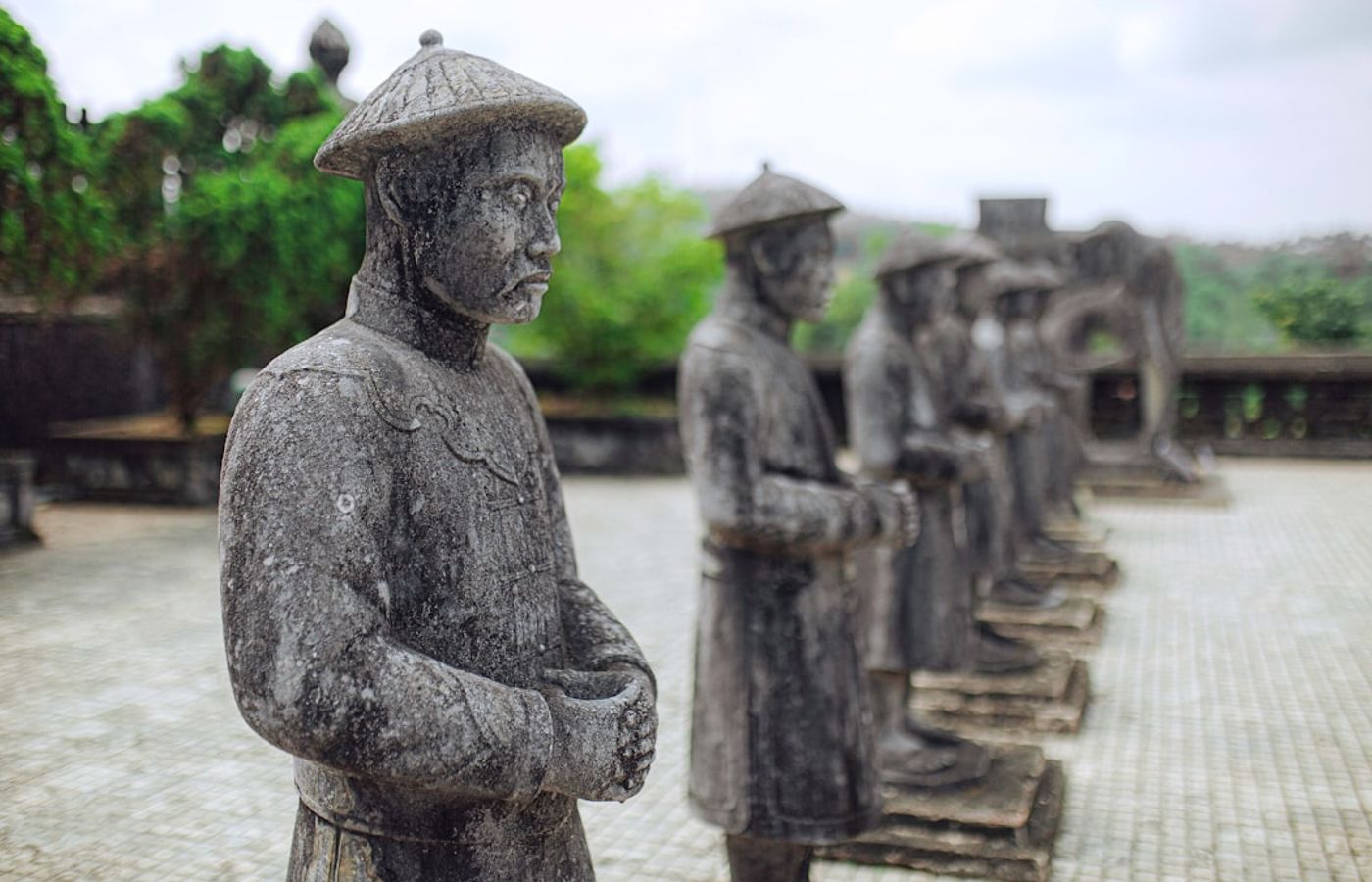
The Museum of Cham Sculpture opened in 1919 in a French colonial building at the western foot of the Dragon Bridge and holds close to 2,000 pieces of Champa stone and terracotta work, with around 500 on display at any time. The Champa kingdom ruled central Vietnam from the fourth to the fifteenth century. The altars, linga and dancing apsaras here came largely from My Son and other temple sites across Quang Nam province.
Entry costs 60,000 VND (about 2.20 EUR) and the doors open 07:30 to 17:00 daily. Several works carry Vietnamese national treasure status, including the Tra Kieu altar with its carved scenes from the Ramayana. An hour covers it comfortably. The free audio guide, opened by scanning a QR code at the entrance, is unusually good and turns what could be a quiet room of stone into an actual narrative.
7Han Market and the Riverfront - Where the City Shops and Eats

Cho Han, the Han Market, has traded at the corner of Tran Phu and Hung Vuong since the 1940s and still works as the practical centre of Hai Chau district. The ground floor sells dried squid, coffee, Nam O fish sauce and fresh produce. Upstairs is fabric and tailoring, where a made-to-measure shirt takes about two days and starts near 400,000 VND (roughly 15 EUR). Doors open 06:00 and close around 19:00.
Prices are not fixed, and the opening quote to a foreign visitor usually sits two to three times above the local rate, so haggling is expected rather than rude. Step out onto the Bach Dang riverside promenade and the mood flips completely. A wide paved walkway follows the Han River for about 2 km, filling with joggers from 05:30 and with families after 18:00, when the bridges light up.
8Hai Van Pass - The Mountain Road Between Two Weather Systems
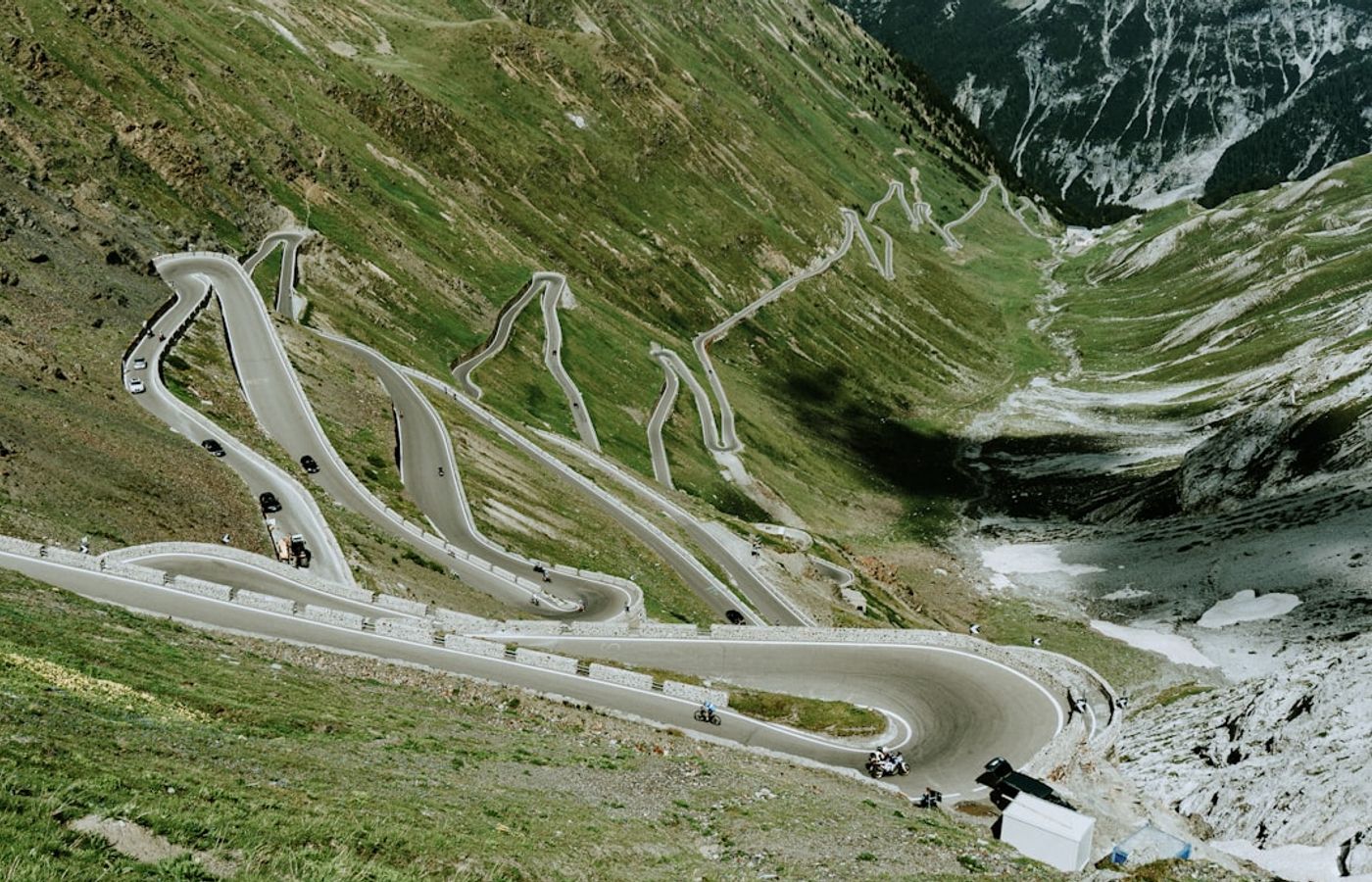
Hai Van Pass climbs to 496 metres over a spur of the Truong Son range and marks a genuine climate boundary - Da Nang can sit in full sun while Hue, on the far side, is under rain. Its 21 km of switchbacks carried all north-south traffic until the Hai Van Tunnel opened in 2005, which is precisely why the road is now quiet enough to enjoy. At the top stands Hai Van Quan, a Nguyen dynasty gate from 1826, restored and reopened to visitors in 2024.
Most travellers ride the pass by motorbike between Da Nang and Hue, with luggage sent separately by car. Fog is the real risk here. Visibility can collapse to 20 metres with no warning, the surface stays wet under cloud, and the drop on the seaward side is unforgiving. Mornings before 10:00 are usually the clearest window, and the restored gate complex charges a small admission at the ticket booth on the summit.
9Non Nuoc Beach - The Quieter Southern End of the Sand
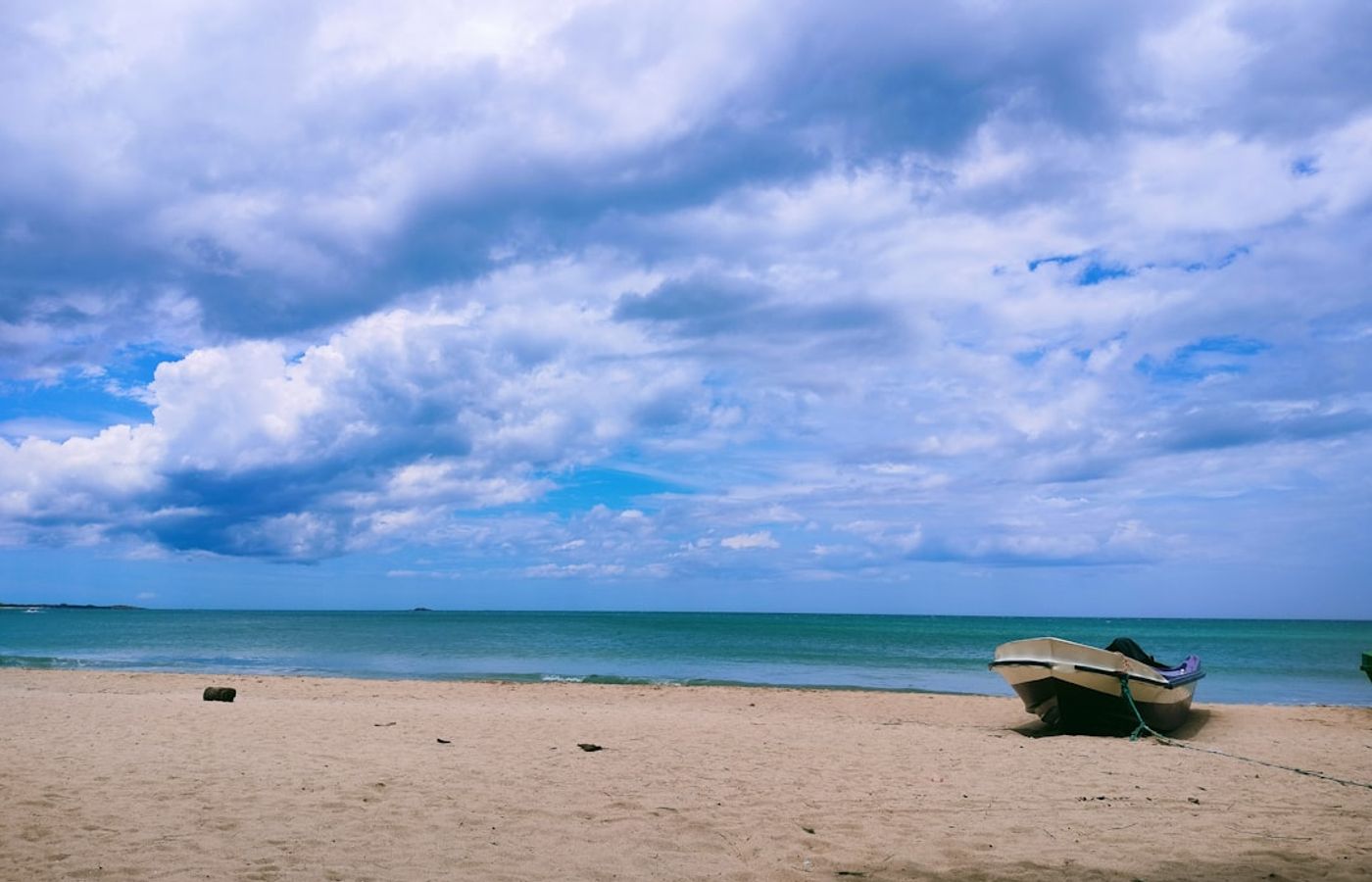
Non Nuoc Beach is the southern continuation of the same sand as My Khe, running below Marble Mountains towards Hoi An, and it is noticeably emptier. The trade-off is facilities. Most of the Truong Sa street frontage is private resort access, and the public entrances near the Non Nuoc stone carving village are basic affairs with plastic chairs, a drinks cooler and not much else. Bring water rather than assuming you can buy it.
Surf is the draw. Between October and March a rideable swell breaks along this stretch and a handful of small operators rent boards for 150,000 to 250,000 VND (about 5.50 to 9 EUR) a day, with lessons for roughly double. Currents run stronger than at My Khe and lifeguard coverage is thinner, so it suits confident swimmers. In the calm summer months the water goes flat and clear, better for swimming than riding.
10A Hoi An Day Trip - The Lantern-Lit Ancient Town Down the Coast
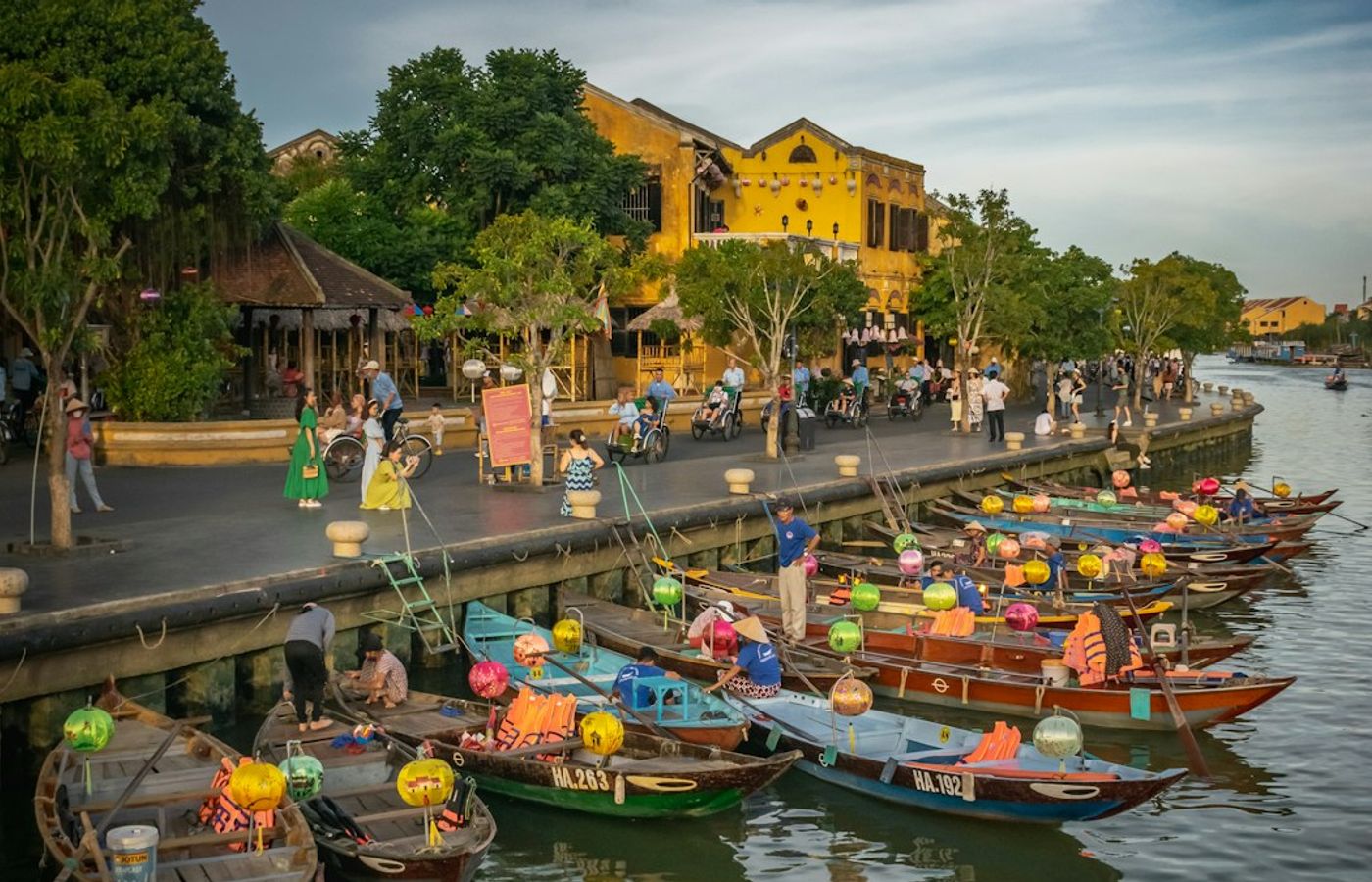
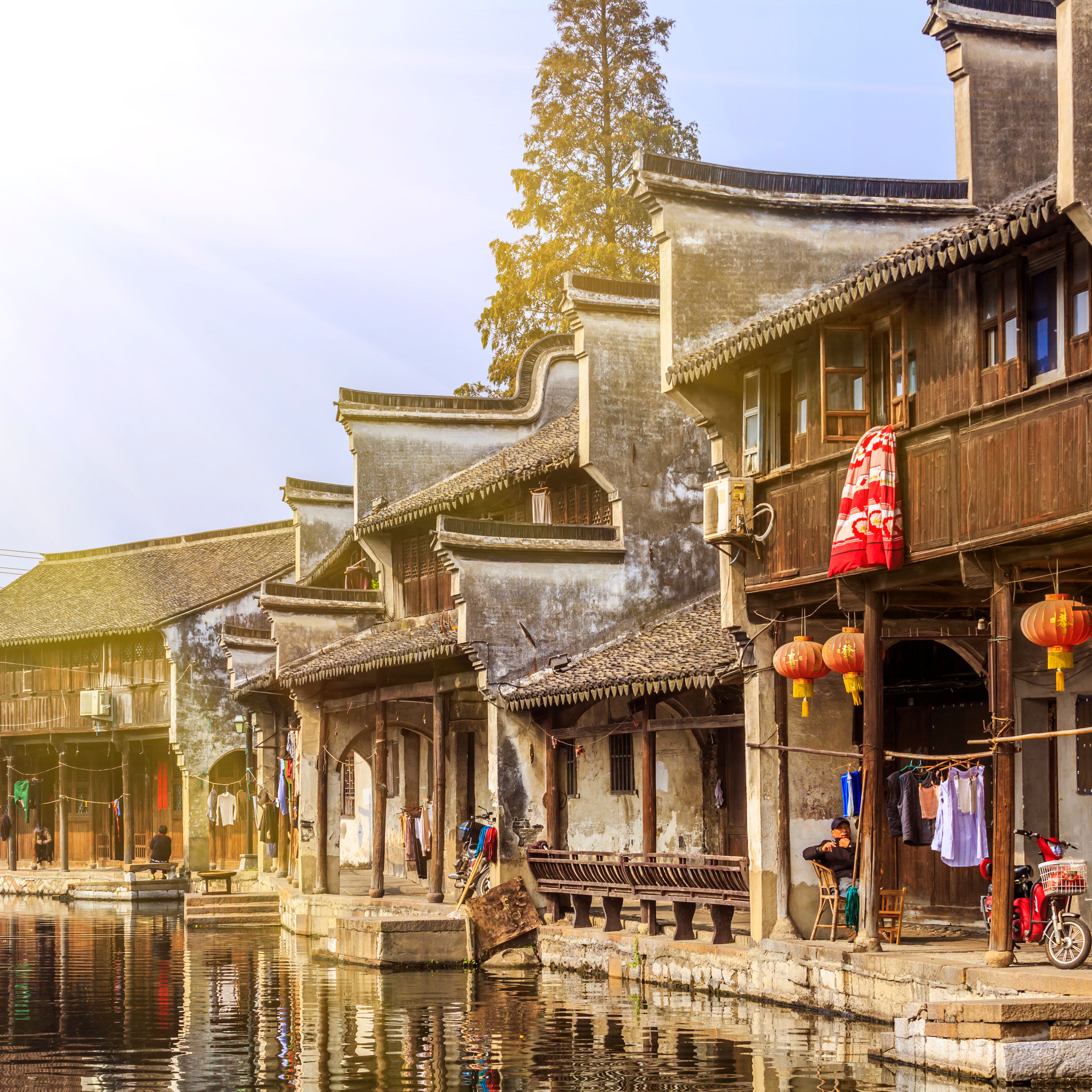
Hoi An Ancient Town is a UNESCO World Heritage Site 30 km south of Da Nang, and it works either as a day trip or as a base of its own. The old quarter is a preserved trading port from the fifteenth to nineteenth centuries: Japanese, Chinese and Vietnamese merchant houses along Tran Phu and Nguyen Thai Hoc, the covered Japanese Bridge dating to the 1590s, and assembly halls built by traders from Fujian and Guangdong.
The ancient town ticket costs 120,000 VND (about 4.40 EUR) and admits you to five heritage buildings of your choosing. Motor traffic is banned from the old quarter during set hours, and on the fourteenth day of each lunar month the lantern festival switches the electric lights off entirely, leaving only silk lanterns and candles on the Thu Bon River. Tailors work faster and cheaper here than in Da Nang - two days for a suit is standard.
Take this guide with you
Get every place in this guide, with addresses and map links, in your inbox — easy to open on your phone during the trip.
One email to the address on your account. No newsletter.

CEO and co-founder
Tomas is the co-founder and director of trip1, an European company specializing in reservation services. He launched the company in 2025 with a focus on building scalable, efficient operations.
10 Best Things to Do in Da Nang, Vietnam - FAQ
My Khe Beach for an early swim, the Golden Bridge at Ba Na Hills, the cave temples of the Marble Mountains and the Dragon Bridge's weekend fire show. Add the Lady Buddha at Linh Ung Pagoda on the Son Tra Peninsula, the Museum of Cham Sculpture, Han Market, and a day trip to Hoi An Ancient Town, 30 km south. Hai Van Pass is the scenic road north.
Three days works well. Spend day one in the city: My Khe Beach, the Museum of Cham Sculpture, Han Market and the Dragon Bridge, all close together. Give Ba Na Hills its own full day, 35 km west. On day three pair the Marble Mountains with Hoi An, which sit on the same southern road, and fit Son Tra Peninsula or Hai Van Pass into a spare morning.
September to November, when most of the year's rain falls; the rainy and typhoon season runs into December. Red flags close the sea at My Khe on rough days from October, cloud often hides the Golden Bridge view, and fog can cover Hai Van Pass. February to April is the driest time, and December to February is the coolest, with average temperatures of about 18 to 23 degrees Celsius.
Watch the Dragon Bridge breathe fire and spray water at 21:00 on Saturdays, Sundays and public holidays, ideally from the eastern riverside near Tran Hung Dao street; arrive by 20:15 for a good spot. Walk the Bach Dang promenade along the Han River as the bridges light up, eat at the seafood stalls along Vo Nguyen Giap street, or spend the evening among Hoi An's lanterns.
Head indoors. The Museum of Cham Sculpture holds close to 2,000 pieces of Champa art, with a good free audio guide, and an hour covers it. Han Market's upper floor has tailors who make a shirt in about two days, and Hoi An's tailors can make a suit just as fast. Skip Ba Na Hills, Hai Van Pass and the slippery Marble Mountains steps in heavy rain.
Yes. Hoi An Ancient Town is a UNESCO World Heritage Site about 30 km south, roughly 40 minutes by car. Its merchant houses, assembly halls and the covered Japanese Bridge from the 1590s fill an afternoon. Arrive around 15:00 to see the town in daylight and the lanterns at dusk, and skip the 10:00 to 14:00 tour peak. Stop at the Marble Mountains on the way.